
REVIEW · HISTORICAL TOURS
7 Days Balkan tour to historic Croatia and Bosnia Herzegovina
Seven days, several borders, one big route. This tour links Croatia and Bosnia and Herzegovina with a useful return through southern Hungary, giving you medieval towns, Roman ruins, mountain lakes, Ottoman-era sights, and Adriatic views in one organized trip. I especially like the mix of major sights and smaller stops, from the Sea Organ in Zadar to the cliffside Dervish Monastery at Blagaj.
I also like that transportation, six breakfasts, hotels, and a tour manager are included, which takes much of the planning burden off your shoulders. The main caution is the pace: you cover a lot of ground, and some days involve long drives, border crossings, and only about an hour at several important sights.
In This Review
- Key points to know before booking
- What this seven-day Balkan route does well
- Day 1: Zagreb’s cathedral, squares, and tiled church roof
- Day 2: Four hours among the lakes of Plitvice
- Day 3: Zadar’s medieval lanes and Split’s Roman palace
- Day 4: Dubrovnik’s walls, palace, and Franciscan monastery
- Day 5: Počitelj, Blagaj, and Mostar’s rebuilt bridge
- Day 6: Sarajevo, the Latin Bridge, and the return west
- Day 7: Pécs and the final drive to Budapest
- Hotels, coaches, guides, and group size
- What the $1,160 price really covers
- Practical details that can make the trip easier
- Who should book this Balkan tour?
- FAQ
- Where does the tour start?
- Where does the tour end?
- How long does the tour last?
- What countries does the route visit?
- Are hotels included?
- Are breakfasts included?
- Are attraction tickets included?
- What gratuity is expected?
- How much luggage can each person bring?
- Can children join the tour?
- Should you book it?
Key points to know before booking
- Plitvice Lakes gets four hours: This is one of the better time allowances on the trip, giving you a real walk through the national park rather than a rushed photo stop.
- The route crosses multiple borders: You begin and end in Hungary, travel through Croatia and Bosnia and Herzegovina, and should carry a passport valid for at least six months.
- Dubrovnik receives the star treatment: You see the Old Town, Rector’s Palace, Franciscan Monastery, city walls, and defensive tower area, with a cable car option.
- The group can reach 30 people: The coach format is practical, but short guided visits may feel less personal in a full group.
- Kenny may be your bilingual guide: A past departure was led by Kenny, who spoke fluent English and Mandarin and was praised for clear storytelling and care for the group.
- Most attraction tickets cost extra: Several stops are free to enter, but listed admission tickets, optional activities, and gratuities are not included.
What this seven-day Balkan route does well
This is a sightseeing circuit for people who want the Adriatic and the western Balkans in one go. You do not settle into one town for several nights. Instead, you move from Zagreb to the Dalmatian coast, cross into Bosnia and Herzegovina, visit Sarajevo, then loop back through Croatia and Hungary.
That design gives you variety. One day brings Gothic church towers and city squares. Another brings waterfalls and wooden paths. Later, Roman palace ruins give way to Ottoman bridges, Islamic architecture, and the layered streets of Sarajevo.
I would choose this tour if you value breadth over long free afternoons. It is less suitable if you want slow coastal mornings, independent hotel selection, or time to explore each city beyond its main sights.
The price is listed at $1,160.11 per person. For seven days, that works out to about $166 per day before gratuities, attraction tickets, personal expenses, and any optional activities. That is a reasonable package price for a multi-country coach trip with hotels, daily transportation, six breakfasts, and a tour manager, but the final cost will be higher than the headline figure.
The included hotels are at least three-star properties, with private facilities in twin, double, or single rooms. Hotel names are supplied only 24 to 48 hours before check-in, so you should not book this expecting a carefully chosen boutique hotel in every city.
More history tours in Budapest:
- Budapest: Historic Cruise with Welcome Drink
★ 4.7 · 6,512 reviews - Budapest Historical Sightseeing – Free Walking Tour
★ 5.0 · 1,302 reviews - Buda Castle District Dark History, Legends and Vampire Night Tour
★ 4.5 · 1,240 reviews
Day 1: Zagreb’s cathedral, squares, and tiled church roof
The first day begins at 8:30 a.m. at Budapest-Keleti railway station, on Kerepesi út. From there, you drive south toward Zagreb, Croatia’s capital.
Zagreb is a sensible first stop because it gives you an easy introduction to Croatia away from the coast. The central sights are compact enough to connect the city’s religious, civic, and historic sides.
At Zagreb Cathedral, you will see one of the city’s defining Gothic buildings. The visit is scheduled for about an hour, and admission is not included. That means you should be ready for an exterior-focused visit if the group does not enter, or for an extra ticket if access is available.
Ban Josip Jelačić Square is the city’s central meeting place. It is a good spot to get your bearings, watch local life, and understand how Zagreb’s upper and lower sections relate to one another. The square is not a single grand monument experience. Its value is as the city’s civic heart.
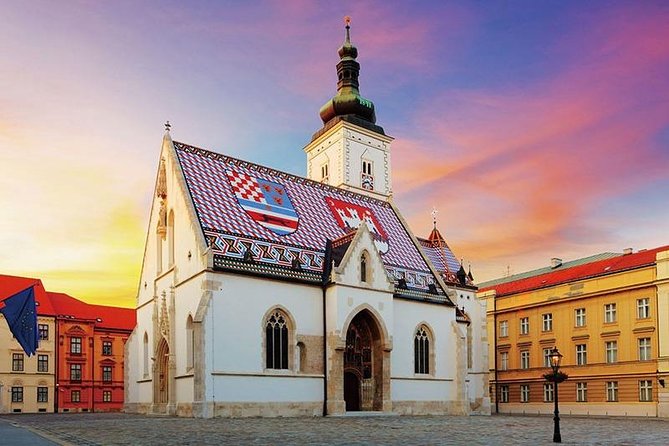
St. Mark’s Church provides the most memorable architectural detail of the day: its colorful tiled roof. The church sits in the Upper Town, where the older streets and government buildings give Zagreb a more intimate feel than the broad central square.
You sleep in Zagreb or a nearby town in a minimum three-star hotel. The first day is fairly gentle by comparison with what follows, but you are still beginning with a coach transfer from Budapest, so an early start is part of the bargain.
Day 2: Four hours among the lakes of Plitvice
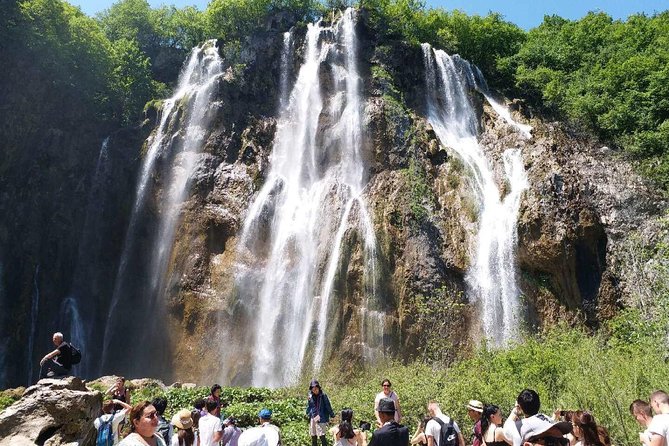
Plitvice Lakes National Park is one of the strongest parts of the route. The park contains 16 lakes linked by waterfalls, wooden walkways, and hiking paths. The water takes on a pale, silvery appearance because of its mineral content, while the surrounding trees give the park its cool, quiet mood.
You receive about four hours for a guided visit. That matters. Plitvice is not a place you understand from one overlook and a quick photograph. The paths and waterfalls are the attraction, and four hours gives you a useful amount of time to walk.
The trails may include uneven surfaces, steps, and wet sections, so sensible shoes are important. The supplied details say most people can participate, but they do not promise a route free of physical demands. If you have mobility concerns, ask the operator about the planned path before departure.
Admission to the park is listed as free within the tour, which adds real value. Plitvice is also the day when the trip’s pace briefly relaxes. You spend the night in Zadar or nearby, positioning the group for the coast the next morning.
Day 3: Zadar’s medieval lanes and Split’s Roman palace
Day three starts in Zadar, an old coastal city with narrow streets and a strong religious character. The planned visit lasts about an hour, so you should focus on the compact center rather than expect a full city tour.
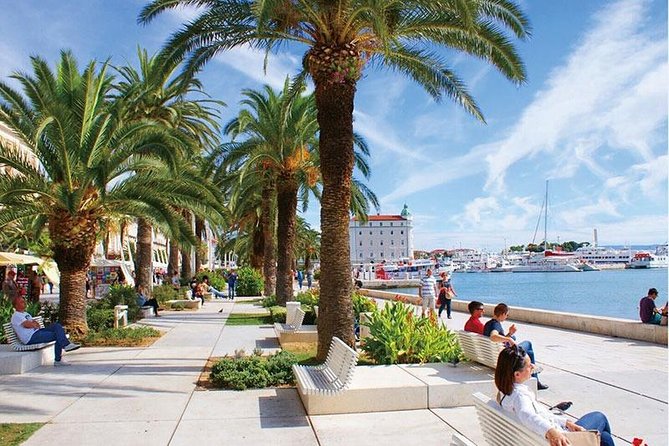
The Sea Organ is Zadar’s most unusual sight. Built into the waterfront, it uses the movement of the sea to create sound. It is a simple idea with an odd, haunting result, and it gives the city a modern edge after the older churches and stone lanes.
Nearby, the Sun Salutation provides a second contemporary waterfront feature. Its solar-powered light display is designed to be seen after dark, but the stop still makes sense during a daytime itinerary because it sits beside the Sea Organ and waterfront promenade.
The route then continues to Split, Croatia’s second-largest city. Its main prize is the Peristyle of Diocletian’s Palace, part of a Roman complex built in the fourth century. This is not a remote ruin outside town. The palace remains woven into the living center of Split, with streets, buildings, and daily activity occupying the old structure.
That combination is what makes the Peristyle valuable. You are not merely looking at ancient walls behind a fence. You are seeing Roman planning reused by later generations.
The scheduled stop is about an hour, and admission is not included. That is a tight window for Split, especially if you want to wander beyond the Peristyle. You spend the night in Neum or nearby, in Bosnia and Herzegovina, so this is also a border-crossing day. Keep your passport accessible, and expect the schedule to depend partly on traffic and border conditions.
More things to do in Budapest:
- Budapest: City Highlights Cruise with Welcome Drink
★ 4.6 · 35,610 reviews - Budapest: Unlimited Prosecco, Beer and Aperol Spritz Cruise
★ 4.8 · 25,310 reviews - Budapest: Széchenyi Spa Day Ticket with Optional Upgrades
★ 4.3 · 23,911 reviews - Budapest: Nighttime or Daytime Sightseeing Cruise
★ 4.2 · 21,062 reviews
Day 4: Dubrovnik’s walls, palace, and Franciscan monastery
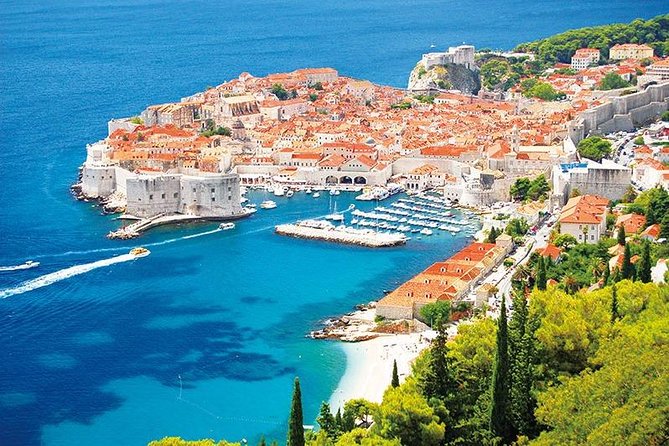
Dubrovnik is the visual high point for many people on this route. Its Old Town is enclosed by stone walls above the Adriatic, with narrow lanes, polished limestone streets, churches, palaces, and defensive structures packed into a small area.
The overall Dubrovnik visit is listed at about two hours, with separate stops of roughly one hour for the Old Town, Rector’s Palace, and Franciscan Church and Monastery. Read those times as an organized introduction, not as enough time to see everything.
The Old Town is the place to slow your eyes down. Look above street level at carved details, bell towers, shutters, and the stonework of the buildings. The city has also served as a filming location for Game of Thrones, which may appeal to fans, but the old town is worth your attention even if you have never watched the series.
The Rector’s Palace shows the city’s former political power. It is a more focused stop than a general walk, and the admission ticket is not included. The same applies to the Franciscan Monastery. The monastery is known for its church and historic setting within the Old Town, and its pharmacy is one of the details many people hope to see, though the supplied schedule does not guarantee entry to every part.
You can also take the cable car up the mountain for a wider view of Dubrovnik and the coast. This is optional and costs extra. If the weather is clear, it can be a strong use of limited free time. If you prefer the old streets, you may decide that the city walls or a quiet café matter more.
The key drawback is time. Dubrovnik deserves a full day, yet this tour gives you a concentrated visit. You will see the main pieces, but you may need to choose between the walls, museums, cable car, and unhurried wandering.
Day 5: Počitelj, Blagaj, and Mostar’s rebuilt bridge
Day five shifts the focus to Bosnia and Herzegovina. This is where the route becomes especially rewarding for anyone interested in the meeting of Christian, Muslim, Ottoman, and Yugoslav influences.
Počitelj is a stepped medieval village built into a hillside beneath its fortress. Stone houses, stairs, and defensive remains give the stop a strong sense of place. The visit lasts about an hour and is listed without an admission charge.
Wear shoes with a good grip here. The village is steep, and the schedule does not leave much room for a slow climb. You may prefer to stay lower in the village if the upper fortress path feels too demanding.
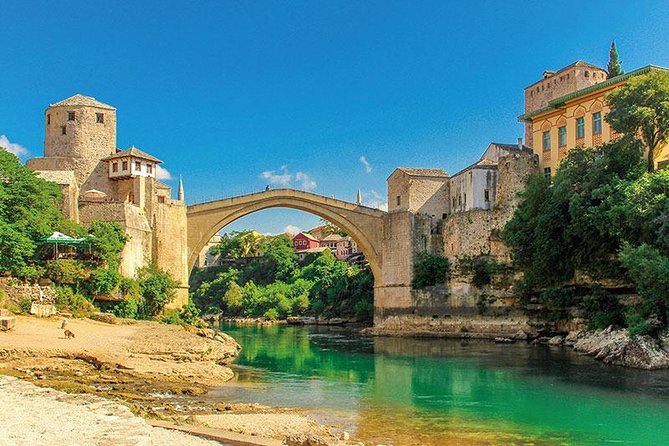
At Blagaj, the Dervish Monastery sits beside the source of the Buna River, below a cliff described as 200 meters high. The clear water and rock walls create a striking setting, and the stop offers a different experience from the fortified village at Počitelj.
The itinerary then reaches Mostar, where the Old Bridge crosses the Neretva River. The bridge area is the center of the old city, with views up and down the river and a strong Ottoman-era character.
The Old Bridge Area of the Old City of Mostar is a UNESCO World Heritage site, and it is easy to see why the place has such visual force. The bridge itself is the obvious focus, but the riverbanks, stone lanes, and surrounding buildings complete the scene.
Admission to the bridge area is free, while some listed attractions are not included. You receive about an hour at Mostar, which is enough to cross the bridge and take in the river views, but not enough for a broad city visit.
You sleep in Sarajevo or nearby. This is a full sightseeing day, and the mix of short stops means you should carry only what you need when leaving the coach.
Day 6: Sarajevo, the Latin Bridge, and the return west
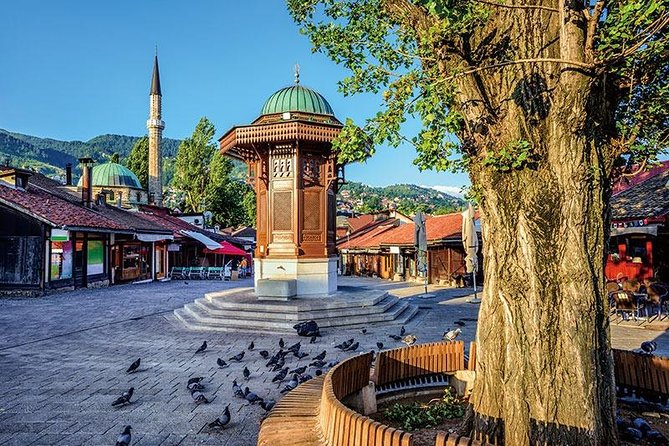
Sarajevo brings the strongest historical weight of the trip. The city has long connected eastern and western cultural influences, and its center still shows that mix in places of worship, street design, food, and architecture.
The main Sarajevo visit is scheduled for about an hour. The Latin Bridge is the best-known historical point, linked to the assassination of Archduke Franz Ferdinand in 1914, an event that helped trigger the First World War.
The Sarajevo Meeting of Cultures marker in the old town gives you a small but useful visual lesson. One side of the line feels more Ottoman and eastern in character, while the other points toward Austro-Hungarian Europe. In a short stop, that marker helps explain why Sarajevo feels different from the Croatian cities earlier in the trip.
The city also has newer architecture shaped by its more recent past and rebuilding. The itinerary presents Sarajevo as a place that has changed greatly, rather than leaving you with only a war story or a prewar postcard.
After the visit, you cross back into Croatia and continue to Vinkovci or a nearby town for the night. This is one of the less glamorous parts of the trip. The overnight location is mainly practical, breaking up the long return to Hungary. You should expect another substantial coach day, with border procedures adding uncertainty to the timetable.
Day 7: Pécs and the final drive to Budapest
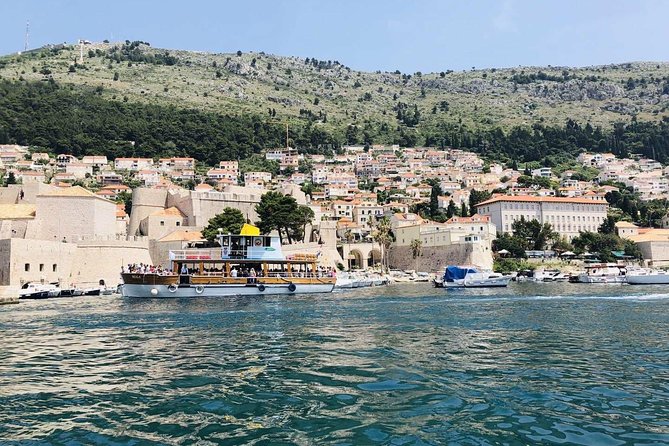
The last day begins with the return to Hungary and a stop in Pécs. Located between the Danube and Drava rivers, Pécs is known for its pleasant climate, museums, Turkish remains, and musical traditions.
The city gives the tour a neat final change of mood. After the Adriatic coast and Bosnia’s mountain towns, Pécs offers a Hungarian cultural stop before the coach returns to Budapest.
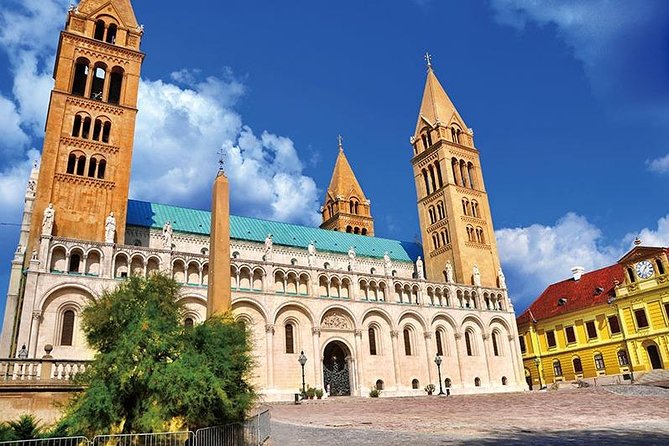
Pécs Cathedral rises over Szent István Square and is the main listed highlight. The city visit lasts about an hour, so you will need to keep your expectations modest. You can see the cathedral and square, but a museum visit or detailed look at the Turkish ruins may require more time than the schedule allows.
The coach returns to Budapest in the afternoon. The tour ends back at the original meeting point, Budapest-Keleti. An additional post-tour hotel night in Budapest is optional and not included in the standard package.
Hotels, coaches, guides, and group size
The tour uses modern air-conditioned coaches and a professional driver. That is essential on a route with repeated border crossings and long transfers. You do not need to manage unfamiliar roads, parking, or international car rental rules.
The maximum group size is 30 people. A full coach can make the short city visits feel less flexible, but it also keeps the per-person price lower than a private trip. The tour manager handles the broad schedule, while local guides may lead private city visits in several places.
Language arrangements deserve attention. goEUgo may combine English and Chinese departures if numbers are low. One tour leader can speak both languages, and a guide named Kenny has led a departure in fluent English and Mandarin, with a friendly, humorous approach and strong care for the group. If you are booking mainly for an English-language experience, confirm the language setup and official tour voucher before you go.
Rooming is based on twin rooms, with double beds available by request. One twin room can hold two adults and one child aged 2 to 11, but the child does not receive a separate bed. Three-person groups should not expect a triple room, since those rooms are not arranged.
Each person may bring one piece of luggage up to 30 kilograms and one small carry-on, such as a purse, backpack, or camera bag. That is generous for a week, but remember that you will move hotels several times.
What the $1,160 price really covers
The package includes:
- Six breakfasts
- Seven nights of minimum three-star accommodation during the tour
- Private-facility twin, double, or single rooms
- Daily coach transportation
- A professional driver
- An experienced tour manager
You pay separately for listed attraction tickets that are not included, optional activities such as the Dubrovnik cable car, personal costs, and gratuities. The stated gratuity is €10 per person per day, collected in cash by the tour manager, adding €70 per person across seven days.
For a first visit to this part of Europe, I think the package offers fair value. The coach route would be difficult to organize efficiently on your own, especially with Bosnia and Herzegovina included. The tradeoff is control: you give up the freedom to linger in Dubrovnik, Split, Mostar, or Sarajevo.
The tour is often booked around 104 days ahead. That suggests you should not leave arrangements until the last minute, especially if you need particular room arrangements or must check visa rules for several countries.
Practical details that can make the trip easier
Carry your passport every day, not just at the start. You are responsible for passport, visa, health, insurance, and other entry requirements for every country on the route.
Confirmation is normally issued at booking, but bookings made within seven days of departure may take up to 48 hours and depend on availability. The operator also requires its official tour voucher. A downloadable booking ticket alone is not treated as final confirmation.
The cancellation deadline is three full days before the local start time for a full refund. Changes made inside that window are not accepted, and the minimum group requirement means the operator can offer another date or a refund if the tour cannot run.
Bring comfortable walking shoes, a refillable water bottle, and a small day bag. You will want quick access to your passport, phone, and any extra admission money without opening the main suitcase at every stop.
Who should book this Balkan tour?
Book it if you want a broad first look at the Balkans without arranging hotels, driving, border crossings, and intercity transport yourself. It suits curious, active adults who are comfortable with short visits and early starts.
It is also a good match for solo passengers who prefer the structure of a group. The language mix can work well when the tour leader is strong in English, and the warm group atmosphere described by past participants shows that friendships can form even among people from very different backgrounds.
Think twice if your priority is beach time, long museum visits, or sleeping several nights in one place. The tour shows you many famous places, but it rarely lets you linger.
FAQ
Where does the tour start?
It starts at Budapest-Keleti, Budapest, Kerepesi út 2-4, 1087 Hungary, at 8:30 a.m.
Where does the tour end?
The tour ends back at the original meeting point in Budapest.
How long does the tour last?
It lasts approximately seven days.
What countries does the route visit?
The route includes Hungary, Croatia, and Bosnia and Herzegovina.
Are hotels included?
Yes. Accommodation during the tour is included in minimum three-star hotels with private facilities. Hotels before the tour and on the final day are not included.
Are breakfasts included?
Yes. Six breakfasts are included.
Are attraction tickets included?
Some stops are listed as free, but admission tickets for attractions such as Zagreb Cathedral, the Sea Organ area, Diocletian’s Palace, Dubrovnik sights, and the Old Bridge area may not be included. Optional activities are also extra.
What gratuity is expected?
The stated gratuity is €10 per person per day, collected in cash by the tour manager during the tour.
How much luggage can each person bring?
Each person can bring one piece of luggage weighing no more than 30 kilograms and one small hand-carry item.
Can children join the tour?
Yes. Children under 18 must travel with an adult. A child aged 2 to 11 can share a twin room with two adults without a separate bed, subject to the stated rooming rules.
Should you book it?
I would book this tour for the route, not for luxury or leisure. Zagreb, Plitvice, Dubrovnik, Mostar, Sarajevo, and Pécs make a strong seven-day sequence, and the included coach, hotels, breakfasts, and tour management remove much of the work.
Go in with realistic expectations. You will spend plenty of time on the road, attraction tickets and tips add to the price, and Dubrovnik, Split, Mostar, and Sarajevo each deserve more time than this schedule allows. If you want a fast, well-organized introduction to Croatia and Bosnia and Herzegovina from Budapest, it is a practical choice. If you want to travel slowly, stay central, and set your own rhythm, plan an independent trip instead.
Just added in Budapest
- Budapest: Private Walking Tour with a Local Guide★ 3.6 · 6 reviews
- Budapest: Danube River Views Bike Ride★ 4.8 · 23 reviews
- Budapest: City Bike Tour with Coffee Stop★ 5.0 · 37 reviews
- From Budapest: Guided Tour of Eger with Wine Tasting★ 4.5 · 6 reviews
- Walk to recent and aged spiritual sanctuaries near Budapest★ 5.0 · 5 reviews
- Walking consultancy with alternative psychologist and author★ 5.0 · 2 reviews
- Budapest: Guided Tour of the Parliament Building in Spanish★ 4.6 · 1,240 reviews
- Budapest: 3-Hour Trabant Sightseeing Tour★ 4.7 · 28 reviews
Historical Tours, compared.
Budapest Historical Sightseeing – Free Walking Tour
Read our review →
Buda Castle District Dark History, Legends and Vampire Night Tour
Read our review →
BloodThirsty Hungary: Walking tour & Dark Historical Stories
Read our review →
Budapest Jewish Heritage Memorial Walking Tour & Synagogue Entry
Read our review →
Jewish Heritage Guided Tour with Synagogue Ticket
Read our review →
Budapest Historic Downtown Bicycle Tour in small groups
Read our review →
Historic Downtown ride on E-Bicycles Buda & Pest
Read our review →Browse the lists this tour appears in