REVIEW · BUDAPEST TOURS
Analog Photo Trip
See Budapest through a slower lens. This three-and-a-half-hour photo walk combines major sights, short history talks, public transport, and the simple pleasure of taking pictures on an analog camera. I like the mix of famous views and less obvious city corners, and I especially like that you leave with physical photographs rather than only another phone gallery. The small group, capped at 12 people, also gives the experience a more personal feel.
The main consideration is pace. Six stops, a tram ride, camera instruction, and time for photos make this a full outing, and one couple needed longer than planned because they moved slowly. The trip also depends on good weather, so keep some flexibility in your Budapest schedule.
In This Review
- Key points about the Analog Photo Trip
- Why the Analog Format Changes a Budapest Sightseeing Tour
- Starting at Anker köz Near St. Stephen’s Basilica
- Framing the Chain Bridge With Buda Castle Behind It
- Taking Tram 2 Along the Danube
- Parliament and Kossuth Lajos Square
- Margaret Bridge and the Best Sense of the Route
- Matthias Church in the Castle District
- Fisherman’s Bastion and the Tour’s Final Views
- What Emese Tárnok Adds to the Experience
- Is $142.97 a Fair Price?
- Timing, Group Size, and Practical Planning
- Who Should Book This Photo Trip?
- Should You Book the Analog Photo Trip?
- FAQ
- Where does the Analog Photo Trip start?
- What time does the experience begin?
- How long does the tour last?
- Where does the tour end?
- What language is the tour offered in?
- How many people can join the tour?
- Is the experience suitable for beginners with analog cameras?
- Is admission included at the listed sightseeing stops?
- Can I cancel for a full refund?
Key points about the Analog Photo Trip
- Physical photographs become your souvenir: You use an analog camera during the outing, giving the experience a tangible result beyond digital snapshots.
- Emese Tárnok leads the experience: Her clear communication, patience, city knowledge, and friendly manner receive especially strong praise.
- The route links both sides of Budapest: You see St. Stephen’s Basilica, the Chain Bridge, Parliament, Margaret Bridge, Matthias Church, and Fisherman’s Bastion.
- Tram 2 adds local flavor: The route is not only a walking tour, with public transport forming part of the journey.
- The group stays small: A maximum of 12 people should make it easier to ask questions and get help with the camera.
- The price is $142.97 per person: That is a serious price for a short city tour, but the value depends on how much you want the analog photography lesson and physical prints.
Why the Analog Format Changes a Budapest Sightseeing Tour
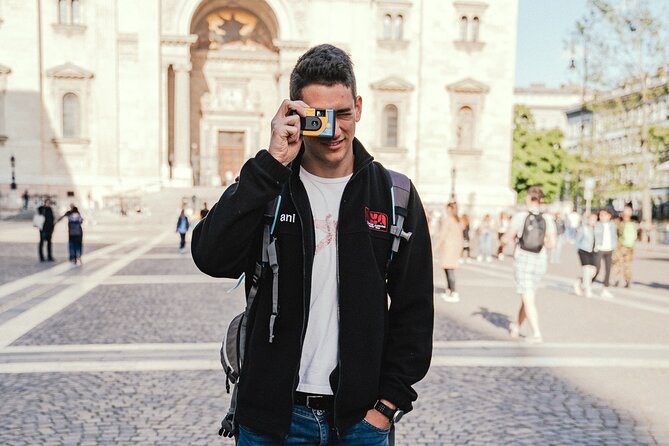
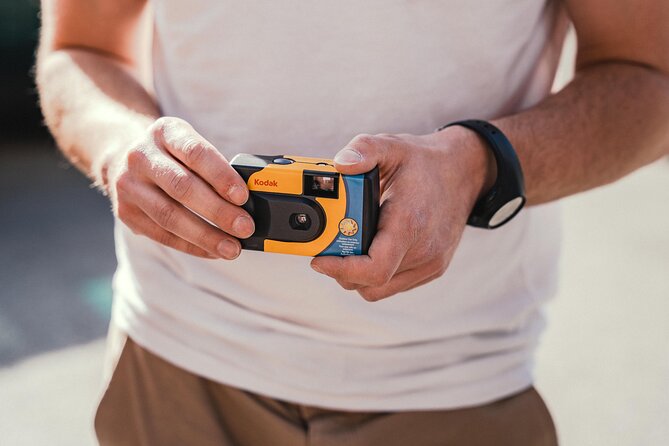
Budapest is easy to photograph badly. You can point your phone at the Danube, snap the Parliament, and move on in seconds. An analog camera asks you to slow down, frame the scene, and think before pressing the shutter.
That is the central appeal here. You are not simply being taken from one famous building to another. You are learning a different way to look at the city. The camera is part of the activity, not just an accessory.
You receive a brief introduction to using the analog camera before setting off. That matters if you have never handled one. The experience is designed to be approachable, and Emese helps make the process simple for beginners. One person described the camera as a completely new experience and left thinking it might become a new hobby.
You should still understand the trade-off. Analog photography is slower and less predictable than using a phone. You have limited chances to take a picture, and the final result is not instant. If you want a fast-moving sightseeing tour with dozens of guaranteed images, this may feel restrictive. If you enjoy the surprise of physical photographs, that limitation is part of the fun.
More things to do in Budapest:
- Budapest: City Highlights Cruise with Welcome Drink
★ 4.6 · 35,610 reviews - Budapest: Unlimited Prosecco, Beer and Aperol Spritz Cruise
★ 4.8 · 25,310 reviews - Budapest: Széchenyi Spa Day Ticket with Optional Upgrades
★ 4.3 · 23,911 reviews
Starting at Anker köz Near St. Stephen’s Basilica
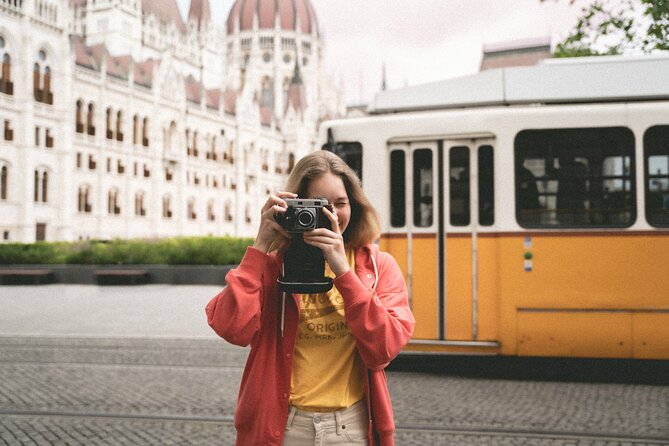
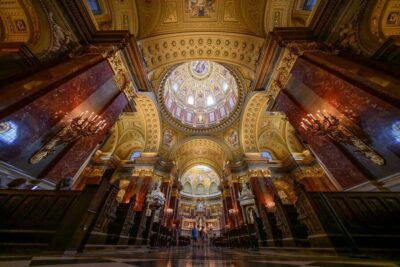
The meeting point is CBI CompareBudapest at Anker köz 2-4, with a 5:00 pm start. The first stop is St. Stephen’s Basilica, one of Hungary’s most important churches and one of central Budapest’s major landmarks.
The planned visit here lasts about 15 minutes. That is enough for a brief look around, a few photographs, and an introduction to the building’s importance. It is not enough for a long interior visit or an extended architectural study, so keep your expectations in check.
The basilica works well as an opening stop because it gives you an immediate sense of Budapest’s grand central districts. Its scale and formal design offer strong subjects for an analog camera, especially when you take time to look at details rather than simply record the whole building.
Admission is listed as free for this stop. The tour is offered in English, which makes the historical explanation accessible to English-speaking visitors. Since the tour moves through several locations, the talk here is likely to be concise rather than a full church tour.
Framing the Chain Bridge With Buda Castle Behind It
From St. Stephen’s Basilica, the route continues toward the Széchenyi Chain Bridge, known locally as Széchenyi Lánchíd. You get around 15 minutes here before taking Tram 2.
This is one of the best-known views in Budapest: the bridge crossing the Danube, with Buda Castle visible behind it. It is also the kind of view that benefits from a slower camera. Rather than firing off a burst of phone pictures, you have a reason to consider the bridge, the river, and the hilltop castle as one composition.
The short time limit has both benefits and drawbacks. It keeps the tour moving, but you will not have endless time to search for a perfect angle. If photography is your main goal, listen carefully to the camera instructions and be ready to work quickly.
The Chain Bridge stop also sets up the tour’s larger story. Budapest is a city shaped by the Danube and by the connection between Buda and Pest. You are not seeing isolated monuments. You are following the city’s main visual spine.
Taking Tram 2 Along the Danube
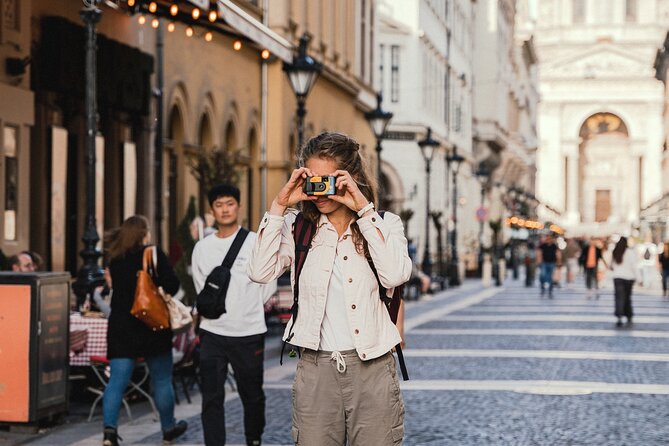
Tram 2 is a notable part of the experience. Many sightseeing tours keep you on foot or in a private vehicle. Here, public transport helps connect the stops and gives you another way to see Budapest.
The exact tram arrangements and fare details are not provided, so you should check what is included before booking. The tour information confirms that Tram 2 forms part of the route, but it does not state whether a transport ticket is supplied.
The tram also helps explain the tour’s appeal to people who want more than a standard walking route. You are moving through the city as people do every day, then stopping at places chosen for their history and photographic value. That mix feels more grounded than a route made only of photo backdrops.
Because the full experience is around three hours and 30 minutes, the tram ride helps break up the walking. Still, plan to be on your feet for much of the outing. Comfortable shoes are sensible, especially since the tour ends in the Castle District.
A completely different kind of day:
- Budapest: Nighttime or Daytime Sightseeing Cruise
★ 4.2 · 21,062 reviews - Budapest: 1-Hour Evening Sightseeing Cruise with Drink
★ 4.5 · 8,330 reviews - Budapest Danube Cruise and Dinner Options, Live Music and Dance
★ 4.5 · 7,428 reviews - Budapest: Historic Cruise with Welcome Drink
★ 4.7 · 6,512 reviews
Parliament and Kossuth Lajos Square
The Hungarian Parliament Building and Kossuth Lajos Square provide another 15-minute stop. The square’s open setting gives you room to take in the Parliament and the surrounding civic buildings.
This is a place where context adds value. The guide discusses the history of the square and its role in Budapest, so you are not only photographing an impressive façade. You get a clearer sense of why this location matters to Hungary.
The stop is brief, which is useful if you prefer a broad city tour. You get the essential view without spending a large part of the afternoon in one place. On the other hand, anyone wanting a detailed Parliament visit should book a separate experience. This tour looks at the surroundings and explains the setting, rather than offering an interior tour.
For analog photography, the Parliament stop offers a change from the Chain Bridge. The bridge gives you a long horizontal subject over the river. Parliament gives you a formal architectural subject and a wide civic square. That variety is helpful when your number of exposures is limited.
Margaret Bridge and the Best Sense of the Route
At Margaret Bridge, the tour pauses for about 15 minutes. The stated purpose of this stop is especially interesting: from the bridge, you can look back toward places already visited and ahead toward the next part of the route.
That makes Margaret Bridge more than another photo stop. It lets you understand Budapest spatially. You can connect the Danube views, Parliament, the bridge crossings, and the direction toward Buda.
I like this kind of pause because it helps prevent the tour from becoming a checklist. A good city tour shows you how places relate to one another. Here, the bridge offers a broad view of the route you have taken and the Castle District still ahead.
It is also a natural point to think about your photographs. By this stage, you have had time to learn the camera and may feel more comfortable making deliberate choices. If your first pictures were cautious, this is a chance to use the camera with more confidence.
Matthias Church in the Castle District
The route then reaches Matthias Church, one of the Castle District’s most striking buildings. The planned stop is only about five minutes, so this is a quick look rather than a full visit.
The church is described as Gothic, with an astonishing exterior that makes a strong subject for photography. Its style provides a sharp contrast to the basilica, bridges, and Parliament seen earlier.
The short stop is the clearest limitation in the schedule. You will have time to capture the building and hear a brief comment, but not to study every detail. Admission is listed as free for this stop, though the experience does not promise an interior visit.
If Matthias Church is high on your personal list, you may want to return independently. The photo tour gives you an introduction and a useful place to make pictures, but it is not built around a long church visit.
Fisherman’s Bastion and the Tour’s Final Views
The final stop is Fisherman’s Bastion, where the tour ends. The bastion was inspired by early medieval architectural styles and is one of the Castle District’s most recognizable places.
Ending here makes practical sense. The Castle District offers a different atmosphere from the central streets and river crossings, and Fisherman’s Bastion provides a strong final set of views. It is also a fitting place to finish an analog photography experience because the location has layered stonework, towers, and broad city outlooks.
The tour ends at Fisherman’s Bastion, Budapest 1014. Since no return transport is included in the supplied details, plan your next move before you arrive. You can ask Emese for practical direction during the tour, but do not assume the experience brings you back to the original meeting point.
The final stop lasts about 15 minutes. That gives you time for pictures and a final look around, but again, it is not a substitute for a full Castle District tour. I would book this experience as an introduction to the area, then return later if you want a longer visit.
What Emese Tárnok Adds to the Experience
The guide is a major part of the value. Emese Tárnok receives repeated praise for clear communication before, during, and after the tour. That is useful for an experience involving equipment, timing, and several stops.
Her manner also seems to suit beginners. The camera instruction is brief, and she explains how to use the equipment without making the activity feel technical or intimidating. That is important because many people have never used an analog camera before.
Patience matters, too. A couple who moved slowly found that the tour ran longer than planned, but Emese remained kind and patient. The stated duration is approximately three hours and 30 minutes, so you should allow some flexibility rather than scheduling something immediately afterward.
The historical side is another strong point. The tour does not appear to offer long lectures, but it adds useful facts at each major location. You get enough context to understand the places without losing the flow of the photo trip.
Is $142.97 a Fair Price?
At $142.97 per person, this is not a cheap way to see Budapest. You are paying more than you would for a basic self-guided walk, and the stops themselves list free admission.
The value comes from the package: an English-speaking guide, camera instruction, a small group of no more than 12, a route across several major sights, and physical analog photographs as a souvenir. If those elements matter to you, the price can be reasonable. The analog camera experience is the feature that makes this different from an ordinary city walk.
I would be less likely to recommend it to someone who only wants sightseeing. You can see many of these places independently, and the short stops mean you are paying for a broad introduction rather than deep visits.
I would be more likely to recommend it to a couple, a small group of friends, or a solo visitor who wants a structured activity. One review specifically describes the outing as enjoyable with a partner and friends, while another calls it a fun way to spend part of the day. The combination of learning, movement, and photographs gives the experience a clear purpose.
Timing, Group Size, and Practical Planning
The tour begins at 5:00 pm and lasts approximately three hours and 30 minutes. That timing gives you an afternoon-to-evening activity, but the supplied information does not promise sunset conditions or a particular type of light.
A maximum of 12 people keeps the group modest. That matters when you need help with a camera or want to ask about a building without holding up a large crowd. It should also make the guide’s historical comments easier to hear.
The tour is offered in English and provides a mobile ticket. Confirmation arrives at booking. Service animals are allowed, the route is near public transportation, and most people can participate.
The weather rule deserves attention. The experience requires good weather, and poor conditions can lead to a different date or a full refund. You can cancel for a full refund if you do so at least 24 hours before the 5:00 pm start time. Changes or cancellations made less than 24 hours before the start are not refunded, so watch the local time and the forecast.
Who Should Book This Photo Trip?
I would choose this tour if you want to see Budapest’s main sights while doing something active and creative. It suits first-time analog photographers because the camera lesson is short and the guide helps make the process easy.
It also suits people who value physical souvenirs. A digital picture can disappear into a crowded phone library. A printed analog photograph gives you something concrete to keep from the city.
Couples and friends may enjoy the shared pace, especially if you like stopping to compare pictures and talk about what you are seeing. Solo visitors can also benefit from the structure and the small group.
I would hesitate if you dislike fixed schedules, have limited mobility, need long visits at each landmark, or want a serious architectural tour. The plan is active and broad, with five stops lasting 15 minutes and one lasting only five minutes. It is designed to give you a taste of many places, not exhaustive time at any one of them.
Should You Book the Analog Photo Trip?
Book it if the analog camera is the main attraction for you. You get a fresh way to see Budapest, a patient guide in Emese Tárnok, several major sights, and physical photographs to take home.
Skip it if your priority is entering the churches, touring Parliament, or spending an hour at each landmark. At $142.97, the experience needs to be judged as a guided photo activity, not simply as transportation between free sights.
For the right person, that distinction makes the price easier to accept. This is a playful, focused way to explore Budapest, with enough history to give the pictures meaning and enough movement to keep the afternoon from feeling like a classroom.
FAQ
Where does the Analog Photo Trip start?
The tour starts at CBI CompareBudapest, Anker köz 2-4, 1061 Hungary.
What time does the experience begin?
The start time is 5:00 pm.
How long does the tour last?
The experience lasts approximately three hours and 30 minutes.
Where does the tour end?
The tour ends at Fisherman’s Bastion in Budapest, 1014 Hungary.
What language is the tour offered in?
The tour is offered in English.
How many people can join the tour?
The maximum group size is 12 people.
Is the experience suitable for beginners with analog cameras?
Yes. The experience includes a brief introduction to using the analog cameras, and the guide helps make them easy to use.
Is admission included at the listed sightseeing stops?
The provided details list admission as free at St. Stephen’s Basilica, the Chain Bridge, the Hungarian Parliament surroundings, Margaret Bridge, Matthias Church, and Fisherman’s Bastion.
Can I cancel for a full refund?
Yes. You can cancel at least 24 hours before the experience start time for a full refund. If poor weather causes the tour to be canceled, you are offered another date or a full refund.
Just added in Budapest
- Budapest: Private Walking Tour with a Local Guide★ 3.6 · 6 reviews
- Budapest: Danube River Views Bike Ride★ 4.8 · 23 reviews
- Budapest: City Bike Tour with Coffee Stop★ 5.0 · 37 reviews
- From Budapest: Guided Tour of Eger with Wine Tasting★ 4.5 · 6 reviews
- Walk to recent and aged spiritual sanctuaries near Budapest★ 5.0 · 5 reviews
- Walking consultancy with alternative psychologist and author★ 5.0 · 2 reviews
- Budapest: Guided Tour of the Parliament Building in Spanish★ 4.6 · 1,240 reviews
- Budapest: 3-Hour Trabant Sightseeing Tour★ 4.7 · 28 reviews
Budapest Tours, compared.
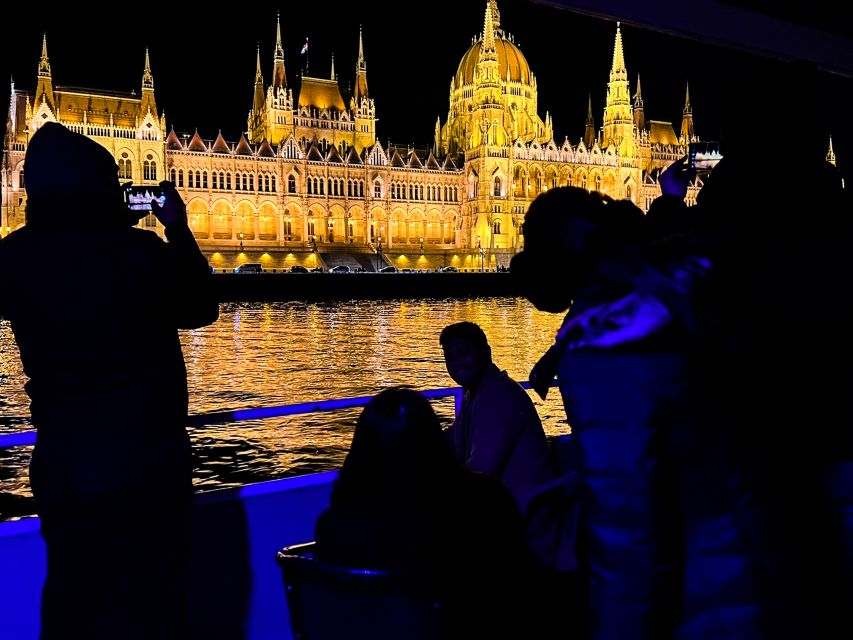

Unlimited Prosecco, Beer and Aperol Spritz Cruise
Read our review →
Széchenyi Spa Day Ticket with Optional Upgrades
Read our review →
Budapest Danube Cruise and Dinner Options, Live Music and Dance
Read our review →