
REVIEW · HISTORICAL TOURS
Best Historical Sights of Budapest Tour
Budapest rewards a well-planned first look. I like the private format, which gives you György Rashad Salamon’s full attention, and I like the hotel pickup, which removes the usual morning puzzle of finding a meeting point. The flexible start also lets you shape the outing around your schedule.
The main consideration is pace. Four hours covers a great deal, from City Park and Heroes’ Square to Parliament and the Castle District, so some stops are best viewed as introductions rather than long visits. Public transportation is part of the experience, and tickets cost an extra $7.50 per person.
This is a strong choice if you are new to Budapest, want a broad orientation, or prefer a guide who can adjust the day to your interests. György is praised for clear historical explanations, practical city advice, and extra care when a member of the group has health concerns.
In This Review
- Key points to know before booking
- Why this four-hour route works for a first day
- City Park, where Budapest’s story begins
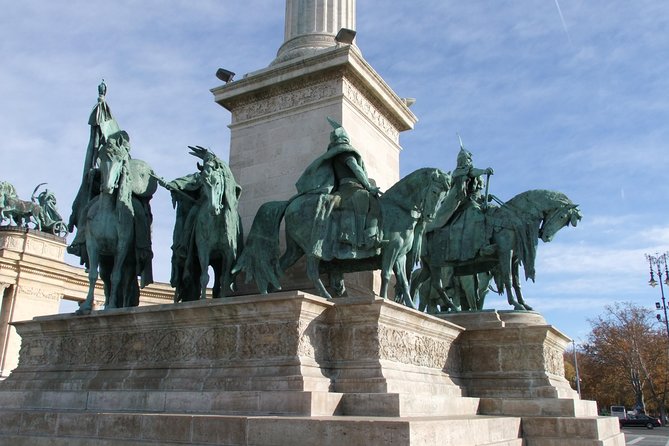
- Heroes’ Square and Hungary’s key figures
- Andrássy Avenue’s grand facades and city life
- St. Stephen’s Basilica and the Holy Right Hand
- Parliament and Liberty Square’s political stories
- Crossing Chain Bridge into the Castle District
- Matthias Church and Fisherman’s Bastion
- The guide’s approach: history with practical help
- Walking, timing, and the real pace
- Who gets the best value from the $276.36 group price
- Booking details and cancellation
- Should you book the Best Historical Sights of Budapest Tour?
- FAQ
- Where does the tour start?
- What time does the tour begin?
- How long does the experience last?
- Is this a private tour?
- Are transportation tickets included?
- Is there much walking?
Key points to know before booking
- Start at your hotel: Pickup is available anywhere convenient in Budapest, with a standard start time of 9:00 am that can be changed.
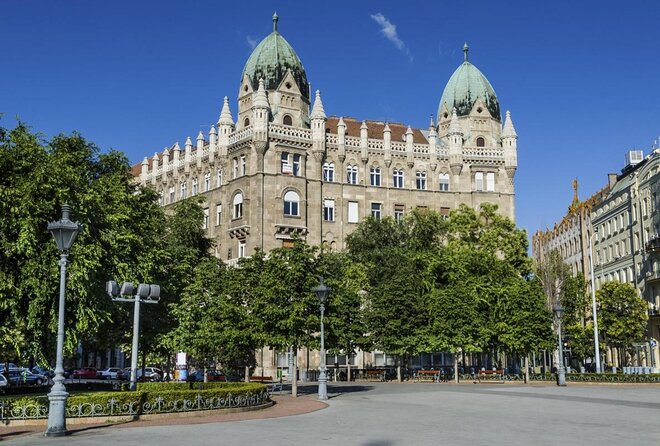
- Cover Buda and Pest: The route links City Park, Andrássy Avenue, St. Stephen’s Basilica, Parliament, Liberty Square, and the Castle District.
- Use public transportation: Trams, buses, and the subway help you see more ground and teach you how to return to major sights later.
- Travel privately: Your group alone takes part, with a maximum of 15 people and an itinerary that can be adjusted.
- Hear the difficult chapters: György explains medieval Hungary, the 1848 revolution, the Iron Curtain era, and the bullet-scarred traces of conflict.
- Expect a broad introduction: The tour aims to show more than 90 percent of Budapest’s major sights, but four hours does not allow an extended visit at every stop.
Why this four-hour route works for a first day

Budapest is split by the Danube into Buda and Pest, with major sights spread across both sides of the city. That geography can make a first day feel scattered if you rely only on a map.
This tour solves that problem by using a private car-free route with public transportation. You do not simply pass a list of famous buildings. You learn how the subway, buses, and trams connect the areas you are likely to revisit.
The guide collects you at your hotel or another convenient place in Budapest. That is useful after a late arrival, and it is especially helpful if you are staying somewhere away from the usual central meeting points.
The tour is offered in English and lasts about four hours. The group price is $276.36 for up to 15 people, so the value improves sharply when shared by several people. For two people, it is a premium private outing. For a family or larger party, the same guide and pickup cost can be quite reasonable.
Transportation tickets are not included and cost $7.50 per person. Keep that extra amount in mind when comparing the total price with other guided options.
More history tours in Budapest:
- Budapest: Historic Cruise with Welcome Drink
★ 4.7 · 6,512 reviews - Budapest Historical Sightseeing – Free Walking Tour
★ 5.0 · 1,302 reviews - Buda Castle District Dark History, Legends and Vampire Night Tour
★ 4.5 · 1,240 reviews
City Park, where Budapest’s story begins
The first major area is City Park, one of the easiest places in Budapest to connect grand architecture, leisure, and national identity.
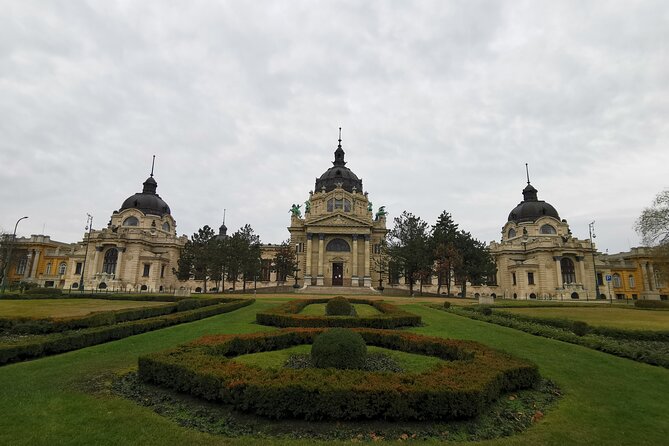
The headline sight here is Vajdahunyad Castle. Its romantic design makes it one of the city’s most memorable buildings, and it gives you an early taste of Hungary’s fondness for historical styles. You can also see the Széchenyi Baths, the capital’s largest thermal bath, along with the zoo and the outdoor ice-skating rink.
The tour does not promise a long bath visit, zoo visit, or castle interior tour. Instead, City Park works as a wide introduction to Budapest’s public spaces and attractions. I would treat this part as a scenic orientation, not as time for a full spa session.
That distinction matters. If Széchenyi Baths is high on your personal list, plan to return separately. A four-hour city tour cannot also provide the time needed to use the pools properly.
Heroes’ Square and Hungary’s key figures
From City Park, the route continues to Heroes’ Square. This is one of Budapest’s most important ceremonial spaces, and it gives the guide a natural place to explain the people and turning points that shaped Hungary.
György’s historical teaching is one of the strongest reasons to choose this tour. He has been described as a former history teacher, and his explanations cover a wide span, from medieval Hungary through the 1848 revolution and the period after the fall of the Iron Curtain.
That range helps you read the city with more care. Statues, public squares, church interiors, and damaged walls are not just photo stops. They become clues to Hungary’s changing rulers, political struggles, and national memory.
You will receive a short lesson at Heroes’ Square rather than a university lecture. That is the right approach for a four-hour outing. You get enough background to make later sights more meaningful without spending the whole morning in one place.
Andrássy Avenue’s grand facades and city life
The route then follows Andrássy Avenue, one of Budapest’s most attractive streets. Neo-Renaissance mansions and townhouses line the avenue, creating a long parade of elegant facades.
The street also has a more modern role. It is a major shopping and dining corridor, with cafes, restaurants, theaters, and luxury boutiques. Homes along the avenue have appeared on House Hunters International, an amusing detail if you know the show and a reminder that these buildings are not merely museum pieces.
I like this section because it connects architecture with daily life. You see the polished public face of Budapest, but you also get a sense of how the avenue functions as part of the city today.
Do not expect a dedicated shopping break unless you arrange one with your guide. The emphasis is on seeing the street and understanding its place in Budapest, not browsing every boutique.
More things to do in Budapest:
- Budapest: City Highlights Cruise with Welcome Drink
★ 4.6 · 35,610 reviews - Budapest: Unlimited Prosecco, Beer and Aperol Spritz Cruise
★ 4.8 · 25,310 reviews - Budapest: Széchenyi Spa Day Ticket with Optional Upgrades
★ 4.3 · 23,911 reviews - Budapest: Nighttime or Daytime Sightseeing Cruise
★ 4.2 · 21,062 reviews
St. Stephen’s Basilica and the Holy Right Hand
A visit inside St. Stephen’s Basilica brings the tour from grand streets to religious history. The basilica houses the Holy Right Hand, the mummified hand of St. Stephen, Hungary’s first king and a central figure in the country’s story.
The interior provides an important change of mood after the open spaces of City Park and Heroes’ Square. You can look at the church as architecture, but the reliquary also shows how faith, kingship, and national identity overlap in Hungary.
The exact time of the visit can matter. György has arranged sightseeing around major services before, including a morning visit when a Holy Thursday service was about to begin. Bells, organ music, and a large congregation made that stop especially memorable, though you should understand that service schedules and access can change.
Because the timing is flexible, tell the guide if the basilica matters to you. The private format gives you a better chance of shaping the visit around your interests than a fixed group departure would.
Parliament and Liberty Square’s political stories
The route continues around the Hungarian Parliament and Liberty Square. Parliament is one of Budapest’s most recognizable buildings, with a dramatic riverside setting and a design that rewards a slow look from outside.
This tour focuses on the stories behind the area’s statues and memorials. Liberty Square is particularly useful for understanding how Budapest presents its political past in public places. The square’s monuments invite questions about power, memory, occupation, and national independence.
The guide’s role is important here. Without context, a statue is easy to photograph and forget. With explanation, you can connect it to the broader story of Hungary’s changing political life.
The information provided does not promise an interior Parliament visit, so you should not book this tour expecting a full parliamentary tour. It is better understood as an informed look at the building and the surrounding square.
Crossing Chain Bridge into the Castle District
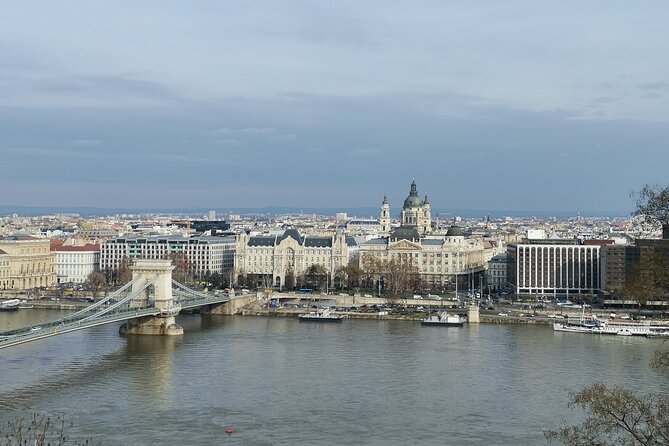
The move to Buda crosses the famous Chain Bridge, linking the Pest side with the hilltop Castle District. Even if you have seen pictures of the bridge, crossing it gives you a clearer sense of Budapest’s layout.
This is also where the tour’s use of public transportation becomes especially useful. You are not confined to one compact neighborhood. Trams, buses, and the subway help connect the city’s major areas, and György explains how to use those systems efficiently.
The transportation element adds practical value beyond the four-hour route. After the tour, you should have a better idea of how to reach places you want to revisit, instead of relying on taxis for every trip.
Transportation tickets cost $7.50 per person and are separate from the tour price. That is a small but necessary extra cost, so have it in your budget from the start.
Matthias Church and Fisherman’s Bastion
The Castle District is the tour’s most concentrated historical area. Here you visit the charming Royal Castle, Matthias Church, and Fisherman’s Bastion.
Matthias Church is known for its colorful interior and beautiful frescoes. It gives you a chance to see a place where art and history work together, rather than simply looking at another grand exterior.
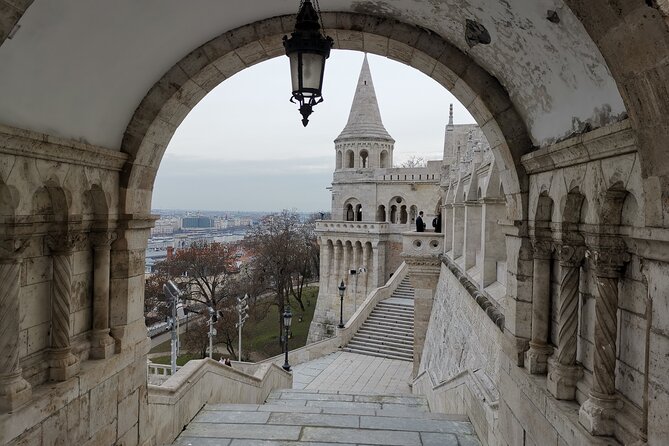
Fisherman’s Bastion provides the payoff: broad views over Budapest and the capital’s riverfront landmarks. This is one of the best places on the route to pause and understand how Buda and Pest fit together.
The Royal Castle adds another layer, though the description does not promise a complete museum visit or interior tour. Expect to explore the historic district and hear its stories, then take in the panorama from the hill.
The area is attractive but not entirely flat. The tour information says there is not much walking, which will reassure many people, but comfortable shoes remain sensible. If someone in your group has limited stamina, mention it in advance. György has been praised for adapting the outing when a companion had health issues and for handling those needs with care.
The guide’s approach: history with practical help
György Rashad Salamon is the named experience provider, and the strongest praise centers on his personal approach. He is described as a former history teacher who can explain Budapest from its medieval beginnings through the 1848 revolution and the post-communist period.
That matters because Budapest’s sights can otherwise feel disconnected. György links architecture, monuments, religious objects, and damaged walls to the events that shaped them.
He also appears willing to answer questions and adjust the focus. One group received help with restaurant, taxi, and other practical advice for the rest of its stay. Another group received more time than expected, and one party was even given a bottle of wine at the end.
Those extras should not be treated as guaranteed parts of the tour. They do show the kind of personal service the guide aims to provide.
If you are interested in Jewish history, tell him before the tour begins. A private route can give more room for that subject than a standard sightseeing circuit, and one customized visit included Jewish history along with the main sights.
Walking, timing, and the real pace
The tour begins at 9:00 am by default, but the departure time can be changed. A morning start makes sense for a broad city overview, especially if you want to see the basilica or other central sights before the day gets crowded.
The route includes walking, but not a heavy amount according to the tour details. Public transportation does much of the work. Still, you will move through several districts, enter at least some major buildings, and spend time in the Castle District.
The four-hour length is both a strength and a limit. It is long enough to show you the city’s main framework and short enough to fit into a busy first day. It is not long enough for full visits to the baths, zoo, castle museums, Parliament interiors, and churches.
Think of this as a guided orientation with selected interior stops. Afterward, you can decide what deserves a longer return visit.
Who gets the best value from the $276.36 group price
The price is easiest to justify for a group of four or more. At the maximum size of 15, the per-person cost becomes modest for a private English-language tour with hotel pickup and a flexible itinerary.
For a couple, the price is harder to judge. You are paying for privacy, convenience, and the guide’s ability to focus on your questions. If you prefer fixed group tours or plan to see only one neighborhood, a cheaper option may suit you better.
I see the strongest value for:
- First-time visitors who want a city overview
- Families or friends sharing one private booking
- People who want hotel pickup
- Groups interested in Hungarian political and religious history
- Those who value public-transit guidance
- Anyone who needs a flexible pace or customized focus
The tour has received seven five-star ratings, with repeated praise for the guide’s historical explanations, kindness, flexibility, and willingness to spend extra time. That is a small review sample, but the praise is notably consistent.
Booking details and cancellation
You can book with confirmation at the time of booking. Pickup is available at the place most convenient for you in Budapest, and the activity ends back at the meeting point.
The tour is private, so only your group participates. Most people can take part, and the route is near public transportation.
Free cancellation is available if you cancel at least 24 hours before the start time. Cancellations or changes made less than 24 hours before the local start time are not refunded or accepted.
Should you book the Best Historical Sights of Budapest Tour?
Book it if you want a smart first look at Budapest rather than a slow visit to one museum or district. The route covers an impressive spread of the city, and György’s strength is explaining why the sights matter, not just naming them.
I would especially choose it for a group that wants private pickup, flexible timing, public-transit help, and a guide willing to discuss subjects such as the 1848 revolution, the Iron Curtain era, church history, or Jewish Budapest.
Skip it if you want long, unhurried time inside every attraction. Four hours moves quickly, and the tour ticket does not include personal expenses or the $7.50-per-person transportation cost.
For most first visits, though, this is a useful way to get your bearings fast. You leave with a clearer map of Buda and Pest, a stronger grasp of Hungary’s past, and a practical sense of which places deserve your own return visit.
FAQ
Where does the tour start?
Pickup can take place at your hotel or wherever is most convenient for you in Budapest. The listed starting point is Budapest, and the activity ends back at the meeting point.
What time does the tour begin?
The standard start time is 9:00 am, but the departure time is flexible and can be changed according to your wishes.
How long does the experience last?
The tour lasts approximately four hours.
Is this a private tour?
Yes. Only your group participates, and the booking covers up to 15 people.
Are transportation tickets included?
No. Transportation tickets cost $7.50 per person and are separate from the tour price.
Is there much walking?
The tour information says there is not much walking. The route also uses public transportation, including trams, buses, and the subway. Comfortable shoes are still sensible for the Castle District.
Just added in Budapest
- Budapest: Private Walking Tour with a Local Guide★ 3.6 · 6 reviews
- Budapest: Danube River Views Bike Ride★ 4.8 · 23 reviews
- Budapest: City Bike Tour with Coffee Stop★ 5.0 · 37 reviews
- From Budapest: Guided Tour of Eger with Wine Tasting★ 4.5 · 6 reviews
- Walk to recent and aged spiritual sanctuaries near Budapest★ 5.0 · 5 reviews
- Walking consultancy with alternative psychologist and author★ 5.0 · 2 reviews
- Budapest: Guided Tour of the Parliament Building in Spanish★ 4.6 · 1,240 reviews
- Budapest: 3-Hour Trabant Sightseeing Tour★ 4.7 · 28 reviews
Historical Tours, compared.

Budapest Historical Sightseeing – Free Walking Tour
Read our review →
Buda Castle District Dark History, Legends and Vampire Night Tour
Read our review →
BloodThirsty Hungary: Walking tour & Dark Historical Stories
Read our review →
Budapest Jewish Heritage Memorial Walking Tour & Synagogue Entry
Read our review →
Jewish Heritage Guided Tour with Synagogue Ticket
Read our review →
Budapest Historic Downtown Bicycle Tour in small groups
Read our review →
Historic Downtown ride on E-Bicycles Buda & Pest
Read our review →Browse the lists this tour appears in