REVIEW · PRIVATE
Budapest: 1956 Revolution Memorial Private Tour
The past still speaks in Budapest. This private tour connects the 1956 Revolution to the actual squares, statues, cafés, and buildings where the conflict unfolded. I like the focus on real places, especially Kossuth Lajos Square and Bem Square, and I like that coffee at Bambi café adds an ordinary Hungarian setting to a difficult subject. The main drawback is that the tour is not suitable for people with mobility impairments.
I also appreciate the personal scale. A private guide can adjust the pace and explain why historians still debate the right name for the events: rebellion, uprising, revolution, or War of Independence. Miklos, the guide praised for his encyclopedic command of Hungarian communism, provides a handout and a communism-related souvenir, giving you something useful to take away after three or four hours.
In This Review
- Key points to know before booking
- Why Budapest’s 1956 Revolution still matters
- Kossuth Lajos Square and Bloody Thursday
- Imre Nagy and the cost of leadership
- Bem Square and the student protests
- Coffee at Bambi café
- Sándor Petőfi and public political memory
- The Hungarian Radio building and the call for help
- What the private format adds
- Is $175 per person a fair price?
- Who should book this Budapest history tour?
- Should you book the 1956 Revolution Memorial Private Tour?
- FAQ
- How long does the Budapest 1956 Revolution Memorial Tour last?
- Where does the tour visit?
- Is hotel pickup included?
- What languages are available?
- Are public transportation costs included?
- Can I cancel the tour for a refund?
Key points to know before booking
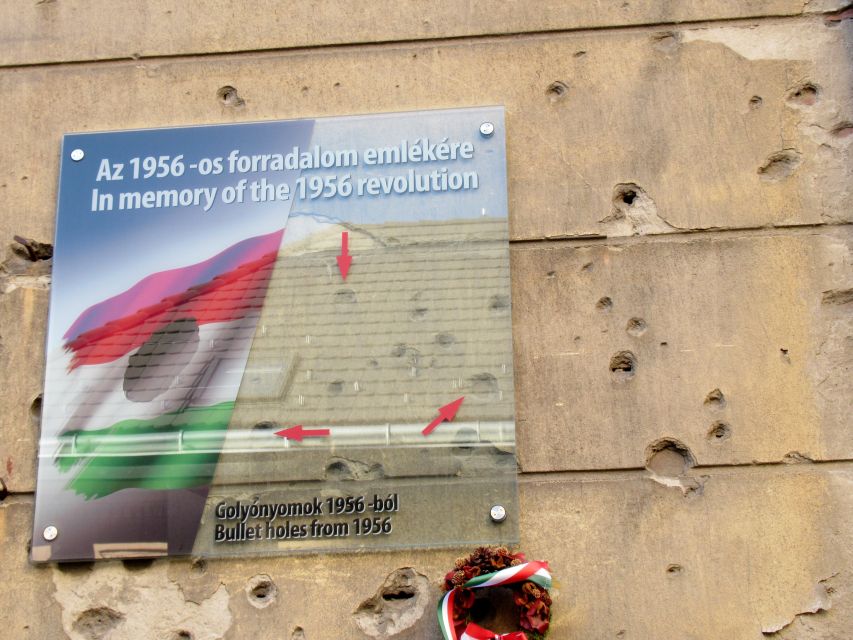
- Kossuth Lajos Square reveals the human cost: You visit the site known as Bloody Thursday and discuss the still-disputed death toll.
- Bem Square links Hungary to Poland: This was a major gathering point for the 1956 protests, including a huge student demonstration.
- Bambi café adds everyday context: Coffee here offers a pause in an iconic Budapest café tied to the city’s communist-era atmosphere.
- The Hungarian Radio building marks a desperate appeal: Revolutionaries tried to reach the outside world from this fighting hotspot.
- Private guiding keeps the subject flexible: You can ask questions and spend more time on the parts of communist Hungary that interest you most.
- The price favors people who value depth: At $175 per person, this is best for visitors who want focused historical interpretation rather than a general city walk.
Why Budapest’s 1956 Revolution still matters
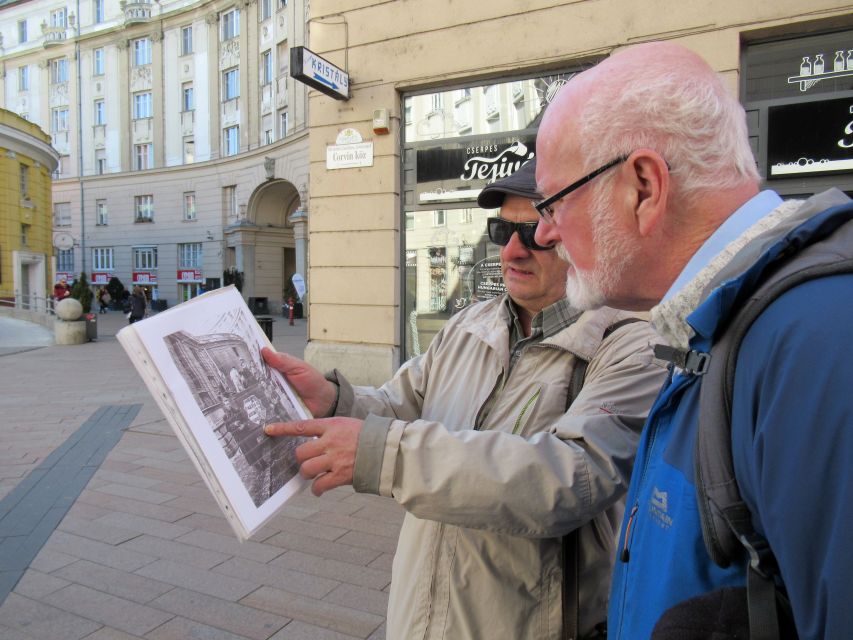
The Hungarian Revolution began with a peaceful student rally on October 23, 1956. The students were showing solidarity with the Polish people, but the gathering quickly grew into a much larger challenge to Soviet rule and Hungary’s communist government.
That change from peaceful protest to armed conflict is central to the tour. You are not simply moving from one monument to another. You are following how public demands, government violence, and hopes for outside help shaped the events.
The naming issue matters, too. Historians have called the events a rebellion, revolt, uprising, popular uprising, revolution, counter-revolution, and War of Independence. Each word suggests a different political judgment. A good guide can help you understand why the language remains sensitive, and this tour gives that debate a clear physical setting.
I would choose this experience if you want to understand Budapest beyond its grand buildings and attractive streets. The tour deals with a painful period, but the places make the story easier to follow. You see where people gathered, where fighting took place, and where the government tried to hold power.
More things to do in Budapest:
- Budapest: City Highlights Cruise with Welcome Drink
★ 4.6 · 35,610 reviews - Budapest: Unlimited Prosecco, Beer and Aperol Spritz Cruise
★ 4.8 · 25,310 reviews - Budapest: Széchenyi Spa Day Ticket with Optional Upgrades
★ 4.3 · 23,911 reviews
Kossuth Lajos Square and Bloody Thursday
Kossuth Lajos Square is one of the tour’s most important stops. Here, you discuss Bloody Thursday, a deadly event during the revolution. The exact number of people killed remains uncertain, with estimates ranging from 22 to roughly 1,000.
That wide range tells you something important. The facts of 1956 were shaped by confusion, censorship, propaganda, and the violence of the moment. Your guide can explain what is known, what remains disputed, and why the square became such a powerful symbol.
You also see the former headquarters of Hungary’s communist government. This gives the stop a political focus. The revolution was not only a fight in the streets. It was also a challenge to the institutions that controlled the country.
I like that the tour does not reduce the square to a single dramatic incident. You can connect the site to the wider political crisis and ask how the government responded to public protest. If you have already seen Budapest’s main sights, this stop offers a different way to read the city center.
The limitation is that this is a serious historical visit, not a light sightseeing stop. You may spend a fair amount of time listening and thinking rather than taking in a long list of attractions. That is a benefit if you want substance, but less useful if your main goal is fast-paced sightseeing.
Imre Nagy and the cost of leadership
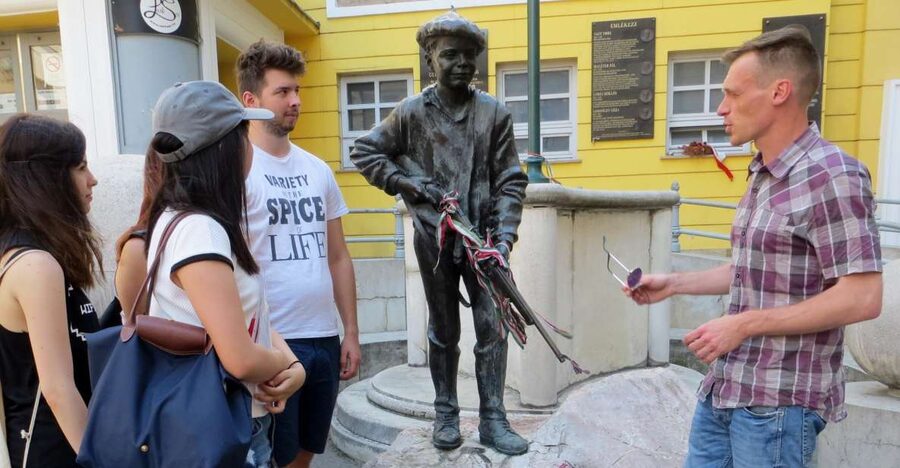
The tour continues to the statue of Imre Nagy, the prime minister who led the revolution. His story gives the events a personal center.
Nagy became associated with the revolutionary government and the effort to move Hungary away from Soviet control. He was executed for treason in 1958 after the revolution was defeated. The stop helps you consider the risks faced by political leaders who tried to respond to popular demands during a period of intense pressure.
I find this kind of stop valuable because it keeps the history from becoming a list of dates. A statue can be easy to pass without a second thought, but with the right explanation it becomes a place to discuss responsibility, compromise, and political courage.
Do not expect a museum-style display here. The value comes from the guide’s explanation and the connection to the surrounding city. If you want detailed objects, documents, and indoor exhibitions, you may want to add a separate museum visit to your Budapest plans.
Bem Square and the student protests
Bem Square was a focal point of the 1956 Revolution. About 200,000 Hungarian students protested against Soviet rule here, making the square one of the clearest places to understand the public energy behind the uprising.
This stop also connects Hungary with Poland, since the revolution began with a student rally supporting the Polish people. That link gives the events a wider Eastern European setting. The protests were not isolated from what was happening elsewhere in the communist bloc.
Bem Square is especially useful for understanding the scale of the movement. A gathering of this size was more than a small political meeting. It showed that opposition to Soviet rule could become a mass public action.
I would pay close attention here to how the guide describes the movement’s changing mood. The tour’s strength is not simply telling you that a large protest happened. It is showing how a peaceful demonstration became part of a national revolution.
The square also gives the itinerary a different feel from Kossuth Lajos Square. Instead of focusing mainly on government power and a deadly confrontation, Bem Square lets you consider public participation, student action, and the role of ordinary people in political change.
A few more options to weigh up in Budapest
- Private Budapest TukTuk Tour: Custom Route, Hotel Pickup
★ 5.0 · 1,307 reviews - Budapest Essentials Private Tour Highlights and Hidden Gems
★ 5.0 · 861 reviews - Budapest Private Tuk Tuk Half-Day Tour
★ 5.0 · 606 reviews - Budapest One Way Private Transfer to or from Airport
★ 4.5 · 548 reviews
Coffee at Bambi café
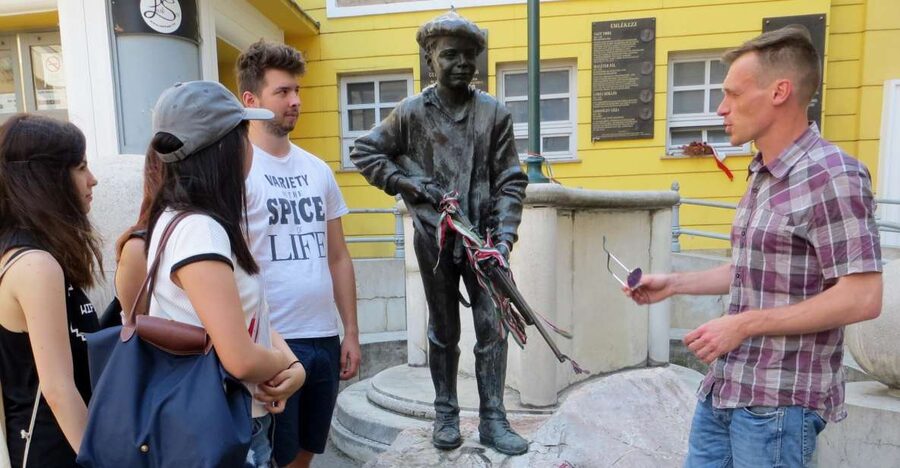
A coffee stop at the iconic Bambi café is one of the tour’s most appealing details. After discussing protests, executions, and street fighting, you pause in a place associated with everyday Budapest life.
That change of pace matters. Historical tours can become heavy when every stop describes violence or political repression. Coffee gives you time to ask questions, review what you have heard, and see a familiar social setting connected to the communist era.
Bambi café is not presented as a grand attraction. That is precisely the point. A café can reveal more about daily life than an official monument does. It gives you a chance to think about how people ate, met, talked, and carried on during a difficult political period.
I would not book the tour only for the coffee stop. The café is an addition to the history rather than the main event. Still, it helps break up the walking and makes the experience feel less like a classroom lecture.
The handout supplied at the end is useful here. You can use the break to look over the main names and events, then keep the material for later reading. Miklos is described as teaching with the care of a classroom instructor, and that approach fits this tour well.
Sándor Petőfi and public political memory
The statue of revolutionary poet Sándor Petőfi is another important stop. Political gatherings took place here during the 1956 Revolution, and gatherings still take place at the site today.
Petőfi’s presence links literature, national identity, and political action. The tour shows that public memory in Budapest is not kept only in museums. It remains connected to statues and open spaces where people can gather.
This is a good place to ask how historical symbols continue to be used. The same location can serve as a memorial, a meeting point, and a political stage. That makes the stop relevant beyond 1956.
You may find this part especially interesting if you like the connection between writers and political change. The tour does not treat the revolution as only a military or government story. It also gives attention to words, public emotion, and national feeling.
The Hungarian Radio building and the call for help
The Hungarian Radio building was one of the main fighting points in 1956. From here, revolutionaries appealed to the world for help.
This stop gives the tour an international dimension. The people involved did not see their struggle as a private dispute inside Hungary. They wanted the outside world to hear what was happening and hoped that help might come.
The building also shows how important communication was. Control of radio broadcasts meant control of the public message. In a conflict shaped by censorship and propaganda, a radio station could be as important as a government office.
I like this stop because it explains the revolution’s frustration as well as its courage. Public action had created hope, but the appeal to the wider world also shows how vulnerable the movement was. The tour can help you understand the gap between asking for assistance and actually receiving it.
As with the other outdoor locations, the building’s importance may not be obvious without explanation. You are paying for interpretation, not just the chance to look at the exterior. That is why the guide matters so much.
What the private format adds
A private group changes the experience in several practical ways. You meet at your accommodation if you choose hotel pickup, provide the address when booking, and begin from there. If you do not use pickup, public transportation costs are not included, so keep that expense in mind.
The private format is most useful for questions. The 1956 Revolution involves disputed terms, uncertain numbers, and several layers of political meaning. You can ask your guide to explain an issue again or spend more time on Imre Nagy, the communist government, or the student movement.
The tour lasts three to four hours. That is long enough to create a clear narrative without taking up your entire day. You should wear weather-appropriate clothing because much of the experience takes place around outdoor squares and city streets.
The guide languages are English, French, German, Russian, and Albanian. Check the available language when you choose a time. The experience is offered as a private group tour, so you are not sharing the discussion with a large mixed crowd.
Miklos is the guide specifically praised for his command of the people and events of Hungarian communism. The handout and souvenir support his teaching style. If you prefer a guide who explains causes and consequences rather than simply pointing out buildings, this is an important reason to consider the tour.
Is $175 per person a fair price?
At $175 per person, the tour is not a budget activity. Its value depends on how much you want from the subject and how many people are in your private group.
For someone with only a passing interest in Hungarian history, the price may feel high for a three to four hour experience. Budapest offers many inexpensive ways to see its main sights, and you can visit public squares without paying for a guide.
The calculation changes if you want a focused history lesson with a private guide, hotel pickup, handouts, and a souvenir. You are paying for a carefully connected route and the chance to ask questions throughout. The value is strongest for people who have already seen the main landmarks and now want to understand the political history behind them.
I would also consider the cost in relation to your group size. Since this is a private experience, the price may make more sense when shared among several people, depending on the booking terms available to you. Check the final price for your party before deciding.
Free cancellation up to 24 hours in advance and the option to reserve now and pay later make planning less risky. Those policies do not lower the price, but they give you useful flexibility if your Budapest schedule changes.
Who should book this Budapest history tour?
I would recommend it to you if:
- You want a focused explanation of communist-era Hungary.
- You prefer real city locations to a general sightseeing loop.
- You enjoy asking questions and having a guide adjust the discussion.
- You are interested in the political links between Hungary and Poland.
- You have enough time for a serious three to four hour experience.
- You can manage walking around outdoor sites and squares.
You may want to skip it if you are looking for a relaxed café tour, a broad introduction to Budapest, or an activity with little walking. It is also not suitable for people with mobility impairments.
The subject can be emotionally and politically demanding. You should come ready to listen, especially at Bloody Thursday and the Hungarian Radio building. The reward is a clearer understanding of why 1956 remains such an important part of Hungarian identity and European Cold War history.
Should you book the 1956 Revolution Memorial Private Tour?
Book this tour if you want Budapest to explain itself through its modern political past. The route is strong because each stop adds a different piece: government power at Kossuth Lajos Square, mass protest at Bem Square, public symbolism at Petőfi’s statue, communication at the Hungarian Radio building, and daily life at Bambi café.
The best reason to choose it is the guide-led interpretation, especially if Miklos is available in your preferred language. His teaching approach, handout, and broad command of communist-era events suit a subject that cannot be understood from a few dates on a plaque.
At $175 per person, I would not call it a casual add-on. I would call it a specialist tour for people who value historical context, private discussion, and a serious look at Budapest’s twentieth century. If that sounds like your kind of sightseeing, it earns a place in your schedule.
FAQ
How long does the Budapest 1956 Revolution Memorial Tour last?
The tour lasts approximately three to four hours. Starting times depend on availability.
Where does the tour visit?
The route includes Kossuth Lajos Square, the site of Bloody Thursday, the former communist government headquarters, the statue of Imre Nagy, Bem Square, Bambi café, the statue of Sándor Petőfi, and the Hungarian Radio building.
Is hotel pickup included?
Hotel pickup is available as an option. You need to provide your accommodation address in the special requirements box when booking.
What languages are available?
The tour is available in English, French, German, Russian, and Albanian. The available language may depend on the selected booking option.
Are public transportation costs included?
No. Public transportation costs are not included in the tour price.
Can I cancel the tour for a refund?
Yes. You can cancel up to 24 hours in advance for a full refund. You can also reserve now and pay later.
Just added in Budapest
- Budapest: Private Walking Tour with a Local Guide★ 3.6 · 6 reviews
- Budapest: City Bike Tour with Coffee Stop★ 5.0 · 37 reviews
- Budapest: Danube River Views Bike Ride★ 4.8 · 23 reviews
- From Budapest: Guided Tour of Eger with Wine Tasting★ 4.5 · 6 reviews
- Walk to recent and aged spiritual sanctuaries near Budapest★ 5.0 · 5 reviews
- Walking consultancy with alternative psychologist and author★ 5.0 · 2 reviews
- Budapest: Guided Tour of the Parliament Building in Spanish★ 4.6 · 1,240 reviews
- Budapest: 3-Hour Trabant Sightseeing Tour★ 4.7 · 28 reviews
Private, compared.
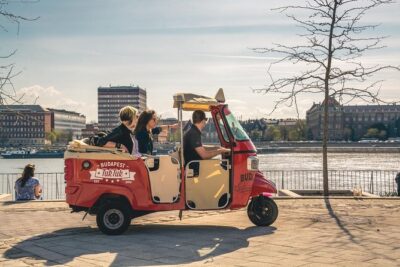
Private Budapest TukTuk Tour: Custom Route, Hotel Pickup
Read our review →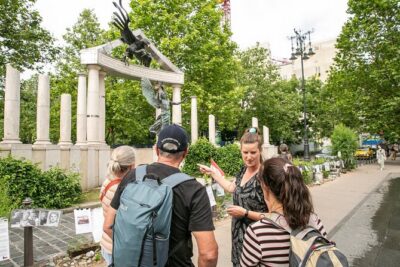
Budapest Essentials Private Tour Highlights and Hidden Gems
Read our review →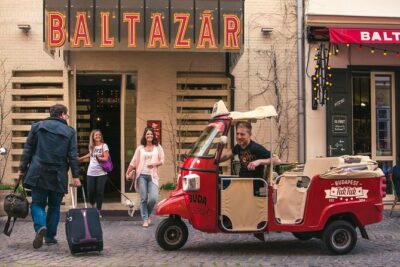
Budapest One Way Private Transfer to or from Airport
Read our review →
Budapest Private Luxury Sightseeing Tour with Guide and Transport
Read our review →
Private Budapest City tour with Classic Russian Jeep or G-Wagon!
Read our review →
Budapest Private Full Day City Sightseeing Tour Walking or by Car
Read our review →