
REVIEW · CITY TOURS
Budapest City Landmarks Walking Tour in 2 Hours
Budapest reveals itself on foot. This low-cost walk links grand churches, river views, Art Nouveau, Holocaust history, and everyday Hungarian life in one useful introduction. I especially like the broad city overview and the practical food and restaurant advice. The main thing to consider is that the $3.63 price covers booking administration, while the guide relies on your donation afterward.
The route is packed, not leisurely. You cover the Pest side from Erzsébet Square to Parliament, with plenty of stops for stories and photographs, but the Basilica is viewed from outside and the tour does not include Buda Castle interiors. Arrive early, bring water, and look for the guide holding a small blue flag near the Budapest Eye.
In This Review
- Key points at a glance
- Why this Pest walk works so well on day one
- Meeting the guide at Erzsébet Square
- St. Stephen’s Basilica and the city’s grand scale
- Food lessons beside the Fat Policeman statues
- Habsburg stories, Herendi porcelain, and Zsolnay ceramics
- Vörösmarty Square and Budapest’s café culture
- The Danube Embankment delivers the big views
- Little Princess, Vigadó, and the Chain Bridge
- Gresham Palace and Hungarian modernity
- Hungarian words, inventions, and national pride
- Shoes on the Danube: the tour’s most serious stop
- Parliament closes the story beside the Danube
- Price, tipping, and what you really receive
- Who should book this walk?
- Should you book the Budapest landmarks walk?
- FAQ
- How long does the Budapest City Landmarks Walking Tour last?
- Where does the tour begin?
- Where does the tour finish?
- Is the tour offered in English?
- Does the tour enter St. Stephen’s Basilica?
- What is included in the price?
- Do I need to tip the guide?
- How many people can join the tour?
- Is the tour suitable for most people?
- What happens if the weather is poor?
Key points at a glance

- A useful first-day orientation: See major Pest landmarks, the Danube, Chain Bridge, and views toward Buda in about two hours.
- More than architecture: Guides cover Hungarian food, politics, language, inventions, Jewish history, public art, and local customs.
- Strong value at $3.63: The booking charge is small, but you should budget an additional tip or donation for the guide.
- A one-way route: Begin at Budapest Eye in Erzsébet Square and finish beside the Hungarian Parliament Building.
- Practical local advice: Guides such as Gary, Dora, Esther, Rita, Judith, and Sophie are praised for restaurant suggestions and clear explanations.
- Outside visits only: The tour does not enter St. Stephen’s Basilica or provide admission to other buildings.
Why this Pest walk works so well on day one
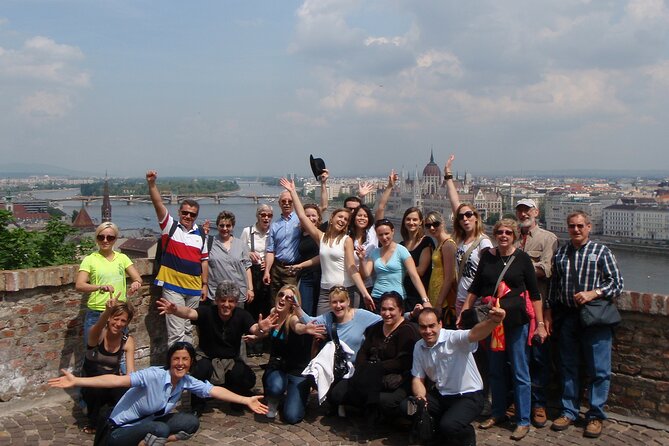
I like this experience because it gives you a mental map before you spend time inside Budapest’s museums, churches, cafés, and baths. The route moves through central Pest, then follows the Danube toward Parliament, so you see how the city’s grand parts fit together instead of meeting each sight in isolation.
The tour also has a useful mix of subjects. You hear about architecture and rulers, but also about Hungarian cooking, basic phrases, public art, elections, famous Hungarian-born people, and the way local restaurants work. That makes it more than a parade of facades.
The walk is advertised as about two hours, though the highlights describe it as closer to two and a half hours. Plan your morning or afternoon around a little flexibility. You will still have most of the day free, but this is not a quick 45-minute orientation.
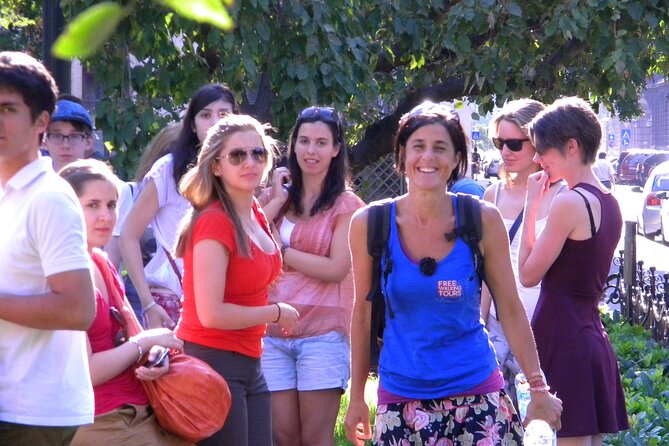
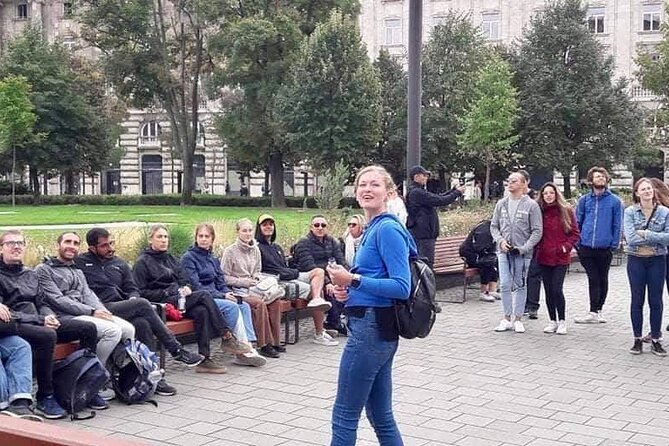
With a maximum of 30 people, the group can be fairly large. That matters in busy squares and along the river. Guides who use a speaker, as Marton did, make it easier to follow the talk, and guides such as Dora and Rita are praised for keeping a comfortable pace and answering questions.
More walking tours in Budapest:
- Budapest: Buda Castle Walk with Saint Stephen’s Hall
★ 4.5 · 3,012 reviews - Big Bus Budapest Hop-On Hop-Off Bus and Walking Tour
★ 3.5 · 2,206 reviews - Budapest: Buda Castle District Walking Tour
★ 4.6 · 2,108 reviews
Meeting the guide at Erzsébet Square
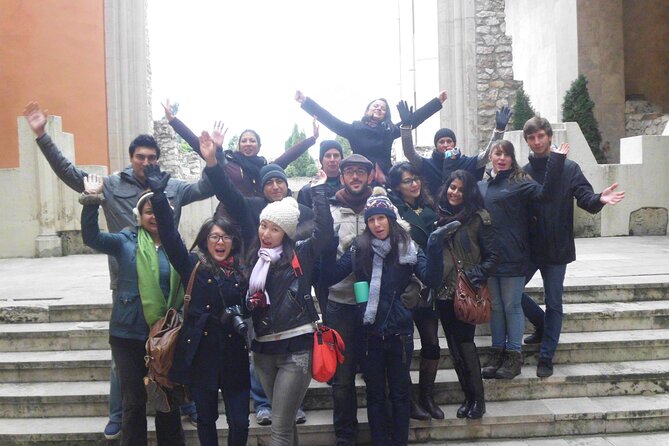
Your starting point is Erzsébet tér, about 20 meters from the Budapest Eye Ferris wheel. The guide is meant to be holding a small blue flag, so use the Ferris wheel as your visual anchor rather than relying only on a street name.
This detail deserves attention. One person missed the group after looking for a blue jacket and receiving confusing directions, then learned that the guide was carrying a blue umbrella. The published meeting instructions specify the small blue flag, not an umbrella. My advice is simple: arrive early, stand near the Budapest Eye, and contact the operator before departure if you cannot spot the guide.
The opening talk sets expectations. The guide points out the planned route on a map and explains that the walk will touch history, buildings, public art, society, food, basic Hungarian, and local character. That wide range is one of the tour’s strengths, though it also means no single topic gets a long scholarly treatment.
St. Stephen’s Basilica and the city’s grand scale
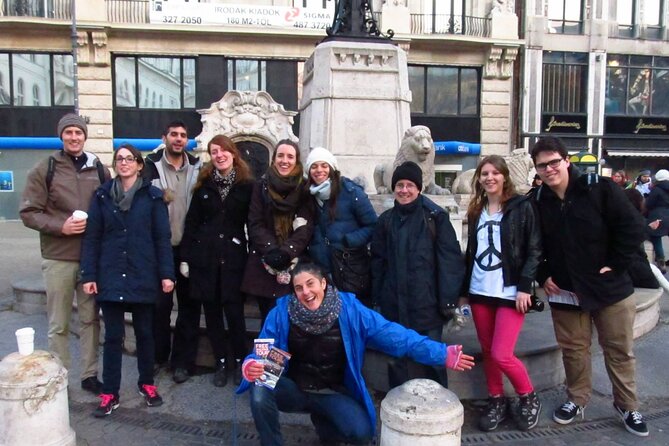
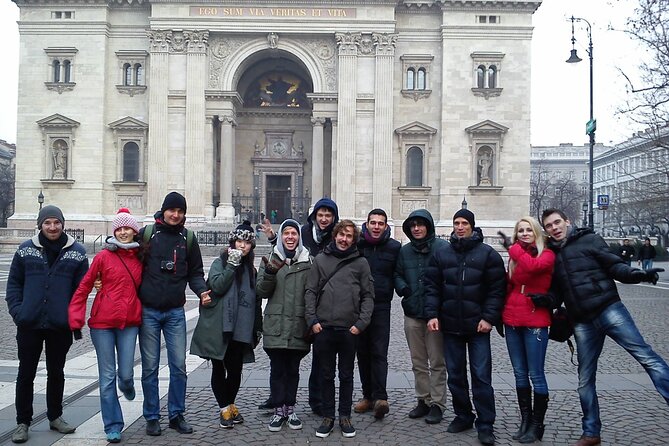
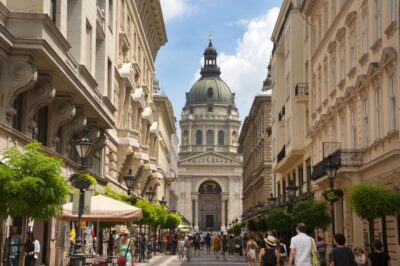
The first major stop is St. Stephen’s Basilica, Budapest’s largest church, with seating for about 8,500 people. You learn how its design reflects different periods of Budapest’s growth and glory.
The stop lasts only about eight minutes, and you do not go inside. That is both a benefit and a limitation. You get useful architectural context and a look at the pedestrianized square, but anyone hoping to see the dome interior, mosaics, or treasury will need to return independently.
I would mark the Basilica as a possible later visit, especially if the guide’s explanation sparks your interest. The tour helps you decide what deserves more of your free time, which is one of its stated purposes.
Food lessons beside the Fat Policeman statues
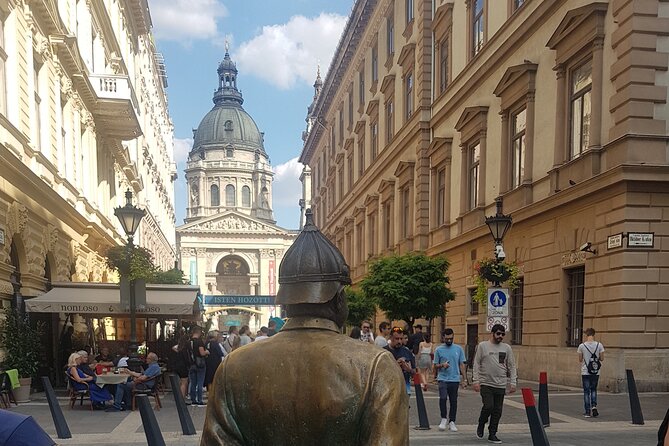
At St. Stephen’s Square, public art provides a light change of pace. The famous fat policeman statues, with their shiny bellies, invite a quick photo and a little good-natured fun.
The guide then turns to Hungarian food, cooking traditions, and what to order in Budapest. This is practical information, not just cultural decoration. You learn how to avoid tourist traps and may receive suggestions for places to eat later.
Several guides receive special praise for this part of the experience. Sophie is credited with offering food recommendations and ideas for places to visit afterward. Gary is praised for pointing out restaurants, shopping, nightlife, and budget-friendly choices. Judit’s restaurant advice was useful enough that the people on her tour tried two recommended places.
Since you are near the center at this point, listen carefully and take notes on names. A tour guide’s food suggestion is often more useful when you know the exact place, dish, and neighborhood to seek later.
More things to do in Budapest:
- Budapest: City Highlights Cruise with Welcome Drink
★ 4.6 · 35,610 reviews - Budapest: Unlimited Prosecco, Beer and Aperol Spritz Cruise
★ 4.8 · 25,310 reviews - Budapest: Széchenyi Spa Day Ticket with Optional Upgrades
★ 4.3 · 23,911 reviews - Budapest: Nighttime or Daytime Sightseeing Cruise
★ 4.2 · 21,062 reviews
Habsburg stories, Herendi porcelain, and Zsolnay ceramics
At József Nádor tér, the subject shifts to the Habsburg connection, especially the figure described as the most Hungarian Habsburg. This adds political and dynastic context to the elegant Pest streets.
You also see examples of Herendi porcelain and colorful Zsolnay ceramics. Herendi is famous for hand-painted porcelain, while Zsolnay is known for its striking glazed ceramics. The stop helps you notice details you might otherwise pass without a second glance.
The visit lasts around eight minutes. Do not expect a museum-style examination of either craft tradition. Instead, you get just enough information to recognize these names and understand why they matter when you encounter them in shops, museums, or historic interiors.
Vörösmarty Square and Budapest’s café culture
Vörösmarty Square sits at the end of Váci utca, the well-known pedestrian shopping street. It is a good place for people-watching and a natural point for discussing Gerbeaud café, neo-classical buildings, the city’s old underground railway, and Hungarian social habits.
The underground detail is especially useful. One terminal of the second-oldest underground railway in the world is here, giving you a reason to look at the transport system as part of Budapest’s history rather than just a way to get around.
This is also where the guide talks about Christmas markets and holiday traditions. If you visit outside the Christmas season, the information still gives the square a seasonal identity. The stop itself is brief, about five minutes, so the emphasis is on orientation rather than a long architectural lecture.
Váci utca can feel commercial, so I would treat this stop as a reference point. The guide’s later restaurant and nightlife suggestions may help you move beyond the most obvious tourist streets.
The Danube Embankment delivers the big views
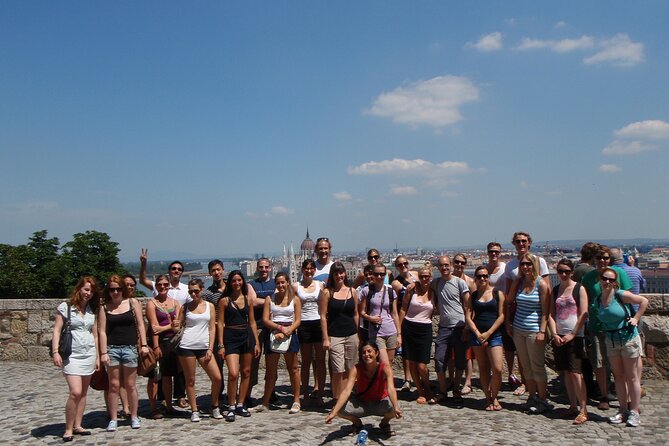
The walk reaches the Korzó, the Danube embankment, where Budapest opens up. From here you see the river, Buda Castle, Matthias Church, Fisherman’s Bastion, Gellért Hill, and the Citadel. Many of these views belong to the UNESCO-listed historic setting of Budapest.
This is one of the strongest parts of the route. The guide explains the riverside buildings and points out the panoramic tram line, giving you an immediate sightseeing option for another part of your visit. You also see Budapest as two connected halves, Buda across the river and Pest under your feet.
The guide introduces the first non-Communist statue in Budapest, adding a modern political note to the scenery. This is typical of the experience: a pretty view comes with a story about public memory and changing governments.
The river walk is also where weather matters most. The tour requires good weather and may be moved or refunded if conditions are poor. Even on a clear day, bring water. One four-star review specifically advised taking a drink, and that is sensible advice for a two-hour walk with several outdoor stops.
Little Princess, Vigadó, and the Chain Bridge
At the Little Princess Statue, you get two minutes for a small local ritual: touch the statue’s shiny knees while making a secret wish. It is a quick, playful pause after the heavier subjects along the river.
Vigadó Square follows almost immediately. The space is linked with the coronation banquet held for Franz Joseph and Sissy in the 19th century, and with performances by major Central European musicians including Franz Liszt, Debussy, and Brahms.
These short stops work best when you see them as connecting points. They keep the walk moving while adding cultural color. If you want long time for photographs, you may need to return later.
At Széchenyi Chain Bridge, the guide explains how the first permanent bridge connected Buda and Pest. The bridge becomes a simple way to understand the city’s development: two distinct towns brought into closer contact, eventually forming Budapest.
The stop lasts about five minutes. You do not get an extended bridge crossing as part of this itinerary, so treat it as an introduction and plan a separate crossing if you want the full experience on foot.
Gresham Palace and Hungarian modernity
Gresham Palace offers one of the best architecture stops on the route. The guide discusses the building’s secessionist style, Budapest’s golden age around the turn of the 20th century, and the ornaments associated with Art Nouveau.
This is a good reminder that Budapest is not only about medieval towers and imperial monuments. Its identity also comes from the late 19th and early 20th centuries, when ambitious buildings reshaped the city.
The stop lasts about eight minutes. You will learn what to look for in the facade and decoration, but the walk does not include a full interior visit. If Art Nouveau interests you, this is a useful preview for further exploring Budapest on your own.
Hungarian words, inventions, and national pride
At the Hungarian Academy of Sciences, the guide teaches a few Hungarian words and phrases. Hungarian is not closely related to the main languages spoken by most of Budapest’s European neighbors, so even a handful of greetings or courtesy words can make your stay more engaging.
The talk also covers Hungary’s Nobel Prize record per capita, famous people of Hungarian origin, and inventions that affect everyday life. This section adds national pride without leaving the route’s broader historical purpose.
Different guides bring different energy to this material. Gary is praised for mixing language lessons with folklore and practical advice. Esther is praised for being clear and engaging, while Andy, Endre, Rita, Judith, and Dora are repeatedly described as friendly, funny, and well prepared.
You should not expect an academic lecture. The value is in collecting memorable facts that help you place Hungarian contributions within a larger European story.
Shoes on the Danube: the tour’s most serious stop
The Shoes on the Danube Bank memorial is a row of 60 pairs of shoes commemorating Jewish people murdered here during World War II. The guide discusses deportations, the Holocaust, and the varied lives of Hungarian Jewish people, from assimilated citizens and synagogue-goers to working families and children.
This stop is only about eight minutes, but it carries far more weight than its length suggests. The guide asks you to picture the people who were killed before they were forced to leave their shoes on the riverbank. The plain metal shoes make the horror personal without grand visual effects.
Expect the tone to change here. The tour has included jokes, food, statues, and language, but this moment asks for silence and attention. I consider it essential to the route because it connects Budapest’s elegant center with the city’s recent past and the human cost of political violence.
Parliament closes the story beside the Danube
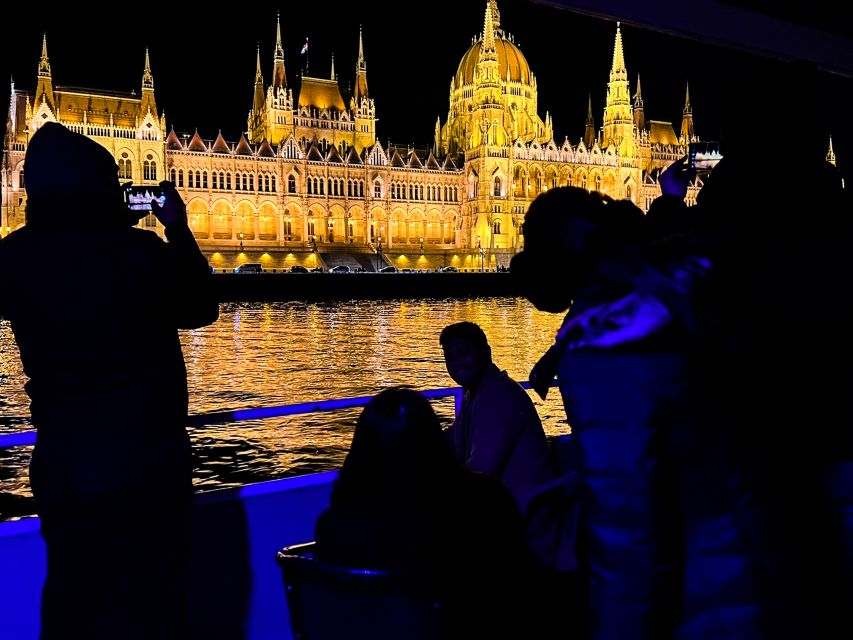
The final stop is the Hungarian Parliament Building on Kossuth Lajos tér. The guide explains its neo-Gothic design and discusses recent Hungarian history and elections.
Parliament is a strong ending because it brings together the themes introduced earlier: national identity, political power, architecture, the river, and the relationship between Buda and Pest. You also receive final orientation and suggestions for restaurants, nightlife, and activities for the rest of your visit.
The walk ends here, not back at the Budapest Eye. That one-way route is convenient if you want to continue around Parliament or the river, but you should know where you are going next. The guide’s recommendations can help, especially if you are still deciding how to spend your evening.
Price, tipping, and what you really receive
At $3.63 per person, this is an unusually inexpensive way to spend two hours in central Budapest. The charge includes the booking fee, but that money goes toward administration and does not pay the guide.
The guides depend entirely on donations at the end. You choose the amount, so the listed price should not be treated as the full cost of the experience. Think of it as a low-entry booking charge plus a tip for the guide’s work.
That arrangement can be excellent value if you want orientation, history, and practical advice without paying for admission tickets. Every listed stop is free, and you finish with most of the day available for museums, food, shopping, or a second tour.
The tradeoff is that the walk does not include interiors or formal entry tickets. You are paying for explanation, access to a route, and local guidance, not for admission to the Basilica, Parliament, or other buildings.
Who should book this walk?
I would choose this tour for a first visit to Budapest, especially if you want to get your bearings quickly. It suits people who prefer a friendly overview rather than a narrow architectural or political lecture.
It is also useful for independent visitors. You can use the route to decide which buildings deserve a later visit, then follow the food, nightlife, and neighborhood suggestions from the guide.
You may want something else if you dislike group walks, need a slow pace, or want to spend substantial time inside the landmarks. A group of up to 30 people can feel crowded, and thirteen stops in roughly two to two and a half hours means the visit to each one is short.
The experience is offered in English and includes mobile ticketing. Service animals are allowed, most people can participate, and the route is near public transportation. Free cancellation is available up to 24 hours before the start time, while poor weather can lead to a different date or a full refund.
Should you book the Budapest landmarks walk?
Yes, if you want a low-cost introduction to central Budapest with history, food advice, river views, and local color. The strongest value comes from the guides, and names such as Gary, Dora, Esther, Rita, Judith, Sophie, and Marton are associated with clear explanations, humor, strong voices, and useful recommendations.
Book it early in your stay, arrive ahead of time at the Budapest Eye, and bring water. Keep your expectations realistic: this is an outdoor overview, not a series of interior visits.
I would skip it only if you already know Pest well or want a private, slow, specialist tour. For most first-time visitors, it is a smart way to spend two hours and a good base for planning the rest of Budapest.
FAQ
How long does the Budapest City Landmarks Walking Tour last?
The stated duration is approximately two hours. The tour description also refers to a walk of around two and a half hours, so you should allow some extra time.
Where does the tour begin?
It begins at the Budapest Eye in Erzsébet tér, Budapest 1051. The guide is described as meeting you about 20 meters from the Ferris wheel while holding a small blue flag.
Where does the tour finish?
The walk finishes at the Hungarian Parliament Building, Kossuth Lajos tér 1-3, Budapest 1055.
Is the tour offered in English?
Yes. English is the listed language for the experience.
Does the tour enter St. Stephen’s Basilica?
No. You see the Basilica and learn about its architecture, but entrance inside is not included.
What is included in the price?
The booking fee is included. It covers administration and does not contribute to the guide’s earnings.
Do I need to tip the guide?
Tips are not included. The guides depend entirely on donations at the end, and the amount is your choice.
How many people can join the tour?
The maximum group size is 30 people.
Is the tour suitable for most people?
Yes. Most people can participate, and service animals are allowed. The tour takes place outdoors and requires walking between the listed stops.
What happens if the weather is poor?
The experience requires good weather. If it is canceled because of poor conditions, you will be offered another date or a full refund.
Just added in Budapest
- Budapest: Private Walking Tour with a Local Guide★ 3.6 · 6 reviews
- Budapest: Danube River Views Bike Ride★ 4.8 · 23 reviews
- Budapest: City Bike Tour with Coffee Stop★ 5.0 · 37 reviews
- From Budapest: Guided Tour of Eger with Wine Tasting★ 4.5 · 6 reviews
- Walk to recent and aged spiritual sanctuaries near Budapest★ 5.0 · 5 reviews
- Walking consultancy with alternative psychologist and author★ 5.0 · 2 reviews
- Budapest: Guided Tour of the Parliament Building in Spanish★ 4.6 · 1,240 reviews
- Budapest: 3-Hour Trabant Sightseeing Tour★ 4.7 · 28 reviews
City Tours, compared.
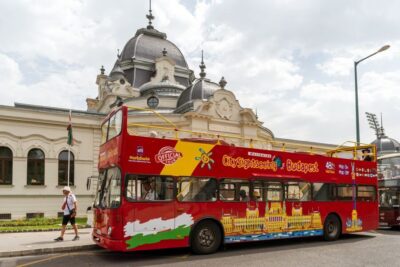
City Sightseeing Hop-On Hop-Off Bus Tour & Extras
Read our review →
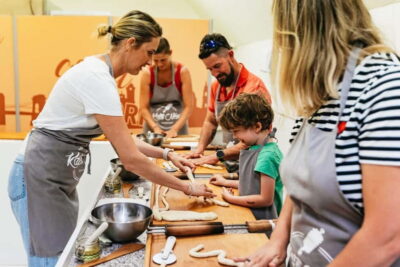
Hungarian Chimney Cake Workshop in the City Center
Read our review →

Browse the lists this tour appears in