
REVIEW · SEGWAY TOURS
Budapest City Segway / Sightseeing Tours Buda+Pest
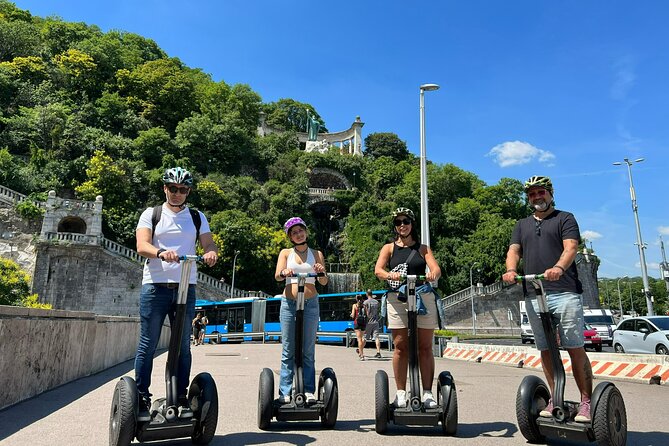
See Budapest before your feet complain. This guided Segway tour is a smart way to cover both sides of the Danube in one outing, with stops at Buda Castle, Fisherman’s Bastion, Parliament, Heroes’ Square, and the Chain Bridge. I like the 15 to 20 minute training session, which helps first-time riders settle in, and I like the chance to see far more of the city than you could on foot in two hours. The main drawback is that the long stop list can sound more thorough than the actual sightseeing time. Most stops last about five minutes, so you get an introduction and a photo pause, not a full visit.
The tour is offered in English and costs $47.18 per person. I also like the small maximum group of 14, since a guide can give clearer instructions and keep the group together. Guides including Erik, Alex, Raed, Shapal, and Fouchs Ari have been praised for friendly instruction, useful historical context, and steady attention to safety. Still, a Segway is not ideal if you dislike balancing, and children must be at least 8 years old and weigh 35 kilograms or more.
In This Review
- Five things to know before you ride
- Why a Segway works well in Budapest
- Getting comfortable during the 15 to 20 minute lesson
- Buda Castle, Fisherman’s Bastion, and Matthias Church
- Parliament, the Chain Bridge, and the Danube memorial
- Pest’s grand avenues and city-center sights
- Heroes’ Square, City Park, and the thermal baths
- Gellért Hill, the Citadella, and the best views
- What the guide adds to a fast route
- Is $47.18 good value?
- Which tour length should you choose?
- Who should book this Budapest ride?
- Should you book the Budapest City Segway Tour?
- FAQ
- Where does the Segway tour begin and end?
- How long does the tour last?
- Is training included?
- Are helmets provided?
- What age and weight rules apply to children?
- Can I cancel for a full refund?
Five things to know before you ride
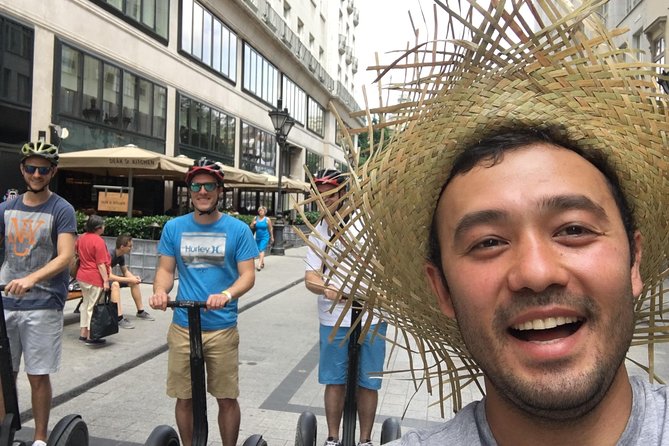
- Training comes first: Plan on 15 to 20 minutes of instruction before the city route begins.
- You cover both Buda and Pest: The route links castle views, river bridges, grand avenues, thermal baths, museums, and major squares.
- Most stops are brief: The listed sightseeing pauses are about five minutes each, mainly for photos and guide commentary.
- Guides are a major part of the value: Erik, Alex, Raed, Shapal, and Fouchs Ari are noted for clear explanations, humor, patience, and safety help.
- The two-hour option is a good balance: It gives you a broad look at the city without turning the ride into an exhausting half-day outing.
Why a Segway works well in Budapest

Budapest spreads widely along the Danube. Buda rises on the western bank, while Pest stretches across flatter ground to the east. Walking between the castle district, Parliament, Heroes’ Square, and the Central Market Hall would take time and planning. A Segway lets you connect these areas quickly, with less strain on your legs.
I would think of this as a city orientation tour rather than a museum tour. You roll from one landmark to the next, stop for an explanation, take photos, and keep moving. That format is useful early in a Budapest visit because it helps you understand how the city fits together.
The tour begins at Zoltán u. 11 in central Budapest and ends back at the same meeting point. It is close to public transportation, which makes the start and finish fairly simple to manage. Morning and afternoon departures are available, so you can fit the ride around a museum visit, thermal bath session, or evening meal.
The tour has a maximum of 14 people. That is not a private experience, but it is small enough to feel manageable. The guide needs to watch riders, traffic, pedestrians, and the route, so staying near the group matters.
More segway tours in Budapest:
- Budapest Highlights️ Live Guided Segway Tour
★ 5.0 · 898 reviews - 1.5 Hour Budapest Segway Tour – To The Castle Area
★ 5.0 · 614 reviews - Budapest: 1.5-Hour Fun Segway Sightseeing
★ 4.9 · 583 reviews
Getting comfortable during the 15 to 20 minute lesson
If you have never used a Segway, the training session is important. You learn how to move, slow down, stop, and steer before heading into the city. The equipment is designed to be easy to master, but you still need to pay attention and make deliberate movements.
That first lesson also gives you a chance to decide how comfortable you feel. One rider described being nervous at first and enjoying the experience after patient instruction from Raed. That is useful advice: beginners should not assume the machine will feel natural in the first minute.
Helmets are compulsory and included. Gloves and a raincoat are available if needed. The tour also includes photographs and videos at good viewpoints, which is a thoughtful extra when your hands are occupied with riding.
Your clothing should allow easy movement. The supplied information does not specify a dress code, but sensible shoes and clothing suited to the weather make practical sense. The guide may provide a raincoat, yet poor weather can still affect how pleasant the ride feels.
Buda Castle, Fisherman’s Bastion, and Matthias Church
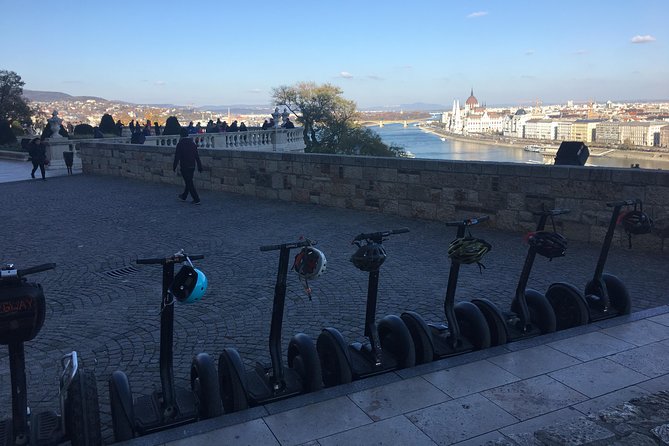
The Buda portion gives you some of the city’s best elevated views. The Museum of Military History, Fisherman’s Bastion, Buda Castle, and Matthias Church are grouped around the castle district, so this part of the ride gives you a strong sense of historic Buda.
At the Museum of Military History, the stop is short. You should expect an outside orientation and a brief explanation rather than time inside the museum. If military history interests you, note the museum for a separate visit.
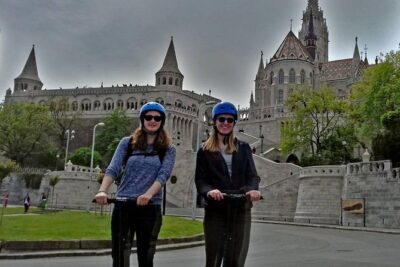
Fisherman’s Bastion is one of the easiest places to appreciate from a Segway stop. Its white stone terraces frame the Danube and Pest side of the city. The pause is useful for photographs, especially with Parliament across the river. Five minutes goes quickly, so use the time for views rather than trying to explore every terrace.
Buda Castle is the larger historic complex nearby. The guide can help connect the castle area to the city’s royal past, but this tour does not provide the time needed to see the palace interiors or nearby museums in detail. I would treat the stop as a preview and return later if you want a slower visit.
Matthias Church adds another important landmark to the castle district. Its colorful roof and prominent position make it easy to recognize. Again, the value here is orientation and context, not an extended church visit.
Parliament, the Chain Bridge, and the Danube memorial
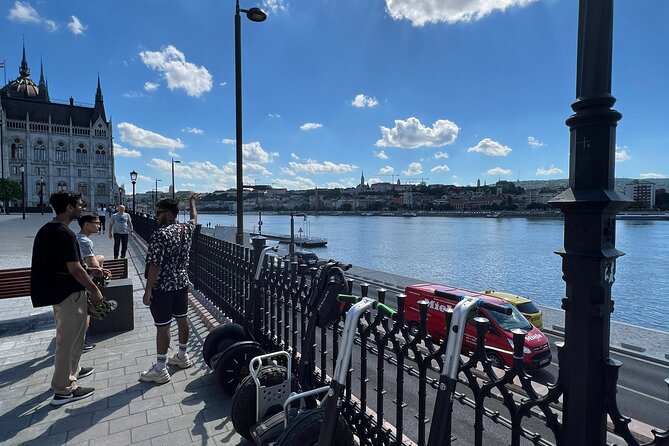
The ride across Budapest’s central riverfront brings several of the city’s most recognizable sights into one sequence. The Hungarian Parliament Building is the big visual prize on the Pest side. Its riverside position makes it especially good for a quick photo stop and a short explanation from the guide.
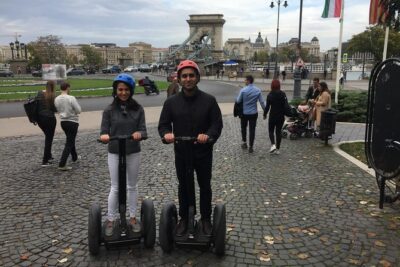
The Chain Bridge is another highlight. The lion statues at its entrance give the stop a clear focal point, while the bridge itself helps you understand the connection between Buda and Pest. Seeing the bridge as part of the city’s daily movement is more useful than viewing it only from a distant lookout.
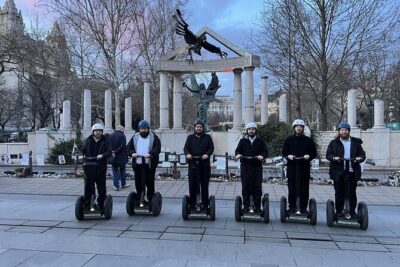
The tour also reaches the Shoes on the Danube Bank memorial. This quiet line of iron shoes honors people killed during the Second World War. The stop deserves a respectful pause. Since the tour moves at a steady pace, you may want to return later for a longer look and more reflection.
The route includes the Elisabeth Bridge and Margaret Bridge as well. These crossings show how different parts of Budapest relate to the river. Margaret Bridge also provides the link toward Margaret Island, another useful change of scene from the formal central districts.
More things to do in Budapest:
- Budapest: City Highlights Cruise with Welcome Drink
★ 4.6 · 35,610 reviews - Budapest: Unlimited Prosecco, Beer and Aperol Spritz Cruise
★ 4.8 · 25,310 reviews - Budapest: Széchenyi Spa Day Ticket with Optional Upgrades
★ 4.3 · 23,911 reviews - Budapest: Nighttime or Daytime Sightseeing Cruise
★ 4.2 · 21,062 reviews
Pest’s grand avenues and city-center sights
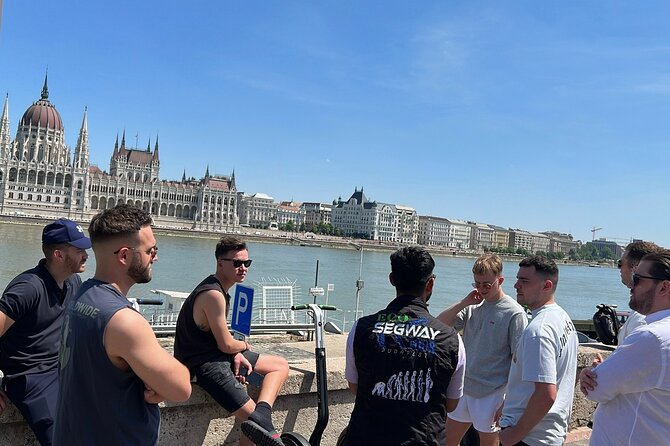
On the Pest side, the tour includes St. Stephen’s Basilica, Andrássy Avenue, the Hungarian State Opera House, and the Budapest Eye. These stops shift the focus from medieval Buda to the grand urban character of central Pest.
St. Stephen’s Basilica is named for Stephen, Hungary’s first king, and its reliquary holds his right hand. The five-minute stop lets you identify the church and hear the basic story, but it does not replace a proper interior visit.
Andrássy Avenue is Budapest’s grand boulevard, lined with Art Nouveau buildings, shops, restaurants, and cultural landmarks. The State Opera House is one of its major sights. Riding along this stretch gives you a quick sense of Budapest’s late nineteenth-century ambition and elegance.
The Budapest Eye provides another easy city-center reference point. It is less about history and more about helping you place yourself within the central shopping and sightseeing area. You pass through a part of Pest that is lively and convenient, but the tour does not pause long enough for shopping or a ride on the wheel.
The Hungarian National Museum and House of Terror Museum add important historical depth to the route. Both are better treated as separate visits. The Segway stop helps you mark their locations and decide if you want to return when you have more time.
Heroes’ Square, City Park, and the thermal baths
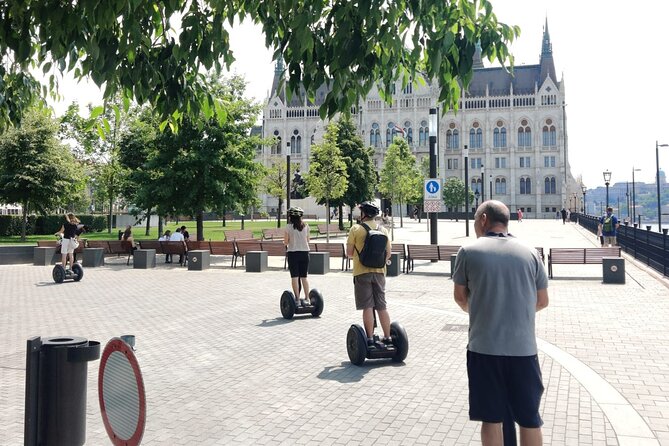
The longer tour option appears especially useful for reaching Heroes’ Square, Vajdahunyad Castle, and the Széchenyi Baths. One rider specifically found the extra hour worthwhile for Heroes’ Square, and I agree with that logic if you want more than the central Buda and Pest highlights.
Heroes’ Square is a broad ceremonial space with statues of important figures from Hungarian history. It gives the guide room to explain national identity and the country’s past, though the standard stop remains brief.
Nearby Vajdahunyad Castle has an unusual mix of architectural styles. It is one of those places that benefits from a guide’s quick explanation because the appearance can seem older and more unified than it really is. You get a photo opportunity and a reason to return for a walk around City Park.
Széchenyi Baths and Pool are among Budapest’s best-known thermal bath complexes. The tour only points them out. You will not have time to change, bathe, or use the pools during the ride, so plan a separate visit if soaking in thermal water is on your list.
Margaret Island offers a different kind of stop. It sits in the Danube between Buda and Pest and provides open space away from the main streets. The short visit gives you a taste of the island, but you would need extra time to explore it properly.
Gellért Hill, the Citadella, and the best views
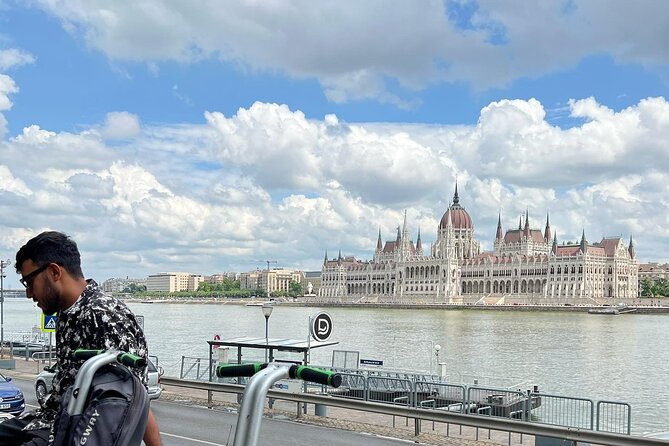
The Gellért Hill section brings elevation and wide views into the day. The itinerary includes Gellért Hill, Gellért Hill Cave, the Citadella, Gellért Thermal Bath, and the nearby Elisabeth Bridge.
The Citadella sits high on Gellért Hill and is known for its panorama across the Danube. This is one of the tour’s most useful viewpoints because it helps you connect landmarks you have already seen from street level. You can look back toward the bridges, Parliament, and the castle district.
The Citadella is also a nineteenth-century fortress, with a small museum connected to Second World War history. The tour does not provide time for a full museum visit, but the guide can give you a basic setting for the site.
Gellért Hill Cave and Gellért Thermal Bath add local character to this part of the route. The cave is a distinctive landmark, while the bath is another reminder that Budapest’s thermal-water culture is part of everyday city life, not just a tourist attraction.
The hill section may be the part where your riding comfort matters most. The tour information does not give detailed slope or surface conditions, so listen closely to the guide and follow instructions. The guide’s safety role is especially valuable here and around busy crossings.
What the guide adds to a fast route
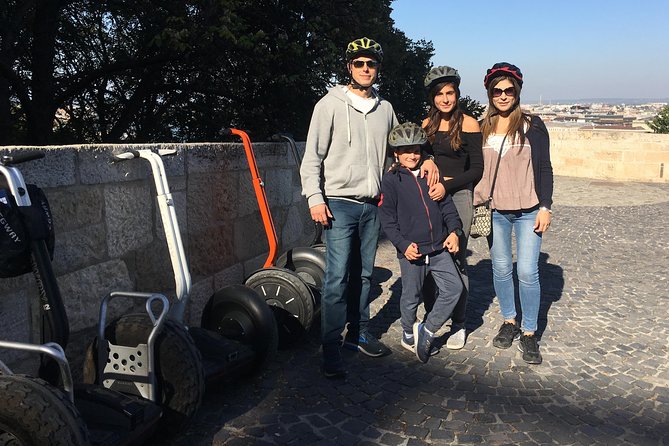
A quick route through 20 or more points could easily become a blur. The guide is what turns it into a useful sightseeing lesson. The strongest guidance described for this tour is concise rather than overloaded with facts.
Raed is praised for patient training, enthusiasm, safety awareness, historical explanations, and even helping a rider stay warm when the weather turned cold. Alex is described as engaging and willing to answer questions, with enough flexibility to add a requested detour when the group size allowed it.
Fouchs Ari helped with Hungarian pronunciation and historical context, while Erik combined humor with careful instruction. Shapal is noted for giving clear background on Budapest and making good use of a short tour.
Guide quality can vary from person to person, as it does on any guided activity. Still, the repeated strengths here are clear: friendly instruction, safety, photo help, and history presented in manageable portions. That combination matters more than a long lecture when you are balancing on a moving vehicle.
Is $47.18 good value?
At $47.18 per person, the tour is not the cheapest way to see Budapest. Public transportation and walking cost less, and you will see more detail by choosing just one district and exploring it slowly.
The value comes from combining distance, transport, orientation, and a live guide. In two hours, you can connect Buda Castle, the Danube bridges, Parliament, central Pest, and perhaps several additional landmarks. Doing the same route independently would require more map work, transfers, and time.
The price also includes the Segway, helmet, training, and guide. Gloves and a raincoat are available when needed, and photo and video help is included. Gratuities, coffee, and tea are not included.
The strongest value is for a first or second day in Budapest. You can use the ride to mark places you want to revisit. If you already know the city well, or want long interior visits, the price may feel less attractive.
Which tour length should you choose?
The experience can last from about one to five hours, depending on the option selected. The most clearly praised format is the two-hour tour, which gives you a broad introduction without requiring a full day.
Choose a shorter option if you mainly want Buda Castle, the Chain Bridge, Parliament, and nearby central sights. Choose a longer option if Heroes’ Square, City Park, Gellért Hill, the baths, and more distant stops matter to you.
Keep the five-minute stop pattern in mind. A longer tour gives you more territory, not necessarily much more time at each individual landmark. If you want to enter a museum, church, bath, or castle, schedule it separately.
Who should book this Budapest ride?
I would recommend it to first-time visitors, families with older children, couples who want an active city tour, and anyone who tires easily on long walking days. Children need to meet the minimum age of 8 and weight requirement of 35 kilograms.
It also suits people who like learning in small doses. The guide gives context at each stop without requiring you to sit through a long formal talk. If you enjoy taking photos, the planned viewpoints and guide-assisted pictures are useful.
I would hesitate if you have serious balance concerns, dislike group activities, or want a slow architectural tour. Most people can participate, but the tour still requires you to control the Segway and follow safety instructions.
The tour has a 5 out of 5 rating based on 281 reviews, with 99 percent of people recommending it. You can cancel for a full refund up to 24 hours before the start time. Changes or cancellations inside that window are not refunded.
Should you book the Budapest City Segway Tour?
Book it if you want an efficient first look at Budapest and like the idea of covering Buda and Pest without a long day on foot. The two-hour option is the safest choice for most people, while the longer route earns its cost if Heroes’ Square, City Park, Gellért Hill, and the thermal-bath district are priorities.
I would not book it as your only sightseeing plan. Use it to get your bearings, hear the city’s main stories, and note the places worth returning to. With patient guides, included training, a small group limit, and a route that reaches far beyond the usual center, it offers strong value for an active introduction to Budapest.
FAQ
Where does the Segway tour begin and end?
The tour begins at Budapest, Zoltán u. 11, 1054 Hungary. It ends back at the same meeting point.
How long does the tour last?
The experience lasts approximately one to five hours, depending on the option selected. The two-hour version is a popular balance for seeing the main sights.
Is training included?
Yes. The training normally lasts 15 to 20 minutes and takes place before the sightseeing route.
Are helmets provided?
Yes. Helmets are compulsory and included in the price. Gloves and a raincoat are also available if necessary.
What age and weight rules apply to children?
Children must be at least 8 years old and weigh at least 35 kilograms to participate.
Can I cancel for a full refund?
Yes. You can cancel at least 24 hours before the experience’s local start time for a full refund. Cancellations or changes made less than 24 hours before the start time are not accepted for a refund.
Just added in Budapest
- Budapest: Private Walking Tour with a Local Guide★ 3.6 · 6 reviews
- Budapest: Danube River Views Bike Ride★ 4.8 · 23 reviews
- Budapest: City Bike Tour with Coffee Stop★ 5.0 · 37 reviews
- From Budapest: Guided Tour of Eger with Wine Tasting★ 4.5 · 6 reviews
- Walk to recent and aged spiritual sanctuaries near Budapest★ 5.0 · 5 reviews
- Walking consultancy with alternative psychologist and author★ 5.0 · 2 reviews
- Budapest: Guided Tour of the Parliament Building in Spanish★ 4.6 · 1,240 reviews
- Budapest: 3-Hour Trabant Sightseeing Tour★ 4.7 · 28 reviews
Segway Tours, compared.
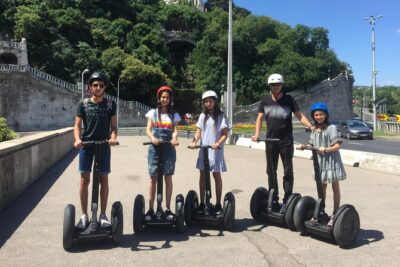
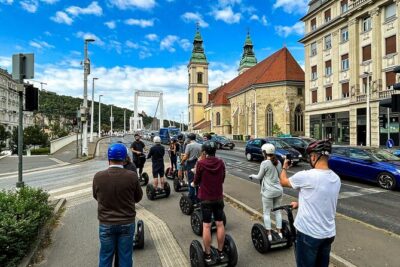
1.5 Hour Budapest Segway Tour – To The Castle Area
Read our review →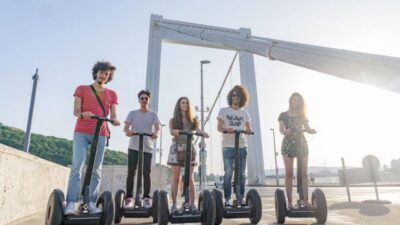
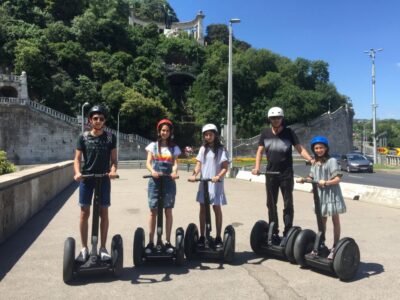
3 Hours Budapest Segway Grand City Tour Buda, Margaret and Pest
Read our review →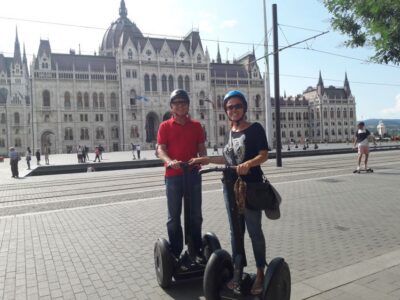
Browse the lists this tour appears in