

REVIEW · FOOD & DRINK
Budapest Food Tour in Obuda with 8+ Tastings of Hidden Food Gems
Skip the usual Budapest food circuit. This 3.5-hour tour takes you into Óbuda, a quieter district where Roman ruins, neighborhood eateries, and old Hungarian recipes share the same streets. I like the small group of no more than 12 people, and I like the mix of food, history, and riverside scenery rather than a simple eat-and-move-on format.
The tastings cover a generous range: strudel, crispy lángos, sausages or pork knuckle, pickles, gulyás, bread, coffee, pálinka, and a secret dish. Guides Zoltan and George have earned especially warm praise for their humor, local insight, and ability to explain the story behind each plate. The main consideration is portion size. With eight or more tastings, you may be quite full by the end, and one past participant suggested smaller servings would make it easier to enjoy everything.
In This Review
- Key points to know before booking
- Why Óbuda makes a better food setting
- Meeting Árpád and starting near the Roman past
- Walking along the Danube in Budapest
- Strudel and lángos: the sweet and savory opening
- Butcher-shop flavors and hearty Hungarian plates
- Cheese, wine, pálinka, and the secret dish
- The guides make the difference
- What the $118.52 price includes
- Walking, timing, and practical planning
- Who will enjoy this Óbuda food tour most
- Should you book it?
- FAQ
- How long does the Budapest food tour in Óbuda last?
- Where does the tour start?
- Where does the tour end?
- How many people can join the tour?
- What food and drinks are included?
- Can I cancel for a full refund?
Key points to know before booking
- Óbuda instead of central Budapest: You spend the tour in one of Budapest’s less-visited districts, away from the busiest sightseeing routes.
- Eight or more tastings: Expect a full Hungarian food sampler, including sweet pastry, savory dishes, soup, coffee, and local spirits.
- A Roman amphitheater stop: The ancient Amphitheatrum adds an unusual archaeological stop to what could otherwise be a standard food walk.
- Small group, maximum 12: The group size gives you a better chance to ask questions and keep pace with the guide.
- Guides Zoltan and George: Their humor, food knowledge, and explanations of Hungarian culture are among the strongest reasons to choose this experience.
- Plan for walking: Wear comfortable shoes, contact the operator ahead of time about dietary needs, and remember that gratuities are not included.
Why Óbuda makes a better food setting
Budapest is easy to enjoy from the grand boulevards around the Parliament, Castle District, and Danube embankment. But the city can feel very different once you leave the central sights. Óbuda gives you that change of pace without taking you far from Budapest itself.
The district blends old streets, modern services, parks, and recreational areas. Its appeal is not one single blockbuster sight. Instead, you get a sense of an everyday part of the city, with food stops woven into the neighborhood rather than placed only where tourists gather.
I like that choice. A food tour should give you more than dishes you could order anywhere. Here, the setting helps explain how Hungarian food fits into local life. The guide can connect a bowl of soup or a plate of cold meats with the country’s customs, history, and regional habits.
The tour is offered in English, and the small group limit matters. Twelve people is still a real group, but it is far more manageable than a large coach-style outing. You should be able to hear the guide, see the food being presented, and ask questions without fighting for attention.
More food and drink tours in Budapest:
- Budapest: Unlimited Prosecco, Beer and Aperol Spritz Cruise
★ 4.8 · 25,310 reviews - Budapest: Unlimited Prosecco, Beer & Aperol Spritz Cruise
★ 4.5 · 3,371 reviews - Budapest: Wine, Cheese, and Charcuterie Tasting
★ 4.9 · 647 reviews
Meeting Árpád and starting near the Roman past
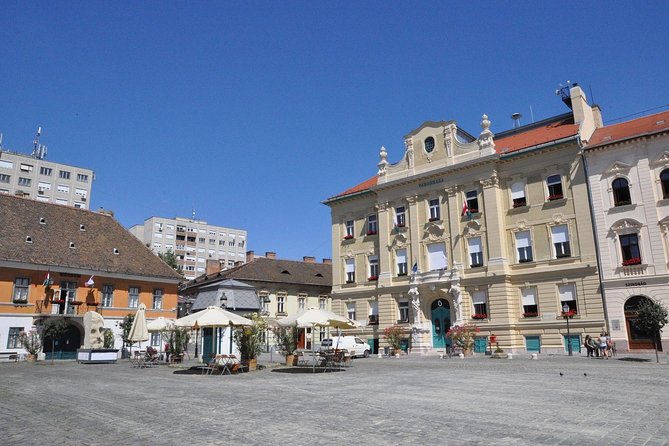
The meeting point is at the Statue of Árpád in Budapest’s District III, postal code 1034. You do not get hotel pickup or drop-off, so you need to make your own way there. The area is near public transportation, which makes the start practical, but you should still allow time to arrive without rushing.
The first listed stop is the Amphitheatrum, near the remains of the Aquincum military camp. Built in the second century AD, this Roman amphitheater once held thousands of spectators for gladiatorial contests, theater, and other public events.
Admission is free, and the stop is scheduled for about an hour. That is a useful amount of time for the guide to explain the site and place Óbuda in the wider story of Roman Budapest. You are not simply walking from one snack to another. You are beginning with the ancient layer of the neighborhood.
The amphitheater is also a good reminder that Budapest’s story reaches far beyond the Austro-Hungarian period most visitors first associate with the city. The ruins give the tour a strong opening, though you should not expect a full archaeological visit with indoor exhibits or a long formal museum presentation. This is a sightseeing stop within a food-focused experience.
Walking along the Danube in Budapest
The route also includes time by the Danube, one of Europe’s major rivers. In Budapest, it separates Buda from Pest and frames some of the city’s best-known views, including the Parliament Building and Buda Castle.
The Danube stop is scheduled for roughly an hour, which gives the tour room to slow down. That matters after the first tastings. You can walk, listen, and let the guide connect the river to Budapest’s identity rather than treating it as a quick photo stop.
You may not get the classic postcard view from every point on the Óbuda route, so keep expectations sensible. This is not a dedicated river cruise or a central Budapest sightseeing walk. Its value comes from seeing how the river relates to the northern part of the city and from having a scenic break between food stops.
The walking also helps balance the tastings. This is not a sit-down meal in one restaurant. You move through the district, pause at food businesses, and continue on foot. The experience suits you best if you enjoy a little movement between courses.
Strudel and lángos: the sweet and savory opening
The included food list begins with sweet strudel and crispy lángos, two very different Hungarian favorites. Strudel brings flaky pastry and a sweet start, while lángos is a fried dough specialty often associated with casual Hungarian eating.
The exact menu can change. Locations, weather, and other local conditions may affect what is available on the day. That flexibility is worth understanding before you book. You are buying a guided food experience with a planned range of dishes, not a legally fixed tasting menu.
The first pastry stop may also show you a side of Budapest you could easily miss on your own. One detailed account described a pastry shop serving strudel, followed later by a butcher’s shop with hot and cold meats. That sequence makes sense: it moves from a familiar baked treat into more substantial local food.
If you have a sweet tooth, the strudel may be an early favorite. If you prefer savory food, lángos gives the tour a more substantial start. Either way, these dishes help set up the contrast that continues through the rest of the route.
A completely different kind of day:
- Budapest: City Highlights Cruise with Welcome Drink
★ 4.6 · 35,610 reviews - Budapest: Széchenyi Spa Day Ticket with Optional Upgrades
★ 4.3 · 23,911 reviews - Budapest: Nighttime or Daytime Sightseeing Cruise
★ 4.2 · 21,062 reviews - Budapest: 1-Hour Evening Sightseeing Cruise with Drink
★ 4.5 · 8,330 reviews
Butcher-shop flavors and hearty Hungarian plates

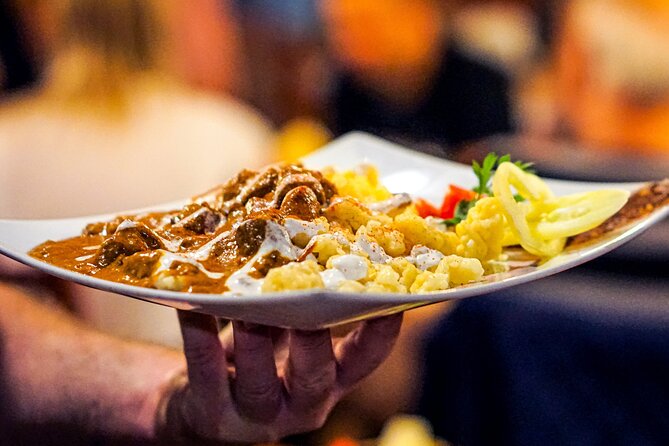
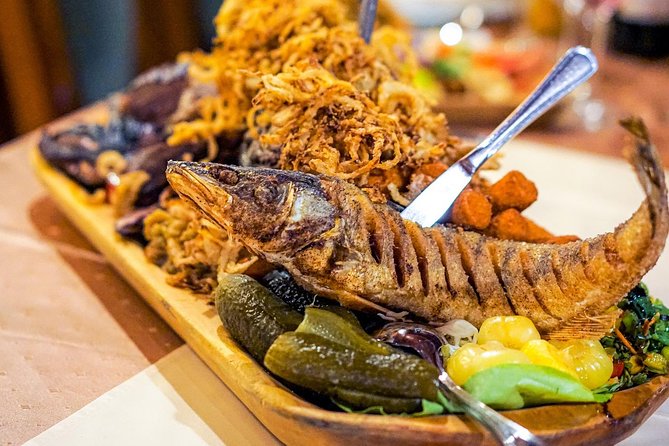
The main food portion leans toward filling Hungarian comfort food. Depending on availability, you may try juicy sausages or tender pork knuckle, along with freshly baked bread and flavorful pickles.
A butcher’s shop stop is a particularly useful detail. It shifts the experience away from polished tourist restaurants and toward the places where local food is handled and sold in a more direct way. You can expect a selection of hot and cold meats rather than one carefully plated dish.
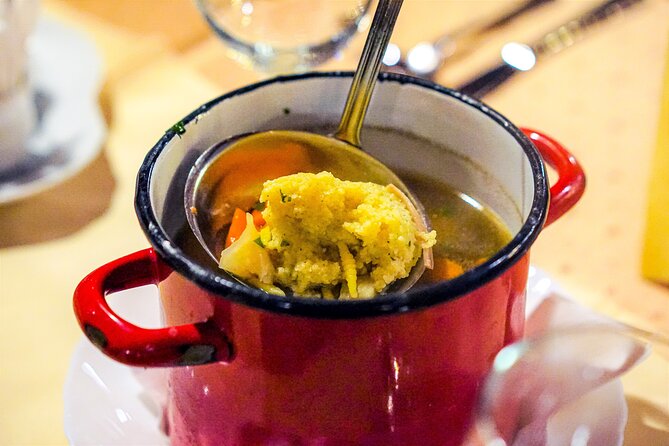
The tour also includes gulyás soup, a hearty Hungarian classic. The soup is often treated abroad as the entire definition of Hungarian cuisine, but tasting it alongside sausages, bread, pickles, pastry, and other dishes gives you a broader picture.
One past participant especially enjoyed stuffed cabbage, which appeared at a restaurant stop. Because the menu is subject to change, stuffed cabbage should not be treated as guaranteed. Still, it shows the kind of traditional dish that may appear beyond the core food list.
The generous selection is one of the tour’s biggest strengths. You get to compare textures and styles instead of placing all your hopes on one entrée. The drawback is equally clear: eight or more tastings can add up quickly. Pace yourself, and do not arrive after a large meal.
Cheese, wine, pálinka, and the secret dish
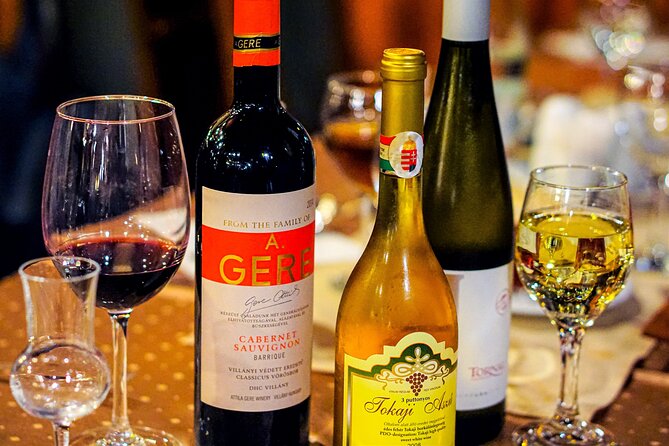
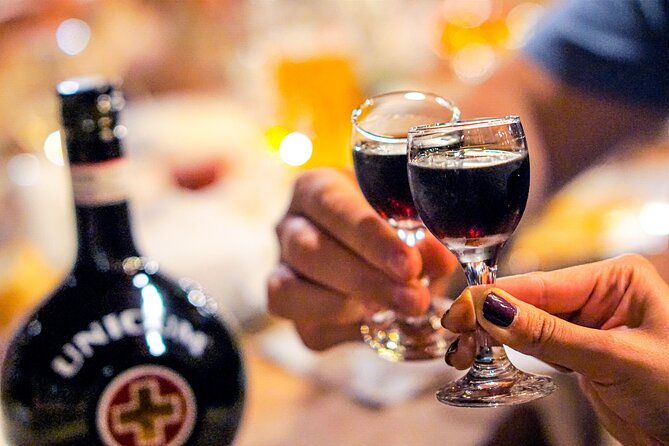
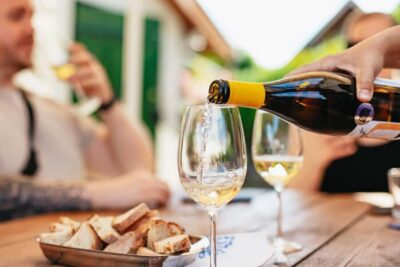
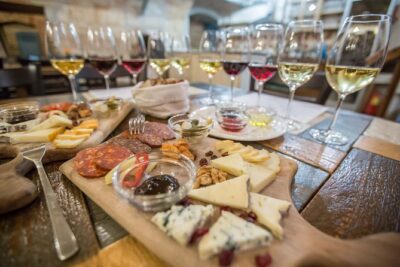
The tour includes a shot of pálinka, a smooth Hungarian fruit spirit, as well as coffee. A wine-shop stop with cheese, wine, and pálinka has also been part of the experience. These tastings widen the scope beyond cooked food and let you try the drinks that often accompany Hungarian social meals.
Pálinka can be strong, so treat the shot as a tasting rather than a challenge. If you do not drink alcohol, contact the operator in advance about your needs. The provided information specifically asks you to share dietary requirements ahead of time so the team can plan as well as possible.
The secret dish is another part of the experience that cannot be fully explained beforehand. It is designed to add a surprise, but the exact item may change with the available locations and menu. That uncertainty is part of the fun, though it may frustrate you if you need a precise food plan.
Coffee gives the route a gentler finish after the heavier dishes and spirits. I like the progression: pastry, fried food, meats, soup, pickles, cheese, alcohol, and coffee. It feels closer to a guided sampling of Hungarian eating habits than to a list of random bites.
The guides make the difference
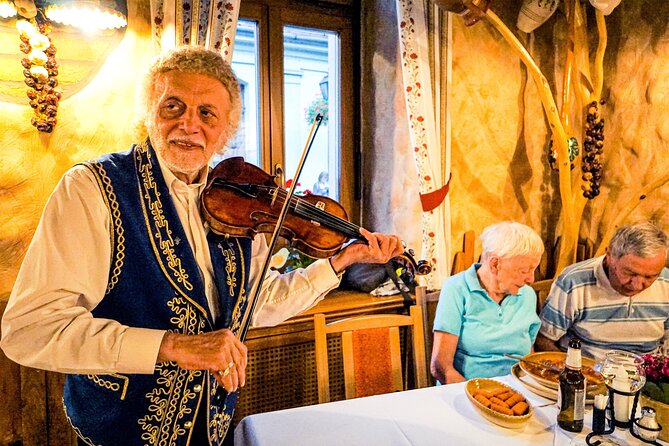
A food walk depends heavily on the person leading it. Zoltan is repeatedly singled out for his humor, local perspective, and clear explanations of both food and history. He is also described as showing people around his own neighborhood, which gives the tour a more personal feel.
George receives similar praise for explaining not just what each dish is, but where it fits into Hungarian culture and the country’s past. That extra context is important. Without it, you might enjoy the sausage or stuffed cabbage but forget the meal a day later.
I would choose this tour mainly for the guide-led interpretation, not simply for the number of tastings. You can eat lángos and gulyás in Budapest without booking a tour. The added value comes from knowing what you are eating, why it matters, and where it fits in the neighborhood.
The group limit of 12 helps here. A smaller group allows for conversation, and food questions are usually more useful when the guide has time to answer them properly. It also makes the route feel less like a procession.
What the $118.52 price includes
At $118.52 per person, this is not a cheap snack crawl. The price needs to cover about three and a half hours, a small group, several food and drink tastings, and a guide who provides local history and cultural context.
The value is strongest if you would otherwise spend time guessing where to eat in Óbuda. You are paying for access to several stops, the planning between them, and the confidence that someone can explain the dishes as you go. The Roman site and Danube walk add sightseeing without requiring another separate tour.
The value is weaker if you mainly want a large single meal or already have a detailed list of Óbuda restaurants. The food portions are tasting portions, even if the total amount may leave you full. Gratuities are not included, so budget for that separately.
Group discounts may be available, which could improve the price for families or friends booking together. Since the experience is often reserved about 57 days ahead, I would not leave it until the last moment if the date matters to you.
Walking, timing, and practical planning
The tour lasts approximately three hours and 30 minutes. The three main areas, the Amphitheatrum, the Danube, and Óbuda, are each allocated about an hour in the supplied schedule, but food stops are woven into that overall time.
Expect a fair amount of walking. Comfortable shoes are a must, especially because eating several times does not mean you will remain seated. The route starts at the Statue of Árpád and ends at Korona tér 1, near the Hungarian Museum of Commerce and Hospitality on the Buda side of Árpád Bridge.
That end point is useful to know when planning the rest of your day. You will not finish back at your hotel or necessarily near your starting point. Hotel transfer is not included, so check your onward public transportation before the tour begins.
The schedule and menu can change because of weather, business availability, and other circumstances. This is a normal concern for a walking food experience, but it means you should book it for the overall experience rather than one promised dish.
Dietary restrictions deserve advance planning. Contact the operator before the tour so they can try to accommodate you. The provided information does not promise that every dietary need can be met, so ask before paying if your requirements are strict.
Who will enjoy this Óbuda food tour most
I recommend this experience if you want to see a less familiar part of Budapest and prefer food with a story attached. It suits first-time visitors who have already seen the main central sights, as well as repeat visitors looking for a different district.
It is also a good fit for people who enjoy traditional food, local drinks, walking, and conversation. The small group makes it more social without turning the tour into a large group event.
Families and mixed-age groups may enjoy the variety, but the alcohol tastings and walking should be considered. People with limited mobility should ask the operator for more details before booking, since the information only confirms that most people can participate and that the tour involves considerable walking.
This may not suit you if you need a fixed menu, dislike rich or meat-heavy food, or want a fast route through central Budapest. It is also not the right choice for someone looking for a formal Roman archaeology tour or a dedicated Danube sightseeing experience.
Should you book it?
Book this Óbuda food tour if you want traditional Hungarian food, neighborhood atmosphere, and useful local stories in one outing. The strongest reasons are the small group, the range of tastings, and guides such as Zoltan and George, who add humor and cultural context to the stops.
I would skip it if the $118.52 price is beyond your food budget, if you prefer one large meal to many tastings, or if you need complete certainty about the menu. For everyone else, it offers a practical way to trade Budapest’s busiest tourist routes for Roman ruins, the Danube, and a food-focused walk through a quieter district.
Book at least a few weeks ahead if possible. With the experience often reserved 57 days in advance, popular dates may disappear early. You can cancel for a full refund up to 24 hours before the start time, but shorter-notice cancellations are not refunded. Poor weather or failure to reach the minimum group size may lead to a new date or a full refund.
FAQ
How long does the Budapest food tour in Óbuda last?
The experience lasts approximately three hours and 30 minutes.
Where does the tour start?
The meeting point is at the Statue of Árpád in Budapest, Hungary, postal code 1034.
Where does the tour end?
The tour ends at Korona tér 1, near the Hungarian Museum of Commerce and Hospitality on the Buda side of Árpád Bridge.
How many people can join the tour?
The group has a maximum of 12 people.
What food and drinks are included?
Included tastings include sweet strudel, lángos, Hungarian sausages or pork knuckle, pickles, gulyás soup, freshly baked bread, a shot of pálinka, coffee, and a secret dish. The menu may change, and other tastings such as cheese, wine, or stuffed cabbage may be offered.
Can I cancel for a full refund?
Yes. You can cancel at least 24 hours before the experience start time for a full refund. Cancellations or changes made less than 24 hours before the start time are not refunded.
Just added in Budapest
- Budapest: Private Walking Tour with a Local Guide★ 3.6 · 6 reviews
- Budapest: Danube River Views Bike Ride★ 4.8 · 23 reviews
- Budapest: City Bike Tour with Coffee Stop★ 5.0 · 37 reviews
- From Budapest: Guided Tour of Eger with Wine Tasting★ 4.5 · 6 reviews
- Walk to recent and aged spiritual sanctuaries near Budapest★ 5.0 · 5 reviews
- Walking consultancy with alternative psychologist and author★ 5.0 · 2 reviews
- Budapest: Guided Tour of the Parliament Building in Spanish★ 4.6 · 1,240 reviews
- Budapest: Vacation Photographer to collect great memories★ 5.0 · 49 reviews
Food & Drink, compared.

Unlimited Prosecco, Beer and Aperol Spritz Cruise
Read our review →
Unlimited Prosecco, Beer & Aperol Spritz Cruise
Read our review →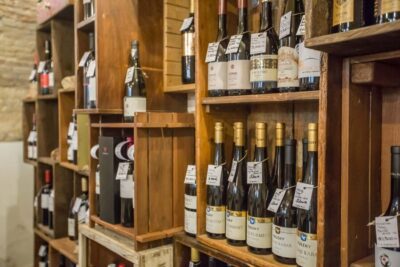
Hungarian Wine Tasting (with Cheese and Charcuterie) in Budapest
Read our review →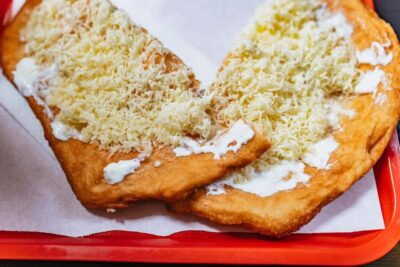
Guided Foodie Walking Tour with Food and Drinks
Read our review →
Budapest Food Tour: Market to Tavern with 14+ Tasters & Wines
Read our review →
Budapest BeerSpa with Unlimited Beer and Optional Széchenyi Bath
Read our review →Browse the lists this tour appears in