REVIEW · GUIDED
Guided Tour with Admission in Memento Park
Budapest’s discarded statues still have stories to tell. Memento Park gathers the giant Communist-era monuments removed from the city after 1989, and a guided walk helps you read them as history, propaganda, and art. I like the small group limit of 15 and the chance to hear personal stories from guides such as Ilodi, Eszter, Esther, and Louisa. The main drawback is the park’s location outside central Budapest, so you need to allow time for the journey.
I also like that admission is included and that the guide stays for questions after the formal walk. Without that context, some statues may seem like oversized blocks of concrete. The timing deserves a close look, though: the experience is advertised at roughly 1 hour to 1 hour 10 minutes, while the guided portion is about 70 minutes and extra questions can add around 20 minutes.
In This Review
- Key things to know before visiting Memento Park
- Why Memento Park matters in Budapest
- The 70-minute guided walk through the statues
- Stalin’s Grandstand and the theater of power
- The Trabant and the park’s lighter side
- The Barrack film and photo exhibition
- Why a guide is worth the extra cost
- Getting there and planning the timing
- What kind of visitor will enjoy this most?
- Group size, access, and cancellation terms
- Should you book Memento Park?
- FAQ
- Where does the Memento Park tour begin?
- What time does the tour start?
- How long does the experience last?
- Is admission to Memento Park included?
- What language is the tour offered in?
- How many people can join the tour?
- Does the tour end at Memento Park?
- Can I take photographs after the guided walk?
- What else can I see at Memento Park?
- Can I cancel for a full refund?
Key things to know before visiting Memento Park
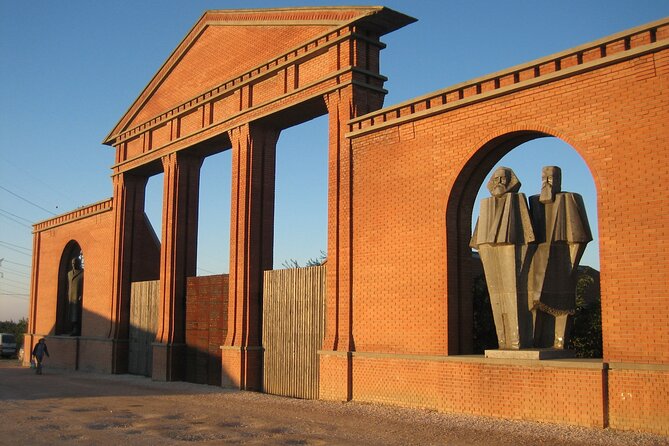
- The statues were removed from Budapest’s streets: The park preserves Communist-era monuments that once shaped public spaces and political life.
- A guide makes a major difference: Visitors repeatedly praised guides for explaining the statues, the artistic choices, and everyday life during Soviet occupation.
- Personal stories add weight: Ilodi and Eszter were praised for connecting political events with lived experience and memorable anecdotes.
- The group is capped at 15 people: That is a useful size for hearing the guide and asking questions.
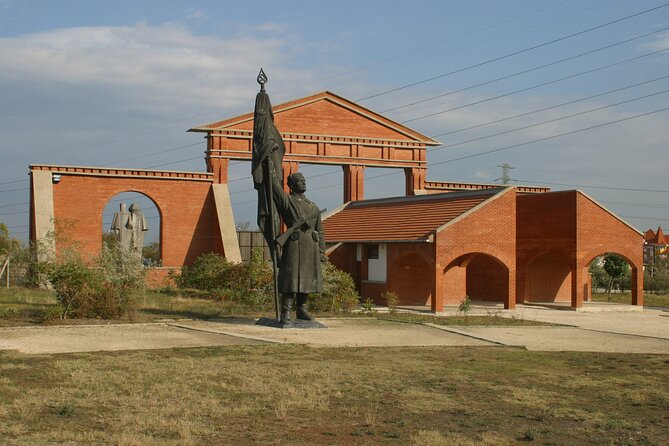
- The experience includes more than a statue walk: You can also see a film, visit the Barrack photo exhibition, explore Stalin’s Grandstand, and photograph the Trabant.
- The meeting time is 11:30 am: The tour begins at Memento Park, at Balatoni út and Szabadkai utca, in Budapest’s 1222 district.
Why Memento Park matters in Budapest
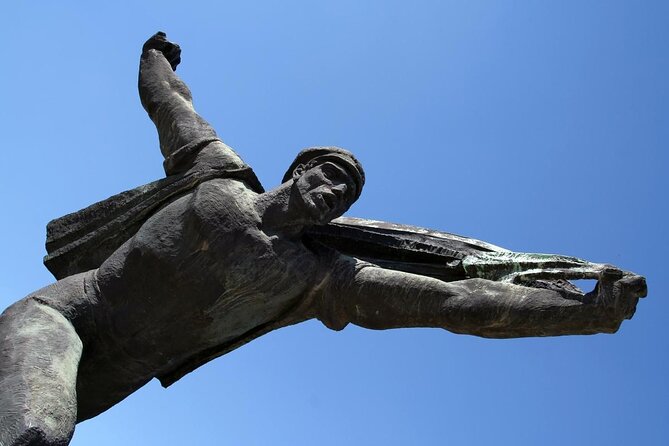
Memento Park is not a collection of random old statues. It is a place built to preserve the public symbols of Hungary’s Communist period after those symbols lost their official role.
Large monuments once occupied prominent streets and squares. They praised workers, soldiers, Soviet power, and Communist ideals. After Hungary’s political change, many were removed from the city center. Rather than destroy every piece, Budapest placed many of them together at Memento Park.
That decision gives the park its unusual character. You are not looking at monuments in the setting their creators intended. You are looking at them after their political power has been stripped away. The result can feel solemn, strange, and at times almost theatrical.
I find that tension especially useful for understanding 20th-century Hungary. A statue that once demanded respect may now look oversized or awkward when grouped with other monuments. A guide can explain why it was made, what message it carried, and how people were expected to respond to it.
The park is also valuable because it avoids reducing the period to a few dates. The best parts of this tour connect political history with ordinary experience. Several guides have been praised for using personal memories and everyday stories to make the period easier to understand.
More things to do in Budapest:
- Budapest: City Highlights Cruise with Welcome Drink
★ 4.6 · 35,610 reviews - Budapest: Unlimited Prosecco, Beer and Aperol Spritz Cruise
★ 4.8 · 25,310 reviews - Budapest: Széchenyi Spa Day Ticket with Optional Upgrades
★ 4.3 · 23,911 reviews
The 70-minute guided walk through the statues
The central part of the visit is a guided tour lasting about 70 minutes. You move through Memento Park while the guide explains the figures and the period that produced them.
This is where the admission fee becomes worthwhile. You could walk among the sculptures alone, but the meaning of many works would be easy to miss. The statues were designed for a political system that used public art to communicate power. Without explanation, you may notice size, poses, and uniforms, but not always the intended message.
Louisa was praised for interpreting sculptures that might otherwise be lost on you. That is an important point. The park is not arranged like a conventional art museum, with long labels beside each object. The guide gives you the missing connections.
Eszter was praised for combining political history with the artistic merits of the monuments. Esther was also praised for setting the scene with a clear account of Hungary’s 20th-century history before discussing the individual works. The names appear in different forms, so the guide assigned to your visit may vary.
You can expect the walk to include discussion of the Stalin era and the Soviet occupation of Hungary. The tone is serious, but the guides are not described as dry lecturers. Ilodi, for example, was praised for being fun while sharing personal experiences. That mix matters here. The subject is heavy, yet an approachable guide can help you stay engaged.
The statues themselves offer plenty to examine. Look at their scale, gestures, clothing, groupings, and facial expressions. Ask what the sculptor wanted people to feel, and how the work functioned when it stood in a city square rather than in a park devoted to historical memory.
The guide’s interpretation also helps you separate artistic value from political purpose. A monument may be effective propaganda and still have interesting visual qualities. This tour treats the works as both historical objects and sculptures, which gives you more to think about than a simple account of who built what.
Stalin’s Grandstand and the theater of power
One of the more unusual features is the chance to learn about the secrets of Stalin’s Grandstand. Even the name points to the relationship between architecture, ceremony, and political authority.
The grandstand represents more than a structure. It suggests the way leaders and officials were placed above crowds during public events. In a Communist state, mass gatherings, parades, and carefully arranged views helped communicate order and power.
The guide is particularly useful here because the significance may not be obvious from a quick look. You can ask how the structure was used and why it matters within the park’s story. The scheduled question period is a good chance to raise that point if the walking portion moves quickly.
This part of Memento Park gives the visit a physical sense of political theater. You are not just hearing about propaganda in the abstract. You are looking at a place connected with how authority was displayed and watched.
The Trabant and the park’s lighter side
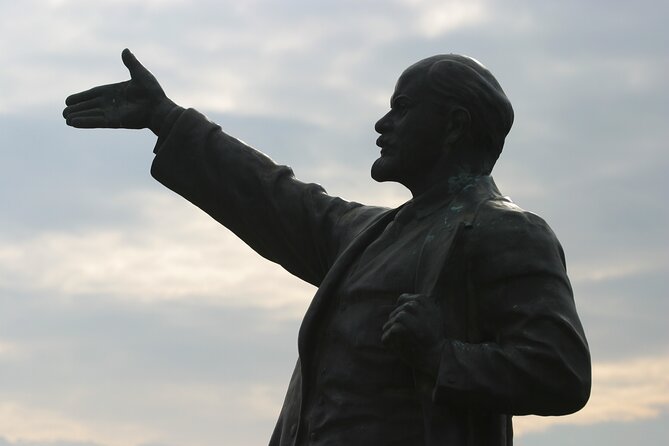
The majestic Trabant is an amusing detail in a serious setting. The Trabant was a familiar symbol of life behind the Iron Curtain, and its presence gives the park something more concrete and everyday than monumental statues.
It also helps break up the scale of the visit. After seeing giant political figures and military imagery, a car associated with ordinary life brings the story back to practical realities. Ask the guide about it if the subject is not covered in detail during the main walk.
The Trabant is also a natural photo stop. The park specifically allows time for photographs after the guided portion, so you do not need to interrupt the explanation every few minutes to take pictures.
A few more options to weigh up in Budapest
- Budapest: Parliament Building Entry Ticket and Audio Guide
★ 4.5 · 3,844 reviews - Budapest: Opera House Guided Tour
★ 4.6 · 1,533 reviews - Budapest Small-Group Guided Tour on MonsteRoller e-Scooter
★ 5.0 · 1,517 reviews - Budapest: Guided Tour of the Parliament Building in Spanish
★ 4.6 · 1,240 reviews
The Barrack film and photo exhibition
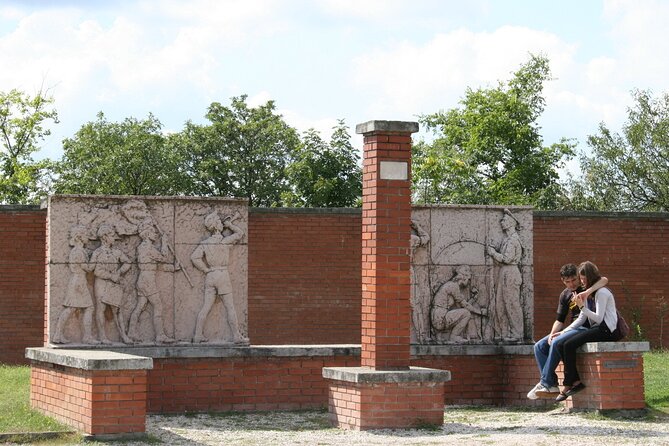
After the walk, you can spend time in the Barrack, where a film show and photo exhibition add another layer to the visit. These features are important because the statues alone tell only part of the story.
A sculpture shows how the state presented itself. Photographs and film can help you think about how that presentation worked in public life. The combination lets you compare official images with the broader atmosphere of the period.
The information provided does not specify the exact running time of the film or the size of the exhibition. I would treat these as useful additions rather than assume they can fit into a tightly scheduled 70-minute visit. If you want to watch the film and examine the photographs carefully, use the extra time after the formal tour.
The Barrack is also a good reason not to rush away once the guide finishes. Many people come for the outdoor statues, but the indoor material can help place those monuments in a wider setting.
Why a guide is worth the extra cost
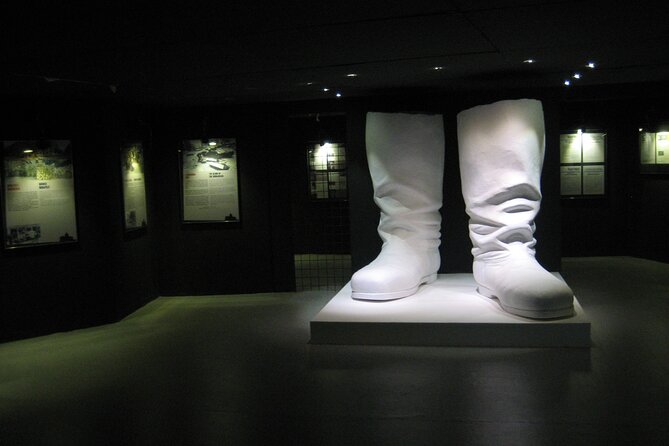
The tour costs $30.04 per person, with admission included. That is not the cheapest way to see an outdoor collection, but the value depends on what you want from the visit.
If you only want photographs of large Communist statues, independent entry may seem sufficient. If you want to understand why the works were made, what they meant, and how Hungary experienced the era, the guide is the stronger choice.
The repeated praise for the guides centers on interpretation. One guide was described as exceptional at explaining the figures. Another was praised for personal anecdotes. Another made the artistic qualities easier to appreciate. These are exactly the details that turn a collection of monuments into a coherent visit.
The group limit of 15 also supports the price. A small group should make it easier to hear the explanation and ask questions than a large coach group. It does not guarantee a private experience, but it gives the visit a more focused feel.
The extra question time adds further value. The guide remains available for about 20 minutes after the tour for questions, according to the tour details. That is helpful if you want to clarify a historical point, ask about a particular statue, or discuss a personal story raised during the walk.
I would consider the price fair for visitors who care about modern European history, political art, or Budapest beyond the usual central sights. It is less compelling for someone with only a short time in the city who prefers famous landmarks and fast sightseeing.
Getting there and planning the timing
The meeting point is Memento Park at Balatoni út and Szabadkai utca, Budapest 1222, Hungary. The park is outside the main central sightseeing zone, so do not treat this as a quick stop between Parliament and the Castle District.
Public transportation is nearby, which makes the park reachable without a private car. The supplied information does not give a specific route, travel time, or transit line, so check the current Budapest transport map from your accommodation before setting out.
The start time is 11:30 am. Arrive with enough time to find the meeting point and settle in before the guide begins. A late arrival could be awkward in a small group, particularly during the opening historical explanation.
Plan on at least the advertised 1 hour to 1 hour 10 minutes for the main experience. The guided portion is about 70 minutes, and questions may continue for roughly 20 more minutes. You then have time for photographs, the Barrack film and exhibition, Stalin’s Grandstand, and the Trabant.
Because the published timing does not clearly combine every extra activity, build some flexibility into your day. If you want only the guided walk, the schedule should be fairly easy to manage. If you want to examine everything on site, do not book another appointment immediately afterward.
The experience uses a mobile ticket, and confirmation is provided at booking. Keep the ticket easy to access on your phone.
What kind of visitor will enjoy this most?
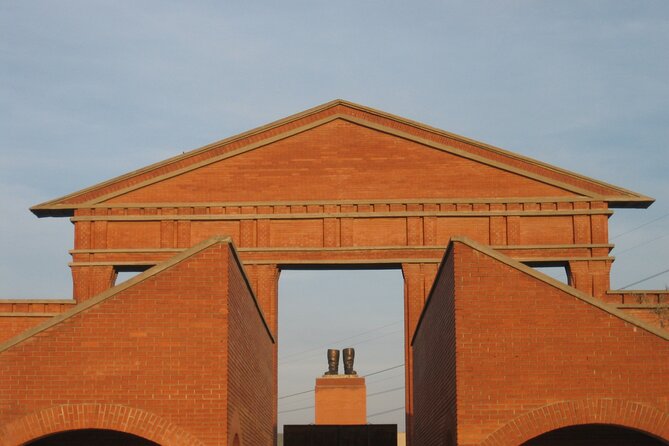
I would recommend the tour most strongly to you if you enjoy:
- Modern European history
- Political monuments and public art
- First-person stories about life under Communist rule
- Guided interpretation rather than self-guided reading
- Places that preserve difficult parts of a country’s past
It also suits visitors who have already seen Budapest’s grander historic sights and want a different side of the city. Memento Park is not designed to charm you with polished streets, cafés, or grand interiors. Its appeal comes from the questions it raises.
Families with older children and teenagers may also find the sculptures useful for discussing propaganda and political change. The subject matter can be serious, so the experience is likely to work best when children have some interest in history.
If you dislike political history, sculpture, or sites away from central Budapest, this may feel like too much effort for too little payoff. The park does not replace Budapest’s major landmarks. It adds context and contrast.
Group size, access, and cancellation terms
The maximum group size is 15 people. Service animals are allowed, and most people can participate. The activity is offered in English.
The tour includes admission, so you are not paying separately for the basic park entry. The experience ends back at the meeting point, which simplifies the next part of your day.
You can cancel for a full refund if you do so at least 24 hours before the start time. Cancellations or changes made less than 24 hours before the start are not refunded or accepted. The cut-off follows local Budapest time, so check the clock carefully if you are changing plans near the deadline.
The tour is often reserved around 12 days ahead. That does not mean you must book that far in advance, but it is a useful sign that the 11:30 am English tour can fill. The small group limit makes advance planning sensible, especially if your Budapest schedule is tight.
Should you book Memento Park?
Book this tour if you want the park to make sense, not just appear in your photo collection. The statues are striking, but the guides provide the political background, artistic reading, and personal detail that give them meaning.
At $30.04, I see the guided admission as good value for anyone interested in Hungary’s Communist past. The small group, English-language explanation, included entry, question time, and extra exhibits all help justify the cost.
Skip it if your time in Budapest is extremely limited or if your interests lie mainly in medieval and imperial sights. For everyone else, Memento Park offers a serious, unusual look at the city’s recent past. The guide is not a minor bonus here. The guide is the difference between seeing old statues and understanding why they are still worth keeping.
FAQ
Where does the Memento Park tour begin?
It begins at Memento Park, at the corner of Balatoni út and Szabadkai utca, Budapest 1222, Hungary.
What time does the tour start?
The tour starts at 11:30 am.
How long does the experience last?
The advertised duration is approximately 1 hour to 1 hour 10 minutes. The guided tour itself is about 70 minutes, and the guide may remain for about 20 minutes of questions afterward.
Is admission to Memento Park included?
Yes. The admission ticket is included in the tour price.
What language is the tour offered in?
The tour is offered in English.
How many people can join the tour?
The activity has a maximum of 15 participants.
Does the tour end at Memento Park?
Yes. The activity ends back at the meeting point.
Can I take photographs after the guided walk?
Yes. After the guided portion, you have time to take photographs and explore the park’s attractions.
What else can I see at Memento Park?
You can visit the film show and photo exhibition in the Barrack, learn about Stalin’s Grandstand, and see the Trabant.
Can I cancel for a full refund?
Yes, if you cancel at least 24 hours before the experience start time. Cancellations and changes made less than 24 hours before the start are not refunded or accepted.
Just added in Budapest
- Budapest: Private Walking Tour with a Local Guide★ 3.6 · 6 reviews
- Budapest: Danube River Views Bike Ride★ 4.8 · 23 reviews
- Budapest: City Bike Tour with Coffee Stop★ 5.0 · 37 reviews
- From Budapest: Guided Tour of Eger with Wine Tasting★ 4.5 · 6 reviews
- Walk to recent and aged spiritual sanctuaries near Budapest★ 5.0 · 5 reviews
- Walking consultancy with alternative psychologist and author★ 5.0 · 2 reviews
- Budapest: Guided Tour of the Parliament Building in Spanish★ 4.6 · 1,240 reviews
- Budapest: Vacation Photographer to collect great memories★ 5.0 · 49 reviews
Guided, compared.

Parliament Building Entry Ticket and Audio Guide
Read our review →

Budapest Small-Group Guided Tour on MonsteRoller e-Scooter
Read our review →
Guided Tour of the Parliament Building in Spanish
Read our review →
Budapest Danube Cruise with Drink, Audio Guide, Margaret Island
Read our review →