REVIEW · TICKETS
Memento Park: Official Guided Tour with Entry Ticket
Communist statues tell strange stories. At Memento Park, you’ll meet bronze workers, soldiers, politicians, and idealized heroes once used to shape Hungarian public life. I like the way the guide explains the symbols instead of leaving you to guess, and I like the chance to see Stalin’s Grandstand and a real Trabant up close. The main drawback is its location: Memento Park sits outside central Budapest, and public transport takes about 40 minutes.
The tour is especially useful if you want more than a quick look at Soviet-era sculpture. Guides explain how propaganda worked and what ordinary Hungarian life was like under dictatorship. English guide Ildi has earned particular praise for her warm, engaging approach, though this is a history-focused visit rather than a light sightseeing stop.
In This Review
- Key points to know before you go
- Why Memento Park matters in Budapest
- Starting at Witness Square and Stalin’s Grandstand
- Walking among the communist-era statues
- The End Wall and what comes afterward
- How long the visit really takes
- Reaching Memento Park from Budapest
- Is the $28 price good value?
- What the guides add to the experience
- Who should book this tour?
- Final recommendation
- FAQ
- Where is Memento Park located?
- How long does it take to reach Memento Park by public transport?
- What language is the guided tour in?
- Where do I meet the guide?
- How long does the guided tour last?
- What does the ticket include?
- Is transportation included?
- Does the tour run in bad weather?
- Is Memento Park wheelchair accessible?
Key points to know before you go
- The statues were removed from Budapest: Memento Park gathers unwanted communist monuments that once dominated streets and squares across the city.
- Stalin’s Grandstand has a political past: You’ll see the preserved structure and enter areas connected with its former use.
- The guide adds the real value: Symbolism, public ceremonies, propaganda, and daily life become much easier to understand with explanation.
- Bring sturdy walking shoes: The park’s paths are covered with gravel, and the tour runs outdoors in rain or shine.
- Allow extra time after the walk: You can photograph the statues, sit in a Trabant, visit the souvenir shop, watch films, and see exhibitions.
- The location requires planning: The park is outside central Budapest, so include transport time on both sides of the visit.
Why Memento Park matters in Budapest
Budapest is full of grand buildings, thermal baths, and polished tourist sights. Memento Park offers something less comfortable and more revealing: the physical remains of a political system that shaped Hungary for decades.
After the fall of communism, many public statues lost their official meaning. Instead of destroying every monument, Budapest moved a large collection to this park on the edge of the city. The result is part museum, part open-air memorial, and part lesson in political theater.
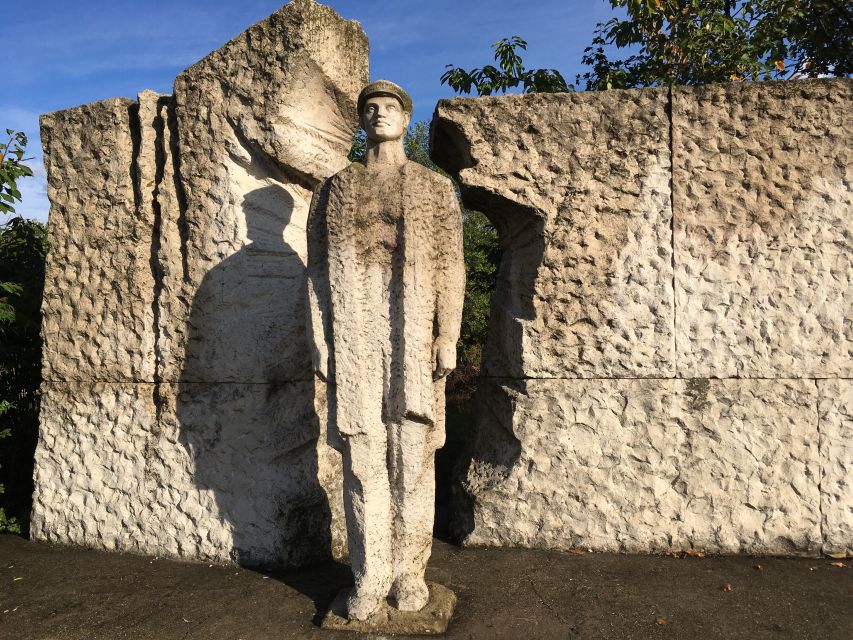
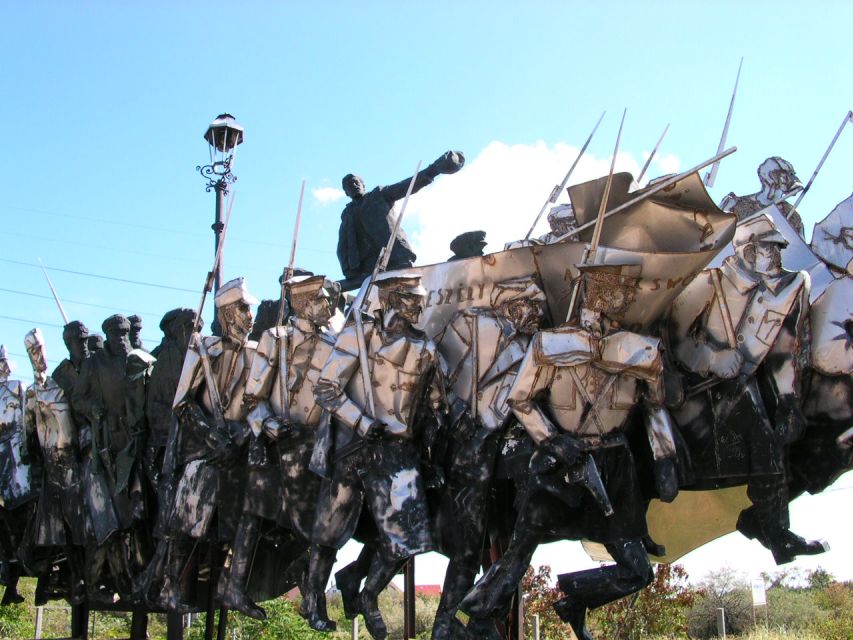
The statues are large because communist governments wanted power to look large. Workers appear muscular and purposeful. Soldiers and political figures are presented with confidence. Groups move forward together, usually with one clear direction and no room for doubt.
Without a guide, you can still enjoy the odd scale and stern faces. With a guide, you begin to notice the details: gestures, poses, clothing, flags, and the way one figure is placed beside another. The sculptures stop being random old monuments and start showing how a government tried to influence what people believed.
I would not treat this as a casual photo stop. The park works best when you give it time and attention. It is also one of the few Budapest experiences that helps connect public art with private life under the Iron Curtain.
More things to do in Budapest:
- Budapest: City Highlights Cruise with Welcome Drink
★ 4.6 · 35,610 reviews - Budapest: Unlimited Prosecco, Beer and Aperol Spritz Cruise
★ 4.8 · 25,310 reviews - Budapest: Széchenyi Spa Day Ticket with Optional Upgrades
★ 4.3 · 23,911 reviews
Starting at Witness Square and Stalin’s Grandstand
Your meeting point is the cash desk at Memento Park. Arrive about 15 minutes before the scheduled start, show your voucher, and join the English-speaking guide.
The walk begins at Witness Square, the open area in front of the main park. This gives the guide space to establish the political setting before you enter the Statue Park itself.
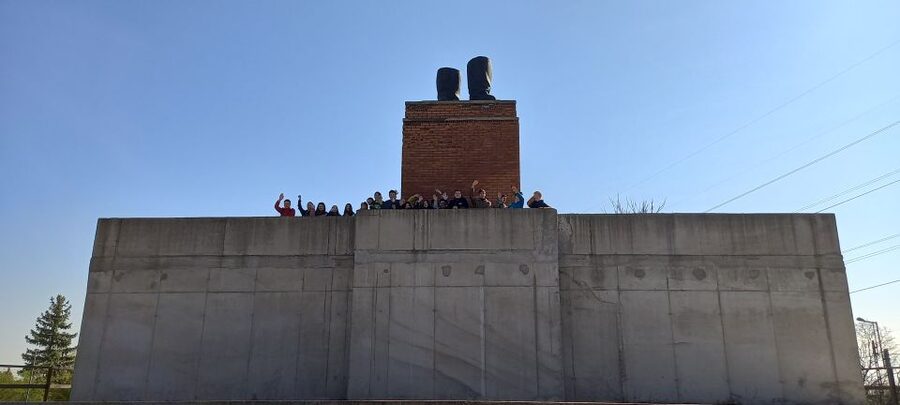
The first major stop is Stalin’s Grandstand. The name sounds imposing, and that is the point. It recalls a time when huge public ceremonies were designed to display loyalty, unity, and control.
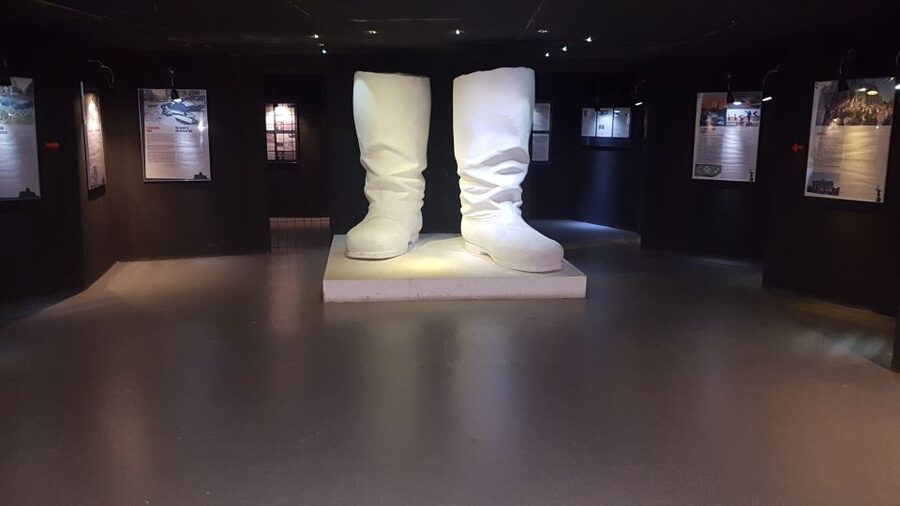
The structure has an unusual story. A statue of Stalin once rose above the grandstand, but the statue was pulled down during the 1956 Hungarian Revolution. What remains is the base and the viewing platform, along with rooms beneath it that are part of the visit.
Those concealed spaces are one of the more interesting parts of the tour. They add a practical side to the history. The grandstand was not only a monument. It was also a working structure used for public events and political display.
From the Waving Balcony, you can look toward the surrounding area. The view helps you see how the grandstand functioned as a stage, with the public gathered below and important figures positioned above.
This section is more than a quick introduction. It shows how architecture can direct attention and organize crowds. The design tells you who was supposed to watch, who was supposed to be watched, and where authority was meant to sit.
Walking among the communist-era statues
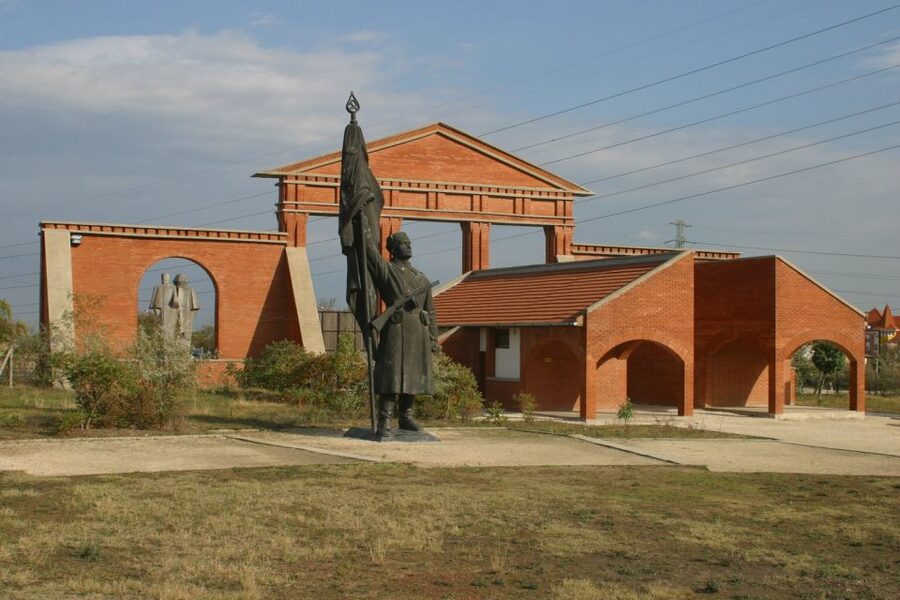
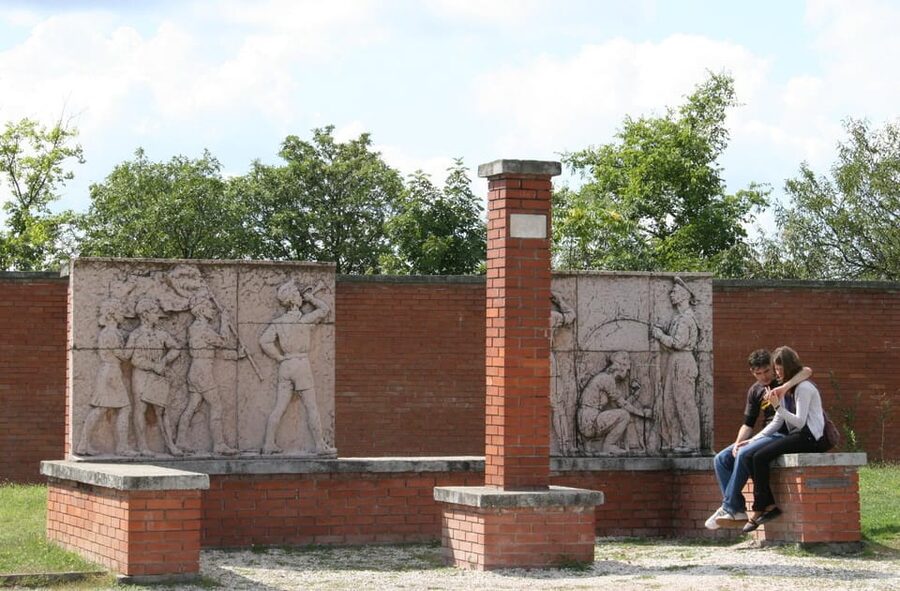
From the outer section, the tour moves into the Statue Park. Here, you walk among monuments representing workers, political figures, Hungarian communists, international communist leaders, and major events connected with the workers’ movement.
The sculptures are often blunt. They do not ask for quiet reflection in the way many traditional memorials do. They instruct you how to feel. A worker may look proud, a soldier determined, and a group of people united around an idea.
That directness can make the statues seem strange or even unintentionally funny today. The guide helps explain why they were made in this style and how they would have appeared when placed in busy urban locations.
I particularly like the contrast between the statues’ original purpose and their current setting. In central Budapest, these monuments were part of daily public life. Here, they have been gathered together, separated from the streets and squares where they once carried official authority.
The tour also deals with ordinary life behind the official images. You hear about the pressure to conform, the role of propaganda, and the difference between public behavior and private opinion. That context gives the sculptures more weight.
This is where a live guide earns the ticket price. The monuments rarely explain themselves. Their meaning depends on politics, language, historical events, and the habits of the society that produced them.
The program is interactive, so you can ask questions and share your thoughts. That matters because the park can raise difficult questions. Some visitors want political background, while others are more interested in art and architecture. A good guide can connect both.
The End Wall and what comes afterward
The formal guided walk finishes at the End Wall. It is a fitting stopping point because the park is not only a collection of statues. It is also a statement about what happens when official symbols lose their power.
Do not rush away when the guided portion ends. You have time to explore the grounds independently and look again at the works that caught your attention.
A Trabant is available for photographs. This small East German car is a useful reminder that communist-era history was not only about statues and leaders. It also involved everyday objects, limited consumer choices, and the practical details of life behind the Iron Curtain.
You can visit the souvenir shop, watch the film program, and see the exhibitions in the Most Cheerful Barrack. The films about spy recruitment from the Soviet era have an unintentionally comic quality, but they also show how political messaging reached beyond public monuments.
The extra exhibits are useful if you want more context. If you are short on time, the guided walk and the main statue collection are the essentials. If you enjoy modern history, political films, or unusual museums, plan to stay longer.
A few more options to weigh up in Budapest
- Budapest: Parliament Building Entry Ticket and Audio Guide
★ 4.5 · 3,844 reviews - Budapest: Opera House Guided Tour
★ 4.6 · 1,533 reviews - Budapest Small-Group Guided Tour on MonsteRoller e-Scooter
★ 5.0 · 1,517 reviews - Budapest: Guided Tour of the Parliament Building in Spanish
★ 4.6 · 1,240 reviews
How long the visit really takes
The activity is described in slightly different ways, so timing deserves attention. The main walk is presented as taking about 70 minutes, while the detailed schedule divides the program into a 95-minute guided tour and a further 35 minutes connected with guided activities, snacks, or tasting.
The safest approach is to check the exact start time and allow additional time after the formal tour. The visit is not something I would squeeze between two tightly timed central Budapest attractions.
At a minimum, plan for the guided portion, transport in both directions, and time for photographs. If you want to see the films and exhibitions, add more time.
The tour is conducted in English. It runs in rain or shine, so your comfort depends on what you bring. Comfortable shoes, sunscreen, weather-appropriate clothing, and a camera are sensible choices.
The gravel promenades are the main physical consideration. The site is wheelchair accessible, but gravel can affect how easy it is to move around. If accessibility is important for your visit, it is wise to ask the provider about the current route and conditions before you arrive.
Children under 10 are not considered suitable for this activity. That makes sense given the serious subject matter and the amount of historical explanation.
Reaching Memento Park from Budapest
Memento Park is outside central Budapest, and public transport takes about 40 minutes. That journey is the biggest practical weakness of the experience.
You need to treat the park as a planned outing, not a stop you will casually discover while walking between central sights. Leave enough time to reach the cash desk 15 minutes before the tour begins.
A taxi can simplify the journey, especially if you are traveling with several people or have limited time. It will cost more than public transport, so the best choice depends on your budget and schedule.
The location also adds to the visit in a small but meaningful way. The park feels separated from the polished center of Budapest, just as the statues have been separated from their original settings. That does not make the journey convenient, but it reinforces the sense that you are visiting a place set apart from ordinary sightseeing.
Use the journey as part of your planning. Do not book this tour immediately before a train departure, airport transfer, or fixed reservation elsewhere.
Is the $28 price good value?
At about $28 per person, the tour is reasonably priced if you want historical explanation. Admission alone may be enough for visitors who prefer to wander independently, but the statues are not always easy to interpret without background.
The guide turns a collection of large bronze figures into a readable story. You learn why the works were created, how they were used, and what they reveal about daily life under communist rule.
That value is strongest for first-time visitors to Memento Park. If you already know a great deal about Hungarian communism or mainly want photographs, you may prefer a self-guided visit.
The ticket includes admission to Memento Park and the guided tour. Transportation, food, drinks, and gratuities are not included. The detailed schedule refers to local snacks and food tasting, but the inclusion information says food and drinks are excluded, so confirm this point before booking if it matters to you.
Free cancellation up to 24 hours before the activity and a reserve-now, pay-later option make the booking less risky. Those policies are helpful when your Budapest plans may change.
What the guides add to the experience
The strongest praise for this tour centers on the guides. Ildi is singled out for her welcoming manner, clear explanations, and ability to make the subject engaging without turning it into a dry lecture.
That balance matters here. Communist history can quickly become a list of dates and political names. The best parts of the experience connect the monuments to real behavior: what people saw in public, what they could say safely, and how propaganda shaped the visual world around them.
You should also expect questions and conversation. This is not simply a headset tour where you follow a fixed script. The program invites your thoughts, which can make the visit more useful if you arrive with curiosity.
The guide may also help you notice the humor in the site. The old spy films and oversized statues can seem absurd from a modern viewpoint. At the same time, the stories behind them are serious. The tour works because it allows both reactions without treating the period as a joke.
Who should book this tour?
I would recommend it to adults and older teenagers interested in political history, public art, Budapest during the Cold War, or life behind the Iron Curtain.
It is a particularly good choice if you want context. The guide explains the symbols and connects them with Hungarian society, which gives you a better understanding than a quick walk around the statues alone.
You may want to skip it if your Budapest visit is very short, if you dislike history-heavy tours, or if a 40-minute public transport journey feels like too much effort for an outdoor museum.
The gravel paths, exposed setting, and rain-or-shine schedule also matter. Wear shoes that can handle uneven ground, and do not arrive without checking the weather.
Final recommendation
Book the Memento Park guided tour if you want the statues to make sense, not simply appear in photographs. The combination of Stalin’s Grandstand, propaganda sculpture, everyday communist history, and the Trabant gives you a distinctive view of Budapest.
The outing requires more planning than a central city attraction, but the guide makes that effort worthwhile. I would choose it for a half-day history visit, allow extra time after the walk, and make sure your schedule leaves room for the journey home.
FAQ
Where is Memento Park located?
Memento Park is in the outskirts of Budapest, in Central Hungary. It is outside the central tourist area.
How long does it take to reach Memento Park by public transport?
Getting to Memento Park by public transport takes about 40 minutes.
What language is the guided tour in?
The live guided tour is conducted in English.
Where do I meet the guide?
You meet the guide at the cash desk in Memento Park. Arrive 15 minutes before the activity starts and present your voucher.
How long does the guided tour last?
The main walk is described as taking about 70 minutes. The detailed schedule also lists a 95-minute guided tour and a further 35-minute activity period, so check the exact timing when you book.
What does the ticket include?
The ticket includes admission to Memento Park and its premises, as well as the guided tour.
Is transportation included?
No. Transportation to and from Memento Park is not included.
Does the tour run in bad weather?
Yes. The tour runs in rain or shine. Bring weather-appropriate clothing, sunscreen, and comfortable shoes.
Is Memento Park wheelchair accessible?
The activity is listed as wheelchair accessible. The park’s promenades are covered with gravel, so you may wish to confirm current route conditions before visiting.
Just added in Budapest
- Budapest: Private Walking Tour with a Local Guide★ 3.6 · 6 reviews
- Budapest: Danube River Views Bike Ride★ 4.8 · 23 reviews
- Budapest: City Bike Tour with Coffee Stop★ 5.0 · 37 reviews
- From Budapest: Guided Tour of Eger with Wine Tasting★ 4.5 · 6 reviews
- Walk to recent and aged spiritual sanctuaries near Budapest★ 5.0 · 5 reviews
- Walking consultancy with alternative psychologist and author★ 5.0 · 2 reviews
- Budapest: Guided Tour of the Parliament Building in Spanish★ 4.6 · 1,240 reviews
- Budapest: 3-Hour Trabant Sightseeing Tour★ 4.7 · 28 reviews
Tickets, compared.
Széchenyi Spa Day Ticket with Optional Upgrades
Read our review →
Parliament Building Entry Ticket and Audio Guide
Read our review →

Sparty – The Ultimate Late-Night Spa Party Ticket
Read our review →