REVIEW · BUDAPEST TOURS
Pest side stories with a Historian
Budapest rewards curious walkers. This three-hour Pest tour links grand squares, royal-looking buildings, churches, and the city’s oldest underground railway, while a historian explains how Hungary’s past shaped what you see today. I especially like the small maximum of 10 people and the inclusion of refreshments and metro tickets, which make the outing feel more personal and practical. The main drawback is the amount of walking: you cover a large part of central Pest, and the pace can feel demanding on a hot day.
The tour begins at 2 p.m. outside the Kempinski Hotel Corvinus Budapest on Erzsébet tér and usually ends at St. Stephen’s Basilica, although the final point can shift to another central Pest location. I like that the route does not stay in one postcard zone. You move from a former market square and political gathering place to Heroes’ Square, a fanciful castle, Andrássy Avenue, and a historic metro line.
In This Review
- Key points to know before booking
- Starting at Elizabeth Square’s changing identity
- St. Stephen’s Basilica and the optional interior visit
- Heroes’ Square, where Hungarian history gets its opening chapter
- Vajdahunyad Castle, a medieval-looking building from 1896
- Andrássy Avenue and the city’s grand urban face
- Vörösmarty Square and central Pest commerce
- Riding the Millennium Underground
- What the guide adds to the experience
- Walking demands, timing, and group size
- What $58.94 buys you
- Who should book this Pest tour?
- Should you book Pest Side Stories with a Historian?
- FAQ
- Where does the tour start?
- What time does the tour begin?
- How long does the experience last?
- Where does the tour end?
- How many people can join the tour?
- Is the tour offered in English?
- Are metro tickets included?
- Are refreshments included?
- Is entry to St. Stephen’s Basilica guaranteed?
- Can I cancel for a full refund?
Key points to know before booking
- Small group of up to 10: You get a better chance to hear the guide and ask questions than on a large bus tour.
- A broad view of Pest: The route connects Elizabeth Square, St. Stephen’s Basilica, Heroes’ Square, Vajdahunyad Castle, Andrássy Avenue, Vörösmarty Square, and the Millennium Underground.
- History drives the tour: The guide explains Hungary’s changing rulers, wars, political eras, architecture, and national identity rather than simply naming buildings.
- Metro travel is part of the experience: A provided ticket helps connect the central Pest stops and introduces you to the oldest underground railway on the European continent.
- Expect substantial walking: Several hours on foot and long stretches between major sights make comfortable shoes a must.
- Strong overall rating: The tour has a 4.9 rating, with 100 percent of participants recommending it, based on 14 reviews.
Starting at Elizabeth Square’s changing identity
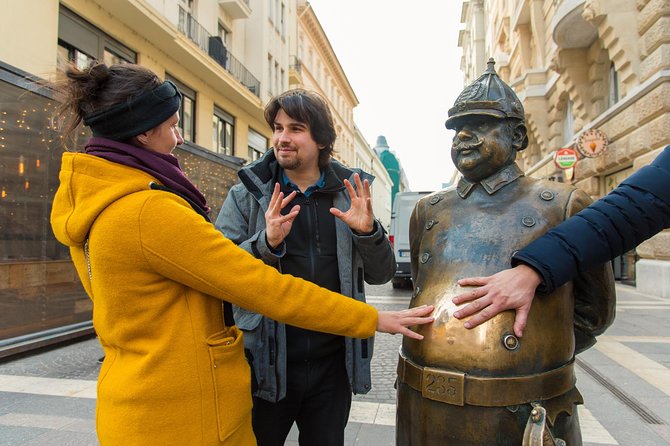
The meeting point at Kempinski Hotel Corvinus places you beside Elizabeth Square, one of the most useful starting spots in central Pest. The square has passed through several lives: it was once a market square, later a Stalin-era square, and later a bus station. Today it is known as a young, party-oriented part of the city with public art and unusual statues.
That changing identity gives the guide a natural way to introduce modern Budapest. You are not looking only at old façades. You are also seeing how a city reuses public space as politics, transport, and daily life change.
The 20-minute stop is brief, but it sets the tone. Expect stories about the square’s past rather than a long architectural lecture. It is also a sensible place to meet because the location is central and close to public transportation.
More things to do in Budapest:
- Budapest: City Highlights Cruise with Welcome Drink
★ 4.6 · 35,610 reviews - Budapest: Unlimited Prosecco, Beer and Aperol Spritz Cruise
★ 4.8 · 25,310 reviews - Budapest: Széchenyi Spa Day Ticket with Optional Upgrades
★ 4.3 · 23,911 reviews
St. Stephen’s Basilica and the optional interior visit
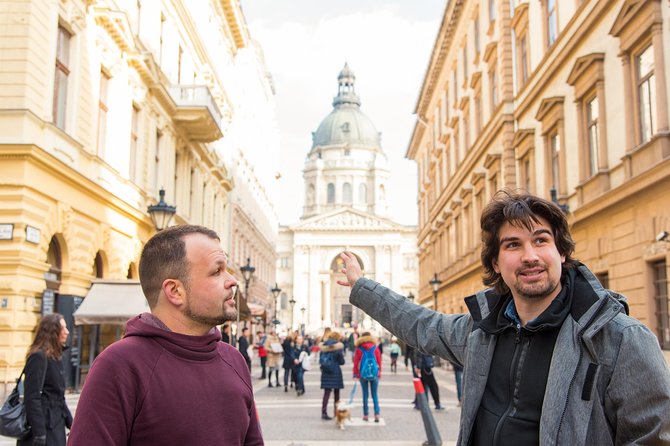
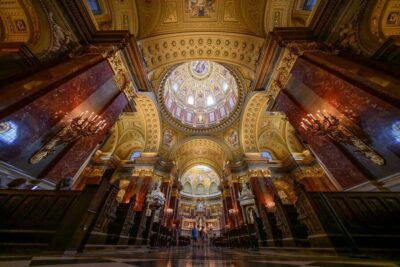
St. Stephen’s Basilica is the largest church in Budapest and one of the defining buildings in Pest. Its name honors Stephen I, Hungary’s first king, and its position near the center of the city makes it an easy landmark for both the start and end of a walking day.
The tour allows the group to enter if there is enough interest. That wording matters. An interior visit is not guaranteed as a fixed part of the experience, so you should not book this tour solely for a full church visit.
You receive about 20 minutes here. That is enough to look at the exterior, hear why the basilica matters, and possibly step inside with the group. The stop may feel short if you want a quiet visit or detailed attention to the interior. You can always return later on your own if the building catches your interest.
The basilica also works well as a final meeting point. After a long afternoon, ending near such a clear landmark makes it easier to continue sightseeing or find your way back through central Pest.
Heroes’ Square, where Hungarian history gets its opening chapter
Heroes’ Square is the strongest history stop on the route. The broad square and its statues provide a visual introduction to more than 1,100 years of Hungarian history. The guide uses the monument to explain major figures and turning points, giving you a framework for the rest of your time in Budapest.
This is where a historian-led walk earns its price. Without context, the statues can look like a formal row of national heroes. With explanation, they become part of a longer story about Hungary’s origins, political pressures, and struggles for independence.
The group spends about 30 minutes here. That is a good amount of time for a clear introduction without turning the square into a classroom. The open setting also makes it easier to see the monument as a whole.
The practical catch is distance. Heroes’ Square sits away from the compact core around the basilica, so reaching it contributes to the tour’s long walking time. The route uses the metro, and the included ticket helps make this wider itinerary possible.
Vajdahunyad Castle, a medieval-looking building from 1896
Vajdahunyad Castle often surprises people because it looks far older than it is. The castle was built in 1896, and its medieval appearance raises an obvious question: why construct a faux historic castle at that time?
That question is the point of the stop. The guide explains why the building was created and how its design reflects Hungary’s interest in celebrating earlier architectural styles. You get to consider the difference between a genuinely medieval structure and a later building designed to recall the medieval world.
The tour allows about 30 minutes here. That is enough to enjoy the setting and understand the reason behind its appearance, though not enough for a slow, detailed examination of every corner.
This is one of the more unusual stops because it is less predictable than Budapest’s famous church, parliament views, or riverfront. I like the way it adds architectural curiosity to the political and national history discussed at Heroes’ Square.
A completely different kind of day:
- Budapest: Nighttime or Daytime Sightseeing Cruise
★ 4.2 · 21,062 reviews - Budapest: 1-Hour Evening Sightseeing Cruise with Drink
★ 4.5 · 8,330 reviews - Budapest Danube Cruise and Dinner Options, Live Music and Dance
★ 4.5 · 7,428 reviews - Budapest: Historic Cruise with Welcome Drink
★ 4.7 · 6,512 reviews
Andrássy Avenue and the city’s grand urban face
Andrássy Avenue is described as the pride of Budapestians and has been a UNESCO World Heritage site since 2002. The avenue helps you read Pest as a planned, ambitious capital rather than a collection of isolated monuments.
The 30-minute segment focuses on the avenue’s importance and character. You will see how a major urban boulevard connects prominent parts of the city, and the guide can tie its buildings and role to Budapest’s wider development.
This part of the tour is less about entering a single attraction and more about understanding the city as you walk through it. That is useful if you want to recognize the relationship between Budapest’s central sights instead of ticking them off one at a time.
It is also another reason to wear comfortable shoes. The walking is not a minor transfer between attractions. Moving along a major avenue takes time, and the tour covers a lot of ground overall.
Vörösmarty Square and central Pest commerce
Vörösmarty Square brings the group back toward the commercial center of Pest. It is an iconic central square where the focus turns to commerce, high-end products, and the city’s historical heart.
The stop lasts about 15 minutes, making it more of a concise orientation than a long visit. The guide can help you understand how this part of Budapest balances historic surroundings with shopping and business.
For you, the value is practical as well as historical. This is the kind of central location where you may want to return later for independent exploration. The short visit gives you a useful sense of where the square fits within Pest without taking too much time from the larger route.
The square also helps vary the afternoon. After monuments, national history, and architecture, you get a glimpse of how central Budapest functions as a commercial district.
Riding the Millennium Underground
The Millennium Underground is one of the tour’s best details. It is the oldest underground railway on the European continent, and the metro ride gives the itinerary a welcome change from walking.
A provided metro ticket is included, so you do not need to arrange this part separately. The 30-minute allocation covers both the transport experience and the guide’s explanation of why the line matters.
This is not just a convenient way to reduce walking. Public transportation becomes part of the city story. You see how Budapest modernized its capital and created a transport link suited to a growing urban center.
The metro portion may appeal especially to you if you enjoy everyday infrastructure as much as grand monuments. It also helps explain how the tour can connect the central squares with Heroes’ Square and Vajdahunyad Castle in a three-hour format.
What the guide adds to the experience
The strongest praise for this tour centers on the guides and their storytelling. Names mentioned in the feedback include Steven, Andrew, and Greg, while the operator also responds under the names Judit, Daniel, István, and András. Since the specific guide can vary, you should expect a historian-led style rather than one fixed personality.
Steven, nicknamed the tall in one account, covered the basilica, financial buildings, the former grain exchange, statues, and the effects of invading powers and wars during the previous century. That description gives you a good sense of the tour’s range. The guide does not treat each sight as a separate fact. Buildings, statues, and public spaces become clues to Hungary’s political and social story.
Andrew was praised for providing detailed history while keeping an easy pace. That balance matters because the route is large. You get substantial background without necessarily being pushed at a fast walking speed.
Greg led an afternoon tour around Pest that focused on interaction as well as sightseeing. This suggests that the small group is not only about avoiding crowds. It also gives the guide room to respond to questions and shape the discussion around the people present.
The experience is best for you if you want explanation, context, and connections. It is less suited to someone who prefers to spend long periods inside one museum or monument.
Walking demands, timing, and group size
The tour starts at 2 p.m. and lasts approximately three hours. That timing leaves your morning free and works well as an introduction on your first day in Budapest, though the afternoon schedule means you should think about heat and energy levels.
The distance is the main consideration. Several accounts describe a lot of walking and long stretches between sights. One person completed the route on a hot day but noted the combination of heat and distance. Another described the walking as substantial while still finding the pace manageable.
I would treat the tour as an active half-day, not a gentle stroll. Wear comfortable shoes, bring water, and allow for the possibility that the group may cover more ground than the stop-by-stop times suggest. The refreshments are a useful inclusion, but the exact type and quantity are not specified, so they should not replace your own water planning.
The cap of 10 people is a real advantage. You are less likely to lose the guide’s voice in a crowd, and the group can communicate more easily when deciding whether to enter the basilica. Small groups also make historical discussion feel more natural.
What $58.94 buys you
At $58.94 per person, this is not the cheapest way to see Pest. The value depends on how much you want from the guide.
You are paying for roughly three hours of organized sightseeing, a historian guide, refreshments, and metro tickets. You also get a route that links several areas you might otherwise visit separately. If you tried to arrange the same broad introduction on your own, you would save money but lose the connected explanation about Hungarian history, political change, architecture, and urban development.
The price makes more sense if you are new to Budapest, have limited time, or prefer a small-group discussion to a large coach outing. One participant specifically found it much better than a busload tour, which fits the format well: you walk through the city rather than view it through a window.
The value is weaker if you already know Budapest’s history or plan to spend the afternoon inside attractions. Since the tour focuses on exterior sights and movement between them, you are paying mainly for interpretation and route planning rather than admission tickets.
No separate admission fees are listed for the stops. The basilica entrance is optional if the group wants to go inside, so confirm the current arrangement if that visit is important to you.
Who should book this Pest tour?
I would choose this experience for a first or second day in Budapest. It gives you a broad mental map of Pest and introduces places you may want to revisit later, including the basilica, Vörösmarty Square, Heroes’ Square, and Vajdahunyad Castle.
It also suits history-minded visitors who want more than quick photographs. The guide’s focus on Hungarian people, foreign powers, wars, political eras, statues, and buildings gives the city more meaning.
You should think twice if walking for three hours is difficult, if you dislike changing locations often, or if you want guaranteed interior visits. The group covers many sights, but the route does not provide long, unhurried time at each one.
The tour is offered in English only. Confirmation arrives when you book, service animals are allowed, and the experience is near public transportation. Most people can participate, but the amount of walking remains the central practical issue.
Free cancellation is available if you cancel at least 24 hours before the 2 p.m. start time. Changes or cancellations made inside that window are not accepted for a refund.
Should you book Pest Side Stories with a Historian?
Book it if you want a small, history-focused introduction to Pest and are happy to walk between major sights. The route has real variety: Elizabeth Square’s changing identity, St. Stephen’s Basilica, the national story at Heroes’ Square, the 1896 origins of Vajdahunyad Castle, Andrássy Avenue, Vörösmarty Square, and the Millennium Underground.
I would not book it as a relaxed sightseeing outing or a church tour. The three hours are active, and the optional basilica entrance means the emphasis stays on the city streets and the guide’s interpretation.
For the right audience, the $58.94 price is fair. You get a small group, a wide route, public transportation, refreshments, and a guide who can turn Budapest’s monuments into a connected story. Bring good shoes, keep an open afternoon, and let the city’s layers do the rest.
FAQ
Where does the tour start?
It starts at the Kempinski Hotel Corvinus Budapest, Budapest, Erzsébet tér 7-8, 1051 Hungary.
What time does the tour begin?
The scheduled start time is 2 p.m.
How long does the experience last?
The walking tour lasts approximately three hours.
Where does the tour end?
It is scheduled to end at St. Stephen’s Basilica, Budapest, Szent István tér 1. It may instead finish at another central Pest location close to the starting point.
How many people can join the tour?
The tour has a maximum of 10 participants.
Is the tour offered in English?
Yes. English is the listed language.
Are metro tickets included?
Yes. Metro tickets are provided as part of the experience.
Are refreshments included?
Yes. Refreshments are included, although the specific type is not stated.
Is entry to St. Stephen’s Basilica guaranteed?
No. The group enters if there is interest, so an interior visit is optional rather than guaranteed.
Can I cancel for a full refund?
Yes, if you cancel at least 24 hours before the local start time. Cancellations made less than 24 hours before the tour are not refunded, and changes within that period are not accepted.
Just added in Budapest
- Budapest: Private Walking Tour with a Local Guide★ 3.6 · 6 reviews
- Budapest: Danube River Views Bike Ride★ 4.8 · 23 reviews
- Budapest: City Bike Tour with Coffee Stop★ 5.0 · 37 reviews
- From Budapest: Guided Tour of Eger with Wine Tasting★ 4.5 · 6 reviews
- Walk to recent and aged spiritual sanctuaries near Budapest★ 5.0 · 5 reviews
- Walking consultancy with alternative psychologist and author★ 5.0 · 2 reviews
- Budapest: Guided Tour of the Parliament Building in Spanish★ 4.6 · 1,240 reviews
- Budapest: Vacation Photographer to collect great memories★ 5.0 · 49 reviews
Budapest Tours, compared.
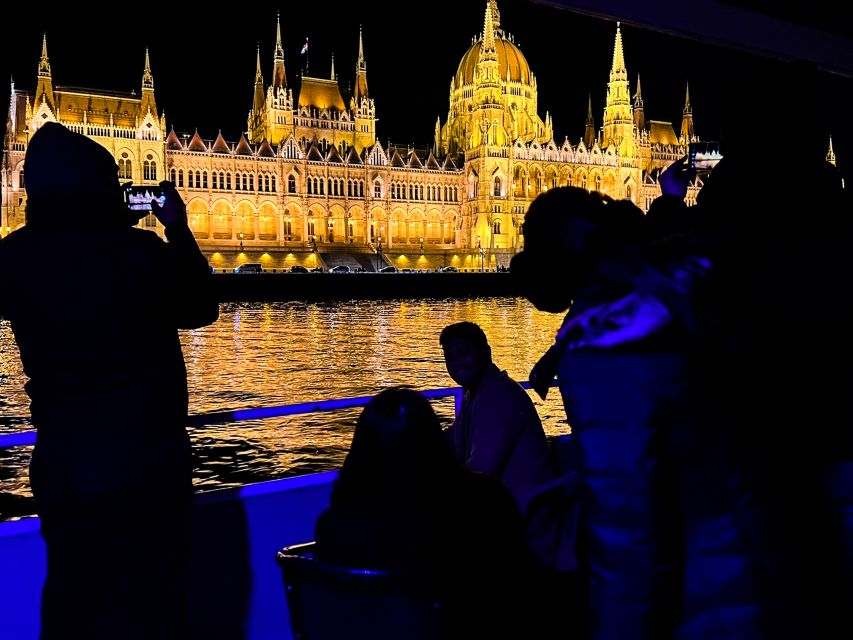

Unlimited Prosecco, Beer and Aperol Spritz Cruise
Read our review →
Széchenyi Spa Day Ticket with Optional Upgrades
Read our review →

Budapest Danube Cruise and Dinner Options, Live Music and Dance
Read our review →