REVIEW · AUDIO TOURS
Self Guided Tour In Budapest With 100 Captivating Audio Stories
Budapest rewards curious walkers. This browser-based audio tour gives you 100 location-based stories tied to castles, bridges, squares, museums, stations, and riverside memorials, so you can explore without matching a guide’s timetable. I like the freedom to start and stop anywhere, and I like that the price is only $3.62 per person. The main drawback is that you need your own smartphone, internet connection, and headphones, with no offline access if your signal fails.
This is less a fixed walking route than a pocket-sized Budapest story bank. You choose the sights that interest you, listen near the correct location, and build your own outing from one hour to a full day. That suits independent visitors, but it also means you must plan your route and keep an eye on your phone.
In This Review
- Key points to know before you go
- What this Budapest audio tour actually is
- Buda Castle, Fisherman’s Bastion, and the royal side of the river
- The Chain Bridge and Danube memorials
- Parliament, squares, and the political heart of Pest
- Central Budapest’s culture, music, and grand buildings
- Railway stations and overlooked city stories
- Gellért Hill, the Citadella, and the city from above
- How much time you need, and how to plan it
- Price, equipment, and the small print that matters
- Should you book this Budapest audio guide?
- FAQ
- How much does the self-guided Budapest audio tour cost?
- How long does the experience last?
- Is this a guided group tour?
- What language is available?
- Do I need to download an app?
- What do I need to bring?
- Is offline access included?
- Can I get a refund or change my booking?
Key points to know before you go

- About $3.62 per person: The low price makes this a useful supplement to sightseeing, especially if you want context without paying for a private guide.
- More than 100 location stories: The choices include Buda Castle, Parliament, the Danube, railway stations, libraries, bridges, churches, squares, and lesser-known corners of the city.
- Browser-based access: You receive a link and open the guide directly in your browser, with no cumbersome app download.
- Flexible timing: Use it for one hour or up to roughly eight hours, starting and stopping wherever you like.
- Outdoor sightseeing focus: The stories are designed to accompany visits to places and buildings, rather than replace paid interior tours.
- Bring your own equipment: A smartphone, internet access, and headphones are required. Offline listening is not included.
What this Budapest audio tour actually is
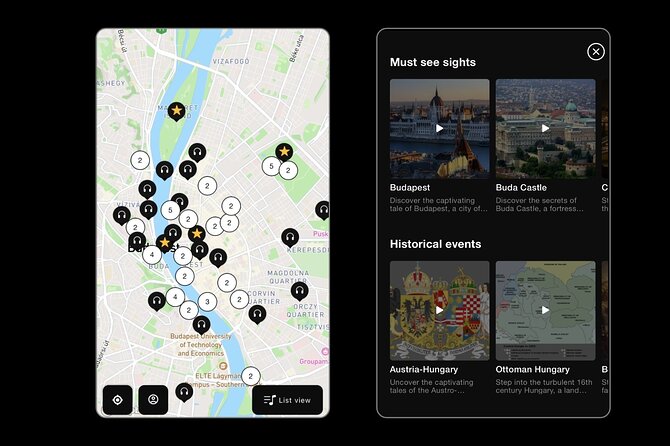
The simplest way to understand the experience is to think of it as a location-triggered audio guide with a map. You receive one-step access through a link, then use the web app to find stories near your position.
You are not joining a group, meeting a guide, or following a strict sequence. The activity is private in the sense that only your group uses it, but there is no in-person guide accompanying you. You decide which stories to hear and how long to stay at each place.
The description refers to 100 or more possible stories, while the listed highlights cover 39 named sights and areas. That means the full collection is broader than the sample route. You might build a classic central Budapest walk, focus on Buda, follow the Danube, or pick unusual subjects such as railway architecture, medical history, and Hungarian music.
The audio includes storytelling and soundscapes, along with information about famous people, important events, and major sights. That format is useful when you want more than a quick photograph, but less structure than a traditional tour.
More self-guided walks in Budapest:
- Budapest: Parliament Building Entry Ticket and Audio Guide
★ 4.5 · 3,844 reviews - Budapest Danube Cruise with Drink, Audio Guide, Margaret Island
★ 4.5 · 1,036 reviews - Budapest: Danube River Sightseeing Cruise with Audio Guide
★ 4.1 · 1,002 reviews
Buda Castle, Fisherman’s Bastion, and the royal side of the river
Start in Buda if you want a strong historical opening. The Buda Castle story focuses on battles and royalty, giving you a sense of why the hill has mattered for centuries. Since the experience is outside and admission to the audio stop is free, you can listen while viewing the castle area without committing to an indoor museum visit.
Nearby, Fisherman’s Bastion offers one of Budapest’s most recognizable views. Its story leans toward folklore and fortress imagery, making it a natural companion to the castle stop. The two work well together, but they should not be treated as a complete tour of every castle interior. The audio provides context at the location, while any interior admission would be a separate matter.
The National Széchényi Library also appears among the options. Located in Buda Castle, it gives the tour a more scholarly angle, focusing on Hungarian books, culture, and royal connections. You can choose this story if you want your castle walk to move beyond military history.
The National Archives of Hungary and the Semmelweis Museum of Medical History add still more variety. The Archives points toward centuries of records and national memory. The Semmelweis stop turns to medical progress and the institution founded in 1769. These are good choices for you if grand monuments are only part of what makes a city interesting.
Gül Baba’s Tomb takes you away from the main castle circuit and into a more spiritual corner of Buda. The story centers on Gül Baba and the tomb on steep Mecset Street. Because the route involves a climb, you will want comfortable shoes and enough time to move at your own pace.
The Chain Bridge and Danube memorials
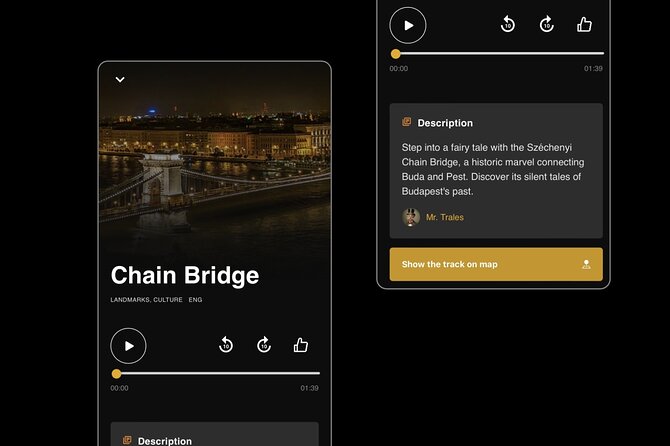
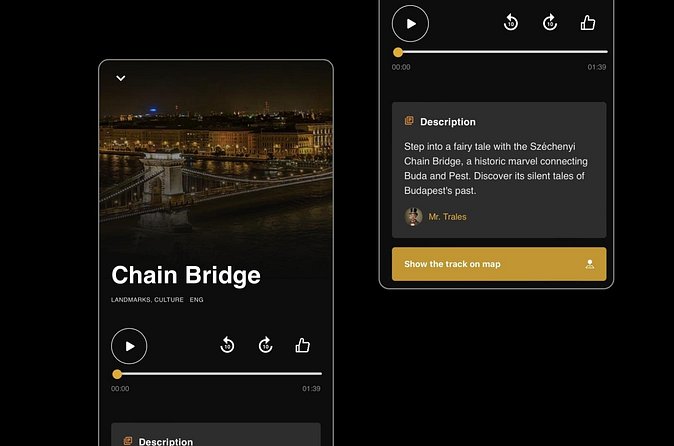
The Chain Bridge is one of the clearest links between Budapest’s two halves. The audio story covers the historic crossing and its lion statues, while a second listing also identifies the bridge as its own possible stop. You may hear related material at more than one point, so check the map and titles before starting both.
Crossing the bridge gives you a natural break between Buda and Pest. It is also a practical place to use the guide because the bridge connects several major sightseeing areas. The audio cannot control traffic, crowds, weather, or your walking speed, so pause it when you need to concentrate on the crossing.
The Danube River story focuses on the promenade and the grand hotels along the water. The nearby Shoes on the Danube Bank memorial brings a much more serious tone. Its audio explains the meaning behind the shoes and the people remembered there.
Give that memorial your full attention. It is not just another photo stop, and the guide’s story is most useful when you pause rather than rush through it. Pairing it with the Danube story creates a short riverside sequence with both architectural and historical weight.
Margaret Bridge offers another crossing and a different piece of engineering history. Its unusual 165-degree design is the main point of interest. From there, you can continue toward Margaret Island, where the audio shifts from bridges and war memories to nature, history, and leisure.
Parliament, squares, and the political heart of Pest

The Hungarian Parliament Building is one of Budapest’s essential sights, and the guide includes a location story for the building. The exterior alone is impressive, but the audio helps place it within Hungary’s past and present. Since the stop is outside, do not confuse listening access with a ticket for an interior Parliament visit.
Kossuth Lajos Square is the natural companion. The story focuses on the square as a center of national life and the events that shaped it. Liberty Square provides another political stop, with attention to the Hungarian National Bank and the historical echoes around the square.
The Hungarian National Bank Headquarters receives its own story. Here the subject shifts to currency, economic change, and national identity. The Hungarian Academy of Sciences, founded in 1825, adds a story about learning and scientific progress.
These stops are especially useful if you are tired of seeing only churches and palaces. They show how Budapest’s public spaces connect architecture with politics, education, and finance. The drawback is that several are close together in theme, so you may prefer to select only the ones that match your interests.
Deák Ferenc Square is less ceremonial and more practical. It is a major meeting point for streets and transport lines, so it works well as a place to pause, reorient yourself, and select the next nearby story.
Vörösmarty Square gives you a more historic public-space setting. Its identity has changed since 1812, and the audio follows those changes. Batthyány Square, across the river, adds another story about power and legacy, with views back toward the Pest side.
More things to do in Budapest:
- Budapest: City Highlights Cruise with Welcome Drink
★ 4.6 · 35,610 reviews - Budapest: Unlimited Prosecco, Beer and Aperol Spritz Cruise
★ 4.8 · 25,310 reviews - Budapest: Széchenyi Spa Day Ticket with Optional Upgrades
★ 4.3 · 23,911 reviews - Budapest: Nighttime or Daytime Sightseeing Cruise
★ 4.2 · 21,062 reviews
Central Budapest’s culture, music, and grand buildings
The Franz Liszt Academy of Music offers one of the strongest cultural stops in the collection. Its story connects the building with musical legends, talent, and Budapest’s long musical tradition. If you enjoy music, this is worth choosing even if you skip some of the more general city-square stories.
The Great or Central Synagogue on Dohány Street is another major stop. The audio explores the building’s scale and history as Europe’s largest synagogue. Treat this as an exterior audio stop unless you separately arrange interior admission.
The Metropolitan Ervin Szabó Library gives you a surprisingly different setting. The story describes a former palace turned into a place of learning. This is exactly the kind of stop that makes a self-guided collection useful: you can choose a building that might otherwise receive only a passing glance.
Andrássy Avenue adds grand urban design to the route. Its Neo-Renaissance architecture and long history make it a good connecting walk between central Pest and City Park. You can listen as you move along the avenue, then continue toward Heroes’ Square.
Heroes’ Square commemorates the Magyar conquest of the Carpathian Basin and the 1000th anniversary of that event. The Millennium Monument dominates the space, with the Museum of Fine Arts and Palace of Art framing it. The story is listed as about 10 minutes, which is long enough for a useful introduction but not a full museum visit.
City Park extends the same outing. The audio covers the park’s 302 acres, while the City Park Ice Rink and boating lake provide a separate story about seasonal recreation. You may also choose Millenáris, where the focus is the old velodrome and its 412-meter track. These stops give the guide room to cover sports and leisure, not just monuments.
Railway stations and overlooked city stories
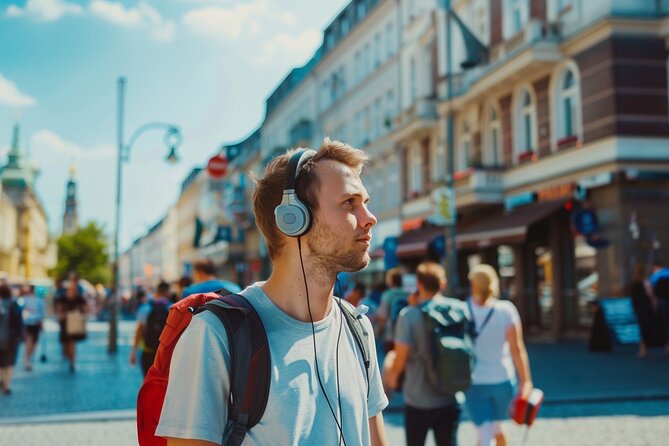
Budapest’s railway stations are among the most distinctive choices here. Nyugati Railway Station’s Royal Waiting Room is linked to the designers of the Eiffel Tower, making it a fine stop for architecture lovers. Keleti Station offers another story about railway history and the building’s grand design.
Westend Shopping Center provides a less obvious subject. Its story follows the rise and fall of an iconic shopping center, adding a modern urban angle. This is useful when you want a break from royal buildings and memorials.
Újlipótváros brings attention to a district where older history meets modern city life. Corvinus University gives you an academic story, while the Central Market Hall turns to food, culture, and city planning.
The market story should be especially practical for a first visit. You can listen before or after browsing the hall, then decide for yourself how much time to spend inside. The guide gives background, but it does not replace the pleasure of looking at the stalls and making your own choices.
Gellért Hill, the Citadella, and the city from above
Gellért Hill is one of the best choices for a broad view of Budapest. Its story brings together history, folklore, and the city panorama. The Citadella adds a fortress-focused account, while the Liberty Statue tells the story of a major symbol of resilience.
The Gellért Hill Cave changes the mood again. Instead of open views, the story takes you toward an underground setting shaped by secrets and legends. Because these stops are connected geographically, you can create a focused hill outing rather than zigzagging across the city.
The tradeoff is physical effort. The supplied information does not give a precise route or walking difficulty, but Gellért Hill and the steep approach to Gül Baba’s Tomb clearly require more care than a flat square or bridge stop. Use the flexible start and stop controls to break the visit into manageable sections.
Liberty Bridge and Elisabeth Bridge complete the bridge collection. Liberty Bridge brings Art Nouveau design and local myths. Elisabeth Bridge tells a darker story of destruction and rebuilding. You can compare their styles and histories in a single bridge-focused day.
How much time you need, and how to plan it
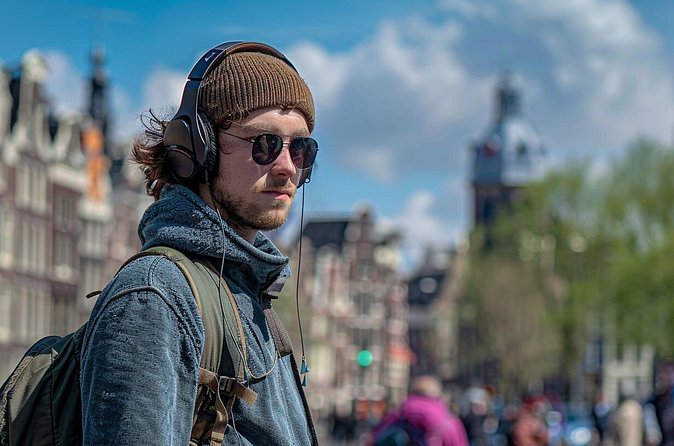
The advertised duration is about one to eight hours. That wide range is not a weakness by itself. It reflects the fact that you are choosing from many stories rather than following one fixed route.
For a short visit, select three or four nearby stops. A central Pest plan might include St. Stephen’s Basilica, Deák Ferenc Square, the Danube, and Shoes on the Danube Bank. A Buda plan could combine Buda Castle, Fisherman’s Bastion, the National Széchényi Library, and the Chain Bridge.
For a longer day, connect districts by bridges and public transportation. The activity is near public transport, and the freedom to start again at any location makes it easy to resume after a break. Still, the web app does not provide offline access, so internet service matters throughout your outing.
The one-hour stories are generally listed at around 10 minutes, with Buda Castle and Margaret Island listed at about 20 minutes. Add time for walking, views, food, photos, and any separate admissions. If you try to hear every available story, you will quickly turn sightseeing into a checklist, so choose the subjects you care about most.
Price, equipment, and the small print that matters
At $3.62 per person, this is inexpensive for Budapest. The value is strongest if you want historical background at several places and do not need a live guide. A private tour would offer more conversation and route planning, but it would also cost far more.
You must bring a smartphone and headphones. The guide is offered in English, and you need internet access because offline listening is not included. Service animals are allowed, and most people can participate, but the experience is not recommended for people with hearing impairment because the main content is audio.
This is a non-refundable purchase, and changes are not allowed after booking. Choose your date carefully. Confirmation arrives at booking, and the activity begins and ends in Budapest, with no separate in-person meeting guide described.
One useful St. Stephen’s Basilica tip is to arrange admission online if you plan to go inside. An online purchase can help you avoid the long ticket-office line, and the tower requires its own ticket. The audio story can add context, but it is not a substitute for that entrance ticket.
Should you book this Budapest audio guide?
Book it if you like freedom, short historical stories, and the ability to shape your own route. It is particularly well suited to independent visitors, repeat visitors seeking new subjects, and anyone who wants a cheap layer of context over several days.
Skip it if you want a human guide, guaranteed offline access, or a tightly organized walking route. You also need to be comfortable managing the map, choosing stops, and keeping your phone connected.
For $3.62, the risk is small, but the non-refundable rule makes careful planning important. Pick a few linked sights, bring charged equipment and headphones, and treat the 100 stories as a menu rather than a march. That approach gives you the best chance of hearing the places that make Budapest memorable.
FAQ
How much does the self-guided Budapest audio tour cost?
The price is $3.62 per person.
How long does the experience last?
The approximate duration is one to eight hours, depending on how many stories and locations you choose.
Is this a guided group tour?
No. It is a self-guided private activity with no physical in-person guide. Only your group participates.
What language is available?
The audio guide is offered in English.
Do I need to download an app?
No. You access the guide directly through your browser using the supplied link.
What do I need to bring?
You need your own smartphone, internet access, and headphones.
Is offline access included?
No. Offline access is not included, so an internet connection is required while using the guide.
Can I get a refund or change my booking?
No. The experience is non-refundable and cannot be changed after booking.
Just added in Budapest
- Budapest: Private Walking Tour with a Local Guide★ 3.6 · 6 reviews
- Budapest: Danube River Views Bike Ride★ 4.8 · 23 reviews
- Budapest: City Bike Tour with Coffee Stop★ 5.0 · 37 reviews
- From Budapest: Guided Tour of Eger with Wine Tasting★ 4.5 · 6 reviews
- Walk to recent and aged spiritual sanctuaries near Budapest★ 5.0 · 5 reviews
- Walking consultancy with alternative psychologist and author★ 5.0 · 2 reviews
- Budapest: Guided Tour of the Parliament Building in Spanish★ 4.6 · 1,240 reviews
- Budapest: 3-Hour Trabant Sightseeing Tour★ 4.7 · 28 reviews
Audio Tours, compared.

Parliament Building Entry Ticket and Audio Guide
Read our review →
Budapest Danube Cruise with Drink, Audio Guide, Margaret Island
Read our review →
Danube River Sightseeing Cruise with Audio Guide
Read our review →

Budapest River Cruise with 1 Free Tokaj Frizzante and Audio Guide
Read our review →
Budapest Paddle Steamer Danube Cruise with Tokaj & Audio Guide
Read our review →
Budapest Audio Guide Cruise with Day, Sunset and Night Options
Read our review →