REVIEW · GUIDED
The beginner’s guide to Budapest – Budapest Sightseeing Tour
Budapest rewards curious walkers. This 3.5-hour city tour links grand squares, thermal baths, royal-looking buildings, and solemn memorials while a local guide explains how they fit together. I like the included public transport, since you see Budapest as a resident might, and I like the pause for coffee and cake at a local café. The main drawback is the price, $94.63 per person, especially since admission to several sights is not included.
The small group, capped at 15 people, keeps the outing personal and makes questions easier. Guides Ferenc, László, and Fanni have been praised for their patience, clear explanations, and friendly manner. Still, this is a fast-moving introduction, not a series of long interior visits. You will see many major sights, but often from outside.
In This Review
- Key points at a glance
- Why this Budapest tour works for first-time visitors
- Starting beside the Hungarian State Opera House
- Heroes’ Square and the national story
- Széchenyi Baths and Vajdahunyad Castle
- Walking Andrássy Avenue toward central Pest
- A coffee and cake pause with a local guide
- St. Stephen’s Basilica and Liberty Square
- Parliament, Chain Bridge, and the Danube memorial
- What the $94.63 price includes
- Pace, comfort, and practical limits
- Who should book this introduction to Budapest?
- Should you book it?
- FAQ
- Where does the Budapest sightseeing tour start?
- Where does the tour end?
- How long does the tour last?
- What language is the tour offered in?
- Are public transport tickets included?
- Is coffee and cake included?
- Is a map provided?
- What is the maximum group size?
- Are attraction admission tickets included?
- Can I cancel for a full refund?
Key points at a glance
- Public transport turns the city into part of the tour: Tram and Metro tickets are included, so getting between distant sights is part of the experience.
- The route covers both grand and painful chapters: You move from Heroes’ Square and the Opera House to the Holocaust memorial at Shoes on the Danube Bank.
- Coffee and cake add a welcome local pause: The café stop gives you a chance to rest and ask questions in a less formal setting.
- The 15-person limit matters: You get a better chance to hear the guide and ask about Budapest’s culture, architecture, and daily life.
- Most sights are exterior stops: Entry is not included at Vajdahunyad Castle, St. Stephen’s Basilica, or the Parliament Building.
- It is strongest as a first-day orientation: The route helps you decide which places deserve a longer visit later.
Why this Budapest tour works for first-time visitors
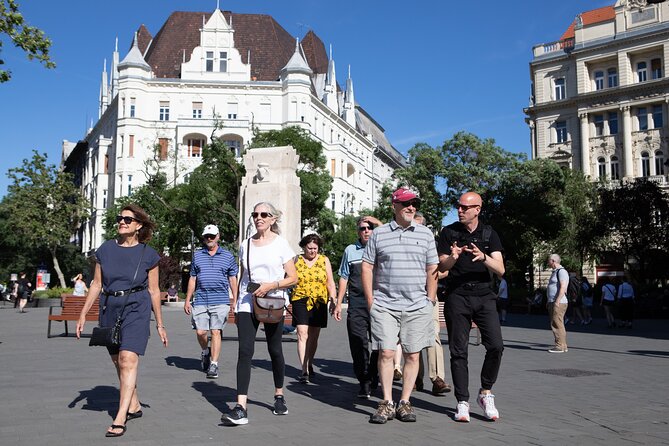
Budapest can feel spread out at first. The city reaches along both banks of the Danube, with Pest’s broad boulevards on one side and Buda’s hills on the other. This tour focuses on the Pest side and connects places that are too far apart for a simple stroll.
That is where the included transport helps. Instead of spending your morning guessing which tram or Metro line to use, you move through the city with someone who knows the route. One guide, László, was praised for navigating the Metro patiently and answering questions along the way. That detail matters if you are still learning the city’s layout.
The route also gives you a useful mix. You see national monuments, 19th-century architecture, a famous thermal bath, a grand church, the Parliament, and two memorials tied to the country’s difficult past. It is not just a parade of pretty facades.
The group limit of 15 is a practical advantage. A larger group can make city walking feel like following a flag through traffic. Here, you should have a better chance to hear the guide and stop for questions. Ferenc was praised for keeping a good pace while allowing time for conversation, which is exactly what you want on a short orientation tour.
More things to do in Budapest:
- Budapest: City Highlights Cruise with Welcome Drink
★ 4.6 · 35,610 reviews - Budapest: Unlimited Prosecco, Beer and Aperol Spritz Cruise
★ 4.8 · 25,310 reviews - Budapest: Széchenyi Spa Day Ticket with Optional Upgrades
★ 4.3 · 23,911 reviews
Starting beside the Hungarian State Opera House
The meeting point is the Hungarian State Opera House at Andrássy út 22. This is a strong place to begin because Andrássy Avenue introduces you to Budapest’s grand 19th-century style before you even leave the starting point.
The Opera House is a Neo-Renaissance building designed by Miklós Ybl, one of Hungary’s important architects. On the tour, the Opera House is an exterior stop, with about 10 minutes listed for the visit. That is enough for an introduction and some photographs, but not enough for an interior performance or architectural tour.
From here, the route heads toward the City Park area. The exact order of transport and walking can vary, but the included tickets make the transfer part of the guided experience. You do not need to treat each tram or Metro ride as a separate chore. You can concentrate on the city passing outside the window.
Heroes’ Square and the national story
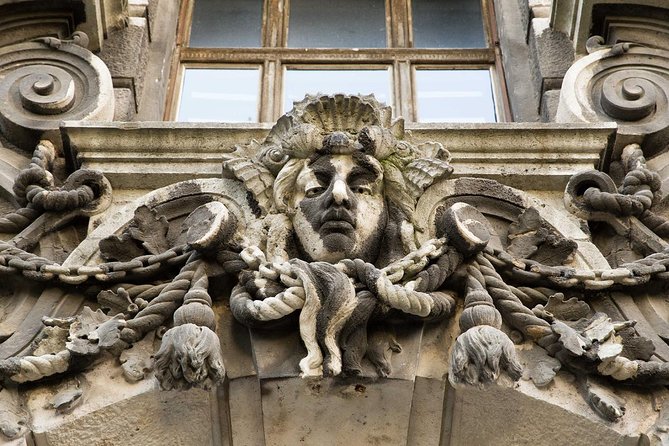
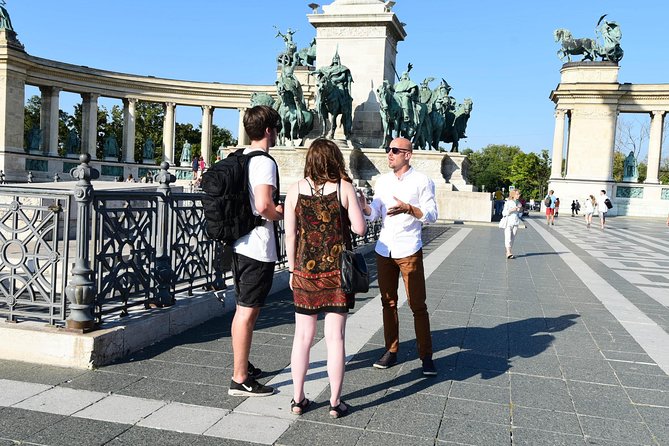
Heroes’ Square gets about 20 minutes, making it one of the longer stops. The square is dominated by a monumental statue complex honoring the Seven Chieftains of the Magyars and other important Hungarian leaders.
You will also see the Memorial Stone of Heroes. It is often called the Tomb of the Unknown Soldier, though that name is not quite accurate. A good guide can help you sort out this kind of detail and explain why the square carries such weight in Hungarian public life.
The scale of Heroes’ Square is hard to appreciate from a quick photograph. Give yourself time to look across the full arrangement of columns and statues. The square sits at the gateway to City Park, so the broad setting adds to its formal character.
This stop is free, but the 20 minutes will pass quickly if the guide is explaining the figures and the political meaning of the monument. If you want a slow look at the nearby museums or City Park, plan to return on your own.
Széchenyi Baths and Vajdahunyad Castle
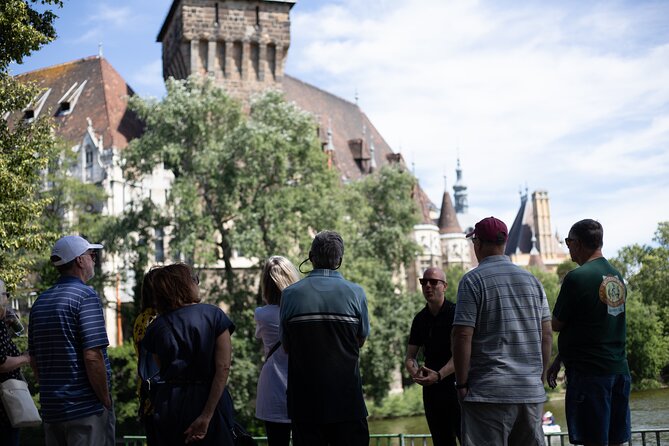
The Széchenyi Medicinal Bath receives about 15 minutes. The complex is one of Budapest’s best-known thermal bath sites and is supplied by two hot springs, with water temperatures listed at 74 and 77 degrees Celsius.
That does not mean you will have time for a bath during this tour. You are making a sightseeing stop, and admission is not included. Think of it as a look at one of the city’s signature institutions, not a bathing session.
The bath is followed by Vajdahunyad Castle, with about 10 minutes allocated. The castle was built in 1896 for the Millennial Exhibition, marking 1,000 years since the Hungarian Conquest of the Carpathian Basin in 895. Its design draws on several Hungarian architectural styles, which gives it a storybook appearance.
Admission to the castle is not included. The short stop is best for seeing the exterior and learning why a building from 1896 looks much older. If you have a special interest in the castle or the museums connected with it, you will need separate time and an additional ticket.
A few more options to weigh up in Budapest
- Budapest: Parliament Building Entry Ticket and Audio Guide
★ 4.5 · 3,844 reviews - Budapest: Opera House Guided Tour
★ 4.6 · 1,533 reviews - Budapest Small-Group Guided Tour on MonsteRoller e-Scooter
★ 5.0 · 1,517 reviews - Budapest: Guided Tour of the Parliament Building in Spanish
★ 4.6 · 1,240 reviews
Walking Andrássy Avenue toward central Pest
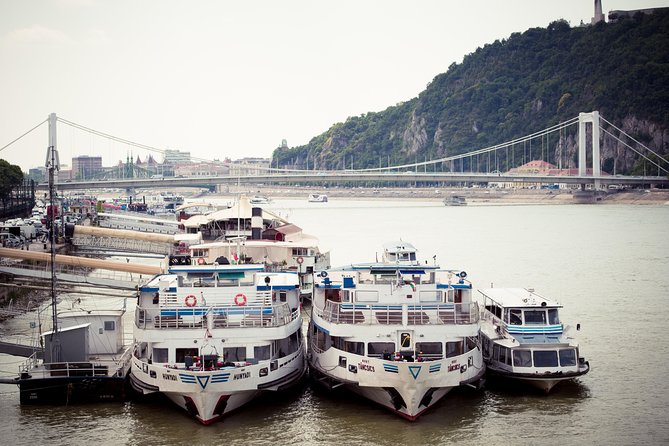
Andrássy Avenue links Erzsébet Square with City Park and dates from 1872. Its Neo-Renaissance mansions and townhouses give the route a sense of order and ceremony. The avenue was recognized as a World Heritage Site in 2002.
The tour allows about 10 minutes here. That is not enough to examine every facade, but it gives you a useful introduction to one of Budapest’s defining streets. I like this part because the city’s architecture becomes the attraction. You are not only moving from landmark to landmark. You are seeing how the spaces between them were designed.
The avenue also helps you understand the relationship between the Opera House and the outer park area. Budapest’s major public buildings were not scattered by accident. Their placement reflects the city’s effort to present itself as a modern European capital in the late 19th century.
A coffee and cake pause with a local guide
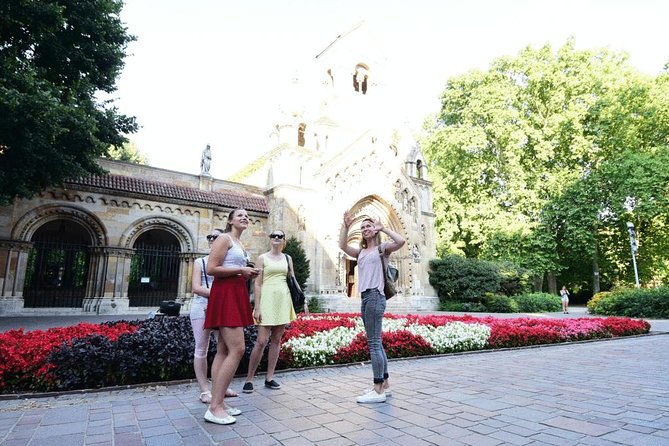
Coffee and cake are included, along with snacks and coffee or tea. The exact café is not specified, so you should treat this as a local refreshment stop rather than a promised visit to a particular historic establishment.
Still, the pause adds real value. Three and a half hours of walking, standing, and public transport can feel long without a break. A café table also changes the tone. You can ask about food, customs, neighborhoods, or practical city matters without trying to speak while crossing a busy street.
The map and further recommendations are useful after the tour. A paper map may seem old-fashioned, but it helps you mark places you want to revisit. Since several stops are quick exterior visits, the guide’s suggestions can help you choose where to spend your remaining time in Budapest.
St. Stephen’s Basilica and Liberty Square
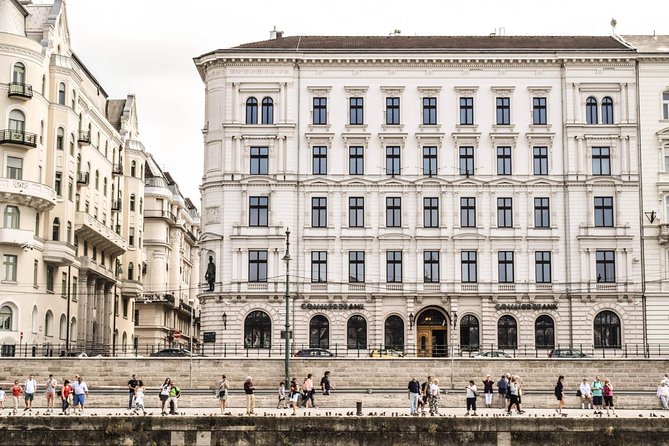
St. Stephen’s Basilica receives about 15 minutes. The basilica is named for Stephen, Hungary’s first king, who lived from about 975 to 1038. His right hand is kept in a reliquary, an unusual detail that gives the church a direct connection to Hungary’s earliest royal era.
Admission is not included. The short stop suggests that the focus is likely an exterior introduction rather than a full interior visit. If you want to see the church inside, check the visiting arrangements separately and return with enough time.
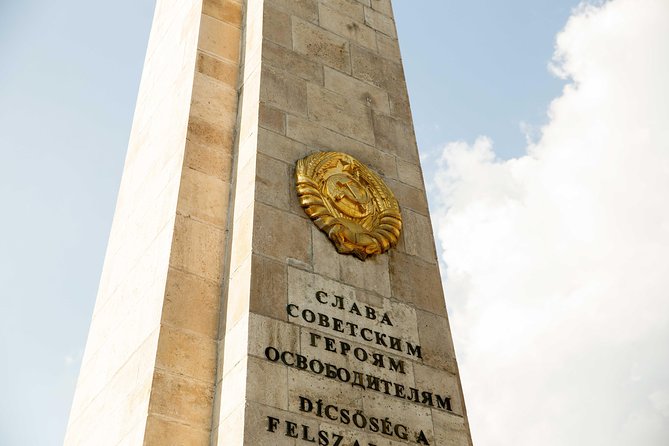
Liberty Square gets about 20 minutes and is one of the more serious parts of the route. The square contains memorials connected with Hungarian Jewish victims of the Holocaust and Soviet soldiers who liberated Budapest from the Nazis in 1945. It is also near the United States Embassy and the historicist headquarters of the Hungarian National Bank.
This is a place where context matters more than speed. You are not simply looking at statues. You are seeing how different memories of the 20th century occupy the same public space. The guide’s role is especially important here, and the positive comments about the tour’s historical explanations are encouraging.
Parliament, Chain Bridge, and the Danube memorial
The Hungarian Parliament Building gets about 10 minutes. The building is the seat of Hungary’s National Assembly and one of the country’s best-known landmarks. Its position along the Danube makes it one of Budapest’s most recognizable views.
Admission is not included, and 10 minutes is not enough for an interior visit. This is a photo and orientation stop. If Parliament is high on your list, plan a separate visit rather than expecting this tour to cover it fully.
The route then reaches the Széchenyi Chain Bridge, which crosses the Danube between Buda and Pest. The bridge is named for Count István Széchenyi and gives you a clear sense of how the two sides of the city connect.
The final listed stop is Shoes on the Danube Bank. This memorial honors Jews murdered by Arrow Cross militia during the Second World War. The bronze shoes along the river are simple, quiet, and painful to see. The 10-minute visit is brief, but the subject deserves respectful attention.
This ending gives the tour emotional balance. Budapest is not presented only through opera houses, baths, and grand government buildings. You also face the violence that shaped the city and its people.
What the $94.63 price includes
At $94.63 per person, this is not a bargain-priced walking tour. The value depends on how much help you want during your first hours in Budapest.
You are paying for about three and a half hours with a local guide, a small group of no more than 15 people, public transport tickets, coffee and cake, snacks, a map, and further recommendations. You also get a route that would take more planning to arrange independently.
The free admission at many stops keeps the outing simple, but three notable places list admission as not included: Vajdahunyad Castle, St. Stephen’s Basilica, and the Hungarian Parliament Building. That is not a problem if you mainly want an introduction from the outside. It is worth considering if you expected a tour with several interior visits.
I would compare this price with the cost of a private guide, several separate transport fares, and the time needed to plan the route yourself. For a solo visitor or a couple who values local explanation and easy navigation, the price can make sense. For a family or group already comfortable with public transport, it may feel high.
Group discounts are available, but the exact discount is not specified. Children must be accompanied by an adult.
Pace, comfort, and practical limits
The tour operates in all weather, so dress for the forecast. You will be outside at many stops, and the experience requires a moderate level of physical fitness. Comfortable shoes matter more than smart clothes.
The pace appears steady rather than frantic. Ferenc was praised for keeping the group moving while leaving room for questions, and Fanni was described as friendly, helpful, and accommodating. Those qualities are more useful than a guide who simply recites facts.
Still, the route covers a lot in a short period. The listed stop times add up to roughly two hours and 10 minutes, leaving the rest for transport, walking, explanations, and the café pause. You should expect short visits at several landmarks.
This tour suits you best if you want to get your bearings, learn the broad story of Pest, and identify places for later visits. It is less suitable if you prefer long museum sessions, extensive church interiors, or plenty of free time at every stop.
Who should book this introduction to Budapest?
I would recommend it most strongly to first-time visitors staying in Budapest for a few days. The route gives you a practical map of the city and introduces several places you might otherwise miss.
It also suits solo visitors who want a small social setting without committing to a full-day excursion. The local guide can answer the simple questions that are hard to solve from a guidebook, such as how the neighborhoods connect and which sights deserve another visit.
History-minded visitors will appreciate the movement from royal symbols and national monuments to Holocaust and wartime memorials. Architecture fans get the Opera House, Andrássy Avenue, the Basilica, Parliament, and the Chain Bridge in one outing.
I would hesitate if your top priority is entering the Parliament Building, bathing at Széchenyi, or touring the Opera House interior. Those experiences are not part of the included admission. You will need separate plans.
Should you book it?
Book this tour if you want a friendly, efficient first look at Budapest with transport handled for you. The strongest reasons are the small group, the local guides’ patient approach, the useful mix of sights, and the chance to ask questions over coffee and cake.
Think carefully about the price and the exterior-focused format. At $94.63, you should value orientation and local explanation more than included entry tickets. For a first day in the city, I think it can be a good investment. For a repeat visit or a budget-focused trip, you may prefer to use Budapest’s public transport and visit fewer sights at your own pace.
Free cancellation is available if you cancel at least 24 hours before the start time. Changes or cancellations made later are not accepted for a refund.
FAQ
Where does the Budapest sightseeing tour start?
It starts at the Hungarian State Opera House, Budapest, Andrássy út 22, 1061 Hungary.
Where does the tour end?
The activity ends back at the meeting point.
How long does the tour last?
The tour lasts approximately 3 hours and 30 minutes.
What language is the tour offered in?
The tour is offered in English.
Are public transport tickets included?
Yes. Tickets for public transport are included in the experience.
Is coffee and cake included?
Yes. Coffee and cake at a local café are included, along with snacks and coffee or tea.
Is a map provided?
Yes. You receive a souvenir map, along with further recommendations.
What is the maximum group size?
The group has a maximum of 15 people.
Are attraction admission tickets included?
Admission is listed as not included for Vajdahunyad Castle, St. Stephen’s Basilica, and the Hungarian Parliament Building. Several other stops are free admission stops.
Can I cancel for a full refund?
Yes, if you cancel at least 24 hours before the experience start time. Cancellations made less than 24 hours before the start time are not refunded.
Just added in Budapest
- Budapest: Private Walking Tour with a Local Guide★ 3.6 · 6 reviews
- Budapest: Danube River Views Bike Ride★ 4.8 · 23 reviews
- Budapest: City Bike Tour with Coffee Stop★ 5.0 · 37 reviews
- From Budapest: Guided Tour of Eger with Wine Tasting★ 4.5 · 6 reviews
- Walk to recent and aged spiritual sanctuaries near Budapest★ 5.0 · 5 reviews
- Walking consultancy with alternative psychologist and author★ 5.0 · 2 reviews
- Budapest: Guided Tour of the Parliament Building in Spanish★ 4.6 · 1,240 reviews
- Budapest: Vacation Photographer to collect great memories★ 5.0 · 49 reviews
Guided, compared.
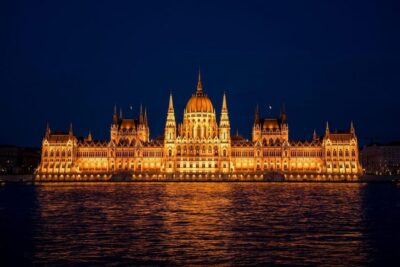
Parliament Building Entry Ticket and Audio Guide
Read our review →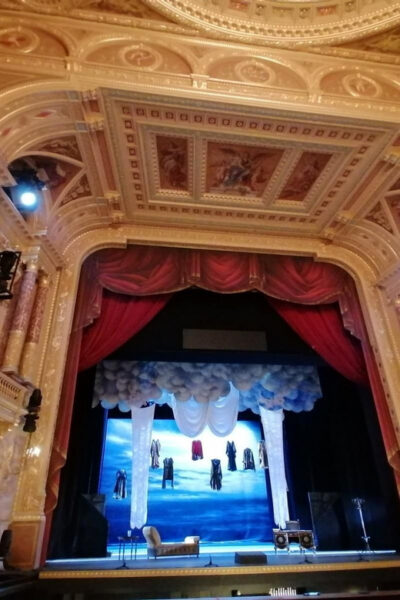
Budapest Small-Group Guided Tour on MonsteRoller e-Scooter
Read our review →
Guided Tour of the Parliament Building in Spanish
Read our review →
Budapest Danube Cruise with Drink, Audio Guide, Margaret Island
Read our review →