
REVIEW · HUNGARIAN WINE TASTINGS
Budapest: Essentials of Hungarian Wine Tasting Class
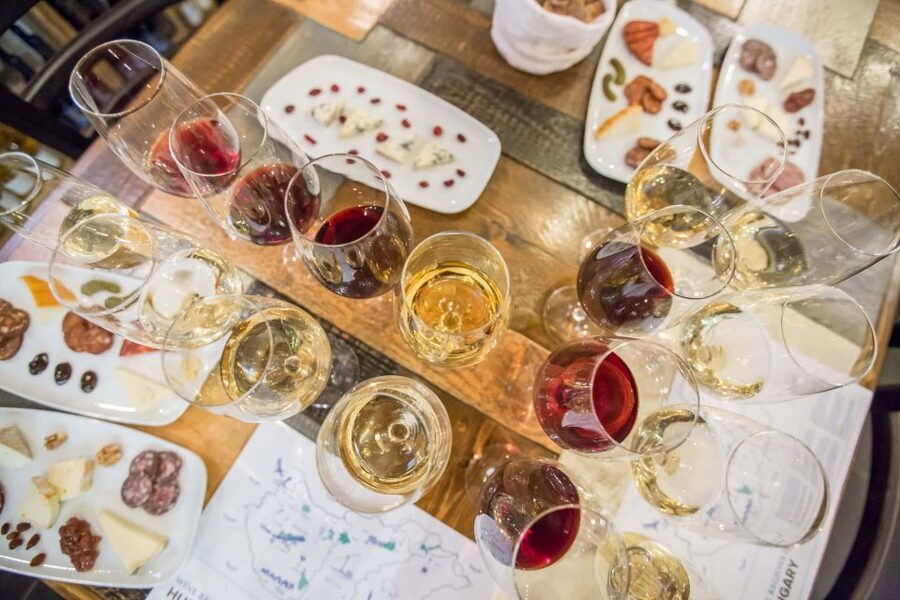
Hungarian wine deserves an evening of its own. This two-hour class gives you a clear, friendly introduction to the country’s wine regions, grapes, and styles, with eight wines poured alongside Hungarian cheese, meats, and other local flavors. It is a useful choice if you want more than a standard bar tasting but do not have time to visit the countryside.
I especially like the small-producer focus and the way each bottle helps explain a different part of Hungary’s wine story. The hosts, including Tomas, Carlos, John, Sebastian, and others on different evenings, have been praised for being warm, funny, and easy to follow. The main thing to consider is the generous pouring. This can feel closer to eight small glasses than eight tiny tastes, so pace yourself and eat as you go.
In This Review
- Key points to know before booking
- Why Hungarian wine makes a good Budapest lesson
- Entering the old cellar near the National Museum
- The first pour sets the map in motion
- Whites, reds, and grapes beyond Tokaj
- Local cheese and charcuterie make the wine easier to understand
- Tokaj aszú brings the evening to a sweet finish
- The hosts shape the mood
- What the $65 price gets you
- Who will enjoy this class most?
- Should you book the Hungarian wine tasting class?
- FAQ
- Where does the Hungarian wine tasting take place?
- How far is the venue from the National Museum?
- How can I reach the tasting room by public transport?
- How long does the class last?
- How many wines will I taste?
- Is food included?
- Is the class taught in English?
- How old must I be to participate?
- Can I cancel my booking?
Key points to know before booking
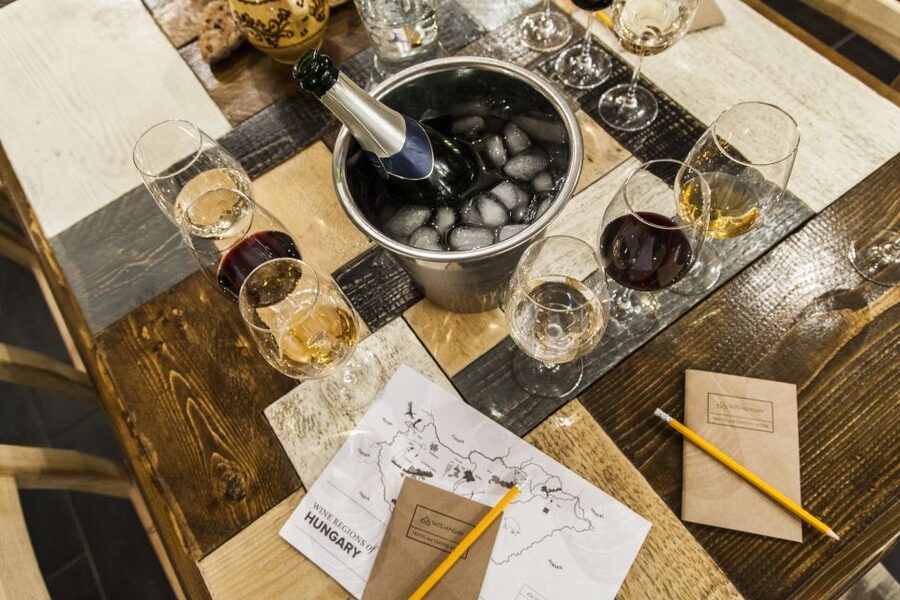
- Eight wines in two hours: The lineup normally moves from an aperitif through whites, reds, and a sweet Tokaj aszú.
- A useful Hungary-wide introduction: You learn about the major regions, key grapes, soils, climate, winemaking traditions, and current changes in the industry.
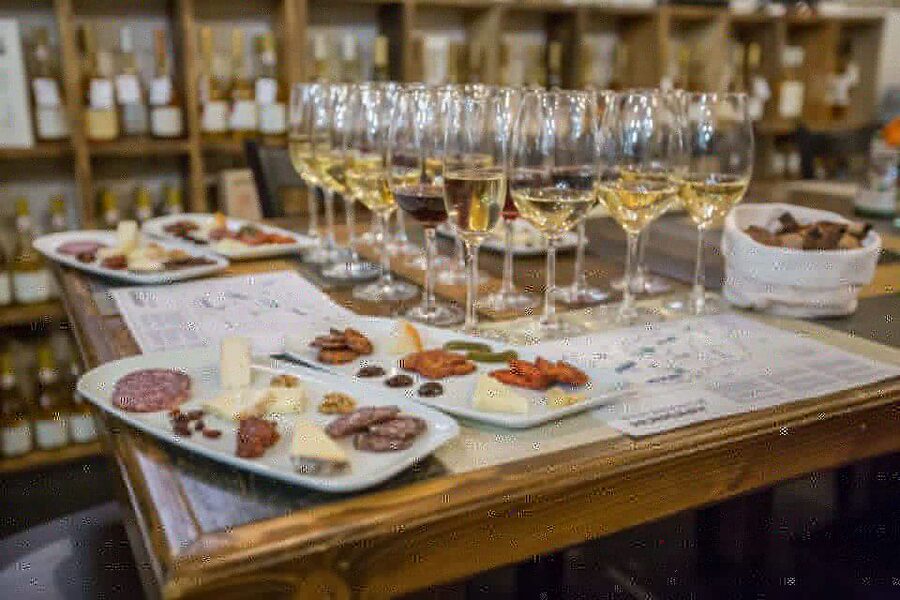
- Food is part of the lesson: Hungarian cheeses, charcuterie, bread, meats, and other local flavors help show how the wines work with food.
- A central Budapest location: The Tasting Table Budapest is at Bródy Sándor utca 9, about 150 meters from the National Museum.
- Good for beginners and wine fans: The tone is relaxed enough for first-timers, while the selection and regional detail give experienced drinkers plenty to think about.
- Plan for a full evening feeling: Generous pours and the social format can make this more substantial than the advertised two hours.
Why Hungarian wine makes a good Budapest lesson
Hungary is easy to overlook as a wine country. Visitors know Tokaj, perhaps, and may recognize a few supermarket bottles, but the national picture is much wider. Hungary has several wine regions, a range of native grapes, and a mix of crisp whites, serious reds, sparkling wines, rosé, and sweet wines.
That variety is exactly why a guided tasting helps. Eight unrelated bottles could leave you with a pleasant buzz and little sense of place. Here, the wines are chosen to build a story. You move across regions and styles, learning why a grape or bottle tastes the way it does and how Hungarian producers fit into the wider wine world.
I like this approach because it gives you a way to order wine later. Instead of remembering only that you liked the third glass, you can connect a style to a region, a grape, or a meal. The tasting sheets and Hungarian wine-region map make that easier. Keep them. They are useful when you visit a wine shop or restaurant later in your trip.
The class also gives needed context about Hungary’s winemaking past and present. You hear about older traditions, the importance of local conditions, and promising changes among modern producers. The aim is not to turn you into a sommelier in 120 minutes. It is to give you enough structure to keep exploring.
More Hungarian wine tastings:
- Budapest: Premium Sightseeing Cruise with Tokaj Frizzante
★ 4.7 · 2,510 reviews - From Budapest: Etyek Wine Tasting Tour with 3-Course Meal
★ 4.8 · 557 reviews - Hungarian Wine Tasting (with Cheese and Charcuterie) in Budapest
★ 5.0 · 531 reviews
Entering the old cellar near the National Museum
The meeting point is The Tasting Table Budapest, at Bródy Sándor utca 9 in District VIII. It is only about 150 meters from the National Museum, so you can pair the class with an afternoon in the museum district or reach it easily after sightseeing.
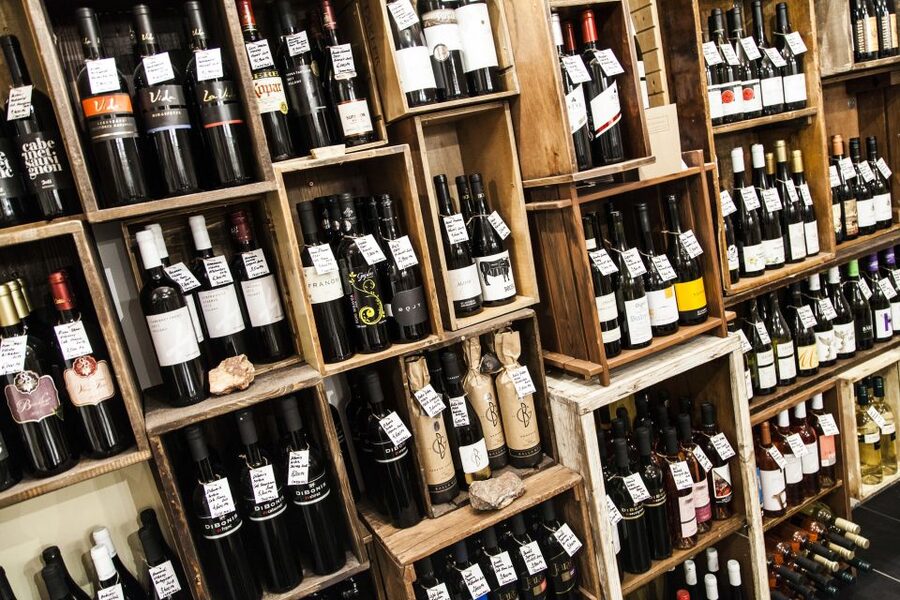
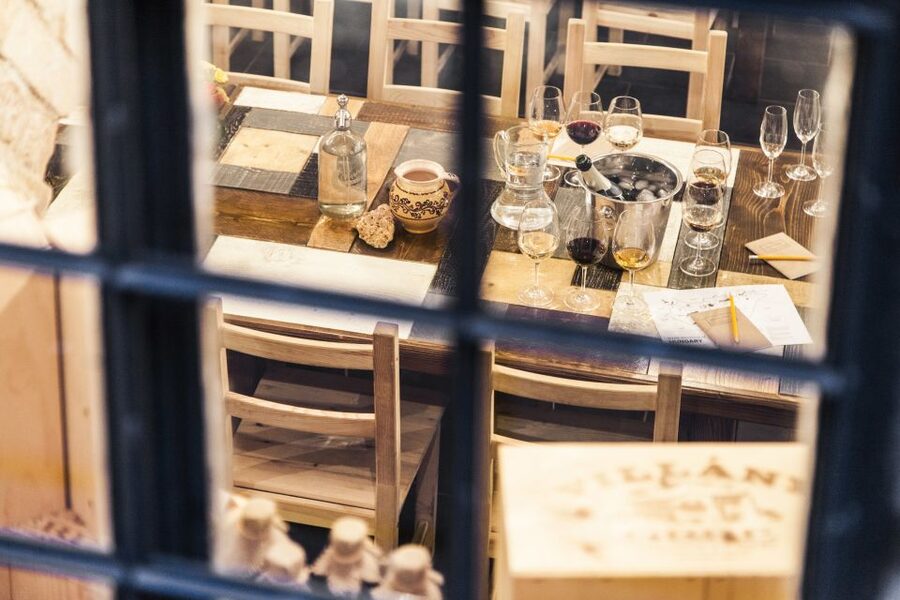
The venue has been described as a charming old cellar with brick arches. That setting matters. Wine education can feel stiff in a bright classroom, but a cellar gives the evening a more relaxed sense of place. You are in a wine shop and tasting room, not a formal restaurant, so the mood is friendly and practical.
The location is also easy to reach by public transport. Astoria on metro line M2 and Kálvin tér on line M3 are each about a five-minute walk away. Trams 47 and 49 also stop at those transport hubs. Check the address before setting out, especially if you are arriving after dark, but this is one of the easier food and drink activities to fit into a Budapest evening.
The class is offered on most evenings from 6:00 PM to 8:00 PM. That timing works well. You can spend the day sightseeing, attend the tasting, then decide if you want a later dinner or simply walk back through central Budapest with a new list of bottles in mind.
The first pour sets the map in motion
The tasting begins with an aperitif. The exact bottle can change, but the opening wine gives the host a gentle way to explain the format and get the table talking.
From there, the sommelier introduces the basic map of Hungarian wine. You learn about the main regions, where they sit in the country, and the broad styles associated with them. This is the part that can sound abstract in a book but becomes easier when you taste along.
The hosts are not simply reciting technical facts. Several have been praised for explaining how soil and climate affect flavor, as well as for connecting wine with Hungarian culture and history. Tomas, for example, has been singled out for making regional differences understandable. Carlos has been described as both entertaining and well informed about Hungary and its wines.
The tone seems to vary a little by host. Some sessions are highly conversational, while others offer a longer run of facts and stories. That is not necessarily a flaw, but it is worth knowing if you prefer a tightly timed lecture. One evening reportedly ran to about two and a half hours because the conversation and tasting continued. Another attendee felt the host supplied more detail than anyone could retain. Bring questions, but do not worry about remembering every term.
Whites, reds, and grapes beyond Tokaj
After the aperitif, the class moves through whites and reds, with rosé possibly included. The stated format often works out as one sparkling wine, three whites, three reds, and one sweet wine, though the selection can change.
This is where the tasting earns its price. Hungary is not presented as one single wine style. You get a sense of the country’s different grapes and regional personalities, rather than being asked to judge a single famous bottle.
The white wines help show the range of Hungarian production. Some may be fresh and bright, while others can have more body or distinctive local character. The host explains the grapes and the reasons each bottle was selected, helping you understand what to look for rather than simply announcing a score.
The red section adds another useful contrast. You may encounter familiar international grapes alongside varieties that are less common in your home market. One attendee enjoyed tasting grapes they had never tried before. That is one of the pleasures here: the class can move you beyond the same familiar Cabernet Sauvignon, Chardonnay, or Pinot Noir choices.
You do not need a trained palate. The hosts are used to people with different levels of wine experience. One session was praised for being unpretentious enough for beginners while still offering enough detail for someone who enjoys picking out unusual notes in a Cabernet Franc. That is the right balance for a holiday activity.
I suggest taking brief notes rather than trying to write a full tasting essay. Record the wine you liked, the region, the grape if given, and one word about its style. After several pours, your handwriting and attention may lose some of their precision. The tasting sheet is there to help, not to turn your evening into homework.
More food and drink tours in Budapest:
- Budapest: Unlimited Prosecco, Beer and Aperol Spritz Cruise
★ 4.8 · 25,310 reviews - Budapest: Unlimited Prosecco, Beer & Aperol Spritz Cruise
★ 4.5 · 3,371 reviews - Budapest: Wine, Cheese, and Charcuterie Tasting
★ 4.9 · 647 reviews - Budapest: Guided Foodie Walking Tour with Food and Drinks
★ 4.9 · 453 reviews
Local cheese and charcuterie make the wine easier to understand
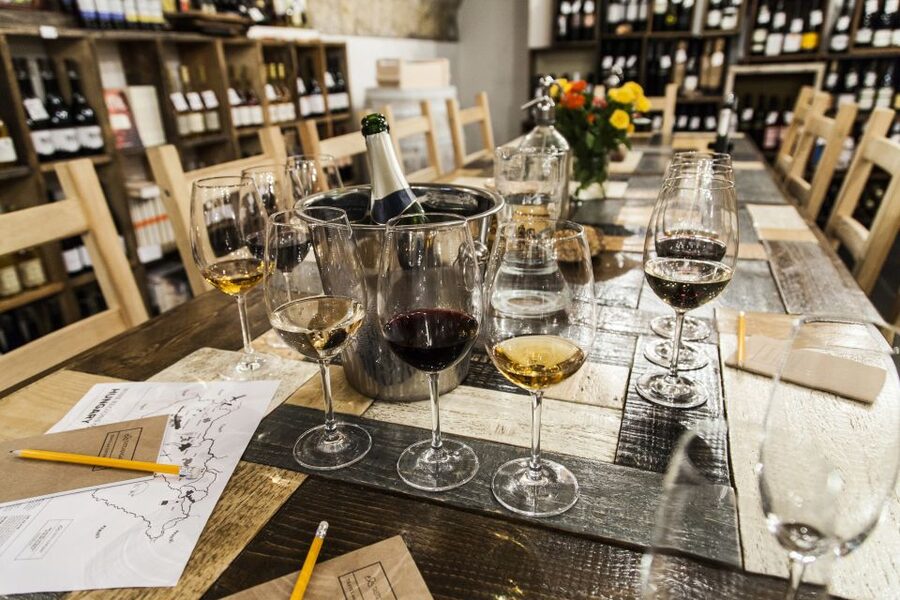
Food pairings are not a decorative extra. They keep the tasting grounded and give you a better idea of how these wines work at the table.
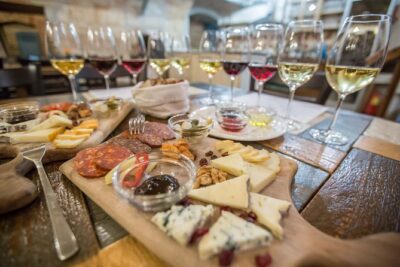
Expect Hungarian flavors presented with cheese, charcuterie, meats, bread, and similar small bites. Past sessions have also included pumpkin seed oil and chutney. The exact spread may vary, but the pattern is clear: you receive enough food to taste with the wines, not just a token cracker.
The cheese and meat boards have received especially strong praise. One attendee found the food generous enough to serve as dinner, while another felt there could have been more munchies for the number of wines. Both points are useful. The pairings are a substantial part of the experience, but if you need a large meal, you may still want dinner afterward.
Pay attention to what happens when you taste the wine alone and then with food. A sharp white may soften beside cheese. A red may work better with cured meat. A sweet Tokaj can make sense with a savory bite in a way that is less obvious when you taste it by itself.
The food also gives you a small taste of Hungary without requiring a separate restaurant reservation. It is not a full cooking class or a formal dinner, but it adds local character and helps break up the talking.
Tokaj aszú brings the evening to a sweet finish
The final wine is a sweet botrytised Tokaj aszú, one of Hungary’s best-known wine styles. Botrytised grapes are affected by noble rot, a natural process that concentrates sweetness and flavor. You do not need to master the production method to appreciate why this wine is used as the finale.
Ending with Tokaj gives the class a strong closing point. You have moved through sparkling, white, red, and perhaps rosé wines, then arrive at something unmistakably different. It also shows why Hungary deserves more attention than a single famous name. Tokaj is important, but it is part of a larger national story.
The sweet wine can be a highlight even for people who normally prefer dry wines. The host explains its place in Hungarian wine culture and helps you understand how dessert wines fit into the wider lineup. If you are buying a bottle afterward, this is one of the styles worth asking about.
The hosts shape the mood
The class depends heavily on the person leading it. The strongest sessions combine clear explanations with humor and room for conversation.
Tomas has been praised for his grasp of Hungarian regions and for explaining how soil and climate influence taste. Carlos has been described as welcoming, funny, and well informed about both wine and the country. John has received praise for his personal route into wine work and for his engaging delivery. Sebastian was noted for making a solo participant feel included. Other hosts, including Somali and Christian, have also been praised for warmth and enthusiasm.
Names and personalities change from evening to evening, so I would not book solely for one particular host. Still, the repeated pattern is encouraging: the hosts care about the producers and wines they present, and that enthusiasm comes through.
The social setup is another plus. You may share a table with people from several countries who are also curious about Hungarian wine. The class gives you an easy way to talk without the awkwardness of approaching strangers in a bar. One group even continued for a drink together afterward.
There is one practical sound issue to keep in mind. In a lively group, side conversations can make it harder to hear every explanation. Sit close to the host if possible, and ask people at your table to hold side discussions until the next pour.
What the $65 price gets you
At $65 per person, this is not the cheapest way to drink wine in Budapest. You can buy a bottle for less, and wine bars may offer individual glasses with no lecture attached.
The value comes from the structure. You receive eight selected Hungarian wines, mineral water, food pairings, a map, tasting notes, and two hours with a sommelier. The wines are bought directly from producers the team has come to know, and many come from small producers who may not be easy to find outside Hungary.
Generous pours improve the value but also change the evening. Some people describe the glasses as nearly normal servings rather than tiny samples. That is good news if you want a substantial tasting, but it means you should not schedule a demanding activity immediately afterward. Eat the pairings, use the water, and do not feel obliged to finish every pour.
The tasting can also save you from spending money on bottles at random. If you find a favorite, the shop may offer the chance to buy it, and an earlier session included a discount on wines tasted. The supplied details do not promise that discount for every booking, so ask on the night rather than counting on it.
Who will enjoy this class most?
I would recommend it most strongly to:
- Curious beginners who want plain explanations without wine-school pressure
- Experienced wine drinkers looking for grapes and regions they may not know
- Solo visitors who would enjoy a built-in social evening
- Couples and small groups seeking a relaxed activity near the National Museum
- Food-minded visitors who like cheese, cured meats, bread, and local flavors with their drinks
- Short-stay visitors who cannot spare a full day for a wine-region excursion
It is less suitable if you want a quiet private tasting, a full meal, or a tour of vineyards outside Budapest. It is also not the right pick if you dislike group conversation or prefer to sample only a few wines slowly.
The legal drinking age in Hungary is 18, and participants must be at least 18. The minimum booking requirement is two people, and a session can be changed or canceled if that minimum is not met. You can cancel up to 24 hours ahead for a full refund, and reserve now while paying later, which is useful when your Budapest schedule is still shifting.
Should you book the Hungarian wine tasting class?
I would book this if you want a useful introduction to a wine country that many visitors barely explore. The combination of eight wines, local food, a central cellar setting, and an enthusiastic English-speaking host gives you far more direction than simply ordering an unfamiliar bottle at dinner.
Book it early in your Budapest stay if possible. That way, you can use what you learn when choosing wine for later meals or when shopping for a bottle to take home. Choose the 6:00 PM session if that time suits you, since it leaves the rest of the evening open and has worked well for past participants.
Skip it only if you want a full meal, a private experience, or a countryside vineyard visit. For most wine-curious visitors, $65 is a fair price for a social, filling, and genuinely educational evening.
FAQ
Where does the Hungarian wine tasting take place?
It takes place at The Tasting Table Budapest, Bródy Sándor utca 9, 1088 Budapest, in District VIII.
How far is the venue from the National Museum?
The tasting room is about 150 meters from the National Museum.
How can I reach the tasting room by public transport?
The venue is about a five-minute walk from Astoria on metro line M2 and Kálvin tér on metro line M3. Trams 47 and 49 also stop at Astoria and Kálvin tér.
How long does the class last?
The scheduled duration is two hours, usually from 6:00 PM to 8:00 PM.
How many wines will I taste?
The class includes eight Hungarian wines. The lineup begins with an aperitif and usually includes whites, reds, and a sweet Tokaj aszú wine. Rosé may also be included.
Is food included?
Yes. The tasting includes local Hungarian food pairings, such as cheeses, charcuterie, meats, bread, and other local flavors.
Is the class taught in English?
Yes. The host or greeter and the tasting are in English.
How old must I be to participate?
The legal drinking age in Hungary is 18, so participants must be at least 18 years old.
Can I cancel my booking?
Yes. You can cancel up to 24 hours in advance for a full refund. You can also reserve now and pay later.
Just added in Budapest
- Budapest: Private Walking Tour with a Local Guide★ 3.6 · 6 reviews
- Budapest: Danube River Views Bike Ride★ 4.8 · 23 reviews
- Budapest: City Bike Tour with Coffee Stop★ 5.0 · 37 reviews
- From Budapest: Guided Tour of Eger with Wine Tasting★ 4.5 · 6 reviews
- Walk to recent and aged spiritual sanctuaries near Budapest★ 5.0 · 5 reviews
- Walking consultancy with alternative psychologist and author★ 5.0 · 2 reviews
- Budapest: Guided Tour of the Parliament Building in Spanish★ 4.6 · 1,240 reviews
- Budapest: 3-Hour Trabant Sightseeing Tour★ 4.7 · 28 reviews
Hungarian Wine Tastings, compared.
Hungarian Wine Tasting (with Cheese and Charcuterie) in Budapest
Read our review →
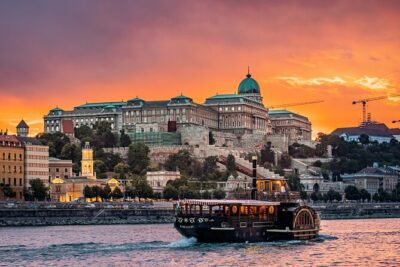
Budapest River Cruise with 1 Free Tokaj Frizzante and Audio Guide
Read our review →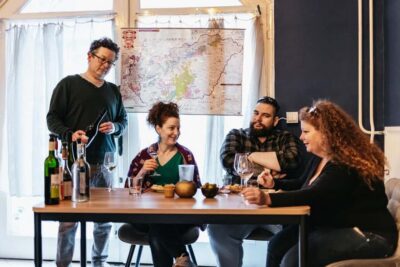
Budapest Paddle Steamer Danube Cruise with Tokaj & Audio Guide
Read our review →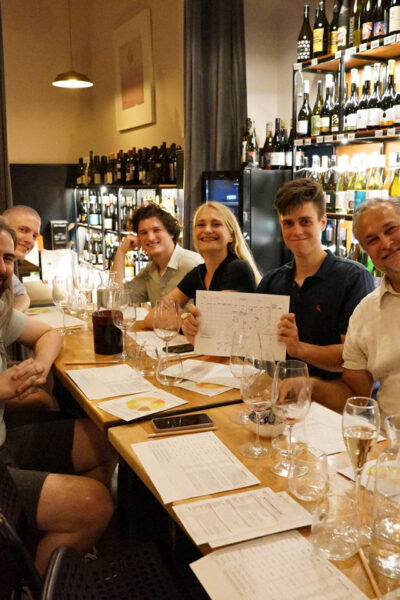
8-Tier Hungarian Wine Tasting in a Cozy Downtown Wine Bar
Read our review →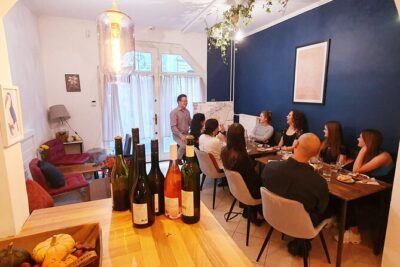
Browse the lists this tour appears in