
REVIEW · COOKING CLASSES
Hungarian Cooking and optional Local Market Tour
Budapest tastes better from a kitchen. This four-hour experience combines a hands-on Hungarian cooking class with an optional visit to the Central Market Hall, giving you more than a restaurant meal. I especially like the small-group format, which allows instructors such as Vesna, Bernadette, Brigitte, Betty, and Sylvia to offer real help, and I like that you eat what you prepare with Hungarian wine, local drinks, and plenty of cultural stories. The main caution is that the market option and return transport have caused confusion for some people, so check exactly what your booking includes before you go.
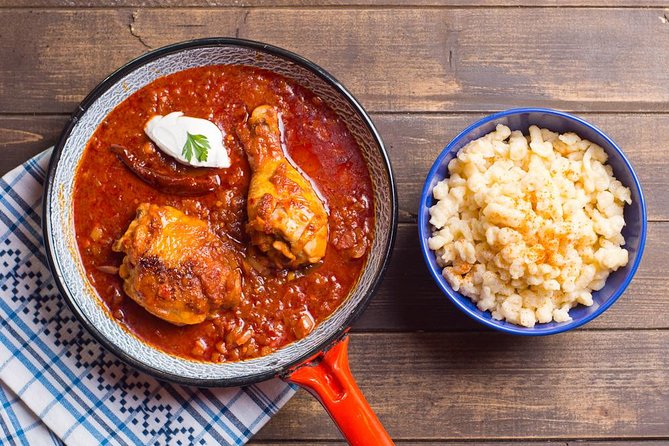
The menu usually centers on goulash soup, chicken or mushroom paprikash with handmade nokedli, and apple strudel, though dishes can vary. Vegetarian cooking is available by request, but people with allergies or religious dietary needs should ask early because substitutions may be limited.
In This Review
- Key points to know before booking
- What this Budapest cooking class is really like
- Starting at Central Market Hall
- Getting from the market to the cooking school
- Cooking goulash soup from the beginning
- Making paprikash and fresh nokedli
- Folding apple strudel at the end
- Wine, pálinka, and Hungarian food culture
- The group size and teaching style
- What can go wrong
- Who will enjoy this experience most
- Booking advice and final verdict
- FAQ
- How long does the Hungarian cooking class last?
- Where does the experience begin?
- Where does the experience end?
- Is the Central Market Hall tour included?
- What food will I prepare?
- Is a vegetarian menu available?
- Are drinks included?
- How large is the group?
- Can I cancel for a full refund?
Key points to know before booking
- Three traditional dishes from scratch: Expect practical work with soup, paprikash, homemade spaetzle-style nokedli, and strudel.
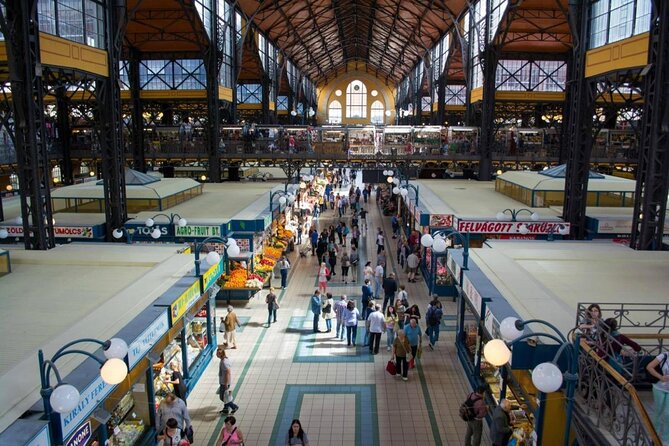
- Optional Central Market Hall visit: You can learn about paprika, meats, cheeses, pastries, and produce before cooking.
- Instructors receive the strongest praise: Vesna, Bernadette, Brigitte, Betty, and Sylvia are repeatedly described as patient, clear, warm, and encouraging.
- Food and drinks are part of the lesson: Wine, beer, local snacks, pálinka, and sometimes Unicum add a taste of Hungarian food culture.
- Maximum group size is 15: That is small enough for hands-on participation, though the exact class size can vary.
- Clarify the ending: The cooking school may be on Bécsi Street in Buda or Páva Street in Pest, and the standard booking may not include a taxi back to the market.
What this Budapest cooking class is really like
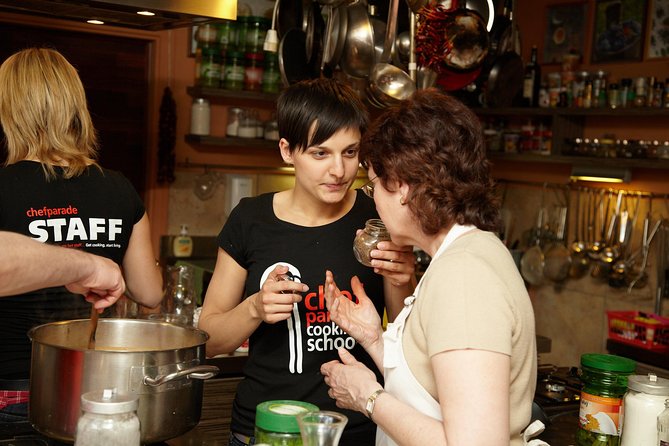
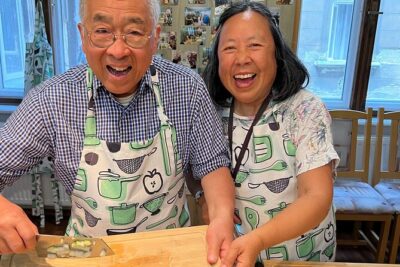
This is not a demonstration where you sit at a counter and watch a chef do everything. You prepare food, work through the recipes, and then sit down to eat the results. That matters because Hungarian cooking often depends on small choices: how you build a stock, when you add paprika, how long you stir the sauce, and how you handle the dough.
The class lasts about three to four hours, depending on the group and the menu. You should expect a relaxed social setting, with cooking mixed with stories about Hungarian traditions, family food, local ingredients, and everyday life. Several classes have included wine or beer while the food cooks, plus a small pálinka tasting.
I like this format for a first visit to Budapest. You get a meal, a recipe lesson, and a better idea of why paprika, sour cream, seasonal produce, and long-simmered sauces matter here. You also leave with recipes, which gives the experience value beyond one afternoon.
The price is about $126.98 per person. That is not cheap for a meal in Budapest, but it covers roughly four hours of instruction, food, drinks, and cultural explanation. If the market visit is included in your selected package, the price also buys a guided introduction to one of the city’s most useful food stops. For people who would otherwise spend money on a cooking class and a separate market visit, it can be fair value.
Still, this is a class, not a bargain lunch. You are paying for participation and instruction. If your main goal is simply to eat Hungarian food, a restaurant will cost less. If you want to understand and repeat the dishes at home, the class earns its price more easily.
More cooking classes in Budapest:
- Budapest Cooking Class & Market Tour with Local Guide & Wines
★ 5.0 · 553 reviews - Budapest Bike Tour with a Hungarian Goulash
★ 4.7 · 209 reviews - Budapest Bike Tour with Hungarian Goulash
★ 5.0 · 198 reviews
Starting at Central Market Hall
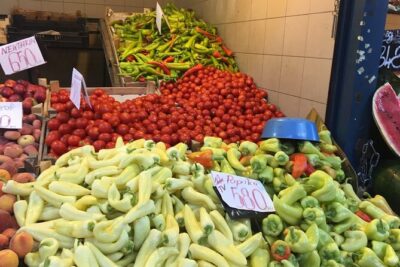
The optional market portion begins at the Central Market Hall in Budapest’s 1093 district. This is a practical place to start because you can see ingredients before hearing how they are used in the kitchen.
The guide introduces the market atmosphere and explains how Hungarians shop. The point is not only to walk past stalls and take photographs. It is to understand the choices behind familiar foods. You might compare paprika, inspect produce, taste local specialties, and learn which meats, cheeses, pastries, or condiments are worth buying.
One particularly useful part of the tour is the tasting. You may try different versions of Hungarian products and learn how quality and flavor can vary between similar stalls. That turns the market from a sightseeing stop into a short food lesson.
The market visit is usually around an hour, though the precise timing can vary. I would treat it as an introduction rather than a full shopping trip. Some people have found the pace too quick to buy much, while others found it just right for learning which products to seek out later.
If you want paprika, a cookbook, or packaged condiments, ask your guide early how much free time you will have. The guide may focus on explaining what to buy and what to avoid, which can be helpful, but too much warning leaves less time for shopping. If buying ingredients is important to you, arrive with a short list and make your plans clear.
Getting from the market to the cooking school
After the market, the class takes place at a Chefparade cooking school. The supplied details identify Páva Street 13 in Pest and Bécsi Street 27 in Buda as possible school locations. That is important because the meeting point is listed as Central Market Hall, but the cooking class does not always finish there.
Transportation has also been a source of confusion. Some packages include a return taxi, cookbook, or apron, while the basic booking may not. One account describes the group taking taxis from the market to the school, and another notes that a shared taxi was arranged at the end.
I would not leave this to chance. Before the day of the class, confirm:
- Which school address you will use
- How you will get from the market to the school
- Whether your package includes a return taxi
- Where the activity ends
- Whether an apron or cookbook is included
The standard information says the activity ends back at the cooking school, not necessarily at Central Market Hall. That distinction can affect your afternoon plans, especially if you have a train, a museum reservation, or luggage waiting elsewhere.
Cooking goulash soup from the beginning
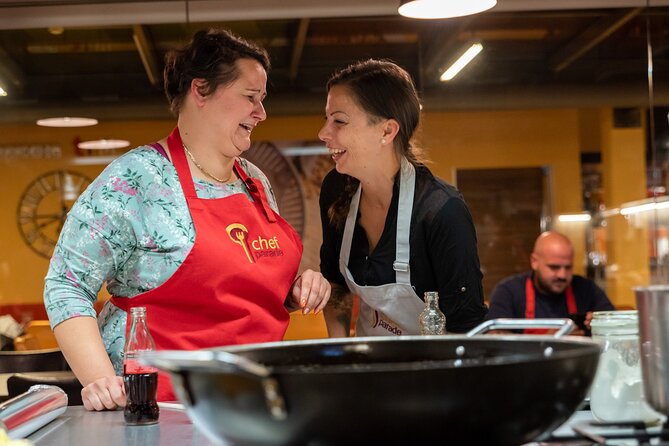
The first course is generally goulash soup, a hearty Hungarian dish made with beef and vegetables. The class may also use a vegetable stock, depending on the menu. You should expect to chop vegetables and take part in the preparation rather than simply receive a finished bowl.
Goulash soup is a good teaching dish because it introduces several basics of Hungarian cooking at once. You see how vegetables build flavor, how paprika changes the character of a dish, and why a soup needs time rather than just heat. It is filling, but it also sets up the rest of the meal.
Some sessions have substituted creamy potato soup or included porkolt instead. The exact menu is not guaranteed, so do not book this expecting one fixed set of dishes. The recurring pattern is three Hungarian courses prepared with guidance.
More markets in Budapest:
- Budapest Food Tour: Market to Tavern with 14+ Tasters & Wines
★ 5.0 · 434 reviews - Budapest: Hungarian Cuisine in the Market Hall (german)
★ 4.8 · 146 reviews - Budapest: Hungarian Cooking Class and Market Walk
★ 5.0 · 91 reviews - Easy Cooking Class Budapest – with Market Walk (local wine & pálinka included)
★ 5.0 · 62 reviews
Making paprikash and fresh nokedli
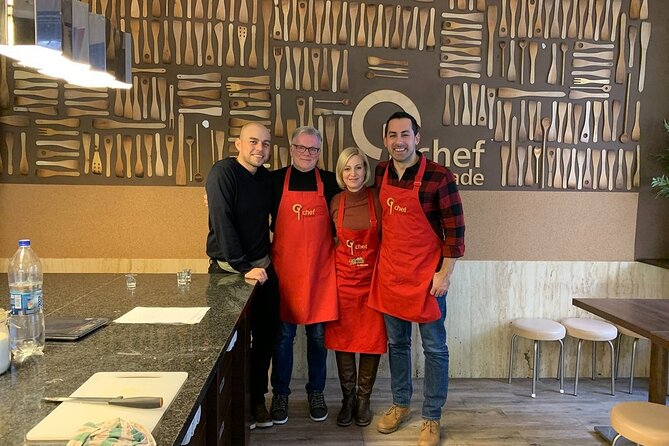
The main course is usually chicken paprikash with nokedli, a small homemade dumpling similar to spaetzle. A mushroom paprikash is available as an alternative, and a vegetarian menu can be requested in advance.
This is the part of the class that seems to offer the most useful technique. Chicken paprikash is not difficult because of a long ingredient list. It is difficult to get the sauce and cooking time right. The sauce needs attention, and the chicken should not be rushed.
The class may use boneless chicken, depending on the ingredients supplied, even though the recipe can traditionally call for a different cut. That may disappoint a serious home cook, but it also gives the instructor a chance to explain how the dish changes with different meat. Ask questions if you want to reproduce the traditional version at home.
Making nokedli by hand adds a satisfying bit of work. It is simple enough for beginners, but active enough that you feel involved. You will likely prepare the dough, cook the dumplings, and serve them with the paprikash rather than receiving them ready-made.
The class is especially good for people who want reasons, not just instructions. Instructors have explained alternatives, cooking choices, and the logic behind the recipes. That helps you adapt the meal when you return home and cannot find the exact Hungarian ingredients.
Folding apple strudel at the end
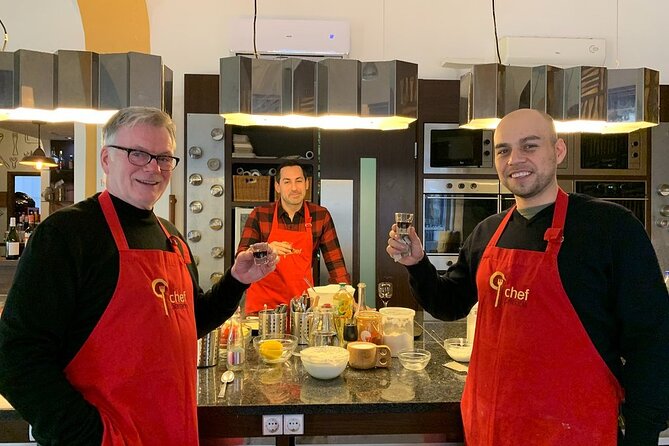
Dessert is generally apple strudel, made with thin pastry and an apple-cinnamon filling. It is a fitting finish because it gives you a different kind of kitchen task after the soup and stew.
You may prepare the filling, handle the pastry, and bake the strudel while the group finishes the savory courses. Pastry can be the most delicate part of the class, so expect guidance rather than perfection. The goal is to understand the process and enjoy a warm dessert, not to pass a professional baking exam.
One nice touch is that there may be extra strudel to take away. That is not something I would assume for every session, but it has happened. The class also provides recipes, and some people have bought the Hungarian Classics cookbook, paprika, and other condiments afterward.
Wine, pálinka, and Hungarian food culture
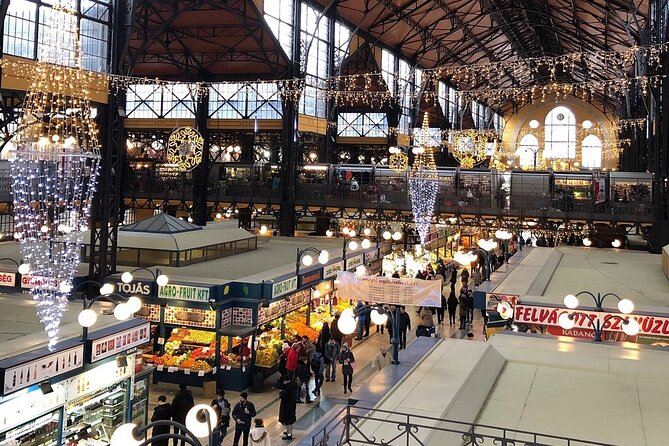
The drinks are not just decoration. Wine, beer, and local spirits help explain how food is enjoyed in Hungary. Pálinka, the fruit brandy, is often part of the tasting, and some classes include Unicum as a digestif.
Drink service can make the class more social, but you can still focus on the cooking. If you do not drink alcohol, check the available alternatives with the provider before booking, since the advertised experience specifically mentions wine and spirits.
The cultural talk is one of the best reasons to choose this class over a generic cooking lesson. Instructors discuss Hungarian life, food traditions, local ingredients, and the role of the market. The strongest instructors are not only good cooks. They are patient teachers who explain clearly and keep the room comfortable for people with different levels of kitchen experience.
You do not need to be an experienced cook. Beginners have been able to follow the recipes, and people who cook often have still picked up useful tricks. The hands-on work is real, but it is guided.
The group size and teaching style
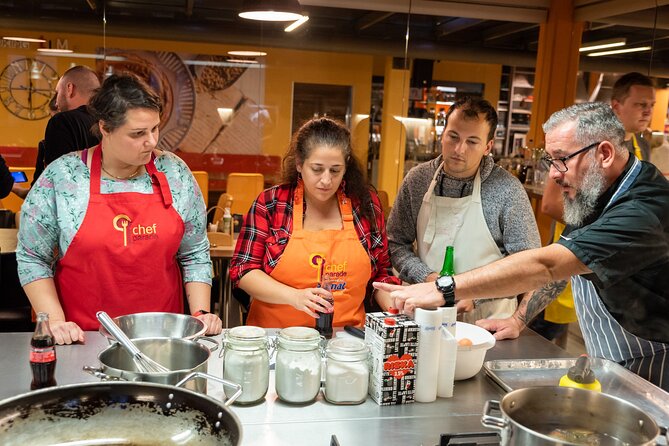
The maximum group size is 15 people. That is not a private class, but it is small enough to make questions possible. If only a few people book, you may receive something close to a private lesson. One class even operated with a single participant.
The group dynamic can shape the day. In a larger class, you may prepare one part of a recipe while the group cooks the full meal together. That can be social and efficient, but it means you may not personally complete every step of every dish.
If you want full control of each recipe, ask how the work is divided at the beginning. The class is designed for shared cooking and shared eating, not for each person to make a separate three-course meal. You will still get hands-on practice, but the exact amount depends on the group and instructor.
The instructors named in the available information receive consistently warm praise. Vesna is often singled out for her market explanations, cooking guidance, patience, and friendly manner. Bernadette and Brigitte are praised for clear instruction, while Betty is noted for explaining techniques in a way that transfers well to other dishes. Sylvia has been appreciated for both market guiding and kitchen teaching.
That range of teaching styles is a plus. It also means the tone may vary slightly depending on who leads your session.
What can go wrong
The main concern is not the food. It is communication about the optional market tour, school address, and transport.
One person paid for the market option but found that the cooking school did not seem aware of it. Another found the market visit rushed and was surprised by differences between basic and premium packages. The provider acknowledged that the package description could be confusing, particularly regarding the taxi, cookbook, and apron.
The class can also feel hurried if the room must be cleared for the next session. Most descriptions portray a pleasant meal at the end, but one account describes eating quickly and waiting for a taxi afterward. That is a good reason not to schedule an important appointment immediately after the class.
Dietary needs deserve advance attention. A vegetarian menu is available on request, but options for allergies and religious restrictions may be limited. State your needs when booking, not on the morning of the class.
Finally, the menu can change. Goulash, chicken paprikash, nokedli, and apple strudel are the advertised examples, but potato soup, porkolt, mushroom paprikash, or palacsinta have also appeared in classes. If flexibility sounds enjoyable, this is no problem. If you need a specific dish, ask first.
Who will enjoy this experience most
I would choose this class if you want to do something social and food-focused in Budapest. It suits couples, families with adult children, friends, and solo visitors who enjoy meeting people around a shared table.
It is also a smart choice for anyone who has already eaten goulash or paprikash in Budapest and wants to understand the dishes rather than simply order them again. The recipes and ingredient advice make the lesson useful after your trip.
You may want to skip the market add-on if you dislike guided shopping or have little interest in ingredients. The visit is short, and it may not leave enough time for relaxed browsing. But if paprika, pastries, local cheese, and market customs appeal to you, the add-on gives the cooking class a stronger sense of place.
The experience is less suitable if you need a guaranteed private lesson, a fixed menu, extensive dietary substitutions, or a clearly included ride back to the center. It can still work, but you should confirm those points before paying.
Booking advice and final verdict
At $126.98, this is a worthwhile splurge for people who value instruction, food, drinks, and cultural context. The strongest part is the teaching. You are not simply shown a Hungarian meal. You help make it, eat it, and take the method home.
I would add the market visit if it is clearly confirmed and you have time to browse later on your own. I would also confirm the school address and return arrangements in writing. Free cancellation is available up to 24 hours before the start time, while later cancellations and changes are not accepted.
Book it if you want a practical taste of Hungarian life, especially if you enjoy cooking at home. Skip it if you only want a quick meal or have a tightly packed schedule. For most food-minded visitors, the chance to make paprikash, fresh nokedli, and strudel with an instructor such as Vesna or Bernadette is a memorable way to spend a Budapest morning or afternoon.
FAQ
How long does the Hungarian cooking class last?
The full experience takes approximately four hours. The cooking itself is generally described as lasting three to four hours, with the optional market visit taking place beforehand.
Where does the experience begin?
The listed starting point is Central Market Hall in Budapest, postal district 1093. This is also the meeting point for the optional market tour.
Where does the experience end?
The activity ends at the cooking school. The supplied locations are Bécsi Street 27 in Buda or Páva Street 13 in Pest, depending on the class arrangement.
Is the Central Market Hall tour included?
The market visit is optional. Confirm that your selected package includes it, since package details and communication about the market portion have caused confusion.
What food will I prepare?
The sample menu includes goulash soup, chicken paprikash with nokedli, and apple strudel. Mushroom paprikash may replace the chicken dish, and other classes have included potato soup, porkolt, or palacsinta.
Is a vegetarian menu available?
Yes. A vegetarian menu is available upon request. You should provide dietary requirements when booking because choices for allergies and religious dietary restrictions may be limited.
Are drinks included?
The experience includes local snacks and drinks while you cook. Wine is specifically mentioned, and the class may include beer, pálinka tasting, and other Hungarian beverages.
How large is the group?
The maximum group size is 15 people. The actual class may be smaller, and some sessions have operated with only one or a few participants.
Can I cancel for a full refund?
Yes, if you cancel at least 24 hours before the experience start time. Cancellations or changes made less than 24 hours beforehand are not accepted for a refund.
Just added in Budapest
- Budapest: Private Walking Tour with a Local Guide★ 3.6 · 6 reviews
- Budapest: Danube River Views Bike Ride★ 4.8 · 23 reviews
- Budapest: City Bike Tour with Coffee Stop★ 5.0 · 37 reviews
- From Budapest: Guided Tour of Eger with Wine Tasting★ 4.5 · 6 reviews
- Walk to recent and aged spiritual sanctuaries near Budapest★ 5.0 · 5 reviews
- Walking consultancy with alternative psychologist and author★ 5.0 · 2 reviews
- Budapest: Guided Tour of the Parliament Building in Spanish★ 4.6 · 1,240 reviews
- Budapest: 3-Hour Trabant Sightseeing Tour★ 4.7 · 28 reviews
Cooking Classes, compared.
Budapest Cooking Class & Market Tour with Local Guide & Wines
Read our review →
Premium Hungarian Home Cooking Experience with Chef Marti
Read our review →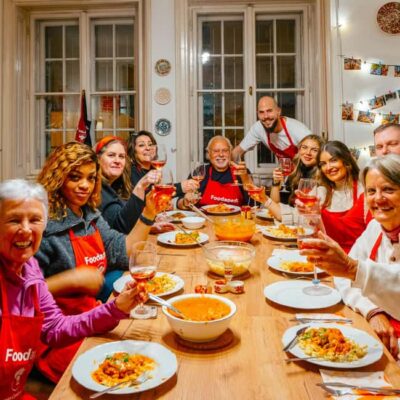
Easy Cooking Class Budapest – with Market Walk (local wine & pálinka included)
Read our review →
Budapest TukTuk Private Tour with Goulash Soup in the Downtown
Read our review →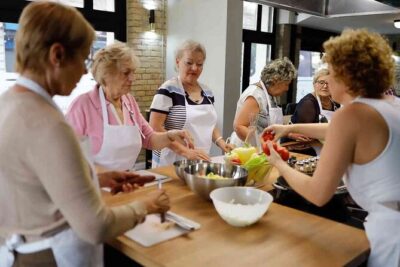
Browse the lists this tour appears in