
REVIEW · MARKETS
Budapest Great Market Hall Chef‑Led Private Tasting Tour
Come hungry, leave better informed. This two-hour private walk through Budapest’s Central Market Hall combines Hungarian food, local shopping habits, and easy-to-follow cultural background without turning breakfast into a lecture. I especially like the personal pace and the chance to taste both familiar treats and less obvious market foods. I also like having a former chef as a guide, since ingredients make more sense when someone explains how they are used at home.
The main consideration is the price: $78.60 per person is fair for a private tasting, but it is more than a self-guided stroll through the market. The market itself may also feel quieter and less crowded than you expect, so book this for food insight and personal attention, not for a loud, cinematic market spectacle.
In This Review
- Key points at a glance
- Why Central Market Hall works so well for a food tour
- A two-hour route through Hungarian staples
- Langos begins the tasting
- Cured meats, crackling, and pickles
- Pogacsa gives you three savory bites
- The sweet finish includes three very different treats
- The guide makes the difference
- What the private format is worth at $78.60
- Timing, meeting point, and practical planning
- Who will enjoy this market walk most
- Should you book the Central Market Hall tasting?
- FAQ
- Where does the tour take place?
- What time does the experience begin?
- How long does the tour last?
- Is the tour private?
- What language is the tour offered in?
- Is transportation included?
- What food is included in the tasting?
- Is alcohol included?
- Can I cancel for a full refund?
- Can most people participate?
Key points at a glance
- A private morning at Central Market Hall: Your group gets the guide’s full attention rather than following a large crowd.
- A former chef leads the walk: The focus goes beyond naming foods, with practical explanations of cooking, ingredients, and Hungarian customs.
- Sweet and savory tastings: Expect langos, cured sausages, pickles, pogacsa, fresh strudel, Turo Rudi, and Konyakmeggy.
- Paprika and souvenirs make more sense: The guide can explain what you are buying and help you avoid poor-quality gifts.
- English is clear and fluent: The guide is described as having perfect English, useful when food names and customs are unfamiliar.
- The tour begins at 9:00 am: Transportation is not included, and the experience ends where it starts.
Why Central Market Hall works so well for a food tour
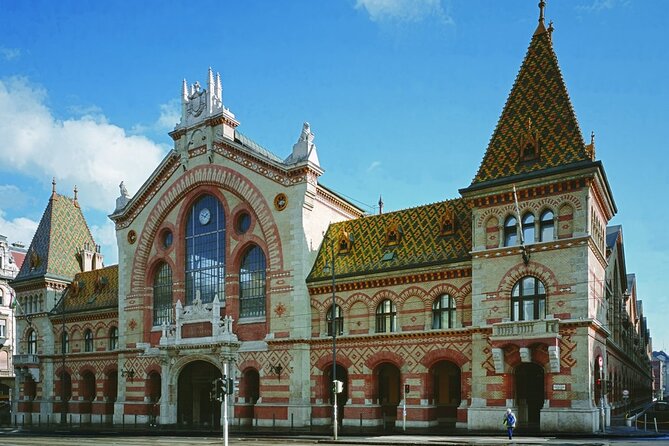
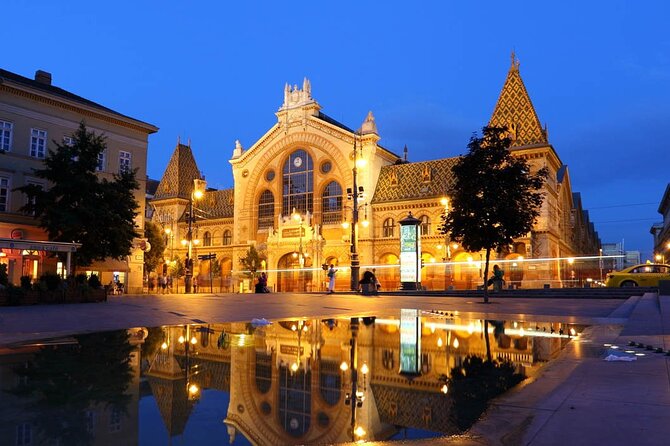
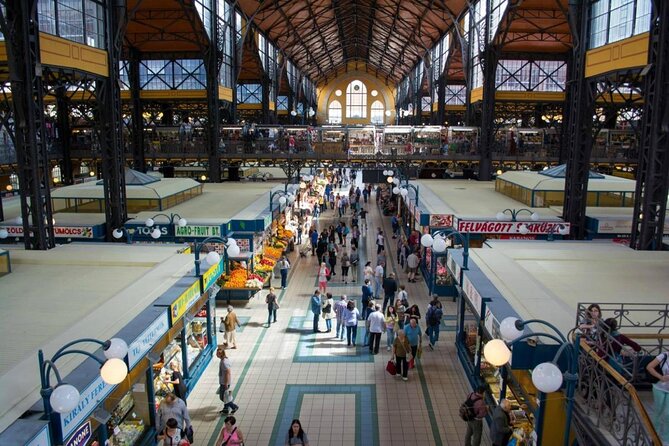
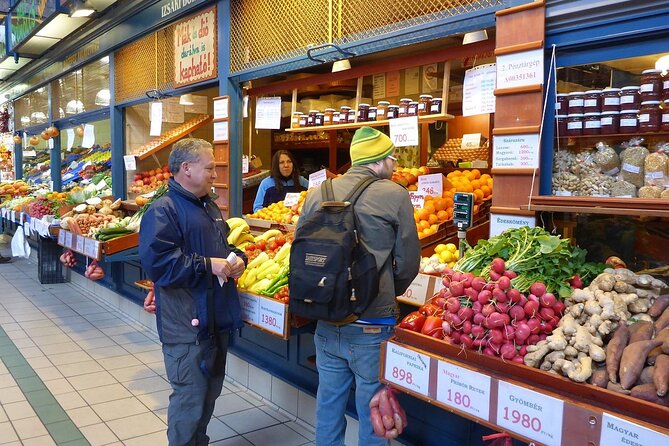
Central Market Hall gives you a useful introduction to Hungarian food in one compact setting. Instead of moving from restaurant to restaurant, you see ingredients in the place where people shop, compare products, and choose what to take home.
The walk moves through sections with seasonal produce, cured meats, pastries, spices, pickles, and everyday staples. That matters because Hungarian cooking is easier to understand when you see its building blocks together. Paprika is not just a red powder to sprinkle on goulash. It has a place in Hungarian food culture, and the guide explains how that story developed and how different products are used.
I like this approach more than a simple tasting counter. You are not only handed a bite and told its name. You get context for what you are eating, how it fits into daily meals, and why some foods are important to Hungarian identity.
The hall also sells goods beyond food, including textiles, porcelain, and embroidery. The tasting walk can therefore help with shopping decisions, too. If you want paprika or gifts to take home, having someone explain quality and selection can save you from buying the first brightly packaged item you see.
More food and drink tours in Budapest:
- Budapest: Unlimited Prosecco, Beer and Aperol Spritz Cruise
★ 4.8 · 25,310 reviews - Budapest: Unlimited Prosecco, Beer & Aperol Spritz Cruise
★ 4.5 · 3,371 reviews - Budapest: Wine, Cheese, and Charcuterie Tasting
★ 4.9 · 647 reviews
A two-hour route through Hungarian staples
The tour stays at Central Market Hall, with the start and finish at the same meeting point. That makes the plan simple, though you need to arrange your own way to the market.
The pace is relaxed. You stop at selected stalls rather than trying to inspect every counter. The guide explains what is being sold, how locals use it, and what may be worth tasting or buying. Since the experience is private, you can steer the conversation toward cooking, history, culture, or a mixture of all three.
That flexibility is one of the strongest reasons to choose this tour. If you cook at home, ask about ingredients and preparation. If you are curious about Hungarian history, ask how food traditions changed. If you want practical shopping help, focus on paprika, sweets, textiles, and other take-home goods.
The advertised length is about two hours, although some outings have lasted longer. I would leave room in your morning rather than scheduling a tight appointment immediately afterward.
Langos begins the tasting
Langos is deep-fried bread dough, served here with sour cream and cheese. It is filling, salty, and very much a food to approach with an appetite rather than as a dainty first bite.
This is a good opening taste because it gives you a clear example of Hungarian comfort food. The combination of crisp fried dough, creamy sour cream, and cheese is straightforward, but the guide’s explanation helps place it within local eating habits.
Langos can be heavier than some visitors expect. If you are planning a large lunch soon after the tour, pace yourself. The menu includes several more savory samples, and the portions may add up even when each individual taste seems small.
Cured meats, crackling, and pickles
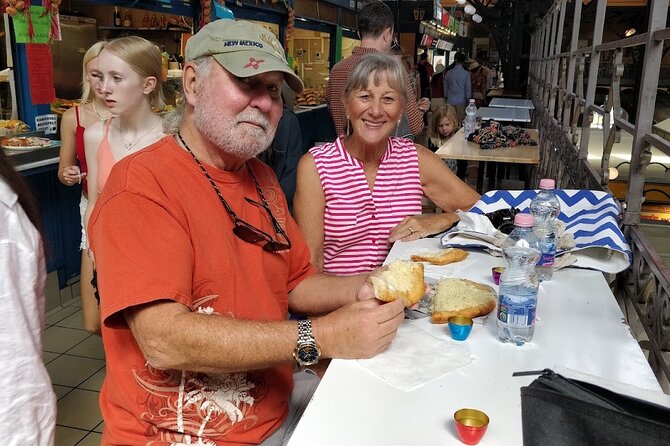
The savory section includes a variety of cured sausages, pork crackling, and an assortment of pickles. These foods show a different side of Hungarian cooking than the better-known paprika dishes.
Cured sausages can vary in seasoning and texture, so this is a useful point to ask questions. The same applies to pork crackling, which is rich and crisp rather than universally easy to love. It is exactly the sort of item that is more interesting when you can try it in a small amount and hear how it is used.
The pickles add welcome sharpness. One especially unusual example mentioned from the market is pickled baby watermelon. That is the kind of tasting you may not choose on your own, and it gives the tour a sense of discovery without requiring you to commit to a full jar.
If you are cautious with unfamiliar food, you can ask for an explanation before tasting. The private format makes that less awkward than it can be in a large group.
More markets in Budapest:
- Budapest Cooking Class & Market Tour with Local Guide & Wines
★ 5.0 · 553 reviews - Budapest Food Tour: Market to Tavern with 14+ Tasters & Wines
★ 5.0 · 434 reviews - Budapest: Hungarian Cuisine in the Market Hall (german)
★ 4.8 · 146 reviews - Hungarian Cooking and optional Local Market Tour
★ 4.5 · 98 reviews
Pogacsa gives you three savory bites
Pogacsa is a Hungarian savory pastry, often compared with a British scone or an American biscuit. The tasting includes three types: cheese, potato, and pork crackling.
Trying the three versions side by side is more useful than sampling only one. You can compare texture and flavor while learning how a simple pastry can appear in several forms. It also gives you a practical idea of what to look for in bakeries and market stalls during the rest of your stay.
Pogacsa is one of the easier foods on the menu for most people. It is portable, familiar in shape, and not especially challenging in flavor. I would pay attention to the pork crackling version, since it shows how Hungarian cooks use ingredients that may seem less familiar to visitors.
The sweet finish includes three very different treats
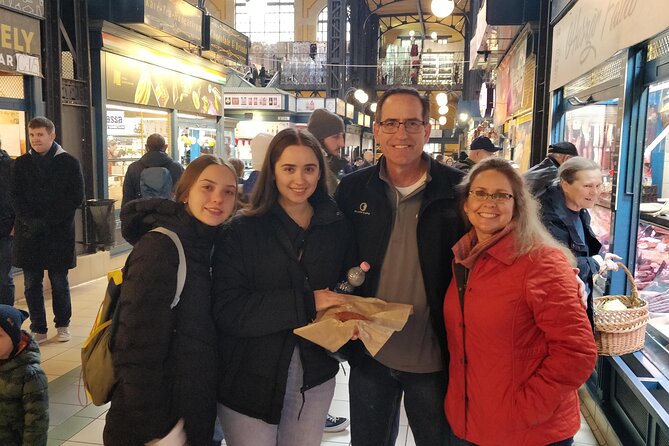
The dessert selections cover a broad range. Fresh strudel is made with layers of phyllo and comes with a choice of filling based on what is available. The combination of crisp pastry and soft filling makes it an easy favorite, especially when served fresh at the market.
Turo Rudi is a Hungarian sweet made from cottage cheese with a hint of lemon, covered in dark chocolate. It may sound unusual if you expect a conventional candy bar, but the tart dairy center keeps it from tasting like pure sugar.
Konyakmeggy is dark chocolate filled with cognac and sour cherry. This is the most distinctly grown-up sweet of the three, and it pairs fruit, chocolate, and alcohol in a small package. The menu also includes a shot of homemade palinka, an optional alcoholic drink, so you can decline if you prefer not to drink.
The tasting list is generous for a two-hour experience. You get fried bread, meat, pickles, pastries, sweets, and an optional spirit. Come with breakfast only partly handled, not with a full meal already in you.
The guide makes the difference
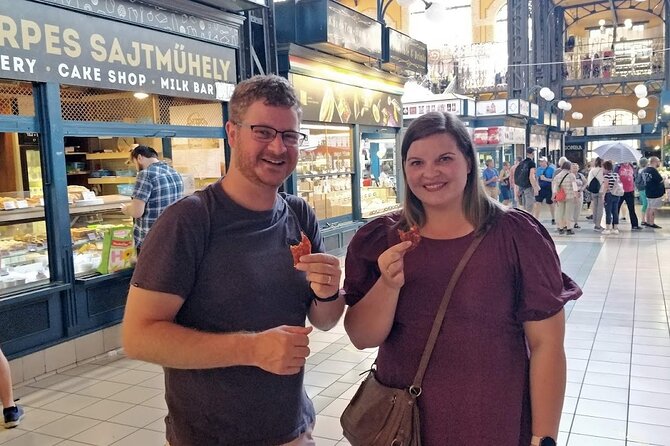
The guide is described as a local former chef with perfect English. That combination is important. A market walk can easily become a parade of food names, but a chef can explain what the ingredients do in a dish and how they connect.
The most praised qualities are warmth, clear explanations, humor, and the ability to adjust the pace. Andrew is named repeatedly in the available accounts, while Brian is also mentioned as a guide. The strongest descriptions present the walk as relaxed and personal, more like time spent with an informed local than a formal classroom tour.
That tone suits the market. You can ask why a food is served a certain way, how to shop for paprika, or what a package label means. The guide has also helped people choose souvenirs, including steering one person away from a poor-quality textile purchase.
I would use the private format actively. Do not wait for the guide to guess your interests. Tell the guide at the start if you care most about cooking, food history, shopping, alcohol, or everyday life. You will get more value when the conversation follows your questions.
What the private format is worth at $78.60
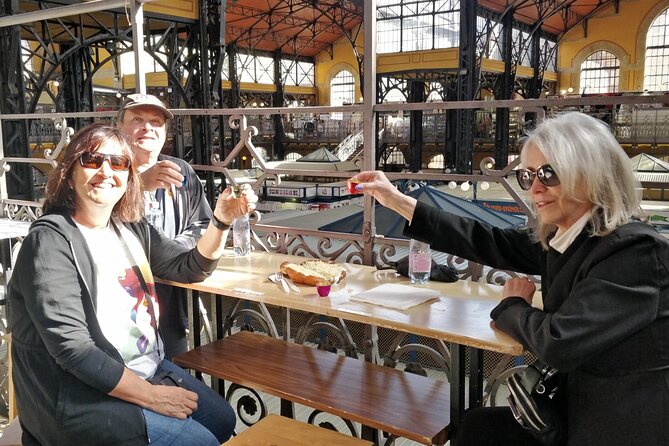
At $78.60 per person, this is not the cheapest way to eat at the market. You could walk through Central Market Hall on your own, buy a pastry, and spend far less.
The value comes from the combination of tastings, interpretation, and private attention. You are paying for someone to select stops, explain products in English, answer questions, and help you make sense of what you see. If the tour helps you buy better paprika, choose useful gifts, or understand dishes you later order elsewhere in Hungary, the cost becomes easier to justify.
It also works better for two people or a small family group than for a solo budget visitor. A private tour lets you share the cost within your own party while keeping the discussion focused. If your main goal is simply to fill up on inexpensive food, this is probably too costly. If you want an orientation to Hungarian ingredients at the start of a trip, the price is more reasonable.
The 100 percent recommendation rate and five-star score suggest strong satisfaction, but I would still judge the tour by your priorities. It is a guided food education experience with tastings, not a full restaurant meal and not a broad city sightseeing tour.
Timing, meeting point, and practical planning
The start time is 9:00 am at Central Market Hall in Budapest, 1093 Hungary. The activity ends at the same meeting point, and transportation to or from the market is not included.
That early start is useful. You see the market near the beginning of the day and can continue exploring Budapest afterward. It also means you should check your route and allow enough time to arrive before the start.
A mobile ticket is provided, and confirmation is received when you book. The tour is offered in English. Service animals are allowed, and most people can take part. The experience is private, so only your group joins the activity.
Free cancellation is available if you cancel at least 24 hours before the local start time. Changes or cancellations inside that window are not accepted for a refund.
Who will enjoy this market walk most
I would recommend this experience to people who want a friendly introduction to Hungarian food without spending half a day in a formal cooking class. It suits couples, families, and small groups who enjoy asking questions and trying several small samples.
It is especially useful at the beginning of a Budapest visit. You can learn what foods to order later, what market items make sensible gifts, and how paprika, pickles, pastries, and preserved meats fit into local life.
Food-focused visitors will get the most from it, but you do not need to be an adventurous eater. The menu includes approachable items such as strudel, cheese-topped langos, and chocolate sweets, along with stronger or less familiar tastes such as pork crackling, cured sausages, and pickled baby watermelon.
You may want to skip it if you dislike fried food, dairy, preserved foods, or alcohol. The palinka is optional, but several tastings are rich or salty. Also, if you prefer to explore independently and do not need explanations, the private guide may not justify the cost.
Should you book the Central Market Hall tasting?
Book it if you want personal guidance, generous samples, and practical food knowledge in a compact two-hour visit. The best parts are the flexible conversation, the former chef’s explanations, and the help with market shopping.
I would book it early in your Budapest stay, especially if you plan to buy paprika or edible souvenirs. The tour gives you a better sense of what you are seeing before you shop on your own.
Skip it if your budget is tight or your only goal is a cheap meal. For everyone else, this is a friendly, useful way to meet Hungarian food at its source, with enough odd bites and good stories to keep the morning interesting.
FAQ
Where does the tour take place?
The tour takes place at Central Market Hall in Budapest, Hungary. It starts and ends at the market.
What time does the experience begin?
The stated start time is 9:00 am.
How long does the tour last?
The tour lasts approximately two hours.
Is the tour private?
Yes. Only your group participates in the activity.
What language is the tour offered in?
The experience is offered in English.
Is transportation included?
No. Transportation to and from Central Market Hall is not included.
What food is included in the tasting?
The tasting can include langos with sour cream and cheese, cured sausages, pogacsa, pork crackling, pickles, strudel, Turo Rudi, and Konyakmeggy.
Is alcohol included?
An optional shot of homemade palinka is included. You do not have to drink it.
Can I cancel for a full refund?
Yes, if you cancel at least 24 hours before the experience start time. Cancellations made less than 24 hours before the start are not refunded.
Can most people participate?
Yes. Most people can participate, and service animals are allowed.
Just added in Budapest
- Budapest: Private Walking Tour with a Local Guide★ 3.6 · 6 reviews
- Budapest: Danube River Views Bike Ride★ 4.8 · 23 reviews
- Budapest: City Bike Tour with Coffee Stop★ 5.0 · 37 reviews
- From Budapest: Guided Tour of Eger with Wine Tasting★ 4.5 · 6 reviews
- Walk to recent and aged spiritual sanctuaries near Budapest★ 5.0 · 5 reviews
- Walking consultancy with alternative psychologist and author★ 5.0 · 2 reviews
- Budapest: Guided Tour of the Parliament Building in Spanish★ 4.6 · 1,240 reviews
- Budapest: Vacation Photographer to collect great memories★ 5.0 · 49 reviews
Markets, compared.
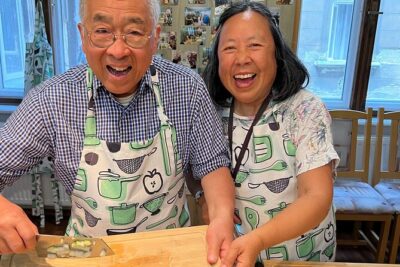
Budapest Cooking Class & Market Tour with Local Guide & Wines
Read our review →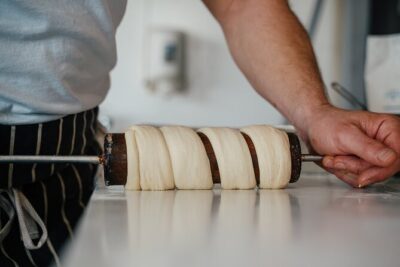
Budapest Food Tour: Market to Tavern with 14+ Tasters & Wines
Read our review →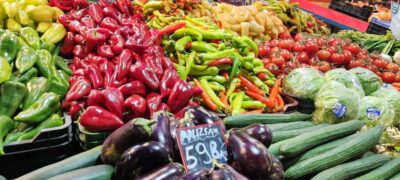
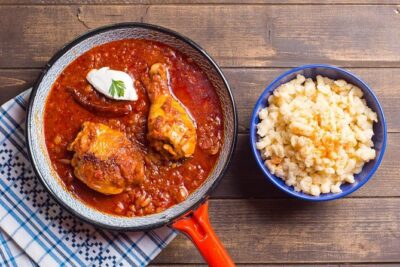
Hungarian Cooking and optional Local Market Tour
Read our review →
Easy Cooking Class Budapest – with Market Walk (local wine & pálinka included)
Read our review →
Central Market Hall Guided Food Tour with Tastings
Read our review →
Budapest Market Tour & Home Cooking Class with local Chef & Guide
Read our review →Browse the lists this tour appears in