
REVIEW · BUDA CASTLE AND CASTLE DISTRICT TOURS
Budapest: The WWII Siege of Buda Castle & Bomb Shelter Tour
History gets close underground. This 90-minute walking tour makes the 52-day siege of Budapest feel immediate by combining Castle Hill streets with the Buda Castle Cave, where civilians, soldiers, and the wounded sought shelter during World War II. I especially like the use of diaries and memoirs, and I like that the tour points out physical traces above ground instead of treating the siege as a story confined to a museum. The main drawback is the walking: cobbled streets, steep stairs, narrow passages, and chilly underground rooms demand steady legs and comfortable shoes.
The tour is also emotionally heavy. You will hear about hunger, disease, darkness, cold, overcrowding, and the desperate struggle to preserve lives and palace treasures. The cave stays close to 12°C, or 54°F, all year, so a light jacket is useful even on a warm Budapest afternoon.
The experience has earned a strong 4.8 rating from 130 reviews, with particular praise for guides such as Rita, Jonas, Kopp, and Balazs. Their enthusiasm seems to make a real difference, though one guest found a guide’s English pronunciation difficult at times. If you care about Budapest’s wartime past, this is one of the more focused history walks in the city.
In This Review
- Key points to know before booking
- Why the Siege of Budapest still matters
- Starting at De la Motte-B.-Palace
- Walking Úri Street and the Castle District
- Entering the Buda Castle Cave
- Following the route toward Lovas Way
- Ending at Szentháromság tér
- What the $24 price buys you
- Who should take this tour?
- My practical verdict
- Should you book the Buda Castle siege tour?
- FAQ
- How long is the Buda Castle siege tour?
- What language is the tour conducted in?
- Where does the tour begin?
- How do I find the guide at the meeting point?
- Where does the tour finish?
- Does the tour include the Buda Castle Cave?
- What is the temperature inside the cave?
- What should I wear?
- Is the tour suitable for wheelchair users?
- Can children join the tour?
- Does the tour operate in bad weather?
- Can I cancel my booking?
Key points to know before booking
- The siege lasted 52 days: The Soviet Red Army surrounded German-occupied Budapest on Christmas Eve 1944.
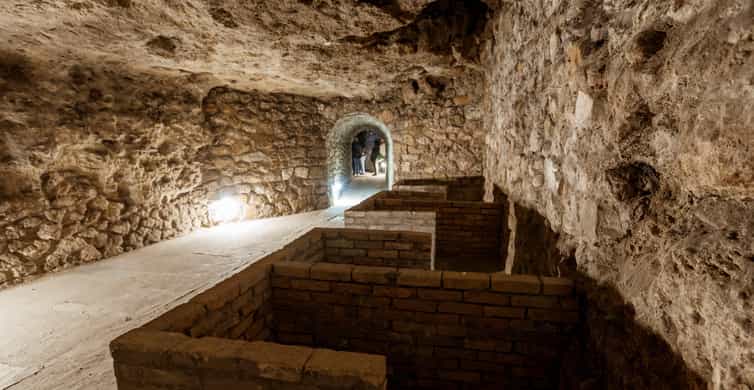
- The tour goes below the Castle District: Expect a cellar, an authentic World War II bomb shelter, dark corridors, steep stairs, and narrow sections.
- Survivor accounts shape the story: Diaries and memoirs help explain what life was like for civilians, soldiers, and the wounded underground.
- You see traces above ground too: The guide may point out bullet holes, concealed doorways, and ventilation shafts linked to public shelters.
- The tour ends at Trinity Square: You begin at De la Motte-B.-Palace on Dísz Square and finish at Szentháromság tér.
- It suits older children and adults: The recommended minimum age is 14, and the route is not suitable for wheelchair users or people with mobility limits or claustrophobia.
Why the Siege of Budapest still matters
Budapest’s wartime story is easy to miss if you only visit the grand facades of Buda Castle. The district is handsome today, with restored buildings and broad views, but during the winter of 1944 and 1945 it became a trapped military zone and a shelter for a huge civilian population.
On Christmas Eve 1944, Soviet forces surrounded the German-occupied capital. The siege continued for 52 days. Buda Castle became a place of refuge for German and Hungarian troops, injured soldiers, local residents, and people trying to protect what remained of their homes and possessions.
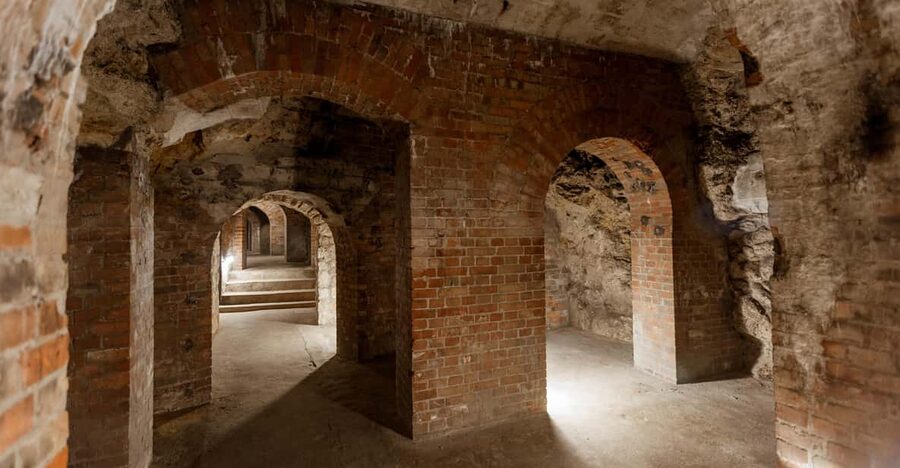
The tour places this suffering in physical spaces. The narrow underground rooms were not abstract military positions. They were places where people waited in the dark, searched for water and food, dealt with illness, and tried to sleep despite the noise and danger above.
I find that context important because Budapest’s siege is sometimes compared with Stalingrad, one of the most brutal encirclement battles of the Second World War. The comparison is not used here as a dramatic slogan. It helps explain the scale of the destruction and the pressure placed on those trapped inside the city.
More of the Castle District:
- Budapest: Buda Castle Cave Tour
★ 4.7 · 5,677 reviews - Budapest: Buda Castle District Vampires and Myths Night Tour
★ 4.6 · 3,830 reviews - Budapest: Buda Castle Walk with Saint Stephen’s Hall
★ 4.5 · 3,012 reviews
Starting at De la Motte-B.-Palace
You meet at De la Motte-B.-Palace, 1014 Budapest, Dísz tér 15. The location is next to the Posta building, by a large green gate. Look for the guide carrying a turquoise umbrella with the Buda Castle Walks logo.
This meeting point can take a little care to find, particularly if construction or closures have changed the look of Dísz Square. I would arrive early rather than cutting it close. The tour begins promptly and cannot wait for late arrivals.
The operator also provides an online visit planner for the Buda Castle Palace District. It gives current information about traffic conditions and closures, and it can be opened without registration on a phone or computer. Checking it before setting out is sensible, especially if you are coming from the airport or another part of Pest.
The tour is conducted in English with a live guide. Personal headphones have been used on some departures, which helps when the group spreads out or when you are standing on a noisy street. Group size can vary, but smaller groups make it easier to hear questions and keep pace.
Walking Úri Street and the Castle District
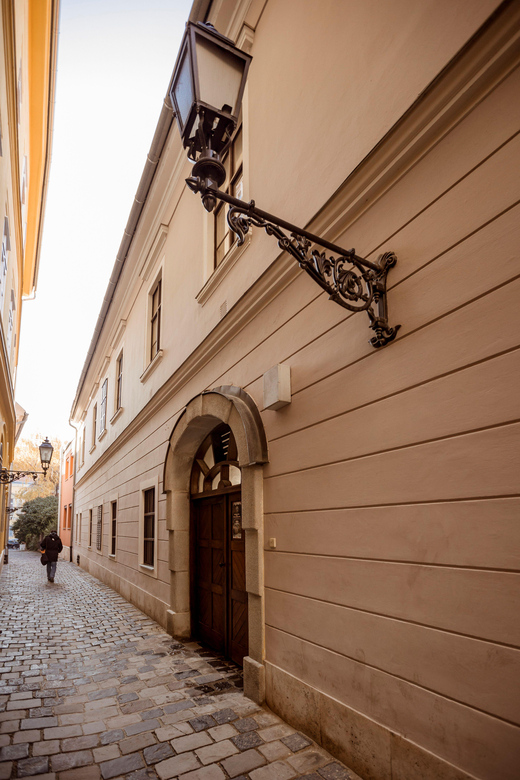
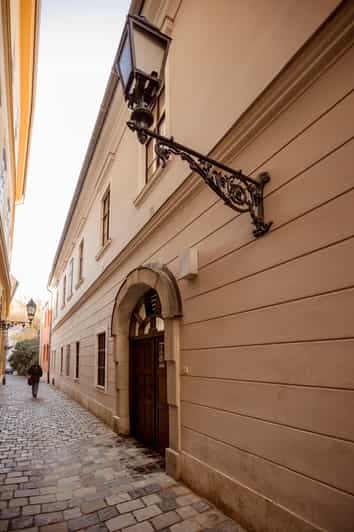
The first part takes place above ground on Castle Hill, including Úri Street. This is where the guide builds the setting before taking you into the shelters.
The value of this section is not simply architectural sightseeing. The streets help you picture how the district functioned during the siege. The old residential quarter had cellars, storage rooms, hidden access points, and cave spaces beneath its buildings. Those features became essential when the fighting reached the Castle.
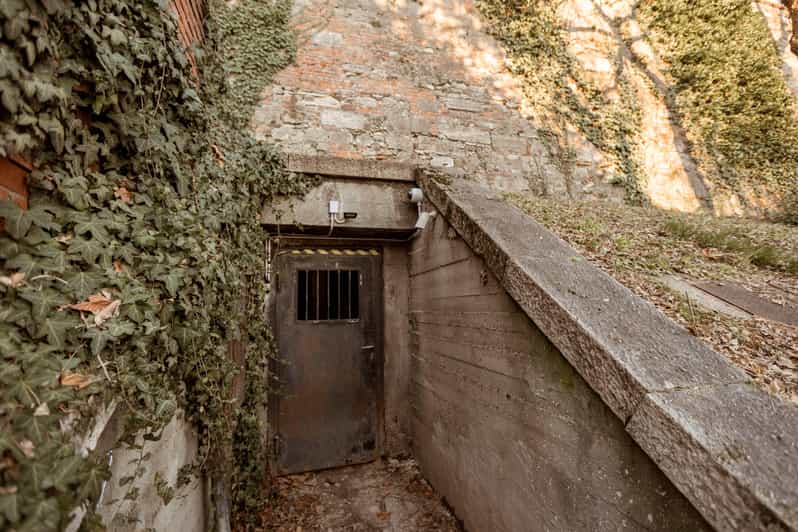
Look closely as you walk. The guide may point out surviving bullet holes, concealed doorways, and ventilation shafts rising from public shelters. These details are easy to pass without explanation. Once you know what to look for, the street becomes a record of the siege rather than just a pleasant route between famous sights.
You will also hear about life before and after the fighting, not only the 52 days themselves. Guides have been praised for handling questions about the wider history of Budapest, including the political conditions surrounding the war. That wider frame helps you understand why German and Hungarian forces were in the city and why the civilian population was caught between armies.
There is some physical effort here. Castle Hill streets are cobbled, and the walk continues through areas with uneven surfaces. The route is not a gentle, flat stroll.
Entering the Buda Castle Cave
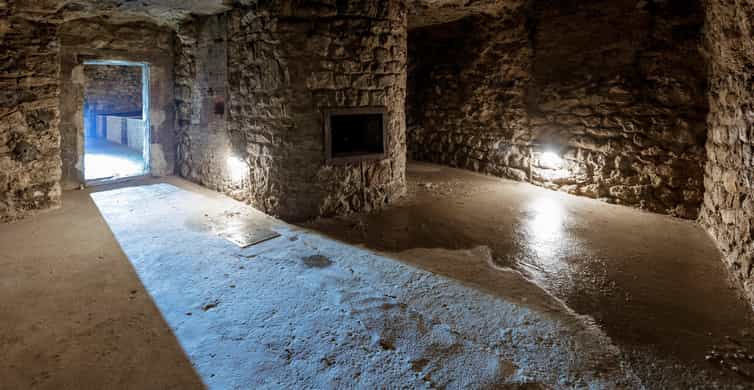
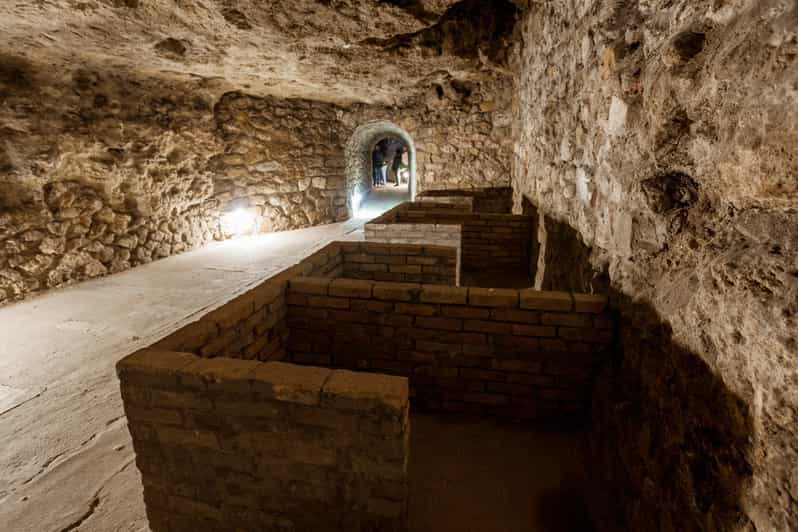
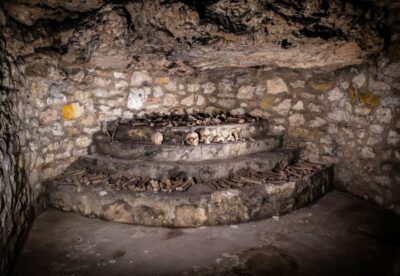
The central part of the experience lasts about 35 minutes in the Buda Castle Cave, also called the Buda Castle Cave system. This underground labyrinth includes dark but illuminated spaces, a cellar in an old dwelling house, and an original World War II bomb shelter.
The temperature underground remains about 12°C throughout the year. In summer, that cool air can be a relief. In winter, it can feel quite cold, particularly if you have dressed only for a short city walk. Layers are the practical answer.
The cave is fascinating, but it is not polished for comfort in the way a modern attraction might be. You may encounter steep stairs, narrow corridors, solid surfaces, and sections that are sometimes wet. People with claustrophobia should think carefully before booking. Wheelchair users and people with mobility impairments should choose another activity.
The guide’s narration matters most here. Empty rooms can tell you only so much. Diaries and memoirs supply the human detail: the lack of water, dwindling food, freezing conditions, overcrowding, darkness, and disease. You begin to grasp why the underground spaces offered safety from shelling but brought their own dangers.
I appreciate that the story includes more than soldiers. Civilians and the wounded were part of the shelter population, and their experiences receive serious attention. The result is a more complete picture of the siege, one that does not reduce the event to troop movements and battlefield dates.
The underground section can also feel emotionally difficult. One person described the experience as sad and hard to process, while still feeling glad to have taken the tour. That is a fair warning. This is not light sightseeing, and the subject deserves a respectful frame of mind.
More things to do in Budapest:
- Budapest: City Highlights Cruise with Welcome Drink
★ 4.6 · 35,610 reviews - Budapest: Unlimited Prosecco, Beer and Aperol Spritz Cruise
★ 4.8 · 25,310 reviews - Budapest: Széchenyi Spa Day Ticket with Optional Upgrades
★ 4.3 · 23,911 reviews - Budapest: Nighttime or Daytime Sightseeing Cruise
★ 4.2 · 21,062 reviews
Following the route toward Lovas Way
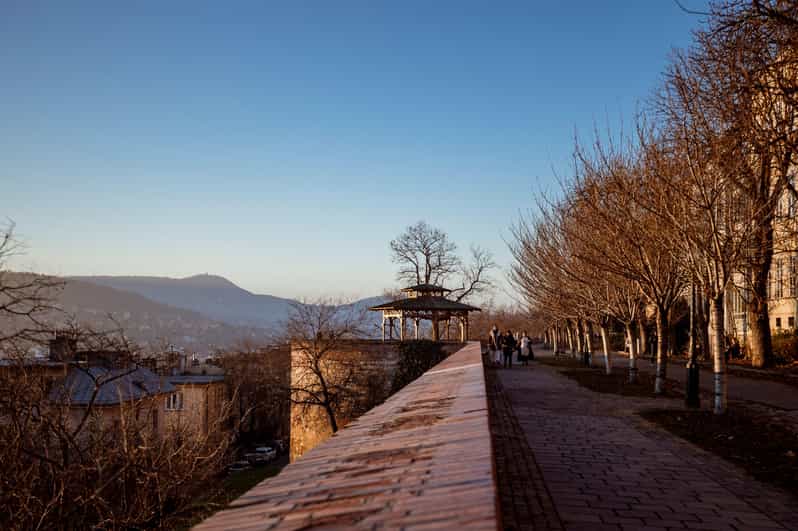
After the cave, the tour returns outdoors and continues along Lovas Way. This section gives you time to connect the underground spaces with the streets and buildings above them.
The route helps explain how the Castle District worked as a layered refuge. Public shelters, private cellars, and the cave network were connected to the daily life of the neighborhood. Ventilation shafts and hidden entrances were not curiosities at the time. They were part of a survival system.
The walk also gives the guide room to answer questions. Several guides have been praised for making the discussion lively and for handling related questions about Budapest before, during, and after World War II. The tone seems best suited to people who want a conversation, not just a memorized list of dates.
English ability can vary by guide. Most comments praise the clarity and enthusiasm of the presentation, but one participant found the pronunciation of a guide named Jonas hard to follow at times. If English is not your first language, staying near the guide and using the headphones when provided should help.
Ending at Szentháromság tér
The tour finishes at Szentháromság tér, or Trinity Square. This is a useful end point in the Castle District, and the timing can work well for continuing your afternoon or evening nearby.
One practical advantage is that the tour does not end back at the starting gate. You finish in a different part of Buda Castle, so you can continue exploring rather than retracing the entire route. The exact feel of the ending depends on the departure time, but one group finished before sunset and enjoyed views from the western side of the castle walls.
I would not schedule a tight appointment immediately afterward. The walk lasts 90 minutes, but you should allow extra time for finding the meeting point, gathering the group, and moving through the district at a careful pace.
What the $24 price buys you
At $24 per person, this is a good value if you want a focused history experience rather than a broad overview of Budapest. The price covers an English guided walk through the Palace District and the Buda Castle Cave. You are paying for interpretation, access to the underground spaces, and the chance to connect visible remains with personal accounts.
The value is strongest for history-minded visitors. A standard Castle District walk might explain medieval kings, palace buildings, and panoramic views. This experience concentrates on a shorter, darker period that many city tours barely cover.
It is less useful if you want a general introduction to Buda Castle or a tour centered on grand architecture. The emphasis is firmly on the siege, shelters, and wartime survival. You will see parts of the district, but the historical subject controls the route.
The free cancellation option up to 24 hours before the start also reduces the risk of booking ahead. You can reserve now and pay later, which is useful when your Budapest schedule is still shifting.
Who should take this tour?
I would recommend it to adults, older teenagers aged 14 and above, history students, and anyone who wants to understand Budapest beyond its postcard views. It is especially useful if you have already seen the Castle District and now want to understand the marks left by the war.
The tour also works well for solo visitors. One solo participant ended up with a private-style departure because no one else had booked that time. That is not something you can count on, but a small group can make the guide’s explanations and question time more personal.
You should skip it if you dislike enclosed spaces, have trouble with stairs, or need a fully accessible route. The tour runs in rain and other weather, since part of it takes place outdoors. Bring water, a snack, and shoes with good grip.
I would also avoid booking it immediately after a long airport transfer unless you have the energy for a fairly active walk. One participant arrived directly from the airport and needed help finding a place for luggage. That kind of assistance may be possible, but it should not be treated as a standard luggage service.
My practical verdict
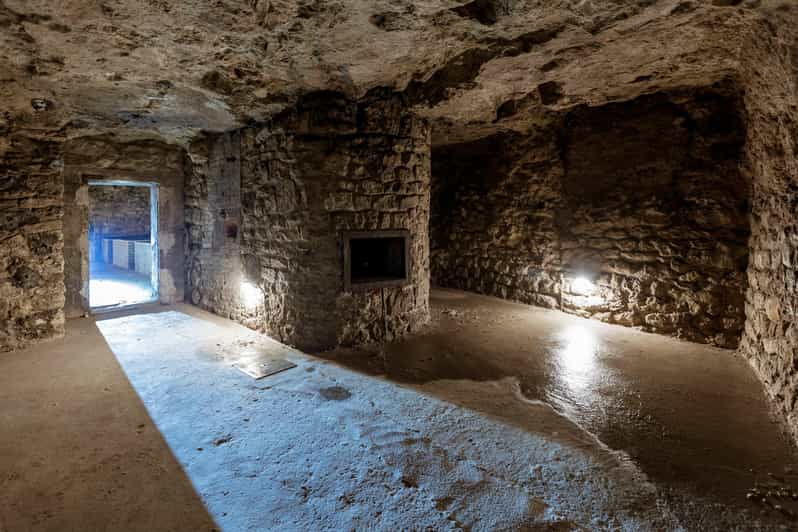
I like this tour because it turns a difficult chapter of Budapest history into something you can physically follow. You walk the Castle District, see traces that can otherwise disappear into the background, and then enter the cold underground spaces where people actually waited out the siege.
The guide is the main variable, but the strongest departures appear to be led with real enthusiasm. Rita has been praised for detailed explanations, Kopp for an engaging and well-pitched presentation, and Balazs for his passion and historical depth. Jonas has also received strong praise, though English pronunciation may be easier for some people than others.
At $24, the experience offers solid value, especially if the Siege of Budapest is new to you. Just bring warm layers, allow time to find the turquoise umbrella, and treat the cave route as a serious physical and emotional experience rather than a casual underground attraction.
Should you book the Buda Castle siege tour?
Book it if you want a thoughtful World War II experience with real places, survivor accounts, and a strong sense of scale. It is particularly worthwhile for history-focused visitors who want to see what happened beneath the elegant Castle District.
Think twice if you are claustrophobic, unsteady on stairs, uncomfortable on cobblestones, or looking for a light sightseeing walk. For the right person, the tour adds a powerful layer to Budapest. For the wrong person, the narrow cave passages and grim subject matter may feel like too much.
FAQ
How long is the Buda Castle siege tour?
The tour lasts 90 minutes, or 1.5 hours.
What language is the tour conducted in?
The live guided tour is conducted in English.
Where does the tour begin?
It begins at De la Motte-B.-Palace, 1014 Budapest, Dísz tér 15, next to the Posta building and the large green gate.
How do I find the guide at the meeting point?
Look for a staff member with a turquoise umbrella carrying the Buda Castle Walks logo.
Where does the tour finish?
The tour ends at Szentháromság tér, also called Szentháromság Square or Trinity Square.
Does the tour include the Buda Castle Cave?
Yes. The tour enters the Buda Castle Cave and includes an old dwelling-house cellar and an authentic World War II bomb shelter.
What is the temperature inside the cave?
The cellar and cave temperature is approximately 12°C, or 54°F, throughout the year.
What should I wear?
Wear comfortable walking shoes and dress in layers. Warm clothing is recommended because the underground areas stay cool.
Is the tour suitable for wheelchair users?
No. The route includes cobbled streets, steep stairs, narrow corridors, dark illuminated areas, and sometimes wet surfaces. It is not suitable for wheelchair users or people with mobility impairments.
Can children join the tour?
The experience is recommended for ages 14 and above, and children under 14 are not permitted.
Does the tour operate in bad weather?
Yes. The tour runs in all weather conditions, including rain, because part of the route takes place outdoors.
Can I cancel my booking?
You can cancel up to 24 hours in advance for a full refund. You can also reserve now and pay later.
Just added in Budapest
- Budapest: Private Walking Tour with a Local Guide★ 3.6 · 6 reviews
- Budapest: Danube River Views Bike Ride★ 4.8 · 23 reviews
- Budapest: City Bike Tour with Coffee Stop★ 5.0 · 37 reviews
- From Budapest: Guided Tour of Eger with Wine Tasting★ 4.5 · 6 reviews
- Walk to recent and aged spiritual sanctuaries near Budapest★ 5.0 · 5 reviews
- Walking consultancy with alternative psychologist and author★ 5.0 · 2 reviews
- Budapest: Guided Tour of the Parliament Building in Spanish★ 4.6 · 1,240 reviews
- Budapest: 3-Hour Trabant Sightseeing Tour★ 4.7 · 28 reviews
Buda Castle and Castle District Tours, compared.

Buda Castle District Vampires and Myths Night Tour
Read our review →
Buda Castle District Dark History, Legends and Vampire Night Tour
Read our review →
Buda Castle District Walking Tour with a Historian
Read our review →

Walking tour in the Buda Castle incl. Fisherman’s Bastion
Read our review →Browse the lists this tour appears in