
REVIEW · BUDA CASTLE AND CASTLE DISTRICT TOURS
Budapest: Buda Castle District Walking Tour with a Historian
Buda rewards anyone willing to walk uphill. This 2.5-hour tour turns the Castle District from a pretty collection of lanes into a readable story, linking medieval Hungary, royal power, Ottoman-era changes, World War II, and modern Budapest. I especially like the inside visit to Matthias Church and the way the route uses viewpoints, courtyards, statues, and fountains to make the past feel tied to the streets beneath your feet.
I also like the coffee stop. It gives you a chance to sit, ask questions, and catch your breath instead of racing from monument to monument. Guides such as Petra, Judit, Monica, Gábor, and Raymond have been praised for clear storytelling, humor, local insight, and friendly advice. The main consideration is that much of the tour is outdoors, and parts of Buda Castle have at times been affected by construction. Bring a rain jacket and expect a walking tour, not a full palace interior tour.
In This Review
- Key points at a glance
- Starting beneath the Holy Trinity Column
- Forty-five minutes inside Matthias Church
- Fisherman’s Bastion and the Parliament view
- András Hadik and the quieter lanes
- Buda Castle, royal power, and war
- The Funicular, Matthias Fountain, and Savoy Terrace
- Why the historian guide matters
- The coffee stop is more useful than it sounds
- Is $63 a fair price?
- Weather, pace, and what to bring
- Who should book this Buda Castle walk?
- Final verdict: book it for context, not just views
- FAQ
- How long is the Buda Castle District walking tour?
- Where does the tour begin?
- How can I reach the meeting point?
- Is Matthias Church included?
- How long is the church visit?
- Is the Budapest Castle Hill Funicular ride included?
- What language is the tour conducted in?
- What happens if it rains?
Key points at a glance
- Matthias Church gets real attention: The guided visit lasts about 45 minutes and includes the entrance ticket and live commentary.
- Fisherman’s Bastion delivers the classic view: You’ll look across the Danube toward Parliament and the Pest side of Budapest.
- The tour connects many eras: The guide moves from medieval Buda to royal Hungary, World War II, and the city today.
- The route includes more than the main monuments: You’ll see Savoy Terrace, Matthias Fountain, Alexander Palace, the Presidential Palace, and the equestrian statue of András Hadik.
- A coffee stop slows the pace: This is useful for questions, conversation, and a short rest during the walk.
- The $63 price buys context as much as access: It makes the most sense for first-time visitors who want a strong historical framework.
Starting beneath the Holy Trinity Column
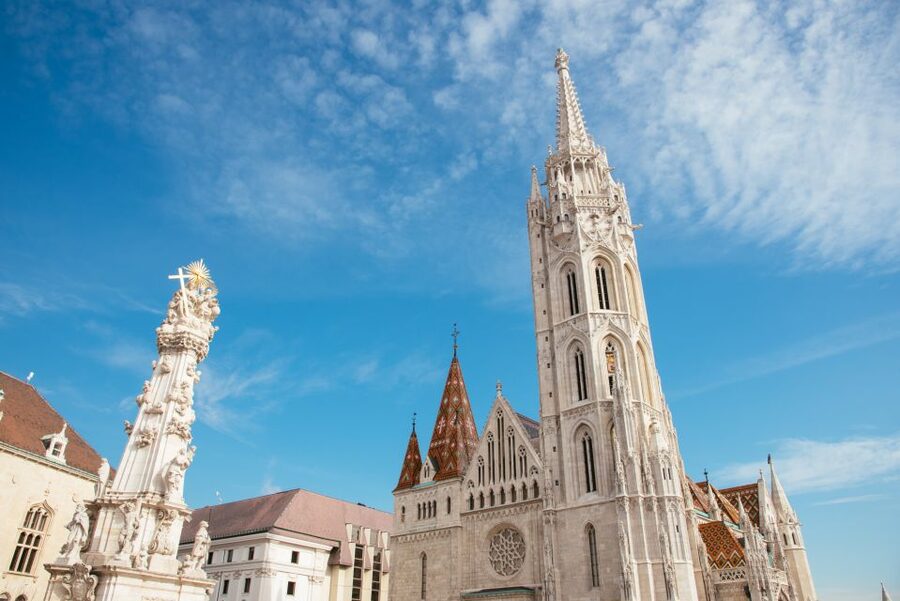
The meeting point is in front of the Holy Trinity Column on Szentháromság tér. This is a central and easy-to-recognize spot in the Castle District, close to Matthias Church and Fisherman’s Bastion.
You can reach it by taxi, on foot, or by bus 16, 116, or 216. Bus 16 is especially useful for reaching Castle Hill from the Pest side, though you should allow time to find the column and gather with the group.
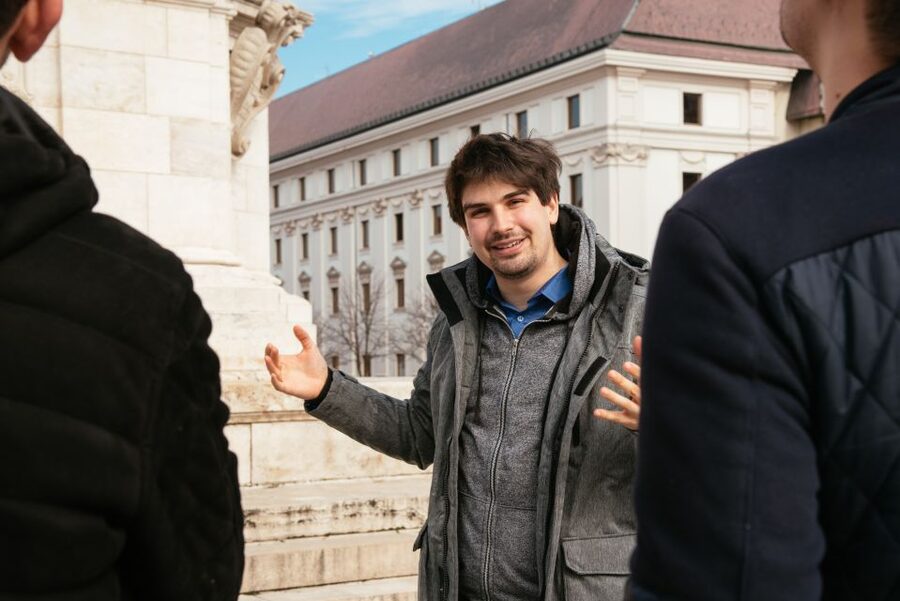
The tour starts in the oldest part of Budapest, which gives the guide a useful setting for explaining how Buda and Pest developed as separate cities before joining together. The opening discussion covers more than 1,100 years of Hungarian heritage, so you get the basic timeline before the monuments begin competing for your attention.
That preparation matters. Without it, the Castle District can feel like a string of handsome buildings with difficult names. With a guide, the streets become clues to royal ambition, religious change, war, rebuilding, and present-day city life.
More of the Castle District:
- Budapest: Buda Castle Cave Tour
★ 4.7 · 5,677 reviews - Budapest: Buda Castle District Vampires and Myths Night Tour
★ 4.6 · 3,830 reviews - Budapest: Buda Castle Walk with Saint Stephen’s Hall
★ 4.5 · 3,012 reviews
Forty-five minutes inside Matthias Church
Matthias Church is the central indoor stop, and it is also the part of the tour that most clearly justifies the admission included in the price. The church is often described as one of Budapest’s most beautiful, and the interior gives you plenty to examine beyond the usual stained glass and carved details.
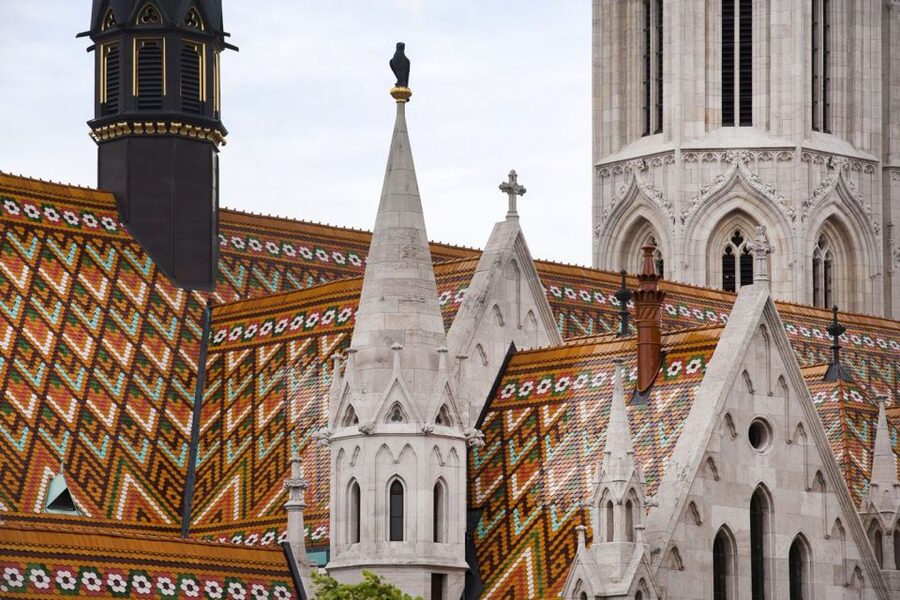
The 45-minute guided visit lets the historian explain the church’s role in Hungarian history and point out architectural details you could easily miss alone. The interior is known for strong patterns and color, so this is not a quick walk through a dim medieval shell. The guide also places the church within the changing religious and political life of Buda.
One particularly nice possibility is hearing the organ during your visit. A few departures have coincided with organ playing, but this is not presented as a guaranteed part of the tour. If music is important to you, treat it as a lucky extra.
The church is also a good shelter if the weather turns sour. In heavy rain, the route may be adjusted to include more indoor locations, though the normal plan remains mostly outside. Photography rules and church activity can vary, so follow the guide’s instructions inside.
Fisherman’s Bastion and the Parliament view
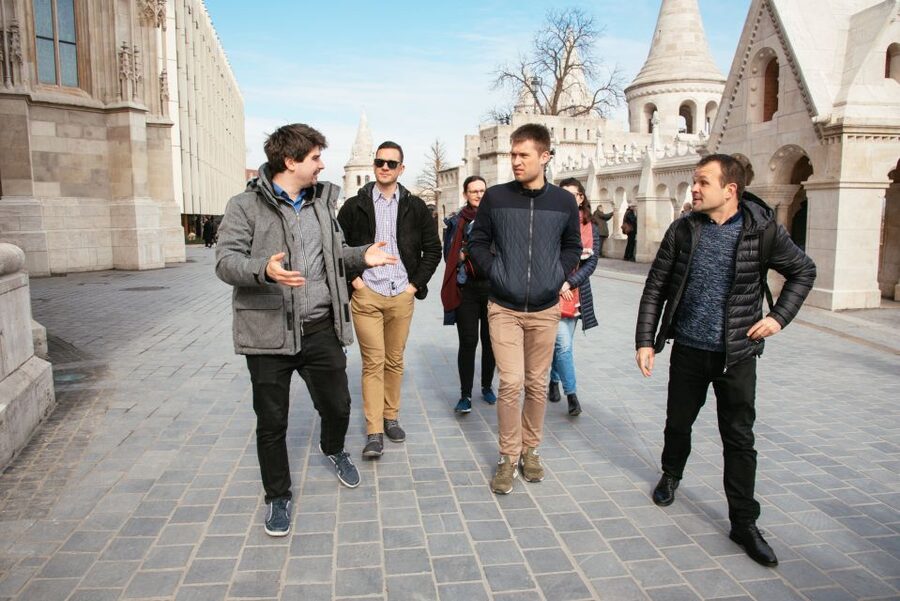
After the church, the route moves to Fisherman’s Bastion for about 15 minutes. This is a short stop, mainly intended for photos and orientation rather than a long lecture.
The view explains why Castle Hill is such a popular part of Budapest. From the ramparts, you can see the Danube, the Parliament building, and the broad sweep of Pest across the river. The guide helps you match the skyline to the city’s political and geographic story.
This stop can be crowded, particularly around the best viewpoints. That is one reason the tour’s small-group format is valuable when available. You can stay close to the guide and ask questions without losing the thread of the explanation.
The tradeoff is time. Fifteen minutes is enough for photographs and a clear explanation, but not enough for a slow exploration of every terrace. If you want carefully composed images from several angles, plan to return later on your own.
András Hadik and the quieter lanes
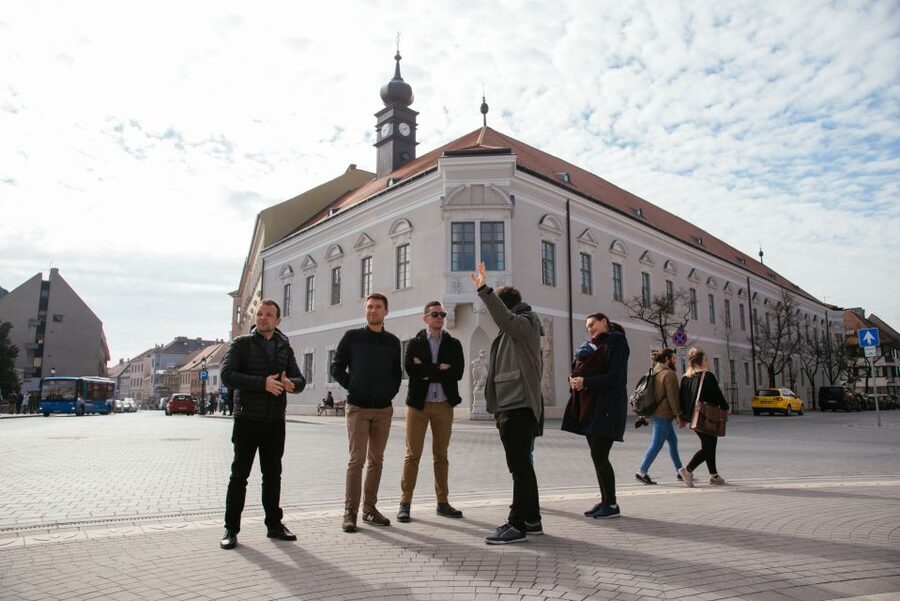
The equestrian statue of András Hadik receives about 15 minutes of sightseeing time. It is a useful pause from the most famous landmarks, because the guide can use one figure and one statue to explain military life, national memory, and the way Hungary presents its past.
From here, the walk continues through the winding alleys of the district. This is where the tour feels less like a checklist. The lanes are part of a living neighborhood, with residents, local businesses, and people out for an evening stroll. The Castle District is not only a monument zone. Thousands of people live here, and the guide makes that modern role part of the picture.
I like this contrast. You see romantic streets and impressive views, but you also hear how the area functions today. That keeps Buda Castle from becoming a polished stage set.
The surface can be uneven in old streets, and the route involves walking for most of the 2.5 hours. Wear comfortable shoes and leave room in your schedule rather than treating this as a quick stop between other appointments.
More walking tours in Budapest:
- Big Bus Budapest Hop-On Hop-Off Bus and Walking Tour
★ 3.5 · 2,206 reviews - Budapest: Buda Castle District Walking Tour
★ 4.6 · 2,108 reviews - Budapest City Landmarks Walking Tour in 2 Hours
★ 5.0 · 2,048 reviews - 3-Hour Orientation Walking Tour of Buda and Pest
★ 4.8 · 1,834 reviews
Buda Castle, royal power, and war
The Buda Castle section lasts about 30 minutes. This is the broadest historical part of the route, covering the castle’s role from the Middle Ages through World War II.
You’ll hear about the Royal Palace and the way rulers used the hill to display authority. The guide also points out the Matthias Fountain, the Palace Gardens, Alexander Palace, and the Hungarian Presidential Palace. These stops help separate royal buildings, government buildings, ceremonial spaces, and public viewpoints.
A key strength is the long historical arc. The tour does not stop at medieval kings or pretty architecture. It also addresses the destruction and upheaval connected with World War II, then relates the rebuilt district to Budapest today. That is important in Buda, where polished façades can conceal a difficult twentieth-century story.
You should keep your expectations clear about the castle itself. This is primarily an exterior walking tour, with the main interior visit taking place at Matthias Church. You will see the palace complex and learn about it, but the experience does not promise a full tour of every palace room or museum collection.
Construction has also affected parts of the castle area at times. That can mean a less-than-perfect view of certain buildings or a modified walking line. The guide’s historical explanation becomes even more useful in such conditions, since you may need context to understand what you are seeing.
The Funicular, Matthias Fountain, and Savoy Terrace
The Budapest Castle Hill Funicular is included as a sightseeing stop rather than a promised ride. The guide explains its place on the hill and uses it as another way to understand how people reach and move through the Castle District.
Next comes the Fountain of King Matthias, with about 15 minutes for sightseeing. Fountains often disappear into the background when you are rushing between major sights, but a guide can explain the figures and the story represented in the sculpture. This is exactly the sort of detail that rewards a slower walk.
Savoy Terrace is the final major viewpoint, with roughly 15 minutes for photos, sightseeing, and more commentary. It offers another angle over Budapest and gives the guide a natural place to connect Buda with Pest, the Danube, and the city’s modern identity.
The tour finishes at Budavári Palota, the Royal Palace area. That is a useful endpoint because you can continue exploring the hill, visit another attraction, stop for lunch, or make your way back toward the river and the city center.
Why the historian guide matters
This tour rises or falls on the guide. The route itself is easy to find, but the history of Hungary is not always easy to organize. Names, rulers, invasions, religious changes, imperial politics, and twentieth-century events can blur together without a clear storyteller.
The strongest guides on this experience have included Petra, Judit, Monica, Barika, Noemi, Raymond, Gábor, Gabriel, Andrea, Anna, Dorit, and Zsuszanna. Their praised qualities are consistent: clear English, strong command of local history, humor, patience with questions, and the ability to connect old events with present-day Budapest.
Judit has been particularly noted for presenting Hungarian history in a logical order. Gabriel has a lively, funny delivery while still covering several major periods. Raymond brings both historical and modern economic perspectives, and Petra has been valued for combining city knowledge with castle history.
You cannot choose your guide from the information provided, so I would book this for the structure and subject rather than for one specific person. Still, the repeated emphasis on storytelling and conversation is encouraging. Small groups are often reported, which allows the pace to follow the group and makes it easier to stop for questions.
One practical concern is sound. In crowded areas, some people have wished for a microphone and earpiece. Stay close to the guide, especially at Fisherman’s Bastion and around the church, and speak up if you cannot hear.
The coffee stop is more useful than it sounds
The coffee break is a modest feature, but it improves the rhythm of the morning or afternoon. A seat, a drink, and a few minutes away from the monuments give you time to process the history and ask about places to visit afterward.
The café is described as authentic, and the stop can become a relaxed conversation about Budapest and other European cultures. Some guides also offer suggestions for restaurants, lunch, further sightseeing, and public transport after the tour.
Coffee is not the reason to book this experience, and the exact drink choice is not specified. Think of it as a pause built into a walking route, not a full food experience. It is especially welcome in hot weather or after the long outdoor portion.
Is $63 a fair price?
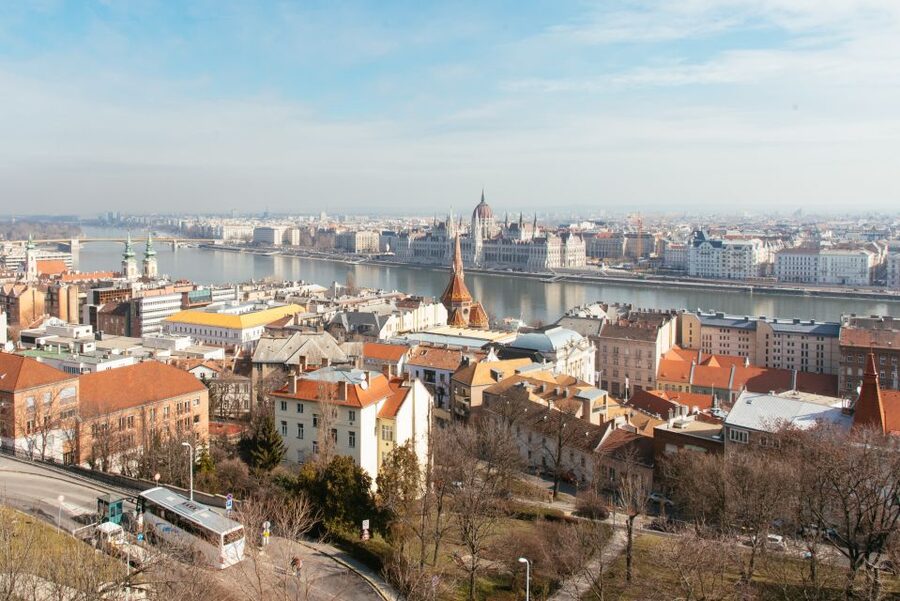
At $63 per person, this is not the cheapest way to see Castle Hill. You can walk around the district without paying for a guide, and many viewpoints are open to the public.
The value comes from three things: the historian-led explanations, the included Matthias Church entrance, and the efficient route through several major sites. If you are visiting Budapest for the first time, the guide can save you from spending hours trying to piece together the castle’s story from plaques and scattered information.
The price makes less sense if you mainly want photographs or already have a strong grasp of Hungarian history. You may prefer to explore at your own speed and return to Fisherman’s Bastion when it is quieter.
For most first-time visitors who enjoy history, $63 is a reasonable price for a focused 2.5-hour introduction. It is also useful early in your Budapest stay, since the guide can help you decide what deserves a longer visit later.
Weather, pace, and what to bring
This is mostly an outdoor walking experience. Bring an umbrella or rain jacket if the forecast is uncertain, and wear shoes suitable for slopes, paved lanes, and extended standing.
In heavy rain, the route may shift toward indoor locations, but the normal experience depends on seeing the district from its streets and ramparts. Fog can also change the views. That does not ruin the history, but it can soften or hide the Parliament panorama.
Allow extra time before the start to reach Szentháromság tér. After the tour, you may want to continue at the palace or return to the church area, so do not schedule a train, dinner, or another timed attraction immediately afterward.
The tour is conducted in English. If you need another language, this is not the right choice based on the available details, although one guide did switch to Spanish when asked during a particular departure. That should not be treated as a regular service.
Who should book this Buda Castle walk?
I would choose this tour if you want the Castle District explained rather than simply photographed. It suits first-time visitors, history fans, couples who want a scenic walk with substance, and anyone who prefers a small-group conversation to a large bus tour.
It is also a good fit if Matthias Church is high on your list. The included admission and extended commentary make the church more rewarding than a quick self-guided visit.
I would think twice if you dislike outdoor walking, need a fully indoor activity, or want an extensive tour of the Royal Palace interiors. The palace receives important attention, but the focus is the wider district and its story.
Final verdict: book it for context, not just views
I recommend the Buda Castle District Walking Tour with a Historian for most visitors who have 2.5 hours and want a solid introduction to Buda. The best parts are the detailed Matthias Church visit, the views from Fisherman’s Bastion and Savoy Terrace, and the guides’ ability to make difficult history easy to follow.
Book it early in your Budapest stay if you want restaurant tips, transport help, and ideas for what to see next. Skip it only if you prefer complete independence or want to spend your time inside the palace rather than walking through the district.
FAQ
How long is the Buda Castle District walking tour?
The tour lasts 2.5 hours.
Where does the tour begin?
It begins in front of the Holy Trinity Column on Szentháromság tér in the Buda Castle District.
How can I reach the meeting point?
You can reach the meeting point by taxi, on foot, or by buses 16, 116, and 216.
Is Matthias Church included?
Yes. The entrance ticket and live English commentary inside Matthias Church are included.
How long is the church visit?
The guided visit inside Matthias Church lasts about 45 minutes.
Is the Budapest Castle Hill Funicular ride included?
The Funicular is listed as a sightseeing stop, but the information provided does not state that a ride is included.
What language is the tour conducted in?
The tour is conducted in English with a live guide.
What happens if it rains?
The walk is mostly outdoors, so you should bring an umbrella or rain jacket. In heavy rain, the itinerary may be changed to include more indoor locations.
Just added in Budapest
- Budapest: Private Walking Tour with a Local Guide★ 3.6 · 6 reviews
- Budapest: City Bike Tour with Coffee Stop★ 5.0 · 37 reviews
- Budapest: Danube River Views Bike Ride★ 4.8 · 23 reviews
- From Budapest: Guided Tour of Eger with Wine Tasting★ 4.5 · 6 reviews
- Walk to recent and aged spiritual sanctuaries near Budapest★ 5.0 · 5 reviews
- Walking consultancy with alternative psychologist and author★ 5.0 · 2 reviews
- Budapest: Guided Tour of the Parliament Building in Spanish★ 4.6 · 1,240 reviews
- Budapest: 3-Hour Trabant Sightseeing Tour★ 4.7 · 28 reviews
Buda Castle and Castle District Tours, compared.
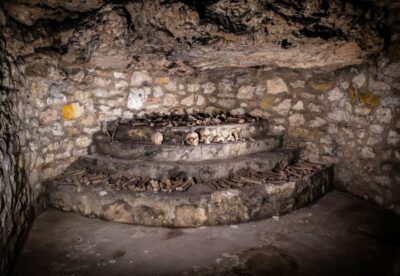

Buda Castle District Vampires and Myths Night Tour
Read our review →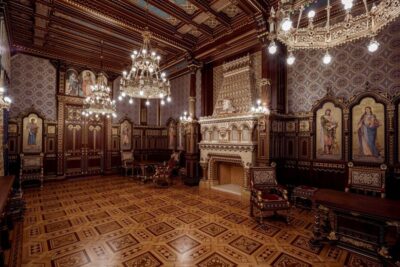
Buda Castle District Dark History, Legends and Vampire Night Tour
Read our review →

Walking tour in the Buda Castle incl. Fisherman’s Bastion
Read our review →
Buda Castle Tour: Fisherman’s bastion and hidden gems
Read our review →Browse the lists this tour appears in