REVIEW · TOURS
Café Wandering: An Excursion through Budapest’s Belle Epoque
Budapest once told its stories over coffee. This three-hour walk links grand Belle Epoque buildings with the cafés where Hungarian writers, artists, and thinkers gathered. I like the small group of eight and the chance to learn from an art historian rather than simply pass pretty façades. I also like the route’s focus on interiors, especially Gerbeaud and the Museum Café.
The main consideration is cost at $123 per person, with coffee, cakes, and other refreshments charged separately. You are paying for specialist guidance and a carefully planned cultural walk, not an inexpensive café crawl. The pace also keeps moving, so this suits you best if you prefer context and architecture over a long, leisurely coffee break.
In This Review
- Key points at a glance
- Starting at Gerbeaud on Vörösmarty Square
- Riding the Danube tram to the Central Café
- Café Astoria and the grandeur of old coffee houses
- Művész Coffee House and the artist’s point of view
- Urania on Rákóczi Street, where café culture meets cinema
- New York Palace Café and the grand finale
- Kazinczy Street and the art nouveau orthodox synagogue
- Why the art historian guide matters
- Is $123 good value?
- Who should book this Budapest café tour?
- Should you book Café Wandering?
- FAQ
- How long does Café Wandering last?
- Where does the tour begin?
- What language is the tour conducted in?
- How large is the group?
- Is an art historian included?
- Are coffee, cake, and other refreshments included?
- Which cafés are included?
- Does the tour visit any synagogue?
- Can I cancel for a full refund?
Key points at a glance
- Gerbeaud begins the story: Start at Vörösmarty Square in one of Budapest’s most famous historic cafés.
- Café culture gets serious context: An art historian explains how coffee houses became meeting places for writers, artists, intellectuals, and local society.
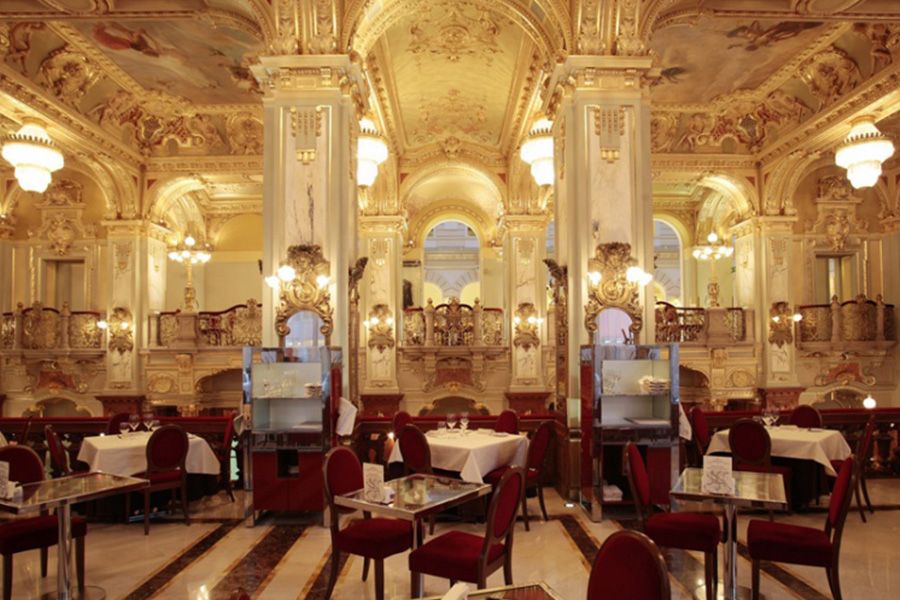
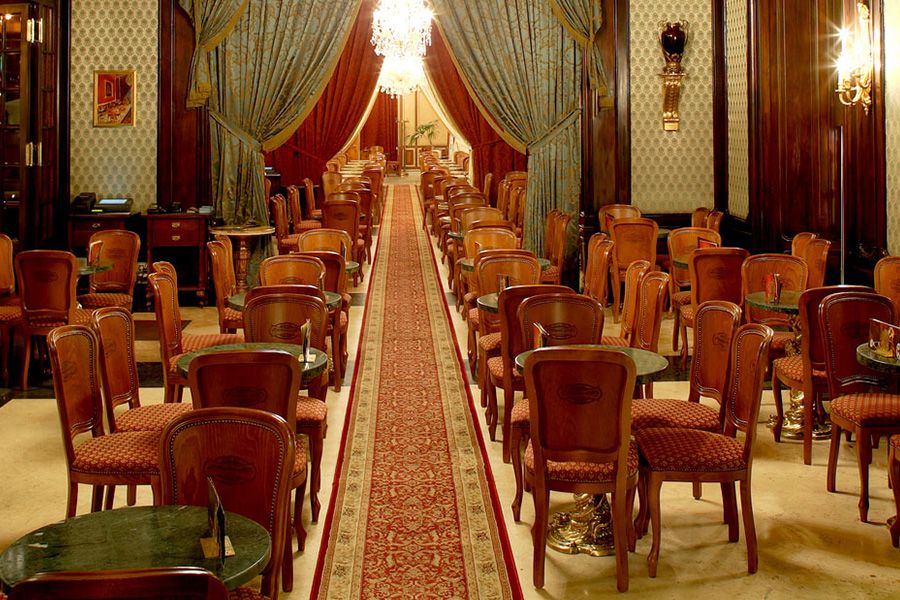
- The interiors are the main event: Expect ornate decoration at Gerbeaud, the Central Café, Café Astoria, and the Museum Café.
- Asian design details reward close looking: The tour draws attention to motifs and decorative elements that are easy to miss on your own.
- The route includes more than cafés: Urania, the oldest film theater in Budapest, and the art nouveau orthodox synagogue on Kazinczy Street add variety.
- Kota earned special praise: One verified booking review specifically called guide Kota excellent, while another described the experience as informative.
Budapest’s café tradition is not just about pastries and elegant rooms. In the late 19th and early 20th centuries, cafés functioned as offices, salons, newsrooms, lecture halls, and informal clubs. A writer could sit with a coffee for hours. An artist might meet a patron. A journalist could work near the city’s latest gossip.
This walking tour uses those rooms to explain a larger period in Hungarian life. You see architecture from the height of the Habsburg Empire’s economic and cultural power, then connect it to the people who used these places.
The tour costs $123 per person and lasts three hours. That is a substantial price for a walking experience, but the group is limited to eight people and the guide is an art historian. The guides may be professors, doctoral students, historians, journalists, art critics, or published authors. For you, that means the value depends heavily on how much you want historical and artistic interpretation.
If you only want to look at ornate interiors, you can visit some of these cafés independently. If you want to understand why they mattered, how their design worked, and what café culture meant in Imperial Budapest, the guided format makes more sense.
Starting at Gerbeaud on Vörösmarty Square
The meeting point is Café Gerbeaud at Vörösmarty tér 7 to 8. This puts you in the center of Budapest, in a square that is easy to reach and well suited to a walking tour.
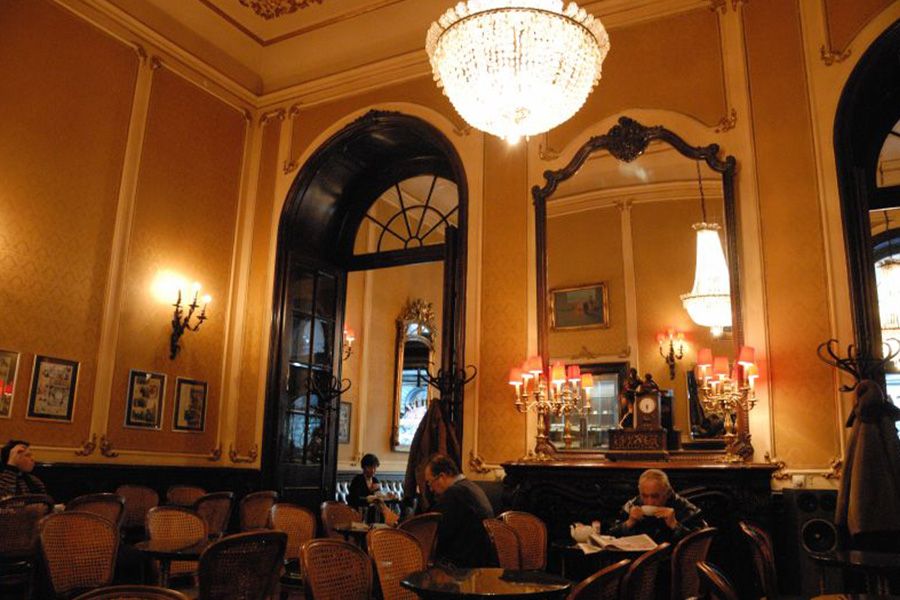
Gerbeaud provides the first look at the atmosphere of Imperial Budapest. The café has more than a century of history and served as a social hub for locals and visitors in the late 19th century. Its interior is the kind of place where the room itself explains why cafés became such important public spaces.
You can expect to spend time noticing the decoration rather than simply ordering a drink and moving on. The point is to see how the furnishings, walls, and overall design created a setting for conversation and display.
Gerbeaud is also a practical first stop because it establishes the tour’s main theme: coffee houses were part of the city’s cultural life. You are not just seeing an old restaurant. You are seeing one of the places where Budapest’s social world took shape.
Coffee, cake, and other refreshments are not included. If you want to sample something at each stop, your final cost will rise. I would avoid treating every café as a full meal stop. Three hours is better used for looking, listening, and asking questions.
More things to do in Budapest:
- Budapest: City Highlights Cruise with Welcome Drink
★ 4.6 · 35,610 reviews - Budapest: Unlimited Prosecco, Beer and Aperol Spritz Cruise
★ 4.8 · 25,310 reviews - Budapest: Széchenyi Spa Day Ticket with Optional Upgrades
★ 4.3 · 23,911 reviews
Riding the Danube tram to the Central Café
From Gerbeaud, the group takes a tram along the Danube to the Central Café. This short ride breaks up the walking and gives the tour a useful change of rhythm.
Central Café and Restaurant 1887 is presented as one of the clearest examples of classic café house culture during the peak of Habsburg influence. Its dignity is part of the appeal. The room, food, desserts, and drinks all help recreate the social world of the period.
The guide’s role matters here. A grand interior can blur into a series of attractive details when you see it alone. With an art historian, you can ask why a room feels formal, how decoration shaped the visitor’s experience, and what the café represented to the city’s educated classes.
The café’s name points to its founding date, 1887, which places it firmly in the era the tour explores. That date is useful context because Budapest was then developing rapidly as a major cultural and economic center.
The tram ride is also a reminder that this is not a single-building visit. You move through central Budapest, connecting several places rather than spending the whole three hours in one café. Bring comfortable shoes, even though the route includes public transportation.
Café Astoria and the grandeur of old coffee houses
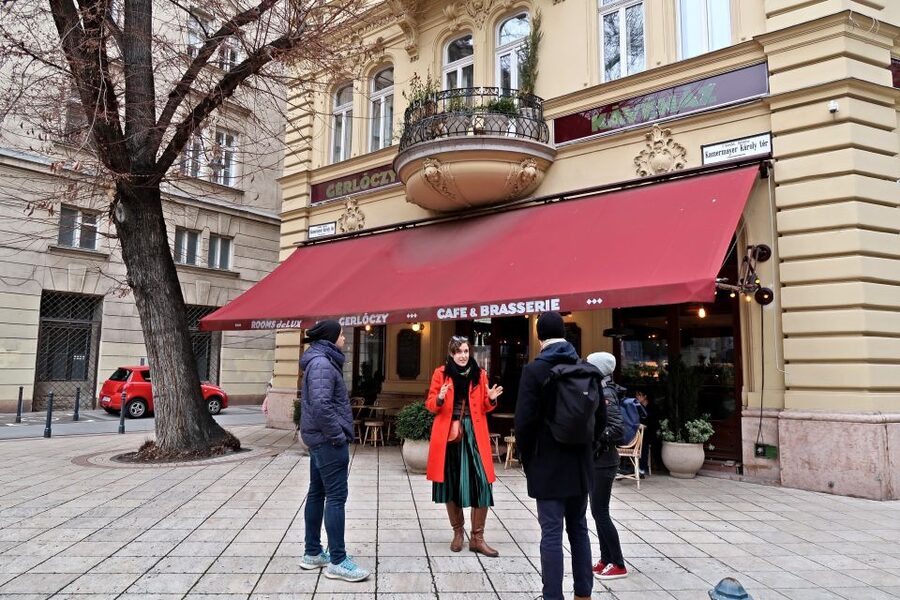
After the Central Café, the route continues to Café Astoria. This more than century-old café evokes the grandeur associated with classic European coffee houses.
Astoria helps broaden the picture. Gerbeaud introduces you to a famous social center, while the Central Café represents the formal side of café culture. Astoria adds another version of that same world, one shaped by scale, ceremony, and old-fashioned elegance.
You will likely get more from this stop if you pay attention to how it differs from the earlier cafés. The tour is not simply counting historic coffee houses. It is asking you to compare their rooms, decorative choices, and cultural roles.
That comparison is one of the strongest reasons to choose a guided walk. On your own, you might visit one celebrated café, take a few photographs, and leave with the impression that all historic coffee houses are alike. Seeing several in one route gives you a better sense of Budapest’s architectural range.
The drawback is that the experience may feel more observational than indulgent. You are not booking a three-hour pastry tasting. The refreshments are optional purchases, and the guide’s attention stays on the cultural setting.
Művész Coffee House and the artist’s point of view
The stated route also includes Művész Coffee House, known in English as the Artist Café. Its name fits the wider theme of Budapest cafés as places used by creative people.
This stop adds an artist’s angle to a tour that already discusses writers, poets, journalists, and intellectuals. You can expect the guide to connect the café setting with the people who worked, met, or exchanged ideas in such rooms.
Művész is particularly useful for showing that café culture was not limited to one grand institution. It formed a network of places where people could spend time in public while pursuing private work and conversation.
Because the tour is only three hours, the time at each venue may be limited. That is worth keeping in mind if you want a slow inspection of every room. The benefit is breadth. You see several important locations and learn how they fit into Budapest’s Belle Epoque culture.
A completely different kind of day:
- Budapest: Nighttime or Daytime Sightseeing Cruise
★ 4.2 · 21,062 reviews - Budapest: 1-Hour Evening Sightseeing Cruise with Drink
★ 4.5 · 8,330 reviews - Budapest Danube Cruise and Dinner Options, Live Music and Dance
★ 4.5 · 7,428 reviews - Budapest: Historic Cruise with Welcome Drink
★ 4.7 · 6,512 reviews
Urania on Rákóczi Street, where café culture meets cinema
The route description also highlights Urania Café on Rákóczi Street. The building houses Budapest’s oldest film theater and was known for lectures by prominent intellectuals before large audiences.
This is an important change of subject. The tour begins with cafés, but Urania shows how public culture extended into film, lectures, and large gatherings. The setting links the intimate café table with the larger auditorium.
You should pay attention to that contrast. A café allowed conversation in a relatively small room. A lecture theater addressed a crowd. Both were part of a city where ideas circulated through public spaces.
Urania also helps prevent the walk from becoming a repeated series of ornate interiors. You get a different type of cultural venue and a clearer idea of how Budapest’s intellectual life reached beyond coffee and cake.
The available route details name both Urania and the later café stops, so the precise order may depend on the day’s arrangements. Ask your guide at the start how the route will run. That simple question can help you plan your energy and know when the major interiors are coming.
New York Palace Café and the grand finale
The guided route includes the New York Palace Café, one of the best-known names connected with Budapest’s historic café culture. Its inclusion gives the tour a grand finish.
New York Palace is associated with the theatrical side of the Belle Epoque. The setting is meant to impress, but the guide can help you look past the initial spectacle. Notice how the room presents wealth, status, and cultural ambition.
This is where the tour’s design focus becomes especially useful. The experience asks you to examine Asian motifs and other elements employed by the designers. Those details may appear in decorative patterns, objects, or architectural choices. You might notice them on your own, but a trained guide makes it easier to understand why they were used and how they fit the period’s taste.
The café is also a good place to consider the difference between historic atmosphere and everyday café life. Today, it is a famous stop for people seeking Budapest’s grandest coffee-house experience. During the Belle Epoque, cafés had a more active role in the city’s working and intellectual routines.
Do not assume the tour includes a full sit-down visit at every named café. The included service is the three-hour guided walk. Any coffee, cake, or drink you order is extra.
Kazinczy Street and the art nouveau orthodox synagogue
The experience concludes at the fascinating art nouveau orthodox Kazinczy Street Synagogue. This final stop shifts the focus from café culture to religious architecture and urban identity.
Its art nouveau design gives you another chance to study how Budapest’s designers used pattern, ornament, and non-Western visual references. The Asian motifs discussed earlier gain a broader setting here, alongside the synagogue’s distinctive Jewish architectural character.
Ending at the synagogue is a strong choice because it prevents the tour from becoming only a celebration of café glamour. Budapest’s Belle Epoque was created by many communities, professions, and cultural influences. The final building points toward that wider city.
The supplied information does not state that the tour includes interior admission to every location or a dedicated synagogue visit inside. Treat this as the concluding architectural sight, and ask the guide what access is available on your date.
Why the art historian guide matters
The guide is the heart of this experience. The official guide pool includes professors, doctoral students, historians, journalists, art critics, and published authors. That is a more specialized profile than you usually get on a general city walk.
One verified booking review singled out Kota as excellent. Another described the tour as informative. Those comments point to the feature most likely to shape your experience: the quality of the explanations.
You should arrive ready to ask questions. Ask about a decorative motif. Ask why cafés became so important to writers. Ask how the Habsburg period affected Budapest’s architecture. A small group of up to eight makes this easier than on a large coach tour.
The language is English, and the tour is guided live. If you prefer a quiet stroll with little commentary, this may feel too academic. If you enjoy connecting buildings with ideas and people, the format should suit you well.
Is $123 good value?
At $123 per person, this is not a budget walk. You are also paying separately for refreshments, cakes, and coffees. The price makes the most sense if you value three things: a very small group, specialist instruction, and access to a carefully connected set of historic sites.
The value is weaker if you plan to order several drinks or pastries and expect those costs to be covered. They are not. It is also less suitable if your main goal is simply to sit in Budapest’s prettiest cafés.
For an architecture enthusiast, cultural historian, or repeat visitor who wants a sharper understanding of the city, the price can be reasonable. You are getting a focused art and social history lesson across several locations, rather than a general orientation walk.
Free cancellation up to 24 hours before the start and reserve now, pay later terms make planning easier. The tour lasts three hours, but available starting times should be checked before booking.
Who should book this Budapest café tour?
I would recommend it to you if you enjoy architecture, design, literary history, or the social life of old cities. It is especially useful early in a Budapest visit, when you want a cultural framework for the grand buildings you will see elsewhere.
It also suits repeat visitors. You may already know the main sights, but the cafés and design details can show you another side of the city.
This is less suitable for young children who need constant activity, anyone seeking a food-focused tour, or anyone who wants to spend an hour relaxing in one café. The walk includes several stops, a tram ride, and plenty of explanation.
Wear comfortable shoes and keep your schedule open for the full three hours. If you want refreshments, budget for them separately. Most important, treat the cafés as cultural interiors first and places to eat second.
Should you book Café Wandering?
Book this tour if you want to understand why Budapest’s cafés mattered, not merely photograph their ceilings. The small group, art historian guide, and range of venues give the experience real substance, while the praise for Kota suggests that the personal quality of the guide can be excellent.
Skip it if $123 feels high for a walking tour or if you mainly want coffee and cake. You can visit individual cafés independently for less. But if you want the connections between Gerbeaud, Central Café, Astoria, Művész, Urania, New York Palace, and Kazinczy Street explained in one compact outing, this is a thoughtful and distinctive choice.
FAQ
How long does Café Wandering last?
The tour lasts three hours.
Where does the tour begin?
It begins at Café Gerbeaud, Budapest Vörösmarty tér 7 to 8, 1051.
What language is the tour conducted in?
The live tour guide speaks English.
How large is the group?
The group is limited to eight participants.
Is an art historian included?
Yes. The experience includes a three-hour guided walk led by an art historian.
Are coffee, cake, and other refreshments included?
No. Any refreshments, cakes, or coffees you select at the cafés cost extra.
Which cafés are included?
The route includes Gerbeaud, Central Café and Restaurant 1887, Café Astoria, Művész Coffee House, and New York Palace Café. The route information also highlights Urania Café on Rákóczi Street.
Does the tour visit any synagogue?
The experience concludes at the art nouveau orthodox Kazinczy Street Synagogue.
Can I cancel for a full refund?
Yes. You can cancel up to 24 hours in advance for a full refund.
Just added in Budapest
- Budapest: Private Walking Tour with a Local Guide★ 3.6 · 6 reviews
- Budapest: Danube River Views Bike Ride★ 4.8 · 23 reviews
- Budapest: City Bike Tour with Coffee Stop★ 5.0 · 37 reviews
- From Budapest: Guided Tour of Eger with Wine Tasting★ 4.5 · 6 reviews
- Walk to recent and aged spiritual sanctuaries near Budapest★ 5.0 · 5 reviews
- Walking consultancy with alternative psychologist and author★ 5.0 · 2 reviews
- Budapest: Guided Tour of the Parliament Building in Spanish★ 4.6 · 1,240 reviews
- Budapest: Vacation Photographer to collect great memories★ 5.0 · 49 reviews
Tours, compared.
City Sightseeing Hop-On Hop-Off Bus Tour & Extras
Read our review →
Buda Castle District Vampires and Myths Night Tour
Read our review →
Budapest City Landmarks Walking Tour in 2 Hours
Read our review →
3-Hour Orientation Walking Tour of Buda and Pest
Read our review →