

REVIEW · WORKSHOPS
Hungarian Strudel Making Class: Stretch & Fill Two Ways
Stretching dough changes the whole baking game. This hands-on Budapest cooking class takes you from flour and filling to baked strudel, with Marti guiding each person through the surprisingly stretchy dough. I like the small group, capped at 10, and the warm home-kitchen setting. I also like that you eat what you make, alongside Hungarian wine, homemade soft drinks, and local snacks.
The class offers more than a recipe. Marti shares family traditions, childhood memories, and practical tricks that help you understand why strudel matters in Hungarian cooking. The main consideration is timing: the class needs at least four participants, and the first person to book gets to choose the two fillings.
In This Review
- Key points at a glance
- Why Hungarian strudel is worth learning
- Arriving at Király u. 77
- The opening: Hungarian bites and kitchen conversation
- Stretching the dough by hand
- Picking two fillings
- Waiting for the oven with Hungarian flavors
- Sitting down to eat what you made
- What $95.34 buys you
- Who should book this class
- Practical booking details
- Should you book Hungarian Strudel Making Class: Stretch & Fill Two Ways?
- FAQ
- Where does the Hungarian strudel class begin and end?
- How long does the class last?
- How many people can join?
- Which strudel fillings are available?
- What food and drinks are included?
- Can I cancel for a full refund?
Key points at a glance
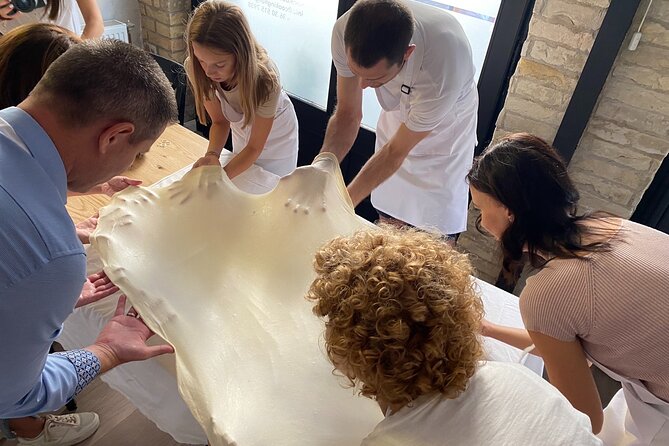
- Stretch the dough by hand: You get real practice rather than watching a demonstration from the sidelines.
- Choose two fillings: Options include apple, sweet farmer cheese with sour cherry, savory cabbage, and poppy seed with pumpkin.
- Eat while the pastry bakes: A Hungarian farmer’s plate brings peppers, sausage, spicy cottage cheese cream, and bread to the table.
- Learn in a central home kitchen: The studio is at Király u. 77, near public transportation, and not in a basement room.
- Expect personal instruction: The class is limited to 10 people, so you can ask questions and get help with the dough.
- Plan ahead: The experience costs $95.34 per person, and it is often reserved about 66 days in advance.
Why Hungarian strudel is worth learning
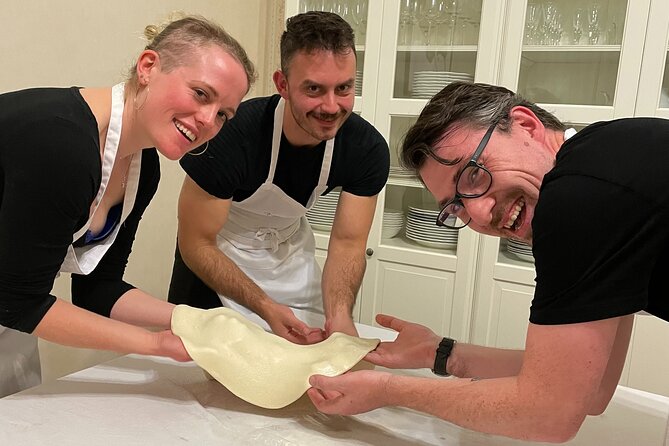
Strudel is easy to recognize once it reaches your plate: a crisp, rolled pastry wrapped around fruit, cheese, seeds, or vegetables. Making it is another matter. The dough must be stretched thin by hand, and that physical step gives this class its purpose.
You are not simply assembling prepared pastry. You work with stretched dough from the beginning, then fill and roll it in the traditional family style. That makes the activity useful for anyone who wants to understand how Hungarian home cooking works, not just taste the finished dish.
Marti also places strudel in a cultural setting. Her stories about baking with her mother give the class a personal thread, and the conversation can reach beyond the pastry to Hungarian food and customs. That is a fine reason to choose this instead of a standard demonstration class.
The food is substantial, too. You have snacks during baking, then the two strudels you helped prepare. Arrive hungry, especially if you choose one sweet and one savory filling.
More things to do in Budapest:
- Budapest: City Highlights Cruise with Welcome Drink
★ 4.6 · 35,610 reviews - Budapest: Unlimited Prosecco, Beer and Aperol Spritz Cruise
★ 4.8 · 25,310 reviews - Budapest: Széchenyi Spa Day Ticket with Optional Upgrades
★ 4.3 · 23,911 reviews
Arriving at Király u. 77
The class begins at Budapest, Király u. 77, 1077 Hungary, in a central kitchen studio. It is near public transportation, and the meeting point is also where the experience ends.
The setting matters. A clean, attractive home kitchen feels more personal than a large commercial cooking room. You are there to cook with the host, not move through a production line. Several people specifically appreciated the welcoming atmosphere and the chance to talk with Marti in her own kitchen.
Read the directions carefully before setting out. One couple found the written arrival instructions clear and easy to follow. Budapest is a walkable city, but allow enough time to find the address without rushing in with flour already flying.
The class lasts about two and a half hours. Morning and afternoon start times are available, so you can fit it around sightseeing. A morning class can work well before an afternoon walk through central Budapest. An afternoon session may be better if you want strudel to serve as a late lunch or early dinner.
The opening: Hungarian bites and kitchen conversation
The class begins with an introduction to strudel, its place in Hungary, and the plan for the cooking session. You also get Hungarian bites while the pastry is being prepared and baked.
The farmer’s plate includes different peppers, sausage, spicy cottage cheese cream, and bread. These are not just filler snacks. They introduce you to familiar Hungarian flavors, including the paprika-led character of the cuisine and the combination of creamy, salty, spicy, and fresh ingredients.
Drinks include Hungarian wine, homemade soft drinks, and mineral water. Individual sessions have also included pálinka, but the stated drink list centers on wine, soft drinks, and water, so you should not count on every extra offering.
This opening portion gives you time to settle in and ask questions. It also helps explain why the class takes two and a half hours. You are not rushing through a recipe. You are eating, listening, cooking, and waiting for the pastry to bake.
Stretching the dough by hand
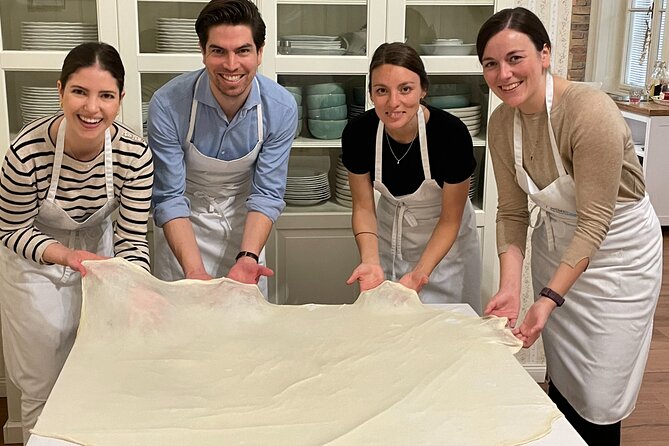
The signature part of the class is the dough. Marti demonstrates how to stretch it, then expects everyone to practice. You learn by handling the dough, seeing how far it can go, and getting corrections as needed.
That individual attention is one of the strongest reasons to book a small group. Strudel dough can look fragile, and it is natural to worry about tearing it. The class gives you time to try, adjust, and try again instead of watching one expert do the difficult part.
The process is practical rather than polished for show. You learn useful tips and techniques connected with the dough, fillings, and baking. The goal is not to turn you into a professional pastry chef in one morning. It is to give you enough understanding and confidence to attempt strudel at home.
Everyone takes part. This point matters if you dislike cooking classes where one person works while the rest watch. The class is built around participation, and the teacher brings people into each stage.
A completely different kind of day:
- Budapest: Nighttime or Daytime Sightseeing Cruise
★ 4.2 · 21,062 reviews - Budapest: 1-Hour Evening Sightseeing Cruise with Drink
★ 4.5 · 8,330 reviews - Budapest Danube Cruise and Dinner Options, Live Music and Dance
★ 4.5 · 7,428 reviews - Budapest: Historic Cruise with Welcome Drink
★ 4.7 · 6,512 reviews
Picking two fillings
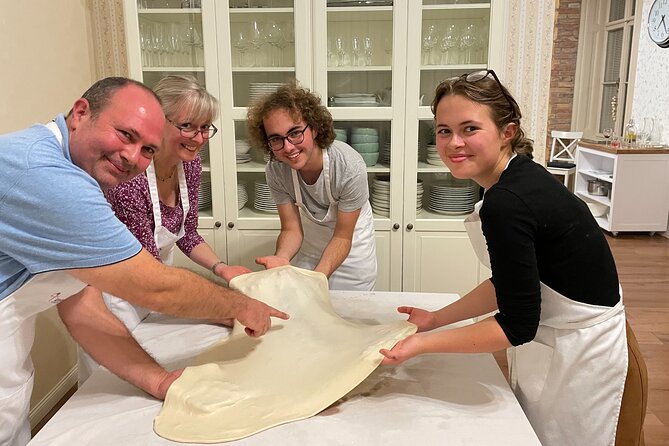
You prepare two kinds of strudel. The available fillings are:
- Apple
- Sweet farmer cheese with sour cherry
- Savory cabbage
- Poppy seed with pumpkin
The first person to book can choose the two fillings, so your preferred combination is not guaranteed if you reserve later. If the choice matters to you, book early or ask about the available options before confirming.
The choices give you a useful contrast. Apple is the familiar sweet option, while farmer cheese with sour cherry adds a creamy, tart filling. Savory cabbage shows how strudel can move into meal territory, and poppy seed with pumpkin offers a distinctly Central European flavor pairing.
I would choose one sweet and one savory version if you have the option. That gives you a better sense of the pastry’s range and makes the final meal less one-note. It also suits the generous portions, since two dessert-style strudels could be a lot after the farmer’s plate.
Guests with food concerns should raise them before booking. One person with several allergies was able to take part after discussing the options, but the provided information does not promise a specific allergy program or guarantee that every filling can be altered.
Waiting for the oven with Hungarian flavors
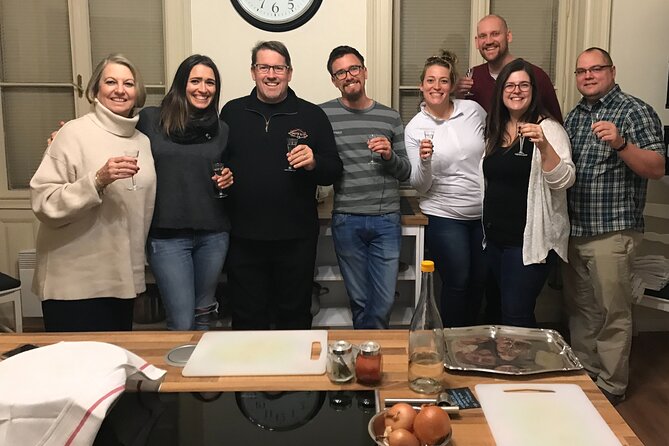
Once the strudels are assembled, they bake while you continue eating and talking. This pause is part of the experience rather than dead time.
The snacks make the wait pleasant, and the local ingredients give you another small lesson in Hungarian food. You can taste peppers, sausages, and spicy cottage cheese cream while discussing the dishes and the customs connected with strudel.
This is also where the class becomes social. Groups have described the kitchen as relaxed, friendly, and easygoing. You might come with a friend, a parent, or a partner, but the small format also leaves room for conversation among people who have just met.
The class works particularly well for people who enjoy food stories. Marti’s memories of baking with her mother add a family angle that a recipe card cannot provide. If you want a fast, technical pastry workshop with little conversation, this may feel too informal. If you like cooking as a way to meet a place, it should suit you well.
Sitting down to eat what you made
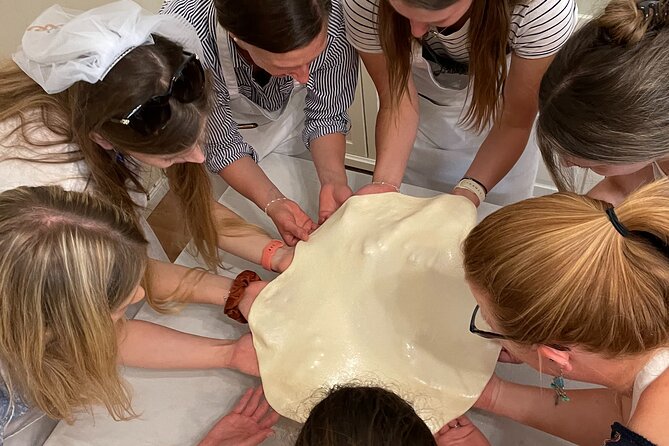
The payoff is simple: the strudels come out of the oven, and you eat them. That makes the class feel complete. You learn the technique, see the results, and taste the difference between the two fillings.
The finished pastry is served with the Hungarian bites and drinks, so this is more than a sample-size cooking demonstration. One session produced enough food that there were leftovers to take home. That is useful, although it also means you should not plan a large restaurant meal immediately afterward.
The best part is the connection between effort and flavor. You have stretched the dough, chosen the filling, rolled the pastry, and waited for it to bake. Even a slightly uneven roll becomes part of the story. Strudel is forgiving in that way: it does not need to look factory-perfect to taste good.
You also leave with methods you can repeat. The class does not only explain what goes into the pastry. It shows how to handle the dough and gives practical advice for making it again at home.
What $95.34 buys you
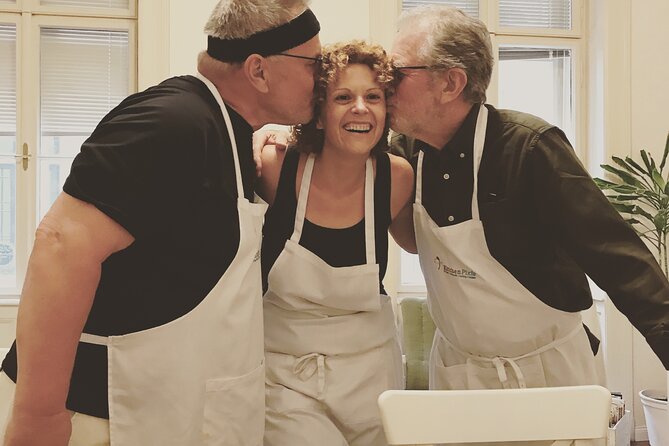
At $95.34 per person, this is not the cheapest food activity in Budapest. The price makes more sense when you count the full package: roughly two and a half hours of teaching, two strudels, a farmer’s plate, drinks, local ingredients, and a small group capped at 10.
You are also paying for access to a host who gives personal help. In a larger class, the dough-stretching stage could become a quick demonstration. Here, the stated format guarantees individual guidance, and the class size supports that promise.
The value is strongest if you want a meal plus a skill. If you only want to eat strudel, a bakery or café will cost less. If you want to understand the pastry, practice making it, hear family stories, and share the kitchen with a host, the class earns its higher price.
The high advance-booking average, about 66 days, is a useful warning. You do not need to wait that long in every case, but popular dates may disappear well before a Budapest trip. Morning and afternoon choices help, though the filling selection can depend on who books first.
Who should book this class
I would recommend it to couples, families, friends, and solo food lovers who prefer active experiences. It suits people who like to ask questions and do the work themselves. Children may enjoy the hands-on element, but the supplied information does not give a minimum age, so check before booking with young children.
It is also a good choice for anyone with a personal connection to Hungarian food. The family recipe and stories about baking with a mother give the class emotional weight without turning it into a formal history lesson.
You should think twice if you dislike group activities, have a strict schedule, or want a quick tasting with no cooking. The class requires a minimum of four participants, and the pastry needs time to bake. It is a social kitchen experience, not a grab-and-go snack stop.
The class also makes sense near the start of a Budapest visit. You can use the tips and flavor ideas later when choosing dishes in restaurants and markets. Booking it near the end has one clear advantage, too: it can become a memorable final meal, as long as you do not mind eating a good deal of pastry before leaving town.
Practical booking details
Your confirmation arrives when you book, and the experience uses a mobile ticket. Hotel pickup and drop-off are not included, so you make your own way to Király u. 77.
The group maximum is 10, and at least four people are needed for the session to run. If the minimum is not met and the class is canceled, you can choose another date or experience, or receive a full refund.
Free cancellation is available up to 24 hours before the start time. Cancellations or changes made within 24 hours are not refundable or accepted, and the cut-off follows Budapest local time.
Should you book Hungarian Strudel Making Class: Stretch & Fill Two Ways?
Book it if you want to cook, not just watch. The strongest features are the real dough-stretching practice, Marti’s warm teaching style, the central home kitchen, and the chance to compare sweet and savory strudel at one sitting.
Skip it if you want a low-cost bakery visit or cannot commit to a two-and-a-half-hour group class. For everyone else, $95.34 is a fair price for a meal, a lesson, and a personal look at Hungarian home cooking. Choose a date early, arrive hungry, and try to secure one sweet and one savory filling.
FAQ
Where does the Hungarian strudel class begin and end?
It begins and ends at Király u. 77, 1077 Budapest, Hungary. The location is near public transportation.
How long does the class last?
The class lasts approximately 2 hours and 30 minutes.
How many people can join?
The class requires a minimum of four participants and accepts a maximum of 10 travelers.
Which strudel fillings are available?
You can choose two fillings from apple, sweet farmer cheese with sour cherry, savory cabbage, and poppy seed with pumpkin. The first person to book can choose the fillings.
What food and drinks are included?
The experience includes two stretched strudels, a Hungarian farmer’s plate with peppers, sausage, spicy cottage cheese cream, and bread, plus Hungarian wine, homemade soft drinks, and mineral water.
Can I cancel for a full refund?
Yes. You can cancel at least 24 hours before the experience start time for a full refund. Cancellations or changes made less than 24 hours before the start time are not accepted or refunded.
Just added in Budapest
- Budapest: Private Walking Tour with a Local Guide★ 3.6 · 6 reviews
- Budapest: Danube River Views Bike Ride★ 4.8 · 23 reviews
- Budapest: City Bike Tour with Coffee Stop★ 5.0 · 37 reviews
- From Budapest: Guided Tour of Eger with Wine Tasting★ 4.5 · 6 reviews
- Walk to recent and aged spiritual sanctuaries near Budapest★ 5.0 · 5 reviews
- Walking consultancy with alternative psychologist and author★ 5.0 · 2 reviews
- Budapest: Guided Tour of the Parliament Building in Spanish★ 4.6 · 1,240 reviews
- Budapest: Vacation Photographer to collect great memories★ 5.0 · 49 reviews
Workshops, compared.
Hungarian Chimney Cake Workshop in the City Center
Read our review →
Budapest Cooking Class & Market Tour with Local Guide & Wines
Read our review →
Chimney Cake Workshop Budapest Downtown – Kürtőskalács Class
Read our review →
Easy Cooking Class Budapest – with Market Walk (local wine & pálinka included)
Read our review →
Kürtőskalács: Chimney Cake Workshop in City Park Budapest
Read our review →Browse the lists this tour appears in