
REVIEW · WALKING TOURS
Alternative Budapest Walking Tour
Budapest has a second city beneath the grand one. This small-group walk leaves the famous sights behind for murals, ruin bars, design shops, cafés, galleries, and the changing culture of the Jewish district. I like the personal feel, with no more than 10 people, and I like that guides such as Raymond, Petra, Anna, and Kristian have added local stories instead of giving a stiff history lecture. The main drawback is the price: at $67 per person, it is not cheap for a 2.5-hour walk, especially since drinks and coffee are extra.
This is a good choice if you want to understand how Budapest lives today, not just what it looked like in the past. The route can change, which keeps it fresh but means you should not book it expecting a fixed checklist of sights. Wear comfortable shoes, since this is a walking tour through city streets rather than a gentle stroll around one square.
In This Review
- Key points before you book
- What this Budapest alternative tour is really about
- Starting at the pale yellow Lutheran Church
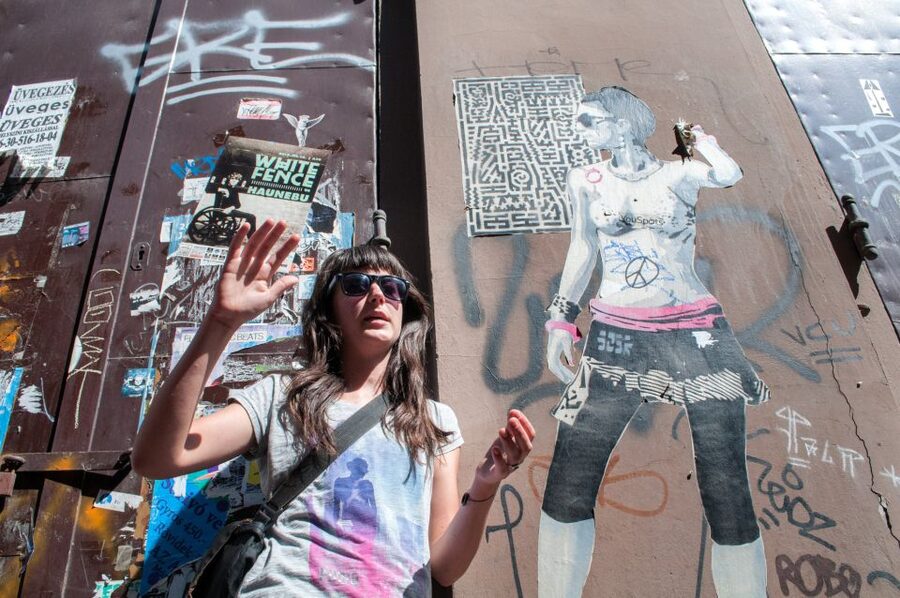
- Reading Budapest through street art
- The Seventh District and Budapest’s Jewish quarter
- Cafés, design shops, and independent spaces
- Ruin bars beyond the party reputation
- Music venues, galleries, and the city after dark
- The guide makes or breaks the walk
- Pace, comfort, and the two-and-a-half-hour schedule
- Is $67 a fair price?
- Who should book this walking tour?
- Should you book the Alternative Budapest Walking Tour?
- FAQ
- How long does the Alternative Budapest Walking Tour last?
- What language is the tour conducted in?
- How many people are in the group?
- Where does the tour meet?
- Are food and drinks included?
- Is the tour suitable for wheelchair users?
Key points before you book
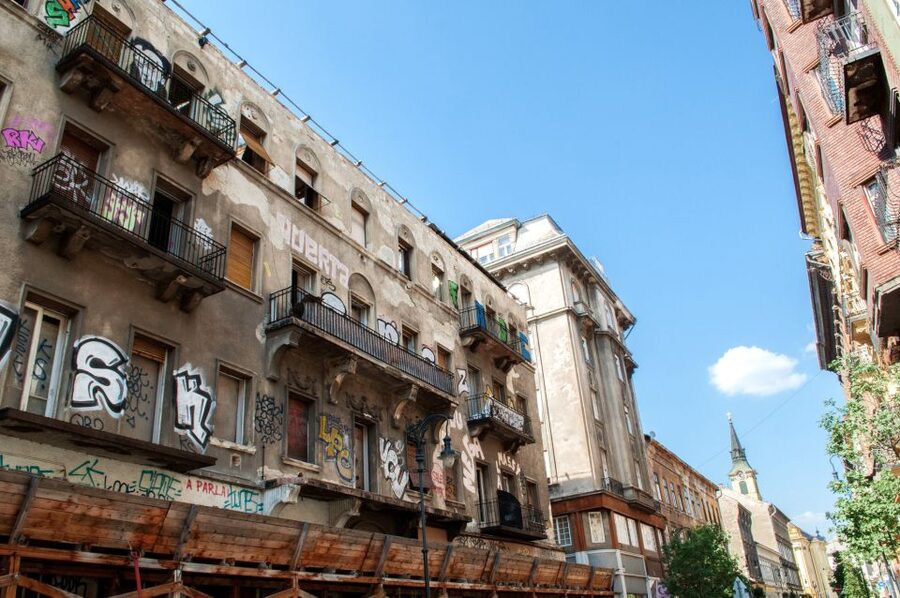
- Street art with context: Murals, graffiti, painted sidewalks, and unusual buildings come with explanations about local artists, politics, and city life.
- The Jewish district is the main stage: You explore the Seventh District, where old buildings now hold cafés, bars, shops, cultural spaces, and galleries.
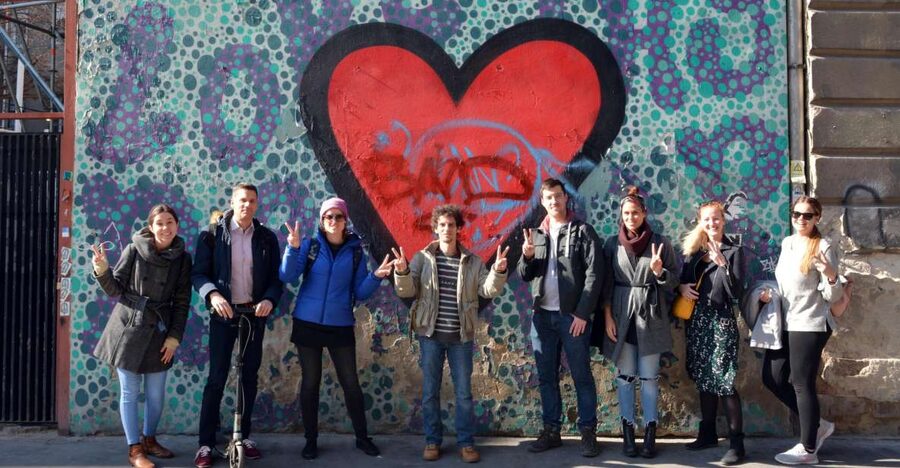
- Small groups make a real difference: With a maximum of 10 people, it is easier to ask questions and adjust the conversation to your interests.
- Ruin bars are treated as culture, not just nightlife: Szimpla Kert and similar places reveal how neglected buildings became social and creative spaces.
- Guides shape the experience: Past guides including Raymond, Petra, Anna, Antonia, and Kristian were praised for being friendly, relaxed, and full of useful local advice.
- Plan for changing weather: There may be indoor stops, but you still need weather-appropriate clothes and shoes for several hours outside.
What this Budapest alternative tour is really about
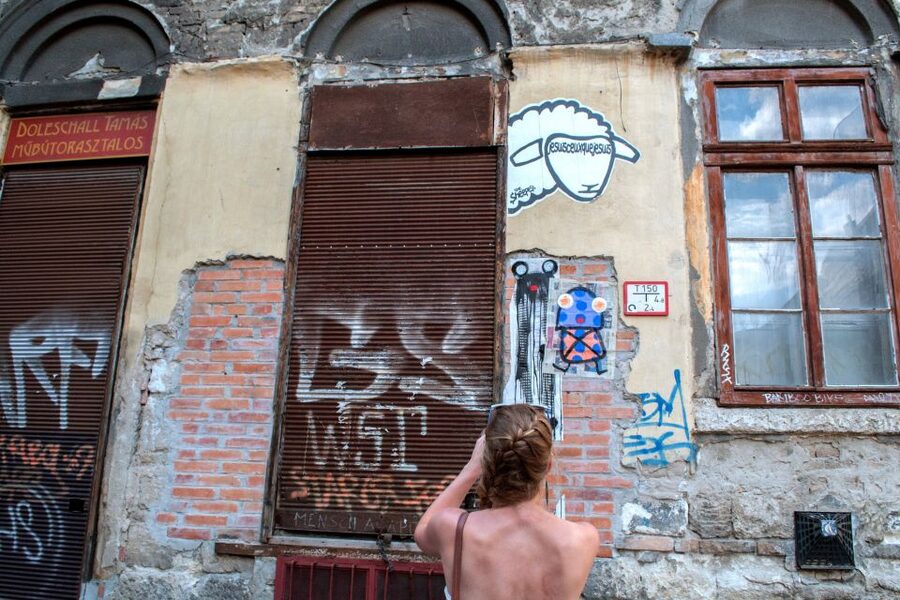
Many Budapest walks focus on the Parliament, Buda Castle, St. Stephen’s Basilica, or the thermal baths. Those places matter, but they do not explain the city’s current creative life. This tour takes a different route through Budapest, using street art, independent shops, music venues, cafés, and ruin bars as its guide.
I like that approach because these places are not presented as decoration. A mural can lead to a discussion about local politics. A converted building can explain the city’s changing property market. A ruin bar can show how abandoned or neglected spaces became places for art, nightlife, workshops, and community projects.
The tone is intended to be casual. You are encouraged to ask questions, and the guide can point you toward places to visit during the rest of your stay. Several guides have also included personal stories and practical suggestions, which can make the walk feel more like time with a well-informed local than a standard sightseeing circuit.
The route covers both Buda and Pest in the general description, but much of the alternative culture described here centers on Pest, especially the old Jewish quarter and Seventh District. Since the tour is described as ever-changing, exact stops may vary.
More walking tours in Budapest:
- Budapest: Buda Castle Walk with Saint Stephen’s Hall
★ 4.5 · 3,012 reviews - Big Bus Budapest Hop-On Hop-Off Bus and Walking Tour
★ 3.5 · 2,206 reviews - Budapest: Buda Castle District Walking Tour
★ 4.6 · 2,108 reviews
Starting at the pale yellow Lutheran Church
You meet the guide in front of the pale yellow Lutheran Church, on the church steps. This is a practical central meeting point, but it is worth arriving early enough to identify the building clearly, especially if you are unfamiliar with Budapest’s street layout.
The walk then moves away from the usual tourist zone. One of the appealing features is that the guide sets up a contrast between the polished center and the less cared-for streets nearby. Budapest’s alternative culture grew in areas where old buildings, empty spaces, and low-cost rooms allowed artists, musicians, shop owners, and community groups to experiment.
That does not mean every street is pretty or every stop will feel polished. In fact, the rough edges are part of the point. You may see fading paint, patched walls, unusual architecture, and traces of past uses beside new cafés and stylish shops. If you prefer a neat parade of grand monuments, this walk may feel scattered. If you enjoy seeing how a city changes from the ground up, it offers a useful window.
Reading Budapest through street art
Street art is one of the strongest parts of the tour. You do not simply stop for photographs of large murals. The guide explains local graffiti writers, street artists, and the reasons certain walls or public surfaces have been painted.
Past visitors have appreciated details such as why paint appears on sidewalks and how local attitudes toward architecture differ from what you may expect. Those small observations help you notice things you would probably pass without a second thought.
The art also gives the tour a modern focus. You are looking at work that may change, disappear, or be painted over. That fits the city’s alternative culture, which is not preserved behind glass. A mural can be a political statement, a neighborhood marker, a commercial commission, or simply an act of visual mischief.
I would bring a phone or camera, but do not treat the route as a guaranteed street-art photo tour. The experience is as much about the stories around the work as the images themselves. One guide may focus on a political mural, while another may spend more time on design, architecture, or the people who use the area.
The Seventh District and Budapest’s Jewish quarter
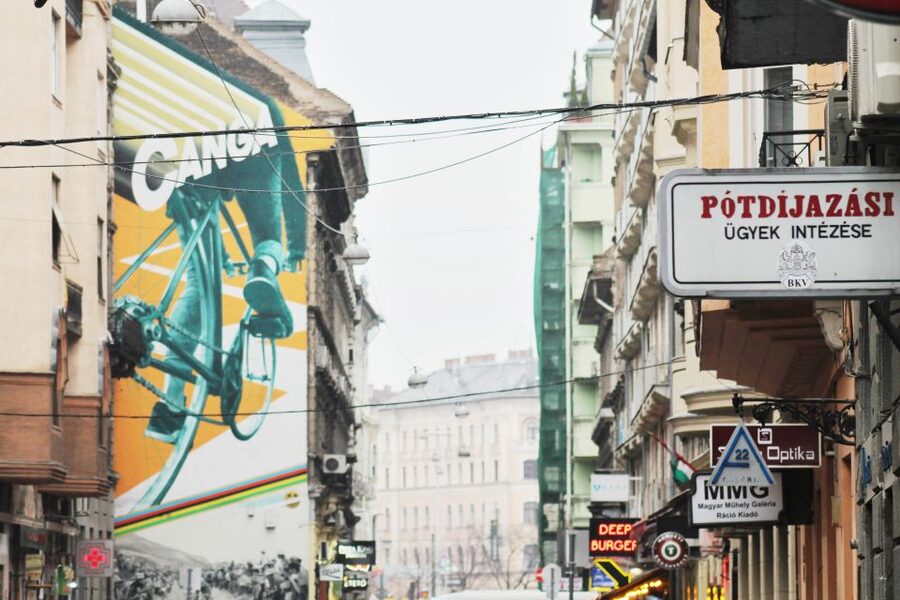
The Seventh District is the heart of the route described by many of the guides. This area has an important Jewish past, and the tour connects that past to the district’s current cafés, restaurants, bars, galleries, and shops.
The guide may discuss the Jewish community of Budapest, the old buildings around the quarter, and the way the area changed over time. The tour is not presented as a formal memorial walk, so you should not expect a full Jewish-history itinerary. Instead, the subject is part of a wider story about memory, neglect, renewal, nightlife, and local identity.
That combination is valuable. It helps you understand why the district feels layered. A building can carry painful memories, while the same street now attracts artists, visitors, musicians, and new businesses. The result is not simple. New energy can bring useful investment, but it can also raise questions about noise, commercial pressure, and who gets to remain in the neighborhood.
The best guides leave room for those questions. Past guide Kristian, for example, was praised for discussing local culture and politics along with street art and the role of ruin bars in the area’s revival. That sort of conversation gives the district more meaning than a quick stop for a drink.
More things to do in Budapest:
- Budapest: City Highlights Cruise with Welcome Drink
★ 4.6 · 35,610 reviews - Budapest: Unlimited Prosecco, Beer and Aperol Spritz Cruise
★ 4.8 · 25,310 reviews - Budapest: Széchenyi Spa Day Ticket with Optional Upgrades
★ 4.3 · 23,911 reviews - Budapest: Nighttime or Daytime Sightseeing Cruise
★ 4.2 · 21,062 reviews
Cafés, design shops, and independent spaces
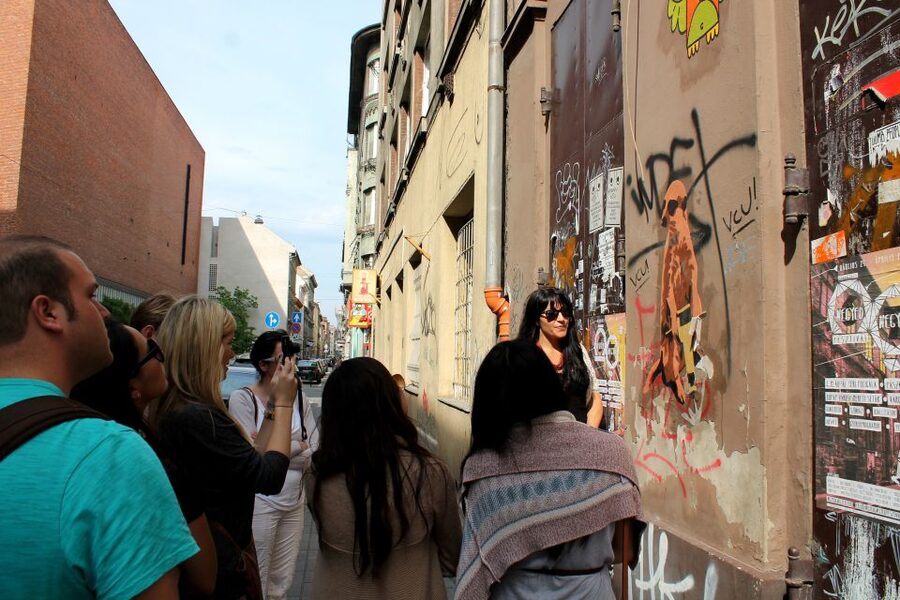
The tour can include small cafés, design stores, studios, bookshops, and art spaces that are easy to miss on a normal sightseeing route. These stops are not guaranteed, since the route changes, but they help show how the city’s creative scene works at street level.
One well-liked stop has been Printa, an eco-design shop where the group paused for coffee. Other routes have included a bookshop café and art and coffee collectives. These places matter because they combine several parts of Budapest’s independent culture: local design, reused materials, publishing, coffee, exhibitions, and informal social space.
I like these pauses because they break up the walking and give you a chance to see how residents use the district. They also make the tour more comfortable in cold or wet weather. One winter group stopped indoors for coffee and mulled wine, which is a reminder that the guide may adapt the pace when conditions are poor.
Food and drinks are not included, so budget a little extra if you want to join a coffee or beer stop. You are not required to buy anything based on the information provided, but the experience is more social when you have time to sit and talk.
Ruin bars beyond the party reputation
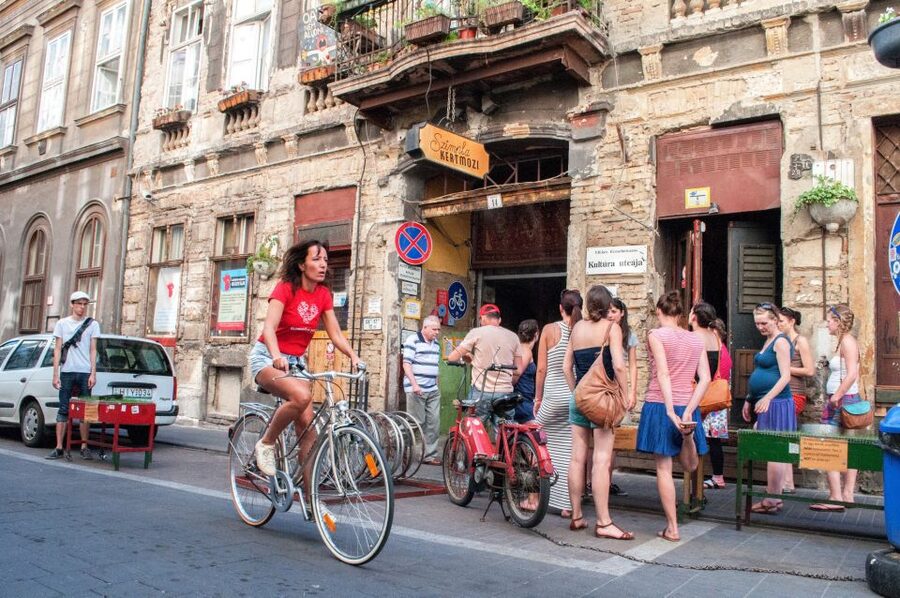
Ruin bars are a major part of Budapest’s alternative identity, but this tour treats them as more than places for a late night. A ruin bar can also be a community center, workshop, gallery, or meeting place.
Szimpla Kert is the clearest example. The space is arranged around a courtyard, with rooms on different levels and a jumble of mismatched objects. Past descriptions mention an old Trabant converted into seating, a detail that captures the playful, improvised style of the place.
The attraction is not traditional beauty. It is the way an old building has been reused. You see how a neglected space can become a bar, music venue, art setting, and social gathering point at once.
Do not assume you will receive a full evening of nightlife. This is a walking tour, and any bar visit is part of the route rather than a pub crawl. The guide may explain the role these venues played in changing the district, and you may have time for a drink or conversation. Alcohol is not included, and the experience is not designed around drinking.
Music venues, galleries, and the city after dark
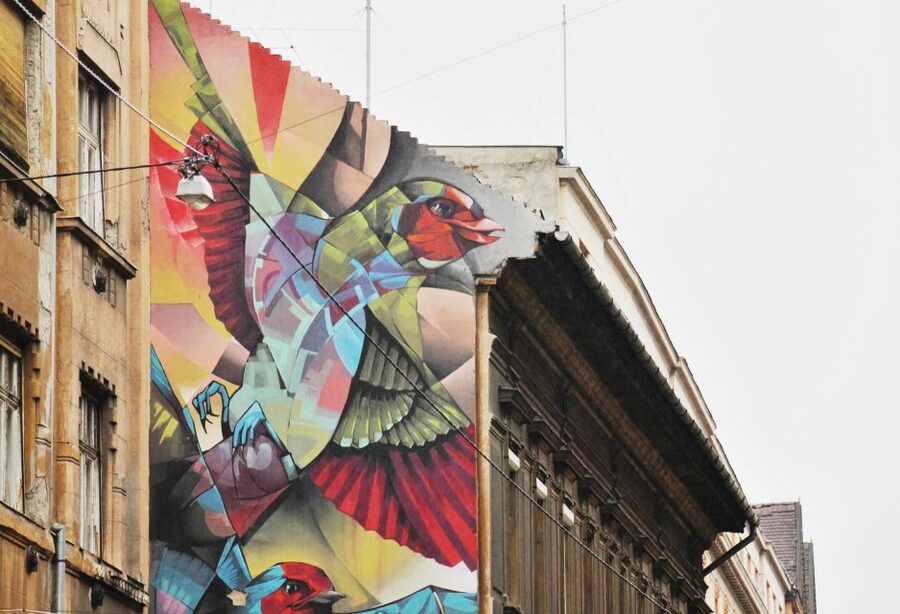
The tour also reaches toward Budapest’s underground music and fashion scenes. Depending on the route and what is open, you might see live music venues, studios, galleries, or stores connected to local designers.
One earlier route included the A38 ship bar and venue, where the group saw a sound check. That kind of stop shows the range of the experience. You are not limited to wall art and cafés. Budapest’s alternative culture also lives in performance spaces, music rooms, fashion studios, and temporary projects.
Because venues change and access can depend on opening times, you should not expect an interior visit everywhere. The tour may pass a location, explain its importance, or stop if the timing works. That uncertainty is part of an ever-changing route, but it is also the reason I would avoid booking this as your only chance to see one particular gallery or music venue.
The guide makes or breaks the walk
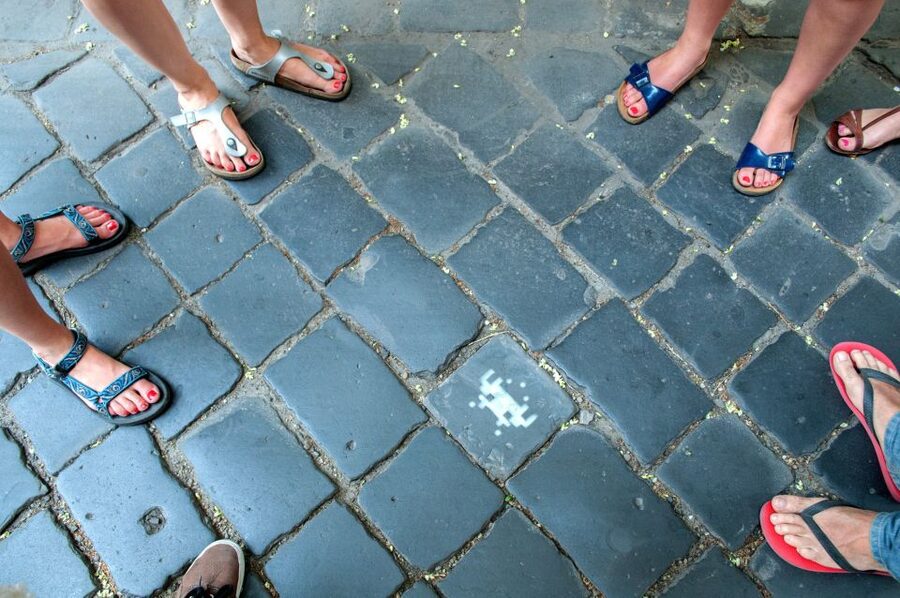
A route like this depends heavily on the guide. The streets themselves are interesting, but the guide provides the connections between them.
The strongest guide reports describe people who were friendly, relaxed, easy to understand, and happy to answer questions. Raymond and Ray were praised for explaining the city’s past while pointing out murals, shops, buildings, and ruin bars. Petra was remembered for her enthusiasm and personal approach. Anna was described as warm and willing to add useful stops and advice.
Names and guide assignments can change, so I would not book solely because you hope for one particular person. Still, the pattern is encouraging. The experience works best when the guide can explain both the visible details and the bigger issues behind them.
English is the tour language. One older comment noted that you need a strong grasp of English, which is worth considering because the appeal depends on stories, political context, and conversation. If you understand only basic English, you may miss some of the best material.
The small group limit of 10 is another advantage. You can hear the guide more easily, ask about a mural, and stop for a quick question without holding up a large crowd. In some cases, the group may be even smaller or function almost like a private walk, but that is not guaranteed.
Pace, comfort, and the two-and-a-half-hour schedule
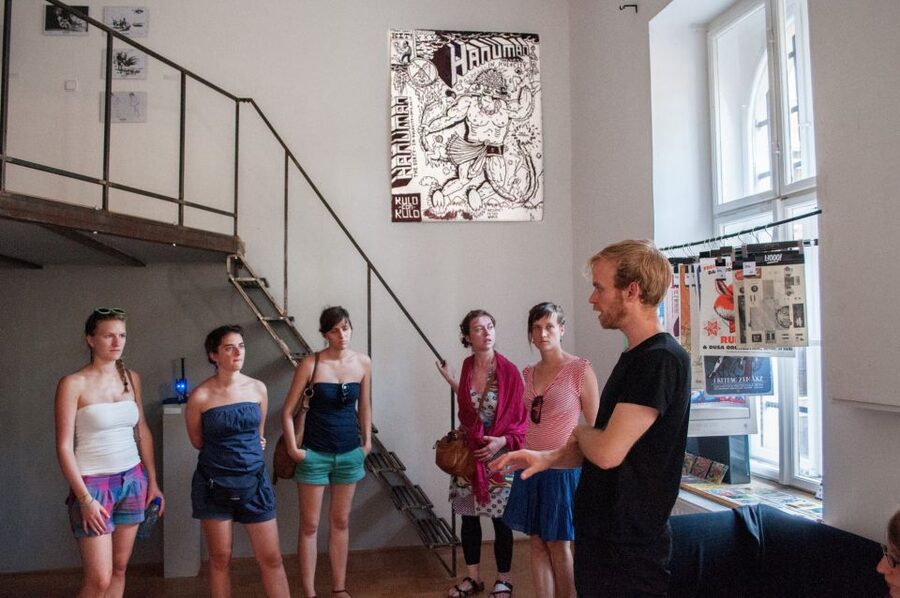
The activity is advertised as lasting 2.5 hours, while the description also refers to a three-hour walking tour. I would check the current start time and duration when booking, since the exact schedule may vary.
Either way, plan for several hours on foot. Comfortable shoes are essential, and you should wear clothing suited to the forecast. The tour is not suitable for wheelchair users or people with mobility impairments, so anyone concerned about stairs, uneven pavement, or extended walking should choose a different activity.
There can be indoor pauses, which helps in rain or cold weather, but this is still an outdoor city walk. One group completed the tour on a very cold afternoon with indoor stops and hot drinks. Another enjoyed it in the rain because the guide kept the conversation moving. Even so, bad weather can reduce the comfort of looking closely at murals and buildings.
The starting time may be useful for planning the rest of your day. An afternoon departure has worked well for some groups, leaving the evening open for dinner or a return to a ruin bar. If you want to use the guide’s suggestions, I recommend taking notes during the walk or saving places on your phone.
Is $67 a fair price?
At $67 per person, this costs more than a basic public walking tour. The value depends on what you want from Budapest.
You are paying for a professional English-speaking guide, a small group, local background, and access to a side of the city that is not easy to organize from a map. If the guide is strong, the information can shape the rest of your stay by helping you choose cafés, bars, galleries, and districts that match your interests.
The price feels less convincing if you mainly want to see famous landmarks, take quick photographs, or visit a long list of named venues. There are no entrance fees, food, or beverages included, and the tour lasts only a few hours. One person found it slightly overpriced, and I think that is a fair concern.
For me, the strongest value comes when you book it early in your stay. You can use the guide’s suggestions afterward and return to the places that caught your attention. If you schedule it near the end of your visit, the local tips still help, but you have less time to make use of them.
Who should book this walking tour?
I would choose this tour if you:
- Prefer local neighborhoods to a standard monument route
- Like street art, independent design, music, cafés, or nightlife
- Want to understand the Jewish District’s present-day changes
- Enjoy asking questions and chatting with a guide
- Have already seen, or plan to see, Budapest’s main historic sights
- Want suggestions for the rest of your visit
I would skip it if you want a formal art tour, a complete Jewish-history tour, or a fixed list of interiors. It is also a poor fit if walking is difficult or if you are not comfortable following several hours of English conversation.
Should you book the Alternative Budapest Walking Tour?
Yes, if you want Budapest with its sleeves rolled up. This walk shows murals, reused buildings, odd shops, cafés, music spaces, and ruin bars while explaining the social changes behind them.
I especially like the small group, the flexible route, and the chance to ask a local guide what is worth doing afterward. The $67 price requires thought, and you should confirm the duration and accept that some stops may change. But for an English-speaking visitor who wants modern Budapest rather than another procession of grand buildings, this is a lively and useful choice. Book it near the start of your stay, wear good shoes, and leave room in your evening for one of the places you discover.
FAQ
How long does the Alternative Budapest Walking Tour last?
The activity is advertised as 2.5 hours, though its description also refers to a three-hour tour. Check the available schedule and current duration when booking.
What language is the tour conducted in?
The tour is conducted in English with a live English-speaking guide.
How many people are in the group?
The group is limited to 10 participants, allowing more personal interaction and time for questions.
Where does the tour meet?
Meet the guide on the steps in front of the pale yellow Lutheran Church. If you have trouble finding the guide, call the local partner for help.
Are food and drinks included?
No. Food and beverages are not included, and any coffee, beer, or other drink you choose to purchase costs extra.
Is the tour suitable for wheelchair users?
No. The activity is not suitable for wheelchair users or people with mobility impairments. Comfortable shoes and weather-appropriate clothing are recommended.
Just added in Budapest
- Budapest: Private Walking Tour with a Local Guide★ 3.6 · 6 reviews
- Budapest: Danube River Views Bike Ride★ 4.8 · 23 reviews
- Budapest: City Bike Tour with Coffee Stop★ 5.0 · 37 reviews
- From Budapest: Guided Tour of Eger with Wine Tasting★ 4.5 · 6 reviews
- Walk to recent and aged spiritual sanctuaries near Budapest★ 5.0 · 5 reviews
- Walking consultancy with alternative psychologist and author★ 5.0 · 2 reviews
- Budapest: Guided Tour of the Parliament Building in Spanish★ 4.6 · 1,240 reviews
- Budapest: 3-Hour Trabant Sightseeing Tour★ 4.7 · 28 reviews
Walking Tours, compared.
Budapest City Landmarks Walking Tour in 2 Hours
Read our review →
3-Hour Orientation Walking Tour of Buda and Pest
Read our review →
Budapest Historical Sightseeing – Free Walking Tour
Read our review →
Budapest All in One Small Group Walking Tour with Strudel Stop
Read our review →
Buda Castle District Walking Tour with a Historian
Read our review →
BloodThirsty Hungary: Walking tour & Dark Historical Stories
Read our review →Browse the lists this tour appears in