
REVIEW · WALKING TOURS
Budapest All in One Small Group Walking Tour with Strudel Stop
Budapest reveals itself in layers. This tour connects them neatly, from the Opera House and Heroes’ Square to the Danube and Buda Castle, using the city’s metro when distances get long. I especially like the mix of major sights and local transport, plus the welcome pause for strudel and coffee at Strudel House. The main caution is the pace: expect about 6 kilometers of walking, stairs, and roughly four hours on your feet.
A group capped at 10 keeps the outing personal without the price of a private tour. Guides such as Greg, also called Gergely, Esther, Anna, Petra, and Louisa are repeatedly praised for clear explanations, warmth, humor, and useful city tips. You will not go inside the main churches or buildings, so this is an orientation tour rather than a deep look at Budapest’s interiors.
In This Review
- Key points at a glance
- Starting beside the Opera House and Andrássy Avenue
- Heroes’ Square and Hungary’s national story
- City Park, Vajdahunyad Castle, and Szechenyi Spa
- Back to central Pest and St. Stephen’s Basilica
- The Strudel House break at the right moment
- Szabadsag ter and Budapest’s difficult 20th century
- The Danube Promenade and Chain Bridge
- Matthias Church and the Buda Castle District
- How much walking and effort should you expect?
- Guide quality and the role of local explanation
- Is $100.37 a fair price?
- Who should book this Budapest tour?
- Final verdict: book it early in your Budapest stay
- FAQ
- Where does the Budapest walking tour begin?
- Where does the tour end?
- How long does the tour last?
- How much walking is involved?
- Are public transport tickets included?
- Is the strudel and drink included?
- Are church and building interiors included?
Key points at a glance
- A full Budapest introduction in one morning: See important parts of both Pest and Buda in about three and a half to four hours.
- The metro is part of the experience: Ride public transport beneath Andrássy Avenue and use the system to reach the outer sights.
- Heroes’ Square and Vajdahunyad Castle: Get a quick lesson in Hungarian history and architecture in City Park.
- Strudel is more than a snack: Sit down at the well-known Strudel House for dessert and a hot drink, with savory choices also available.
- The final views are excellent: The tour ends around Matthias Church and Fisherman’s Bastion, looking across the Danube toward Pest.
- Best for first-time visitors: You get bearings, historical context, and practical transport help before exploring alone.
Starting beside the Opera House and Andrássy Avenue
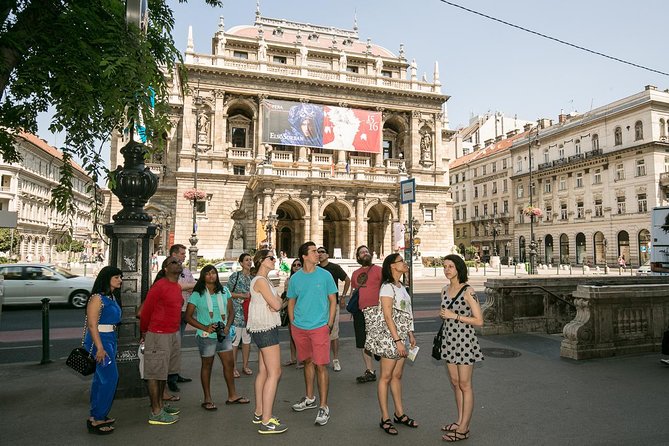
The morning begins at 9:00 am outside the Hungarian State Opera House, at Andrássy út 22. This is a useful meeting point because the Opera House gives you an immediate introduction to Budapest’s grand central boulevard and its 19th-century city planning.
You first hear the story of the Opera House from outside. Since interior admission is not included, do not expect a guided visit through the auditorium. Still, the exterior stop works well as a starting marker, especially if this is your first morning in the city.
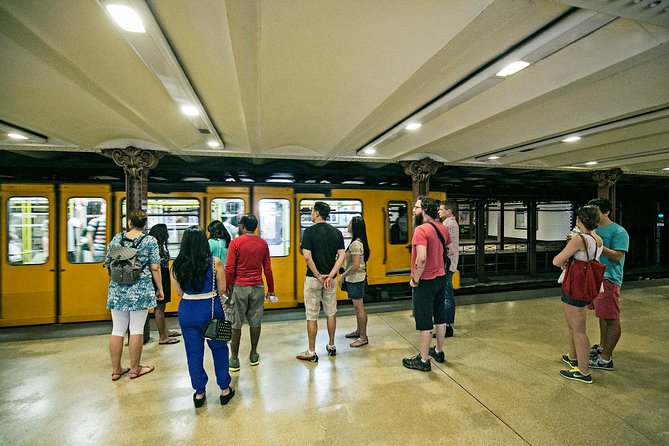
From here, your guide leads you to the underground beneath Andrássy Avenue. Public transport tickets during the tour are included, and the metro ride saves your legs for the places where walking matters more. The ride also gives you a practical lesson in Budapest transportation. Several guides, including Esther, have been praised for making the metro and bus system easy to understand.
This is one of the tour’s smartest choices. A walking tour that tried to cover all these districts entirely on foot would be tiring and less efficient. Here, you walk where the streets and views are the point, then ride when the distance is not.
More walking tours in Budapest:
- Budapest: Buda Castle Walk with Saint Stephen’s Hall
★ 4.5 · 3,012 reviews - Big Bus Budapest Hop-On Hop-Off Bus and Walking Tour
★ 3.5 · 2,206 reviews - Budapest: Buda Castle District Walking Tour
★ 4.6 · 2,108 reviews
Heroes’ Square and Hungary’s national story
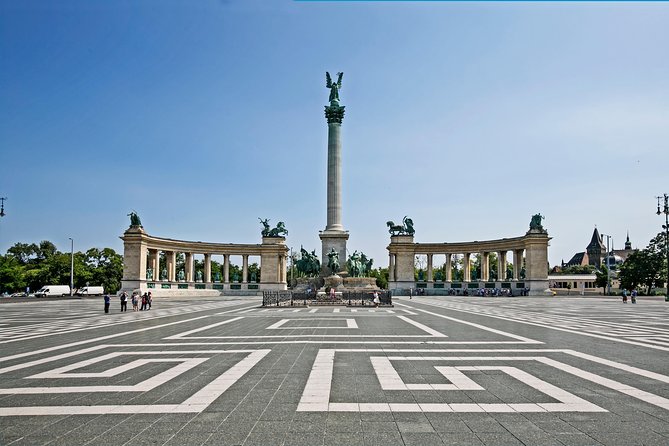
Your first major stop is Heroes’ Square, one of Budapest’s grandest open spaces. Its monument presents Hungarian leaders and national figures in a broad colonnade, giving your guide a natural place to explain Hungary’s past and the significance of the 1896 millennium celebrations.
Allow about 30 minutes here. That is enough time to see the main monument, take photographs, and listen to the historical explanation without turning the stop into a lecture. The value is not just the statues themselves. You begin to understand how Hungary presents its national story, including the long sequence of kings, leaders, and political changes.
This part suits visitors who want context before visiting museums or historic buildings later. Guides are particularly important here because the square can look like a collection of imposing figures if you do not know who they are or why they were placed together.
The stop is outdoors, so bring clothing that suits the forecast. The tour operates in all weather, and there is no audio equipment or headset system. You need to stay close enough to hear your guide directly, especially if the square is busy or windy.
City Park, Vajdahunyad Castle, and Szechenyi Spa
After Heroes’ Square, you walk through Varosliget, or City Park. The park contains several sights, so the tour gives you a short look rather than an exhaustive visit. It is a pleasant change from the monumental avenues and crowded central streets.
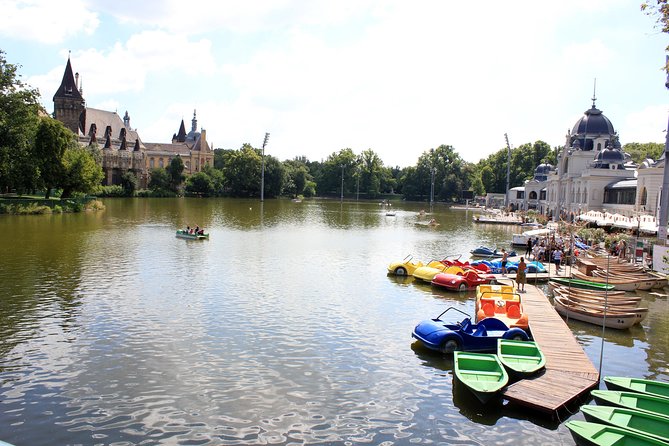
The next stop is Vajdahunyad Castle. Built for the 1896 Millennial Exhibition, the complex was designed to showcase different periods and styles of Hungarian architecture. Your guide takes you into the courtyard and explains the architectural mixture. This is a quick visit, but it gives you a useful way to read the buildings instead of simply photographing them.
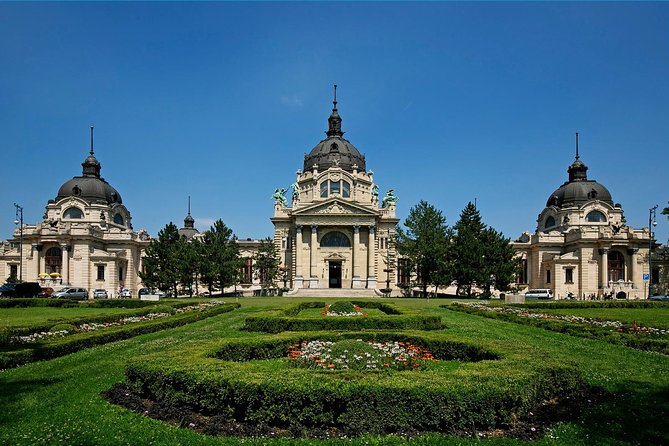
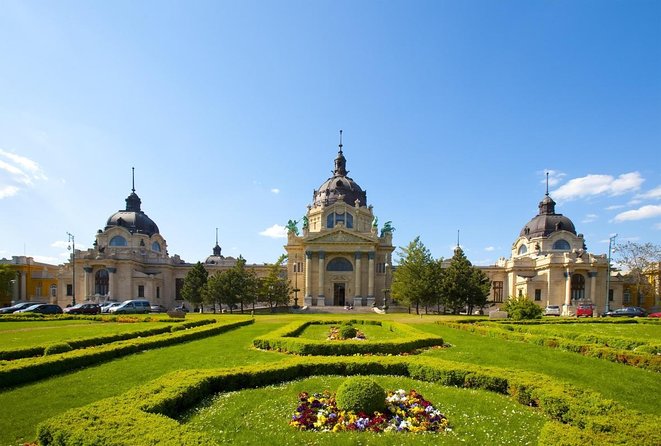
You also stop at Szechenyi Spa, one of Budapest’s best-known thermal bath complexes and described as Europe’s largest thermal bath. The tour provides a look at the bath house and an explanation of local spa culture. It does not include bathing or a spa admission, so pack your swimsuit only if you plan to return on your own.
This short stop is useful because thermal bathing is part of Budapest’s identity, not just a tourist add-on. You learn why the baths matter before deciding if you want to spend several hours there later. The drawback is that a peek into the complex cannot replace time inside the pools. If Szechenyi is high on your personal list, plan a separate visit.
Back to central Pest and St. Stephen’s Basilica
The metro takes you back toward the center, where the tour continues around St. Stephen’s Basilica. This neo-classical church is one of Budapest’s two tallest buildings, an important detail that helps explain its place in the city skyline.
The stop focuses on the story of the church from outside. Interior entry is not included, so you will need a separate visit if you want to see the inside. That limitation keeps the tour moving and makes it possible to cover far more of the city, but it also means you should not treat this outing as a substitute for a church tour.
Here, a good guide adds real value by explaining the building’s role and connecting it to Budapest’s broader development. Guides such as Louisa are praised for giving the essential story first, then answering deeper questions for anyone who wants more detail. That approach works well in a small group because you can ask about architecture, religion, politics, or daily life without holding up a giant crowd.
More things to do in Budapest:
- Budapest: City Highlights Cruise with Welcome Drink
★ 4.6 · 35,610 reviews - Budapest: Unlimited Prosecco, Beer and Aperol Spritz Cruise
★ 4.8 · 25,310 reviews - Budapest: Széchenyi Spa Day Ticket with Optional Upgrades
★ 4.3 · 23,911 reviews - Budapest: Nighttime or Daytime Sightseeing Cruise
★ 4.2 · 21,062 reviews
The Strudel House break at the right moment
After several outdoor stops, you sit down in a downtown Hungarian cafe for strudel and a drink. The included choice is strudel with coffee, tea, or mineral water at the iconic Strudel House.
The timing is excellent. You have already walked through City Park, visited several major sights, and used public transport. A seated break lets you recharge before the Danube and Buda Castle section.
The stop is not just a pastry handout. The cafe has a pleasant setting, and the experience can include several kinds of strudel, including sweet and savory options. You might also see strudel being prepared, depending on the conditions during your visit. One useful detail from the tour feedback is that the guide may arrange a table in a back room, which makes the pause feel organized rather than rushed.
I would not book this tour only for the dessert, but the stop adds real value to the morning. One person considered skipping it on a future visit, while others called it a highlight. That difference makes sense: if you prefer to spend every spare minute sightseeing, the cafe may feel like lost time. If your feet need a rest, it is a welcome part of the design.
Szabadsag ter and Budapest’s difficult 20th century
The tour then reaches Szabadsag ter, or Liberty Square. You stop for about 10 minutes to see the Soviet Memorial and hear about Hungary during the communist period.
This is a small stop with a serious purpose. Budapest’s story is not limited to medieval kings, elegant avenues, and grand bridges. The Soviet period and its political legacy still shape how the city is understood. Your guide also explains the Parliament building and current Hungarian politics from the nearby streets.
The exact amount of time available for political discussion depends on the group and the guide. If you want a long, detailed account of modern Hungarian politics, this tour will only provide an introduction. Still, it gives you enough background to make later sightseeing more meaningful.
The Danube Promenade and Chain Bridge
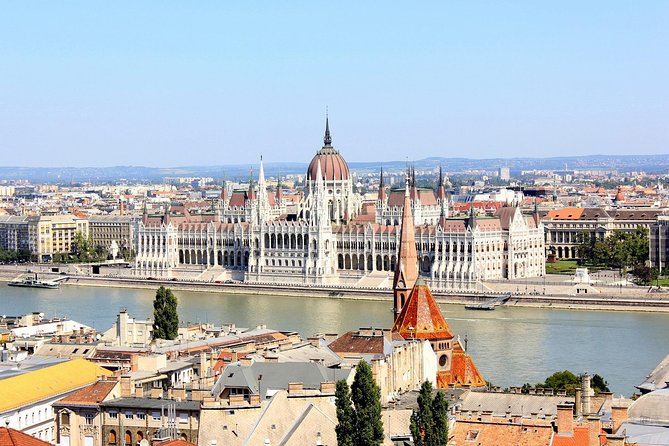
From central Pest, you reach the bank of the Danube. The river stop is brief, about 10 minutes, but the view does a lot of work. Across the water, you can see Gellert Hill and the Citadel, while the city’s bridges frame the river corridor.
You then walk toward Szechenyi Lanchid, better known as the Chain Bridge. The bridge stop lasts around five minutes, with your guide explaining its history and importance. You have time for photographs, but do not expect a long promenade walk or a dedicated stop at every river memorial.
One piece of practical advice: if seeing the Shoes on the Danube memorial matters to you, ask your guide about its location or plan to visit separately. It is near Parliament, but it is not listed as a formal stop on this route. The tour concentrates on broad city views and the Chain Bridge instead.
This section is among the most rewarding visually. You move from street-level history to a wide view of both halves of Budapest. It also prepares you for the final climb into Buda, where the city looks different from above.
Matthias Church and the Buda Castle District
The tour crosses to the Buda side and finishes in the Castle District. Here, the focus shifts from broad urban orientation to medieval and royal history.
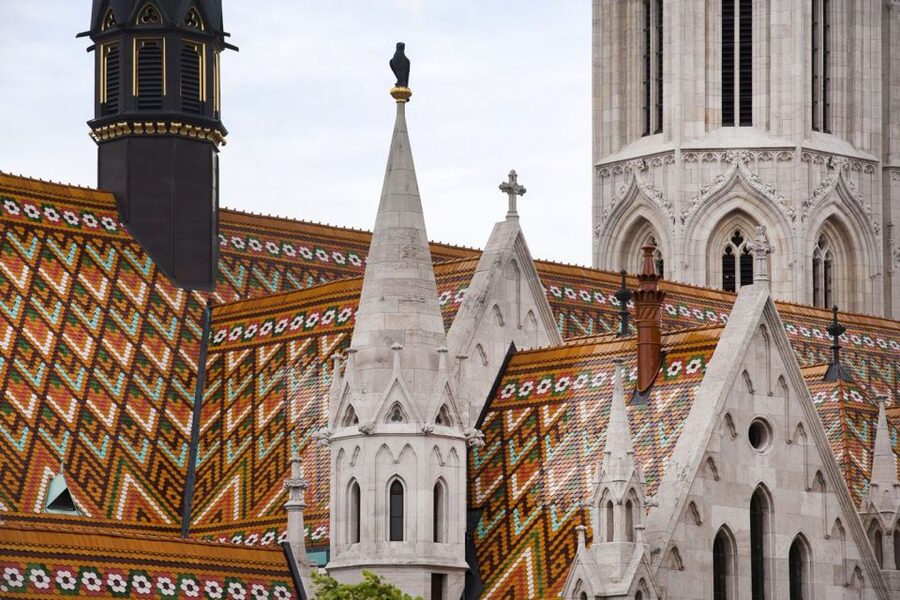
At Matthias Church, your guide explains coronations and the building’s transformation during the Ottoman period, when it became Buda’s main mosque. The stop is short, around five minutes, and admission to the interior is not included. You should plan another visit if the church’s colorful roof, interior decoration, or museum areas are priorities.
The walk through Buda Castle lasts about 15 minutes. This is a compact introduction, not a full palace tour. You get the setting, the streets, and the historical framework, then continue to the viewpoint that most first-time visitors hope to see.
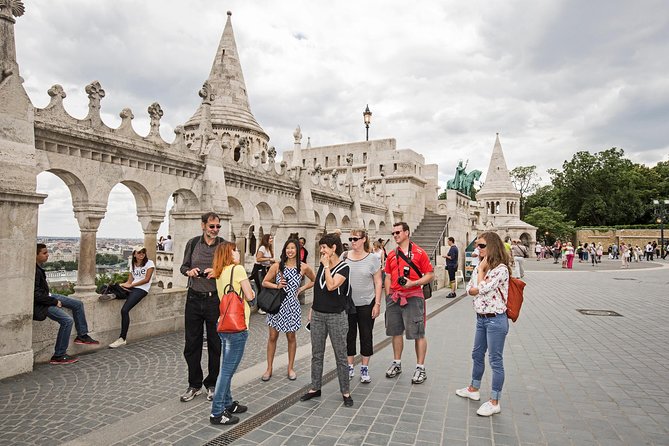
Fisherman’s Bastion is the final stop and one of the tour’s best rewards. From the free arcades, you can look across the river toward Pest, the Parliament area, and the bridges. Admission is required only for the upper terrace, so you can enjoy the main viewpoint without paying extra if you are satisfied with the free sections.
The tour concludes here near Matthias Church and Fisherman’s Bastion. That is convenient if you want to stay in the Castle District, take more photographs, visit the church independently, or continue exploring Buda at your own pace. It is less convenient if your hotel is on the Pest side and you expected a return escort. One included single public transport ticket helps you return downtown, but drop-off is not provided.
How much walking and effort should you expect?
The advertised duration is about three and a half to four hours, with around three hours of walking and approximately 6 kilometers, or 4 miles, on foot. Public transport reduces the distance, but this is still an active morning.
You should expect standing at monuments, walking through parks, moving between metro stops, and tackling stairs or uneven areas in the Castle District. A moderate level of fitness is advised. Several people describe the walking as manageable, especially because the metro and buses cover the longer stretches, but one should not confuse manageable with effortless.
Comfortable shoes matter. So does weather planning. The tour runs in rain, cold, or heat, and some of the best stops are exposed outdoor spaces. There are short pauses, but not a long lunch break.
The group maximum of 10 is a real advantage. Your guide can answer questions, keep everyone together on public transport, and adjust the amount of explanation. The experience is not private, but it should feel far more personal than a large coach excursion.
Guide quality and the role of local explanation
The guide can make or break a history-heavy city tour. This experience has received especially strong praise for its guides’ warmth, organization, and ability to explain Budapest in plain English.
Greg, whose Hungarian name is Gergely, is repeatedly singled out for his humor, energy, and passion for the city. Esther, sometimes written as Ezster, is praised for keeping the route organized while sharing a great deal of history. Anna is described as patient and friendly, while Petra receives praise for pacing the tour well. Andi, Monika, Luisa, and Balint are also named as guides who helped make the city easier to understand.
You cannot choose a specific guide based on the tour details provided, so consider those names examples of the guiding style you may encounter, not a guarantee. The strongest common feature is the balance between information and conversation. You get the basic story at each sight, with room for questions and local suggestions.
There are no headsets or audio equipment. That can make the outing feel more natural, but you need to listen carefully and stay near the guide. In a group of 10 or fewer, this should be manageable.
Is $100.37 a fair price?
At $100.37 per person, this is not Budapest’s cheapest walking tour. The price includes an English-speaking guide, public transport tickets used during the experience, the strudel and drink, and a maximum group size of 10.
The value comes from the amount covered in one morning. You see both Pest and Buda, reach City Park without spending much of the tour on long walks, receive historical explanations, and finish at one of Budapest’s finest viewpoints. If you tried to organize the same route yourself, you could spend less money, but you would need to research the history, navigate the metro, manage ticketing, and decide how to connect the sights efficiently.
The price is easier to justify early in your stay. You get practical transport help, learn the layout of the city, and collect ideas for places to revisit. It is less compelling for someone who already knows Budapest, has a full itinerary planned, or mainly wants interior visits.
The tour receives a 4.8 rating from 1,277 reviews, with 98 percent of participants recommending it. Those figures suggest a very dependable experience, though the usual limitation remains: the route gives you an overview rather than extended time at any one attraction.
Who should book this Budapest tour?
I would recommend it most strongly to first-time visitors who want a broad introduction without spending a full day on a coach. It also suits couples, families with older children, and active older adults who are comfortable walking several miles.
This is a good choice if you want:
- A guide to explain Hungarian history at the actual places where it happened
- A small group rather than a large sightseeing crowd
- Help using Budapest’s metro and public transport
- A mix of famous sights, river views, politics, architecture, and food
- A finish in Buda that leaves the rest of the day open
I would choose another plan if you need wheelchair-friendly details, extensive indoor sightseeing, a hotel pickup, or a slower pace. The provided information asks for moderate fitness, and the route operates in all weather. You should also avoid booking it as your only visit to Matthias Church, Szechenyi Spa, St. Stephen’s Basilica, or the Castle interiors, since those are viewed from outside or only briefly.
Free cancellation is available if you cancel at least 24 hours before the 9:00 am start time. Changes or cancellations inside that window are not accepted for a refund.
Final verdict: book it early in your Budapest stay
I would book this tour near the beginning of a Budapest visit, ideally on your first or second day. It gives you a clear mental map, shows you how the two sides of the city connect, and leaves you with a list of places worth revisiting.
The best parts are the small group, strong local guiding, efficient use of public transport, and the final view from Fisherman’s Bastion. The main tradeoff is speed. You see many places, but most stops are short and exterior only.
Book it if you want a well-organized introduction with history, photos, city transport, and a very welcome plate of strudel. Skip it if you prefer slow museum visits or plan to explore every major building from the inside. For most first-time visitors with steady walking shoes and a free morning, the $100.37 cost buys a useful and enjoyable start to Budapest.
FAQ
Where does the Budapest walking tour begin?
The tour begins at 9:00 am at Budapest, Andrássy út 22, 1061 Hungary, beside the Hungarian State Opera House.
Where does the tour end?
The tour ends on the Buda side near Matthias Church and Fisherman’s Bastion in the Buda Castle District.
How long does the tour last?
The expected duration is approximately three and a half to four hours.
How much walking is involved?
You should expect about three hours of walking and approximately 6 kilometers, or 4 miles, on foot, along with short stops and public transport rides.
Are public transport tickets included?
Yes. Public transport tickets used during the tour are included, and one additional single ticket is provided for returning downtown.
Is the strudel and drink included?
Yes. The price includes strudel at Strudel House, along with coffee, tea, or mineral water.
Are church and building interiors included?
No. Interior visits to churches and other buildings are not included. Fisherman’s Bastion’s free arcades are included, while access to its upper terrace requires admission.
Just added in Budapest
- Budapest: Private Walking Tour with a Local Guide★ 3.6 · 6 reviews
- Budapest: Danube River Views Bike Ride★ 4.8 · 23 reviews
- Budapest: City Bike Tour with Coffee Stop★ 5.0 · 37 reviews
- From Budapest: Guided Tour of Eger with Wine Tasting★ 4.5 · 6 reviews
- Walk to recent and aged spiritual sanctuaries near Budapest★ 5.0 · 5 reviews
- Walking consultancy with alternative psychologist and author★ 5.0 · 2 reviews
- Budapest: Guided Tour of the Parliament Building in Spanish★ 4.6 · 1,240 reviews
- Budapest: 3-Hour Trabant Sightseeing Tour★ 4.7 · 28 reviews
Walking Tours, compared.
Budapest City Landmarks Walking Tour in 2 Hours
Read our review →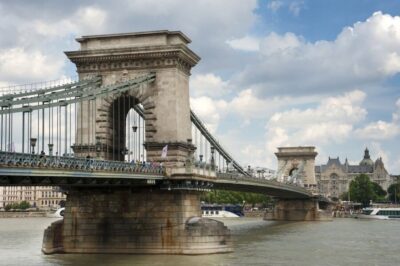
3-Hour Orientation Walking Tour of Buda and Pest
Read our review →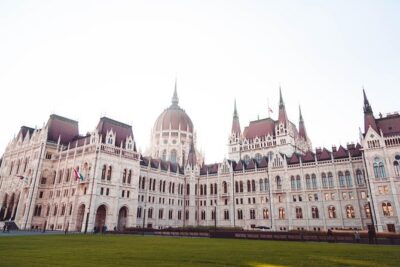
Budapest Historical Sightseeing – Free Walking Tour
Read our review →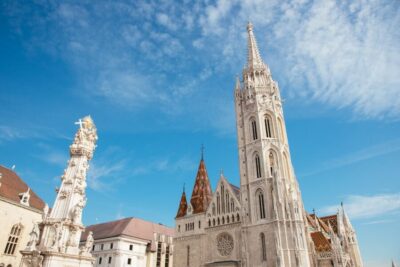
Buda Castle District Walking Tour with a Historian
Read our review →
BloodThirsty Hungary: Walking tour & Dark Historical Stories
Read our review →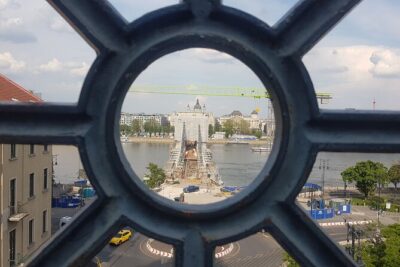
Browse the lists this tour appears in