
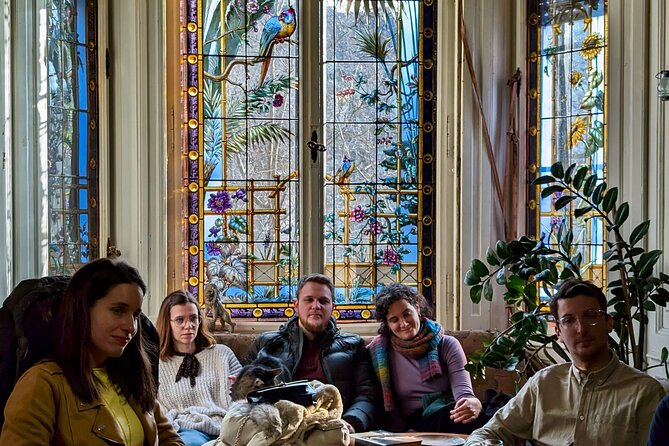
REVIEW · ART NOUVEAU TOURS
Art Nouveau Treasures of Budapest – Exclusive Private Tour
Budapest hides its best curves in plain sight. This private Art Nouveau walk pairs grand Secessionist buildings with Miklós, an engaging guide who brings design, city history, and local access together. I especially like the chance to see the Postal Savings Bank’s colorful folk-inspired tiles and the private Miksa Róth stained-glass window at the tour’s end. The flexible start time is another real advantage.
The main consideration is pace. In roughly two and a half to three hours, you cover several areas on foot and use public transportation, so this is not a slow, exhaustive study of every façade. The route also includes a short refreshment break for some groups, which style enthusiasts may prefer to skip in favor of more buildings.
In This Review
- Six details that make this tour different
- Why Budapest is so rewarding for Art Nouveau
- Starting at Central Market Hall
- Crossing toward Gellért Hill
- St. Gellért Thermal Bath and Swimming Pool
- The Hold Street Postal Savings Bank
- Nemzeti Bank and the city’s public face
- Gutenberg Square and a Miksa Róth stained-glass detail
- The private apartment finale
- How much the private format is worth
- Timing, walking, and practical planning
- Who will enjoy this most
- Should you book Art Nouveau Treasures of Budapest?
- FAQ
- How much does the private tour cost?
- How long does the tour last?
- Is the tour conducted in English?
- Can the tour start at a custom time?
- Is hotel pickup available?
- Are public transportation tickets included?
Six details that make this tour different
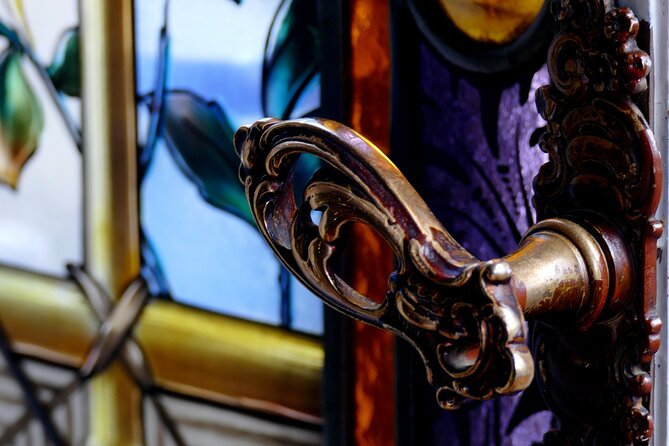
- A private Miksa Róth window: The tour finishes inside a century-old private apartment, where you can see an original stained-glass work by one of Hungary’s great decorative artists.
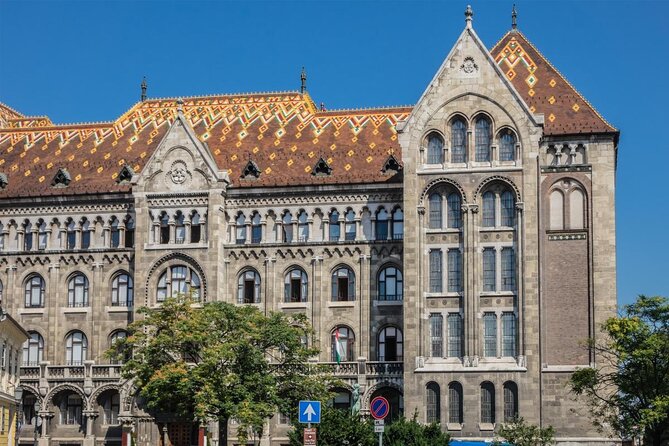
- Lechner’s tiled masterpiece: The former Postal Savings Bank on Hold Street is a riot of colored tiles, folk motifs, and unusual roof decoration.
- An art historian at your side: The guide explains how Budapest’s Secessionist style connects architecture, craft, national identity, and urban history.
- A walk across Budapest bridges: The route uses the city’s bridges for views toward Gellért Hill and the former Royal Palace.
- Private, not crowded: Only your group participates, with space for up to five people.
- A flexible start: You can request a time that fits your Budapest plans, and hotel pickup may be arranged.
Why Budapest is so rewarding for Art Nouveau
Budapest is a fine city for Art Nouveau because the style appears in many forms. Some buildings use flowing lines and floral decoration. Others turn toward Hungarian folk patterns, bright ceramic tiles, stained glass, and playful rooflines.
Here, the movement is often called Secession. The name points to artists and architects breaking away from older academic rules around the turn of the twentieth century. Their work was not simply decorative. It asked a practical question: Could a modern Hungarian style look different from French, Austrian, or German design?
That question gives this walk its purpose. You are not just stopping to photograph pretty buildings. You are learning to notice the details that make Budapest’s version of Art Nouveau its own thing.
An art historian helps you read those details. Look for how a façade handles windows, metalwork, tile, color, and folk decoration. You will also hear how architecture fits into the city’s changing identity. That broader context is useful, but the best experience comes when the guide keeps bringing you back to the buildings themselves.
Miklós has a warm, personal style, according to the supplied comments about his tours. He is described as articulate, passionate about Budapest, and willing to explain more than the basic story. That matters on a specialized tour. You want someone who can answer why a building looks the way it does, not only name the architect.
More Art Nouveau walks:
- Art Nouveau Tour in Budapest: 3-Hour Private Tour
★ 4.6 · 21 reviews - Private Art Nouveau Tour Budapest
★ 5.0 · 21 reviews - Budapest Art Nouveau Walking Tour
★ 5.0 · 17 reviews
Starting at Central Market Hall
The tour begins at Budapest’s Central Market Hall, with hotel pickup or a meeting point available by arrangement. The market is a practical starting place because it puts you in the middle of everyday Budapest before the route turns toward architectural details.
The first listed stop is Central Market Hall, with about 20 minutes allocated and admission not included. The supplied route description is slightly unclear here: it names the market as Stop 1, but also says the tour finishes in a private apartment with the Miksa Róth window. Treat the market as the opening meeting point and confirm the exact sequence with Fungarian before you set out.
That small bit of planning is worthwhile. This is not a private car tour, and the route is designed for walking combined with public transportation. Wear comfortable shoes and leave room for crossings, stairs, and pauses while your guide points out features above street level.
The market itself is not an Art Nouveau palace in the same way as the later stops, but it gives the tour a useful beginning. You start among public commerce and move into the architecture of banks, baths, squares, and private homes. The change helps show that Secession was part of city life, not an isolated museum style.
Crossing toward Gellért Hill
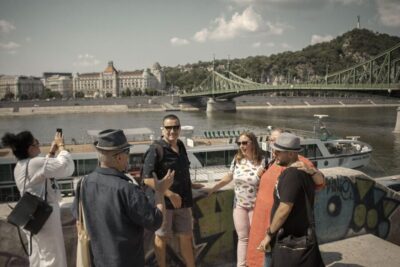
From the market area, you walk across one of Budapest’s bridges toward the foot of Gellért Hill. The route description does not name this bridge, so you should focus less on ticking off a landmark and more on the view.
This crossing gives you a scenic look toward the Danube and the former Hungarian Royal Palace. It is also a reminder that Budapest is a city of two banks, with architecture and city life spread across Buda and Pest.
The walk is part of the attraction, but it also affects the timing. A two-hour-thirty-minute tour can feel full when it includes bridge crossings, public transportation, exterior explanations, and interior access. If you want long photographic pauses at each building, ask about the day’s exact plan before starting.
St. Gellért Thermal Bath and Swimming Pool
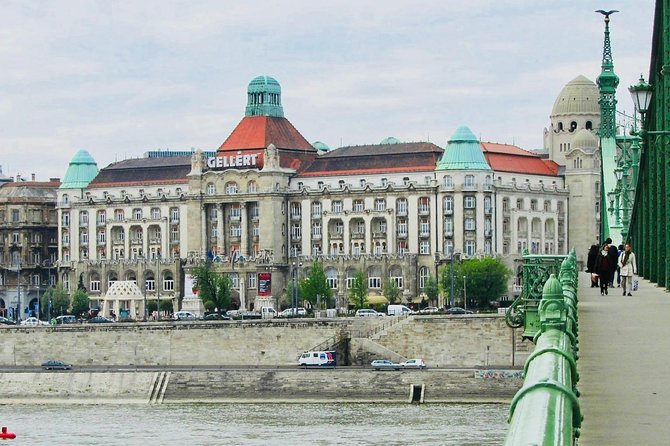
The next major stop is St. Gellért Thermal Bath and Swimming Pool, beside Gellért Hill. You receive around 20 minutes here, and admission is listed as free for the tour.
The Gellért complex is an important example because it is both a functioning bath and a work of architecture. Its style is described as strongly Secessionist, so you can consider how a public bathing institution was designed to feel grand, artistic, and special.
You will not be spending the day using the thermal pools. This is an architectural visit, and the short stop is best suited to looking at the building’s exterior and discussing its design. If you hope to explore the baths at length, you would need to make a separate visit.
This is one place where an art historian adds value. A quick glance may show an ornate old building. A guided look can direct your attention to the relationship between structure and decoration, and to the way public buildings used style to shape a civic experience.
The location also breaks up the route nicely. After the market and bridge crossing, Gellért gives you a clear architectural subject before the tour moves back toward the central districts.
More things to do in Budapest:
- Budapest: City Highlights Cruise with Welcome Drink
★ 4.6 · 35,610 reviews - Budapest: Unlimited Prosecco, Beer and Aperol Spritz Cruise
★ 4.8 · 25,310 reviews - Budapest: Széchenyi Spa Day Ticket with Optional Upgrades
★ 4.3 · 23,911 reviews - Budapest: Nighttime or Daytime Sightseeing Cruise
★ 4.2 · 21,062 reviews
The Hold Street Postal Savings Bank
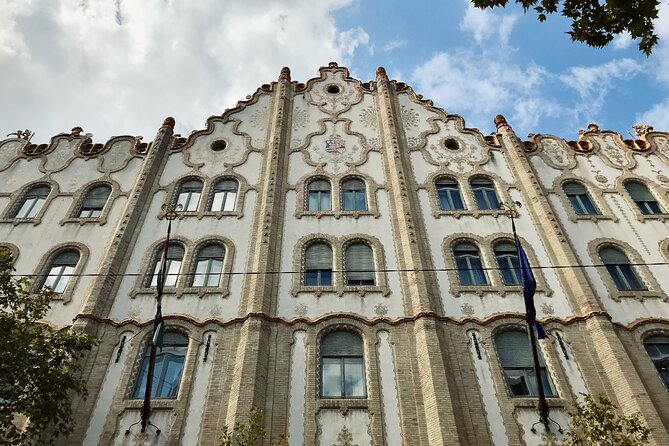
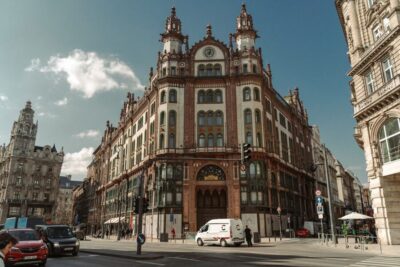
The former Postal Savings Bank on Hold Street is the visual centerpiece for many people on this tour. It was designed by Ödön Lechner in 1901 and is described as one of Budapest’s finest Secessionist works.
Lechner is central to the story of Hungarian Art Nouveau. His buildings often combine modern forms with Hungarian folk references, and this one uses colorful tiles and folk motifs in a particularly exuberant way.
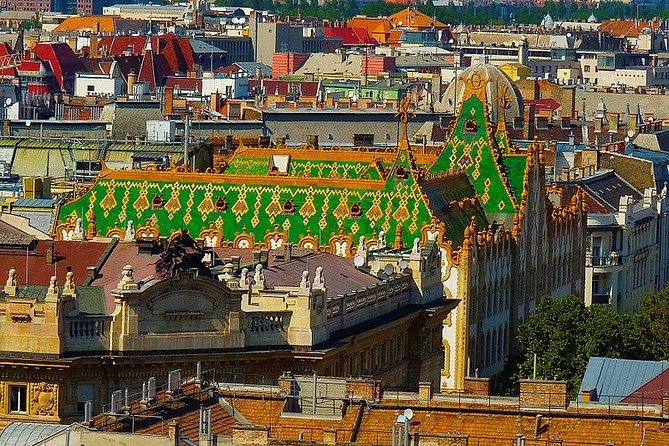
Give yourself time to look up. The decoration is not confined to eye-level stonework. The roof and upper sections are part of the building’s character, with ceramic color doing much of the work. The result is more playful than the restrained Art Nouveau façades you may know from other European cities.
The route information lists both Nemzeti Bank and Postal Savings Bank as separate stops, each with about 20 minutes and free admission. It also describes the Postal Savings Bank under both entries, so the exact distinction between the two stops should be confirmed with the guide. That is not a reason to skip the tour, but it is a useful question to ask if you want a precise route.
For you, the value here is not just the photograph. Lechner’s work gives the guide a chance to explain the local character of Hungarian Secession. The motifs are not random flourishes. They help show how architects searched for a national visual language while working with a modern European movement.
Nemzeti Bank and the city’s public face
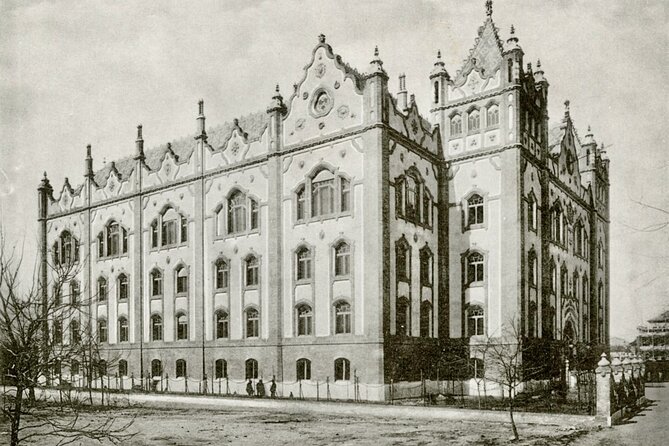
The route also includes Nemzeti Bank, listed with free admission and about 20 minutes. The supplied information gives little detail about exactly which building or interior areas are included, so you should ask whether this is primarily an exterior explanation or includes access beyond the street.
Its place in the route makes sense. Banks and state institutions were ideal settings for ambitious architecture. They had the money, public visibility, and civic importance to support elaborate design.
This stop also helps balance the tour. The Gellért bath shows architecture serving public leisure. The Postal Savings Bank shows decoration and national motifs. A financial institution brings the conversation toward authority, commerce, and the way a city presented itself through its major buildings.
The tour is strongest when you use these stops as comparisons. Notice which buildings seem formal and which seem playful. Compare the use of tile with the use of glass, and public interiors with private residential spaces. Even if you are new to Art Nouveau, those contrasts give you a simple way to look more closely.
Gutenberg Square and a Miksa Róth stained-glass detail
Gutenberg Square brings the route into Budapest’s Palace District, where you see a historic Art Deco building with a grand stairway and leaded glass associated with Miksa Róth. The stop is planned for about 15 minutes and admission is free.
The supplied description uses both Art Deco and Art Nouveau language across the tour, so this is a good moment to ask your guide about the difference. Budapest’s early twentieth-century buildings do not always fit neatly into one box, and a specialist can explain where decorative styles overlap or change.
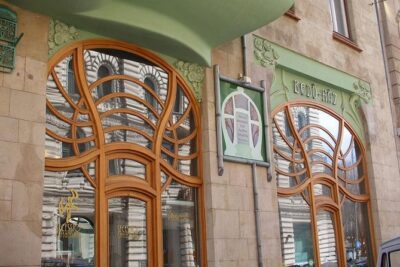
Miksa Róth is one of the important names on this walk. His stained glass appears in major Budapest buildings, including the Parliament and other public places that may not be open for casual viewing. Seeing his work in a smaller, more personal setting gives the craft a different scale.
The stairway glass at Gutenberg Square is especially useful for understanding how decoration works inside a building. Outside, you may notice tiles and rooflines first. Inside, colored glass changes light, movement, and atmosphere.
The private apartment finale
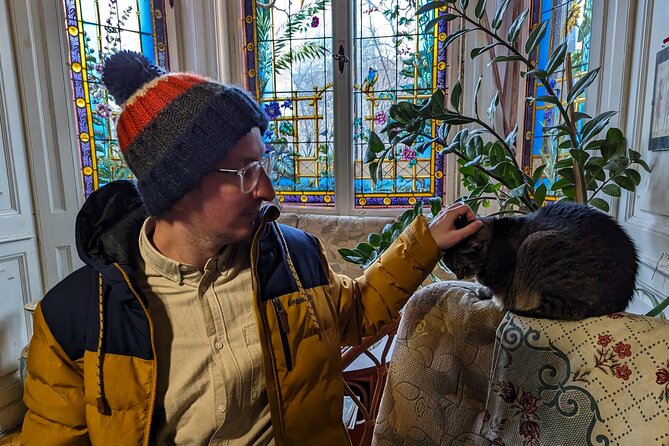
The tour’s most unusual feature is its ending in a century-old private apartment. There, your group has exclusive access to an original stained-glass window by Miksa Róth.
This is not the sort of sight you can reliably find by walking past Budapest’s public monuments. The apartment setting gives you a close look at residential design and shows how Art Nouveau entered ordinary private life, not only grand institutions.
The access also explains why this tour feels different from a standard architecture walk. You are not limited to façades viewed from a pavement. You may see a lobby, staircase, restaurant interior, or private room that requires local knowledge to enter. The exact interior access can vary, so confirm what will be open on your date.
The private apartment is also the point most likely to appeal to serious design enthusiasts. One participant specifically wanted more time on design elements and less general city history, while still calling the tour a very good use of time for anyone who loves Budapest’s style. That is fair advice. Tell Miklós at the start if you want the discussion weighted toward glass, tile, composition, and decorative technique.
How much the private format is worth
The price is $261.67 for a group of up to five people. That can look high if you are traveling alone, but it becomes about $52.33 per person for a full group of five. For a couple, the per-person cost is much higher, though you gain a fully private experience rather than joining a large walking group.
The price includes a local guide and a professional art historian guide, with the same guide service described in several ways. It does not include food, drinks unless specifically stated, or public transportation tickets.
The strongest value comes from the combination of specialist interpretation and access. You are paying for a guide who can connect Lechner, Róth, Secession, and Budapest’s design story, plus a private apartment visit that you would be unlikely to arrange on your own.
The value is weaker if you only want a general city walk. Budapest has many excellent buildings that you can see independently, and this tour spends real time on a narrow artistic subject. Book it because you care about architecture, not because you want a broad introduction to every major sight.
Timing, walking, and practical planning
The duration is approximately two hours and thirty minutes to three hours. The start time can be customized on request, which is helpful if you have a morning museum visit, an afternoon train, or a busy day of sightseeing.
Pickup may be arranged from your Budapest hotel or from a central meeting point. Even with pickup, do not expect a private vehicle. The experience is planned on foot with public transportation, and tickets for that transport are not included.
The private group limit is five people. That is a comfortable size for asking questions and looking at details without being lost in a crowd. Service animals are allowed, the route is near public transportation, and most people can participate.
I would wear shoes suited to city walking and bring a small umbrella if the forecast is uncertain. One past outing continued in rain, yet the guide’s enthusiasm still came through. That is a useful sign for a city tour, though bad weather can make bridge crossings and exterior viewing less pleasant.
Fungarian says the route is a basic outline and may change to personalize the experience or keep the day running smoothly. Minor alterations may happen without notice. If a particular building matters most to you, mention it when arranging the tour.
You can cancel free of charge up to 24 hours before the start time for a full refund. Changes or cancellations within 24 hours are not accepted for a refund, based on local time.
Who will enjoy this most
This tour suits you if:
- You already like Art Nouveau, Art Deco, or Secessionist design.
- You want an expert to explain what you are seeing rather than simply point out buildings.
- You value private access and a flexible schedule.
- You are happy to walk and use public transportation.
- You want to see Budapest beyond the standard Parliament and castle viewpoints.
It is less suitable if you want a relaxed café crawl, a vehicle-based sightseeing tour, or a broad introduction to Budapest’s main attractions. It may also feel too short if you want to sketch, photograph, or study every façade in detail.
The best approach is to tell the guide what interests you. If you care most about stained glass, ask for extra attention to Miksa Róth. If you prefer architecture to general city history, say so. The private format gives you room to shape the conversation.
Should you book Art Nouveau Treasures of Budapest?
Book this tour if Budapest’s decorative architecture is one of your reasons for coming. The colorful Lechner building, Gellért’s Secessionist bath, the bridge views, and the private Róth window create a focused experience with plenty of character.
I would be more cautious if you are watching every dollar or have only a short time in the city. The price makes the most sense for a group of several people, and the route depends on walking and public transportation. Before booking, confirm the exact order of the Nemzeti Bank and Postal Savings Bank stops, the refreshment break, and what interior spaces will be open.
For the right audience, this is a memorable way to see the real Budapest at a glance: not just its famous monuments, but the tiles, glass, stairways, and private details that reveal how the city once imagined modern life.
FAQ
How much does the private tour cost?
The tour costs $261.67 per group, with up to five people included.
How long does the tour last?
The approximate duration is two hours and thirty minutes to three hours.
Is the tour conducted in English?
Yes. The tour is offered in English.
Can the tour start at a custom time?
Yes. The starting time can be customized on request.
Is hotel pickup available?
Yes. You can arrange pickup from your Budapest hotel or agree on a central meeting point.
Are public transportation tickets included?
No. The tour uses walking and public transportation, but public transportation tickets are not included.
Just added in Budapest
- Budapest: Private Walking Tour with a Local Guide★ 3.6 · 6 reviews
- Budapest: Danube River Views Bike Ride★ 4.8 · 23 reviews
- Budapest: City Bike Tour with Coffee Stop★ 5.0 · 37 reviews
- From Budapest: Guided Tour of Eger with Wine Tasting★ 4.5 · 6 reviews
- Walk to recent and aged spiritual sanctuaries near Budapest★ 5.0 · 5 reviews
- Walking consultancy with alternative psychologist and author★ 5.0 · 2 reviews
- Budapest: Guided Tour of the Parliament Building in Spanish★ 4.6 · 1,240 reviews
- Budapest: 3-Hour Trabant Sightseeing Tour★ 4.7 · 28 reviews
Art Nouveau Tours, compared.
Art Nouveau Tour in Budapest: 3-Hour Private Tour
Read our review →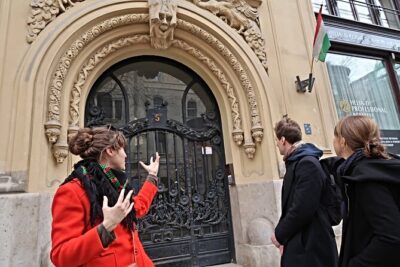
Browse the lists this tour appears in