
REVIEW · ART NOUVEAU TOURS
Private Art Nouveau Budapest Tour
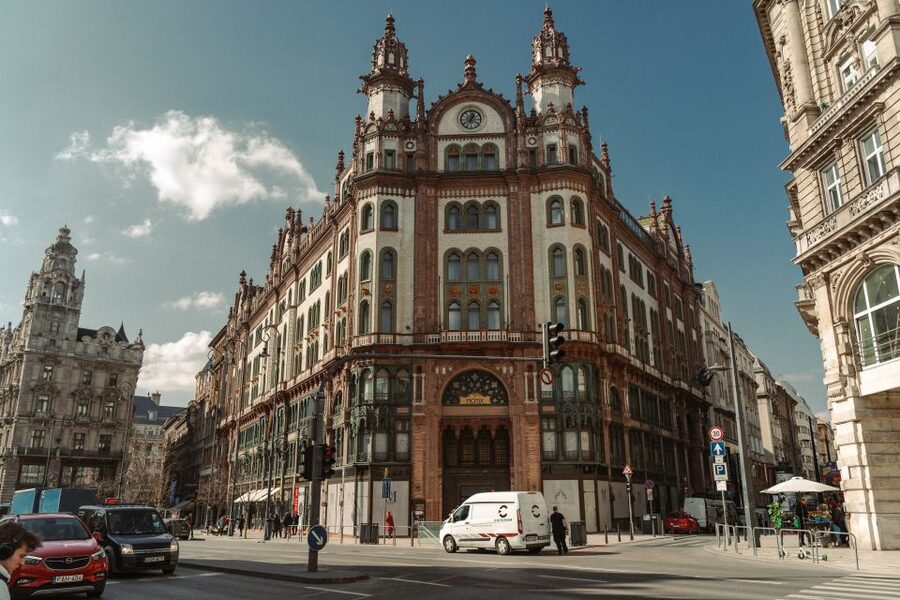
Budapest wears its art on the roof. This four-hour private walk brings you to the city’s fanciest Secessionist buildings, from Ödön Lechner’s Museum of Applied Arts to the tiled Hungarian State Treasury. I especially like the art-historian guide and the included café stop, which turns a building tour into a pleasant half-day outing. The main concern is consistency: one June 2024 booking reported that the guide never arrived, while other bookings describe excellent, highly personal guiding.
You meet at your hotel, apartment, or another agreed point, then follow a route shaped around your location. I also like the chance to see interiors that can be difficult to find alone, though the route, transport use, and start time may change. At $377 per private group of up to 25, the price makes the most sense for a larger party, not a couple paying the full group rate.
In This Review
- Key points at a glance
- Why Art Nouveau works so well in Budapest
- Starting at the Museum of Applied Arts
- The short tram ride into central Budapest
- Váci Street and the central Art Nouveau buildings
- Gresham Palace and the luxury of the past
- Coffee and cake at the House of Hungarian Art Nouveau
- Liberty Square and the Hungarian State Treasury
- What the four-hour format really means
- Guide quality and the risk to consider
- Is $377 a fair price?
- Who should book this Budapest walk?
- Should you book the Private Art Nouveau Budapest Tour?
- FAQ
- How long is the Private Art Nouveau Budapest Tour?
- What is the price of the tour?
- Is the tour private?
- Where does the tour begin?
- Which buildings are included?
- Is public transport used?
- Is food or drink included?
- Which languages are available?
- What should I bring?
Key points at a glance
- Ödön Lechner’s Museum of Applied Arts: Begin with a major Hungarian Art Nouveau work, known for colorful tiles and unusual forms.
- A tram ride connects the districts: The short ride helps link the outer starting point with central Budapest sights.
- Gresham Palace adds old-world luxury: Look for a polished interior and a sense of how Art Nouveau entered grand commercial and residential spaces.
- Liberty Square brings several period buildings together: The square makes it easier to compare styles in one compact area.
- Coffee, a soft drink, and cake are included: The pause takes place at the House of Hungarian Art Nouveau, with a private collection from the period.
- Private guiding allows changes: The route can respond to your meeting point, interests, weather, and access to particular buildings.
Why Art Nouveau works so well in Budapest
Budapest’s Art Nouveau is not one tidy look. The tour explains how several European strands reached the capital, including Viennese Secession, German Jugendstil, French and Belgian Art Nouveau, and a specifically Hungarian approach.
That variety is the real reason to take a specialist tour. On your own, you may notice a curved window or a colorful roof and simply call it pretty. A good guide helps you see how the shapes, tiles, stained glass, and decoration belong to different branches of the same movement.
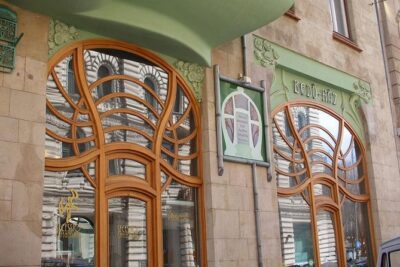
The period produced a remarkable burst of construction in roughly two decades. The buildings are close enough together for comparison, yet distinct enough to keep the walk from feeling repetitive. You get rounded stained-glass windows, wavy facades, uneven surfaces, decorative ironwork, and roof tiles that can look almost too colorful for a government building.
I would not choose this outing if you only want the standard Budapest sights. It is best for you if architecture, decorative arts, urban design, or local cultural history already interests you. The guide’s explanations are a major part of the value.
More Art Nouveau walks:
- Art Nouveau Tour in Budapest: 3-Hour Private Tour
★ 4.6 · 21 reviews - Private Art Nouveau Tour Budapest
★ 5.0 · 21 reviews - Art Nouveau Treasures of Budapest – Exclusive Private Tour
★ 5.0 · 18 reviews
Starting at the Museum of Applied Arts
The suggested starting point is the Museum of Applied Arts, a key work by Ödön Lechner. Lechner is often called the Hungarian Gaudí, a useful nickname if you need a quick sense of his bold approach, though the tour gives the building its own identity.
The exterior is the first major lesson in Hungarian Art Nouveau. Look up at the colored roof and the way the facade refuses to remain flat and predictable. The rounded forms, patterned surfaces, and strong color make this a building you cannot understand well from a hurried street-level glance.
The museum is also a smart place to begin because it sets up the national style that appears later. You start with a building that feels openly decorative, then compare it with the more restrained or more commercial examples in the center.
The supplied information does not promise a full museum interior visit, so I would treat this primarily as an architectural stop unless your guide confirms interior access. That distinction matters. The building may be under repair, closed, or viewed from outside depending on conditions and access on the day.
Meet-up details are flexible. Your guide can collect you at your hotel, apartment, or another city location. Since the walk changes with the starting point, confirm the meeting place clearly before the day of the tour.
The short tram ride into central Budapest
After the first section, the route includes a short tram ride back toward central Budapest. This is practical rather than decorative. It prevents the tour from spending too much of its four hours on a long connecting walk.
The ride also gives you a brief change of pace. You see how the city’s Art Nouveau buildings fit into ordinary Budapest streets instead of appearing as isolated monuments on a sightseeing checklist.
One past booking paid for an all-day metro ticket but used public transport only once, and the booking information had suggested that the ticket would be included. That is a useful warning. Ask your guide or operator exactly what transport costs are covered before buying any pass yourself.
The route is private, so you can raise this question without slowing down a large shared group. You can also ask to spend more time at a favorite facade or move on if the weather turns unpleasant.
Váci Street and the central Art Nouveau buildings
The central section around Váci Street brings several modern constructions into the walk. Here, the value lies in reading the street as a whole. You are not only looking at one famous palace. You are seeing how Art Nouveau changed shops, offices, apartment buildings, and public spaces.
This is where a trained guide earns the fee. Facades can be busy, and the details sit at different heights. You might find rounded windows above eye level, patterned tilework hidden along a roofline, or a surface that appears uneven by design. A guide can point out details you would probably pass without noticing.
The tour description promises more than the buildings normally listed in a guidebook. That does not mean every doorway will be open, so keep expectations sensible. The route may include special access, but entry depends on the building and the guide’s arrangements that day.
The walk is a good fit for photographers, but it is not simply a photo tour. Your guide explains why the buildings look the way they do. If you want time for careful pictures, say so early. A private tour gives you a better chance of adjusting the pace.
More things to do in Budapest:
- Budapest: City Highlights Cruise with Welcome Drink
★ 4.6 · 35,610 reviews - Budapest: Unlimited Prosecco, Beer and Aperol Spritz Cruise
★ 4.8 · 25,310 reviews - Budapest: Széchenyi Spa Day Ticket with Optional Upgrades
★ 4.3 · 23,911 reviews - Budapest: Nighttime or Daytime Sightseeing Cruise
★ 4.2 · 21,062 reviews
Gresham Palace and the luxury of the past
Gresham Palace is one of the route’s most appealing stops. The building lets you see how Art Nouveau could feel polished, wealthy, and highly controlled rather than playful or folk-inspired.
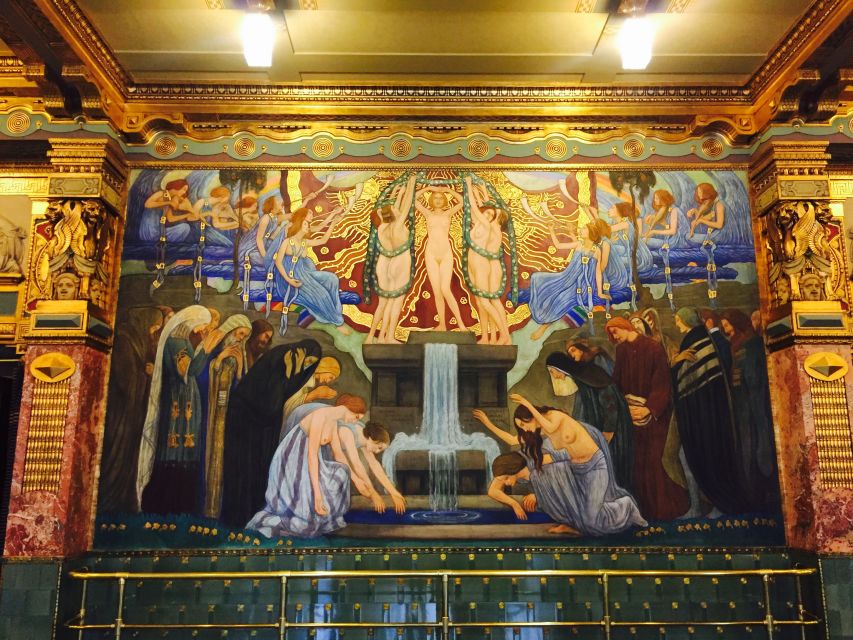
The promised visit includes a look inside, allowing you to enjoy the luxurious atmosphere of both past and present. That interior change is important. A street facade gives you composition and color, but a lobby or interior passage shows how the style continued through floors, fittings, metalwork, and decorative surfaces.
I would give this stop time rather than treating it as a quick photograph. The palace helps explain why Art Nouveau was more than an exterior fashion. It shaped the entire experience of a building.
Access is not something I would assume without checking. The tour says you can pop into Gresham Palace, but building access can depend on current use and local conditions. Your guide may need to adjust the visit if the interior cannot be entered.
Coffee and cake at the House of Hungarian Art Nouveau
The café break takes place at the House of Hungarian Art Nouveau on Liberty Square. You receive a coffee or soft drink and a cake, and the setting includes a private collection from the period.
This is a small inclusion, but it improves the rhythm of the tour. Four hours of looking upward, listening, and walking can become tiring. A seated break gives you time to ask questions and sort out the different styles you have just seen.
The setting matters too. Instead of stopping at an ordinary café with no connection to the subject, you continue looking at Art Nouveau objects and decoration while you rest.
The included refreshment is not a meal. Plan to eat before the tour or afterward if you need something substantial. The tour description only promises one coffee or soft drink and cake.
The café stop also gives you a useful test of the guide. Strong guides make this kind of pause feel like part of the lesson, not dead time. Past bookings praised guides who shared stories, anecdotes, and descriptions with obvious enthusiasm. Names specifically praised include Suzy, Peter Horvath, and Joel.
Liberty Square and the Hungarian State Treasury
Liberty Square is one of the strongest parts of the route because several buildings from the same period face the same public space. You can compare them without spending half the afternoon crossing town.
The square also prepares you for the Hungarian State Treasury. Its rooftop is a highlight, especially because it is invisible from street level. The route brings you close enough to appreciate the roof’s design, a useful reminder that Budapest’s best decoration is often above the normal viewing line.
This is the kind of detail that justifies a guide. You may walk past the Treasury and never realize what is happening above you. I would keep your camera ready, but also listen. The roof is not only a colorful ornament. It helps show how Hungarian Art Nouveau used local visual ideas in a modern architectural style.
The square can be a good place to pause and compare what you have seen so far. Gresham Palace presents luxury, the Treasury presents a public function, and the earlier Lechner building shows a stronger national expression. The contrast gives the tour a clear shape.
What the four-hour format really means
The advertised duration is four hours, but the timing is not rigid. One past itinerary shifted from 10 a.m. to 1 p.m. so the group could attend a guided tour of the Music Academy. That change added real value for that party, and the Art Nouveau outing eventually lasted five and a half hours.
I would not count on an extra ninety minutes. Treat that account as proof that the private format can sometimes expand when a worthwhile opportunity appears, not as part of the official schedule.
The route may also change because the meeting point is customized. A hotel in the center could shorten the connection to the main sights. A starting point farther away may make the Museum of Applied Arts a more sensible first stop.
Comfortable shoes are the only specific item listed to bring, and that advice is sound. You walk between buildings, use public transport briefly, and spend time standing while examining facades. An umbrella or weather layer is sensible, but the stated requirement is simply practical footwear.
Guide quality and the risk to consider
The strongest praise centers on the guides, not just the buildings. Suzy was praised for her passion for Art Nouveau and Budapest history. Peter Horvath was described as turning the outing into a memorable experience through stories and anecdotes. Joel was praised for bringing architecture and history to life and showing places that were not easy for ordinary tourists to find.
That level of personal guiding is exactly what you want from a private tour. You can ask why one building uses Hungarian motifs, stop when a roof catches your eye, or request more detail about a particular architect.
The record is not perfect. The overall score is 3.5 out of 5 from 12 ratings, and one verified booking dated June 2, 2024 reported that the guide did not arrive and that the customer was still waiting for refund news. That is a serious service problem, even though the other detailed accounts are strongly positive.
I would confirm the meeting time, location, and guide contact details shortly before the tour. If the operator offers a named guide, ask whether Suzy, Peter Horvath, or Joel is available, but do not assume a particular person is guaranteed.
The listed languages are English, Spanish, French, Italian, and Portuguese. Choose the language in which you can comfortably discuss art and history. A private guide speaking your strongest language can make the difference between noticing decoration and understanding it.
Is $377 a fair price?
The price is $377 for a private group of up to 25 people. For a full group, that works out to about $15 per person, before considering the guide, hotel pickup, private format, café drink, and cake.
For a couple, the same group price is much harder to justify. You are paying for privacy and specialist attention, not simply admission to a list of buildings. The value improves if you are traveling with family or friends and can divide the cost among several people.
The tour also offers reserve-now, pay-later booking and cancellation up to 24 hours before departure for a full refund. Those terms make it easier to fit into a changing Budapest schedule, though the reported no-show makes it sensible to confirm arrangements directly.
I would compare the tour with the cost of hiring a private art guide for four hours. The key question is not how many buildings you see. It is how much meaning your guide adds to them, and whether the guide can provide access or viewpoints you would miss alone.
Who should book this Budapest walk?
I recommend it most strongly for:
- Architecture fans who want more than Budapest’s major landmarks
- Visitors who enjoy decorative arts, stained glass, tiles, and urban design
- Families or groups who can share the $377 cost
- Repeat visitors seeking a different side of central Budapest
- Anyone who prefers a flexible private route to a fixed group excursion
- People who want guiding in English, Spanish, French, Italian, or Portuguese
I would be less quick to recommend it if you have only one day in Budapest and have not yet seen the city’s major sights. I would also think twice if your main goal is museum interiors, since the information guarantees architectural visits and a private collection at the café, but not a complete interior tour of every building.
Should you book the Private Art Nouveau Budapest Tour?
Book it if you want to understand why Budapest has such unusual facades, roofs, windows, and public buildings, and if you can share the private-group cost. The best accounts describe guides who are passionate, flexible, and able to show special places that are easy to miss.
Before paying, confirm the meeting details, transport arrangements, and the guide assigned to you. If those basics are clear, this can be a rewarding four-hour look at Budapest’s most decorative architectural period. If you are traveling alone or as a couple, the $377 total is the main obstacle.
FAQ
How long is the Private Art Nouveau Budapest Tour?
The scheduled duration is four hours. A past tour lasted five and a half hours after the start time changed to include a guided Music Academy visit, but extra time is not guaranteed.
What is the price of the tour?
The price is $377 per private group of up to 25 people.
Is the tour private?
Yes. It is offered as a private group experience.
Where does the tour begin?
Your guide meets you at your hotel, apartment, or another agreed location in the city. The route can change depending on that starting point.
Which buildings are included?
The route can include the Museum of Applied Arts, Gresham Palace, the House of Hungarian Art Nouveau, Liberty Square, the Hungarian State Treasury, and other Art Nouveau buildings around Váci Street.
Is public transport used?
A short tram ride is included in the suggested route. The amount of transport used can vary with the meeting point and customized itinerary.
Is food or drink included?
Yes. One coffee or soft drink and a cake are included at the House of Hungarian Art Nouveau.
Which languages are available?
The live guide languages are English, Spanish, French, Italian, and Portuguese.
What should I bring?
Bring comfortable shoes. The tour includes walking between architectural sights and a short public transport ride.
Just added in Budapest
- Budapest: Private Walking Tour with a Local Guide★ 3.6 · 6 reviews
- Budapest: Danube River Views Bike Ride★ 4.8 · 23 reviews
- Budapest: City Bike Tour with Coffee Stop★ 5.0 · 37 reviews
- Walk to recent and aged spiritual sanctuaries near Budapest★ 5.0 · 5 reviews
- Walking consultancy with alternative psychologist and author★ 5.0 · 2 reviews
- From Budapest: Guided Tour of Eger with Wine Tasting★ 4.5 · 6 reviews
- Budapest: Guided Tour of the Parliament Building in Spanish★ 4.6 · 1,240 reviews
- Budapest: 3-Hour Trabant Sightseeing Tour★ 4.7 · 28 reviews
Art Nouveau Tours, compared.
Art Nouveau Tour in Budapest: 3-Hour Private Tour
Read our review →
Art Nouveau Treasures of Budapest – Exclusive Private Tour
Read our review →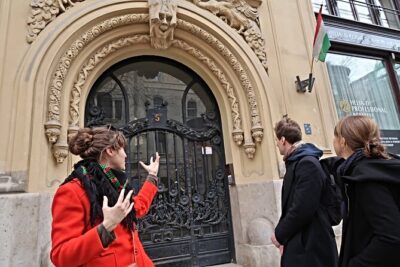
Browse the lists this tour appears in