
REVIEW · ART NOUVEAU TOURS
Private Art Nouveau Tour Budapest
Budapest wears its art on every street. This four-hour private tour makes the city’s Art Nouveau style easier to read, from Hungarian Secession curves to Miksa Roth glasswork and Lechner’s colorful national style. I especially like the private guide and the included coffee in an Art Nouveau setting. Hotel or port pickup and drop-off also take the sting out of city logistics.
The main consideration is price. At $243.53 per group of up to 15, it can be excellent value for a full group, but costly for one or two people. Public transportation tickets are extra, and the four-hour route includes plenty of walking, although past guides have adjusted the plan with taxis or public transport when needed.
In This Review
- Key points to know before booking
- Why Budapest is such a good Art Nouveau city
- A grand opening landmark and the Four Seasons connection
- Parisian Passage Café, 30 minutes of decorative drama
- Liszt Academy, where music meets Secession
- Vaci Street, 30 minutes among urban palaces
- Torok-Bankhaz and the work of Miksa Roth
- Postatakarek Bank and Lechner’s Hungarian style
- House of Hungarian Art Nouveau, a useful period primer
- Budapest Zoo buildings and the variety of Secession
- Museum of Applied Arts, an exterior worth seeing
- Four hours, private pacing, and group value
- What the guides add to the experience
- Who should book this Budapest tour?
- Should you book the Private Art Nouveau Tour Budapest?
- FAQ
- How long does the Private Art Nouveau Tour Budapest last?
- How much does the tour cost?
- Is the tour private?
- Is hotel or port pickup available?
- Is coffee included?
- Are public transportation tickets included?
- Is the Museum of Applied Arts visited inside?
- What language is the tour offered in?
- Can I cancel for a full refund?
Key points to know before booking
- Private guidance makes the difference: Your guide can connect architecture with Hungarian music, politics, design, and national identity.
- The coffee stop is part of the experience: Parisian Passage Café gives you time to enjoy an Art Nouveau interior rather than simply photographing it.
- Several interiors add real value: The route includes the Liszt Academy, passage buildings, banks, and other public spaces, though access can vary.
- Hungarian Secession gets proper attention: Postatakarek Bank and the Museum of Applied Arts show how Budapest adapted Art Nouveau into its own style.
- The price favors larger groups: One group pays $243.53, whether it has two people or as many as 15.
- The route is flexible but not fully fixed: That helps with mobility and special interests, but some people may prefer a tightly timed schedule.
Why Budapest is such a good Art Nouveau city
Budapest is not just a city with a few pretty buildings from the early 20th century. Its Art Nouveau movement, known locally as Secession, often mixes floral decoration, folk motifs, bright ceramics, mosaics, wrought iron, and imaginative rooflines.
That local touch is what makes this tour worthwhile. You are not only looking for European curves and decorative façades. You are learning how Hungarian architects created a national style while still taking ideas from the wider European movement.
A good guide can help you notice what you might otherwise walk past: a ceramic roof detail, an animal motif, a mosaic panel, or the way a bank resembles a small fairy-tale fortress. The route also shows the shift from Art Nouveau toward Art Deco, so the period does not feel frozen in one decorative style.
I would choose this tour if you already enjoy architecture, design, or city history. It also suits curious first-time visitors who want more than a list of famous sights. The private format means you can ask why a building looks the way it does, rather than trying to catch a guide’s explanation in a large group.
More Art Nouveau walks:
- Art Nouveau Tour in Budapest: 3-Hour Private Tour
★ 4.6 · 21 reviews - Art Nouveau Treasures of Budapest – Exclusive Private Tour
★ 5.0 · 18 reviews - Budapest Art Nouveau Walking Tour
★ 5.0 · 17 reviews
A grand opening landmark and the Four Seasons connection
The first part of the route includes one of Budapest’s major landmarks with clear Art Nouveau features. The exact name is not specified in the tour details, so you should confirm the planned opening stop when arranging the pickup.
One past account specifically praised the Four Seasons Hotel as an impressive example of Art Nouveau architecture. That does not mean every departure will use exactly the same interior visit, but it gives you a useful idea of the sort of building the guide may highlight.
The important point is that this is not meant to be an exterior-only photo walk. The plan includes both the outside and inside of a major building, allowing you to compare the grand public façade with the decoration, materials, and craftsmanship indoors.
Access is worth treating as flexible. One guide, Suzy, was praised for arranging access to places that were not normally open to the public. That kind of extra entry can make the tour special, but you should not assume every interior is guaranteed on every date.
Parisian Passage Café, 30 minutes of decorative drama
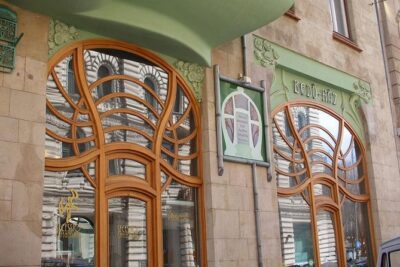
Parisian Passage Café is one of the most visually rewarding stops. The recently renovated passage has an ornate interior that has been compared favorably with Belgian examples, which is high praise in a city known for Art Nouveau architecture.
You will spend about 30 minutes here, with admission included. The coffee or tea is also included, giving you a proper pause in the middle of the route.
I like this part because it turns decoration into a lived experience. You are not standing outside with a camera while a guide points upward. You can sit among Art Nouveau tables and chairs and look at the interior at a slower pace.
This is also a smart place for the guide to explain how commercial buildings used decoration to attract shoppers and café customers. A passage had to do more than connect two streets. It had to create a mood and make people want to linger.
Do not expect a full meal to be included. The stated inclusion is coffee and/or tea, so plan separately if you need lunch or a substantial snack.
Liszt Academy, where music meets Secession
The Liszt Academy brings a different layer to the tour. Located in the city center, this grand building links Hungarian musical culture with the international Secession style.
The planned interior visit lasts about 15 minutes. That is enough time to see the hall, mosaics, and other decorative details, but not enough for a long concert experience or a full museum visit.
This short stop works best when your guide explains the building as both a music institution and a work of architecture. The decoration is not random ornament. It helps express the importance of music, performance, and national culture.
If you enjoy historic interiors, this may be one of the route’s strongest moments. If you care mainly about façades, it still adds welcome variety. You are moving from a café passage to a cultural building, and the comparison helps show how the same style could serve different purposes.
More things to do in Budapest:
- Budapest: City Highlights Cruise with Welcome Drink
★ 4.6 · 35,610 reviews - Budapest: Unlimited Prosecco, Beer and Aperol Spritz Cruise
★ 4.8 · 25,310 reviews - Budapest: Széchenyi Spa Day Ticket with Optional Upgrades
★ 4.3 · 23,911 reviews - Budapest: Nighttime or Daytime Sightseeing Cruise
★ 4.2 · 21,062 reviews
Vaci Street, 30 minutes among urban palaces
Vaci Street is Budapest’s best-known historic shopping street, but this tour asks you to look beyond the shops. During a roughly 30-minute walk, the guide points out urban palaces and explains their Art Nouveau features.
This is where a private guide can earn the fee. A shopping street is easy to rush through. You may notice balconies or elaborate entrances, but miss the design choices that link one building to the next.
The stop also gives you a chance to see Art Nouveau in an ordinary city setting. Not every important example is a museum or a famous landmark. Some are woven into the streets you use for shopping, eating, and getting from one sight to another.
Expect walking on city streets, with stops to examine details. Comfortable shoes are a sensible choice even though the stated dress code is smart casual. The guide can adjust the pace, and one past experience was adapted for a traveler with limited walking ability using taxis and public transportation.
Torok-Bankhaz and the work of Miksa Roth
The Torok-Bankhaz Building is a useful bridge between Art Nouveau and Art Deco. The stop lasts about 15 minutes and focuses on the transition between these two major pre-war styles.
This is a strong choice for anyone who wants to understand how design changes over time. Art Nouveau is often associated with flowing lines, plants, and organic shapes. Art Deco tends to move toward sharper geometry and a more streamlined look. The building helps you see that change rather than treating architectural periods as sealed boxes.
Miksa Roth is also highlighted here. Roth was one of Hungary’s leading decorative artists, especially known for stained glass and mosaics. The tour’s emphasis on his work adds a craft element that many general city walks leave out.
Ask your guide to point out exactly where Roth’s contribution appears. The tour is at its best when you connect the name of an artist with a visible feature on the building.
Postatakarek Bank and Lechner’s Hungarian style
Postatakarek Bank is one of the major reasons to book this route. It represents the Hungarian national branch of Secession, with ornate architecture and castle-like details.
The building is associated with Ödön Lechner, one of the most important architects in Hungarian Art Nouveau. Lechner did not simply copy French or Belgian fashion. He helped shape a distinct Hungarian approach, often using colorful ceramics, folk-inspired forms, and decorative patterns.
The 15-minute stop is brief, but the subject is large. I would pay close attention to the roofline and surface decoration, since Lechner’s buildings are often most memorable when viewed as a whole. The details can seem playful, yet they are part of a serious effort to create a national architectural identity.
This is also a good place to ask about materials. Hungarian Art Nouveau is especially rewarding when you notice how ceramics, mosaics, glass, and painted surfaces work together.
House of Hungarian Art Nouveau, a useful period primer
The House of Hungarian Art Nouveau is dedicated to the Secession period in Hungarian architecture. The planned visit lasts about 15 minutes and offers context about the Hungarian national style and its outside influences.
This stop may be less about one monumental façade and more about making sense of the buildings you have already seen. Without that context, the route can become a parade of attractive details. With it, you can better understand why certain motifs appear again and again.
The attraction is particularly useful if you are new to Art Nouveau. You do not need to arrive with a background in architecture. A good guide can explain the difference between a broad European movement and Hungary’s own adaptation of it.
The compact timing is a benefit if you want a varied route, but it also means you should not expect a long museum visit. The main value comes from the explanation and the connection to the rest of the day.
Budapest Zoo buildings and the variety of Secession
The route also includes several buildings connected with Budapest Zoo. This portion shows how widely Art Nouveau and Secession ideas could be applied.
A zoo complex offers a different setting from a bank, academy, or café. Decorative architecture here could be imaginative, playful, and tied to animals or nature. That makes it a useful contrast with the formal public buildings downtown.
The supplied schedule does not give a separate duration for this portion, so the exact time may depend on the guide’s plan and the day’s pace. I would treat it as a visual extension of the main tour rather than a full zoo visit.
If you are especially interested in architecture, ask whether the zoo buildings can receive more attention. In a private tour, that sort of request may be easier to accommodate than in a fixed group.
Museum of Applied Arts, an exterior worth seeing
The Museum of Applied Arts is one of the route’s notable examples of Hungarian national Secession. At present, renovation limits the visit to the façade.
That restriction matters. You should not book this experience expecting a full museum interior. The building exterior is still important, particularly for its bold Hungarian design language, but the stop is best understood as an architectural viewing rather than a museum admission.
The guide can help you read the façade as a work of applied art. Look for the relationship between structure and decoration, the use of color, and the way the building presents itself from the street.
This is a good example of the tour’s balanced nature. It includes a celebrated building, but the current renovation means part of its value is unavailable. The guide’s explanation becomes even more important when you cannot walk inside.
Four hours, private pacing, and group value
The tour lasts about four hours. The listed stop times add up to about 135 minutes, leaving roughly two hours and 25 minutes for the opening landmark, walking between sights, transportation, the coffee break, and any flexible additions.
That is a sensible length for a specialized city tour. You get enough time to build a clear picture of Budapest’s architecture without giving up an entire day.
The price is $243.53 per group, with up to 15 people included. For a large family or group of friends, that can be strong value. Split among 10 people, it is about $24.35 per person, before any transport costs. For two people, the cost is much higher per person, but you are paying for a private art historian and a route shaped around your group.
Hotel and port pickup and drop-off are included, and the provider says pickup can be arranged at the hotel or port you specify. Public transportation tickets are not included.
The private setup is particularly useful if you have a special interest in Hungarian design or need a slower pace. It is less compelling if you only want a quick overview of central Budapest’s most famous sights.
What the guides add to the experience
The strongest praise has focused on the guides rather than on the buildings alone. Suzy, also identified as Szoke Zsuzsanna, has been described as enthusiastic, professional, and able to connect art with Hungarian history and culture.
Another guide, Bogata, received praise for knowing the city and its historic architecture. Michael was also credited with tailoring a last-minute tour and arranging special access.
Guide assignment may vary, so you should not book on the assumption that one particular person will lead your group. Still, the pattern is clear: the experience depends heavily on the guide’s ability to explain, adapt, and notice opportunities.
The flexible style can cut both ways. If you enjoy spontaneous additions and changing the pace, it is a benefit. If you want every minute fixed in advance, confirm the route and meeting details carefully before the day.
Who should book this Budapest tour?
I would recommend it most strongly to:
- Architecture and design enthusiasts
- First-time Budapest visitors who want context, not just photographs
- Small groups that can share the fixed price
- Families or mixed-age groups that benefit from private pacing
- Visitors interested in Hungarian music, decorative arts, and national identity
- Anyone who values hotel or port pickup
I would think twice if you want a museum-heavy experience. The Museum of Applied Arts is currently exterior-only, and several stops are short.
I would also be cautious if you dislike walking or prefer a rigid schedule. The route can be adapted, but public transport and taxis may add cost, and transportation tickets are not included.
Should you book the Private Art Nouveau Tour Budapest?
Book it if Budapest’s buildings are more than background scenery for you. The combination of a private art historian, Art Nouveau interiors, Hungarian Secession, a coffee in Parisian Passage Café, and hotel pickup gives you a focused way to understand the city.
The value improves sharply with a larger group. A couple may find the price high, while six or more people can share the cost comfortably. Before paying, confirm the pickup point, the expected opening landmark, guide availability, and which interiors are planned for your date.
I would choose this over a general sightseeing walk if you want to understand why Budapest looks the way it does. Just keep your expectations realistic about renovation, transport costs, and the possibility that the flexible route may change.
FAQ
How long does the Private Art Nouveau Tour Budapest last?
The tour lasts approximately four hours.
How much does the tour cost?
The price is $243.53 per group, for up to 15 people.
Is the tour private?
Yes. Only your group participates in the private activity.
Is hotel or port pickup available?
Yes. Pickup and drop-off are offered from hotels or ports specified by the group.
Is coffee included?
Yes. Coffee and/or tea are included during the experience.
Are public transportation tickets included?
No. Public transportation tickets are not included in the tour price.
Is the Museum of Applied Arts visited inside?
No. Because the museum is under renovation, the tour currently explores its façade only.
What language is the tour offered in?
The tour is offered in English.
Can I cancel for a full refund?
Yes. You can cancel at least 24 hours before the experience start time for a full refund. Changes or cancellations made less than 24 hours before the start time are not accepted for a refund.
Just added in Budapest
- Budapest: Private Walking Tour with a Local Guide★ 3.6 · 6 reviews
- Budapest: Danube River Views Bike Ride★ 4.8 · 23 reviews
- Budapest: City Bike Tour with Coffee Stop★ 5.0 · 37 reviews
- From Budapest: Guided Tour of Eger with Wine Tasting★ 4.5 · 6 reviews
- Walk to recent and aged spiritual sanctuaries near Budapest★ 5.0 · 5 reviews
- Walking consultancy with alternative psychologist and author★ 5.0 · 2 reviews
- Budapest: Guided Tour of the Parliament Building in Spanish★ 4.6 · 1,240 reviews
- Budapest: 3-Hour Trabant Sightseeing Tour★ 4.7 · 28 reviews
Art Nouveau Tours, compared.
Art Nouveau Tour in Budapest: 3-Hour Private Tour
Read our review →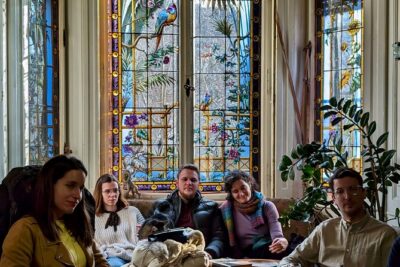
Art Nouveau Treasures of Budapest – Exclusive Private Tour
Read our review →
Browse the lists this tour appears in