
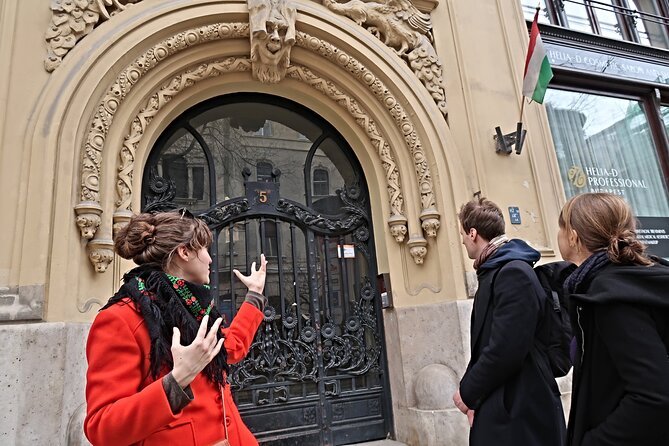
REVIEW · ART NOUVEAU TOURS
Budapest Art Nouveau Walking Tour
Look up, and Budapest changes character. This three-hour walk links grand facades, colorful ceramic details, and Ödön Lechner’s bold designs with a historian guide who explains what you are seeing. I especially like the small-group format and the chance to visit the Kazinczy Street Synagogue, a stop many casual city walks skip. The main catch is the price: at $126.16 per person, this is a costly walking tour, and public transport plus the synagogue entry may add to the bill.
I also like the clear morning or afternoon choice, which makes it easier to fit around Budapest’s museums and thermal baths. The walk is not difficult for most people, but you should expect a moderate amount of time on foot, some public transport, and a busy meeting point at Madal Cafe.
In This Review
- Key points at a glance
- Why Budapest’s Art Nouveau deserves a walking tour
- Starting at Madal Cafe on Alkotmány Street
- Gresham Palace and Budapest’s grand opening act
- The Royal Postal Savings Bank and Ödön Lechner’s bold ideas
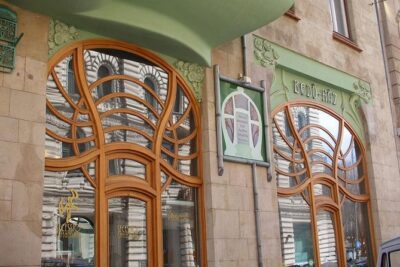
- Thonet House and the colorful world of Zsolnay ceramics
- Ending inside the Kazinczy Street Synagogue
- What the guide adds to the experience
- Is $126.16 a fair price?
- Who will enjoy this walk most?
- Practical advice before you go
- Should you book the Budapest Art Nouveau Walking Tour?
- FAQ
- How long does the Budapest Art Nouveau Walking Tour last?
- What language is the tour offered in?
- Where does the tour begin?
- Where does the tour end?
- Is public transportation included?
- Is the Kazinczy Street Synagogue entrance included?
Key points at a glance
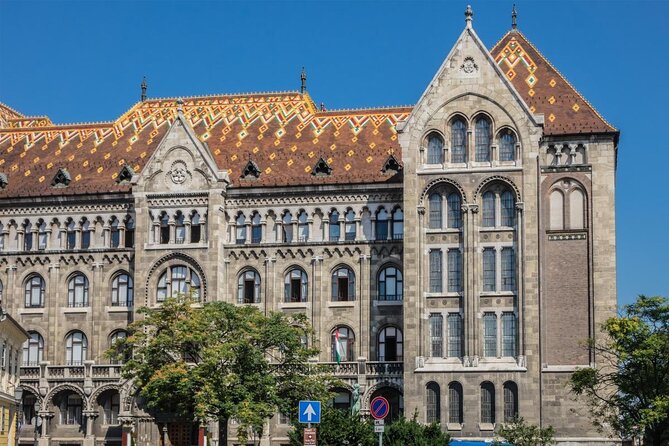
- Ödön Lechner’s Postal Savings Bank: See the work of Hungary’s best-known Art Nouveau architect and discuss the design of its entrance hall.
- Gresham Palace interior and facade: Admire one of Budapest’s grandest Art Nouveau buildings, now a luxury hotel.
- Zsolnay ceramic details: At Thonet House, learn how tiles from Pécs helped give Hungarian Art Nouveau its distinctive look.
- Kazinczy Street Synagogue: Finish at an Orthodox synagogue decorated in Art Nouveau style, with interior access except on Saturdays.
- Small-group setting: The tour is offered in English, with the advertised group size described as either six or eight, so confirm the exact limit when booking.
- Three hours with some transit: Public transportation may be used, but passes are not included.
Why Budapest’s Art Nouveau deserves a walking tour
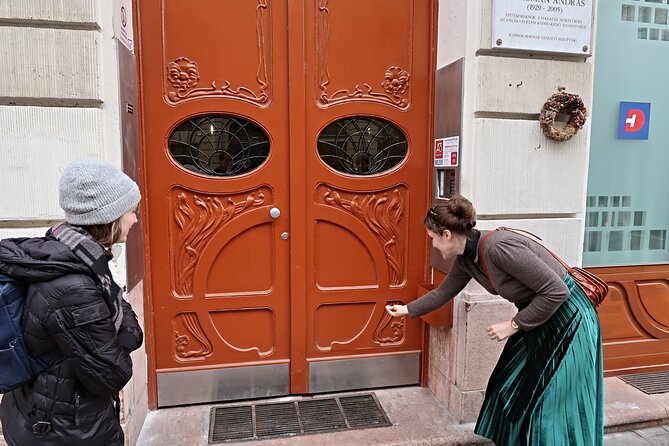
Budapest is often introduced through its Parliament, castle, bridges, and grand coffeehouses. Those sights matter, but Art Nouveau gives you another way to read the city. Instead of looking only at size and ceremony, you start noticing curves, plants, animals, colorful tiles, unusual rooflines, and entrances designed to feel like works of art.
This movement took hold in Budapest around the turn of the 20th century. Hungarian architects did not simply copy French or Belgian models. They mixed new decorative ideas with local traditions and folk-inspired forms. That makes the city’s Art Nouveau different from the smoother, more restrained style you might see elsewhere in Europe.
A guide adds real value here. Much of the best detail is above eye level or tucked into a doorway. Without help, you could walk past a tiled facade and see only a colorful building. With an historian explaining the materials, architects, and ideas behind it, the route becomes a lesson in how Budapest wanted to present itself as a modern European capital.
The tour is also a good choice if you prefer buildings to broad sightseeing commentary. It focuses on architecture, design, and urban history rather than trying to cover every major attraction in one morning. You will not get a complete tour of Budapest, but you will get a more focused understanding of one of its most appealing styles.
More Art Nouveau walks:
- Private Art Nouveau Tour Budapest
★ 5.0 · 21 reviews - Art Nouveau Tour in Budapest: 3-Hour Private Tour
★ 4.6 · 21 reviews - Art Nouveau Treasures of Budapest – Exclusive Private Tour
★ 5.0 · 18 reviews
Starting at Madal Cafe on Alkotmány Street
The walk begins at Madal Cafe, at Alkotmány u. 4. This is a central location near public transportation, but it can be busy. One useful tip comes directly from the practical details of the experience: keep an eye out for your guide and do not assume the first person waiting nearby is part of your group.
That matters because this is a small tour. The advertised highlights describe a maximum of six people, while the additional tour information gives a maximum of eight. Either way, this is far more personal than a large city walk, but I would confirm the exact group size before paying if that detail affects your decision.
The start time comes in a morning or afternoon version. Morning may suit you if you want to pair the tour with an afternoon museum visit. An afternoon departure can work well if you prefer a slower start or want to spend the morning at another Budapest sight.
Wear comfortable shoes. The route lasts about three hours and includes a moderate amount of walking. Public transportation may be used between sections, and those passes are your responsibility. Build a little extra room into your schedule rather than treating the end time as exact.
Gresham Palace and Budapest’s grand opening act
The first main stop is Gresham Palace, where you spend about 20 minutes looking at the exterior and interior design. The building began as offices and luxury apartments and now operates as Budapest’s most luxurious hotel.
That change of use gives the stop an interesting angle. You are not looking at an abandoned monument or a preserved shell. You are seeing a grand Art Nouveau building that still serves a modern purpose, even if access to the interior depends on hotel conditions and the tour’s arrangements.
Gresham Palace works well as an introduction because it shows the style at its most polished and theatrical. Look for the relationship between the facade, decorative lines, and interior details. A guide can point out the design choices that are easy to miss when you only pause for a photograph outside.
I would keep expectations sensible about the interior. The stop description promises a look at interior designs, but this is not presented as a long, private architectural inspection. The visit lasts around 20 minutes, so the guide’s explanation will do much of the work. If you like grand hotels and decorative public spaces, this should be one of the strongest parts of the walk.
The Royal Postal Savings Bank and Ödön Lechner’s bold ideas
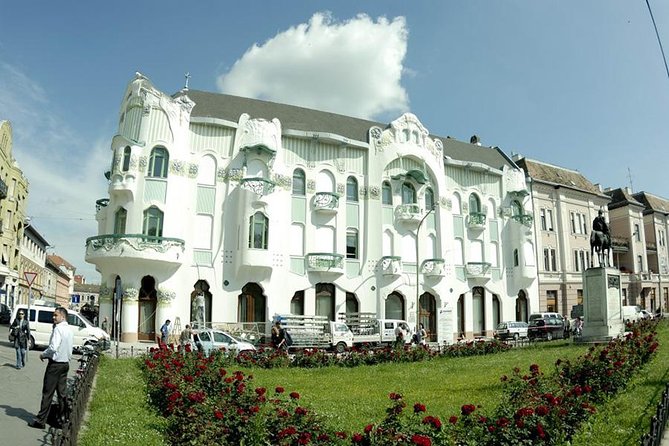
The next stop is the Royal Postal Savings Bank, also called the Postatakarek Bank. It is one of the clearest reasons to book this particular route. The building was designed by Ödön Lechner, Hungary’s best-known Art Nouveau architect, sometimes compared with Antoni Gaudí.
Lechner deserves attention because he gave Hungarian Art Nouveau a strong local voice. Rather than relying only on imported European decoration, his work used unusual shapes, colorful surfaces, and references to Hungarian design traditions. The result can look playful, even slightly mischievous, beside the formal government buildings nearby.
You spend about 20 minutes here, with special attention to the entrance hall and interior design elements. That focus is useful. A quick photo stop might leave you admiring the roof and moving on, while a guide can explain how the building’s parts work together.
This is also a place where a small group helps. If there are only a few people around the guide, you can ask why a particular motif appears, how the building was used, or what makes Lechner’s work different from other Art Nouveau architects. One of the strongest qualities of this experience is the guide’s willingness to respond to those interests rather than delivering a rigid script.
If architecture is your main reason for visiting Budapest, this stop may justify much of the tour’s cost. If you mainly want famous landmarks and quick photographs, the 20-minute discussion may feel more detailed than necessary.
More walking tours in Budapest:
- Budapest: Buda Castle Walk with Saint Stephen’s Hall
★ 4.5 · 3,012 reviews - Big Bus Budapest Hop-On Hop-Off Bus and Walking Tour
★ 3.5 · 2,206 reviews - Budapest: Buda Castle District Walking Tour
★ 4.6 · 2,108 reviews - Budapest City Landmarks Walking Tour in 2 Hours
★ 5.0 · 2,048 reviews
Thonet House and the colorful world of Zsolnay ceramics
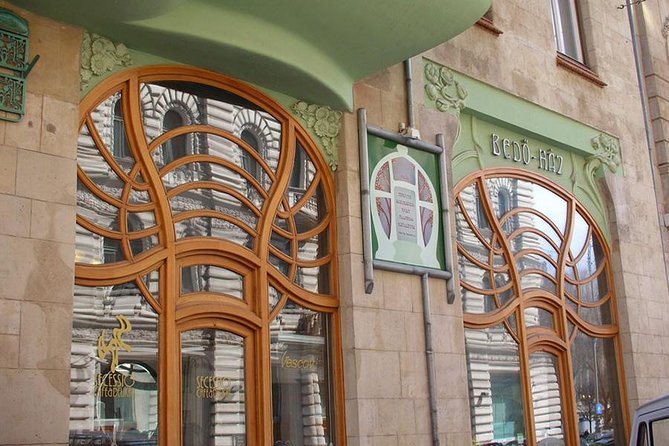
At Thonet House, the subject shifts from a single architect to the materials that helped define Hungarian Art Nouveau. The building is known for its tile-covered facade, and the guide explains the role of the Zsolnay porcelain and ceramics factory in Pécs, a town in southern Hungary.
These tiles are not a minor decoration. They are a key part of the city’s Art Nouveau identity. Ceramic surfaces allowed architects to add color and pattern to facades while protecting the buildings from the weather. They also made it possible to create a richer visual effect than plain stone or plaster.
You spend roughly 20 minutes at Thonet House. This is a good point to slow down and study the surface of the building. Notice how the tiles affect the way the facade catches light and how decoration is built into the architecture rather than added as an afterthought.
I like this stop because it connects Budapest with a wider Hungarian story. The city’s architecture was supported by makers and factories outside the capital, including Zsolnay in Pécs. You are not just looking at a pretty building. You are learning how technology, craft, and national style met in one period of rapid urban growth.
The limit is that you see the building from the route rather than taking part in a ceramics workshop or visiting the Zsolnay factory. The value comes from interpretation. If you enjoy design materials and close visual details, you will likely appreciate this stop more than someone seeking grand interiors.
Ending inside the Kazinczy Street Synagogue
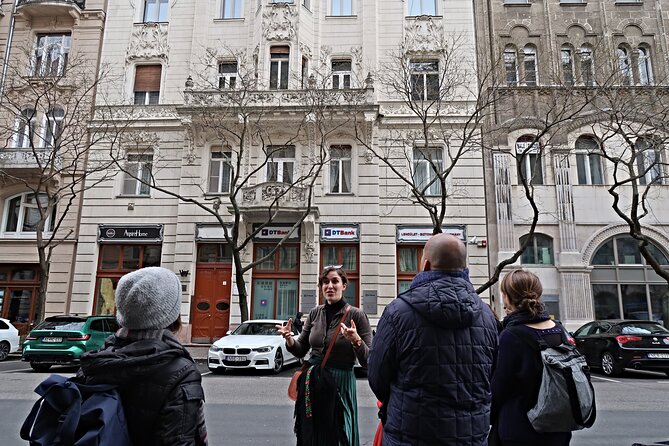
The tour concludes at the Orthodox Synagogue on Kazinczy Street, at 29-31. This synagogue is decorated in Art Nouveau style, making it a surprising final stop. Religious buildings are often associated with older architectural traditions, so the combination of Orthodox worship and Art Nouveau decoration gives the route a different finish.
The visit lasts about 25 minutes. Except on Saturdays, the tour includes the synagogue interior when it is open on the day of your walk. The additional entry cost is not included, so bring that into your budget. Saturday is the key exception, and the interior visit should not be assumed then.
This is one of the most useful features of the tour. You finish with a building that broadens the story beyond banks, hotels, and commercial facades. The guide can help you understand how Art Nouveau appeared in a religious setting and how decorative design changed the feeling of the interior.
The stop also gives the walk a clear endpoint in the Jewish Quarter. The tour does not return you to the cafe, so plan your next activity from Kazinczy Street. That can be convenient if you want to continue exploring the area, but less convenient if you have left belongings near the starting point.
What the guide adds to the experience
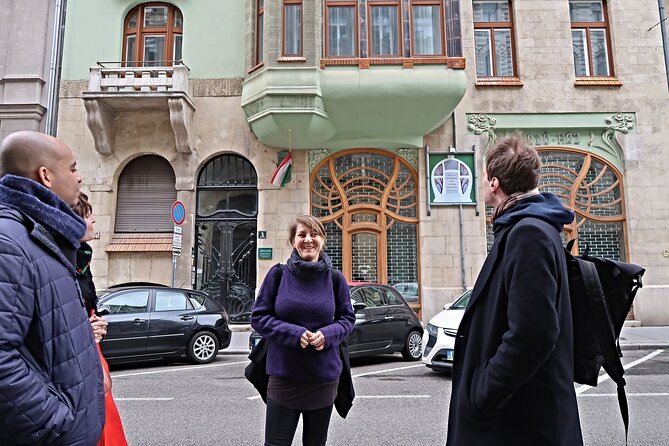
The tour includes an historian guide, and the strongest praise focuses on the quality of the guiding. The guide is described as very well informed about Budapest’s history and architecture, with enough flexibility to follow the group’s interests.
That flexibility matters on a specialized walk. You may want more detail about Lechner, the Zsolnay tiles, synagogue architecture, or the old uses of Gresham Palace. A guide who can adjust the discussion makes the three hours feel more personal.
The small group should also make it easier to hear and ask questions. The information lists a maximum of eight, while the tour highlights refer to a maximum of six. Either number is intimate enough for a better exchange than you would get in a large crowd.
Do not expect the guide to escort you through a long list of unrelated attractions. The route has a clear theme, and that is its strength. You will spend time looking carefully at a handful of buildings rather than collecting a dozen quick stops.
The guide’s role is especially important because several locations are appreciated from the outside or for only a short interior visit. The explanation turns a facade into a story and helps you understand why the architect, materials, and building purpose matter.
Is $126.16 a fair price?
At $126.16 per person, this is not a cheap sightseeing walk. The fee includes the historian guide, but not public transportation passes, food, drinks, or the extra cost of entering the Orthodox Synagogue when applicable.
The price is easier to justify if you value specialist knowledge and a small group. A general city walk may cover more sights for less money, but it will not necessarily spend time explaining Lechner’s designs, Zsolnay ceramics, or the Art Nouveau synagogue.
I would think of this as an architecture lecture that happens on the streets. The value is strongest for people who want context, questions answered, and time to examine buildings instead of rushing between landmarks.
It is less convincing for budget-conscious visitors who are happy to use a guidebook and view the buildings independently. The four main stops are all in the city, and some can be seen without paying admission. You are paying mainly for the guide’s interpretation, the planned route, and the convenience of connecting the sites.
Group discounts may improve the price for people booking together. If you are traveling with friends or family, check the available discount before deciding. Also add the cost of transit and possible synagogue entry so the final amount does not surprise you.
Who will enjoy this walk most?
I would recommend this tour to you if you fit one or more of these descriptions:
- You enjoy architecture, decorative arts, or urban design.
- You want to understand Budapest beyond its best-known monuments.
- You prefer a small group and the chance to ask questions.
- You like tours built around a clear subject rather than broad sightseeing.
- You are comfortable walking for three hours and using public transport.
- You want to see an Art Nouveau religious building as well as civic and commercial structures.
Families with older children may also find it useful, especially if the guide keeps the design discussion lively. Younger children who need constant movement may find 20-minute stops focused on facades a bit slow.
The tour suits first-time visitors who want a deeper architectural theme, but it may be even better for repeat visitors. If you have already seen Parliament, the Danube, and Buda Castle, this walk gives you a fresh reason to look closely at central Budapest.
Practical advice before you go
Wear comfortable shoes and carry a little water, since the walk lasts about three hours. You may use public transport, so keep a valid pass or be ready to buy one at your own expense.
Arrive at Madal Cafe with enough time to identify your guide. The meeting area can be busy, and one person nearly missed the group because of the crowd. Confirm the guide’s name and exact meeting instructions before setting out if possible.
Ask about the synagogue visit when you book, especially if your tour falls on a Saturday. The interior visit depends on the day and whether the site is open, and the extra entry charge is separate.
The tour is offered in English. Confirmation arrives at booking, and free cancellation is available up to 24 hours before the start time. Changes or cancellations inside that period are not accepted for a refund.
Should you book the Budapest Art Nouveau Walking Tour?
Book it if you want a focused, expert-led look at Budapest’s architecture and do not mind paying a premium for a small group. Gresham Palace, the Royal Postal Savings Bank, Thonet House, and Kazinczy Street Synagogue create a well-shaped route, moving from grand hotel design to Lechner’s ideas, ceramic craft, and religious architecture.
Skip it if you want a low-cost introduction to the city, dislike moderate walking, or prefer to spend your sightseeing time inside major museums. The price is high, and additional transit and synagogue costs should be counted.
For architecture fans, design students, repeat visitors, and curious first-time visitors, I think the tour offers real value. The best part is not simply seeing beautiful buildings. It is learning how Budapest used Art Nouveau to express modernity, local identity, and confidence in its own creative style.
FAQ
How long does the Budapest Art Nouveau Walking Tour last?
The tour lasts approximately three hours.
What language is the tour offered in?
The tour is offered in English.
Where does the tour begin?
The meeting point is Madal Cafe, Alkotmány u. 4, 1054 Budapest, Hungary.
Where does the tour end?
The walk ends at the Budapest Orthodox Synagogue at Kazinczy u. 29-31, 1075 Budapest.
Is public transportation included?
No. Public transportation passes are not included, so you must pay for them yourself if they are needed during the tour.
Is the Kazinczy Street Synagogue entrance included?
The additional cost of entering the synagogue is not included. An interior visit is available except on Saturdays, subject to the site being open on the day of the tour.
Just added in Budapest
- Budapest: Private Walking Tour with a Local Guide★ 3.6 · 6 reviews
- Budapest: Danube River Views Bike Ride★ 4.8 · 23 reviews
- Budapest: City Bike Tour with Coffee Stop★ 5.0 · 37 reviews
- From Budapest: Guided Tour of Eger with Wine Tasting★ 4.5 · 6 reviews
- Walk to recent and aged spiritual sanctuaries near Budapest★ 5.0 · 5 reviews
- Walking consultancy with alternative psychologist and author★ 5.0 · 2 reviews
- Budapest: Guided Tour of the Parliament Building in Spanish★ 4.6 · 1,240 reviews
- Budapest: 3-Hour Trabant Sightseeing Tour★ 4.7 · 28 reviews
Art Nouveau Tours, compared.
Art Nouveau Tour in Budapest: 3-Hour Private Tour
Read our review →
Art Nouveau Treasures of Budapest – Exclusive Private Tour
Read our review →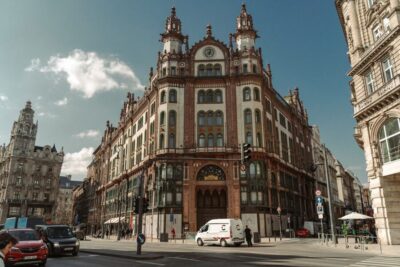
Browse the lists this tour appears in