
REVIEW · ART NOUVEAU TOURS
Budapest Art Nouveau Walking Tour
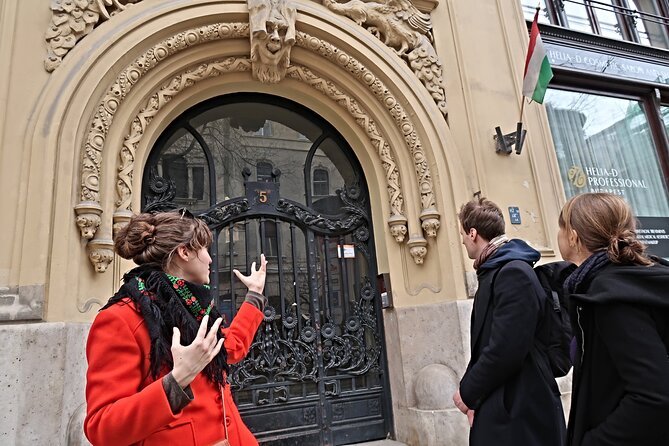
Budapest’s fanciest buildings hide in plain sight. This three-hour walk shows you the city’s Hungarian Art Nouveau, a style filled with porcelain, flowers, curving lines, and Asian references. I especially like the chance to see both the Palace of the Royal Post and Gresham Palace, since each reveals a different side of Budapest’s early 20th-century wealth. I also like that an art and architecture historian leads the walk, rather than a guide who simply points at facades and recites dates.
The main consideration is the changing access to certain buildings. Weekend visits may exclude the Hungarian National Bank and the Orthodox Synagogue on Kazinczy Street, while the House of Hungarian Art Nouveau and synagogue can cost extra when open. The route may also change by day and by your selected meeting option.
In This Review
- Key points to know before you book
- Why Hungarian Art Nouveau feels different
- Starting the walk and getting your bearings
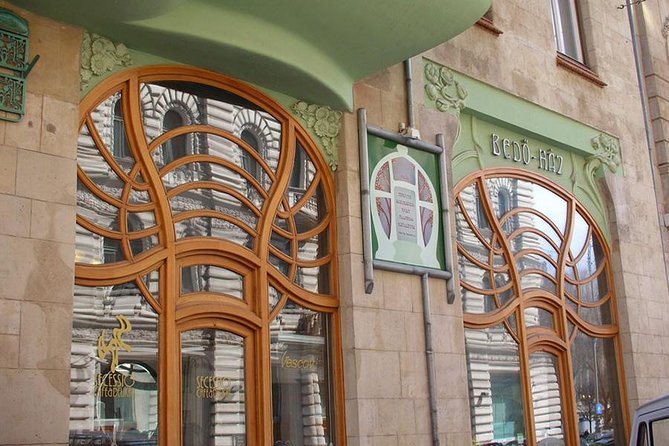
- Bedő House and the first close look at Hungarian style
- The Hungarian State Treasury and Ödön Lechner’s bold vision
- Gresham Palace and Budapest’s grand public face
- Rózsavölgyi Street, Thonet House, and the art of the detail
- Paris Passage and the smaller interiors
- Kazinczy Street Synagogue and the tour’s most unusual ending
- What happens when sites are closed
- Is $123 a fair price for three hours?
- Who should book this Budapest walk?
- Should you book it?
- FAQ
- How long does the Budapest Art Nouveau Walking Tour last?
- What language is the tour offered in?
- Is the tour private or shared?
- Where can I meet the guide?
- Are public transport tickets included?
- Can I enter the Hungarian National Bank and the Orthodox Synagogue?
- Are there extra admission fees?
Key points to know before you book
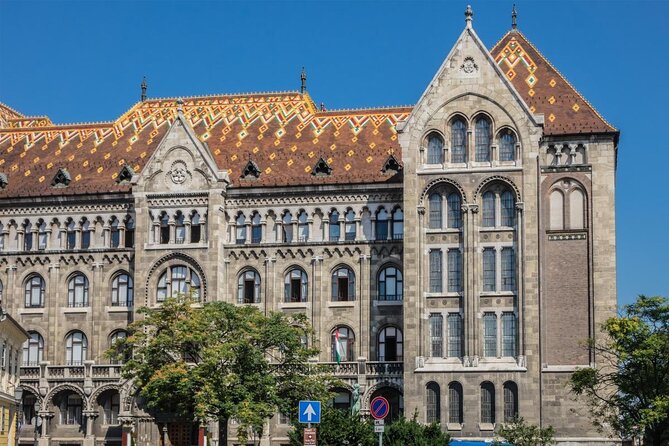
- Ödön Lechner’s Palace of the Royal Post: See the flamboyant work of Hungary’s leading Art Nouveau architect, often called the Hungarian Gaudi.
- Gresham Palace interiors: Enter the grand hall when access is available and study the details beyond the famous riverside facade.
- Zsolnay porcelain everywhere: Learn how colorful ceramic tiles from Pécs gave Hungarian Art Nouveau its distinctive finish.
- Asian design references: Look for motifs linked to ideas about Hungary’s eastern origins and to the wider European interest in Orientalism.
- A small-scale, specialist walk: The experience lasts three hours and is offered privately or in a small group with an English-speaking historian.
- The route can change: Building access depends on the day, especially at the Hungarian National Bank and Kazinczy Street Synagogue.
Why Hungarian Art Nouveau feels different
Art Nouveau swept through Europe around the turn of the 20th century. In Budapest, architects gave the style a local accent. Instead of copying French curves or Belgian ironwork, Hungarian designers used folk references, plant forms, glazed ceramics, and shapes linked to the country’s imagined Asian past.
Ödön Lechner led this movement. His buildings can look playful at first glance, even a little eccentric. Look closer and the design is carefully controlled. Roofs ripple with color, ceramic ornaments frame windows, and facades use repeated patterns rather than plain blocks of stone.
I find this style easier to understand when you see several examples together. One building may use Zsolnay tiles for color, another may place them around doors or rooflines, and a third may bring the same ideas indoors through furniture and decorative panels. The guide’s role matters here, because the details are easy to miss when you walk alone.
This is not a general city walk with one Art Nouveau stop. The subject stays focused on architecture, applied arts, and the social confidence of Budapest’s Belle Époque. If you enjoy looking at buildings but want help understanding why they look the way they do, the three hours have a clear purpose.
More Art Nouveau walks:
- Private Art Nouveau Tour Budapest
★ 5.0 · 21 reviews - Art Nouveau Tour in Budapest: 3-Hour Private Tour
★ 4.6 · 21 reviews - Art Nouveau Treasures of Budapest – Exclusive Private Tour
★ 5.0 · 18 reviews
Starting the walk and getting your bearings
Your starting point depends on the option you choose. If you prefer a central meeting point instead of hotel or holiday-flat pickup, the group can meet at Madal Café at Alkotmány u. 4 in Budapest.
That flexibility is useful, but check the exact start details before you leave. This is a walking tour, yet public transport may be needed between parts of the route. Tram and metro tickets are not included, so keep those separate from the $123 tour price.
The tour is available as a private experience or for a small group. That is a good format for this subject. Architecture often calls for pauses, questions, and a few minutes spent examining one doorway or tile pattern. A large group would make those moments harder.
The guide speaks English and has a background in art and architecture. One confirmed booking praised Anna for being friendly and highly educated in the art and history of Budapest. A separate German-language booking praised the guide’s strong German skills, but the advertised language for this experience is English.
Bedő House and the first close look at Hungarian style
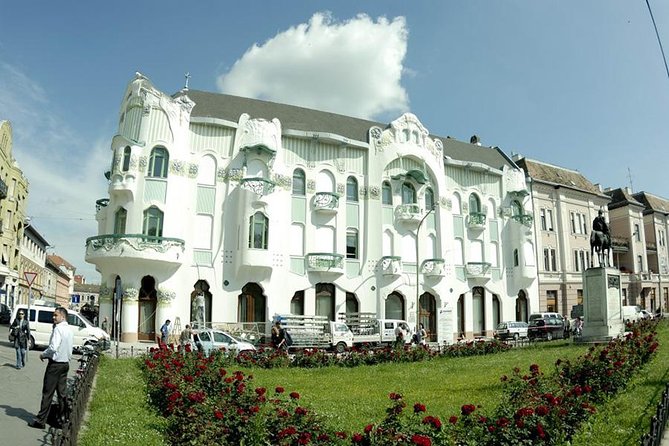
Bedő House is one of the listed stops and gives you an early chance to see how Budapest’s designers combined architecture with decoration. The building is associated with the period’s decorative approach, where the facade is not treated as a plain shell around rooms.
Here, pay attention to the relationship between the surface and the structure. Art Nouveau designers wanted buildings to feel designed from top to bottom. Windows, balconies, ornaments, and color all contribute to the same idea.
The stop is guided, so you are not left to guess which details matter. Ask about the use of plant shapes, ceramics, and references outside western Europe. The tour’s larger theme is not simply pretty architecture. It is the way Hungarian architects built a national style while taking part in an international design movement.
The House of Hungarian Art Nouveau may also be included, depending on the day and route. It is described as a small Art Nouveau museum and coffee house, with an admission charge of 1,000 HUF, about $3.50, when open. That is an appealing addition if you want to see objects and interiors rather than only exterior architecture.
The Hungarian State Treasury and Ödön Lechner’s bold vision
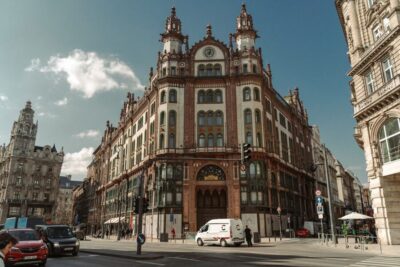
The Hungarian State Treasury, also described as the Palace of the Royal Post, is one of the major reasons to choose this tour. Ödön Lechner designed it, and its flamboyant appearance shows why he became the leading figure of Hungarian Secession.
The building is known for its colorful ceramic decoration and unusual roof treatment. Zsolnay porcelain from Pécs is central to the Hungarian style, and this is where the material becomes hard to ignore. The tiles are not a minor finishing touch. They help give the building its color, pattern, and personality.
Your guide can also explain why Asian motifs appear in Hungarian Art Nouveau. Hungarian designers used eastern references partly because of ideas about the supposed origins of the Hungarian nation. At the same time, this interest belonged to a broader European taste for Asian-inspired forms.
The State Treasury is valuable because it ties several themes together at once: national identity, modern design, industrial ceramics, and the confidence of a growing capital. It also shows how far architects were willing to move from conventional historic styles.
The interior access described for the major buildings is generally limited to entrance halls rather than a full private-room visit. Still, that peek is worthwhile. Art Nouveau often continues indoors through tilework, metal details, patterns, and carefully planned public spaces.
More walking tours in Budapest:
- Budapest: Buda Castle Walk with Saint Stephen’s Hall
★ 4.5 · 3,012 reviews - Big Bus Budapest Hop-On Hop-Off Bus and Walking Tour
★ 3.5 · 2,206 reviews - Budapest: Buda Castle District Walking Tour
★ 4.6 · 2,108 reviews - Budapest City Landmarks Walking Tour in 2 Hours
★ 5.0 · 2,048 reviews
Gresham Palace and Budapest’s grand public face
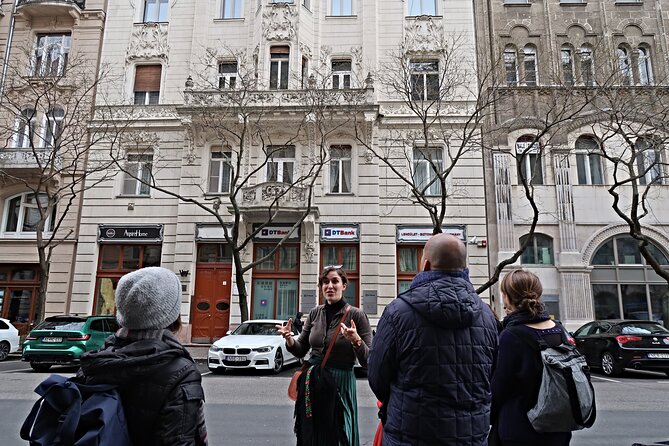
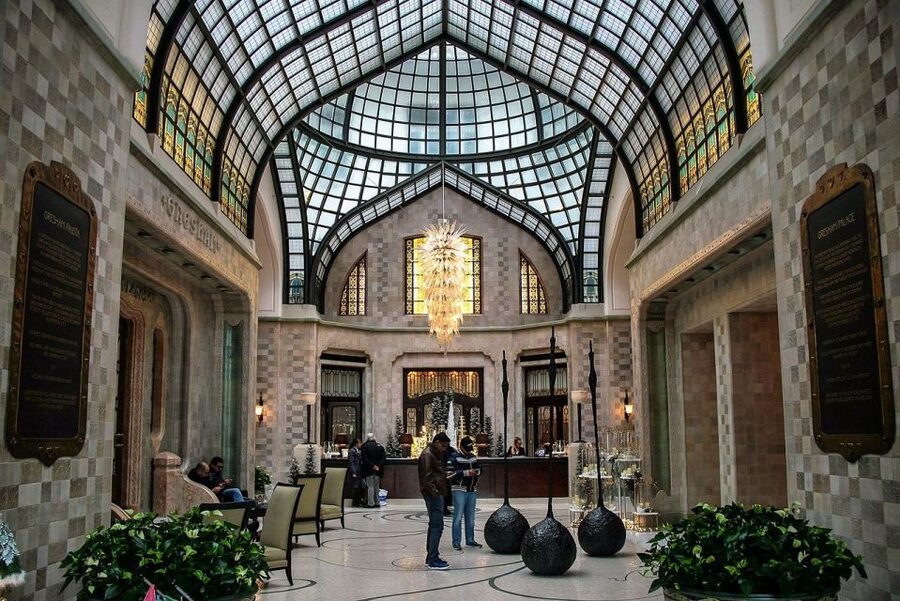
Gresham Palace offers a useful contrast to Lechner’s more distinctly Hungarian approach. Its facade is grand and elegant, and its entrance hall reveals how Art Nouveau could work in a more polished, cosmopolitan setting.
You will have a chance to admire both the exterior and interior design when access permits. Look at the way the decorative details support the building’s sense of luxury. This was architecture for a prosperous city that wanted to look modern, cultured, and connected to Europe.
Gresham Palace is also a good place to ask the guide about function. A grand building may look like a palace, but its design tells you about the businesses, residents, and public ambitions associated with it. The tour uses architecture to explain Budapest’s social mood around the beginning of the 20th century.
I like the inclusion of Gresham because it prevents the walk from becoming a single-architect study. You see how different designers used the same broad movement in different ways. One building may celebrate ceramic color and national symbols, while another puts greater weight on refined ornament and urban prestige.
Access is still the practical question. The tour description says both the Palace of the Royal Post and Gresham Palace allow visitors into the entrance hall, but building conditions can change. Consider the interiors a valuable bonus, not the sole reason to book.
Rózsavölgyi Street, Thonet House, and the art of the detail
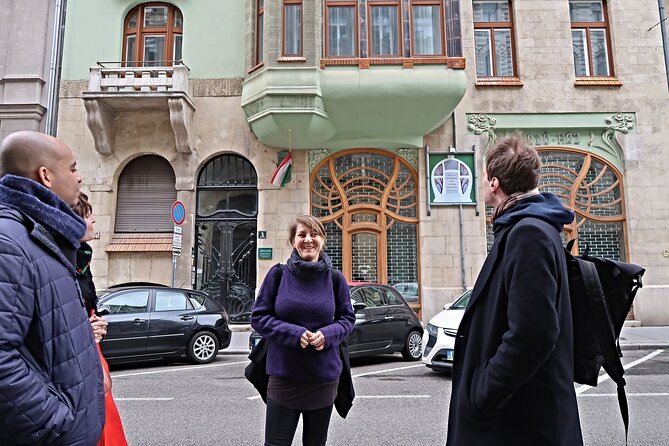
Rózsavölgyi Street is another listed stop, and the route also draws attention to Thonet House. This part of the walk helps you see Art Nouveau at a closer scale.
Thonet House is especially useful for understanding Zsolnay porcelain on facades. The material could be used to catch light, add color, and protect decorative surfaces. Its presence also links architecture with Hungarian manufacturing, since the Zsolnay factory was based in Pécs in southern Hungary.
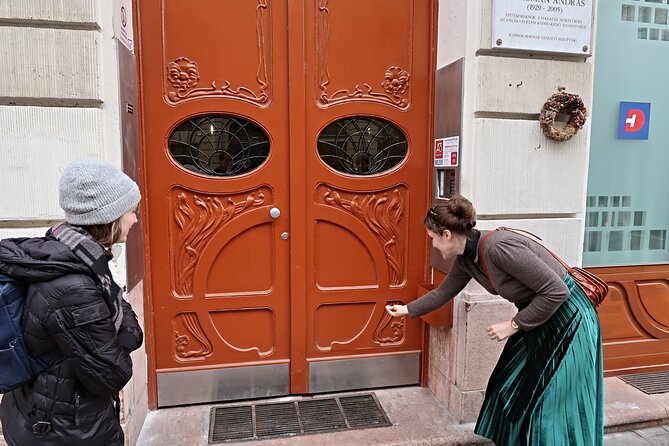
You may find the most rewarding details around entrances, windows, and upper sections of buildings. These are the places where a rushed city walk usually fails. With an expert guide, you can stop long enough to examine repeated motifs and see how the materials were assembled.
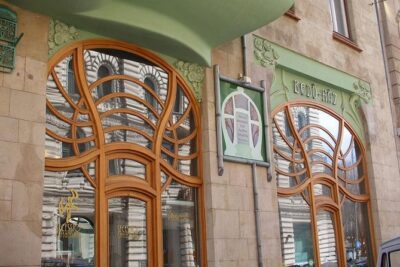
The route may include a flower shop with its original interior, a department store, bank offices, and other public or commercial buildings. These stops broaden the story. Art Nouveau was not limited to palaces and monumental landmarks. It could shape the places where people shopped, worked, handled money, or bought flowers.
That commercial side is important. It shows the style as part of daily urban life, not just an elite architectural experiment. The cost of the tour makes more sense if you value this kind of interpretation, where an ordinary storefront or office can help explain the period.
Paris Passage and the smaller interiors
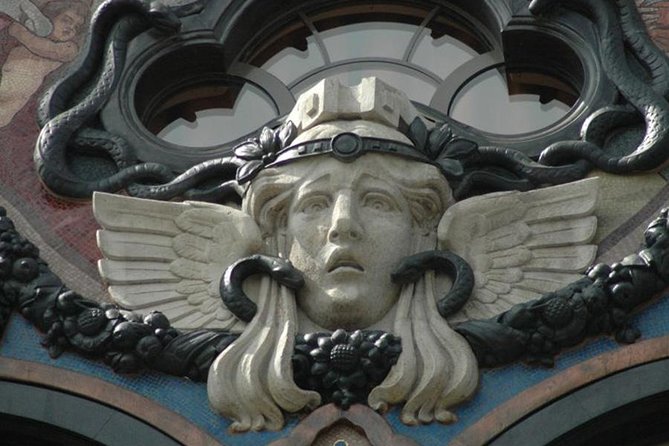
Paris Passage is included among the listed stops. Passages and commercial interiors can reveal a different mood from a large facade. They bring the decorative style down to the level of movement, shopping, and everyday public life.
The tour may also include a small Art Nouveau museum and coffee house. That setting gives you a chance to see design elements in a more intimate environment. Instead of looking up at a roofline, you can focus on interior patterns, furnishings, ceramics, and the way decorative arts shaped a room.
A coffee house stop can also make the three-hour walk feel less like an architecture exam. Still, the main value is visual and historical rather than culinary. No meal or drink is listed as included, so budget separately if you decide to buy something.
If you are interested in applied arts, this part of the tour may be especially useful. The movement reached beyond buildings into objects and interiors. Ceramics from Zsolnay, decorative motifs, and original shop interiors help you see that Art Nouveau was a complete design language.
Kazinczy Street Synagogue and the tour’s most unusual ending
The Orthodox Synagogue on Kazinczy Street is described as the final stop. Its Art Nouveau interior gives the tour a strong ending because it shows how the style could be adapted to a religious building.
The synagogue is not open on Saturdays. When it is open, admission costs 2,000 HUF per person, about $7. The entrance fee is not included, so ask at booking time whether it will be part of your route.
The interior is noted for its exquisite Art Nouveau design. That makes this more than a final landmark photo. You can consider how decorative forms, color, and pattern operate in a sacred setting, rather than in a bank, palace, shop, or office.
If the synagogue is closed, the tour can be adapted to your interests or extended to another Art Nouveau site. Possible alternatives include the Gellért Bath Hotel, the Museum of Applied Arts, and the Geology Museum. This flexibility helps protect the value of the experience when access does not go as planned.
What happens when sites are closed
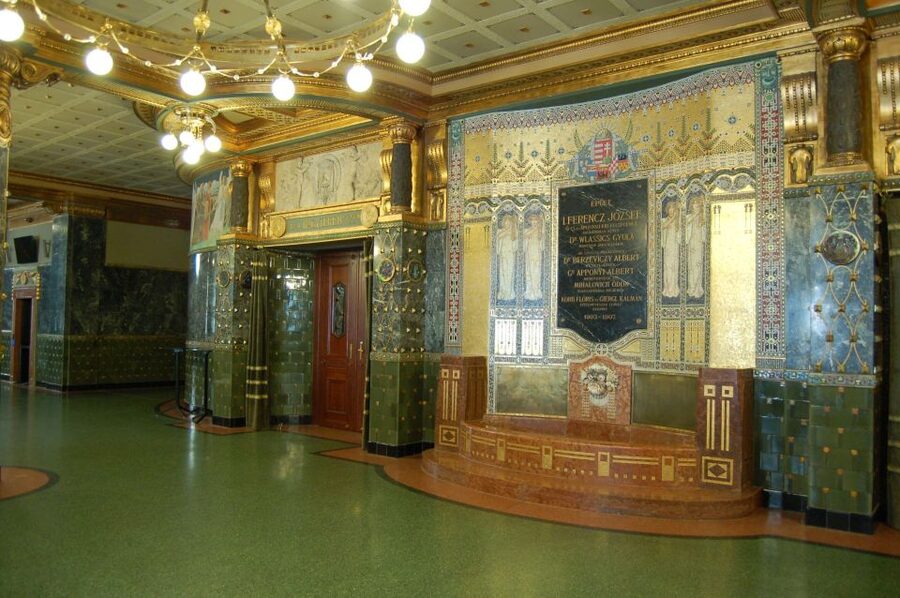
Day of the week matters. On weekends, you cannot enter the Hungarian National Bank, which contains fine examples of Zsolnay porcelain. The Orthodox Synagogue is closed on Saturdays.
This does not mean the tour becomes pointless. The route includes enough architectural subjects to support a full three hours, and the guide can adjust the focus. Still, I would contact the provider before booking if the National Bank or synagogue is a priority for you.
The House of Hungarian Art Nouveau and the synagogue may involve additional admission charges. At roughly $3.50 and $7 respectively, these are modest compared with the tour price, but you should know about them before setting your budget.
The best attitude is to treat the route as a specialist introduction rather than a fixed checklist. Access to working buildings and religious sites can change. The guide’s ability to replace or extend stops is more useful than a promise that every doorway will be open.
Is $123 a fair price for three hours?
At $123 per person, this is not a bargain-priced sightseeing walk. The value depends on how much you want expert interpretation and a smaller group format.
A standard city walk can show you a handsome facade. This experience aims to explain why Hungarian Art Nouveau looks different, how Zsolnay porcelain shaped the buildings, and why Asian motifs appear so often. If you would otherwise spend hours trying to identify Lechner buildings and understand the Secession movement on your own, the specialist guide can justify the price.
The value is stronger for a private group that can shape the discussion around architecture, art, Jewish Budapest, ceramics, or urban history. It is also a good choice if you prefer depth over covering a long list of major attractions.
The value is weaker if you want broad sightseeing, lots of interior access, or a low-cost introduction to Budapest. Some sites may be viewed only from outside, public transport costs extra, and admission to selected buildings is not included.
The three-hour length is sensible. It gives you enough time to compare buildings without turning the walk into a full-day commitment. Wear comfortable shoes, and leave room in your attention for small details. This is a tour where looking carefully matters more than marching quickly.
Who should book this Budapest walk?
I would recommend it to anyone with a serious interest in architecture, decorative arts, design, or Budapest’s early modern identity. It also suits repeat visitors who have already seen the Parliament, Buda Castle, and the main river views and want a more focused subject.
It is a particularly good fit for people who enjoy asking questions. The private or small-group format lets you spend more time on the materials and symbols that interest you.
Families with older children may also find the colorful facades and unusual rooflines appealing, though the tour’s art and architecture focus may be too specialized for young children. People who dislike walking or detailed visual discussion should choose a broader sightseeing option instead.
The experience is offered in English, with an expert art and architecture historian as guide. One confirmed booking praised Anna’s friendly manner and command of Budapest’s art and history, which is exactly the sort of guide you want for a subject built around details rather than quick photo stops.
Should you book it?
Book this tour if you want Budapest to make more sense through its buildings. The Palace of the Royal Post, Gresham Palace, Thonet House, commercial interiors, Zsolnay ceramics, and Kazinczy Street Synagogue create a clear picture of a city testing new ideas at the start of the 20th century.
Before booking, check the day’s access conditions. Saturday is a poor choice if the synagogue matters to you, and weekends exclude the Hungarian National Bank. If you can accept route changes and small extra admission fees, the combination of specialist guidance and unusual buildings makes $123 reasonable for the right audience.
For a casual first-time city overview, I would choose another tour. For a focused look at Budapest’s most inventive architecture, this is a smart and rewarding use of three hours.
FAQ
How long does the Budapest Art Nouveau Walking Tour last?
The tour lasts three hours.
What language is the tour offered in?
The live tour guide speaks English.
Is the tour private or shared?
Private and small-group options are available.
Where can I meet the guide?
The starting point depends on the selected option. If you choose a central meeting point instead of hotel or holiday-flat pickup, the meeting place is Madal Café at Budapest, Alkotmány u. 4.
Are public transport tickets included?
No. Tram and metro tickets are not included in the tour price.
Can I enter the Hungarian National Bank and the Orthodox Synagogue?
Entry depends on the day. The Hungarian National Bank cannot be entered on weekends, and the Orthodox Synagogue on Kazinczy Street is closed on Saturdays.
Are there extra admission fees?
The House of Hungarian Art Nouveau costs 1,000 HUF per person when open, and the Orthodox Synagogue costs 2,000 HUF per person when open. These fees are not included.
Just added in Budapest
- Budapest: Private Walking Tour with a Local Guide★ 3.6 · 6 reviews
- Budapest: Danube River Views Bike Ride★ 4.8 · 23 reviews
- Budapest: City Bike Tour with Coffee Stop★ 5.0 · 37 reviews
- From Budapest: Guided Tour of Eger with Wine Tasting★ 4.5 · 6 reviews
- Walk to recent and aged spiritual sanctuaries near Budapest★ 5.0 · 5 reviews
- Walking consultancy with alternative psychologist and author★ 5.0 · 2 reviews
- Budapest: Guided Tour of the Parliament Building in Spanish★ 4.6 · 1,240 reviews
- Budapest: 3-Hour Trabant Sightseeing Tour★ 4.7 · 28 reviews
Art Nouveau Tours, compared.
Art Nouveau Tour in Budapest: 3-Hour Private Tour
Read our review →
Art Nouveau Treasures of Budapest – Exclusive Private Tour
Read our review →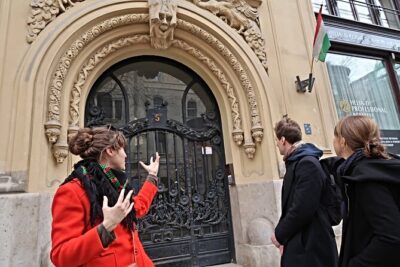
Browse the lists this tour appears in