
REVIEW · BUDA CASTLE AND CASTLE DISTRICT TOURS
Buda Castle Walking Tour: A Kingdom of Many Nations
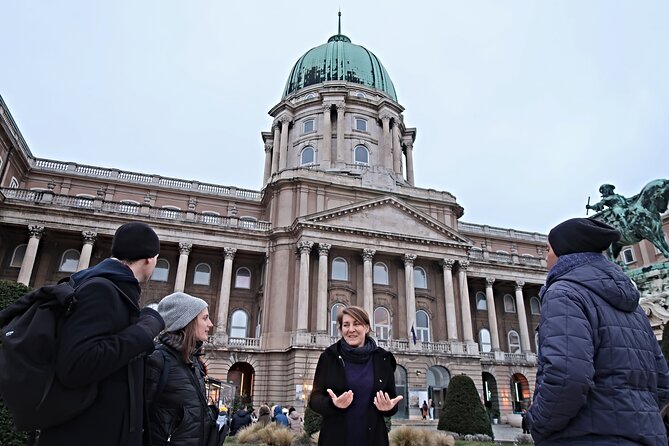
Budapest’s best history lesson happens on foot. This three-hour Buda Castle District tour brings you through the old quarter’s cobbled lanes, royal palace, Matthias Church, and Fisherman’s Bastion with a group of no more than six people per booking. I like the small-group format, which gives the guide room to answer questions and adjust the pace. I also like the mix of major sights and personal stories, including one guide’s family connection to the district.
The main drawback is the extra cost. Admission to Matthias Church and Fisherman’s Bastion is not included, and you do not tour the inside of the royal palace. The tour is really about the Castle District as a historic neighborhood, not a palace interior visit.
In This Review
- Key points to know before you book
- Why Buda Castle is more than a palace visit
- A genuinely small walking group
- Starting at the royal palace on Castle Hill
- Sándor Palace and Hungary’s modern state
- Matthias Church, the visual centerpiece
- Fisherman’s Bastion and the big Budapest view
- Narrow streets, house names, and overlooked details
- Ending at Vienna Gate
- What the $126.15 price really buys you
- Who will get the most from this walk
- Timing, meeting point, and cancellation
- Should you book the Buda Castle walking tour?
- FAQ
- How long is the Buda Castle walking tour?
- What language is the tour offered in?
- How many people can join the tour?
- Where does the tour start?
- Where does the tour end?
- Is hotel pickup included?
- Are admission tickets included?
- Does the tour go inside the royal palace?
- Can I cancel for a full refund?
Key points to know before you book

- A small group of up to six per booking makes it easier to ask questions and follow the guide through narrow streets.
- The tour covers nearly 1,000 years of Hungarian history, from King Béla IV and the Mongol invasion to Ottoman and Habsburg rule.
- Matthias Church is an optional paid highlight, with a richly decorated interior and a striking tiled roof.
- Fisherman’s Bastion provides broad Danube views, including Pest, Margaret Island, and Gellért Hill.
- The three-hour walk ends at Vienna Gate, not back at the starting point, so plan your next stop accordingly.
- Guides such as Peter, Kata, Gregory, Veronica, and Marianna are praised for turning dates and buildings into memorable stories.
Why Buda Castle is more than a palace visit
The name Buda Castle can mislead you. You are not spending three hours touring royal rooms inside a preserved medieval castle. Instead, you walk through the Castle District, the oldest part of Budapest, where the palace occupies the southern end of Castle Hill and the old town spreads north toward Vienna Gate.
This distinction matters. The district was badly damaged during World War II and much of what you see has been rebuilt or restored. The result is a curious mix of medieval street lines, Baroque facades, Gothic references, and postwar reconstruction. It is less like a single museum and more like a living historical quarter.
I find that this kind of walk makes sense early in a Budapest visit. The guide gives you the political and religious background that helps explain the rest of the city. You begin to understand why Buda developed on the hill, why Pest grew across the river, and why so many foreign powers left their mark here.
More of the Castle District:
- Budapest: Buda Castle Cave Tour
★ 4.7 · 5,677 reviews - Budapest: Buda Castle District Vampires and Myths Night Tour
★ 4.6 · 3,830 reviews - Budapest: Buda Castle Walk with Saint Stephen’s Hall
★ 4.5 · 3,012 reviews
A genuinely small walking group
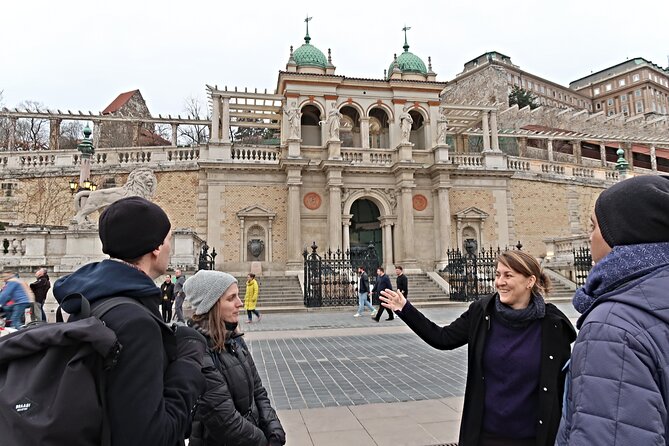
The tour is advertised with a maximum of six people per booking, while the total activity limit is eight people. In practice, the format can feel almost private. One booking had only two people, while another had four, allowing the guide to adjust the walk to the group’s interests.
That is a real advantage in the Castle District. Narrow lanes and busy viewpoints are not ideal places for a large crowd gathered around a flag. With a small group, you can stop beside a facade, ask about a street name, or pause when a guide points out a detail that would be easy to miss.
The guides receive the strongest praise. Peter is described as able to adapt the tour to the group’s interests and explain nearly every corner of the district. Gregory is praised for connecting the castle’s past with broader Hungarian history and modern life. Kata is repeatedly singled out for her energy, clear English, patience, and ability to relate historical events to the present day.
Marianna adds a different strength. Her own memories of life under Soviet rule give the modern part of the story a human touch. Another guide, who grew up in the Buda district, showed the location of her grandmother’s house and explained the story connected with it. Those details are exactly why a local guide can be worth more than a printed guidebook.
Starting at the royal palace on Castle Hill
The walk begins at Országház u. 31 in the Castle District. Check the starting address carefully because the tour does not include hotel pickup. You will need to make your own way to the meeting point using Budapest’s public transport system or another method.
The first major subject is the palace at the southern tip of Castle Hill. Its history is a sequence of destruction and rebuilding. King Béla IV established a fortress here around 1250 after Mongol forces devastated Hungary. Later, King Matthias transformed the royal court into one of Europe’s leading Renaissance centers in the late 15th century.
Then the Ottoman Turks ruled Hungary for more than 150 years. Habsburg emperors followed. Fires, wars, political changes, and rebuilding altered the palace again and again. Its current appearance is eclectic, with much of the form shaped by reconstruction after World War II.
The guide’s job here is not simply to point at the building and list dates. You will hear how its function changed from fortress to royal residence, imperial symbol, and later public institution. This is where the tour’s title, A Kingdom of Many Nations, earns its place. Buda was not shaped by one uninterrupted Hungarian story. It reflects Mongol destruction, Renaissance ambition, Ottoman rule, Habsburg power, war, and modern reconstruction.
The palace itself is viewed from the outside during this walk. If you want the museums or interior rooms, you will need to arrange those separately.
Sándor Palace and Hungary’s modern state

A short stop at Sándor Palace adds a useful modern note. The Neoclassical building was commissioned by Count Vincent Sándor, an aristocrat and philosopher of the Austro-Hungarian Empire, and dates to 1806.
Since 2003, it has served as the official residence of Hungary’s president and the seat of the Office of the President. The stop lasts only about five minutes, but it connects the old royal quarter with the country’s current political life.
Do not expect a palace tour inside. The value is in understanding how the Castle District continues to function as a seat of national power, not just as a historic backdrop.
More walking tours in Budapest:
- Big Bus Budapest Hop-On Hop-Off Bus and Walking Tour
★ 3.5 · 2,206 reviews - Budapest: Buda Castle District Walking Tour
★ 4.6 · 2,108 reviews - Budapest City Landmarks Walking Tour in 2 Hours
★ 5.0 · 2,048 reviews - 3-Hour Orientation Walking Tour of Buda and Pest
★ 4.8 · 1,834 reviews
Matthias Church, the visual centerpiece

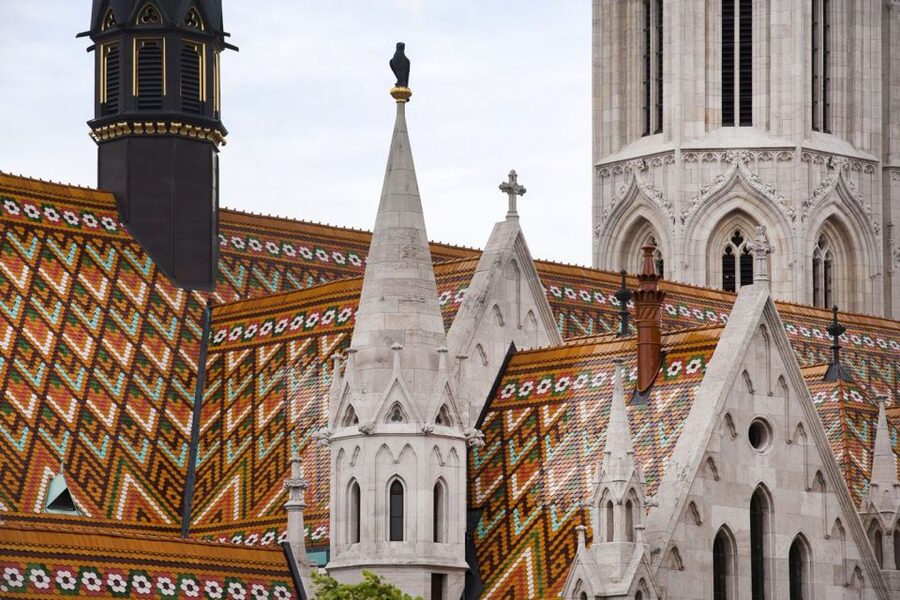
Matthias Church is one of the tour’s major highlights, and it is easy to see why. Its patterned roof and tall steeple give it a fairy-tale appearance, while the interior is filled with color and elaborate decoration.
The building you see today is largely a late 19th-century Neo-Gothic reconstruction. That does not make it unimportant or artificial. It is a carefully made interpretation of earlier styles, and the guide can help you separate medieval history from the later rebuilding that created the present church.
The site has a strong royal connection. Matthias Church served as the coronation church for Hungarian kings, making it one of the most important religious and political buildings in the country. The name refers to King Matthias, one of Hungary’s best-known rulers, whose reign is linked with the Renaissance court on Castle Hill.
Allow extra money for admission. The church ticket is not included in the tour price. One useful choice is to ask the guide to accompany you through the church, an option that has been especially praised because the interior makes more sense with context. If you prefer to keep costs down, you can remain outside, but you will miss one of the district’s most rewarding interiors.
The church is also the busiest part of the route. If you want quieter photos or more room to listen, a morning departure may suit you better when available. The exact departure time depends on the day.
Fisherman’s Bastion and the big Budapest view

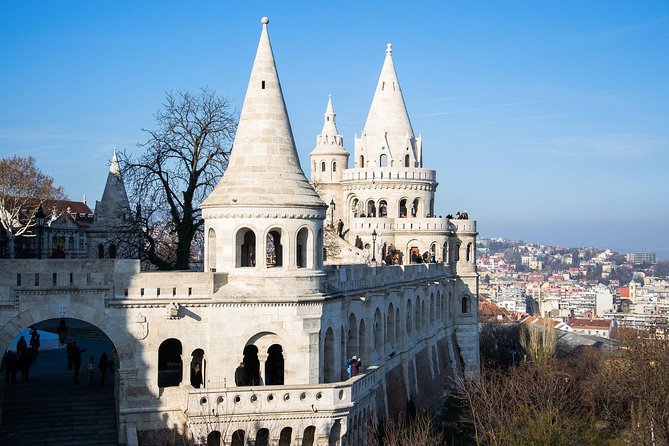
Fisherman’s Bastion is not a medieval defensive fortress in the usual sense. It is an architectural fantasy in Neo-Gothic and Neo-Romanesque styles, built between 1895 and 1902.
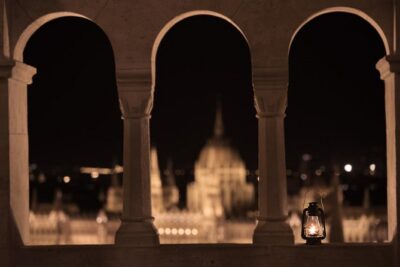
Its seven towers represent the seven Magyar tribes traditionally associated with the settlement of the Carpathian Basin at the end of the ninth century. The design is theatrical, with open terraces and pale stone arcades that frame the city below.
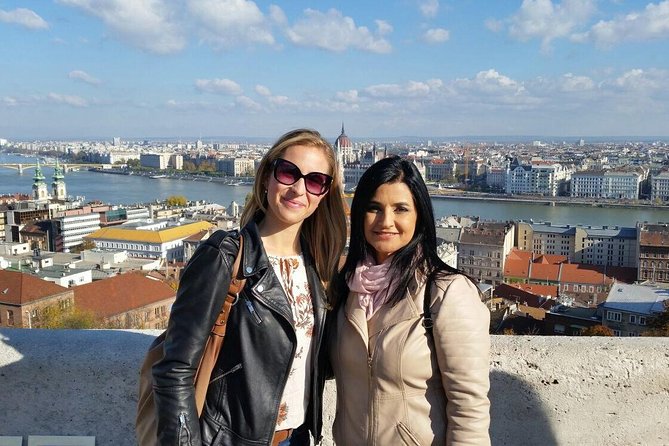
This is the place to look across the Danube toward Pest. You can see the river, Margaret Island, and Gellért Hill, along with the broad urban sweep of Budapest. It is one of those stops where the guide’s explanation helps you read the view. You are not only taking a picture. You are seeing how the two halves of the capital relate to one another.
Admission to parts of Fisherman’s Bastion is also not included. The details of the paid areas are not specified here, so budget for a separate ticket if your route requires it. The guide can explain what is accessible during your visit.
The terraces can be busy, especially around the church. Still, the viewpoint is worth the stop, and the walk gives you more than a quick photo break. You learn why the towers were designed, when they were built, and how the site fits into Hungary’s effort to present its national past at the turn of the 20th century.
Narrow streets, house names, and overlooked details
The Castle District becomes more interesting when you leave the famous sights. Its narrow, cobbled lanes and old facades reward a slower pace. A good guide points out building names, changes in architectural style, and small details that you would likely pass without noticing.
One example is the Red Hedgehog building, a memorable house name that gives the old quarter some personality. These details keep the walk from becoming a parade of grand monuments. They show you how people lived in the district, not only where kings were crowned or presidents work.
This is also where the tour can become personal. Guides have shared family stories tied to particular streets and homes. You may learn about the district not just as a collection of famous dates, but as a place where ordinary families lived through war, occupation, political change, and rebuilding.
The guide quality matters greatly here. A dull presentation could make reconstructed streets feel repetitive. The right guide turns the walk into a connected story. The consistently strong feedback for Kata, Peter, Gregory, Veronica, Marianna, and others suggests that Insight Cities has built a strong guiding team, though you cannot choose a specific guide unless the operator confirms one for your date.
Ending at Vienna Gate
The tour finishes at Vienna Gate, on the northern side of the district. From here, you can look toward Óbuda, or Old Buda, where the Romans founded the city known as Aquincum.
This ending gives the route a clear shape. You begin near the palace, move through the royal and religious center, take in the Danube view, and then walk north toward the older Roman past. It also means you should not assume you will finish near the original meeting point.
The end location can be useful for continuing your day in the Castle District. It can also be slightly inconvenient if you have left belongings or planned a restaurant near the start. Since hotel transportation is not provided, check your onward route before the tour begins.
What the $126.15 price really buys you
At $126.15 per person, this is not a budget stroll. The price covers a three-hour guided walk and a professional guide, but not food, drinks, hotel transportation, or admissions to Buda Castle, Matthias Church, and Fisherman’s Bastion.
The value depends on what you want from Budapest. If you only need directions to the main sights, the price is hard to justify. You can walk around the district on your own and see many exteriors without paying a guide.
I see stronger value if you want history explained in a logical order and prefer conversation over a large headset group. The small group means your questions shape the experience. It also lets the guide slow down for family history, Hungarian politics, architecture, or the Ottoman period if one subject catches your interest.
Factor the extra admission fees into your budget. The tour is best viewed as a guided introduction to the district, with church and viewpoint tickets added when you want the full experience. Group discounts may be available, which could improve the price for more than one person booking together.
Who will get the most from this walk
I would choose this tour for a first visit to Budapest if you want a strong foundation in Hungarian history. It also suits anyone with Hungarian family roots, since the guide can help connect the Castle District to the larger story of the country.
History fans will appreciate the range of periods covered. Architecture fans will enjoy the mix of Gothic, Baroque, Neo-Gothic, Neo-Romanesque, Neoclassical, and postwar reconstruction. Photographers will want the Fisherman’s Bastion views, though the church area may be crowded.
This is less suitable if you have limited mobility or dislike walking on cobbled streets. The experience is a full three-hour walk, and the supplied information does not describe special accessibility arrangements. Most people can participate, but you should ask the operator about your needs before booking.
It is also not the right choice if your priority is a long visit inside the royal palace. The palace is discussed from outside, while Matthias Church is the main paid interior visit.
Timing, meeting point, and cancellation
The tour runs for about three hours, with a morning or afternoon departure depending on the date. Morning can be a smart choice if you want cooler conditions and a calmer start, though the exact time is set by the operator.
You receive confirmation when booking, and the tour is available in English with a mobile ticket. Public transportation is nearby, but hotel pickup and drop-off are not included.
Free cancellation is available up to 24 hours before the local start time. Canceling or changing the booking less than 24 hours before the start does not qualify for a refund.
Should you book the Buda Castle walking tour?
Book it if you want the Castle District explained by a strong local guide rather than simply photographed. The small group, the three-hour route, and the guide’s ability to adjust the story are the main reasons to pay for it.
I would be especially inclined to book if you can use the church admission and have room in your budget for the extra tickets. If you only want exterior views, the total cost may feel high.
The best reason to choose this experience is the human layer. A guide such as Kata, Peter, Gregory, Veronica, or Marianna can connect royal history, occupation, family memory, architecture, and modern Hungary in one walk. Just arrive ready for hills and cobbles, remember that the palace interior is not part of the route, and plan your next stop from Vienna Gate.
FAQ
How long is the Buda Castle walking tour?
The guided walk lasts approximately three hours.
What language is the tour offered in?
The tour is offered in English.
How many people can join the tour?
There can be a maximum of six people per booking, with a maximum of eight travelers for the activity overall.
Where does the tour start?
The meeting point is Budapest, Országház u. 31, 1014 Hungary.
Where does the tour end?
The tour ends at Vienna Gate in the Buda Castle District.
Is hotel pickup included?
No. Hotel pickup and drop-off are not included.
Are admission tickets included?
No. Tickets for Buda Castle, Matthias Church, and Fisherman’s Bastion are not included in the tour price.
Does the tour go inside the royal palace?
The palace is discussed and viewed during the walk, but the tour does not include an interior visit to the royal palace.
Can I cancel for a full refund?
Yes. You can cancel at least 24 hours before the experience start time for a full refund. Changes or cancellations made less than 24 hours before the start are not accepted for a refund.
Just added in Budapest
- Budapest: Private Walking Tour with a Local Guide★ 3.6 · 6 reviews
- Budapest: Danube River Views Bike Ride★ 4.8 · 23 reviews
- Budapest: City Bike Tour with Coffee Stop★ 5.0 · 37 reviews
- Walking consultancy with alternative psychologist and author★ 5.0 · 2 reviews
- From Budapest: Guided Tour of Eger with Wine Tasting★ 4.5 · 6 reviews
- Walk to recent and aged spiritual sanctuaries near Budapest★ 5.0 · 5 reviews
- Budapest: Guided Tour of the Parliament Building in Spanish★ 4.6 · 1,240 reviews
- Budapest: 3-Hour Trabant Sightseeing Tour★ 4.7 · 28 reviews
Buda Castle and Castle District Tours, compared.
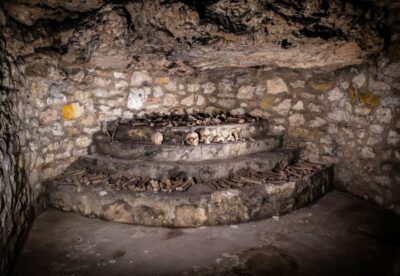

Buda Castle District Vampires and Myths Night Tour
Read our review →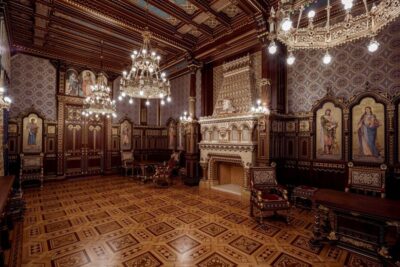
Buda Castle District Dark History, Legends and Vampire Night Tour
Read our review →
Buda Castle District Walking Tour with a Historian
Read our review →

Walking tour in the Buda Castle incl. Fisherman’s Bastion
Read our review →Browse the lists this tour appears in