
REVIEW · BUDA CASTLE AND CASTLE DISTRICT TOURS
Buda Castle Walking Tour: A Kingdom of Many Nations
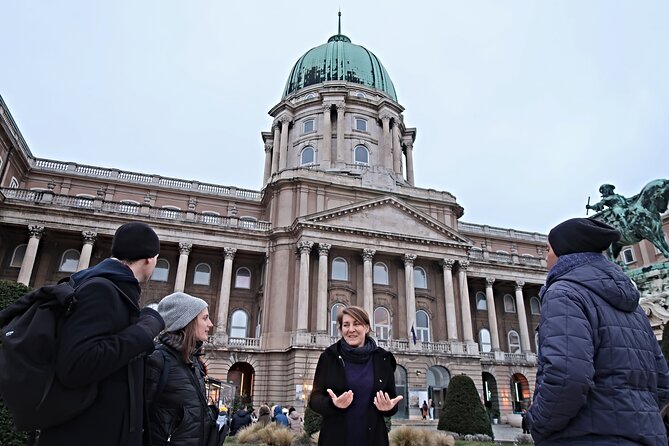
History is written into every stone here. This three-hour Castle Hill walk makes Budapest’s oldest quarter easier to understand, linking royal power, Ottoman rule, wartime destruction, and daily life in one compact route. I like the historian guide and the way the tour goes beyond the palace to include a medieval synagogue, an old pharmacist’s house, and small corners you could easily miss alone. I also like the focus on narrow streets and local stories rather than a quick march from one grand building to another.
The main consideration is the price: $123 per person is a serious spend for a three-hour walk. The value depends on your interest in history and on whether your booking is private or a small group. If you want context, careful explanations, and access to several unusual sites, the cost can make sense. If you mainly want palace views and photographs, you can see much of Castle Hill without paying for a tour.
In This Review
- Key points to know before you book
- Why Castle Hill deserves a guided walk
- Starting near Bálthazár Hotel
- The royal complex and the long rebuilding story
- Matthias Church, from colored roof to decorated interior
- A medieval synagogue and Buda’s mixed past
- The residential quarter and the scars of 1686 and 1945
- The 18th-century pharmacist’s house
- Secret garden, hussars, and stories with a twist
- Ending at Vienna Gate and the view toward Óbuda
- Is $123 a fair price?
- Who should choose this Castle Hill tour?
- Should you book it?
- FAQ
- How long is the Buda Castle Walking Tour?
- What language is the tour conducted in?
- Where does the tour meet?
- What major church does the tour visit?
- Does the tour include the remains of a medieval synagogue?
- Is the tour private or shared?
- Can I cancel the tour for a full refund?
Key points to know before you book

- Castle Hill tells several national stories: Hungarian, Turkish, Habsburg, Jewish, Catholic, Nazi, and Soviet chapters all appear along the route.
- Matthias Church is a major highlight: Its colored roof and decorated interior give the tour a strong visual centerpiece.
- The route includes lesser-known evidence: You see the remains of a medieval synagogue and an 18th-century pharmacist’s house.
- The walking is atmospheric but uneven: Expect narrow, cobblestone streets rather than a smooth city pavement stroll.
- The ending gives you a broad view: Vienna Gate looks toward Óbuda, the Old Buda area founded by the Romans as Aquincum.
- A small group may offer the best balance: You get a guide’s attention without always paying the full cost of a private outing.
Why Castle Hill deserves a guided walk
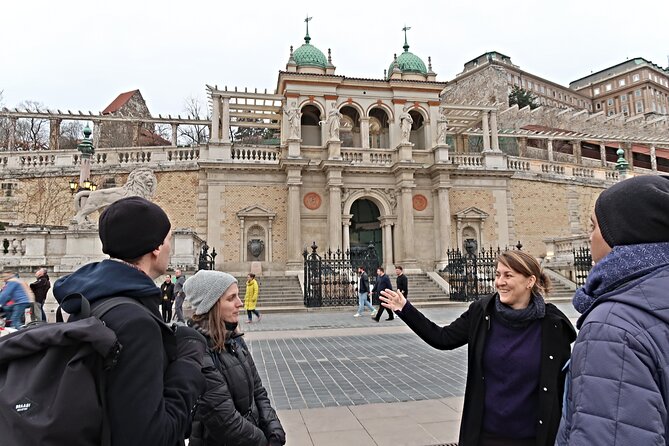
Castle Hill is not one single monument. It is a collection of royal buildings, churches, homes, ruins, government buildings, and lanes shaped by repeated conflict. Without context, you may see attractive façades and a large palace but miss the reason the district feels layered and sometimes oddly rebuilt.
This tour gives that complexity a clear order. You move from the seat of royal power through the residential quarter, then toward the city gate and the view over Old Buda. The story moves across centuries, but the route remains manageable at three hours.
I especially like the theme suggested by the title, a kingdom of many nations. Buda’s past includes Hungarians, Turks, Jews, Habsburg forces, Germans, Russians, and others. The tour does not treat the area as a single heroic chapter. It shows how control of this hill changed, and how each period left something behind.
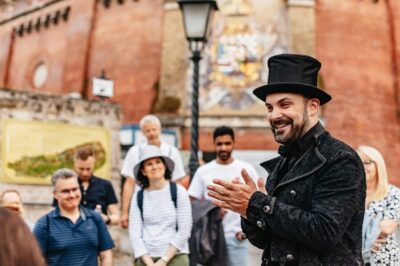
The live guiding is in English, and an historian leads the walk. That matters here because the buildings do not always explain themselves. A roof may look decorative, while a ruined wall may seem insignificant. Good historical framing tells you why each one deserves your attention.
More of the Castle District:
- Budapest: Buda Castle Cave Tour
★ 4.7 · 5,677 reviews - Budapest: Buda Castle District Vampires and Myths Night Tour
★ 4.6 · 3,830 reviews - Budapest: Buda Castle Walk with Saint Stephen’s Hall
★ 4.5 · 3,012 reviews
Starting near Bálthazár Hotel
The meeting point is Bálthazár Hotel at Országház utca 31, about 50 meters from the first bus stop on Castle Hill. That location puts you directly in the historic district rather than at a distant city-center starting point.
You should allow enough time to reach the hill before the scheduled start. The meeting instructions are specific, but Castle Hill has several streets, stops, and grand buildings that can blur together if you are in a hurry.
The tour lasts three hours, so wear shoes you can trust on cobblestones. The description emphasizes walking through narrow streets, and Castle Hill’s character comes from those lanes. This is not a vehicle-based sightseeing trip with occasional photo stops.
Private and small-group options are available. A private tour should suit you if you want to ask many questions or set the pace around your interests. A small group may be the better value if you want expert explanation but do not need a guide entirely to yourself.
The royal complex and the long rebuilding story
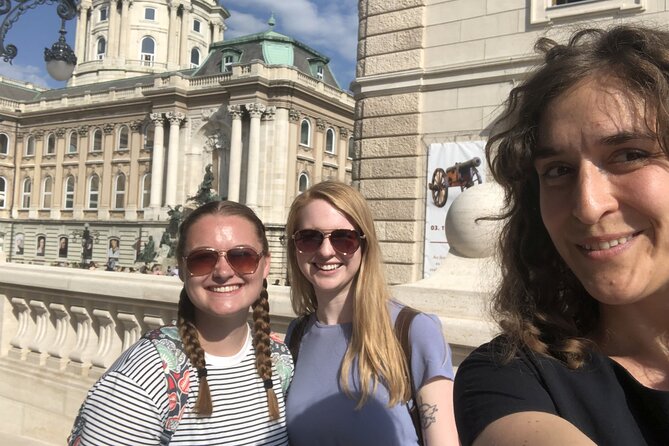
Early in the walk, you see the imposing palace at the southern tip of Castle Hill. It represents royal power, but its present appearance is also a record of destruction and reconstruction.
The palace was rebuilt, expanded, burned, and rebuilt again. Its current form came after World War II, so what you see is not a simple survival from the medieval period. The guide’s explanation helps separate original features from later work and shows how political power shaped the complex.
I find this one of the most useful parts of the tour because the palace can otherwise feel like a grand backdrop. Here, it becomes evidence of Budapest’s repeated attempts to restore a damaged center of power.
You also pass the Presidential Palace and the National Dance Theatre. These places broaden the story beyond royal history. Castle Hill is still tied to national government and public culture, not only to the distant past.
The southern palace area may appeal most to you if you enjoy architecture and state history. The drawback is that the palace is imposing but not presented as a single preserved medieval building. If you want a perfectly intact royal setting, you may find the rebuilding story less romantic, though it is far more revealing.
Matthias Church, from colored roof to decorated interior

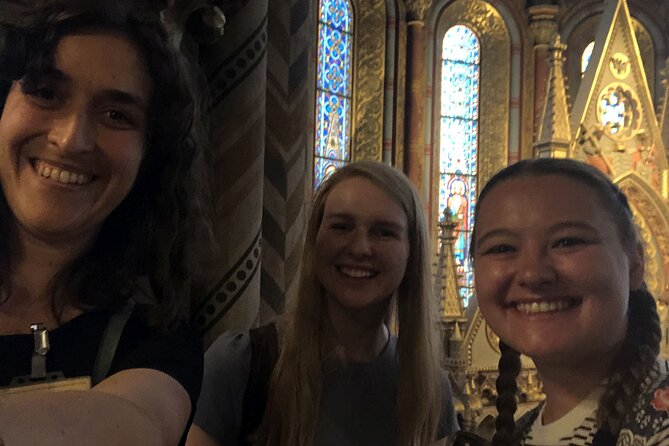
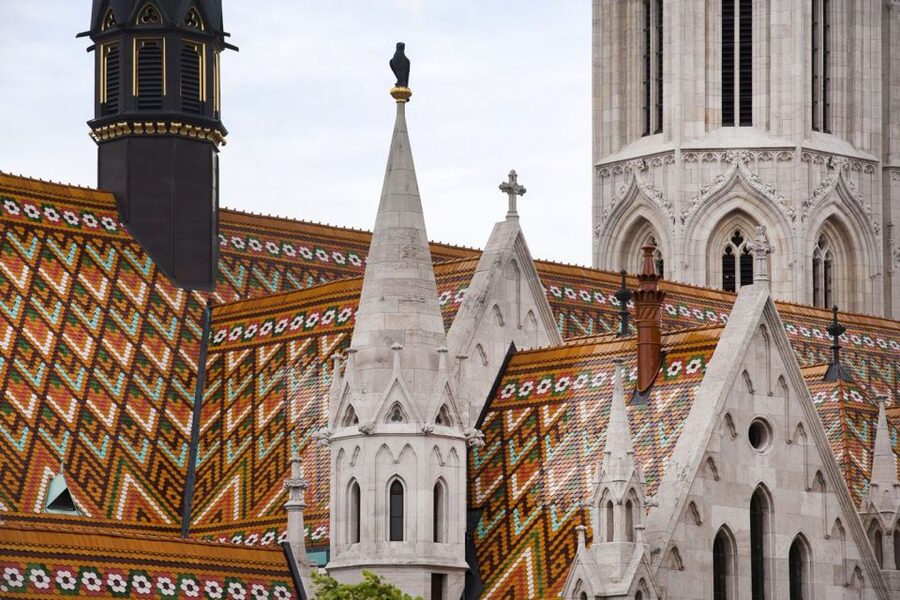
Matthias Church is the visual star of the route. Its highly decorated roof catches your eye before you enter, and the interior gives the tour a more intimate religious stop after the broad palace views.
The roof is one of those features that rewards a slower look. Its patterns and color make it different from the pale stone churches you may expect in Central Europe. The guide can place that decoration within the wider story of Castle Hill, rather than leaving it as a quick photograph.
Inside, the church is described as amazing and highly decorated. The contrast matters. From outside, you notice the roof first. Inside, you get a stronger sense of the building as an active place of worship and a major historic monument.
This stop also gives your three-hour walk a natural center. The palace tells a story of political power and repeated rebuilding. Matthias Church brings religious ceremony, design, and the changing identity of Buda into view.
The church is likely to be the most rewarding stop for visitors who want architecture. Keep in mind that the tour includes it within a larger historical route, so the amount of time inside may depend on the guide’s pace and the conditions on the day. The supplied details do not promise a special exhibition or a separate church-only visit.
More walking tours in Budapest:
- Big Bus Budapest Hop-On Hop-Off Bus and Walking Tour
★ 3.5 · 2,206 reviews - Budapest: Buda Castle District Walking Tour
★ 4.6 · 2,108 reviews - Budapest City Landmarks Walking Tour in 2 Hours
★ 5.0 · 2,048 reviews - 3-Hour Orientation Walking Tour of Buda and Pest
★ 4.8 · 1,834 reviews
A medieval synagogue and Buda’s mixed past
The remains of a medieval synagogue are among the tour’s most important stops. They are less visually grand than Matthias Church, but they explain why the title focuses on many nations and communities.
A remnant can be easy to overlook when surrounded by large monuments. That is precisely why guided interpretation helps. The site points to the Jewish presence in medieval Buda and makes the district’s past broader than royal and Catholic history.
You also see a monument to the last Turkish pasha who ruled Buda. Together, the synagogue remains and the pasha monument show a city shaped by different faiths and political powers.
This section gives the tour a welcome balance. Castle Hill is often sold through palace views and church architecture. Here, the focus shifts toward the people and communities who lived under changing rulers.
You will hear about the area’s Turkish period and the forces that later retook Buda. The story is not reduced to a simple victory. Instead, the streets become evidence of a place repeatedly changed by conquest.
The residential quarter and the scars of 1686 and 1945
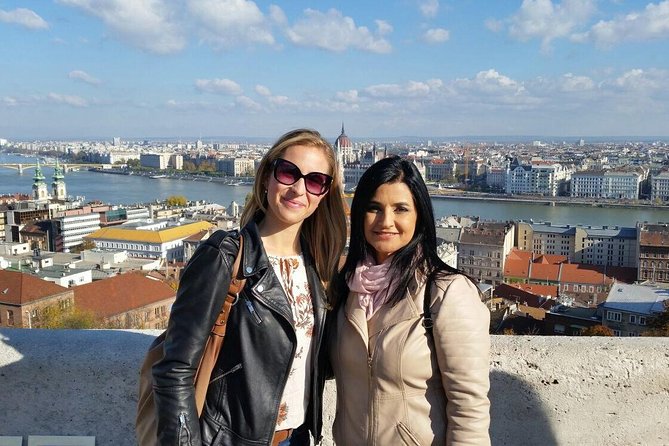
The residential section is where the tour feels most like a walk through a real neighborhood rather than a parade of famous monuments. You meander along cobblestone streets lined with Baroque and Gothic façades and see town palaces built for prominent residents.
The district was destroyed when Habsburg troops retook Buda from the Turks in 1686. It suffered again in 1945, when Russian forces crushed the German troops trapped in the city. Those two events help explain why Castle Hill can contain old-looking buildings alongside reconstructed ones.
The details of wartime damage are especially useful because restoration can hide the scale of destruction. A polished façade does not necessarily mean an untouched building. In this quarter, the guide’s job is to show you the gaps between appearance and survival.
I like this part for its slower rhythm. You are not only looking up at a palace or church. You are seeing the kind of streets where homes, pharmacies, and civic life once carried on around the centers of power.
The tradeoff is that cobblestones and inclines can make the walk tiring. The tour description does not provide accessibility details, so you should ask the operator directly if you have mobility concerns.
The 18th-century pharmacist’s house
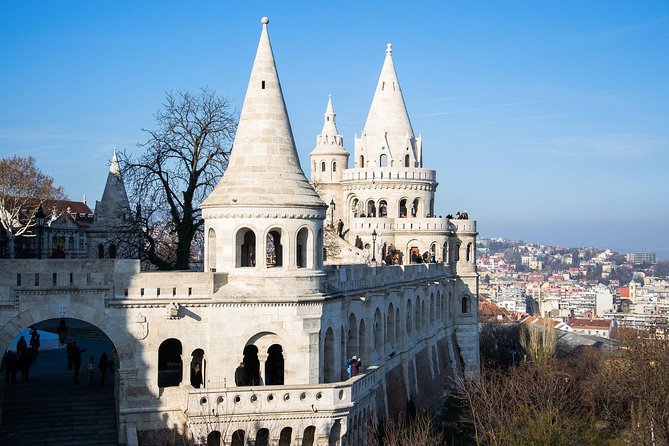
One of the tour’s most unusual stops is an 18th-century pharmacist’s house. It offers a look at everyday professional life, far removed from kings, armies, and grand churches.
The building also helps explain the damage caused by the siege of Buda in the first months of 1945. Rather than hearing only a general account of wartime destruction, you get a specific home and business through which the damage becomes easier to picture.
That detail adds practical human scale to the tour. A palace can survive as a symbol. A pharmacist’s house shows how conflict affected work, medicine, homes, and the ordinary routines of a neighborhood.
If you have already seen Budapest’s major museums, this kind of stop may be especially appealing. It supplies a quieter form of history, based on a place and its use rather than a long display of objects.
The house also reinforces the tour’s central strength: it takes you to sites that do not always receive top billing. The experience is not only about checking off Buda Castle and Matthias Church.
Secret garden, hussars, and stories with a twist

The route includes a secret garden, two wooden hussars, and a stone statue of a hussar said to have conquered Berlin. These touches add variety after the heavier accounts of siege and destruction.
The hussars connect Castle Hill with military legend and national memory. The wooden figures should appeal to you if you enjoy odd visual details that break up a formal architectural tour. The stone statue provides another chance to see how military figures are remembered in public spaces.
You also hear about the mythical Turul bird. This creature is an important Hungarian symbol, and its appearance in the tour gives you a glimpse into the legends attached to the country’s past.
The guide covers a genius baron and his remarkable chess machine as well. That story sounds like a deliberate change of pace, bringing invention and eccentric personality into a route otherwise dominated by rulers and battles.
Finally, you learn why Catholic church bells chime at midday. This is the kind of small fact that can change the way you experience the city afterward. Once you know the reason, a familiar sound becomes part of the historical setting.
These stories may not all appeal equally to every person. If you want only architectural facts, some of the legends and personalities may feel like side trips. I see them as useful seasoning, especially during a long walk.
Ending at Vienna Gate and the view toward Óbuda
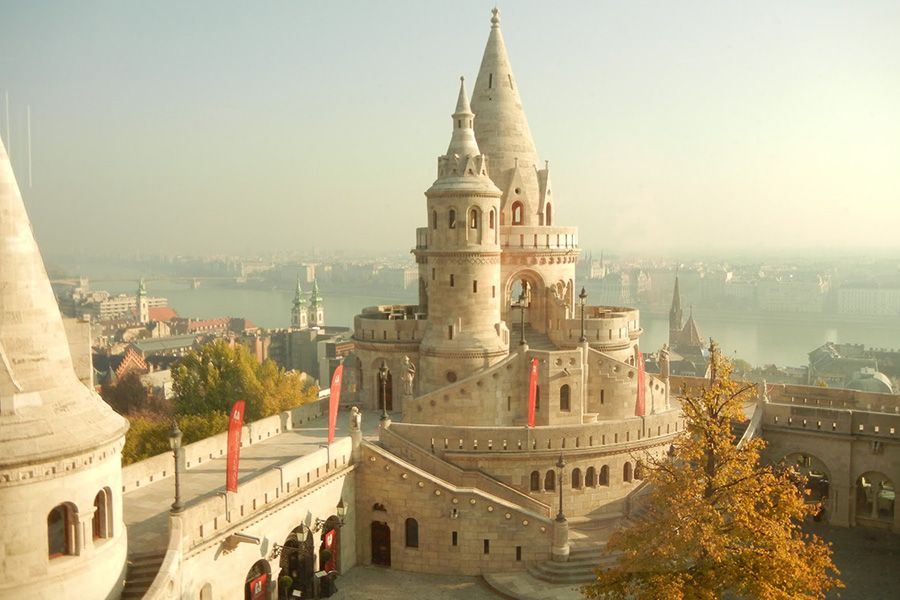
The tour ends at Vienna Gate, a practical finish on the northern side of Castle Hill. From here, you get views toward Óbuda, or Old Buda, where the Romans founded the city as Aquincum.
This ending widens the frame. You begin with the medieval and royal hill, then finish by looking toward the Roman roots of the city. Budapest is not just one old quarter, and the view helps you understand that the city grew through several settlements and eras.
Ending at a gate also feels appropriate. Castle Hill was a defended center, and Vienna Gate connects the walking route to the movement of people and armies through the district.
The tour does not return you to the starting point. That is worth noting when planning the rest of your day. The finish at Vienna Gate may be convenient if you want to continue exploring Castle Hill, but the activity details do not specify onward transport or a return transfer.
Is $123 a fair price?
At $123 per person, this is not a budget walking tour. The cost needs to be judged against the guide’s historical focus, the three-hour length, and the private or small-group format.
I think the price is easier to justify if you choose a private outing or care deeply about the history of Budapest. You are not paying only for a walk past famous buildings. You are paying for connections between the palace, church, synagogue remains, Turkish rule, wartime destruction, homes, legends, and the Roman past of Óbuda.
The value is weaker if you want a simple orientation walk or if you are comfortable reading about Castle Hill on your own. Several of the outdoor sights can be visited independently, and the tour does not include transportation or a meal.
The clearest benefit is concentration. Three hours gives you a structured route through a district that can otherwise feel confusing. You save time deciding what matters and gain explanations at places that might otherwise receive only a passing glance.
Free cancellation is available up to 24 hours before the tour, and you can reserve now and pay later. Those policies help if your Budapest schedule is still shifting, but they do not change the basic question: you should book for the historical interpretation, not simply for access to the hill.
Who should choose this Castle Hill tour?
I would recommend it to you if you enjoy architecture, political history, religious history, and the stories of ordinary buildings. It also suits a first visit to Budapest when you want a strong introduction to Buda without spending a full day on museums.
The tour may be a good fit for independent visitors who like to explore alone but want an expert framework for one important district. Afterward, you can continue at your own pace, using the route’s stories to read the streets more carefully.
Families with older children may also appreciate the variety. The Turul bird, chess machine, hussars, sieges, and church bells offer more entry points than a lecture focused only on dates.
I would be more cautious if you dislike walking on cobblestones, need a fully step-free route, or prefer a quick sightseeing loop. The available information does not promise a specific accessibility plan, so contact the provider before booking if that affects your choice.
Should you book it?
Book this tour if you want Castle Hill explained as a living record of changing rulers, faiths, wars, and homes. The medieval synagogue, pharmacist’s house, secret garden, and hussar stories give it more character than a standard palace-and-church outing.
Skip it if your main goal is a low-cost look at the major sights. At $123, the tour earns its price through the historian guide and small-group or private format, not through the length alone. For the right history-minded visitor, that context can turn a pleasant walk into one of Budapest’s most useful three-hour introductions.
FAQ
How long is the Buda Castle Walking Tour?
The guided walking tour lasts three hours.
What language is the tour conducted in?
The live tour guide speaks English.
Where does the tour meet?
The meeting point is Bálthazár Hotel, Országház utca 31, about 50 meters from the first bus stop on Castle Hill.
What major church does the tour visit?
The route includes Matthias Church, including its decorated roof and interior.
Does the tour include the remains of a medieval synagogue?
Yes. The itinerary includes the remains of a medieval synagogue in the Castle Hill area.
Is the tour private or shared?
Private and small-group options are available.
Can I cancel the tour for a full refund?
Yes. You can cancel up to 24 hours in advance for a full refund.
Just added in Budapest
- Budapest: Private Walking Tour with a Local Guide★ 3.6 · 6 reviews
- Budapest: Danube River Views Bike Ride★ 4.8 · 23 reviews
- Budapest: City Bike Tour with Coffee Stop★ 5.0 · 37 reviews
- From Budapest: Guided Tour of Eger with Wine Tasting★ 4.5 · 6 reviews
- Walk to recent and aged spiritual sanctuaries near Budapest★ 5.0 · 5 reviews
- Walking consultancy with alternative psychologist and author★ 5.0 · 2 reviews
- Budapest: Guided Tour of the Parliament Building in Spanish★ 4.6 · 1,240 reviews
- True Crime Walking Tour in the Buda Castle district★ 5.0 · 26 reviews
Buda Castle and Castle District Tours, compared.
Buda Castle District Vampires and Myths Night Tour
Read our review →
Buda Castle District Dark History, Legends and Vampire Night Tour
Read our review →
Buda Castle District Walking Tour with a Historian
Read our review →

Walking tour in the Buda Castle incl. Fisherman’s Bastion
Read our review →Browse the lists this tour appears in