
REVIEW · WALKING TOURS
Budapest: All in One Walking Tour with Strudel House Stop
Budapest rewards a fast start. This 3.5-hour walking tour links Pest and Buda with a short metro ride, public transport, and roughly 6 kilometers of walking, giving you a useful first look at the city. I especially like the route’s mix of grand landmarks and everyday culture, from Heroes’ Square and Parliament to the Hungarian pastry break at Strudel House. The main tradeoff is simple: you see many places, but you do not go inside the churches or major buildings.
The small group of up to 10 people is another strong point. Guides such as Greg, Monika, Petra, Andi, and Eszter are repeatedly praised for making Hungarian history easy to follow and for answering questions with warmth and humor. Still, the schedule is tight, and the hour at the strudel café may feel long if you would rather spend more time on the Buda side.
In This Review
- Key points at a glance
- Why this route works for a first look at Budapest
- Meeting the guide at the Opera House
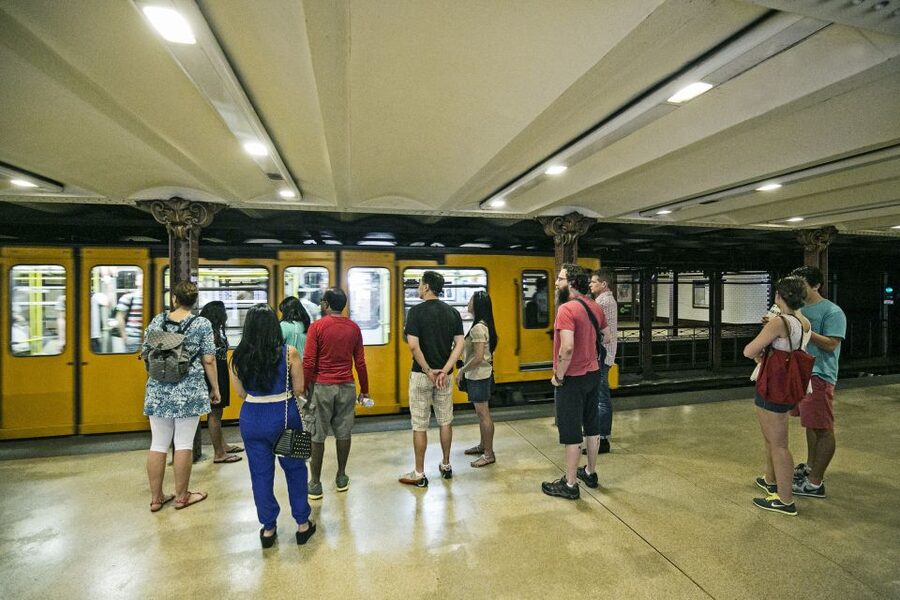
- Riding the Millennium metro to Heroes’ Square
- City Park, Vajdahunyad Castle, and the bathhouse
- St. Stephen’s Basilica and the well-timed pastry stop
- Liberty Square and the Parliament area
- Walking beside the Danube to Chain Bridge
- Crossing into Buda and climbing to the final view
- The guide can make or break the pace
- Who should book this Budapest tour?
- Is the $88 price fair?
- Should you book it?
- FAQ
- How long is the Budapest walking tour?
- Where does the tour meet?
- Where does the tour finish?
- Is strudel included?
- Are public transport tickets included?
- Does the tour go inside Parliament, the churches, or the thermal bath?
- Is the tour suitable for people with mobility impairments?
Key points at a glance
- A real Pest-to-Buda route: Start at the Opera House, cross the Chain Bridge, and finish at Fisherman’s Bastion.
- Public transport saves your feet: The Millennium metro and a shuttle to Buda Castle help cover more ground.
- Strudel is part of the tour: You receive strudel and a drink at the famous Strudel House, with several flavors often served for the table.
- Six kilometers on foot: Expect about three hours of walking, often with short stops rather than long visits.
- A strong first-day choice: You get orientation, history, transport practice, and views in one outing.
- No interior admissions: Churches, Parliament, the baths, and other buildings are seen from outside only.
Why this route works for a first look at Budapest
At $88 per person, this is not the cheapest way to walk around Budapest. It becomes easier to justify when you count the licensed guide, public transport tickets, the extra single ticket for returning to Pest, and the included strudel and drink.
The bigger value is time. Budapest’s sights are spread across two sides of the Danube, and this route uses the metro and a shuttle to connect them. You will not waste half a day working out the city’s transport system or trying to decide which landmarks belong on your short list.
I would use this tour early in a Budapest visit. It gives you a mental map of Andrássy Avenue, City Park, central Pest, the Danube, Chain Bridge, and Castle Hill. Afterward, you can return to the places that deserve a slower visit, especially Parliament, St. Stephen’s Basilica, Matthias Church, and the thermal baths.
The guide matters a great deal here. The route covers a lot of ground, so a flat recitation of dates would make it tiring. The best guides bring the city’s past into the present. Greg is praised for his passion and ability to handle questions, while Monika, Petra, Andi, Anna, and Eszter are also singled out for friendly, clear explanations. One guide even handled questions about the region’s geology and tectonic plates, which gives you an idea of the conversational style this tour can offer.
More walking tours in Budapest:
- Budapest: Buda Castle Walk with Saint Stephen’s Hall
★ 4.5 · 3,012 reviews - Big Bus Budapest Hop-On Hop-Off Bus and Walking Tour
★ 3.5 · 2,206 reviews - Budapest: Buda Castle District Walking Tour
★ 4.6 · 2,108 reviews
Meeting the guide at the Opera House
The tour begins on the steps in front of the Hungarian State Opera House at Andrássy út 22. This is a practical meeting place on one of Budapest’s grandest avenues, but arrive ready to walk rather than expecting a formal introduction followed by a coach ride.
The first photo stop lasts about 10 minutes. Andrássy Avenue gives the tour an immediate sense of Budapest’s scale and ambition, with its broad boulevard and grand architecture. Your guide begins setting the political and cultural story of Hungary before the group moves underground.
There is no audio equipment or headset system. That is good if you like direct conversation, but you need to stay reasonably close to the guide, especially around busy streets and transport stops. A small group helps. With no more than 10 people, it should be easier to hear, ask questions, and keep the group together.
Riding the Millennium metro to Heroes’ Square
The short metro ride is more than a way to save time. It introduces you to one of Budapest’s most useful transport systems and helps you reach City Park without spending much of the tour on foot.
Heroes’ Square is one of the city’s great outdoor history lessons. Its line of statues presents important figures from Hungarian history, and the guide uses the monument to explain the country’s past and cultural identity. You get about 20 minutes here for a guided visit, sightseeing, and photographs.
Do not expect a museum-style lesson on every statue. The strength of this stop is the overview. If Hungarian names and political eras seem hard to sort out on your own, the guide gives you a framework that makes later sights easier to understand.
City Park, Vajdahunyad Castle, and the bathhouse
From Heroes’ Square, you walk through Városliget, Budapest’s City Park. This section lasts about 25 minutes and includes Vajdahunyad Castle, an unusual complex built for the 1896 World Expo.
The castle is especially useful for showing how Hungary presented its culture and architecture at the end of the 19th century. It is not treated as a full castle tour, and you should not expect interior access. Instead, you walk through the complex, hear the key story, and take in its striking exterior forms.
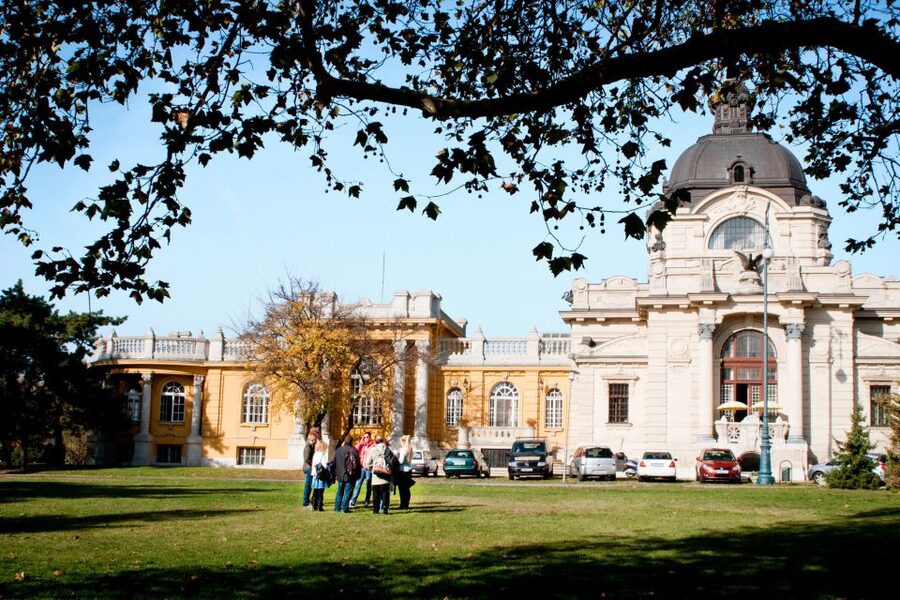
The route then pauses near Széchenyi Thermal Bath House for about 10 minutes. You see the building from outside and learn about Hungary’s bathing culture. This is an important bit of context, since Budapest’s thermal baths are not just another sightseeing stop. They are part of the city’s social life and a major reason many people visit.
The limitation is time. You will not bathe during this tour, and no bath admission is included. If a thermal bath is high on your list, plan a separate visit. The tour gives you the background, then moves on.
More things to do in Budapest:
- Budapest: City Highlights Cruise with Welcome Drink
★ 4.6 · 35,610 reviews - Budapest: Unlimited Prosecco, Beer and Aperol Spritz Cruise
★ 4.8 · 25,310 reviews - Budapest: Széchenyi Spa Day Ticket with Optional Upgrades
★ 4.3 · 23,911 reviews - Budapest: Nighttime or Daytime Sightseeing Cruise
★ 4.2 · 21,062 reviews
St. Stephen’s Basilica and the well-timed pastry stop
After returning by metro toward central Budapest, the route continues along Andrássy Boulevard and toward Elizabeth Square. St. Stephen’s Basilica receives about 10 minutes of sightseeing time.
The basilica is one of central Pest’s major landmarks, and its scale makes a strong impression even from outside. Because interior entry is not included, this is a photo and orientation stop rather than a church visit. I would mark it for a return visit if you want to see the inside at your own pace.
The Strudel House break is the tour’s edible centerpiece. You receive Hungarian strudel and a drink, and the stop usually provides a welcome chance to sit down after the first stretch of walking. Several food reviews describe generous portions, with six or more flavors sometimes placed on the table. You might have more than you can finish, so do not assume this is a single small pastry and a quick coffee.
This stop also helps the social side of the tour. Solo participants are welcome, and the café gives the group time to talk instead of walking in silence. It is a smart pause in the schedule, though the timing will not suit everyone.
One person found the full hour at the strudel stop took too much time away from Buda. That is the clearest criticism in the feedback, and it is fair. If your priority is tasting local food and resting your legs, the break is a treat. If you are determined to spend more time around Matthias Church and Castle Hill, it can feel like a costly pause.
Liberty Square and the Parliament area
After the café, the group heads into downtown Pest and Liberty Square, known locally as Szabadság Square. The guided stop lasts about 15 minutes.
This is a good place for your guide to connect Budapest’s architecture with its political past. The square offers more than a passing photo because it helps explain the city’s changing public life. The precise focus depends on the guide, but you can expect historical context rather than a long building visit.
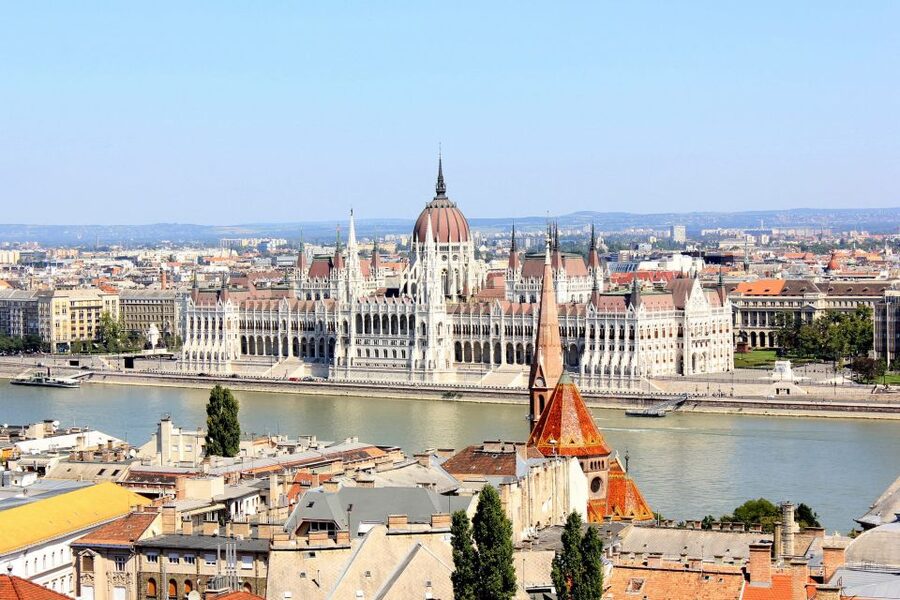
The Hungarian Parliament Building follows, with about 15 minutes for sightseeing, photographs, and explanation. Its riverfront setting is one of Budapest’s signature views. You see the building from outside, and no Parliament ticket is included.
That distinction matters. Parliament interior visits require separate planning, and this tour cannot fit a full visit into its packed route. Still, the riverside view is valuable, especially for a first orientation. Your guide can point out the relationship between the Pest side, the Danube, and Buda Castle across the water.
Walking beside the Danube to Chain Bridge
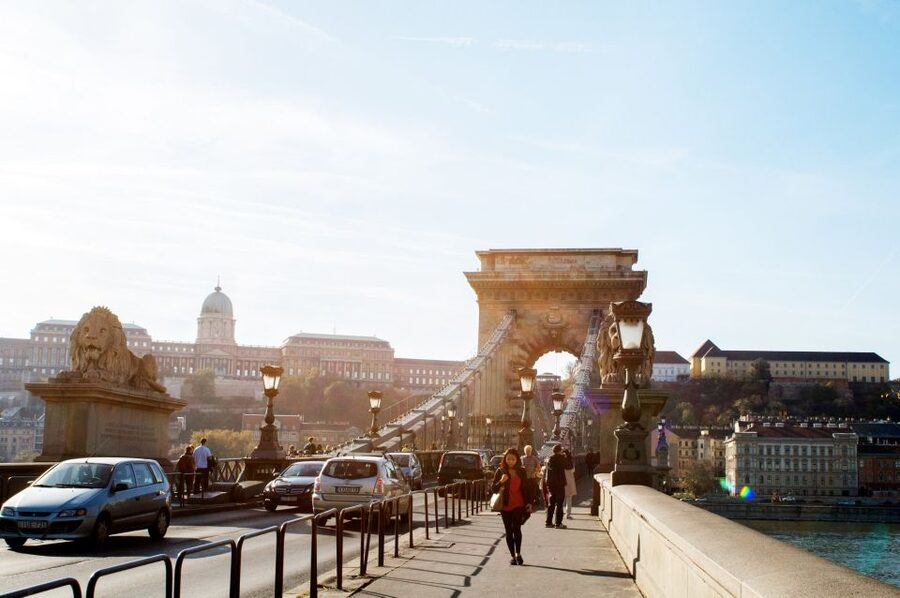
The route continues along the riverbank toward Chain Bridge. This is one of the most enjoyable stretches because Budapest begins to make visual sense as one city rather than two separate sightseeing zones.
You get about 10 minutes at the bridge for photographs and sightseeing. The walk also gives you views toward Buda Castle and the Danube, which are difficult to appreciate from a single square or monument.
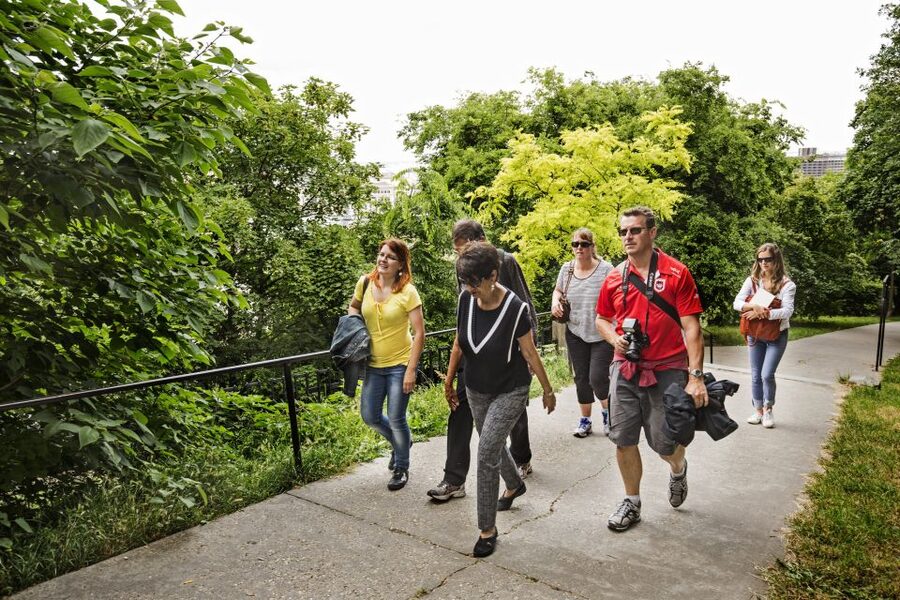
There is a practical point here: the tour is called a walking tour for good reason. The total walking distance is about 6 kilometers, or 4 miles, with roughly three hours spent on foot and shorter stops along the way. Comfortable shoes are essential. The pace is described as easygoing by one long-time participant, but anyone with mobility limits or a medical condition should think carefully before booking.
The tour operates in rain or shine. Bring clothing for the forecast, and avoid large bags or luggage. You will use public transport and walk through busy areas, so a small day bag is the sensible choice.
Crossing into Buda and climbing to the final view
Crossing Chain Bridge brings you to the Buda side. Instead of walking all the way up Castle Hill, the group takes a shuttle to the castle area. That small transport link makes a major difference after a long day on foot.
The cobblestone streets around the castle area feel different from central Pest. Here, the tour slows down for Matthias Church and Fisherman’s Bastion, though each listed stop receives about 10 minutes.
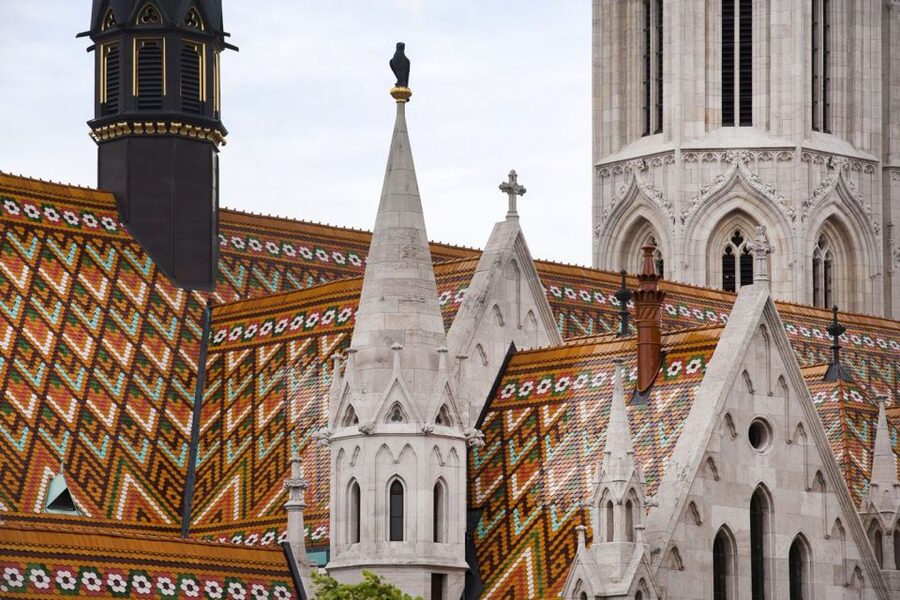
Matthias Church is seen from outside. Its patterned roof and Gothic details make it one of the most memorable buildings on Castle Hill, but the short stop is not enough for a full architectural study. If the church is high on your list, return later for an interior visit and more time.
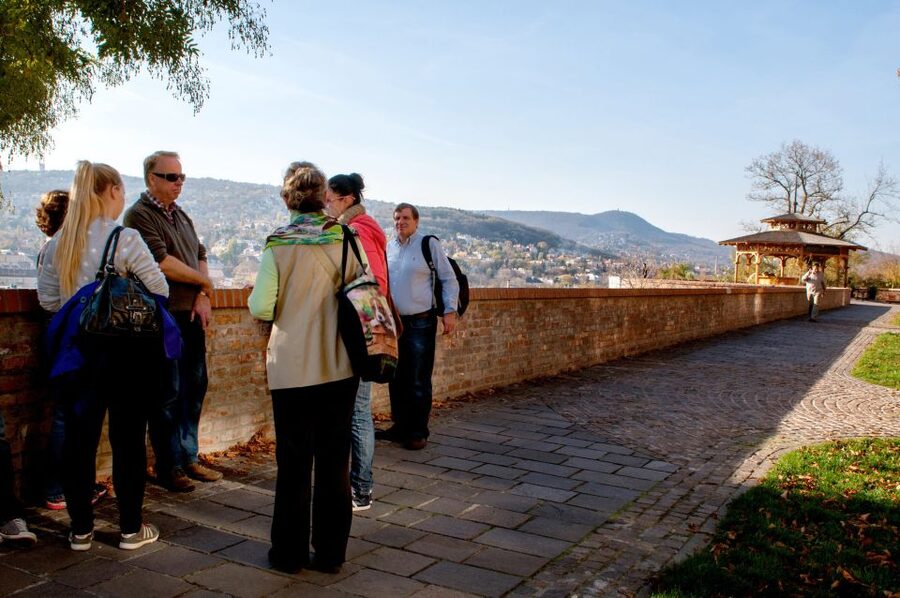
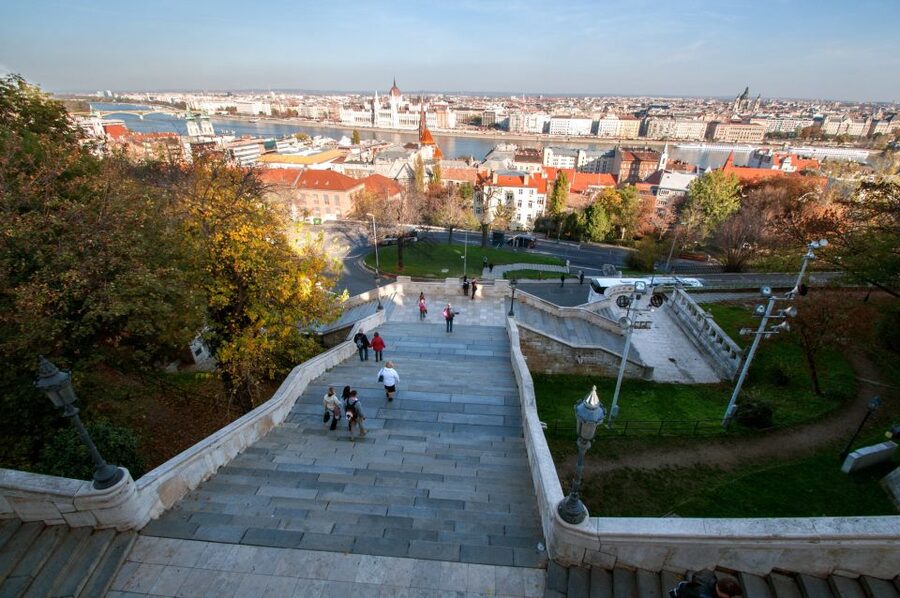
Fisherman’s Bastion is the grand finish. From its terraces, you get the wide panorama that makes the whole route click: the Danube below, Parliament across the water, and the city spread out beyond it. The walk itself includes scenic views, so the final stop is not just a quick photo opportunity. It is the point where the day’s separate sights come together.
The tour ends at Halászbástya. There is no hotel drop-off, but the included extra public transport ticket lets you return to downtown Pest later. You can also stay on Castle Hill to explore independently, which is useful if you want more time in Buda.
The guide can make or break the pace
The most praised part of this experience is the guiding. Names that come up with particular warmth include Greg, Monika, Petra, Andi, Eszter, Anna, Kristina, Rebecca, Orsi, Reka, and George. The recurring strengths are clear explanations, humor, historical context, and a willingness to answer questions.
That matters because the route is dense. In one morning or afternoon, you move from Hungarian kings and national monuments to bathing customs, modern city squares, Parliament, the Danube, and Castle Hill. A good guide keeps those subjects connected rather than leaving you with a pile of unrelated facts.
I also like the local advice built into the experience. Andi, for example, is praised for suggesting less touristy restaurants and shopping areas. That kind of practical help can be as useful as the formal sightseeing, especially if Budapest is your first stop in Hungary.
The tour is in English only. Since there are no headphones, hearing the guide depends on staying close and paying attention at each stop. The group limit of 10 should help, but this is still an active outdoor tour, not a private salon conversation.
Who should book this Budapest tour?
I would recommend it most strongly to:
- First-time visitors who have only a few days in Budapest
- Solo visitors who want company without joining a huge group
- Couples and families who want a broad city introduction
- People who enjoy history explained in person
- Anyone who wants to learn the public transport system while sightseeing
- Visitors who prefer landmarks from the outside and plan separate interior visits
I would be more cautious if you want a slow, detailed visit to each attraction. You will not enter the churches, Parliament, or thermal bath, and the time at some sights is short. People with mobility impairments, children under 2, and those with pre-existing medical conditions are specifically advised not to take this tour.
The walking is manageable for someone used to city sightseeing, but it is not a gentle stroll with long café breaks. Wear comfortable shoes and keep your bag small.
Is the $88 price fair?
The price is reasonable if you value a guide and want to cover both sides of Budapest in one outing. You receive the guide, transport tickets used during the tour, a return ticket to Pest, strudel, and a drink. You also avoid spending time planning a route between far-flung sights.
It is less attractive if you mainly want admission to famous interiors. No entry tickets are included, so budget separately for any church, Parliament, or bath visits you add later. The tour is best understood as an orientation and overview, not a complete ticketed sightseeing package.
The free cancellation period is up to 24 hours before departure, and you can reserve now and pay later. Check the available start time when booking, since the listing does not give one fixed departure hour.
Should you book it?
Book this tour if you want a lively first sweep of Budapest, enjoy asking questions, and can comfortably walk 6 kilometers. The combination of metro, riverfront views, strudel, Heroes’ Square, Parliament, Chain Bridge, and Fisherman’s Bastion gives you a lot for 3.5 hours.
Skip it if you want long interior visits or a slow afternoon on Castle Hill. For most first-time visitors with limited time, I think the route earns its price, especially when the guide is as engaging as Greg, Petra, Monika, or Andi. Just treat it as your city orientation, then return to your favorite sights for a closer look.
FAQ
How long is the Budapest walking tour?
The tour lasts 3.5 hours. Expect about three hours of walking with short stops, covering roughly 6 kilometers or 4 miles.
Where does the tour meet?
Meet the guide on the steps in front of the Hungarian State Opera House at Andrássy út 22.
Where does the tour finish?
The tour ends at Fisherman’s Bastion, also listed as Halászbástya, on the Buda side.
Is strudel included?
Yes. The tour includes strudel and a drink at Strudel House. Several flavors may be served for the table.
Are public transport tickets included?
Yes. Public transportation used during the tour is included, along with one extra single ticket for returning to downtown Pest.
Does the tour go inside Parliament, the churches, or the thermal bath?
No. The tour does not include interior visits to churches or buildings. Széchenyi Thermal Bath is visited from outside, and Parliament, St. Stephen’s Basilica, and Matthias Church are sightseeing stops without included admission.
Is the tour suitable for people with mobility impairments?
No. The tour is not suitable for people with mobility impairments, children under 2, or people with pre-existing medical conditions. Comfortable shoes and clothing are recommended.
Just added in Budapest
- Budapest: Private Walking Tour with a Local Guide★ 3.6 · 6 reviews
- Budapest: Danube River Views Bike Ride★ 4.8 · 23 reviews
- Budapest: City Bike Tour with Coffee Stop★ 5.0 · 37 reviews
- From Budapest: Guided Tour of Eger with Wine Tasting★ 4.5 · 6 reviews
- Walk to recent and aged spiritual sanctuaries near Budapest★ 5.0 · 5 reviews
- Walking consultancy with alternative psychologist and author★ 5.0 · 2 reviews
- Budapest: Guided Tour of the Parliament Building in Spanish★ 4.6 · 1,240 reviews
- True Crime Walking Tour in the Buda Castle district★ 5.0 · 26 reviews
Walking Tours, compared.
Budapest City Landmarks Walking Tour in 2 Hours
Read our review →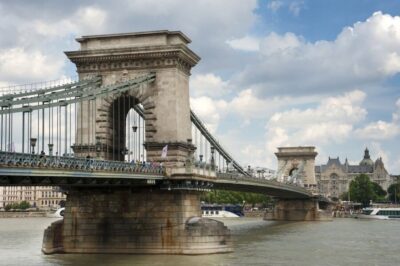
3-Hour Orientation Walking Tour of Buda and Pest
Read our review →
Budapest Historical Sightseeing – Free Walking Tour
Read our review →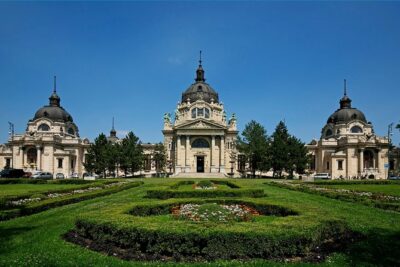
Budapest All in One Small Group Walking Tour with Strudel Stop
Read our review →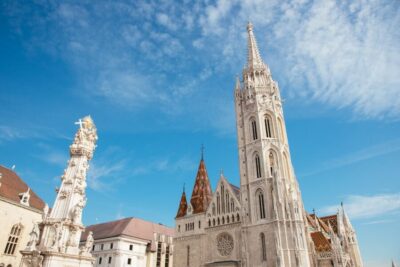
Buda Castle District Walking Tour with a Historian
Read our review →
BloodThirsty Hungary: Walking tour & Dark Historical Stories
Read our review →Browse the lists this tour appears in