

REVIEW · WALKING TOURS
Budapest Castle Walk
Royal Budapest is best seen on foot. The Budapest Castle Walk brings together medieval ruins, Ottoman and Habsburg stories, Jewish heritage, and the scars of World War II in one three-hour outing. I like the included visit to St. Matthias Church, and I like the small-group format, capped at eight people. The main drawback is the price, $125 per person, which feels high if you mainly want photographs and a quick look around.
The 3 p.m. start works well if you want a relaxed morning elsewhere in the city. Still, this is a walking tour over cobbled streets and a hillside, and the pace can stretch beyond three hours if you are not in a hurry. Confirm the start time before setting out, since clear timing matters when you have evening plans.
In This Review
- Key points to know before booking
- Why Buda Castle deserves a walking tour
- Starting at Zero Kilometre Stone and climbing into the Castle District
- Fisherman’s Bastion: the postcard view with a real story
- St. Matthias Church and the layers under the roof
- The Royal Palace and National Széchényi Library
- Jewish Buda, courtyards, gardens, and overlooked corners
- Castle Garden and Várkert Bazaar beside the Danube
- The Siege of Budapest and the World War II bunker
- What the $125 price includes
- Timing, comfort, and practical planning
- Who will get the most from this walk?
- Should you book the Budapest Castle Walk?
- FAQ
- Where does the Budapest Castle Walk begin?
- What time does the tour start?
- Where does the tour finish?
- Is admission to St. Matthias Church included?
- Is the tour available in a small group?
- What happens if the minimum number of participants is not met?
Key points to know before booking
- The tour begins at Zero Kilometre Stone: Meet at Clark Ádám tér near the Royal Palace area at 3 p.m., then finish near Matthias Church.
- The group stays small: The standard format allows a maximum of eight people, with private and larger-group options available.
- St. Matthias Church entry is included: You see the colorful interior and tiled roof rather than only viewing the church from outside.
- The history covers several turning points: Expect medieval royal power, Ottoman rule, Habsburg rebuilding, Jewish life, and the 1945 Siege of Budapest.
- A coffee or another drink is part of the price: This gives you a useful pause during a fairly active walk.
- The best views come from several points: Fisherman’s Bastion and the Castle Garden area open wide views toward the Danube and Pest.
Why Buda Castle deserves a walking tour
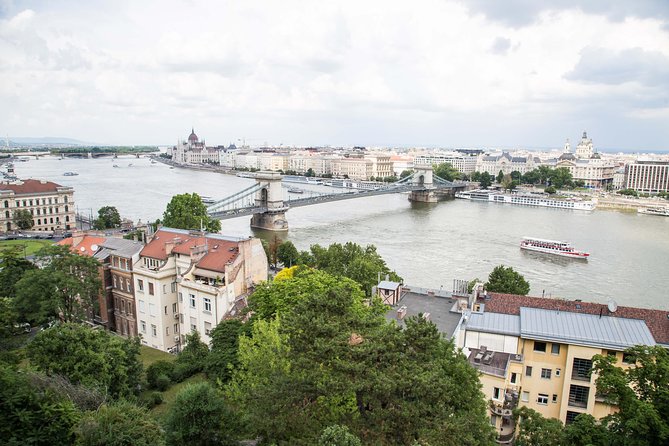
Buda Castle is not one single monument. It is a hilltop district shaped by many rebuilds, wars, royal ambitions, and ordinary city life. Streets bend with the hill, buildings mix Gothic and Baroque details, and medieval fragments appear beside grand imperial-era work.
That layering is the reason I prefer a guided walk here. On your own, it is easy to see the Royal Palace, take pictures at Fisherman’s Bastion, and leave without understanding why the area looks so pieced together. A good guide connects the ruins, courtyards, churches, palaces, and statues into a readable story.
The tour also gives unusual attention to the Jewish community that once lived in the Castle District. You visit an old street and synagogue site linked to that community, an aspect of Buda often missed when sightseeing is reduced to royal buildings and postcard views.
The route takes about three hours, with many opportunities to ask questions and stop for photographs. That is enough time to gain a sense of the district without committing an entire day, though you should not schedule a tight appointment immediately afterward.
More walking tours in Budapest:
- Budapest: Buda Castle Walk with Saint Stephen’s Hall
★ 4.5 · 3,012 reviews - Big Bus Budapest Hop-On Hop-Off Bus and Walking Tour
★ 3.5 · 2,206 reviews - Budapest: Buda Castle District Walking Tour
★ 4.6 · 2,108 reviews
Starting at Zero Kilometre Stone and climbing into the Castle District

The meeting point is the Zero Kilometre Stone at Clark Ádám tér, 1013 Budapest. This is a useful location near the Danube and public transportation, but pay attention to the exact meeting instructions. The Castle District occupies a hill, so the opening section begins with an uphill feel even before the main sightseeing starts.
From here, your guide sets the historical frame. The first royal residence was built on the hill in the mid-13th century, and the area later became home to Hungary’s royal court. That shift changed Buda from a fortified settlement into a major European center.
I like this beginning because it explains the physical shape of the neighborhood. The streets follow the hill rather than forming a neat modern grid. Their curves are not decorative planning. They reflect centuries of defense, rebuilding, and adaptation.
The route includes many stops for questions and photographs, so you are not expected to march continuously. Even so, wear comfortable shoes. The cobbles and slope are central to the experience, not minor details.
Fisherman’s Bastion: the postcard view with a real story
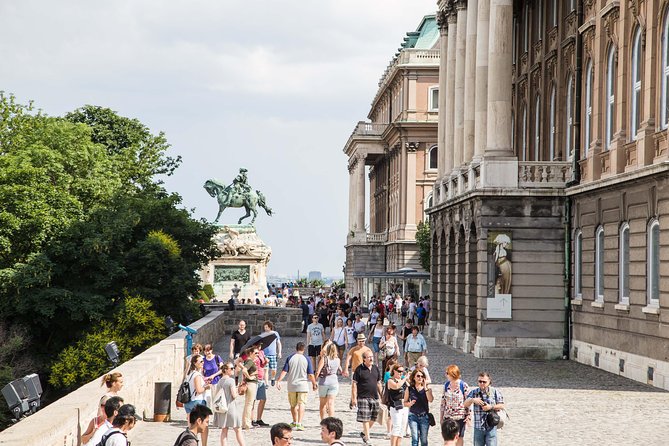
Fisherman’s Bastion is the tour’s first listed stop, with about ten minutes devoted to it. The admission is free, and the main reward is the broad panorama across the Danube toward Budapest’s flatter eastern side.
The viewing platforms are highly photogenic, but the guide gives the place more weight than a simple photo stop. You hear about the periods that shaped the district, including Hungarian royalty, the Habsburg Empire, and the Jewish population that once lived here.
The short time allocation is worth noting. Ten minutes is enough for an introduction and photographs, but not a long, quiet visit to every terrace. If you want extended picture-taking, you may need to return independently.
The views also help you understand Buda’s position. From the hill, the river and opposite bank make the city’s geography clear. This is one reason the walk works better in person than as a list of dates. You can see the strategic value of the height while listening to the story of the people who lived and fought here.
St. Matthias Church and the layers under the roof
The stop at St. Matthias Church lasts about 20 minutes, and admission is included. That inclusion matters because the church interior is a major part of the experience, not an optional extra.
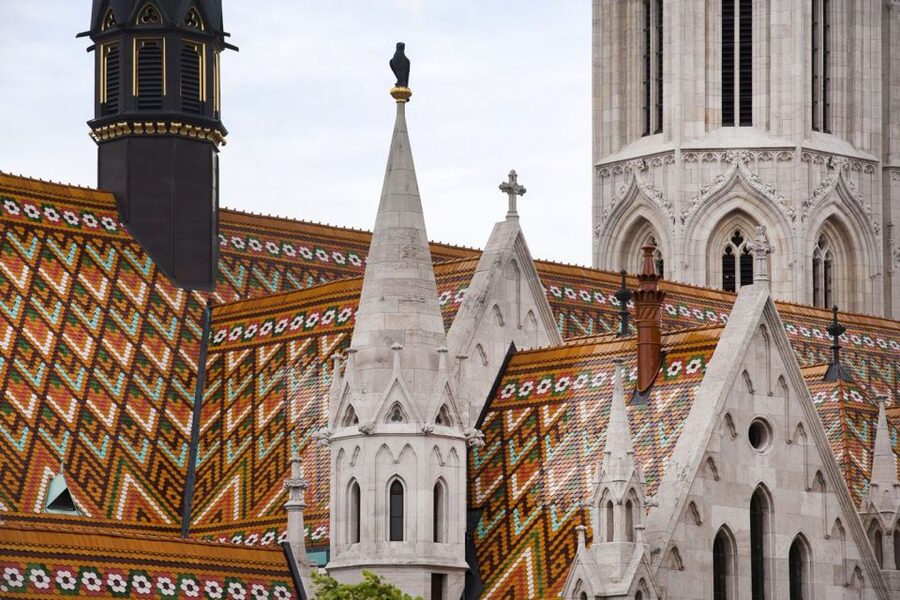
You see the multi-colored tiled roof from outside, then enter to look at the decorated interior. The church was the coronation site of many Hungarian kings, giving it a direct link to the royal story introduced earlier in the walk.
The church also helps explain Buda’s changing religious and political identity. Its history is connected to medieval Hungary, Ottoman rule, later Habsburg influence, and the rebuilding that followed severe wartime destruction.
Twenty minutes gives you a focused visit rather than unlimited time. You will learn why the church matters and have a chance to see the interior, but this is not a leisurely architectural study. If religious art or historic churches are your main interest, you may want to return later with more time.
The church stop is also where the tour connects grand royal history with human cost. The guide discusses the heroes and villains associated with World War II and the brutal siege that left the neighborhood heavily damaged.
More things to do in Budapest:
- Budapest: City Highlights Cruise with Welcome Drink
★ 4.6 · 35,610 reviews - Budapest: Unlimited Prosecco, Beer and Aperol Spritz Cruise
★ 4.8 · 25,310 reviews - Budapest: Széchenyi Spa Day Ticket with Optional Upgrades
★ 4.3 · 23,911 reviews - Budapest: Nighttime or Daytime Sightseeing Cruise
★ 4.2 · 21,062 reviews
The Royal Palace and National Széchényi Library
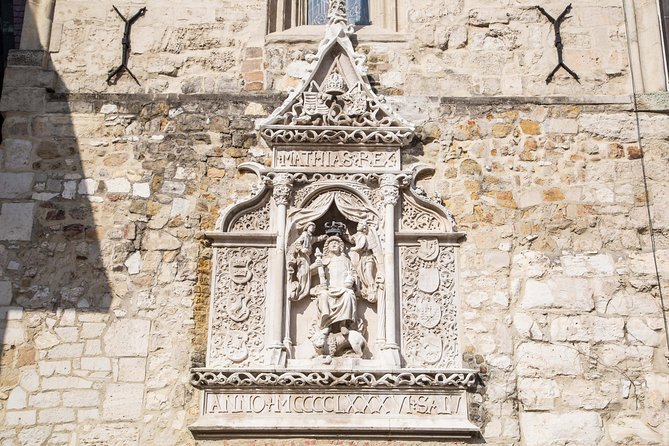
The Royal Palace is one of the district’s major sights, but the palace you see today is the result of repeated destruction and rebuilding. The tour uses the palace and the National Széchényi Library to explain how Buda’s royal role developed and how later generations reshaped it.
A particularly useful point is that the establishment of the Royal Court began a long golden age for the area, even though no royals actually lived in the palace discussed on the walk. Details like this prevent the tour from turning into a simple parade of famous names.
The palace area also shows how difficult it is to label Buda Castle as purely medieval. Gothic and medieval remains sit near later Baroque work, while postwar rebuilding left its own mark. The result is not a single preserved moment. It is a district repeatedly altered by power, fashion, war, and restoration choices.
The stop at the National Széchényi Library is brief, about ten minutes, and admission is not included. You are learning about its place in the Royal Palace complex rather than taking a full museum visit. Museum lovers should budget another visit if they want interior collections.
Jewish Buda, courtyards, gardens, and overlooked corners
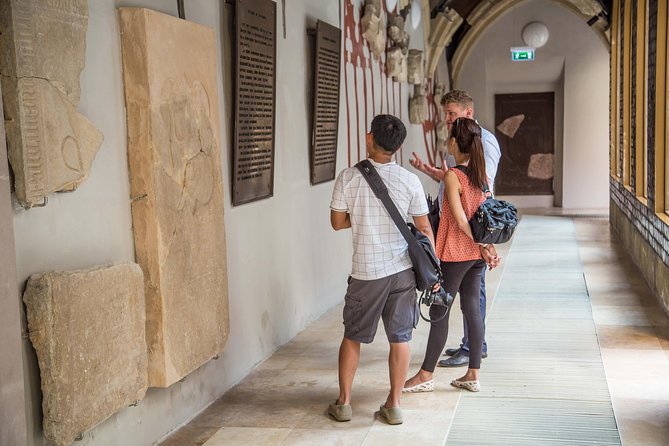
One of the strongest parts of the walk is its attention to places you might otherwise pass without noticing. The route includes old streets, a former synagogue site, courtyards, gardens, palaces, and statues.
These locations give the district a more human scale. Royal buildings tell you who held power, but street layouts and community sites show where people lived, worshiped, worked, and gathered. The focus on Buda’s significant Jewish population is especially valuable because it broadens the story beyond kings and armies.
The hidden courts and gardens are not presented as a separate attraction with guaranteed access to every private corner. Instead, you see parts of the district that are often missed during a standard sightseeing circuit. The exact balance can depend on the guide and the day’s pace.
This is also where a small group helps. With no more than eight people in the standard option, it is easier to pause at a narrow lane or ask why a particular statue or building matters. A private version may suit you if Jewish history, architecture, or wartime history deserves more time.
Castle Garden and Várkert Bazaar beside the Danube
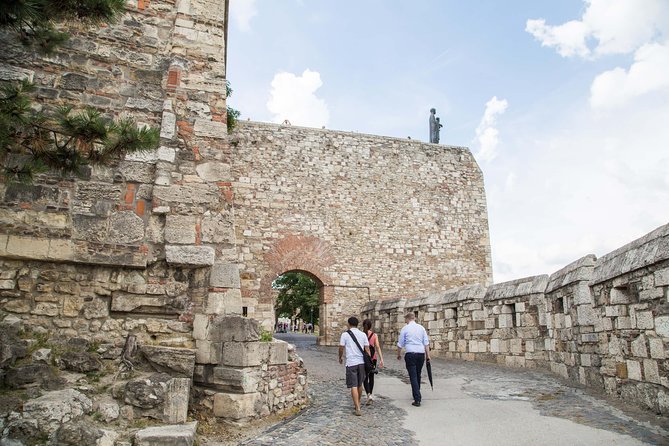
The walk continues to the Castle Garden area and the restored neo-Renaissance Várkert Bazaar along the Danube. This section shifts the mood from old hilltop streets to a more formal riverfront setting.
The Várkert Bazaar is useful for understanding how the Castle District connects to the river below. Its restoration gives you a chance to see a polished architectural setting while still hearing about the long history of the hill above it.
The Castle Garden stop is listed at about ten minutes. The area remains connected to public life today, with the Hungarian president and several hundred residents associated with the neighborhood. That reminder matters. Buda Castle is not only a monument zone for sightseeing. It is also a living district with homes, public buildings, and daily activity.
You should not expect a full tour of every building in the bazaar or garden. The value comes from the setting, the views, and the explanation of how this part of Buda fits into the wider city.
The Siege of Budapest and the World War II bunker
The World War II section gives the walk its darkest turn. The Siege of Budapest in 1945 brought German and Russian forces into direct conflict in the streets of Buda. The fighting caused enormous damage, and the Castle District was heavily demolished.
A visit to a WWII bunker makes this history more tangible than a palace façade alone can do. You hear how the neighborhood’s buildings and streets were affected, then see a physical reminder of the people who endured the siege.
This section may not suit anyone seeking a light sightseeing stroll, but it is an important part of the district’s identity. Without it, the rebuilt palace and tidy streets can give a false impression of uninterrupted grandeur.
The tour also explains that the palace and surrounding neighborhood have been destroyed and rebuilt many times. The current appearance is therefore a record of different periods rather than a perfectly preserved medieval quarter.
What the $125 price includes
At $125 per person, the tour is priced as a premium guided walk rather than a basic orientation tour. The fee includes an English-speaking local guide, entrance to St. Matthias Church, and one coffee, tea, or another drink.
That can be fair value if you want historical interpretation and a small group. You are paying for context, not just transportation or admission tickets. The guide helps you connect several periods of Hungarian history across a compact area, while the church ticket and drink add modest practical value.
The price is harder to justify if your main goals are the free viewpoints and exterior photographs. Fisherman’s Bastion and several outdoor areas do not require an admission ticket, and you can walk much of the Castle District independently.
The best way to judge the cost is to ask what kind of sightseeing you prefer. If you like understanding what you see, asking questions, and finding less obvious sites, the format has a stronger case. If you prefer to explore at your own pace and read signs or guidebooks, you may find it expensive.
Group discounts are available, and you can select a private tour or a larger group option. The standard small group requires at least two people and allows no more than eight.
Timing, comfort, and practical planning
The walk starts at 3 p.m. and runs for about three hours. Since it may stretch longer if you are not in a rush, leave open time afterward. The finish is in central Buda near Matthias Church, at Szentháromság tér 2.
A coffee break is included, which gives you a chance to rest and ask questions in a less hurried setting. Museums are not included, so do not assume the tour covers entrance to the Royal Palace museums or other paid collections.
The experience operates year-round. Weather can change how much you enjoy an outdoor walk, especially on an exposed hill with several viewpoints, so dress for the season and bring shoes suited to uneven paving.
The tour is near public transportation, and most people can participate. Still, the route includes a hillside and cobbled streets. If mobility is a concern, ask for details before booking rather than assuming a flat route.
The operator is Taste Hungary. Confirmation is provided at booking, but the minimum number is two people. If that minimum is not met, the tour can be canceled after confirmation, with an alternative or full refund offered.
Free cancellation is available up to 24 hours before the 3 p.m. start. Changes or cancellations inside that window are not accepted for a refund.
Who will get the most from this walk?
I would choose this tour for a first visit to Budapest when you want the Castle District explained rather than simply photographed. It suits history-minded visitors, architecture fans, and anyone curious about Jewish Buda and the 1945 siege.
It is also a good fit if you value a small group. Eight people is small enough for questions and a more personal pace, while a private option gives you the best chance of shaping the emphasis around your interests.
Families and casual sightseers can participate, but the historical material includes war, destruction, and political change. You should also be comfortable walking uphill over cobbles for several hours.
I would skip it if you have only a short time in Buda and want a quick view from Fisherman’s Bastion. In that case, an independent visit may cost less and give you more freedom. You would, however, miss the Jewish sites, the bunker, the layered royal story, and the explanation of why the district looks as rebuilt as it does.
Should you book the Budapest Castle Walk?
Book it if you want context with your Castle District views, not just a checklist of monuments. The included Matthias Church entry, coffee break, small group, and focus on Jewish life and World War II give the walk more substance than a basic photo tour.
At $125, it is not a bargain walk. I would book only if you value an experienced local guide, plan to ask questions, and can spare a full three hours plus some flexibility afterward. Confirm the 3 p.m. meeting time, allow for the hill and cobbles, and choose the private option if you want a customized pace.
FAQ
Where does the Budapest Castle Walk begin?
The tour begins at the Zero Kilometre Stone at Clark Ádám tér, 1013 Budapest, near public transportation and the Royal Palace area.
What time does the tour start?
The stated start time is 3 p.m.
Where does the tour finish?
The tour finishes near Matthias Church at Szentháromság tér 2, 1014 Budapest.
Is admission to St. Matthias Church included?
Yes. Entrance to St. Matthias Church is included, along with the chance to see its interior and multi-colored tiled roof.
Is the tour available in a small group?
Yes. The standard small-group tour requires at least two people and has a maximum of eight participants. Private and larger-group options are also available.
What happens if the minimum number of participants is not met?
The tour may be canceled after confirmation if at least two participants are not booked. You will then be offered an alternative or a full refund.
Just added in Budapest
- Budapest: Private Walking Tour with a Local Guide★ 3.6 · 6 reviews
- Budapest: Danube River Views Bike Ride★ 4.8 · 23 reviews
- Budapest: City Bike Tour with Coffee Stop★ 5.0 · 37 reviews
- Walking consultancy with alternative psychologist and author★ 5.0 · 2 reviews
- From Budapest: Guided Tour of Eger with Wine Tasting★ 4.5 · 6 reviews
- Walk to recent and aged spiritual sanctuaries near Budapest★ 5.0 · 5 reviews
- Budapest: Guided Tour of the Parliament Building in Spanish★ 4.6 · 1,240 reviews
- Budapest: 3-Hour Trabant Sightseeing Tour★ 4.7 · 28 reviews
Walking Tours, compared.
Budapest City Landmarks Walking Tour in 2 Hours
Read our review →
3-Hour Orientation Walking Tour of Buda and Pest
Read our review →
Budapest Historical Sightseeing – Free Walking Tour
Read our review →
Budapest All in One Small Group Walking Tour with Strudel Stop
Read our review →
Buda Castle District Walking Tour with a Historian
Read our review →
BloodThirsty Hungary: Walking tour & Dark Historical Stories
Read our review →Browse the lists this tour appears in