
REVIEW · JEWISH HERITAGE TOURS
Budapest Dohany, Heroes’, Rumbach synagogues & Jewish Ghetto Tour
History is close underfoot here. This 2-hour-20-minute walking tour brings Budapest’s Jewish Quarter to life through three synagogues, the former ghetto, Holocaust memorials, and streets where Jewish life is growing again. I like the way it connects architecture with religious differences, and I like the human side of the guiding, especially when guides such as Milan and David add family stories and personal insight.
The tour is also good value at $63.52 because admission is included at the Great Synagogue, the Holocaust Memorial Park, and Rumbach Street Synagogue. The main consideration is pace: there is a lot of history in a little time, and one review found the experience heavier on talking than walking. Also, despite the tour title mentioning Heroes’, the detailed route does not include Heroes’ Square.
In This Review
- The Details That Matter Most
- Starting at the Great Synagogue on Dohány Street
- Remembering the Holocaust at Raoul Wallenberg Memorial Park
- Rumbach Street Synagogue and Its Moorish Interior
- Kiraly Street, Gozsdu Udvar, and Everyday Jewish Budapest
- The Carl Lutz Memorial and Stories of Courage
- Dob Street and the Former Budapest Ghetto
- Kazinczy Street Synagogue and Orthodox Budapest
- How Much Walking and Talking Should You Expect?
- Price, Timing, and Practical Value
- Who Will Get the Most From This Tour?
- Should You Book the Budapest Jewish Quarter Tour?
- FAQ
- How long does the tour last?
- What language is the tour offered in?
- Where does the tour begin?
- Where does the tour end?
- Is admission to the Great Synagogue included?
- Is admission to Kazinczy Street Synagogue included?
- What should I wear?
- Can I cancel for a full refund?
The Details That Matter Most
- Three very different synagogues: Compare Neologue, Moorish Revival, and Orthodox Jewish traditions through the Great, Rumbach, and Kazinczy Street synagogues.
- A serious Holocaust history lesson: The Raoul Wallenberg Memorial Park includes the Emmanuel Tree of Life, a Holocaust cemetery, and stories of people who rescued Hungarian Jews.
- Guides who add a personal layer: Milan, David, Micky, and Daniel are praised for clear explanations, warmth, humor, and family connections to Hungarian Jewish history.
- A compact route through the old ghetto: Kiraly Street, Dob Street, Gozsdu Udvar, and Kazinczy Street show both the past and the present Jewish district.
- Dress matters at the synagogues: Cover your shoulders, and wear clothing reaching the knee. Head coverings for men are available at entry.
- A route detail worth checking: The listed stops include Kazinczy Street Synagogue, but the stated ending point is Rumbach Street Synagogue, so confirm the exact version of the route when booking.
Starting at the Great Synagogue on Dohány Street
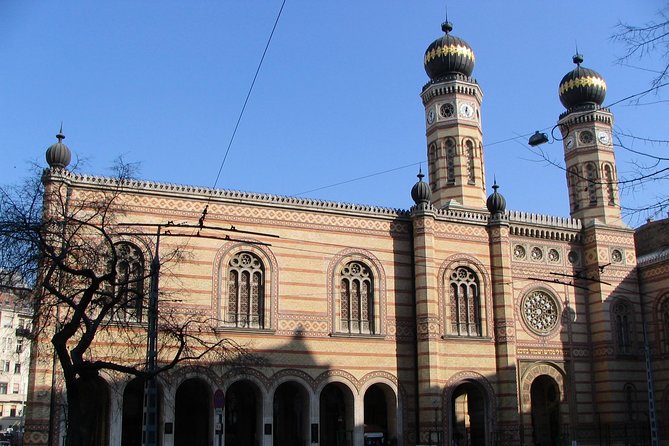
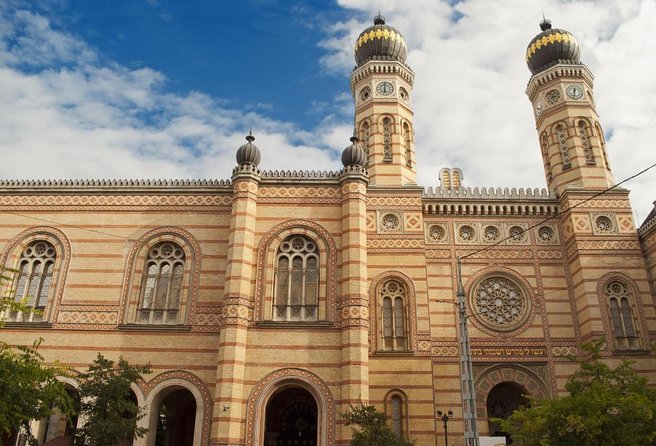
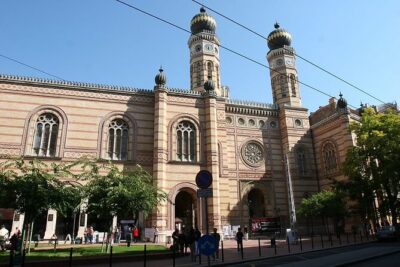
The tour begins at Budapest’s Great, or Central, Synagogue at Dohány Street 2 to 4. This is one of the city’s major landmarks and the largest Jewish temple in Europe, but the point of the visit is not simply to admire a grand building and take a few photographs.
Inside, your guide explains the Hungarian Neologue Jewish community, a branch of Judaism shaped by local history and culture. You also learn how Hungarian Jewish life differed by geography, religious practice, and community tradition. That background makes the later synagogue visits far more useful, since you are not looking at three unrelated buildings.
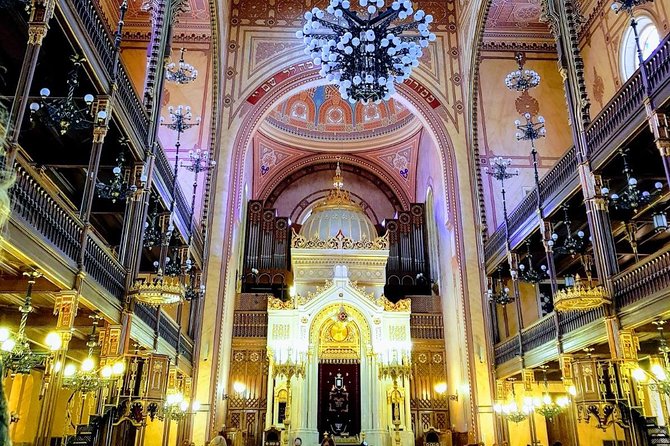
The synagogue dates from the 1850s and has a striking architectural mix. The interior is grand and colorful, with an organ associated with performances by Franz Liszt. Your guide also places the building within the story of Jewish Budapest, rather than treating it as an isolated monument.
You have about 30 minutes here, with admission included. That is enough for an introduction, though not enough for every museum display or side room. One important practical point came up in the tour feedback: the museum in the basement may not be part of the guided explanation. If that museum matters to you, ask about it at the start so you do not leave Budapest wishing you had allowed more time.
I especially like this opening because it gives you a framework. Without it, the Neologue label, the synagogue’s architecture, and the later contrast with Orthodox traditions can feel like a blur of unfamiliar terms.
More Jewish heritage tours:
- Budapest Jewish Heritage Memorial Walking Tour & Synagogue Entry
★ 5.0 · 568 reviews - Budapest: Jewish Heritage Guided Tour with Synagogue Ticket
★ 4.8 · 533 reviews - Jewish Quarter of Budapest Walking Tour
★ 4.7 · 369 reviews
Remembering the Holocaust at Raoul Wallenberg Memorial Park
The next major stop is the Raoul Wallenberg Holocaust Memorial Park, located behind the Great Synagogue complex. This is where the tour shifts from architecture and community life to persecution, survival, and loss.
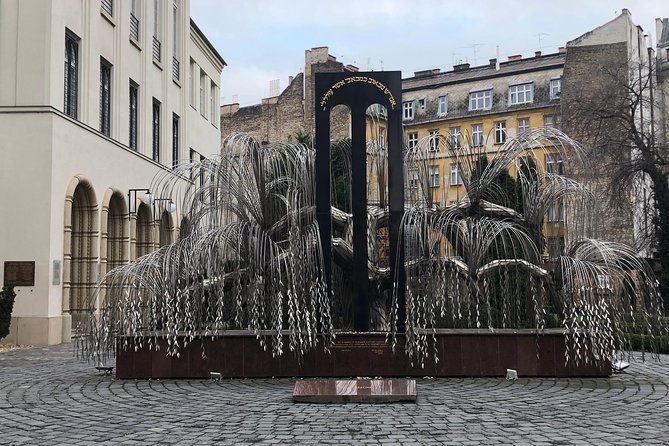
Your guide discusses the Hungarian Holocaust and the Righteous Gentiles who risked their lives to save Jewish people. The memorial to Raoul Wallenberg is part of that story. The Emmanuel Tree of Life, with its metal leaves, is the park’s most recognizable symbol, but the setting also carries a quieter weight because it includes a cemetery created on the territory of the Budapest ghetto.
More than 2,000 victims are buried there. The planned visit lasts about 20 minutes, which gives you time to understand the site and pause, but the subject cannot be rushed emotionally. I would not schedule a noisy meal or a comic sightseeing stop immediately afterward. Give yourself a little quiet time.
This is one of the strongest parts of the experience because the guide links named individuals with the larger events. Several guides, including Milan and David, have been praised for handling difficult subjects with care and for adding family stories. One guide’s grandmother was a Holocaust survivor, a personal connection that gave the discussion added force.
The tone is serious, but the tour does not treat the Holocaust as a museum display detached from modern Jewish life. You continue into streets where Jewish institutions, food shops, cultural centers, and places of worship remain part of Budapest today.
Rumbach Street Synagogue and Its Moorish Interior
Rumbach Street Synagogue is one of the tour’s most rewarding architectural stops. Designed by Viennese architect Otto Wagner and completed in 1872, it is a Moorish-style building that has reopened after a long period of restoration.
You get around 45 minutes here, making it the longest synagogue visit in the published route. That extra time matters. The Great Synagogue is grand and ceremonial, while Rumbach feels more intimate and visually distinctive. Its restored interior gives your guide room to explain how Jewish buildings in Budapest borrowed from several architectural traditions.
The building is also useful for understanding divisions within Hungarian Jewish life. The tour does not present Neologue, Orthodox, and other Jewish communities as one single group. Instead, you see how religious practice, identity, and architecture developed along different lines.
Several guides receive praise for making these distinctions clear. Milan is repeatedly described as careful, well organized, and generous with answers. Micky, sometimes spelled Miky or Michi in tour comments, is praised for a calm style and for explaining both the religious background and the buildings’ design. David is remembered for humor, personal stories, and a strong connection to the local community.
The stated end point is Rumbach Street Synagogue, at Rumbach Sebestyén Street 13. Yet the detailed stop list also includes later walks to Dob Street and Kazinczy Street Synagogue. Because of that mismatch, I would confirm whether your booking is for the shorter route ending at Rumbach or an extended version that continues through the district.
Kiraly Street, Gozsdu Udvar, and Everyday Jewish Budapest
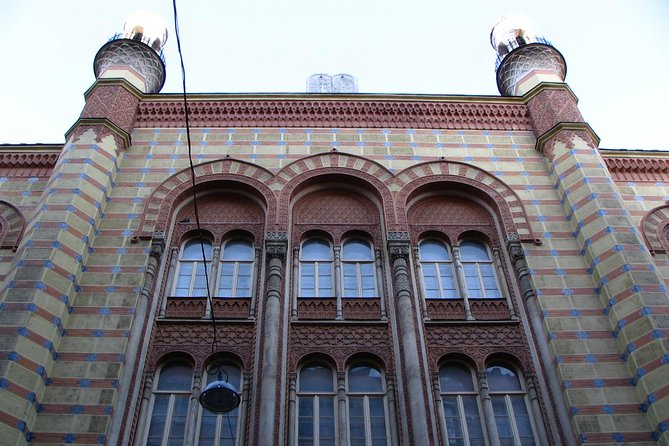
The outdoor part of the tour takes you through streets that help explain how Jewish life developed in Pest.
Kiraly Street was a major commercial road in the 18th and early 19th centuries. Jewish merchants and families helped make it a center of trade and community life. Today, the street again carries shops, restaurants, and cultural activity. The planned stop is brief, about 10 minutes, so expect an explanation of the area rather than a long shopping break.
Gozsdu Udvar adds a different mood. Its courtyards now hold restaurants, bars, cultural events, local artisan products, and antiques. In earlier years, the arcades contained kosher salami shops, food stores, and apartments. The contrast is useful: you can see how one part of the district has shifted from daily Jewish commerce to a broader entertainment area while still retaining its connection to the quarter’s past.
Do not expect free time here to browse at length. The walking tour keeps moving, and a separate review noted that stopping for flódni or other Jewish specialties could mean missing part of the route. If tasting food is a priority, plan to return later rather than trying to eat during the group walk.
The route also points out the Spinoza Theater, restaurant, gallery, and cultural venue. It is named for Baruch Spinoza, the 17th-century Jewish Dutch philosopher of Portuguese Sephardi origin. The stop is short, only about five minutes, but it shows how the quarter’s Jewish identity appears in cultural life as well as in religious buildings.
More things to do in Budapest:
- Budapest: City Highlights Cruise with Welcome Drink
★ 4.6 · 35,610 reviews - Budapest: Unlimited Prosecco, Beer and Aperol Spritz Cruise
★ 4.8 · 25,310 reviews - Budapest: Széchenyi Spa Day Ticket with Optional Upgrades
★ 4.3 · 23,911 reviews - Budapest: Nighttime or Daytime Sightseeing Cruise
★ 4.2 · 21,062 reviews
The Carl Lutz Memorial and Stories of Courage
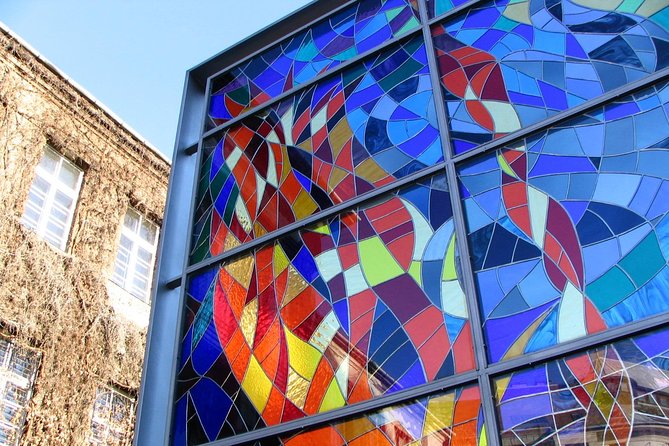
The Carl Lutz Memorial is another brief stop, lasting about five minutes. Lutz was a Swiss diplomat who helped save thousands of Hungarian Jews during the Holocaust, at great personal risk.
Five minutes may sound too short for such a subject, but the memorial works as a prompt for your guide’s larger explanation of rescue efforts. The tour places Lutz alongside other Righteous Gentiles, giving you a clearer sense of how individual choices mattered during a period of state-organized persecution.
This part of the route is not a full museum visit. You are looking at a memorial and listening to context, so the value depends heavily on the guide. That is one reason the guiding style matters so much here. The strongest comments describe guides who answer questions directly, adjust explanations for different levels of background knowledge, and keep the discussion human rather than turning it into a list of dates.
Dob Street and the Former Budapest Ghetto
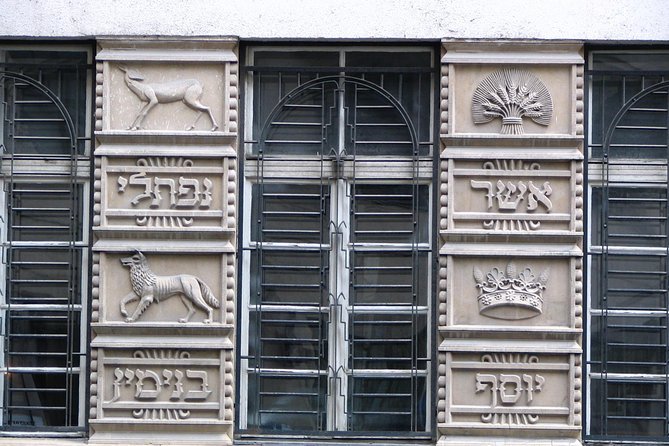
Dob Street runs parallel to Kiraly Street and once formed a central artery of Pest’s Jewish district. It also passed through the Budapest ghetto, so the guide uses the street to connect ordinary urban space with one of the darkest chapters in the city’s past.
Today, Dob Street is again part of the renewal of Jewish life and Hungarian Jewish Orthodoxy. That present-day context keeps the tour from ending in 1945. You see how the same streets have been used for commerce, worship, confinement, survival, and cultural life at different points in time.
The stop is scheduled for about 10 minutes. You will not get a long, slow examination of every building, but your guide may point out Jewish motifs and explain how the district changed. One review praised the way the guide used architecture to show the influence of different periods and religious communities.
This is also where you should expect the tour’s emotional rhythm to vary. A lively street can sit beside a site tied to suffering. That contrast is not a flaw in the route. It is part of understanding a living neighborhood rather than viewing it only as a memorial district.
Kazinczy Street Synagogue and Orthodox Budapest
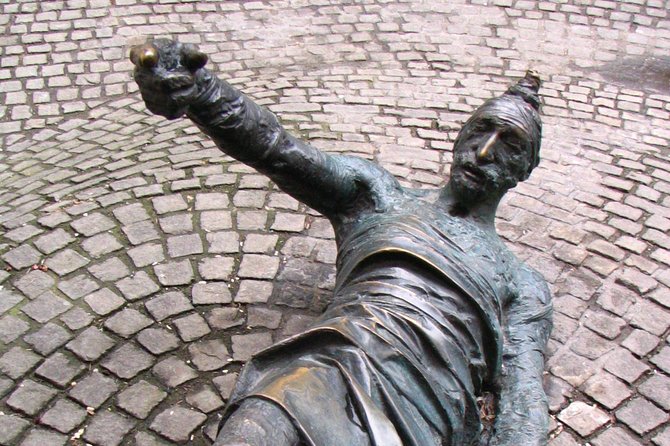
Kazinczy Street is described as Budapest’s cultural street, but it also contains the Hungarian Orthodox Jewish Center. The complex includes a synagogue, mikveh, kosher restaurants and cafés, schools, a butcher, and kosher food shops.
The synagogue’s design reflects early 20th-century Budapest Art Nouveau, known locally as Secession. This gives you a third architectural and religious point of comparison after the Great Synagogue and Rumbach Street Synagogue.
The planned stop lasts about 15 minutes, but admission is not included. The supplied route information does not make clear whether the group enters the synagogue on every departure, or whether the stop is an exterior explanation. Also, the published ending point remains Rumbach Synagogue. Ask about these details before you pay if seeing the Kazinczy interior is central to your plans.
One review specifically noted that access to the Chabad synagogue was not available. That is a useful reminder that synagogue entry can change, even when a building is usually welcoming. Religious services, restoration, security, or other local conditions may affect access.
How Much Walking and Talking Should You Expect?
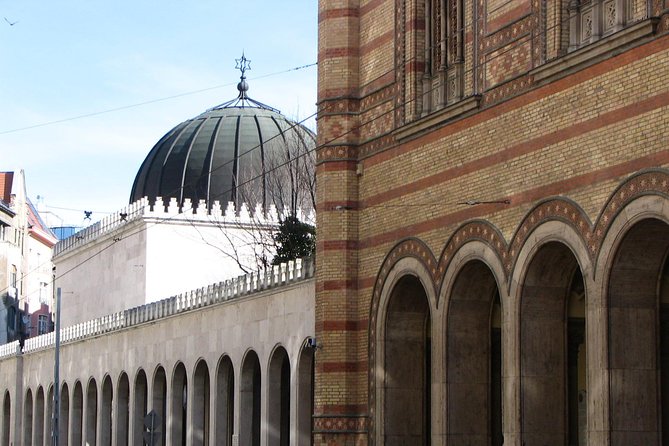
This is a walking tour, but it is not a strenuous city hike. The stops are close together in the Jewish Quarter, and one review noted that even a participant recovering from hip surgery managed the walking comfortably. Still, the route includes standing inside synagogues and outdoors, so comfortable shoes remain a smart choice.
The experience is discussion-heavy. You will spend substantial time listening to explanations of Jewish history, religious differences, architecture, the ghetto, and the Holocaust. That is ideal if you want a guided history lesson with buildings attached.
If you prefer constant movement and quick facts, the pace may feel slow. One critical assessment found there was not much walking and a great deal of talking. I would treat that as a fair warning, not a defect. The tour’s main product is interpretation, not exercise.
The group can include up to 35 people. That is a reasonable size for a popular central Budapest walk, but it is large enough that the guide’s voice and group control matter. The strongest guide feedback centers on clear organization and the ability to answer questions without losing the group.
Price, Timing, and Practical Value
At $63.52 per person, this is not the cheapest way to see Budapest’s Jewish Quarter. It becomes better value if you want entry to the Great Synagogue, the Holocaust Memorial Park, and Rumbach Street Synagogue, plus a guide who explains how the sites connect.
You also avoid having to work out the distinctions between Neologue and Orthodox communities on your own. That background is the part most likely to be missed if you simply walk from synagogue to synagogue with a guidebook.
The tour is offered in English and is generally suitable for most people. It is near public transportation, and service animals are allowed. Regular clothing is fine, but your shoulders must be covered and clothing should reach the knee. If needed, a covering can be bought at the site, and men can obtain a head covering on entry.
Synagogues can close without warning. If one closure affects the program, an alternative visiting time is offered, but no refund is provided because the experience is sold as a package. If all the synagogues close, you can receive alternative hours or dates, or a full refund. Free cancellation is available up to 24 hours before the start time, and poor weather can lead to a new date or a full refund.
Who Will Get the Most From This Tour?
I would choose this tour if you want Jewish Budapest explained through buildings, streets, memorials, and present-day institutions. It suits first-time visitors who want a clear introduction, as well as people with a strong interest in architecture or Holocaust history.
It is especially helpful if you are unsure how the Great Synagogue fits into Budapest’s wider Jewish story. The route gives you comparisons rather than a single grand monument, and guides such as Milan, David, Micky, and Daniel have been praised for making complex subjects easy to follow.
You may want a different plan if your main goal is Heroes’ Square, since that place is not included in the detailed route. You may also prefer independent sightseeing if you dislike long explanations or want plenty of time for food and shopping.
Should You Book the Budapest Jewish Quarter Tour?
I would book it if the Great Synagogue, Rumbach Street Synagogue, Holocaust memorials, and Jewish history are high on your Budapest list. The strongest reason to go is the combination of impressive interiors and careful guiding. The personal stories, architectural comparisons, and clear explanations of Jewish communities give the walk more purpose than a simple landmark tour.
Before booking, confirm two points: the role of Kazinczy Street Synagogue and the stated ending at Rumbach. If you are comfortable with a serious, talk-focused experience and you follow the dress rules, this is a thoughtful way to understand one of Budapest’s most important districts.
FAQ
How long does the tour last?
The tour lasts approximately 2 hours and 20 minutes.
What language is the tour offered in?
The tour is offered in English.
Where does the tour begin?
It begins at Budapest, Dohány u. 2 to 4, 1075 Hungary, at the Great Synagogue.
Where does the tour end?
The stated end point is Rumbach Street Synagogue at Rumbach Sebestyén u. 13, 1074 Budapest.
Is admission to the Great Synagogue included?
Yes. Admission fees and taxes are included, including entry to the Great Synagogue.
Is admission to Kazinczy Street Synagogue included?
No. The listed information says admission to Kazinczy Street Synagogue is not included.
What should I wear?
Wear regular clothing with covered shoulders and clothing reaching the knee. A covering can be purchased on site if needed, and a head covering for men is available upon entry.
Can I cancel for a full refund?
Yes, if you cancel at least 24 hours before the experience start time. Cancellations or changes made less than 24 hours before the start are not accepted for a refund.
Just added in Budapest
- Budapest: Private Walking Tour with a Local Guide★ 3.6 · 6 reviews
- Budapest: Danube River Views Bike Ride★ 4.8 · 23 reviews
- Budapest: City Bike Tour with Coffee Stop★ 5.0 · 37 reviews
- From Budapest: Guided Tour of Eger with Wine Tasting★ 4.5 · 6 reviews
- Walk to recent and aged spiritual sanctuaries near Budapest★ 5.0 · 5 reviews
- Walking consultancy with alternative psychologist and author★ 5.0 · 2 reviews
- Budapest: Guided Tour of the Parliament Building in Spanish★ 4.6 · 1,240 reviews
- Budapest: 3-Hour Trabant Sightseeing Tour★ 4.7 · 28 reviews
Jewish Heritage Tours, compared.
Budapest Jewish Heritage Memorial Walking Tour & Synagogue Entry
Read our review →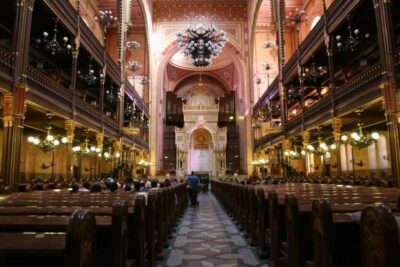
Jewish Heritage Guided Tour with Synagogue Ticket
Read our review →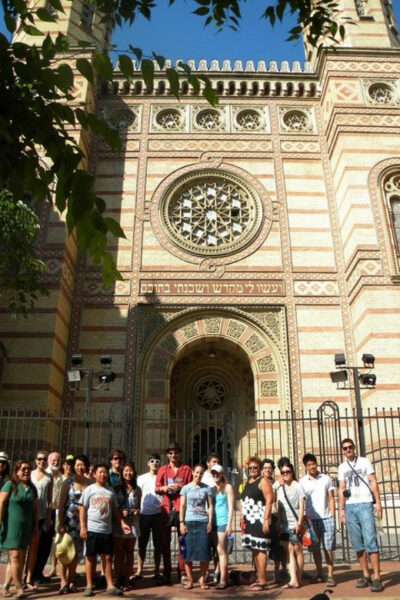
Past and Present of Budapest Jewish District Tour
Read our review →
Budapest Dohany Synagogue & Hungarian Jewish Museum & free extras
Read our review →
Jewish History Guided Walking Tour with Historian
Read our review →Browse the lists this tour appears in