
REVIEW · JEWISH HERITAGE TOURS
Jewish Quarter of Budapest Walking Tour
Budapest’s past appears beside its party life. This 90-minute walk through the Jewish Quarter connects the Hungarian Jewish story with modern street art, nightlife, and ruin pubs. I like the way the tour treats the district as a living neighborhood, not just a collection of memorials. I also like the personal storytelling, especially from guides such as Judit, Ester, Gary, Dora, and Edith, who are praised for clear explanations and thoughtful answers.
The main consideration is the unusual pricing. The $2.27 charge is a booking and administration fee, not the guide’s payment, so you should plan on making a donation at the end. The suggested amount is about €10 per person, and the tour requires upper-intermediate English. You also visit the three synagogues from the outside only.
In This Review
- Key points to know before you book
- Starting at the Budapest Eye
- Seeing the Jewish Triangle from the street
- Learning about Hungarian Jewish life
- Remembering the Righteous Gentiles
- Spotting symbols, statues, and urban art
- Finishing at a ruin pub
- How the 90-minute length works
- English, group size, and accessibility
- Understanding the real price
- Who should book this Jewish Quarter walk?
- Should you book it?
- FAQ
- How long does the Jewish Quarter walking tour last?
- Where does the tour start?
- Does the tour enter the synagogues?
- What language is the tour conducted in?
- How much should I donate to the guide?
- Can a group of eight or more people book?
- Is the tour wheelchair accessible?
Key points to know before you book
- Three synagogues form the Jewish Triangle: The route links the district’s most important Jewish buildings, though entry inside is not part of the walk.
- History comes through personal stories: Expect discussion of Hungarian Jews, wartime suffering, and the Righteous Gentiles who helped save lives.
- The tour ends at a ruin pub: This gives you a useful introduction to Budapest nightlife without booking a separate pub crawl.
- Guides are a major strength: Judit, Ester, Gary, Dora, Edith, Andy, Ursula, and Emmy are praised for clear speaking, warmth, humor, and careful treatment of difficult subjects.
- The group rule matters: Groups of eight or more cannot book, even if they reserve separately.
- It is short but concentrated: The walk lasts about 1.5 hours, making it a good first look at the district rather than a full Jewish Budapest study tour.
Starting at the Budapest Eye
The tour begins beside the fountain at the Budapest Eye ferris wheel in central Budapest. Look for the guide holding a royal blue flag. This is a simple meeting point, but the Budapest Eye area can be busy, so arrive with enough time to locate the fountain and flag without rushing.
The start works well for a first day in the city. You are near central sights, public transport, shops, and places to eat, so you can fit the walk into a larger Budapest plan. From here, the guide leads you toward the Jewish District and its streets, buildings, symbols, and memorial references.
The walk returns to the original meeting point according to the stated arrangement, although the experience also ends at a local pub along the route. It is worth checking with the guide where the group formally finishes that day, especially if you have a later reservation. The important practical point is that you will be left in the Jewish Quarter, an area with plenty of options for food and drinks.
More Jewish heritage tours:
- Budapest Jewish Heritage Memorial Walking Tour & Synagogue Entry
★ 5.0 · 568 reviews - Budapest: Jewish Heritage Guided Tour with Synagogue Ticket
★ 4.8 · 533 reviews - Budapest: Best of Downtown and Jewish Quarter Tour
★ 5.0 · 312 reviews
Seeing the Jewish Triangle from the street
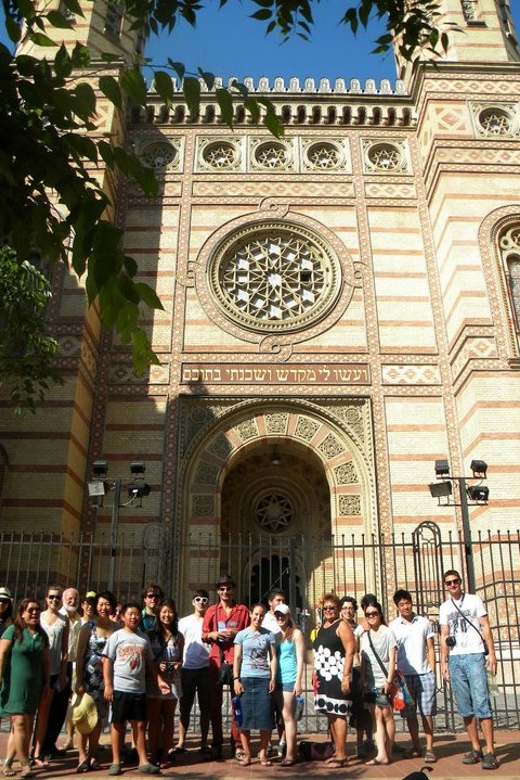
The central structure of the walk is the Jewish Triangle, formed by three synagogues. Seeing these buildings together helps you understand how important this part of Budapest was to Jewish life. The route does not include synagogue admission, so do not book this walk expecting interior visits, religious services, or detailed architectural access.
That limitation is also useful. A street tour keeps the pace moving and lets the guide connect religious buildings with the surrounding streets, urban details, and everyday life. You get the setting first, then you can return later to enter a synagogue on your own if you want more time inside.
The guide’s explanation is the key here. Several guides are praised for making the information clear without turning the walk into a dry lecture. Judit is described as patient and very well prepared. Edith is praised for her clear voice, preparation, care, and compassion. Ester is noted for her storytelling, which matters when the subject moves from dates and buildings to people caught in frightening events.
You should expect a mix of historical explanation and questions. The guides are described as willing to answer questions in detail, and they often offer ideas for other places to see and eat in Budapest. That makes the route more useful than a fixed speech, particularly if you are still deciding how to spend the rest of your stay.
Learning about Hungarian Jewish life
The tour covers the history of Hungarian Jews, but it is not presented only as a sequence of tragic events. The walk aims to show how Jewish life shaped Budapest and how the district continues to function as part of the city.
The supplied details do not promise a full reconstruction of daily Jewish life before the Second World War. That is an important limit. If you want a long, specialized study of family life, religious practice, commerce, or prewar neighborhoods, you will need another museum or a more focused program.
Still, the tour gives you a useful framework. It places the Jewish community within the wider story of Budapest and Hungary, then shows how the district changed over time. One guide, Gary, is praised for explaining both Jewish Hungarian history and the broader history of Hungary. That wider context helps you understand why the Jewish Quarter cannot be separated from the city’s political and social past.
The strongest part of the experience appears to be the human scale. The guides use touching stories and invite questions, which can make difficult material easier to follow. You are not simply looking at old façades. You are being asked to think about the people who lived here, the pressures they faced, and the choices made by those who helped them.
Remembering the Righteous Gentiles
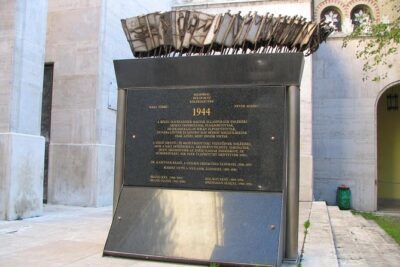
A major subject is the Righteous Gentiles, non-Jewish people who helped protect or rescue Jews during the Holocaust. This gives the walk a broader moral focus. The story is not only about persecution and loss, but also about courage and individual action.
The subject needs a respectful guide, and that is where the personal tone of the tour matters. The strongest guide comments describe the presentation as moving, respectful, and careful with the difficult situation. Judit, in particular, is praised for handling emotional material with patience and clarity.
You should expect the mood to change during this section. The tour includes fun and contemporary material, but the historical content can be heartbreaking. That contrast is not a flaw. It reflects the district itself, where memorials, everyday businesses, nightlife, and traces of the past share the same streets.
If you are traveling with children, use your judgment. One comment says the tour can work with toddlers only if they remain quiet in a stroller. The subject matter may also be better suited to older children who can engage with serious historical discussion.
More walking tours in Budapest:
- Budapest: Buda Castle Walk with Saint Stephen’s Hall
★ 4.5 · 3,012 reviews - Big Bus Budapest Hop-On Hop-Off Bus and Walking Tour
★ 3.5 · 2,206 reviews - Budapest: Buda Castle District Walking Tour
★ 4.6 · 2,108 reviews - Budapest City Landmarks Walking Tour in 2 Hours
★ 5.0 · 2,048 reviews
Spotting symbols, statues, and urban art
The walk also looks for lesser-known symbols and details in the neighborhood. One particularly useful theme is Budapest’s miniature statues. A guide may point out examples around the city and explain the stories behind them, giving you something to watch for after the tour ends.
This is a good addition because it trains you to look up from the main sights. Budapest rewards that habit. Small figures, painted walls, signs, and odd street details can say as much about current city life as a grand public building.
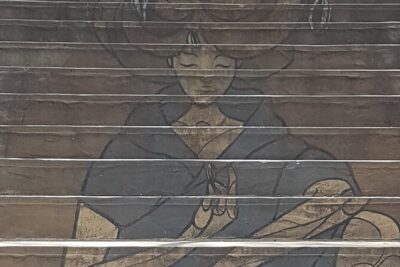
The urban art section helps keep the tour from becoming relentlessly solemn. You move between historical evidence and modern Budapest, including the city’s street-art scene and nightlife culture. The result is a more complete sense of the district as it exists now, rather than a place frozen in wartime memory.
Do not expect a dedicated street-art tour, though. The emphasis remains Jewish Quarter history. The art and symbols are supporting material, useful for making the streets more readable and giving you a few extra stops to seek out later.
Finishing at a ruin pub
The final stop is one of the most practical parts of the experience. The tour ends at a local ruin pub, with several comments specifically praising this feature. One guide finishes at Szimpla, often written as Szimpla Kert, at a time when you can look around before the heavier nighttime crowds arrive.
This is not a full pub crawl. You are introduced to the setting and then can choose what to do next. That distinction matters. If you want guided nightlife all evening, this walk will not provide it. If you want a friendly first look at Budapest’s famous ruin-bar culture, it is a clever ending.
A ruin pub can be easy to miss if you do not know where to look. The guides also provide suggestions for other bars and restaurants, which can save you time later. Gary is praised for offering useful food and drink recommendations, while other guides are credited with suggesting additional things to do around Budapest.
I especially like the timing described for the final stop. Seeing a ruin pub before the main evening rush gives you a chance to understand the space without being swallowed by a loud crowd. You can stay for a drink, eat elsewhere, or use the location as a starting point for your own evening.
How the 90-minute length works
Ninety minutes is enough time to build a clear outline of the district without taking over your day. The walk is short enough to fit before lunch, before dinner, or between major Budapest sights. It also suits anyone who wants an introduction before deciding which synagogue, museum, or memorial to visit independently.
The pace appears manageable. Guides are praised for pausing regularly, finding shade, and avoiding long periods of standing in one place. That is helpful in hot weather and makes the route easier for people who prefer a gentler pace.
The tradeoff is depth. Several comments praise the tour but wish it had been longer. You will get a focused introduction, not every detail of the Jewish Quarter. The time is used for the main story, the three synagogues, symbols, urban culture, and the ruin pub finish.
For the best result, treat the walk as a foundation. Take mental notes of the places that interest you, then return later with more time. The tour is particularly effective on the first or second day of a Budapest visit, when you want context before exploring on your own.
English, group size, and accessibility
The live guide speaks English, and upper-intermediate English is essential. This is more demanding than knowing basic travel phrases. The discussion includes historical ideas, emotional stories, questions, and references to Hungarian and Jewish culture.
If you follow spoken English comfortably in a busy outdoor setting, you should be fine. If you need frequent translation or simple vocabulary, this may feel tiring. The guide’s clear speaking style helps, with Edith singled out for an especially easy-to-follow voice, but the operator still makes the language requirement clear.
Groups of eight or more are not allowed to book. This rule applies even if a large party tries to reserve through separate bookings. It keeps the walk closer to a small-group experience and may help preserve the conversational style praised by many participants.
The activity is listed as wheelchair accessible. Since the tour takes place on city streets and includes a walking route, you may still want to confirm current street conditions if you have particular mobility needs. No separate transport is included.
Understanding the real price
The advertised $2.27 is not the complete cost in the usual sense. It is a booking fee paid to reserve your place and cover administration and marketing. It does not go to the guide.
The guide depends on donations at the end. The amount is your choice, with €10 per person given as the usual suggestion. I would treat that donation as part of your expected budget, not as a surprise add-on.
At roughly €10 plus the small booking fee, the value is strong if you want a personal introduction to the Jewish Quarter, clear historical storytelling, and practical evening suggestions. The price is less attractive if you only want to enter synagogues, since admission is not included and the interiors are not visited.
The donation model also means you should judge the tour by the quality of the guide you receive. The individual guides named in the feedback, including Judit, Ester, Gary, Dora, Edith, Andy, Ursula, and Emmy, receive repeated praise for warmth, energy, humor, careful explanations, and patience with questions. That is a good sign, but the style may vary from one guide to another.
Free cancellation up to 24 hours before the start gives you useful flexibility. You can also reserve now and pay the booking fee later under the stated booking arrangement, which helps if your Budapest schedule is still shifting.
Who should book this Jewish Quarter walk?
I would choose this tour if you want history explained in plain English, a human approach to painful subjects, and a short route that also introduces present-day Budapest. It suits first-time visitors, history-minded adults, and anyone curious about the connection between Jewish heritage, street art, and ruin pubs.
It is also a good match if you like asking questions. The guides are repeatedly praised for responding carefully rather than rushing through a fixed script. That can turn a standard walking route into a useful conversation about Budapest.
I would choose something else if you need synagogue interiors, a long architectural tour, or a specialist account of Jewish daily life before the Second World War. You should also reconsider if your English is below upper-intermediate level or if your group has eight or more people.
Should you book it?
Book this Jewish Quarter walking tour if you want a compact, thoughtful introduction with a memorable local ending. The combination of the three synagogues, Hungarian Jewish history, stories of the Righteous Gentiles, miniature statues, urban art, and a ruin pub gives you more range than the low booking fee suggests.
Go in with clear expectations: the synagogues are viewed from outside, the guide is funded by your donation, and 90 minutes only allows for an introduction. Plan on about €10 per person for the guide, meet beside the Budapest Eye fountain under the royal blue flag, and bring enough English to follow serious historical discussion.
FAQ
How long does the Jewish Quarter walking tour last?
The tour lasts 1.5 hours, or 90 minutes. Starting times vary, so you need to check availability for the date you want.
Where does the tour start?
Meet beside the fountain at the Budapest Eye ferris wheel in central Budapest. The guide will be holding a royal blue flag.
Does the tour enter the synagogues?
No. The route visits the three synagogues that make up the Jewish Triangle from the outside. You can visit the synagogue interiors independently.
What language is the tour conducted in?
The live tour guide speaks English. An upper-intermediate level of English is essential so you can follow the historical explanations and stories.
How much should I donate to the guide?
The donation is your choice. About €10 per person is the usual suggested amount, and the small booking fee paid when reserving does not contribute to the guide’s earnings.
Can a group of eight or more people book?
No. Groups of eight or more are not allowed to book, even if they try to reserve as separate smaller bookings.
Is the tour wheelchair accessible?
Yes. The activity is listed as wheelchair accessible.
Just added in Budapest
- Budapest: Private Walking Tour with a Local Guide★ 3.6 · 6 reviews
- Budapest: Danube River Views Bike Ride★ 4.8 · 23 reviews
- Budapest: City Bike Tour with Coffee Stop★ 5.0 · 37 reviews
- From Budapest: Guided Tour of Eger with Wine Tasting★ 4.5 · 6 reviews
- Walk to recent and aged spiritual sanctuaries near Budapest★ 5.0 · 5 reviews
- Walking consultancy with alternative psychologist and author★ 5.0 · 2 reviews
- Budapest: Guided Tour of the Parliament Building in Spanish★ 4.6 · 1,240 reviews
- Budapest: 3-Hour Trabant Sightseeing Tour★ 4.7 · 28 reviews
Jewish Heritage Tours, compared.
Budapest Jewish Heritage Memorial Walking Tour & Synagogue Entry
Read our review →
Jewish Heritage Guided Tour with Synagogue Ticket
Read our review →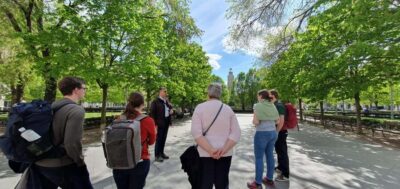
Past and Present of Budapest Jewish District Tour
Read our review →
Budapest Dohany Synagogue & Hungarian Jewish Museum & free extras
Read our review →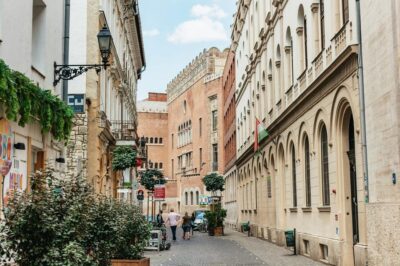
Jewish History Guided Walking Tour with Historian
Read our review →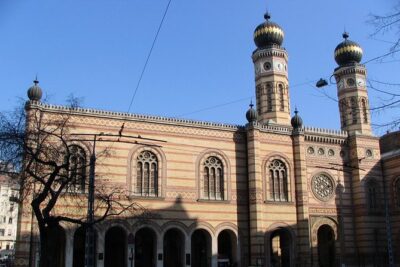
Budapest Dohany, Heroes’, Rumbach synagogues & Jewish Ghetto Tour
Read our review →Browse the lists this tour appears in