
REVIEW · JEWISH HERITAGE TOURS
Budapest City Walk in Jewish Quarter
Budapest’s Jewish Quarter rewards slow walking. This four-hour tour brings together synagogues, WWII memorials, ordinary courtyards, cafés, ruin bars, and stories about Jewish life in Budapest today. I especially like the flexible private format and the chance to see places many visitors would miss, including the remaining ghetto wall. The guide named most often is Timea Tarjani, whose family connection and years of local experience add a personal layer.
I also like the practical help: hotel pickup and drop-off, restaurant recommendations, and assistance arranging kosher food if needed. The main consideration is cost. At $356.90 per group of up to six, it can be good value for a family or small group, but entrance fees can add as much as €46 per person, and food is not included.
In This Review
- Key points to know before booking
- Why this compact Pest neighborhood works so well on foot
- Starting with Budapest’s synagogue triangle
- Memorials that put wartime history on the ground
- A living quarter, not only a memorial
- The guide makes the difference
- How private and flexible is the route?
- Four hours of walking, with a few practical limits
- Is $356.90 a fair price?
- Who will get the most from this walk?
- Should you book the Budapest Jewish Quarter walk?
- FAQ
- Where does the Budapest Jewish Quarter walk begin?
- How long does the tour last?
- What language is the tour offered in?
- Is hotel pickup included?
- What is the price?
- Are synagogue entrance fees included?
- Can I visit all three main synagogues?
- Is food included?
- How much walking is involved?
- What should I wear to the synagogues?
- Can I cancel for a refund?
Key points to know before booking
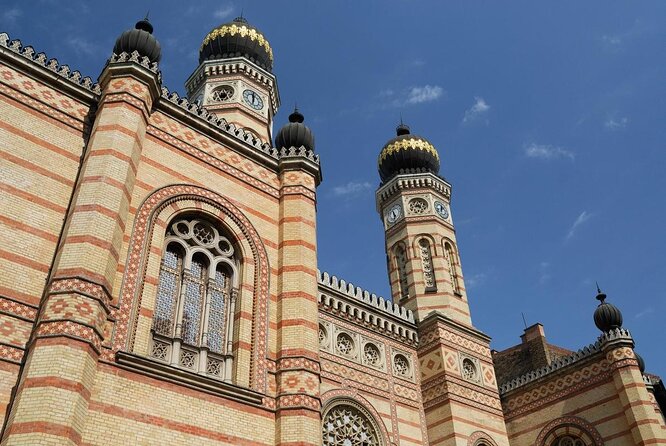
- The synagogue triangle gives the walk its backbone: Dohány Street, Rumbach, and Kazinczy each show a different side of Budapest’s Jewish life.
- WWII history is handled through real places: Expect the Raoul Wallenberg Memorial Garden, stumbling stones, the last remaining ghetto wall, and the Shoes Monument by the Danube.
- Timea Tarjani receives exceptional praise: Her personal connection to Hungarian Jewish life, family stories, and warm manner are central to the experience.
- The route can change to suit you: You can spend more time at a place that matters to you or skip a stop that does not.
- It is not only a memorial tour: Gozsdu Courtyard, local shops, cafés, galleries, the Kazinczy mikveh, and Szimpla show the quarter as a living neighborhood.
- Plan for walking and modest extra costs: Synagogue admission is separate, and religious sites may require a hat or scarf.
Why this compact Pest neighborhood works so well on foot
Budapest’s seventh district packs a remarkable number of sights into a fairly small area. That makes walking the right choice. You are not spending half the tour in a vehicle, and you get time to notice the details between major stops: residential façades, courtyard entrances, small businesses, memorial stones, and the changing rhythm of the streets.
The quarter is also a place of contrasts. One block may bring you to a grand synagogue, the next to a modest prayer room or an unassuming building with a painful past. A few minutes later, you may be looking at a café, gallery, or ruin bar used by today’s residents.
That mixture is important. A tour focused only on monumental buildings can make the Jewish Quarter feel frozen in history. This walk connects the past with the present, showing both what was lost and how Jewish life continues in Budapest.
The pickup is offered at your hotel or rented apartment, which is useful if you are still finding your way around the city. At the end, you can return to your accommodation or be dropped at a restaurant for lunch or dinner.
More Jewish heritage tours:
- Budapest Jewish Heritage Memorial Walking Tour & Synagogue Entry
★ 5.0 · 568 reviews - Budapest: Jewish Heritage Guided Tour with Synagogue Ticket
★ 4.8 · 533 reviews - Jewish Quarter of Budapest Walking Tour
★ 4.7 · 369 reviews
Starting with Budapest’s synagogue triangle
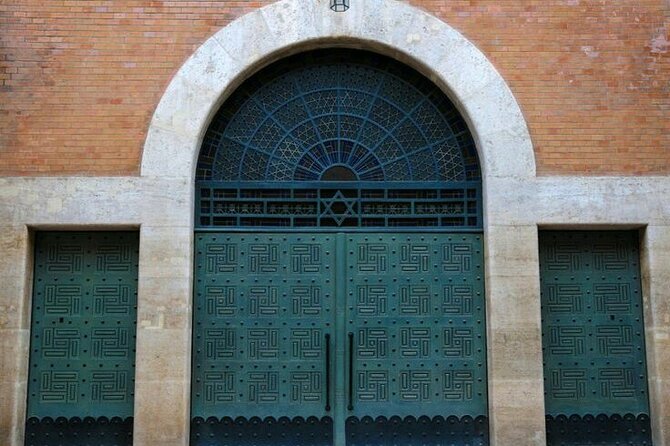
The most recognizable part of the route is the group of three major synagogues often called Budapest’s synagogue triangle: Dohány Street, Rumbach, and Kazinczy.
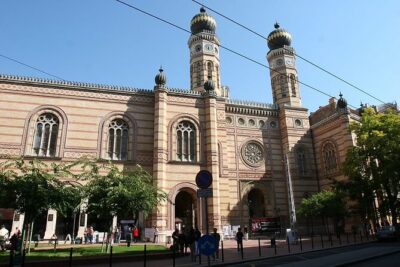
Dohány Street Synagogue is the grandest and most famous of the three. It is also described as the second-largest non-Orthodox synagogue in the world. Its scale helps explain the importance of Budapest’s Jewish community before the Second World War, when the city was a major center of Jewish life in Central Europe.
You should allow time here for the setting to sink in. This is not simply a beautiful building to photograph. It is tied closely to the history of the wartime ghetto and to the community that endured persecution, deportation, and murder.
Rumbach Street Synagogue offers a different experience. Its architecture and atmosphere are distinct from Dohány, so visiting both is not repetitive. The contrast helps you understand that Budapest’s Jewish community was not one uniform group. Different religious traditions and congregations used different spaces.
Kazinczy Street brings another angle, including the Orthodox synagogue and the mikveh. The mikveh is a ritual bath, and its presence points to the everyday religious life that grand public buildings alone cannot show.
You may be able to visit all three synagogues, but admission is not part of the tour price. The stated maximum extra cost is €46 per person, though discounted rates may apply for families and seniors. You can choose to visit only one synagogue, which is a sensible way to control both cost and walking time.
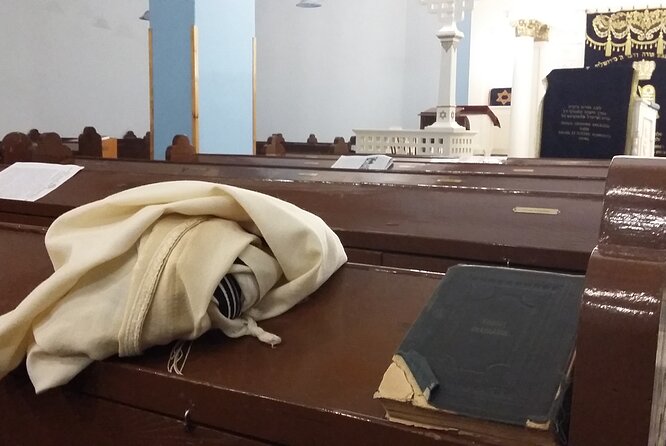
Dress matters at the synagogues. Bring your own hat or cap and scarf if you prefer not to use the pieces supplied at the sites. Ask your guide about the current entrance arrangements when you book, since the exact visits can depend on timing and your interests.
Memorials that put wartime history on the ground
The WWII portion of the walk is likely to be the most serious part of your morning or afternoon. You will not be dealing only with dates and names. The route uses physical places to show what happened to Budapest’s Jewish population.
The Raoul Wallenberg Memorial Garden includes the Emmanuel Tree, a memorial with leaves bearing names of Holocaust victims. It is a quiet place, and your guide can help connect the memorial to the work of Wallenberg, who helped save Jewish lives in Budapest.
The stumbling stones are smaller and easier to miss. Set into the pavement outside former homes, they mark people who were forced from those addresses. This is exactly why walking helps. In a vehicle, you would pass them without noticing. On foot, the memorials appear in the same streets where people once lived.
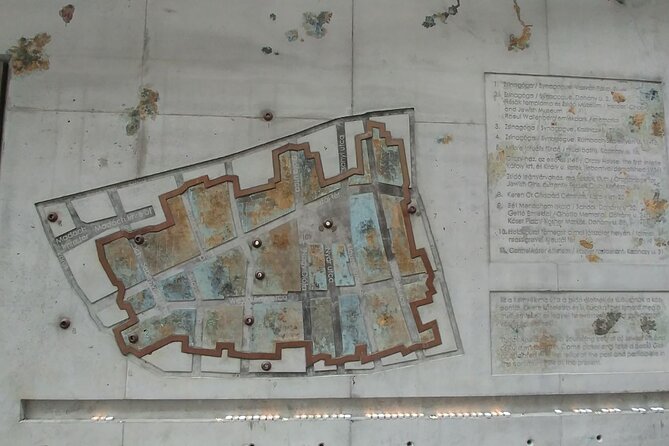
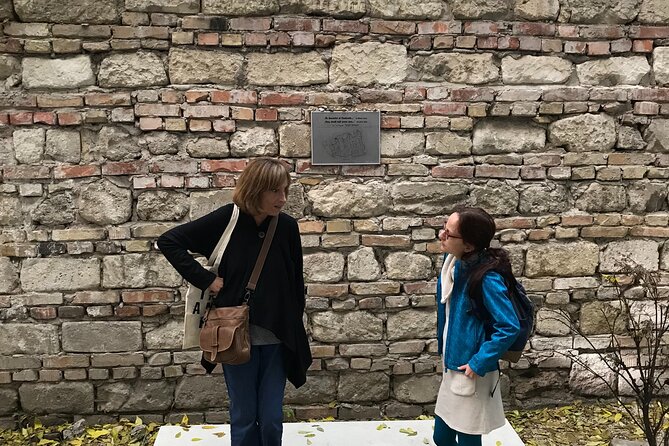
The last surviving section of the WWII ghetto wall is another important stop. It is not a vast ruin or a grand museum display. Its value comes from its modest scale. A remaining fragment can make the boundaries of the former ghetto easier to imagine, especially when your guide explains what stood around it.
Some past participants were able to see areas that are not usually open, using access arranged by Timea. That kind of access should not be treated as guaranteed, but it shows the possible value of having a local guide who knows the quarter beyond its standard sightseeing route.
The tour may also include the Shoes Monument beside the Danube. The iron shoes represent the Jewish people ordered to remove their shoes before being shot at the river during the final months of the war. It is outside the seventh district, so including it may involve a longer walk or a change in the route. Its stark simplicity makes it one of Budapest’s most affecting memorials.
Expect difficult material. This is not a light sightseeing stroll with a few historical comments added. The guide’s job is to explain the facts with care, while also helping you understand the community that existed before the Holocaust and the Jewish life that remains today.
A living quarter, not only a memorial
The tour earns its keep by moving beyond memorials. Gozsdu Courtyard is one of the places where you can see the neighborhood’s commercial and social side. Its courtyards connect streets and fill with shops, eateries, and activity.
You may also pass small food shops, confectioneries, art galleries, cafés, and festival spaces. These stops give you a better sense of how people use the area now. The Jewish Quarter is a residential district and a popular night-life zone at the same time, which can make its identity seem confusing at first.
The ruin bars are part of that modern identity. Szimpla is the best-known example, with its makeshift décor and old-building setting. Seeing it during a daytime walking tour lets you understand its place in the quarter without committing your evening to a bar visit.
This section is useful for practical reasons, too. Your guide can point you toward local eateries and shops, then recommend a restaurant for later. Restaurant recommendations and help booking a table are included, and the operator can arrange kosher meals or snacks if you request them.
Food itself is not included, so treat these recommendations as an added service rather than part of the tour. If keeping kosher matters to you, say so before the walk or at the time of booking. The provider specifically offers help arranging kosher meals and snacks.
More walking tours in Budapest:
- Budapest: Buda Castle Walk with Saint Stephen’s Hall
★ 4.5 · 3,012 reviews - Big Bus Budapest Hop-On Hop-Off Bus and Walking Tour
★ 3.5 · 2,206 reviews - Budapest: Buda Castle District Walking Tour
★ 4.6 · 2,108 reviews - Budapest City Landmarks Walking Tour in 2 Hours
★ 5.0 · 2,048 reviews
The guide makes the difference
The strongest praise is aimed at the guiding, especially Timea Tarjani. She is described as a history teacher, a granddaughter of Holocaust survivors, a longtime Budapest resident, and an active member of the Jewish community. Those personal details matter because the tour covers both public history and present-day Jewish life.
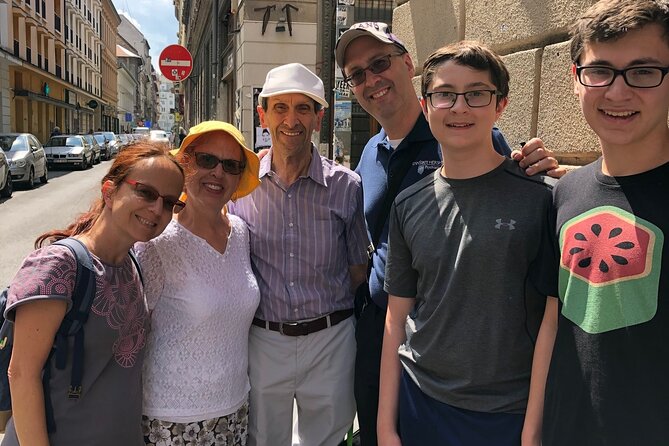
Timea’s approach appears conversational rather than lecture-heavy. She answers questions patiently, shares personal stories when useful, and adjusts the route to the group. Several families found that she kept teenagers engaged, which is not a small achievement on a four-hour history walk.
Her English is described as excellent. She has also helped with practical problems outside the basic route, including arranging COVID tests and assisting when a participant felt faint from dehydration. Those acts are not advertised as formal tour inclusions, so you should not book expecting medical or translation help. Still, they suggest a guide who pays attention to the people in front of her.
One unusual feature is the amount of extra time she may give when the group needs it. In one case, she stayed two additional hours so the family could complete the walk. Again, that should not be assumed. The advertised duration is approximately four hours, and your own schedule should allow for the stated length rather than a much longer outing.
Other guides are also named in the feedback, including Tarjani in some references and Timea in many others. The operator is Budapest Jewish Walk, and the experience includes a licensed local guide. If having Timea specifically is important to you, request her when booking and confirm availability.
How private and flexible is the route?
The advertised price covers a group of up to six, making this most naturally suited to a family, couple traveling with friends, or a small private party. The additional information also gives a maximum of 10 participants, so confirm the exact group arrangement if your party has more than six people.
The flexible route is a genuine advantage. If your family has a strong interest in synagogue architecture, you can spend more time there. If you are tracing family history, you can ask for a slower pace around addresses, memorial stones, and former community buildings. If your children are tiring, you can request a break or shorten the route.
That flexibility also means you should not expect a fixed checklist of every stop on every departure. The description names many possible places, including all three major synagogues, the Jewish Museum and Jewish Archives exhibitions, the Vasvári Street Synagogue, the Carl Lutz Memorial, the mikveh, the ghetto wall, and the Shoes Monument.
Ask about the planned route before the walk if one particular site matters most. The tour aims to give you an overall picture through stories, not to guarantee every listed location in one fixed sequence.
Four hours of walking, with a few practical limits
The walk involves a moderate amount of walking, and you should have a moderate level of fitness. You can ask for a break, but comfortable shoes remain a good idea.
Hotel pickup helps at the start, especially if you are staying outside the quarter or are not yet familiar with Budapest. You may also be dropped at a restaurant rather than taken back to your accommodation, which can make the tour a convenient lead-in to lunch or dinner.
The experience is offered in English and includes a mobile ticket. Service animals are allowed, and the area is near public transportation.
The schedule information needs a close look. The experience is listed as available daily, but the supplied opening-hours entry shows Monday from 9:00 a.m. to 2:00 p.m. Because synagogue hours and religious holidays can affect access, confirm your preferred date and start time before finalizing plans.
You receive confirmation at booking. Cancellation is free if you cancel at least 24 hours before the local start time. Changes or cancellations inside that window are not accepted for a refund.
Is $356.90 a fair price?
At first glance, $356.90 is a serious price for a walking tour. The calculation changes if you fill the group. For six people, the base cost works out to about $59.50 per person before admission fees. For two people, it is about $178.45 each, before those same extra costs.
The price includes hotel pickup and drop-off, a licensed guide, a private or small-group format, and help with restaurant and kosher arrangements. You are paying mainly for access to a guide who can explain difficult history in context and shape the route around your interests.
Admission can add up to €46 per person, although you can choose one synagogue and may qualify for a family or senior discount. Food and drinks are separate.
I see this as better value for a small group that cares about Jewish history, family heritage, or present-day community life. If you only want a quick look at the major synagogues, a shorter group tour or self-guided visit may cost less. If you want a thoughtful, adjustable walk with substantial conversation, the private price is easier to justify.
Who will get the most from this walk?
I would recommend it most strongly to:
- People exploring Hungarian Jewish ancestry
- Visitors who want WWII history explained with care and local context
- Families who need a route adjusted for different ages and interests
- First-time visitors who want both major sights and ordinary neighborhood life
- Anyone seeking kosher dining help or Jewish community context
- Repeat visitors who have already seen Budapest’s main monuments
It may be less suitable if you dislike walking, want a fast list of attractions, or are looking for a purely lighthearted city tour. The Holocaust and the wartime ghetto are central subjects, and the tone becomes solemn at several points.
The tour can work well for teenagers because it mixes buildings, memorials, street life, and personal stories. Still, parents should decide in advance how much wartime detail is appropriate for their children.
Should you book the Budapest Jewish Quarter walk?
Book it if you want to understand how Budapest’s Jewish Quarter developed, suffered, and continues to function today. The best reasons are the guide’s personal approach, the flexible pacing, and the combination of major synagogues with easy-to-miss places such as stumbling stones and the surviving ghetto wall.
For the best value, bring a group of four to six, ask in advance which synagogues are included, and decide how much you want to spend on admission. Wear comfortable shoes, bring a hat or scarf, and tell the operator if kosher food or a particular historical interest matters to you.
I would choose this walk over a standard overview tour if Jewish Budapest is one of your main reasons for visiting. It asks for time, attention, and some emotional energy, but it gives you much more than a collection of buildings. It helps you read the streets.
FAQ
Where does the Budapest Jewish Quarter walk begin?
Pickup is offered in the lobby of your hotel or in front of your accommodation, including a rented apartment.
How long does the tour last?
The tour lasts approximately four hours.
What language is the tour offered in?
The tour is offered in English.
Is hotel pickup included?
Yes. Hotel pickup and drop-off are included, with the option of restaurant drop-off for lunch or dinner.
What is the price?
The listed price is $356.90 per group of up to six people.
Are synagogue entrance fees included?
No. Entrance fees are separate, with a stated maximum additional cost of €46 per person. Discounted family and senior prices may be available.
Can I visit all three main synagogues?
The possible route includes Dohány Street, Rumbach, and Kazinczy synagogues. You can choose to visit one synagogue, and the exact itinerary is flexible, so confirm your preferred visits with the guide.
Is food included?
No. Food and drinks are not included. The provider can recommend and book a local restaurant and can arrange kosher meals or snacks if required.
How much walking is involved?
A moderate amount of walking is involved. You should have a moderate level of physical fitness, and you can ask for a break.
What should I wear to the synagogues?
You should be prepared with your own hat or cap and scarf if you do not want to wear the pieces provided by the synagogues.
Can I cancel for a refund?
Yes, if you cancel at least 24 hours before the experience starts in local time. Cancellations or changes made less than 24 hours in advance are not refunded.
Just added in Budapest
- Budapest: Private Walking Tour with a Local Guide★ 3.6 · 6 reviews
- Budapest: Danube River Views Bike Ride★ 4.8 · 23 reviews
- Budapest: City Bike Tour with Coffee Stop★ 5.0 · 37 reviews
- From Budapest: Guided Tour of Eger with Wine Tasting★ 4.5 · 6 reviews
- Walk to recent and aged spiritual sanctuaries near Budapest★ 5.0 · 5 reviews
- Walking consultancy with alternative psychologist and author★ 5.0 · 2 reviews
- Budapest: Guided Tour of the Parliament Building in Spanish★ 4.6 · 1,240 reviews
- Budapest: 3-Hour Trabant Sightseeing Tour★ 4.7 · 28 reviews
Jewish Heritage Tours, compared.
Budapest Jewish Heritage Memorial Walking Tour & Synagogue Entry
Read our review →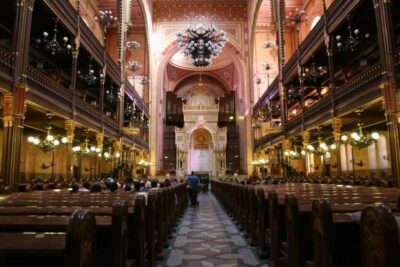
Jewish Heritage Guided Tour with Synagogue Ticket
Read our review →
Past and Present of Budapest Jewish District Tour
Read our review →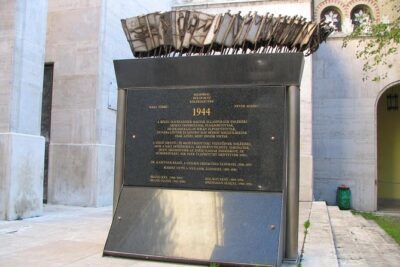
Budapest Dohany Synagogue & Hungarian Jewish Museum & free extras
Read our review →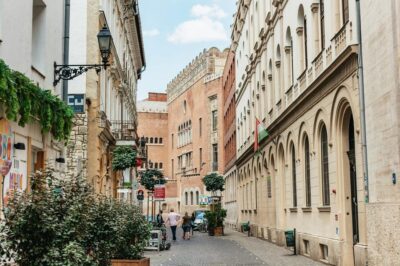
Jewish History Guided Walking Tour with Historian
Read our review →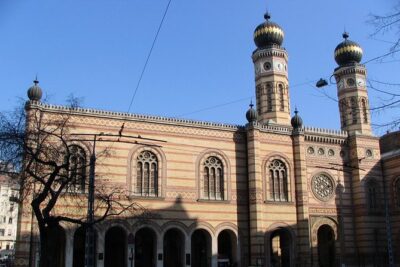
Budapest Dohany, Heroes’, Rumbach synagogues & Jewish Ghetto Tour
Read our review →Browse the lists this tour appears in