
REVIEW · JEWISH HERITAGE TOURS
Budapest: Jewish History Guided Walking Tour with Historian
The past is written into Budapest’s side streets. This 2.5-hour walk through the 7th district brings Jewish Budapest to life through synagogues, ghetto remnants, memorials, local food, and the stories of people who helped save Jewish lives. I especially like the historian-led storytelling and the small group limit of 10, which makes it easier to hear, ask questions, and keep the tour personal.
The included coffee or soft drink with flódni, a traditional Jewish cake, is another fine touch. The main consideration is clear: you see the three major synagogues from outside only, so anyone hoping to enter the Dohány Street Synagogue or the Rumbach Street Synagogue will need a separate visit.
In This Review
- Key points at a glance
- Starting at Erzsébet Square near the Ferris wheel
- The Jewish Quarter before World War II
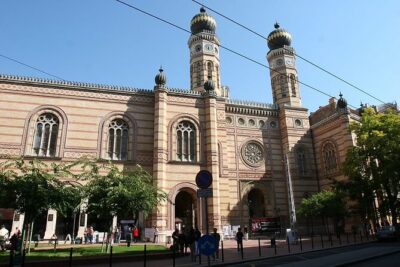
- Dohány Street Synagogue from the outside
- Rumbach and Kazinczy Street synagogues
- Walking the former Budapest Ghetto
- Memorials to Raoul Wallenberg and Carl Lutz
- Gozsdu Passage, street art, and modern Erzsébetváros
- Flódni, coffee, and the short cafe stop
- Is the two-and-a-half-hour pace manageable?
- Guide style and the value of the small group
- What $63 gets you
- Who should book this Budapest walk?
- FAQ
- Where does the tour meet?
- How do I reach the meeting point?
- How long does the tour last?
- Is the tour conducted in English?
- Does the tour enter the synagogues?
- Which synagogues are included?
- Is food included?
- Does the tour run in bad weather?
- Should you book it?
Key points at a glance
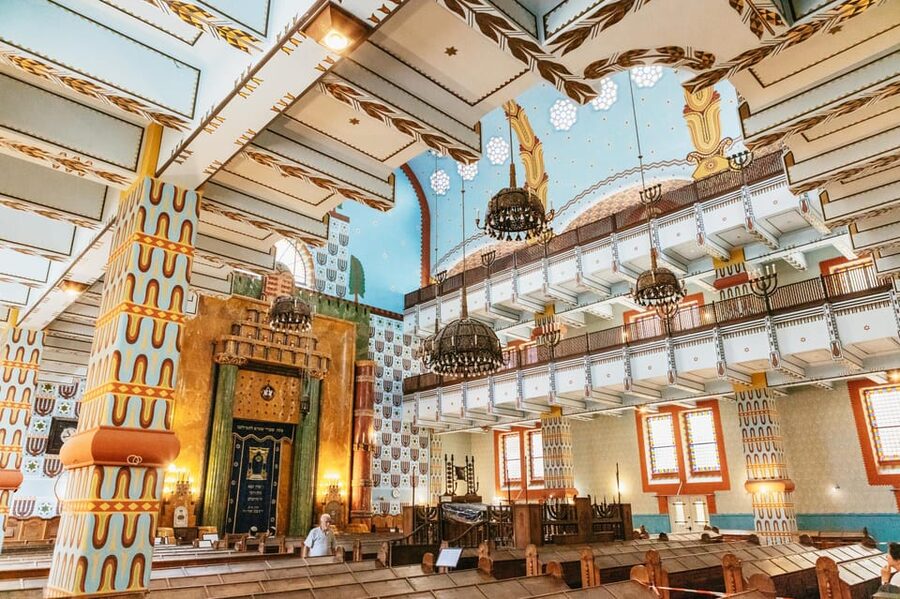
- Three synagogues in one walk: See the exteriors of the Dohány Street, Rumbach Street, and Kazinczy Street synagogues.
- History without softening the facts: The tour covers Jewish life, persecution, the Budapest Ghetto, and Hungary’s role during World War II.
- Small group, maximum 10 people: A useful size for hearing the guide and asking questions.
- Wallenberg and Lutz memorials: Learn about two men who helped save Jewish lives during the winter of 1944 and 1945.
- Flódni break included: Take a short cafe stop for coffee or a soft drink and a local Jewish pastry.
- Modern Jewish Quarter included: See Gozsdu Passage, street art, kosher businesses, and hear about ruin pubs and nightlife.
Starting at Erzsébet Square near the Ferris wheel
The meeting point is in front of the Kempinski Hotel Corvinus Budapest, facing the Ferris wheel on Erzsébet Square. This is one of Budapest’s easiest places to reach, since Deák Ferenc tér is served by the M1, M2, and M3 subway lines, along with several buses and trams.
I like this starting point because it gives you a simple landmark and avoids sending you into a confusing residential street. Arrive a little early, especially if you are unfamiliar with Budapest’s transport system. Look for the guide near the hotel entrance and Ferris wheel area.
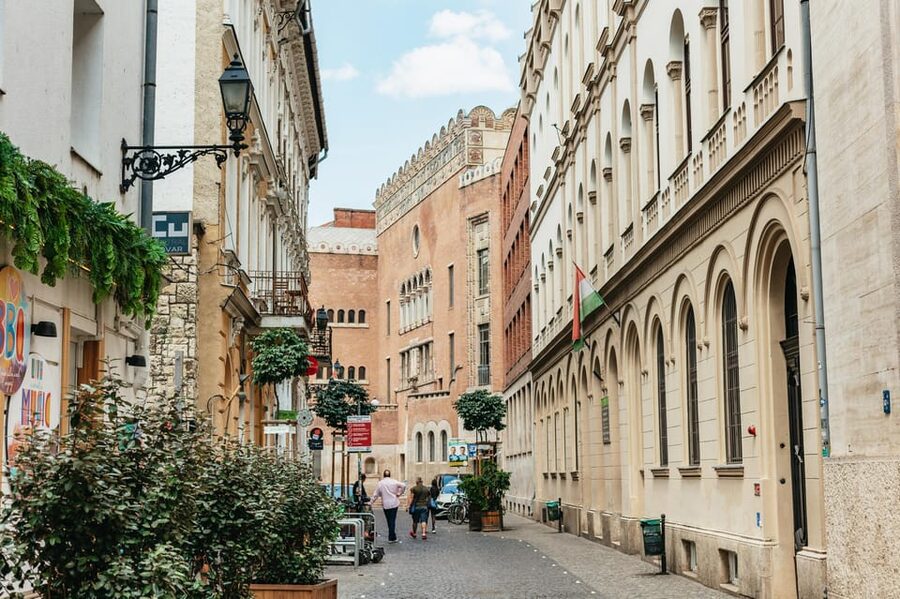
The walk then heads toward the 7th district, also known as Erzsébetváros. This part of central Budapest is now famous for nightlife and ruin pubs, but the tour asks you to look beyond the bars and bright signs. For more than 200 years, Jewish culture has shaped this district, and an active Jewish community remains here today.
The contrast is part of the point. A street may hold a kosher shop, a synagogue, a memorial, a cafe, and a club within a few minutes of one another. You get a better sense of Budapest when you see these layers together rather than treating the Jewish Quarter as a single-purpose sightseeing zone.
More Jewish heritage tours:
- Budapest Jewish Heritage Memorial Walking Tour & Synagogue Entry
★ 5.0 · 568 reviews - Budapest: Jewish Heritage Guided Tour with Synagogue Ticket
★ 4.8 · 533 reviews - Jewish Quarter of Budapest Walking Tour
★ 4.7 · 369 reviews
The Jewish Quarter before World War II
A strong part of this experience is that it does not begin with 1944. The guide first places Jewish life in the wider story of Hungary, including changing borders, political shifts, movement into and out of the country, and the restrictions placed on Jewish people over time.
That wider setting matters. Without it, the synagogues can look like beautiful old buildings with tragic stories attached. With it, you begin to understand why the Jewish community grew, how it adapted, and how laws and social pressure affected daily life.
The tour also addresses incentives and restrictions connected with conversion. One particularly useful part of the explanation, drawn from the way the tour is presented, is the effort to show Jewish life as more than a story of persecution. You hear about community, religious practice, business, food, architecture, and neighborhood life as well as the crimes committed against Jewish people.
Guide quality is central here. The strongest guides on this experience include Barbara, Andrea, András, Gábor, Noémi, Judit, Zsolt, Maggie, Daniel, and others who have been praised for clear explanations, humor, passion, and personal engagement. Names and guide assignments can change, but the repeated praise points to the main strength of the tour: the person leading it can make a complicated subject understandable without turning it into a dry lecture.
Dohány Street Synagogue from the outside
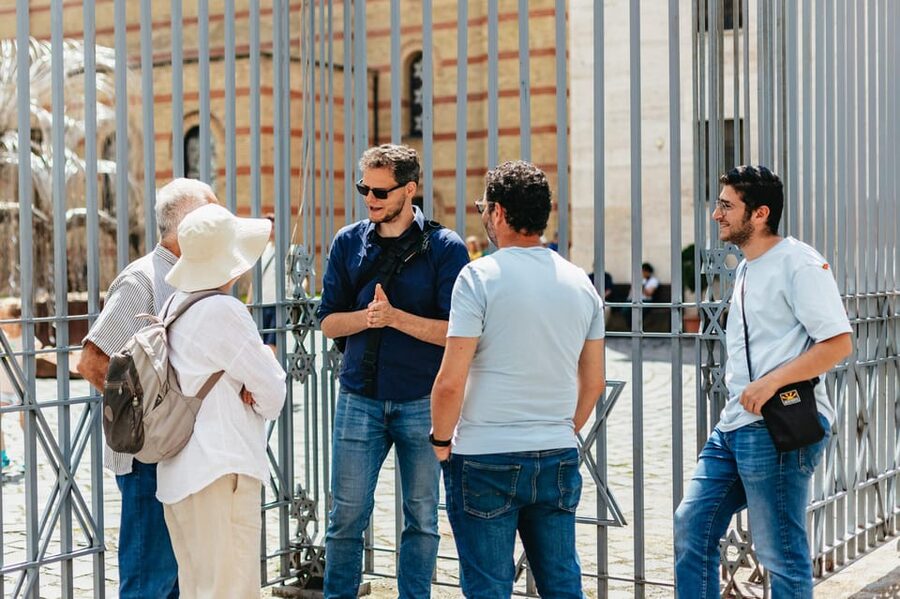
The Dohány Street Synagogue is the visual centerpiece of the route. It is one of Europe’s largest synagogues and one of the most important Jewish buildings in Budapest. From outside, you can take in its scale, ornament, and place in the surrounding district while the guide explains its role in the community.
This is an impressive stop even without entering. Still, you should set your expectations correctly. Admission to the synagogues is not included, and the visits during this walk are exterior visits only.
If you want to see the interior of the Dohány Street Synagogue, its cemetery, and related memorial areas, plan a separate visit. This tour works better as a historical orientation and neighborhood walk than as a complete synagogue sightseeing ticket.
That distinction also affects the $63 price. You are paying for a small-group historian, a focused route, interpretation at many locations, and a cafe break, not for synagogue admission. If your main goal is interior architecture, another ticket or tour may suit you better. If you want context before visiting on your own, the price is easier to justify.
Rumbach and Kazinczy Street synagogues
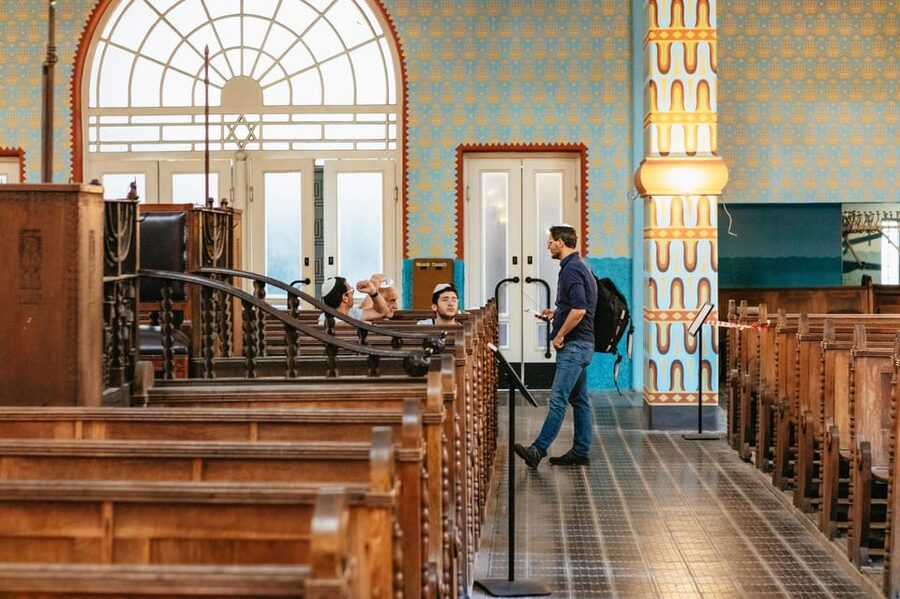
The route also includes the exteriors of the Rumbach Street and Kazinczy Street synagogues. Each represents a different strand of Jewish religious and architectural life in Budapest.
The Rumbach Street Synagogue was built in 1872 by Viennese architect Otto Wagner. The guide explains its place within the Neolog Jewish community and points out the building’s exterior details. The structure adds an architectural counterpoint to the larger Dohány Street Synagogue.
The Kazinczy Street Orthodox Synagogue introduces another part of the district’s religious identity. Seeing all three buildings together helps you understand that Budapest’s Jewish community was not one uniform group. Different traditions and institutions shaped the neighborhood.
The provided tour details describe all three synagogue visits as outside-only. One piece of feedback refers to seeing the Rumbach Synagogue more closely, and another notes some confusion about synagogue entry. Treat that as a reason to confirm the day’s plan with the guide, not as a promise of interior access.
More history tours in Budapest:
- Budapest: Historic Cruise with Welcome Drink
★ 4.7 · 6,512 reviews - Budapest Historical Sightseeing – Free Walking Tour
★ 5.0 · 1,302 reviews - Buda Castle District Dark History, Legends and Vampire Night Tour
★ 4.5 · 1,240 reviews - BloodThirsty Hungary: Walking tour & Dark Historical Stories
★ 4.9 · 633 reviews
Walking the former Budapest Ghetto
One of the most sobering parts of the walk is the route through streets of the former ghetto. You see part of the original ghetto wall and hear how the ghetto existed for less than two months near the end of the war.
That short period can be hard to grasp. The guide helps connect the dates and political decisions to the actual streets under your feet. This is where a walking tour has an advantage over a museum label. You are not only hearing about an event in the abstract. You are moving through the district where people were confined and where community institutions, homes, and places of worship were caught in the crisis.
The tour does not gloss over Hungary’s role in the treatment of Jewish people. That direct approach was praised by several visitors, who valued the fact that the guide addressed difficult facts rather than smoothing them over for comfort.
Expect a serious tone at this point. The experience includes humor and everyday Budapest details, but the ghetto section deals with murder, persecution, and loss. It is best suited to people who want an honest account, not a light sightseeing stroll.
Memorials to Raoul Wallenberg and Carl Lutz
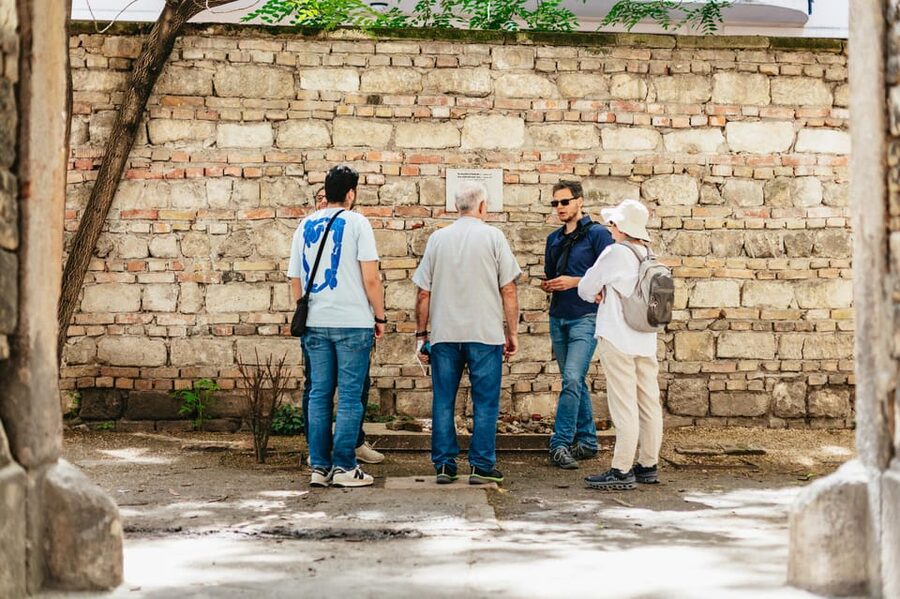
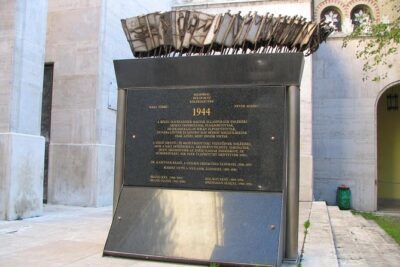
The walk includes memorials connected with Raoul Wallenberg and Carl Lutz, two figures associated with efforts to save Jewish lives during the winter of 1944 and 1945. The guide explains how they helped tens of thousands of Jewish people and why both are honored as Righteous Among the Nations.
These stops give the tour a needed human focus. The story is not only about laws, buildings, and governments. It is also about individual choices made under extreme pressure.
I find memorials more meaningful when a guide explains the surrounding circumstances. Otherwise, you may pass a sculpture, read a name, and move on. Here, the guide links the memorial to the streets and events around it, giving the stop a clear purpose.
The emphasis is not on turning the rescuers into simple heroes while ignoring the wider situation. Instead, the tour places their actions beside the failures and crimes of the period. That balance is one of the experience’s strengths.
Gozsdu Passage, street art, and modern Erzsébetváros
The Jewish Quarter is not frozen in the past. The route passes lively Gozsdu Passage, where restaurants, bars, shops, and evening activity show the district’s present-day energy.
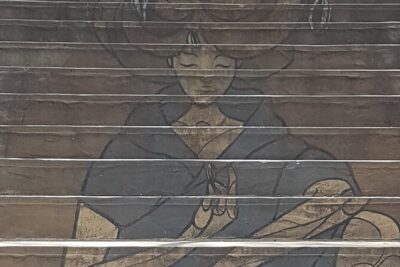
Your guide also points out examples of Budapest’s street art. These works add color and wit to streets that can otherwise feel crowded with tourist businesses. They also show how the neighborhood keeps changing, sometimes in ways that raise questions about preservation, nightlife, and local life.
The guide shares tips about ruin pubs and Budapest nightlife as well as lesser-known corners of Erzsébetváros. This is useful if you are staying nearby and want to return after the tour. Just remember that this is not a dedicated food crawl or nightlife tour. The modern details support the historical story rather than replace it.
The mix of old and new is especially helpful for first-time visitors. You see why the district attracts so much attention today, while also learning what existed before the bars and street art appeared.
Flódni, coffee, and the short cafe stop
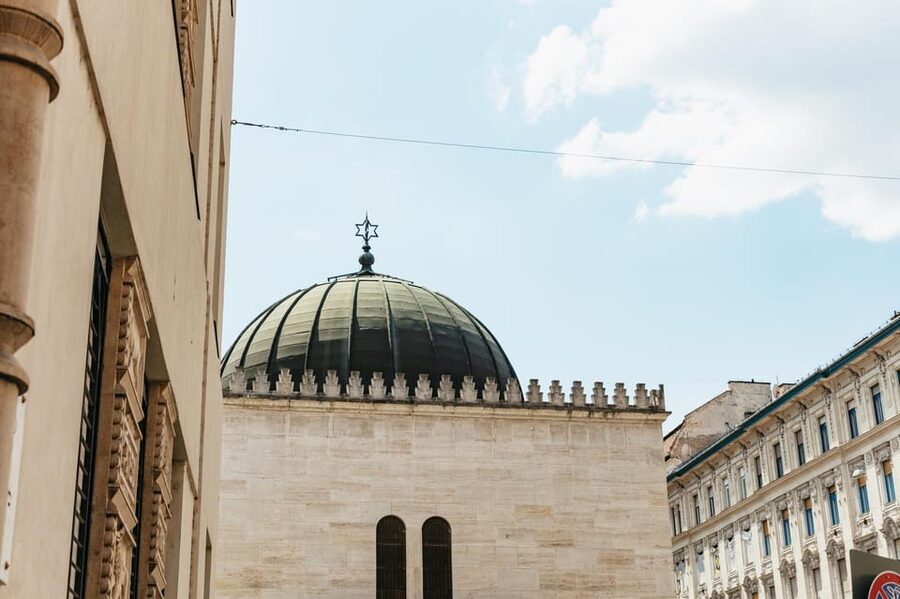
About 15 minutes of the experience is set aside for coffee or a soft drink and flódni, a local Jewish cake. Flódni is a layered pastry associated with Jewish food traditions in Hungary.
This small food stop works well because it gives the group a chance to pause after walking and talking. Food can also offer a more ordinary connection to the community than monuments alone. A cake does not erase the painful parts of the story, but it reminds you that culture continues through recipes, cafes, customs, and shared meals.
The stop is included in the price. You should not expect a full meal, and the tour does not present itself as a culinary experience. Think of it as a modest refreshment and a chance to discuss what you have seen.
Is the two-and-a-half-hour pace manageable?
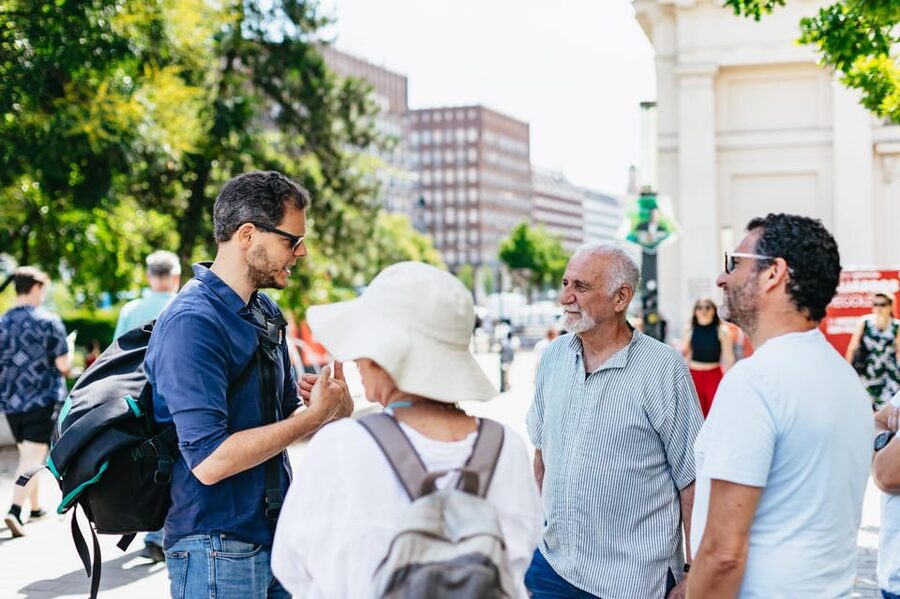
The tour lasts 2.5 hours, with about 2 hours and 15 minutes devoted to guided sightseeing and roughly 15 minutes for the cafe stop. It is a city walk, so comfortable shoes and weather-appropriate clothing matter.
Several comments describe the pace as comfortable, while another points out that there is a lot of walking. That is a fair description. You are covering a historic district on foot, stopping often for explanations, but you are not sitting in a vehicle between sights.
The tour operates in all weather. Budapest summers can be hot, and one account specifically noted a hot day. In colder months, wind and rain can make the open-air format less pleasant. Bring water, wear suitable shoes, and check the forecast before you set out.
The small group limit of 10 is important. A larger group would make narrow streets, street-side explanations, and questions harder. With 10 or fewer people, the guide can adjust the pace and respond to individual needs. One account specifically praised the guide for making accommodations, though the experience remains a walking tour rather than a fully customized private outing.
Guide style and the value of the small group
The guide can make or break a history tour, and this experience earns its strongest marks here. The most praised qualities are clear explanations, enthusiasm, humor, honesty, and the ability to connect Hungarian history with Jewish history.
Gábor was praised for being engaging, funny, and good at handling questions. Noémi was repeatedly described as passionate and clear. András was praised for his commentary and ability to keep the group interested. Daniel received credit for telling stories in an appealing way, while Maggie was noted for her energy and warmth.
You may not receive one of those specific guides, but these examples show what the operator aims for. The best version of the tour feels like a conversation with an informed local who can move from a major historical event to a small street detail without losing the thread.
There is one fair criticism to keep in mind. One person felt the walk lacked structure and purpose, possibly because the guide was unsure about whether the Rumbach Synagogue was open. Another wished for more time for questions. These are not major flaws, but they show how the exact experience can depend on the day, the guide, and changing synagogue arrangements.
What $63 gets you
At $63 per person, this is not the cheapest way to walk around the Jewish Quarter. You are paying for a limited group, an English-speaking historian guide, a planned historical route, and coffee or a soft drink with flódni.
The value is strongest if you want interpretation. You can walk past the synagogues, memorials, ghetto wall, and Gozsdu Passage for free, but you will not automatically understand how the pieces fit together. The guide turns separate sights into a connected account of Jewish life in Budapest.
The price is less attractive if you mainly want synagogue interiors or a general city walk. Since entrance fees are excluded, budget separately for any synagogue visits you want to make. For a first visit to Budapest, though, this can be a useful way to get your bearings in the district and decide which buildings deserve a return visit.
Free cancellation up to 24 hours before the start and reserve-now, pay-later booking add flexibility. They do not change the tour’s basic value, but they are useful when your Budapest schedule is still moving.
Who should book this Budapest walk?
I would recommend it to you if you enjoy history, architecture, local food, and walking at a moderate pace. It is particularly useful if you know little about Hungarian history and want a clear introduction before visiting the Jewish Quarter independently.
It also suits people with a personal or family interest in Jewish history, though the tour is presented as a cultural and historical experience for a broad audience. You do not need to be an expert to follow it.
You may want something else if you need wheelchair-specific arrangements, though the supplied details do not describe accessibility. You should also choose another experience if your priority is interior synagogue access, a full meal, or a tour focused mainly on nightlife.
FAQ
Where does the tour meet?
Meet in front of the Kempinski Hotel Corvinus Budapest, facing the Ferris wheel on Erzsébet Square.
How do I reach the meeting point?
Take the M1, M2, or M3 subway to Deák Ferenc tér. Several buses and trams also stop nearby.
How long does the tour last?
The experience lasts 2.5 hours. The guided sightseeing portion takes about 2 hours and 15 minutes, followed by about 15 minutes for coffee and dessert.
Is the tour conducted in English?
Yes. The live guide conducts the tour in English.
Does the tour enter the synagogues?
No. The three synagogue visits are outside only, and admission to the synagogues is not included.
Which synagogues are included?
You see the exteriors of the Dohány Street Synagogue, the Rumbach Street Synagogue, and the Kazinczy Street Orthodox Synagogue.
Is food included?
Yes. The tour includes a local Jewish cake called flódni and a coffee or soft drink at a local cafe.
Does the tour run in bad weather?
Yes. The tour starts in all weather conditions, so dress for the forecast and wear comfortable shoes.
Should you book it?
Book this tour if you want the Jewish Quarter explained rather than simply photographed. Its best features are the small group, strong historian guides, honest treatment of wartime history, memorial stops, and the chance to connect Jewish traditions with the district’s present-day life.
Do not book it expecting a synagogue interior tour. Instead, use it as a thoughtful introduction to Budapest’s Jewish heritage, then return on your own for any buildings you want to enter. At $63, the value rests in the guide’s interpretation, and the repeated praise for guides such as Noémi, Gábor, András, and Daniel suggests that storytelling is the heart of the experience.
More Walking Tours in Budapest
- Budapest: Buda Castle Walk with Saint Stephen’s Hall
★ 4.5 · 3,012 reviews - Big Bus Budapest Hop-On Hop-Off Bus and Walking Tour
★ 3.5 · 2,206 reviews - Budapest: Buda Castle District Walking Tour
★ 4.6 · 2,108 reviews - Budapest City Landmarks Walking Tour in 2 Hours
★ 5.0 · 2,048 reviews
Just added in Budapest
- Budapest: Private Walking Tour with a Local Guide★ 3.6 · 6 reviews
- Budapest: Danube River Views Bike Ride★ 4.8 · 23 reviews
- Budapest: City Bike Tour with Coffee Stop★ 5.0 · 37 reviews
- From Budapest: Guided Tour of Eger with Wine Tasting★ 4.5 · 6 reviews
- Walk to recent and aged spiritual sanctuaries near Budapest★ 5.0 · 5 reviews
- Walking consultancy with alternative psychologist and author★ 5.0 · 2 reviews
- Budapest: Guided Tour of the Parliament Building in Spanish★ 4.6 · 1,240 reviews
- Budapest: 3-Hour Trabant Sightseeing Tour★ 4.7 · 28 reviews
Jewish Heritage Tours, compared.
Budapest Jewish Heritage Memorial Walking Tour & Synagogue Entry
Read our review →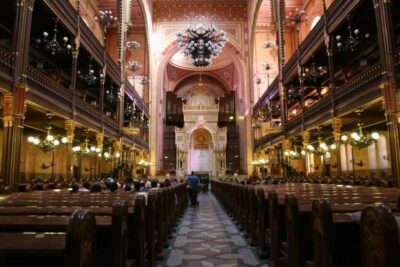
Jewish Heritage Guided Tour with Synagogue Ticket
Read our review →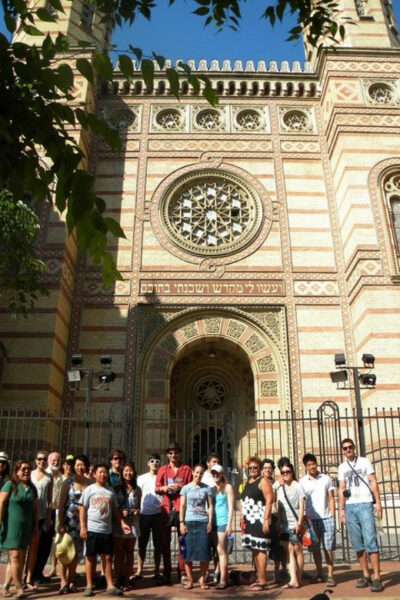
Past and Present of Budapest Jewish District Tour
Read our review →
Budapest Dohany Synagogue & Hungarian Jewish Museum & free extras
Read our review →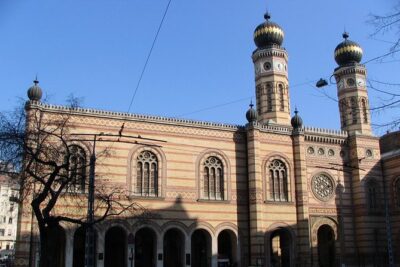
Budapest Dohany, Heroes’, Rumbach synagogues & Jewish Ghetto Tour
Read our review →Browse the lists this tour appears in