
REVIEW · JEWISH HERITAGE TOURS
Past and Present of Budapest Jewish District Tour
Jewish Budapest rewards a closer look. I like this tour for its clear story, moving from the city’s Belle Époque to the Holocaust and present-day District VII, and for the way it links major synagogues with everyday streets, food, art, and nightlife. The strongest guides, including Gary, Eszter, Edith, Dora, and Edi, are praised for clear explanations and warm conversation.
The main catch is simple: you do not enter any synagogue. You see the exteriors, the Great Synagogue’s memorial courtyard and cemetery from outside, and learn what is inside. If you want the full synagogue interiors, you will need a separate visit and extra time.
At $3.63 per person, the booking fee makes this a very inexpensive introduction. The guides depend on donations at the end, so bring some cash or another way to tip if you find the experience useful. Allow about one hour and 45 minutes, wear comfortable shoes, and expect to stand while the guide talks.
In This Review
- Key points to know before you book
- Starting at Erzsébet tér with Budapest’s Jewish story
- Deák Ferenc Square and the story of Gaudiopolis
- The Great Synagogue and its memorial courtyard
- Rumbach Street Synagogue and the changing streetscape
- Gozsdu Udvar and the last piece of the ghetto wall
- Kazinczy Street and the Orthodox community
- Finishing at Szimpla Kert
- What the guide can make or break
- Price, tipping, and the real value
- Who should book this Jewish District walk?
- Should you book it?
- FAQ
- Where does the Past and Present of Budapest Jewish District Tour start?
- Where does the tour end?
- How long does the walking tour last?
- Is the tour offered in English?
- Does the tour enter the synagogues?
- Can I see the Great Synagogue’s memorial courtyard?
- Is synagogue admission included in the price?
- How many people can join the tour?
- Is the tour accessible by public transportation?
- Can I cancel for a full refund?
Key points to know before you book
- A history walk with a clear beginning and end: The route connects Jewish life in Budapest during the Belle Époque with wartime persecution and the modern Jewish Quarter.
- Three major synagogues from the outside: You see the Great Synagogue, Rumbach Street Synagogue, and Kazinczy Street Synagogue, but none includes an interior visit.
- Serious history handled in a direct way: Schutzpass documents, the ghetto wall, the Holocaust, and the survival of Hungarian Jews are part of the discussion.
- A useful District VII orientation: The walk ends at Szimpla Kert and passes Gozsdu Udvar, giving you ideas for later food, nightlife, art, and sightseeing.
- A low-cost, donation-based format: The booking fee is administrative, while guide income comes from voluntary tips.
- Best for an active first look: The route is easy enough for most people, but you should be ready to walk, stand, and keep up with a group of up to 25.
Starting at Erzsébet tér with Budapest’s Jewish story
The meeting point is beside the Budapest Ferris Wheel in Erzsébet tér, a central location near public transportation. It is a practical place to begin because you are not dropped straight into a dense maze of side streets. The guide can first explain where you are going and how the Jewish District fits into the wider city.
The opening focuses on Hungarian Jewish life from the Belle Époque, often described as Budapest’s Golden Age, through the destruction of the Second World War. That broad time span matters. You are not given only a Holocaust memorial walk or only a tour of pretty buildings. The route tries to show a community that built businesses, worshiped, traded, shaped culture, and lived through both prosperity and disaster.
The best guides make this short introduction feel organized rather than rushed. Eszter and Esther are praised for being thoughtful and passionate, while Edith is noted for creating an efficient flow through the district. Edi is especially praised for speaking clearly and maintaining a comfortable pace for a group that included older participants.
You should expect the guide to gather the group around the meeting point and speak for several minutes before moving on. This is a standing tour, not a seat-and-listen activity. If you have trouble hearing English spoken with a strong Hungarian accent, stay close to the guide and ask for clarification when needed.
More Jewish heritage tours:
- Budapest Jewish Heritage Memorial Walking Tour & Synagogue Entry
★ 5.0 · 568 reviews - Budapest: Jewish Heritage Guided Tour with Synagogue Ticket
★ 4.8 · 533 reviews - Jewish Quarter of Budapest Walking Tour
★ 4.7 · 369 reviews
Deák Ferenc Square and the story of Gaudiopolis
The next stop is Deák Ferenc Square, where the guide introduces Gaudiopolis, or City of Joy. This is one of the less obvious subjects on the route and helps prevent the tour from becoming a simple procession between synagogue façades.
The discussion also includes the Schutzpass, a protective document that helped save thousands of Jewish lives. This part of the walk gives you a sense of how survival could depend on paperwork, diplomacy, and the actions of individuals during a dangerous period.
You also see remnants of the former medieval city wall. The guide explains how Jewish people were excluded from trading within the city limits. That detail connects physical Budapest with the rules that shaped who could work, trade, and live freely in the city.
I value this stop because it adds older layers to the story. The district’s Jewish past did not begin in the twentieth century, and the guide uses the city wall to show that exclusion and opportunity changed over time. At the same time, the stop is mainly an outdoor explanation. You should not expect a major monument or a long museum-style presentation here.
The Great Synagogue and its memorial courtyard
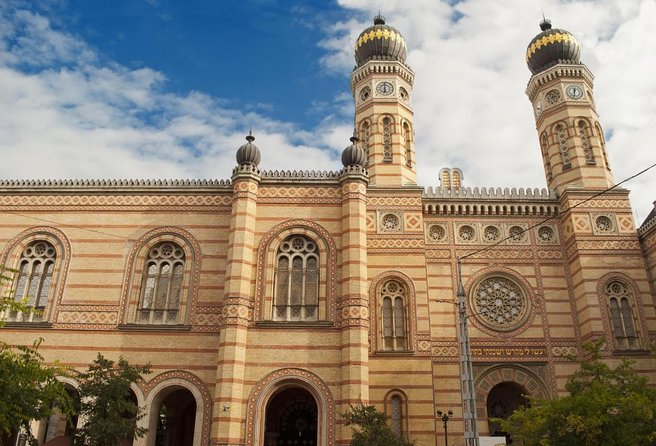
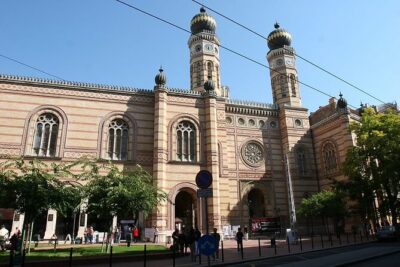
The Great, or Central, Synagogue on Dohány Street is the visual centerpiece of the walk. It is described as the largest synagogue in Europe, and even from the pavement its scale and design make clear why it matters to Budapest’s Jewish community.
The guide explains the Neologue and Orthodox movements, along with Zionism. These subjects are useful because Jewish life in Budapest was not one single, uniform tradition. Different religious approaches and political ideas shaped the city’s institutions and communities.
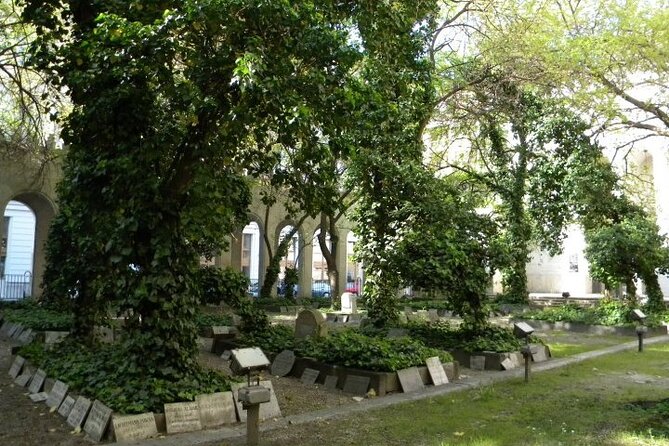
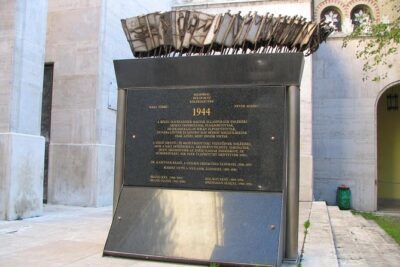
You will also see the memorial courtyard and cemetery from outside. The courtyard gives the history a solemn physical setting, especially when the guide discusses the destruction of Hungarian Jewry during the Nazi occupation. This is often one of the most emotionally heavy parts of the walk.
The limitation is important. The tour does not enter the Great Synagogue. You do not receive an interior visit, a ticket, or time inside the building. The exterior stop lasts about 20 minutes, so the guide can explain its role without turning the walk into a full synagogue tour.
If entering the synagogue is a priority, plan a separate visit. The tour description makes the outdoor format clear, but one person still arrived expecting synagogue access. Check the opening arrangements yourself before planning two visits around the same site, especially because Saturdays are mentioned as a day when synagogues are closed.
Rumbach Street Synagogue and the changing streetscape
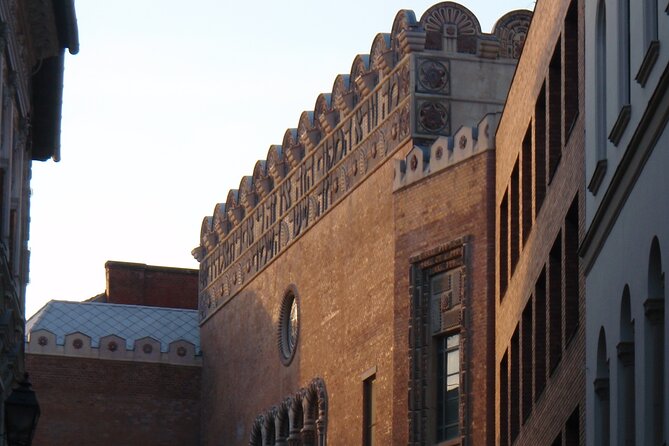
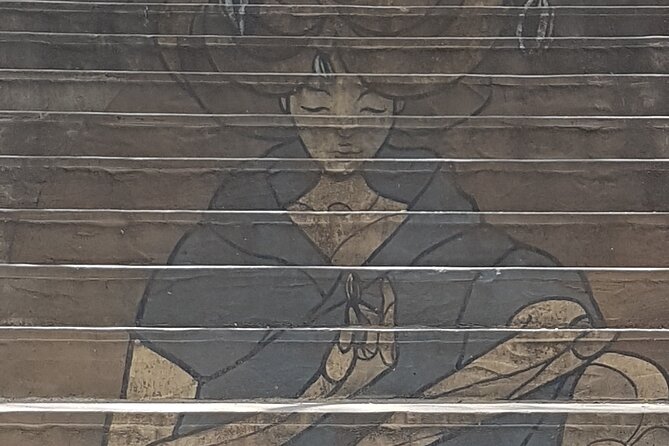
Rumbach Street Synagogue brings a different architectural and urban note. The guide points out the restored building, its murals, and nearby street art. This is where the tour begins to connect religious heritage with the visual character of modern District VII.
The building is discussed from the outside, so you will learn about its restoration and decoration without seeing the interior murals in full detail. That can feel like a missed opportunity if architecture is your main reason for coming. Still, the exterior stop helps you understand how older religious buildings sit within streets now filled with cafés, bars, shops, and creative projects.
The guide’s role is especially important here. A well-presented explanation can make an ordinary-looking street feel significant. Gary is repeatedly praised for giving background and context, while Judith and Dora are praised for making the subject engaging and approachable.
This is also a good point to notice the tour’s balance. It does not show only solemn memorials. It places Jewish buildings beside modern murals and changing urban spaces, helping you see the district as a living part of Budapest rather than a historical exhibit.
More things to do in Budapest:
- Budapest: City Highlights Cruise with Welcome Drink
★ 4.6 · 35,610 reviews - Budapest: Unlimited Prosecco, Beer and Aperol Spritz Cruise
★ 4.8 · 25,310 reviews - Budapest: Széchenyi Spa Day Ticket with Optional Upgrades
★ 4.3 · 23,911 reviews - Budapest: Nighttime or Daytime Sightseeing Cruise
★ 4.2 · 21,062 reviews
Gozsdu Udvar and the last piece of the ghetto wall
Gozsdu Udvar is one of the route’s most useful present-day stops. The passage now combines food, entertainment, culture, markets, and nightlife. You pass through an area that many people later return to for dinner or an evening walk.
The guide also points out the last remaining piece of the ghetto wall. That small remnant carries considerable weight because the surrounding passage can feel social and energetic. The contrast is deliberate: the same district contains places for leisure today and physical traces of confinement from the past.
This is a good example of why the tour works best as both a history lesson and an orientation walk. You learn what the place means, then you can return later with a better sense of what you are seeing. One useful benefit is that the guide may also offer local tips for getting around and suggest further subjects to explore, such as stumbling stones or small public artworks.
Do not expect Gozsdu Udvar to be presented as a long shopping stop. The group keeps moving, and the focus remains on the district’s past and present rather than on spending time at individual restaurants or market stalls.
Kazinczy Street and the Orthodox community
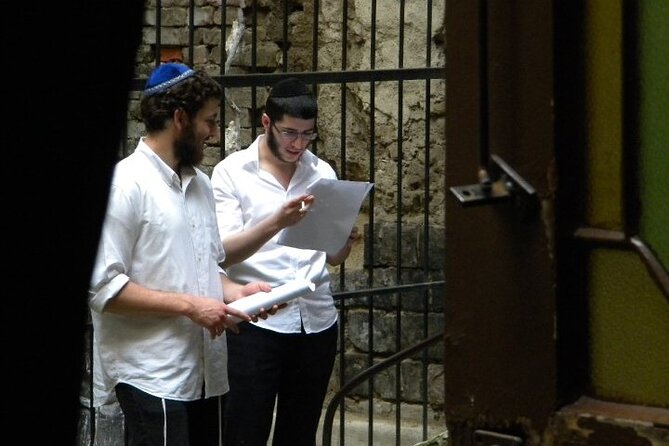
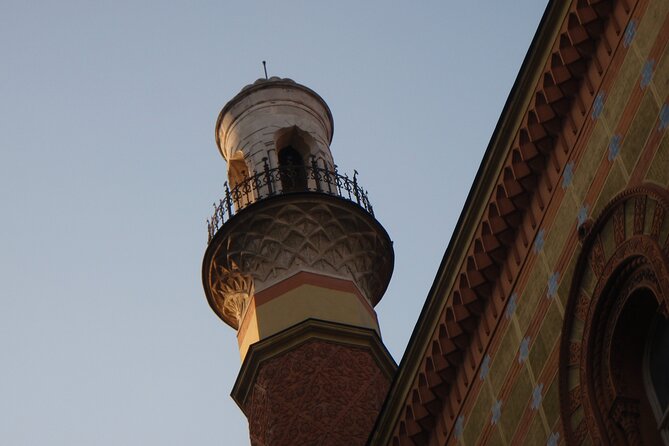
At Kazinczy Street Synagogue, the guide explains the Orthodox community, described as serving about 50 to 60 families. The stop also covers kosher food and the Jewish ritual bath.
This section adds everyday religious detail to the political and wartime history discussed earlier. You learn that a Jewish quarter is not defined only by memorials and architecture. Food practices, worship, family life, and community institutions also shape it.
Again, the group remains outside. You do not enter the synagogue or the ritual bath. For some people, that will make the stop feel brief. For others, the outside explanation will be enough to decide which buildings deserve a longer visit later.
The subject matter can be particularly valuable if you know little about the differences between Neologue and Orthodox Jewish life. Ask questions here if you have them, since the guide usually has time to explain terms and place the community in the context of present-day Budapest.
Finishing at Szimpla Kert

The final section takes you toward Szimpla Kert, Budapest’s famous ruin bar, where the tour ends. You see more murals and street art, then receive a final orientation around the bar and the surrounding streets.
There is no entry fee to Szimpla Kert as part of the tour, but this is not a private bar visit or a reserved tasting. The point is to finish in a landmark of modern District VII. You can stay afterward if you wish, inspect the pop-up exhibitions, or use the location as a base for further exploring.
Ending here is smart. The route begins with national history and Jewish heritage, then finishes amid the district’s current food, art, and nightlife scene. You leave with a practical sense of where to walk next, not just a list of dates and buildings.
The walk covers the southern part of the Jewish District rather than every street. One person found the route too limited and wanted more local stories or visual aids. That is fair. The tour gives you a focused overview, not a complete survey of District VII.
What the guide can make or break
The strongest part of this experience is the human guide. Gary is praised for combining facts, humor, and passion. Eszter is described as friendly, organized, and ready to answer questions. Edith, Dora, Judith, Edi, Christine, Jude, David, and Andy also receive praise for clear delivery, warmth, and useful explanations.
Those names matter because the experience can vary with the person leading it. The content includes a lot of history in less than two hours, and a guide who adds human stories will make the material easier to remember. A guide who simply lists dates and facts may leave you feeling that the tour is generic.
The outdoor format also means sound and pace matter. One participant found a strong Hungarian accent difficult to follow, while another felt a guide walked too quickly and left people behind. That second complaint was rejected by the operator, which says rushing people is against its policy. Even so, stay near the guide, wear sturdy shoes, and speak up if the group moves too fast for you.
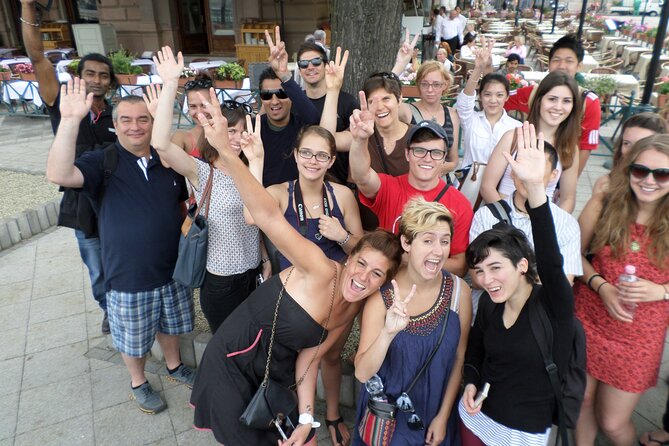
The tour has a maximum of 25 people. That is large enough for a lively group but small enough for questions to be possible when the guide manages the crowd well.
Price, tipping, and the real value
The listed price is $3.63 per person, but this is not the total picture. The booking fee pays for administration and does not contribute to the guide’s earnings. Guides depend entirely on donations at the end, and the amount is your choice.
That makes the cost attractive for anyone seeking a low-price introduction. You receive nearly two hours of guiding, historical context, neighborhood orientation, and advice for future sightseeing without paying synagogue admission as part of the walk.
The tradeoff is that the final price depends on your tip. If the guide gives you a strong, thoughtful experience, budget for a donation rather than treating $3.63 as the full cost. The format is not compulsory tipping, and you should not feel forced to pay a set amount.
With a 4.9 rating from 264 ratings and recommendation from 99 percent of people who rated it, the value appears strong, but the mixed experiences are worth keeping in mind. Most praise centers on the guides, while criticism focuses on limited coverage, no interior access, generic storytelling, or difficulty hearing the English. Those are not small details if you want a deep architectural tour.
Who should book this Jewish District walk?
I would choose this tour if you are visiting Budapest for the first time and want a structured introduction to District VII. It is also a good fit if you want to understand how Jewish life, wartime persecution, memorial sites, religious practice, street art, and nightlife occupy the same neighborhood.
You will get the most from it if you:
- Enjoy walking and listening outdoors
- Want a broad historical framework in under two hours
- Plan to visit the synagogue interiors separately
- Like receiving ideas for later independent exploring
- Can stand for several explanations
- Are comfortable with a donation-based format
I would look elsewhere if your priority is entering the synagogues, seeing every corner of the Jewish Quarter, or hearing a large number of personal family stories. This is an overview, not a specialist architectural visit or a private oral-history walk.
Book ahead if your schedule is tight. The experience is booked around 10 days in advance on average, and the group can include up to 25 people. Free cancellation is available up to 24 hours before the start time, but changes or cancellations within 24 hours are not refunded.
Should you book it?
Yes, if you want an inexpensive and serious first look at Budapest’s Jewish District. The route covers the Great Synagogue, Rumbach Street Synagogue, Kazinczy Street Synagogue, Gozsdu Udvar, the ghetto wall remnant, and Szimpla Kert in a compact walk.
Go in with the right expectations: you are seeing the synagogues from outside, not touring their interiors. Wear comfortable shoes, stay close enough to hear, and allow room in your budget for a voluntary tip. If you are lucky enough to have a guide such as Gary, Eszter, Edith, Dora, or Edi, the history can become far more personal and memorable than the low price suggests.
FAQ
Where does the Past and Present of Budapest Jewish District Tour start?
It starts at the Budapest Ferris Wheel in Erzsébet tér, Budapest 1051, Hungary.
Where does the tour end?
The tour ends at Szimpla Kert, at Kazinczy u. 14, Budapest 1075.
How long does the walking tour last?
The tour lasts approximately one hour and 45 minutes.
Is the tour offered in English?
Yes. The tour is offered in English.
Does the tour enter the synagogues?
No. The tour does not enter the Great Synagogue, Rumbach Street Synagogue, or Kazinczy Street Synagogue.
Can I see the Great Synagogue’s memorial courtyard?
Yes. You see the Memorial Courtyard and cemetery from outside.
Is synagogue admission included in the price?
No. Synagogue entry is not included because the tour does not enter the buildings.
How many people can join the tour?
The maximum group size is 25 people.
Is the tour accessible by public transportation?
Yes. The meeting area is near public transportation.
Can I cancel for a full refund?
Yes, if you cancel at least 24 hours before the experience start time. Cancellations made less than 24 hours before the start time are not refunded.
Just added in Budapest
- Budapest: Private Walking Tour with a Local Guide★ 3.6 · 6 reviews
- Budapest: Danube River Views Bike Ride★ 4.8 · 23 reviews
- Budapest: City Bike Tour with Coffee Stop★ 5.0 · 37 reviews
- From Budapest: Guided Tour of Eger with Wine Tasting★ 4.5 · 6 reviews
- Walk to recent and aged spiritual sanctuaries near Budapest★ 5.0 · 5 reviews
- Walking consultancy with alternative psychologist and author★ 5.0 · 2 reviews
- Budapest: Guided Tour of the Parliament Building in Spanish★ 4.6 · 1,240 reviews
- Budapest: Vacation Photographer to collect great memories★ 5.0 · 49 reviews
Jewish Heritage Tours, compared.
Budapest Jewish Heritage Memorial Walking Tour & Synagogue Entry
Read our review →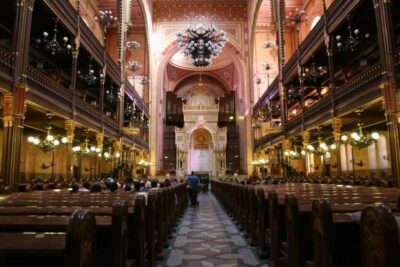
Jewish Heritage Guided Tour with Synagogue Ticket
Read our review →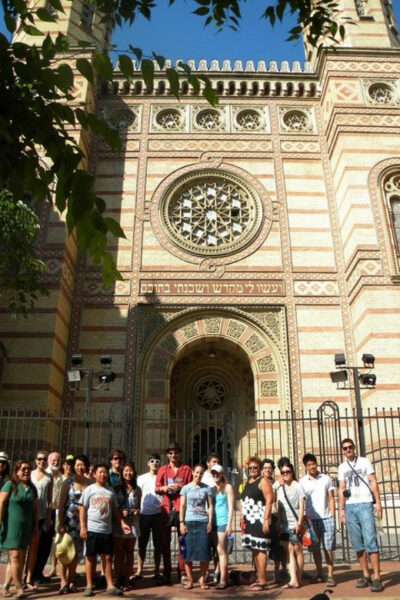

Budapest Dohany Synagogue & Hungarian Jewish Museum & free extras
Read our review →
Jewish History Guided Walking Tour with Historian
Read our review →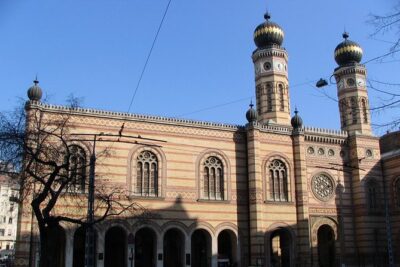
Budapest Dohany, Heroes’, Rumbach synagogues & Jewish Ghetto Tour
Read our review →Browse the lists this tour appears in