
REVIEW · JEWISH HERITAGE TOURS
Budapest Grand Half-Day Jewish Heritage Tour
Budapest’s Jewish Quarter rewards a closer look. This four-hour walking tour links the grand Dohány Street Synagogue with memorials, museums, kosher food spots, and the streets of the former ghetto, giving you both historic context and a sense of Jewish life in Budapest today. I especially like the two synagogue visits and the way the route moves beyond one impressive building into the surrounding neighborhood.
I also like the human scale of the guiding. Benjamin receives repeated praise for his clear, warm, and sometimes funny delivery, while Petra, Orsi, Borcsa, and other guides have also made strong impressions. The main drawback is the amount of material packed into four hours. One recent departure ended about an hour early because of a guide’s outside commitment, and some visitors found the tour’s lecture sections a little long.
In This Review
- Key points to know before booking
- Starting beneath the towers of Dohány Street Synagogue
- The Jewish Museum and the meaning behind the objects
- Raoul Wallenberg Memorial Park and the Tree of Life
- Walking the former ghetto streets
- Rumbach Street and Kazinczy Street: the synagogue triangle
- How the four hours are paced
- Is $116 a fair price?
- Who should book this Jewish heritage walk?
- Should you book the Budapest Grand Half-Day Jewish Heritage Tour?
- FAQ
- How long does the Budapest Grand Half-Day Jewish Heritage Tour last?
- Where does the tour begin?
- Which synagogues can I visit?
- Is the Jewish Museum included?
- Does the tour visit Holocaust memorials?
- Is food included?
- Is the tour suitable for wheelchair users?
Key points to know before booking
- Dohány Street Synagogue is the dramatic opening stop: You enter the largest synagogue in Europe and learn why Budapest became such an important Jewish center.
- The Tree of Life is more than a photo stop: Raoul Wallenberg Memorial Park connects the city’s Jewish past with the people who helped save lives during the Holocaust.
- The route crosses the former ghetto: You see how synagogues, memorials, kosher restaurants, shops, and nightlife now share the same compact streets.
- Kazinczy Street adds an Orthodox perspective: Its Art Nouveau synagogue is one of Europe’s largest operating Orthodox synagogues.
- The guide makes or breaks the experience: Benjamin is especially praised for his storytelling, humor, and willingness to answer difficult questions directly.
- You get more than sightseeing: A kosher café stop includes cake and coffee, plus a 10 percent discount at Carmel Restaurant if you choose lunch there.
Starting beneath the towers of Dohány Street Synagogue
Meet your guide at Dohány Street Synagogue, at Dohány u. 2, in central Budapest. There is no hotel pickup, so you need to reach the meeting point yourself. The location is convenient for exploring the Jewish Quarter afterward, but arrive ready to walk from the first minute.
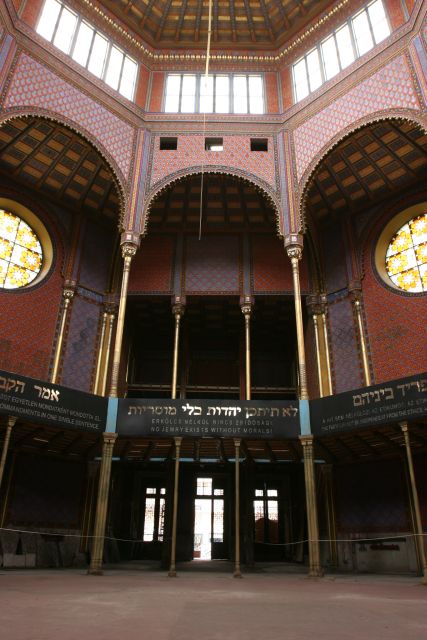
The synagogue sets the tone. It is not a modest neighborhood prayer hall, but a vast, ornate building that reflects the size and importance of Budapest’s Jewish community. The tour includes the interior, where your guide explains the building, Jewish religious practice, and the place of the synagogue in the city’s story.
This first talk can be substantial. One person described sitting for nearly an hour at the synagogue, which was informative but less active than expected. I would treat that as useful preparation rather than wasted time, especially if you know little about Judaism or Hungarian Jewish life. Still, if you prefer a tour that keeps moving, this opening may feel lecture-heavy.
The separate entrance is intended to help you skip the regular line. That matters at a major Budapest sight, where waiting outside can eat into a short city break. Bring a passport or ID card, and wear clothing suitable for a religious site. Large bags and luggage are not allowed, and comfortable shoes are essential for the rest of the route.
More Jewish heritage tours:
- Budapest Jewish Heritage Memorial Walking Tour & Synagogue Entry
★ 5.0 · 568 reviews - Budapest: Jewish Heritage Guided Tour with Synagogue Ticket
★ 4.8 · 533 reviews - Jewish Quarter of Budapest Walking Tour
★ 4.7 · 369 reviews
The Jewish Museum and the meaning behind the objects
The Jewish Museum follows the synagogue and adds objects, customs, and personal details to the larger story. You receive local guiding inside the museum rather than simply wandering through display cases on your own.
This is where the tour can help you connect religious practice with ordinary life. The guide provides context for the artifacts and explains how Jewish identity, worship, family customs, and community life developed in Budapest and throughout Hungary. The subject is serious, but the best guides keep it accessible by answering questions and relating the material to present-day life.
I would not expect a quiet, self-guided museum visit. The value lies in the explanation. Benjamin, in particular, is praised for answering questions openly and for discussing both Jewish history and current Jewish life in Hungary. That kind of conversation is useful for visitors who want more than dates and architectural labels.
The tour also includes the Martyrs’ Cemetery. Its setting beside the synagogue complex adds a difficult but important layer to the visit. The route does not treat memory as a separate topic tucked away at the end. Instead, the cemetery, museum, synagogue, and memorial park form one connected account of community, loss, and survival.
Raoul Wallenberg Memorial Park and the Tree of Life
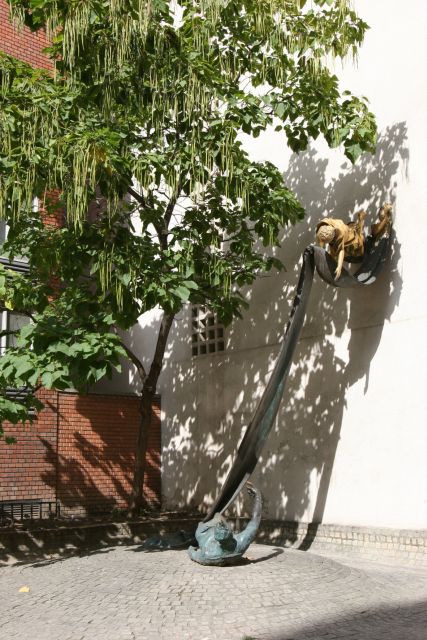
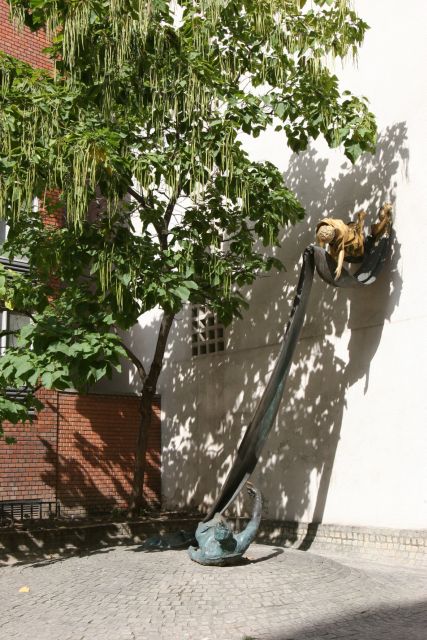
Raoul Wallenberg Memorial Park is one of the most affecting stops. At its center is the Tree of Life, a metal willow whose leaves carry the names of Holocaust victims. The memorial gives a physical form to the scale of the loss, while the guide explains the people and events behind it.
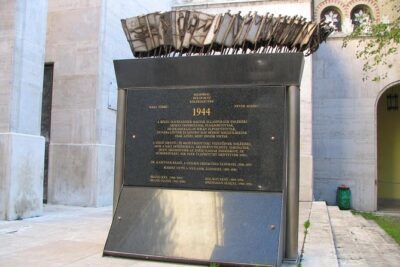
The park is also linked to Wallenberg, the Swedish diplomat who helped protect Jewish people in Budapest during the Second World War. The tour later visits a memorial to Carl Lutz, another figure associated with rescue efforts. Together, these stops show that the story is not only about destruction. It also includes courage, paperwork, shelter, diplomacy, and individual choices made under terrible pressure.
The nearby Temple of Heroes is an outside visit, as is the Jewish Centre. These shorter stops help you understand the synagogue complex as a working religious and memorial site rather than a single monument. You may find the sequence emotionally demanding, so leave room in your day for a quiet break afterward.
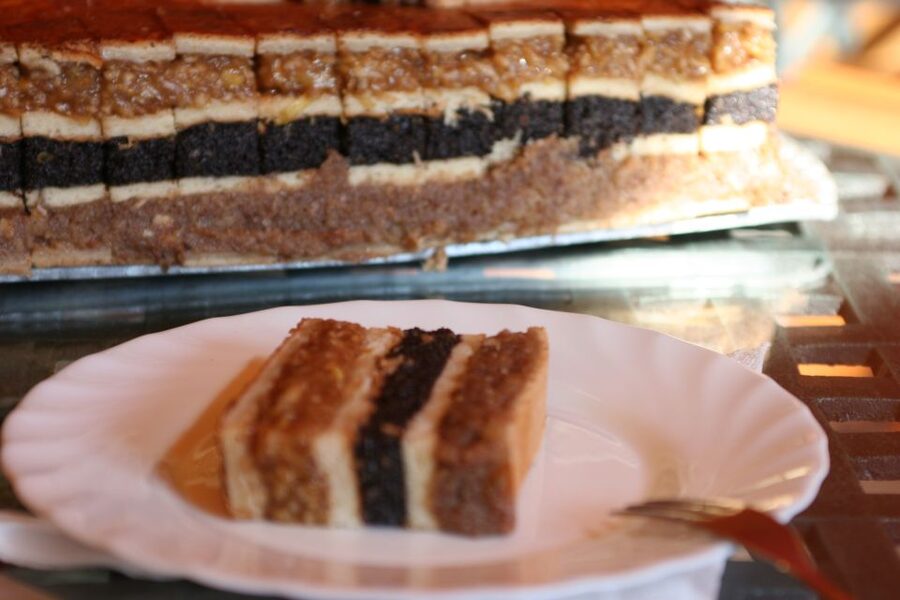
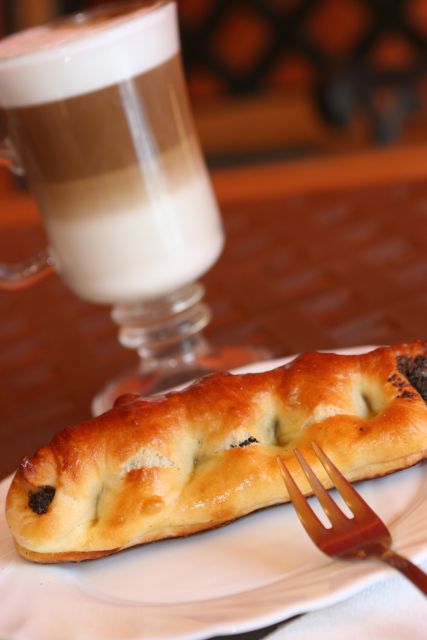
The tour also includes a kosher confectionery stop, with cake and coffee. This is a small but welcome change of pace after the museum and memorials. It gives you time to talk with the guide and fellow participants, and it introduces a living part of the neighborhood rather than presenting Jewish culture only through the past.
Walking the former ghetto streets
After the first portion, the group continues on foot through the Jewish Quarter. The streets once formed part of the Budapest ghetto, and today they contain synagogues, memorials, kosher shops, kosher restaurants, cafés, and the Gozsdu Passage.
This is one of the tour’s strongest features. You are not simply looking at a series of isolated sights. You are walking through an area where traces of Jewish life sit beside modern businesses and nightlife. The contrast can be striking, and your guide helps you read the streets instead of passing through them as background scenery.
Madách Square and Gozsdu Passage provide basic orientation to Budapest as well. The guide explains where you are in relation to the rest of the city, which is helpful if this is your first day in Budapest. The walk also gives you a better sense of the compact geography of the Jewish Quarter, making it easier to return on your own for food or further sightseeing.
The phrase former ghetto should not make you expect a preserved historic district. Much of the experience comes through stories, memorials, and surviving religious buildings rather than a perfectly maintained old quarter. That is both a strength and a limitation. The route presents a real neighborhood, not a museum set, but you need to listen closely to understand what has changed and what remains.
More history tours in Budapest:
- Budapest: Historic Cruise with Welcome Drink
★ 4.7 · 6,512 reviews - Budapest Historical Sightseeing – Free Walking Tour
★ 5.0 · 1,302 reviews - Buda Castle District Dark History, Legends and Vampire Night Tour
★ 4.5 · 1,240 reviews - BloodThirsty Hungary: Walking tour & Dark Historical Stories
★ 4.9 · 633 reviews
Rumbach Street and Kazinczy Street: the synagogue triangle
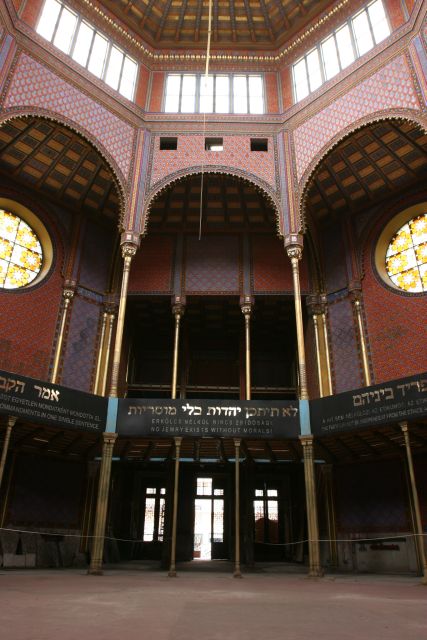
Rumbach Street Synagogue is included as an outside visit. Its place in the so-called synagogue triangle helps you compare the area’s major Jewish institutions, even when you do not enter every building.
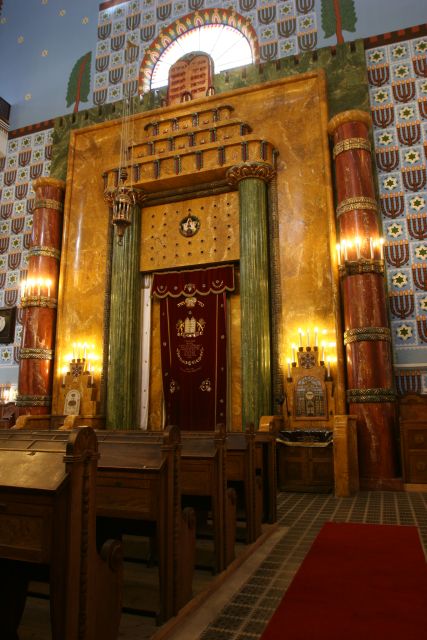
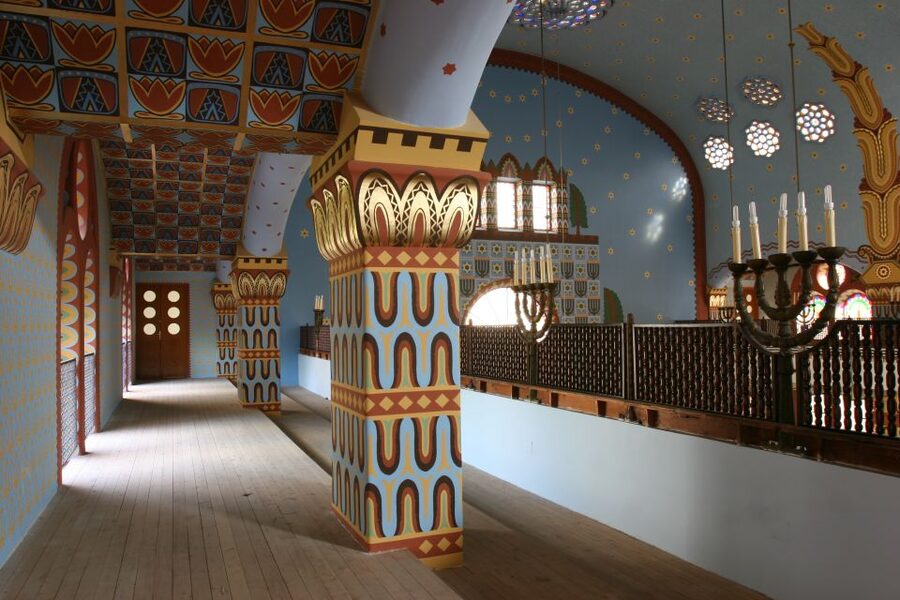
The tour then reaches Kazinczy Street Synagogue, an important Orthodox site built in Art Nouveau style. The supplied schedule describes this as an inside visit, while Rumbach is listed for an outside visit. Kazinczy is one of the largest operating Orthodox synagogues in Europe, so it offers a different religious and architectural perspective from Dohány.
That contrast is valuable. Dohány is associated with the Neolog tradition, while Kazinczy represents Orthodox Jewish life. You do not need prior religious knowledge to appreciate the difference. The guide explains enough to help you understand why several synagogues exist within such a small area and how their communities developed along different lines.
The Art Nouveau design also adds variety to the day. Dohány delivers monumental scale, while Kazinczy brings a more decorative style and an active Orthodox identity. If the interior is open as planned, take time to look beyond the main visual details and listen to the guide’s explanation of how the building is used.
The route may include a stop at Carmel Restaurant, where you receive a 10 percent discount with a lunch option. This is useful if you want to stay in the Quarter after the tour, but the food is not the main reason to choose the experience. The coffee and cake are included; a full meal is separate.
How the four hours are paced
The activity lasts four hours and combines indoor talks with outdoor walking. The first part covers Dohány Street Synagogue, the museum, cemetery, memorial park, Tree of Life, Temple of Heroes, and Jewish Centre. After a break, you continue into the Quarter and visit the Carl Lutz Memorial, Gozsdu Passage, Rumbach Street Synagogue, and Kazinczy Street Synagogue.
That is a lot for half a day. You should expect a steady program rather than long stretches of free time at each stop. The benefit is breadth: you see the main sights and get a clear outline of Budapest’s Jewish past and present. The cost is depth at individual locations, since the group must keep moving.
The walking itself is manageable for most people who can comfortably walk for several hours. It is not suitable for wheelchair users, and the operator does not allow pets or large bags. Since there is no pickup, plan your route to Dohány Street Synagogue before setting out.
The guides are central to the experience. Benjamin receives the strongest pattern of praise, with people describing him as articulate, funny, patient, passionate, and direct. Petra and Orsi are also praised for their command of Jewish life in Hungary, while Borcsa has been credited with adding personal connections and extending the tour so questions could be answered.
There is some inconsistency in the experience, as can happen with a guided group tour. One guide was described as rigid in delivery, even though the material was strong. Another departure finished at 1:05 rather than the expected 2:00 because the guide had a test. That appears to be an exception, but it is worth keeping in mind when you are paying for the full four-hour format.
Is $116 a fair price?
At $116 per person, this is not a budget walking tour. The price includes the professional guide and entry to Dohány Street Synagogue, the Jewish Museum, Raoul Wallenberg Memorial Park, and Kazinczy Street Synagogue. It also includes the guided route through the Quarter and cake and coffee at a kosher confectionery.
The value depends on how you use the guide. If you only want to see the exteriors, you can explore the neighborhood for less money on your own. If you want the synagogue interiors, museum objects, memorials, and historical explanation tied together in one morning, the price becomes easier to justify.
I think the tour is best value for first-time visitors, families, and anyone who wants a clear introduction without researching each site separately. It is also a good choice if you have only a short stay in Budapest. The tour covers a great deal in four hours, and the separate entrance at Dohány can save useful time.
It is less attractive for visitors who already know Budapest’s Jewish Quarter well or prefer slow, independent exploration. You may also feel the price more sharply if the tour ends early or if the group spends too much time listening at the first synagogue. Confirm the planned duration when booking, especially if your afternoon schedule is tight.
Flexible booking helps here. You can cancel up to 24 hours in advance for a full refund, and the reserve-now, pay-later option allows you to hold a place without paying immediately. These policies do not change the tour itself, but they make it easier to fit into a shifting Budapest itinerary.
Who should book this Jewish heritage walk?
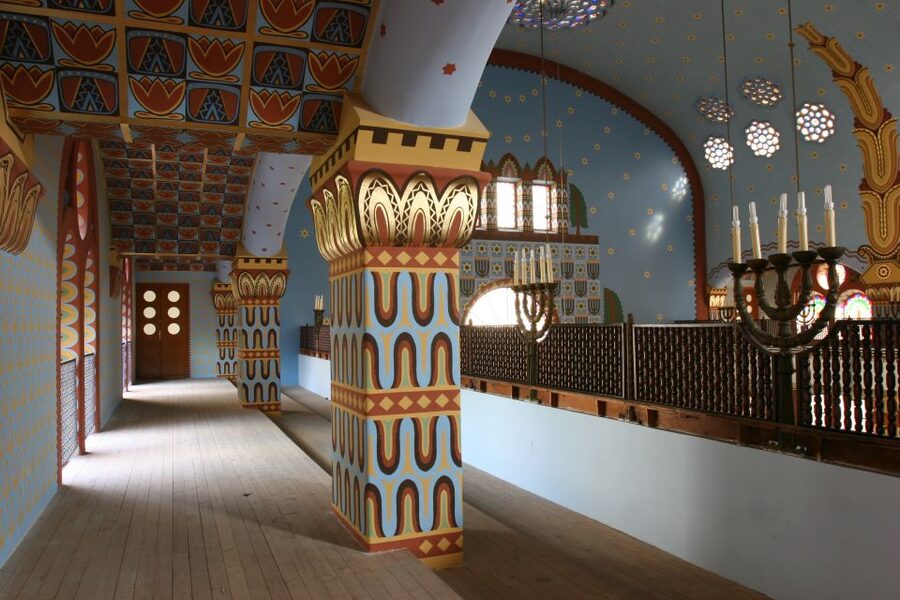
I would choose this tour if you want a serious introduction to Jewish Budapest that includes both religious buildings and the modern neighborhood around them. It suits adults, families with older children, and nonreligious visitors who are curious about culture, architecture, memory, and community life.
You do not need to be Jewish to appreciate it. One family with a teenager found the subject fascinating, and the tour’s mix of clear explanations, questions, and café time keeps the experience from becoming a succession of solemn monuments. The topic remains heavy, but a good guide adds warmth and perspective.
I would be more cautious if you need step-free access, dislike walking, or want a relaxed museum visit with lots of time alone. The tour is offered in English, and the quality of the day depends heavily on the guide’s style. If Benjamin is leading, his combination of humor, openness, and strong command of the subject has been a major reason for the tour’s high praise.
Should you book the Budapest Grand Half-Day Jewish Heritage Tour?
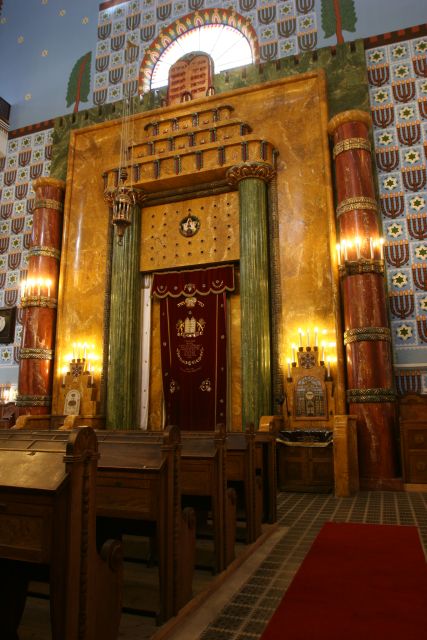
Book it if you want the main Budapest Jewish sights explained as one connected story. The strongest parts are the interior visit to Dohány, the Tree of Life and Wallenberg memorial setting, the walk through the former ghetto, and the comparison between Dohány and Kazinczy Street Synagogues.
Go in prepared for a talk-heavy opening, a serious subject, and a full four hours on foot. Bring identification, wear comfortable shoes, leave large bags behind, and avoid scheduling an important appointment immediately afterward. At $116, the tour earns its price when the guide is strong and the full route is delivered.
For a first visit to Budapest’s Jewish Quarter, I would book it. You will leave with a clearer understanding of the buildings, the memorials, and the community that still shapes this part of the city.
FAQ
How long does the Budapest Grand Half-Day Jewish Heritage Tour last?
The scheduled duration is four hours. The route combines indoor visits, walking through the Jewish Quarter, a break, and a kosher confectionery stop.
Where does the tour begin?
It begins at Dohány Street Synagogue, Dohány u. 2, 1074, Budapest. Hotel pickup is not included.
Which synagogues can I visit?
The tour includes Dohány Street Synagogue and an inside visit to Kazinczy Street Synagogue. Rumbach Street Synagogue is listed as an outside visit.
Is the Jewish Museum included?
Yes. Entry to the Jewish Museum and local guiding inside the museum are included.
Does the tour visit Holocaust memorials?
Yes. The route includes Raoul Wallenberg Memorial Park, the Tree of Life, and the Carl Lutz Memorial. The Martyrs’ Cemetery is also part of the Dohány complex visit.
Is food included?
Cake and coffee at a kosher confectionery are included. You can also receive a 10 percent discount at Carmel Restaurant with the lunch option.
Is the tour suitable for wheelchair users?
No. The activity is not suitable for wheelchair users. You should also bring comfortable shoes and avoid bringing luggage or large bags.
Just added in Budapest
- Budapest: Private Walking Tour with a Local Guide★ 3.6 · 6 reviews
- Budapest: City Bike Tour with Coffee Stop★ 5.0 · 37 reviews
- Budapest: Danube River Views Bike Ride★ 4.8 · 23 reviews
- From Budapest: Guided Tour of Eger with Wine Tasting★ 4.5 · 6 reviews
- Walk to recent and aged spiritual sanctuaries near Budapest★ 5.0 · 5 reviews
- Walking consultancy with alternative psychologist and author★ 5.0 · 2 reviews
- Budapest: Guided Tour of the Parliament Building in Spanish★ 4.6 · 1,240 reviews
- Budapest: 3-Hour Trabant Sightseeing Tour★ 4.7 · 28 reviews
Jewish Heritage Tours, compared.
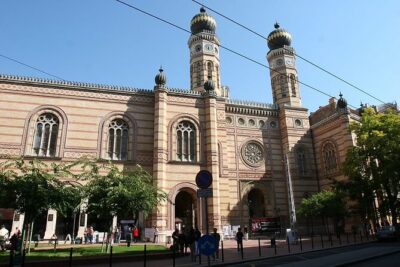
Budapest Jewish Heritage Memorial Walking Tour & Synagogue Entry
Read our review →
Jewish Heritage Guided Tour with Synagogue Ticket
Read our review →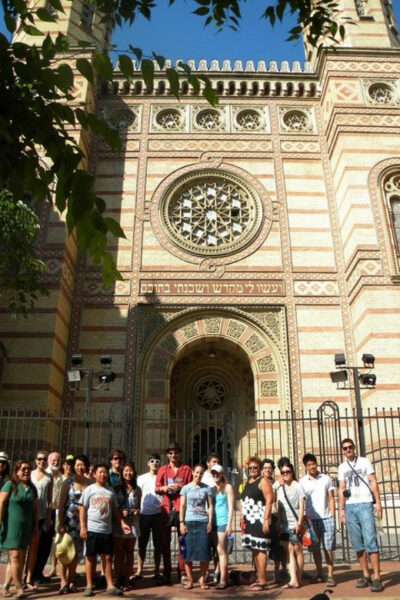
Past and Present of Budapest Jewish District Tour
Read our review →
Budapest Dohany Synagogue & Hungarian Jewish Museum & free extras
Read our review →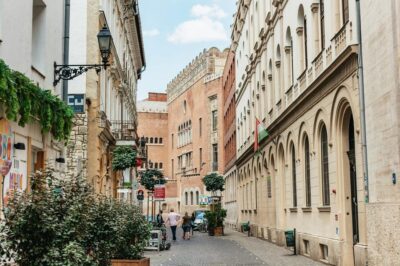
Jewish History Guided Walking Tour with Historian
Read our review →Browse the lists this tour appears in