
REVIEW · JEWISH HERITAGE TOURS
Budapest Jewish Heritage: Synagogues, Shoes, Secrets & Flódni
History feels different when it has a human voice. This private Budapest walk links three distinct synagogues with wartime memorials, ghetto sites, and the everyday story of Hungarian Jewish life. I especially like the personal guide format and the way the route compares Neolog, Conservative, and Orthodox traditions. The final taste of flódni, a layered Jewish Hungarian pastry, is a fine touch.
The main drawback is cost. At $102.95 per person, this is not a cheap stroll, especially since synagogue admission is extra. You are paying for time with a guide rather than a busload of people, and that value depends heavily on the guide you receive and how much discussion you want.
In This Review
- The essential details at a glance
- Starting at Herzl Square and the Great Synagogue
- Rumbach Street and a different Jewish identity
- Carl Lutz and the people who resisted
- Kazinczy Street’s Orthodox synagogue
- The Shoes on the Danube Bank memorial
- Walking through the former Budapest ghetto
- Flódni and the taste of Jewish Budapest
- Why the private format matters
- Is $102.95 per person good value?
- Who will get the most from this walk?
- Should you book Budapest Jewish Heritage?
- FAQ
- Where does the tour begin?
- How long does the tour last?
- Are synagogue entrance tickets included?
- Is the flódni pastry included?
- Is this a private tour?
- Can I cancel for a full refund?
The essential details at a glance
- Three synagogues, three traditions: See the Great Synagogue, Rumbach Street Synagogue, and Kazinczy Street Synagogue, each with a different architectural and religious identity.
- A serious wartime route: Visit the Carl Lutz Memorial, Shoes on the Danube Bank, and part of the former Budapest ghetto.
- Private and conversational: Only your group takes part, which gives you room to ask questions and adjust the discussion.
- Led by a Jewish guide: Guides named in the feedback include Gabriella, Edith, Kata, Miklós, and Peter or Pieter.
- Finishes with flódni: The pastry adds a small but memorable connection to Jewish Budapest through food.
- Allow nearly three hours: The advertised duration is about 2 hours and 45 minutes, with walking between several central sites.
Starting at Herzl Square and the Great Synagogue
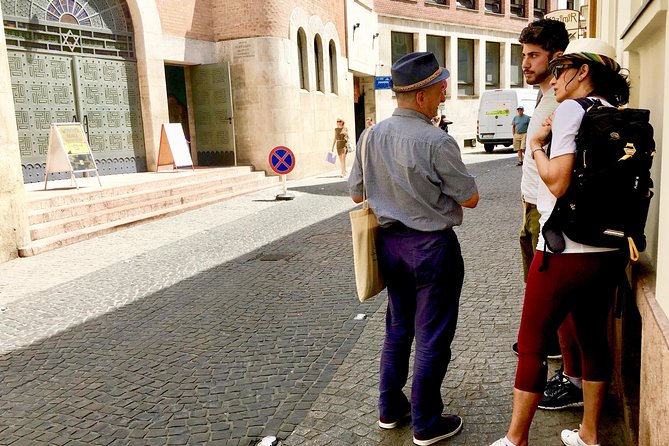
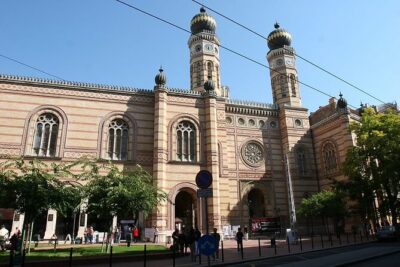
The walk begins at Dohány Street 1, beside the Great Synagogue and Herzl Square in Budapest’s 7th District. This is a sensible starting point because the synagogue complex introduces the scale, importance, and divisions of Budapest’s Jewish community before the route moves into smaller streets.
The Great Synagogue, also called the Central Synagogue or Nagy Zsinagoga, is the largest synagogue in Europe. It can seat 3,000 people and serves the Neolog branch of Judaism, a Hungarian movement that developed its own balance between tradition and modern civic life.
You get about 20 minutes here, with admission not included in the tour price. That matters. If you want to enter the building, check the current entrance arrangements and budget for a separate ticket. The guide can explain the building’s unusual design and connect it to the broader story of Hungarian Jewry, including the fate of the community during the Second World War.
This first stop also helps you see Budapest’s Jewish past as more than a story of persecution. The guide discusses famous Hungarian Jews and the community’s contribution to the city. That wider frame is one of the tour’s strongest features. You hear about people, institutions, and urban life, not only dates and tragedy.
More Jewish heritage tours:
- Budapest Jewish Heritage Memorial Walking Tour & Synagogue Entry
★ 5.0 · 568 reviews - Budapest: Jewish Heritage Guided Tour with Synagogue Ticket
★ 4.8 · 533 reviews - Jewish Quarter of Budapest Walking Tour
★ 4.7 · 369 reviews
Rumbach Street and a different Jewish identity
A short walk brings you to Rumbach Sebestyén Street Synagogue. Built in 1872 by Austrian architect Otto Wagner, it was designed for the more moderate Conservative community.
The building’s Moorish style makes it an obvious contrast with the Great Synagogue. Its interior has been restored, and the decorative work is intended to be seen at close range rather than absorbed from a large open square. The scheduled stop lasts about 15 minutes, and admission is extra.
This is where the tour’s comparative approach becomes useful. Instead of treating every synagogue as another grand building, the guide explains why these congregations needed separate institutions and how their religious positions differed. I like this kind of context because it turns architecture into evidence of community life.
The practical limitation is time. Three synagogues in one walk means you will not receive an extended visit at every site. If your main goal is detailed architectural study, you may want to return independently to the buildings that interest you most.
Carl Lutz and the people who resisted
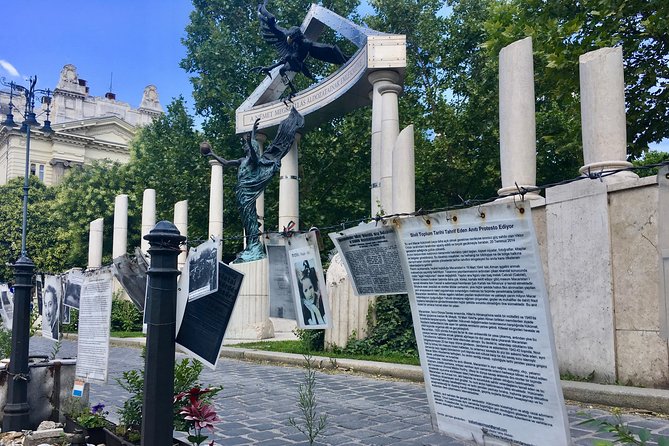
The Carl Lutz Memorial is a brief but important stop. Lutz was a Swiss diplomat who helped save tens of thousands of Jews in Budapest from persecution and deportation during the war.
The memorial is located in the area of the former Budapest ghetto. The scheduled visit lasts about 10 minutes and costs nothing. It provides a useful change in focus after the synagogues. You move from community institutions to the actions of individuals who used official positions, forged documents, and diplomatic protection to help people survive.
The guide’s role matters here. A plaque alone gives you a name and a date. A good guide can place Lutz within the tense final years of the war and explain why Budapest became such a dangerous place for Hungarian Jews. Guides on this tour have been praised for making difficult material understandable without turning the walk into a dry lecture.
Kazinczy Street’s Orthodox synagogue
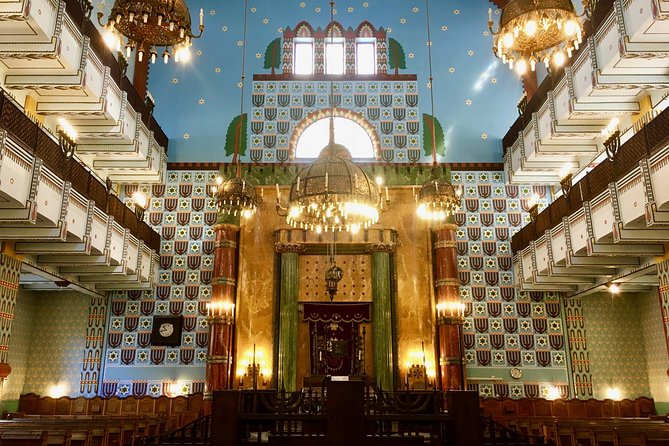
The third synagogue is on Kazinczy Street, tucked into a smaller side street. Built in 1913, it served Budapest’s Orthodox community and has a bright late Art Nouveau design.
The stained-glass ceiling windows were designed by Miksa Róth, one of Hungary’s best-known decorative artists. The colorful interior gives you another sharp contrast with the Moorish Rumbach building and the monumental Great Synagogue.
This stop usually lasts about 10 minutes, and admission is not included. The brief visit is enough to show the building’s character and explain its religious setting, but it is not a full guided tour of every detail.
I find the three-synagogue structure especially valuable for first-time visitors. Without this comparison, it is easy to assume that Budapest’s Jewish community was one uniform group. The buildings show otherwise. They reflect different choices about worship, community life, and how Jewish institutions related to modern Hungarian society.
More history tours in Budapest:
- Budapest: Historic Cruise with Welcome Drink
★ 4.7 · 6,512 reviews - Budapest Historical Sightseeing – Free Walking Tour
★ 5.0 · 1,302 reviews - Buda Castle District Dark History, Legends and Vampire Night Tour
★ 4.5 · 1,240 reviews - BloodThirsty Hungary: Walking tour & Dark Historical Stories
★ 4.9 · 633 reviews
The Shoes on the Danube Bank memorial
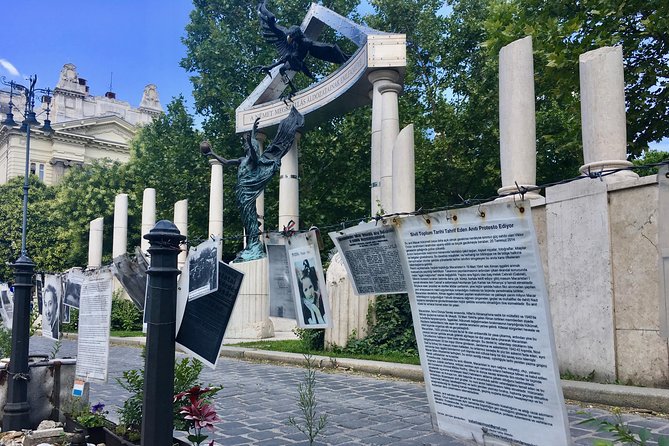
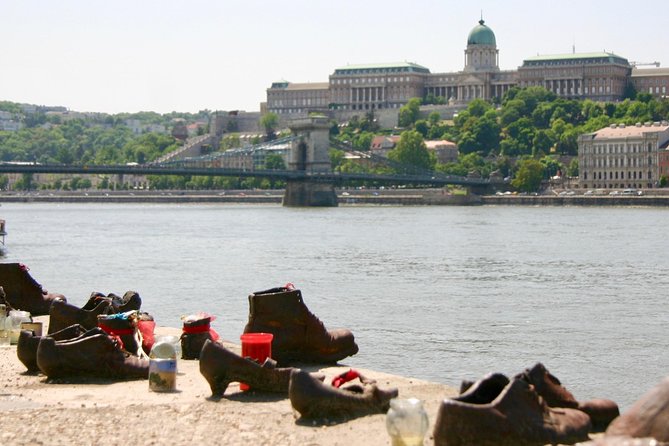
The route then reaches one of Budapest’s most powerful memorials, the Shoes on the Danube Bank. Created in 2005, the sculpture depicts iron shoes left along the riverbank.
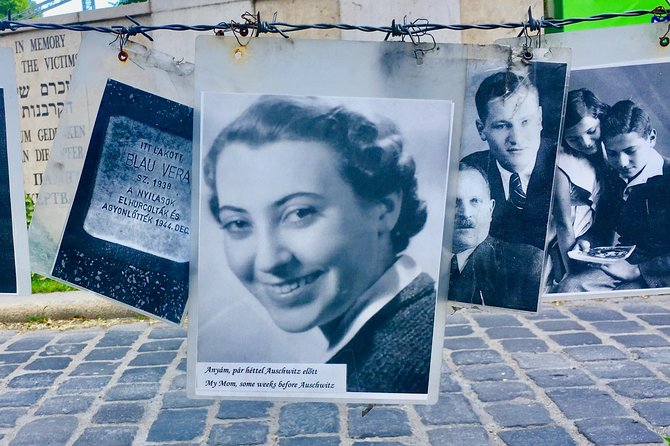
The memorial recalls Jewish victims murdered at this site during the Second World War. They were ordered to remove their shoes before being shot, and their bodies were carried away by the Danube. The objects are simple, familiar, and painfully effective.
The tour allows about 10 minutes here. Admission is included because the memorial is an open public site. You should expect a quiet moment rather than a long explanation filled with spectacle. The power comes from the ordinary shape of the shoes and the grim act they represent.
This part of the walk can be emotionally heavy. That is not a flaw, but you should know what kind of afternoon you are booking. The tour deals directly with murder, deportation, the ghetto, and the destruction of a community. It is suitable for most people, but it is not a light sightseeing outing with a few historical decorations added.
Walking through the former Budapest ghetto
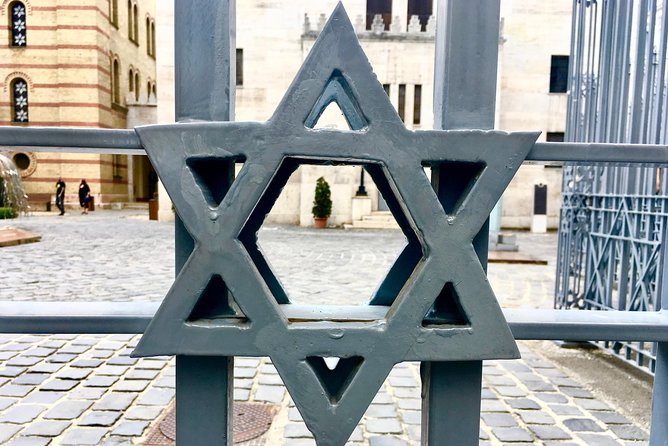
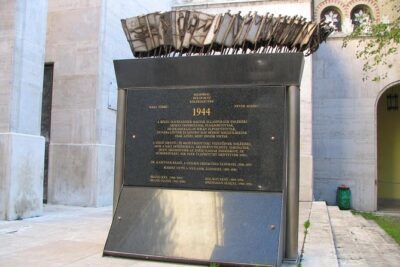
Back in the Jewish Quarter, the guide explains how Budapest’s Jews were forced into a ghetto toward the end of the war. A small section of the ghetto wall remains in the middle of the city.
The scheduled stop is about 15 minutes and free. The physical remains are modest, so the value comes largely from the explanation. You learn how the ghetto functioned, what daily life was like for its inmates, and what eventually happened to them.
This is also where the private format earns its keep. You can ask about ordinary family life, the machinery of persecution, or the way the quarter has changed. One particularly useful strength of the tour is its attention to the years between the First and Second World Wars. That period helps explain how families lived, worked, worshipped, and participated in Budapest before the catastrophe.
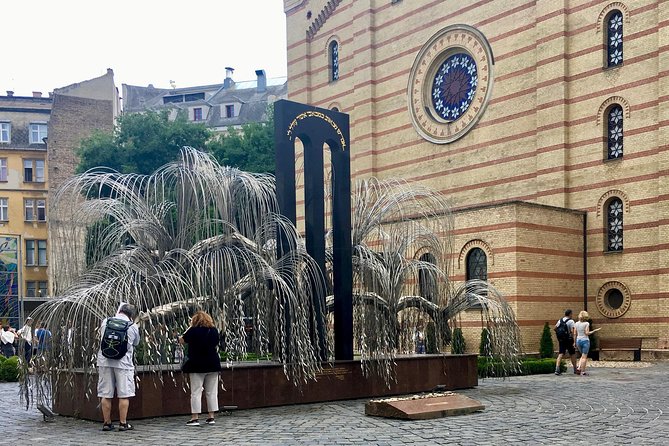
Some guide-led versions have also included a tenement or house synagogue, a smaller and poorer place of worship that gives a more intimate sense of neighborhood life. Other routes have included the Raoul Wallenberg Holocaust Memorial Park, the Tree of Life memorial, the cemetery, or time for a little shopping. These details appear to vary with the guide and available time, so treat them as possible additions rather than guaranteed stops.
Flódni and the taste of Jewish Budapest
The walk ends with flódni, a traditional Jewish Hungarian pastry. It is made with several layers and is associated with the Jewish culinary traditions of the region.
This final snack is more than a sweet reward after nearly three hours on foot. Food gives you a way to think about heritage as something lived at home, not only preserved in monuments. A pastry cannot soften the history you have just encountered, but it adds an everyday cultural note to a route that otherwise focuses heavily on institutions and wartime memory.
The advertised tour includes the snack. One piece of practical advice comes from the mixed feedback: clarify what the closing refreshment includes when you meet your guide. One person felt a promised drink or handout was missed, while another ended the walk with coffee and pastry at a special café. The standard inclusion is flódni, but the exact setting and extras may depend on the guide.
Why the private format matters
This is not a large group walk. Only your party participates, and that changes the pace and tone.
You can ask for more detail about family life, architecture, religion, the Holocaust, or famous Hungarian Jews. You can also tell the guide what brought you to the subject. Miklós, described as a retired educator, reportedly began by asking why the group wanted to take the tour, including one party that was not Jewish. That is a smart opening because it lets the guide shape the discussion instead of delivering the same speech to everyone.
Kata has been praised for sharing personal experience as a Hungarian Jew, including how her family was affected by the Holocaust and Soviet occupation and how she is raising her daughter within Hungarian Jewish culture. Gabriella has received especially warm praise for her command of Hungarian and European Jewish history, along with her helpful, friendly manner. Edith’s style has been described as a mix of explanation and questions that encourage you to think about what you are seeing.
These personal qualities are central to the value. The tour has received a 4.9 rating from 47 reviews, with 96 percent recommending it, but the one lower account is worth considering. That person wanted more stories about how people protected themselves and more detail about specific events. The guide’s response pointed out that the tour covers Jewish heritage in historical context, not only Holocaust survival stories.
That distinction is important. If you want a focused Holocaust tour, ask before booking. If you want the broader story of Jewish Budapest, including religious divisions, urban life, famous figures, war, and memory, this format is better suited.
Is $102.95 per person good value?
At $102.95 per person, the tour sits in the premium category for a walk lasting about 2 hours and 45 minutes. The price includes a private guide, a Jewish guide, the flódni snack, and hotel pickup as an available feature. It does not include synagogue entrance tickets or public transportation.
I would judge the price by group size. For one or two people, it is a serious expense. For a family or small group dividing the cost, private guiding can make more sense, particularly if you have a tight schedule or want a serious conversation rather than a standard group script.
The price also buys access to interpretation. The memorials and synagogues are available in Budapest, but the connections between them are easy to miss. A good guide explains why the three congregations developed separately, how the ghetto changed the quarter, and how Jewish life fits into the wider story of Budapest.
You should not book this expecting every admission to be covered. The Great, Rumbach, and Kazinczy synagogues all list entrance tickets as extra. Ask about the day’s exact route, any planned interior visits, and the final snack arrangement before you commit.
Who will get the most from this walk?
I would recommend it to you if you want a compact introduction to Jewish Budapest and prefer discussion to a fixed group lecture. It suits people with Jewish family connections, visitors interested in Hungarian culture, and anyone who wants to understand the city beyond its famous thermal baths and grand boulevards.
It can also work well for non-Jewish visitors. One guide made a point of asking a non-Jewish group why they had chosen the subject, then explained Hungarian Jewish life as distinct from Jewish history elsewhere in Europe. That kind of framing helps you enter the topic respectfully without needing prior knowledge.
The tour is less suitable if you want a relaxed food walk, a purely architectural tour, or a detailed account of resistance networks and individual wartime incidents. It covers a lot in under three hours, so the experience favors breadth, context, and conversation over exhaustive detail.
You should wear comfortable shoes. The route links several sites on foot, and public transportation is not included. Most people can participate, and service animals are allowed. Hotel pickup is offered, though the stated meeting point is Dohány u. 1, so confirm the arrangement in advance.
Should you book Budapest Jewish Heritage?
Book this tour if you want the big picture of Jewish Budapest, delivered by a private Jewish guide who can respond to your questions. The three synagogues provide clear architectural and religious contrasts, while the wartime memorials give the walk moral weight. The flódni ending keeps the experience connected to daily culture rather than leaving you only with dates and grief.
I would hesitate only if $102.95 feels too high after adding synagogue admission, or if your main interest is a highly detailed Holocaust account. In that case, ask for the guide’s preferred emphasis before booking.
For most people who want a personal, serious, and well-paced introduction to the Jewish Quarter, this is a strong choice. The guide matters greatly, so if you have a choice, Gabriella, Edith, Kata, or Miklós each bring the kind of warmth and subject knowledge that this topic deserves.
FAQ
Where does the tour begin?
The meeting point is Budapest, Dohány u. 1, 1074 Hungary, at the Great Synagogue area.
How long does the tour last?
The tour lasts approximately 2 hours and 45 minutes.
Are synagogue entrance tickets included?
No. Entrance tickets for the Great Synagogue, Rumbach Street Synagogue, and Kazinczy Street Synagogue are not included in the tour price.
Is the flódni pastry included?
Yes. The tour includes an authentic Jewish dessert, flódni, at the end of the walk.
Is this a private tour?
Yes. Only your group participates in the activity.
Can I cancel for a full refund?
Yes, if you cancel at least 24 hours before the experience start time. Cancellations made less than 24 hours in advance are not refunded, and changes within that period are not accepted.
Just added in Budapest
- Budapest: Private Walking Tour with a Local Guide★ 3.6 · 6 reviews
- Budapest: Danube River Views Bike Ride★ 4.8 · 23 reviews
- Budapest: City Bike Tour with Coffee Stop★ 5.0 · 37 reviews
- From Budapest: Guided Tour of Eger with Wine Tasting★ 4.5 · 6 reviews
- Walk to recent and aged spiritual sanctuaries near Budapest★ 5.0 · 5 reviews
- Walking consultancy with alternative psychologist and author★ 5.0 · 2 reviews
- Budapest: Guided Tour of the Parliament Building in Spanish★ 4.6 · 1,240 reviews
- Budapest: Vacation Photographer to collect great memories★ 5.0 · 49 reviews
Jewish Heritage Tours, compared.
Budapest Jewish Heritage Memorial Walking Tour & Synagogue Entry
Read our review →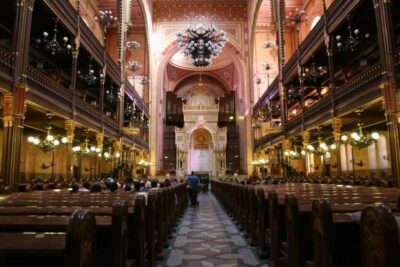
Jewish Heritage Guided Tour with Synagogue Ticket
Read our review →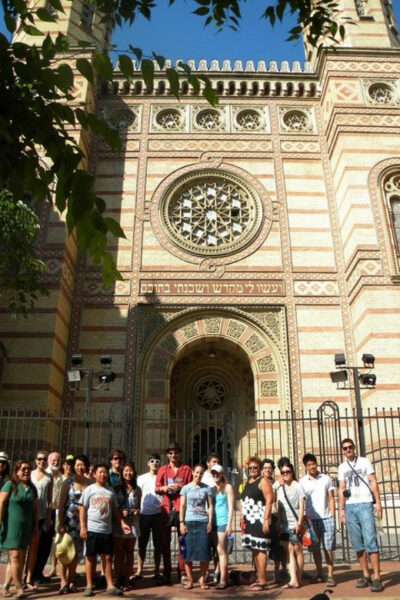
Past and Present of Budapest Jewish District Tour
Read our review →
Budapest Dohany Synagogue & Hungarian Jewish Museum & free extras
Read our review →
Jewish History Guided Walking Tour with Historian
Read our review →Browse the lists this tour appears in