
REVIEW · WALKING TOURS
Downtown Pest Walking Tour
Budapest reveals its story one grand street at a time. This three-hour walk through central Pest connects Parliament, Freedom Square, Art Nouveau buildings, the Jewish quarter, Andrassy Boulevard, and Heroes Square while explaining how Budapest became the political and financial heart of modern Hungary. I especially like the focus on architecture and political history, and the chance to see famous sights in a clear sequence instead of collecting disconnected photo stops. I also like that a historian leads the walk, giving the buildings some much-needed context.
The main consideration is the price: $123 per person is a serious amount for a walking tour, especially since the experience does not list interior admission to Parliament, the Opera House, or the synagogue. You are paying for a private or small-group setting and a guide-led history lesson, not simply for access to landmarks. The route also covers a lot of ground, so comfortable shoes are essential.
In This Review
- Key points about the Pest walk
- Starting beside Parliament at Kossuth Square
- Remembering the Holocaust beside the Danube
- Freedom Square and the money that built Pest
- Art Nouveau streets and St. Stephen’s Basilica
- The great synagogue and Budapest’s Jewish contribution
- Andrassy Boulevard, built for Hungary’s nobility
- Finishing at Heroes Square and the 1896 celebrations
- What $123 buys you
- Who should book this walking tour?
- Should you book the Downtown Pest Walking Tour?
- FAQ
- Where does the Downtown Pest Walking Tour begin?
- How long does the tour last?
- What language is the tour offered in?
- Is the tour private or shared?
- Does the tour enter Parliament?
- What are the main sights on the route?
- Can I cancel for a refund?
Key points about the Pest walk
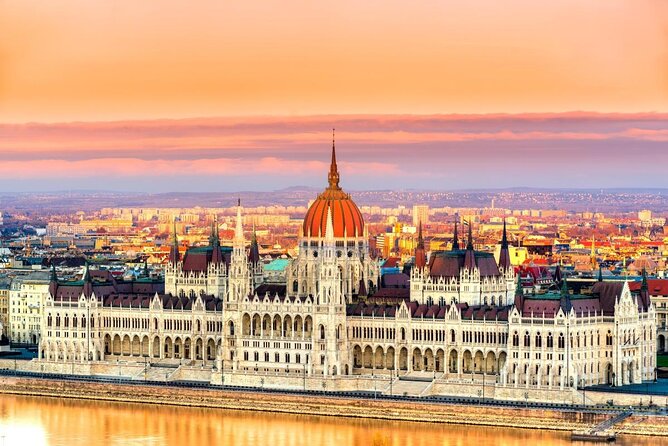
- Parliament begins the story: Start at Kossuth Square beside Hungary’s grandest political building and learn why it mattered at the 1896 inauguration.
- Freedom Square mixes money and power: See the massive Stock Exchange Palace, former financial institutions, and the statue of Cardinal Mindszenty.
- The Danube memorial adds weight: The Holocaust Monument near Parliament recalls Budapest’s Jewish citizens murdered there during the final months of World War II.
- Budapest’s Art Nouveau appears along the route: The walk passes elegant buildings on the way to St. Stephen’s Basilica.
- Andrassy Boulevard links old privilege with national identity: The grand avenue was designed for Hungarian nobility and leads toward Heroes Square.
- The guides are a major strength: András is praised for patient, objective explanations, while Zsofia is praised for strong storytelling and a lively pace.
Starting beside Parliament at Kossuth Square
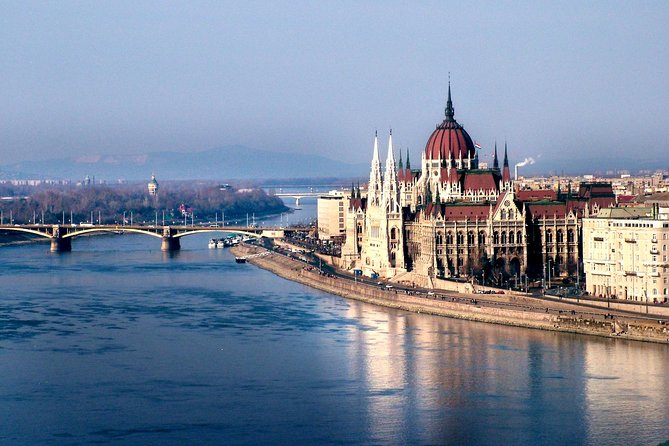
The tour begins at Szamos Cafe, Budapest Kossuth Lajos tér 10, directly by Kossuth Square. This is an excellent place to begin because Parliament gives you an immediate sense of the scale and ambition of nineteenth-century Budapest.
At its inauguration in 1896, Parliament was the largest and most costly building ever constructed in Hungary. You will first appreciate it from outside, where its size does most of the talking. The guide then helps you understand the building as more than a postcard subject. It represents the political confidence of a newly developing Hungarian nation and the desire to create a capital that could compete with the grand cities of Europe.
The building is described as dazzling inside, with art by nearly every major Hungarian painter and sculptor of the period. Still, you should be clear about what this walking tour includes. The route begins in front of Parliament and does not list an interior visit. If you want to tour the rooms inside, you will need to arrange that separately.
Kossuth Square itself also deserves attention. Rather than rushing toward the next stop, a good guide can use the surrounding monuments and buildings to explain the political role of this part of Pest. That slower approach is one reason this tour has earned such strong praise. András, one of the guides, was described as patient, objective, and willing to answer questions. Those qualities matter at a place where Hungarian politics can quickly become complicated.
More walking tours in Budapest:
- Budapest: Buda Castle Walk with Saint Stephen’s Hall
★ 4.5 · 3,012 reviews - Big Bus Budapest Hop-On Hop-Off Bus and Walking Tour
★ 3.5 · 2,206 reviews - Budapest: Buda Castle District Walking Tour
★ 4.6 · 2,108 reviews
Remembering the Holocaust beside the Danube
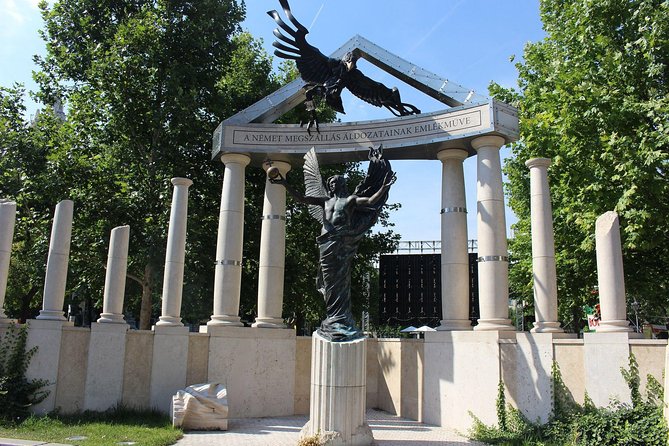
Behind Parliament, on the riverbank, you encounter the Holocaust Monument. It honors the many thousands of Jewish citizens of Budapest who were murdered at that spot during the final months of World War II.
This is a brief stop, but it changes the tone of the walk. The Parliament area can feel grand and ceremonial, while the memorial forces you to confront a much darker part of the city’s past. I appreciate that the route does not treat Budapest as only a city of palaces, banks, and beautiful facades.
The monument also helps connect national history with a precise place. You are not hearing about wartime events in an abstract lecture room. You are standing near the Danube, close to the political center of the country, and learning what happened there. A historian guide is particularly useful at this point because the memorial deserves calm explanation rather than a hurried photograph.
Freedom Square and the money that built Pest
From Parliament, the route continues to Freedom Square. The square was originally developed as the financial center of Budapest, and its buildings show how money, politics, and national ambition shaped Pest in the second half of the nineteenth century.
The massive Stock Exchange Palace is the main architectural prize here. The square also contains opulent buildings that still house banks, giving the area a strong connection to its original purpose. You can see how the new Hungarian middle and upper classes wanted their institutions to look prosperous, permanent, and important.
Freedom Square is often considered Budapest’s most beautiful square, but its appeal is not simply visual. The guide can help you read the buildings as evidence of a growing economy. Instead of viewing each facade as a separate decoration, you begin to see a financial district built to announce confidence.
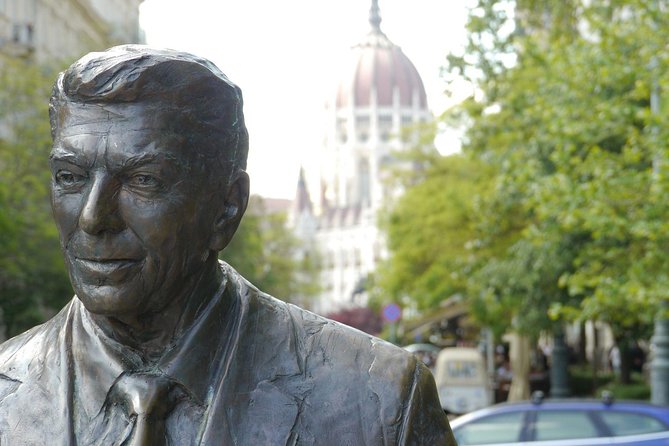
The tour also stops at the statue of Cardinal Mindszenty. He was the head of the Catholic Church in Hungary and spent 15 years hidden in the United States embassy while evading the Communist authorities. His story adds another layer of political conflict to the walk. Parliament introduced the era of nation building, while Mindszenty’s story brings you into the struggle between religion and communism.
This part of the walk is especially good for visitors who want modern Hungarian history explained alongside architecture. It is less about ticking off famous sights and more about understanding why these streets look the way they do.
Art Nouveau streets and St. Stephen’s Basilica
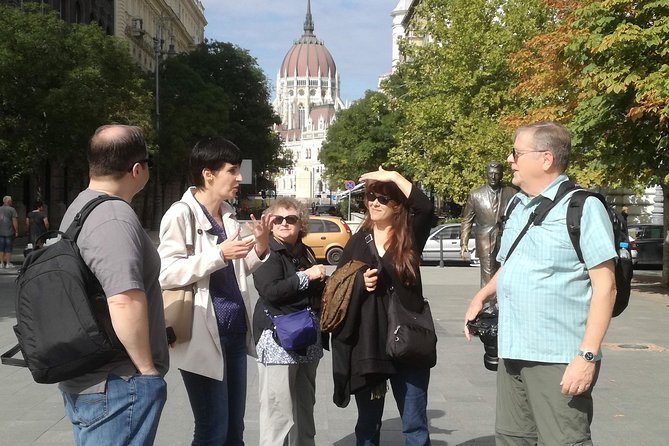
After Freedom Square, you continue toward St. Stephen’s Basilica. Along the way, the guide points out several Art Nouveau buildings, the style for which Budapest is famous.
This is one of the pleasures of walking in Pest. The grand landmarks receive most of the attention, but some of the city’s most memorable details appear between them. Curving lines, decorative stonework, unusual windows, and carefully designed entrances reward anyone willing to look above street level.
The tour format works well here because you might otherwise pass these buildings without knowing what to notice. A historian guide can explain how the facades fit into the wider growth of Budapest and the tastes of its wealthy residents. Zsofia, another guide associated with the tour, was praised for her storytelling and for making three hours pass quickly. That is useful evidence for a route with this many historical stops, since too much information can make a walk feel like a classroom with sore feet.
St. Stephen’s Basilica provides a major visual landmark. It is one of the city’s most important religious buildings and fits the tour’s larger theme: Pest was becoming the religious center as well as the political and financial center of the Hungarian nation.
The available details do not promise entry into the basilica, so plan on viewing it as part of the walking route unless your booking specifically says otherwise. The outside alone gives the guide plenty to discuss, but visitors who want to see the interior should confirm what is included before paying.
More things to do in Budapest:
- Budapest: City Highlights Cruise with Welcome Drink
★ 4.6 · 35,610 reviews - Budapest: Unlimited Prosecco, Beer and Aperol Spritz Cruise
★ 4.8 · 25,310 reviews - Budapest: Széchenyi Spa Day Ticket with Optional Upgrades
★ 4.3 · 23,911 reviews - Budapest: Nighttime or Daytime Sightseeing Cruise
★ 4.2 · 21,062 reviews
The great synagogue and Budapest’s Jewish contribution
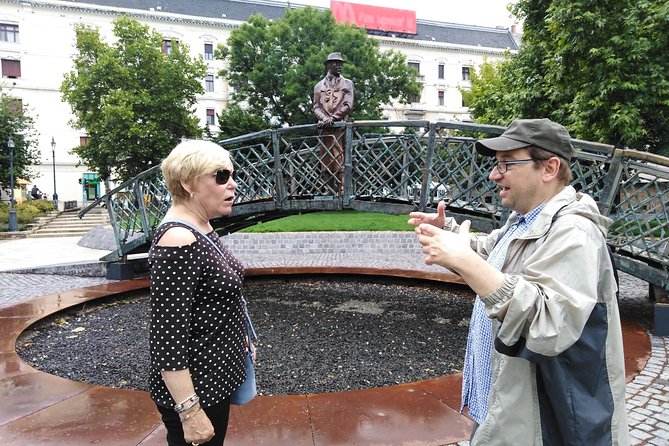
Farther along, the route reaches the second-largest synagogue in the world. The synagogue is presented as a monument to the important role played by Budapest’s Jewish population and its wealthy bourgeoisie in the city’s development.
This stop is essential to the tour’s balance. Budapest’s nineteenth-century success did not come from one group alone. Jewish citizens played a major part in commerce, finance, culture, and urban growth, and the synagogue gives that contribution a powerful architectural presence.
The sequence also works well. You have just seen banks and financial buildings at Freedom Square. Here, the guide connects that economic growth to the people who helped build the city’s modern character. The route is not only about Hungarian state power. It also recognizes the communities whose work and money helped turn Pest into a major European capital.
Again, the tour information identifies the synagogue as a stop but does not promise an interior visit. If you want to explore inside, check the exact arrangements when booking. The walking tour still gives you useful context even if you only see the building from the route.
Andrassy Boulevard, built for Hungary’s nobility
The walk then reaches Andrassy Boulevard, an elegant avenue designed for Hungarian nobility. The route travels along and under the boulevard before making a short stop at the Opera House.
Andrassy Boulevard gives you a different view of nineteenth-century Budapest. Parliament and Freedom Square show political and financial power in concentrated form. Andrassy presents that power as a grand urban promenade, designed for display, movement, and prestige.
The boulevard is also a reminder that city planning can reveal social priorities. Wide avenues and formal buildings were not accidental. They helped create a capital suited to a proud nation and its elite. Your guide can place the street within the larger story of Budapest’s rapid growth during the second half of the 1800s.
The Opera House is a short stop rather than a full performance or interior tour. That makes it a useful pause on the route, but it may disappoint you if you expect a long visit inside. The value here lies in the explanation and the exterior setting, not in a ticketed cultural event.
The wording about traveling along and under Andrassy Boulevard suggests that the route includes more than a single photo opportunity. You get to experience the avenue as part of the city rather than viewing it from one fixed point.
Finishing at Heroes Square and the 1896 celebrations
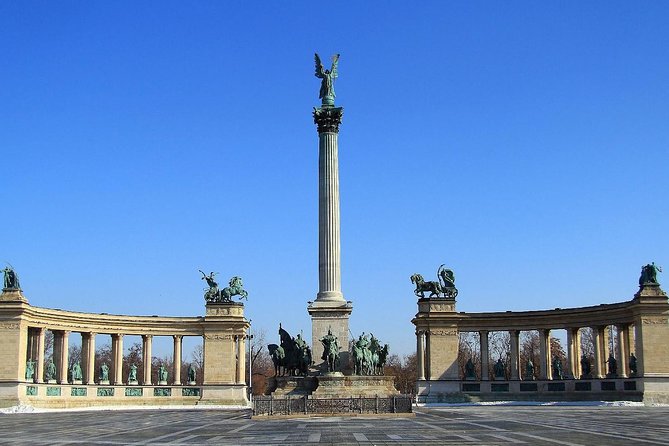
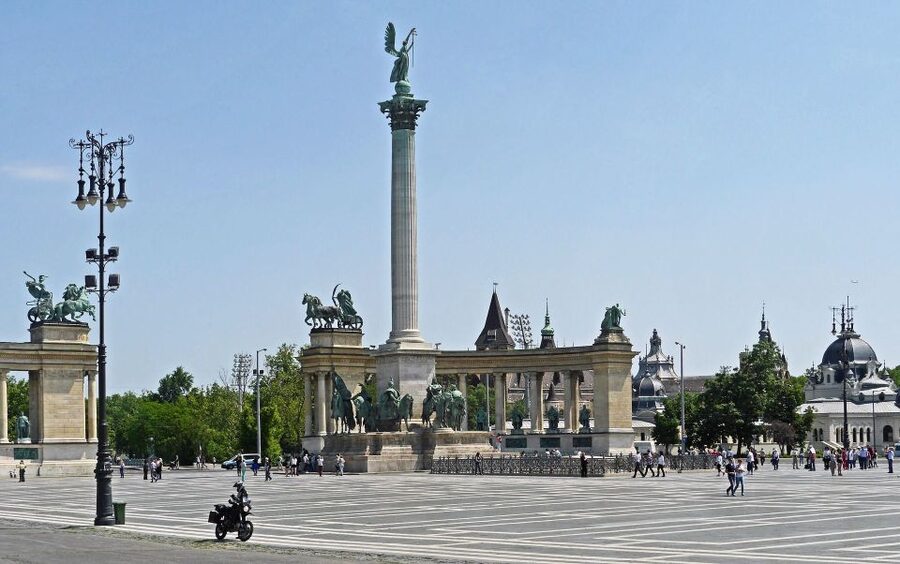
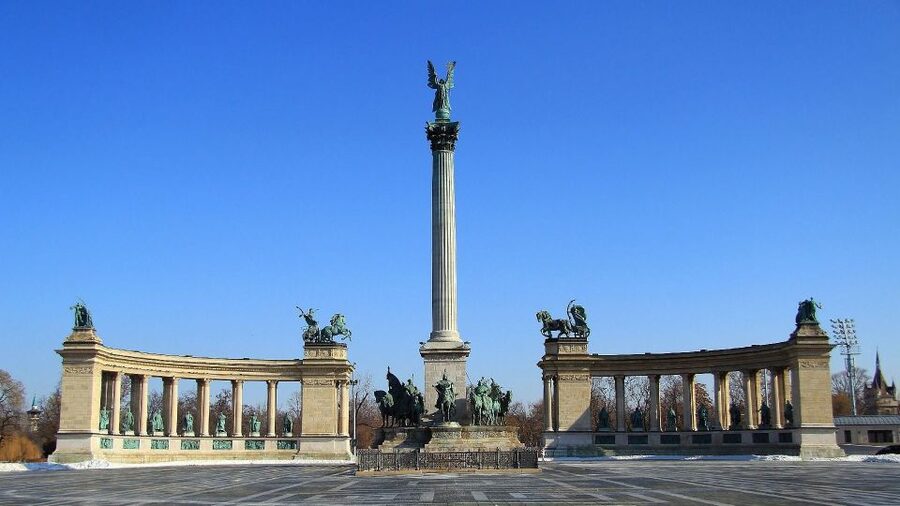
The tour ends at Heroes Square, where Hungarians celebrated the 1,000-year anniversary of the founding of their kingdom in 1896. This is a fitting finish because the entire walk has been building toward the national confidence of that period.
You begin beside Parliament, a building linked to the modern state. You pass the financial center, religious landmarks, and an avenue designed for the nobility. At Heroes Square, those threads come together in a monumental setting created for national celebration.
The square provides a strong final image, but it also gives the guide a chance to explain how Hungary wanted to present itself. The date is important. In 1896, Budapest was celebrating a millennium of Hungarian history while also showing off the city’s new wealth, institutions, and grand architecture.
Because the tour ends here, you can continue exploring the area afterward if you wish, but no onward transportation is included in the tour description. Check the route and your plans for the rest of the day before booking another timed activity nearby.
What $123 buys you
At $123 per person, this is not a budget walk. Its value depends on how much you want from a guide.
You are paying for three hours with a historian, a focused route through central Pest, and the possibility of a private or small-group experience. That can be worthwhile if you want to ask questions, slow down at important buildings, and hear an organized explanation of Hungarian political, religious, Jewish, and architectural history.
The price is harder to justify if you mainly want quick introductions to the sights. You can see many of the buildings from public streets without a tour, and the experience does not list admission to Parliament, the Opera House, or the synagogue. In that case, you may prefer a less expensive group walk or a self-guided route.
The guide quality appears to be the deciding factor. András was praised for his phenomenal English, patience, good humor, and objective approach. One participant even hoped to book another session with him but found that he was unavailable. Zsofia was praised for her excellent storytelling and ability to keep the three-hour walk moving. Those comments suggest that the experience works best when you value conversation and interpretation, not just sightseeing.
You can cancel up to 24 hours in advance for a full refund, and you can reserve now while paying later. Those options reduce the risk of booking early, especially when your Budapest schedule is still changing.
Who should book this walking tour?
I would recommend it to first-time visitors who want a strong introduction to central Pest. The route covers several major sights without treating them as isolated monuments, and the historian guide adds the political context that many city walks skip.
It also suits visitors who enjoy architecture. You will see Parliament, the Stock Exchange Palace, banks, Art Nouveau buildings, St. Stephen’s Basilica, the great synagogue, the Opera House, and Heroes Square in one connected route.
History-focused visitors should find plenty to consider, from nineteenth-century nation building to the Holocaust and the Communist period. The inclusion of Cardinal Mindszenty and the Holocaust Monument keeps the tour from becoming a polished parade of imperial facades.
I would think twice if you have limited mobility or dislike long walks, since the experience covers three hours on foot and gives no specific accessibility details. I would also hesitate if your main goal is interior access. The route highlights major buildings, but the information provided does not include entrance tickets.
Wear comfortable shoes and allow yourself time afterward. Three hours can pass quickly when the guide is engaging, but the number of stops means you will want a slower break later.
Should you book the Downtown Pest Walking Tour?
Book it if you want a history-led explanation of Pest, especially in a private or small-group setting. The route is broad but coherent, moving from Parliament and wartime memory through finance, religion, Jewish life, aristocratic planning, and national celebration.
Skip it if $123 feels too high for an outdoor walk or if you need guaranteed interior visits. For the right person, the fee buys more than directions between landmarks. It buys a patient guide who can explain why Budapest’s grand center was built, who shaped it, and what its buildings still say about Hungary.
FAQ
Where does the Downtown Pest Walking Tour begin?
It begins at Szamos Cafe, Budapest Kossuth Lajos tér 10, beside Kossuth Square and Parliament.
How long does the tour last?
The walking tour lasts three hours.
What language is the tour offered in?
The live tour guide speaks English.
Is the tour private or shared?
Private or small-group options are available.
Does the tour enter Parliament?
The tour starts in front of Parliament and covers its exterior and history. Interior entry is not listed as included.
What are the main sights on the route?
The route includes Parliament and Kossuth Square, the Holocaust Monument, Freedom Square, the Stock Exchange Palace, Cardinal Mindszenty’s statue, St. Stephen’s Basilica, the second-largest synagogue in the world, Andrassy Boulevard, the Opera House, and Heroes Square.
Can I cancel for a refund?
Yes. You can cancel up to 24 hours in advance for a full refund.
Just added in Budapest
- Budapest: Private Walking Tour with a Local Guide★ 3.6 · 6 reviews
- Budapest: Danube River Views Bike Ride★ 4.8 · 23 reviews
- Budapest: City Bike Tour with Coffee Stop★ 5.0 · 37 reviews
- From Budapest: Guided Tour of Eger with Wine Tasting★ 4.5 · 6 reviews
- Walk to recent and aged spiritual sanctuaries near Budapest★ 5.0 · 5 reviews
- Walking consultancy with alternative psychologist and author★ 5.0 · 2 reviews
- Budapest: Guided Tour of the Parliament Building in Spanish★ 4.6 · 1,240 reviews
- Budapest: 3-Hour Trabant Sightseeing Tour★ 4.7 · 28 reviews
Walking Tours, compared.
Budapest City Landmarks Walking Tour in 2 Hours
Read our review →
3-Hour Orientation Walking Tour of Buda and Pest
Read our review →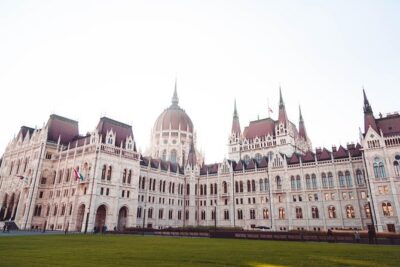
Budapest Historical Sightseeing – Free Walking Tour
Read our review →
Budapest All in One Small Group Walking Tour with Strudel Stop
Read our review →
Buda Castle District Walking Tour with a Historian
Read our review →
BloodThirsty Hungary: Walking tour & Dark Historical Stories
Read our review →Browse the lists this tour appears in