
REVIEW · BUDA CASTLE AND CASTLE DISTRICT TOURS
Gems of the Budapest Castle District Walking Tour
Budapest rewards a good walk. This $3.61 English tour links the Castle District’s grand viewpoints, royal courtyards, statues, ruins, and local stories in about two hours and ten minutes. I like the strong route from the Holy Trinity Statue to the Castle Garden Bazaar, and I like the guide’s mix of facts, legends, humor, and useful Budapest suggestions. The main drawback is the pace: twenty stops in just over two hours means you will often get a short explanation rather than a long visit.
The tour is especially appealing if you want to see the Castle District without spending hours planning a route. Guides Antel and the unnamed lead guide praised in the feedback are noted for clear English, warm delivery, and strong storytelling. You should still expect plenty of walking, a maximum group size of 45, and mostly brief stops rather than interior visits.
In This Review
- Key points at a glance
- Starting beside the Holy Trinity Statue
- Fisherman’s Bastion and the best Pest views
- Statues, archives, and the older layers of Buda
- The Árpád Tóth Promenade and the siege of Budapest
- Knights, confectionery, and the Labyrinth
- Revolution, Houdini, and the modern state
- The funicular, zero point, and Turul bird
- King Matthias’s fountain and the royal courtyard
- Royal Riding Hall and Prince Eugene’s statue
- Castle Garden and the Várkert Bazaar finish
- What the $3.61 price really gives you
- Walking demands, timing, and practical fit
- Should you book the Castle District walk?
- FAQ
- Where does the tour begin?
- Where does the tour end?
- What time does the tour start?
- How long does the tour last?
- Is the tour offered in English?
- What is included in the price?
- Are tips and gratuities included?
- How many people can join the tour?
- Can I cancel for a full refund?
Key points at a glance
- Twenty Castle District stops: The route covers Matthias Church, Fisherman’s Bastion, the National Archives, Buda Castle, the Labyrinth, Castle Garden, and more.
- A guide-led history lesson: You get stories about kings, revolutions, Ottoman rule, WWII, legends, and local symbols.
- Excellent city views: Fisherman’s Bastion and the Árpád Tóth Promenade provide time for photos over Pest and the Buda hills.
- A useful two-hour route: The walk begins at the Holy Trinity Statue and ends by the Castle Garden Bazaar, making it easy to continue sightseeing afterward.
- Mostly free outdoor sights: Every listed stop has free admission, although the tour does not include paid entries, food, or gratuities.
- Good value at the stated price: At $3.61 per person, the live guide may cost less than a coffee and gives you a ready-made route through a confusing historic quarter.
Starting beside the Holy Trinity Statue
The walk starts at 3:00 pm beside the Holy Trinity Statue on Szentháromság utca. This is a sensible meeting point because you are already in the center of the Castle District, close to Matthias Church and Fisherman’s Bastion.
The first five minutes introduce the Holy Trinity column. You hear why it was built and what the figures represent. That small lesson gives you a better way to read the monuments that follow, rather than treating the square as a pretty backdrop for photographs.
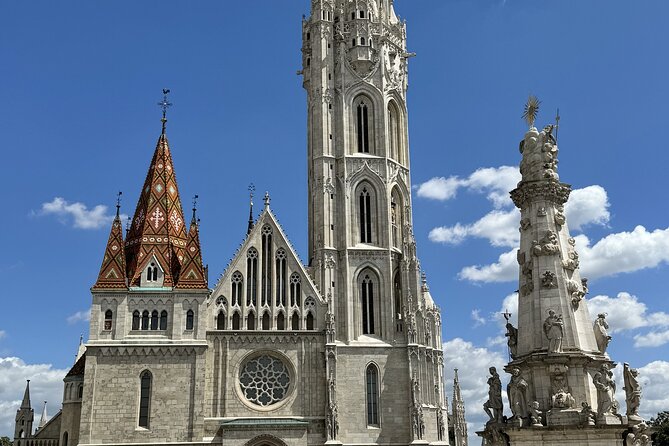
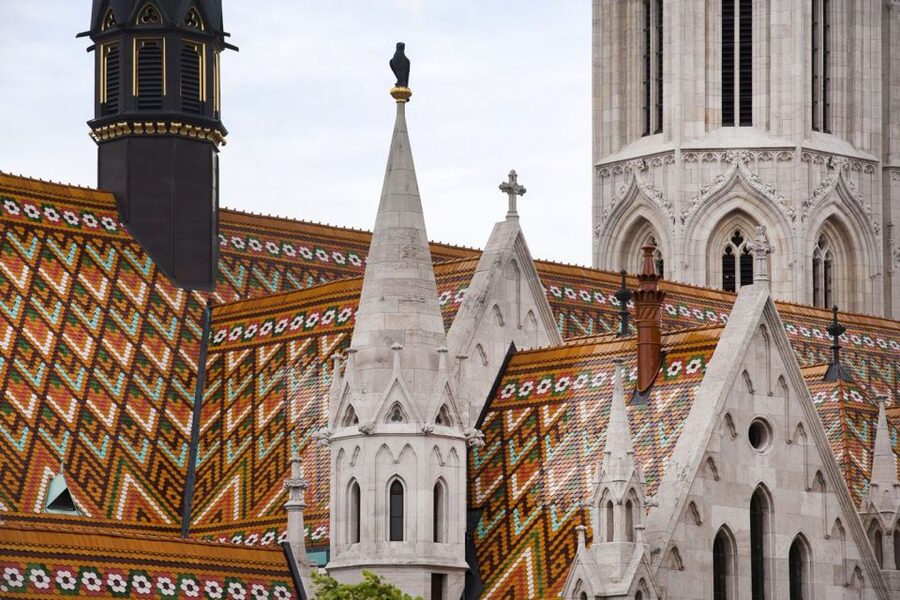
The next stop is Matthias Church, also in the square. The guide covers the church’s foundation and points out architectural details. The scheduled explanation is only five minutes, so I would not expect an inside visit or a detailed treatment of every building phase. Still, the stop helps place the church within the wider royal story of the hill.
More of the Castle District:
- Budapest: Buda Castle Cave Tour
★ 4.7 · 5,677 reviews - Budapest: Buda Castle District Vampires and Myths Night Tour
★ 4.6 · 3,830 reviews - Budapest: Buda Castle Walk with Saint Stephen’s Hall
★ 4.5 · 3,012 reviews
Fisherman’s Bastion and the best Pest views
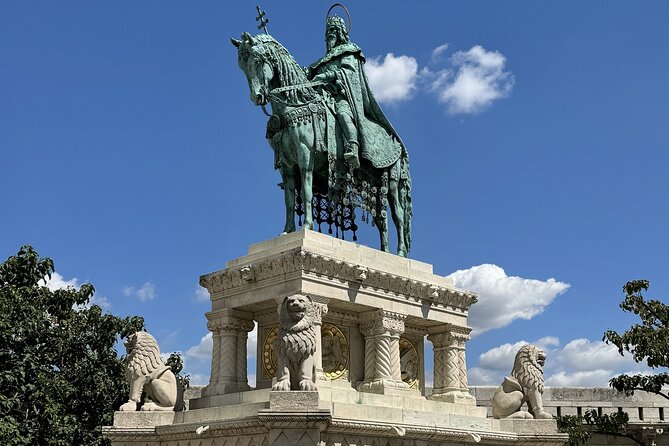
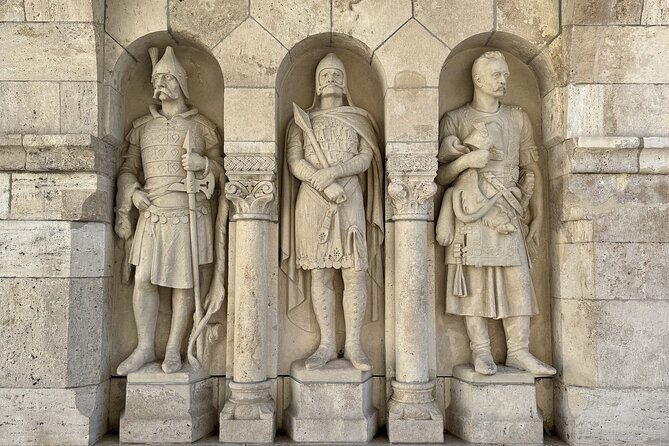
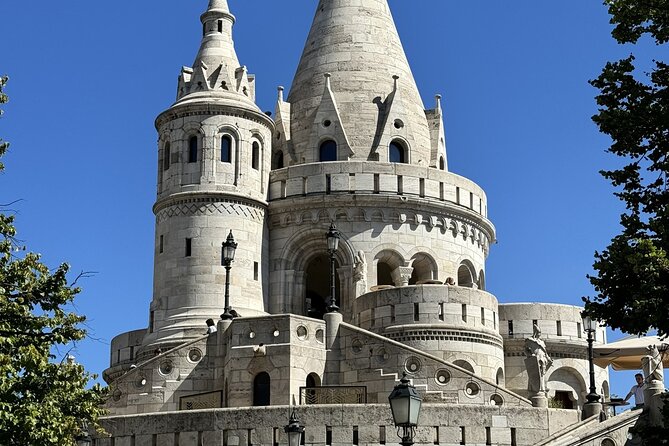
Fisherman’s Bastion receives the longest stop, about twenty minutes, and for good reason. You explore its statues, hear about the double cross and its connection with Hungarian identity, and get time for photographs over Pest.
The guide also brings in legends connected with the bastion. That blend of symbol, story, and view is one of the tour’s strongest features. A guide can point out details that are easy to miss when you walk through the arches alone, especially the relationship between the statues and Hungarian national traditions.
You get a short break here for photos, but do not expect unlimited free time. The stop is long by this tour’s standards, not long in the usual sightseeing sense. If you want careful architectural photography, arrive early or plan to return later.
The feedback gives special praise to Antel for taking the group through the corners of Fisherman’s Bastion with humor and close attention to detail. That is useful information if you value a guide who does more than recite dates. The quality of the experience depends heavily on the person leading the walk, and the comments point to clear English and an engaging presentation.
Statues, archives, and the older layers of Buda
From Fisherman’s Bastion, the route moves through a series of short stops that show how much history is packed into the hill.
At the statue of Pope Innocent XI, the guide connects nearby monuments with wider Hungarian and European history. The stop includes Pope Sylvester II, the coronation statue of King Matthias, and a discussion of what is presented as Hungary’s oldest building. You get a quick set of connections rather than a single long lecture.
The National Archives of Hungary brings in architecture and local detail. The guide points out Vienna Gate, golden signatures along Úri Street, and nearby statues with their own tales. This is the kind of material that can be difficult to gather from a standard map, especially when you are moving through streets where several centuries sit side by side.
The Church of Saint Mary Magdalene offers another short pause. The focus is the monument connected with the coronation mantle of Hungarian kings and the visible damage left by WWII. You are not given a long church visit, but you do get a reminder that the Castle District is not only a royal quarter. It is also a place marked by destruction and rebuilding.
The Árpád Tóth Promenade and the siege of Budapest
The ten-minute stop at the Árpád Tóth Promenade shifts attention toward the 20th century. You hear about the first flag raised after WWII, the row of cannons, the Szekely Knight statue, and the view toward the Buda hills.
The guide also gives a brief account of WWII and the siege of Budapest. This is a useful part of the route because the Castle District can otherwise seem frozen in the age of kings and palaces. The cannon line and damaged structures help connect the elegant streets with the violence that reshaped them.
I would treat this as an introduction, not a full study of the siege. The schedule allows about ten minutes, and the tour still has many stops ahead. If wartime Budapest is your main interest, you will want more time elsewhere. If you simply want the basic story while walking through the district, this section adds welcome balance.
More walking tours in Budapest:
- Big Bus Budapest Hop-On Hop-Off Bus and Walking Tour
★ 3.5 · 2,206 reviews - Budapest: Buda Castle District Walking Tour
★ 4.6 · 2,108 reviews - Budapest City Landmarks Walking Tour in 2 Hours
★ 5.0 · 2,048 reviews - 3-Hour Orientation Walking Tour of Buda and Pest
★ 4.8 · 1,834 reviews
Knights, confectionery, and the Labyrinth
The mounted statue of András Hadik gets five minutes. He is presented as Hungary’s most famous knight, with local customs and the nearby oldest Hungarian confectionery brought into the conversation. The combination of military memory and everyday Budapest life keeps the walk from becoming a parade of rulers and battles.
The Labyrinth follows with a ten-minute visit and a darker tone. The guide explains the natural cave and its use as a dungeon, then tells the story connected with Dracula and Vlad the Impaler.
This stop may appeal most to you if you enjoy legends alongside documented history. The cave’s dungeon connection gives the story a physical setting, but the schedule remains tight. The tour description does not promise an extended paid admission or a long underground exploration, so you should see this as a guided introduction to the site.
Revolution, Houdini, and the modern state
At the Statue of the Independence War, the guide explains the Hungarian Revolution of 1848 and links the statues’ symbols to the conflict. The nearby House of Houdini adds an unusual cultural note.
This is a good example of the route’s variety. In a few minutes, you move from national independence to a famous name associated with illusion and escape. The guide’s job here is to make those connections clear without turning the walk into a list of unrelated trivia.
Szent György Street then brings you to the present-day political center of the district. You see the offices of the president and prime minister, along with medieval castle ruins and stories about the street’s less obvious past. The stop is only five minutes, so you get an orientation rather than access to government buildings.
The funicular, zero point, and Turul bird
The Buda Hill Funicular stop covers the second-oldest funicular, the Zero Kilometre Stone, and what the tour identifies as Hungary’s oldest bridge. These points help explain how the Castle Hill connects with the rest of Budapest.
The funicular itself is a practical landmark as well as a historic one. You can make a note of it for later transport, though this walking experience does not include a ride. The brief stop is enough to understand why the route between the Danube and the hill matters.
The Turul Bird Statue introduces Hungary’s national bird and the story behind the naming of the Hungarians. National symbols can feel abstract when you encounter them alone. A guide’s explanation gives the statue a clearer place in Hungarian identity and legend.
King Matthias’s fountain and the royal courtyard
The Fountain of King Matthias is presented as one of Budapest’s prettiest fountains and comes with a romantic tragedy. At five minutes, it is a quick but memorable stop, especially if you enjoy stories that give a monument an emotional edge.
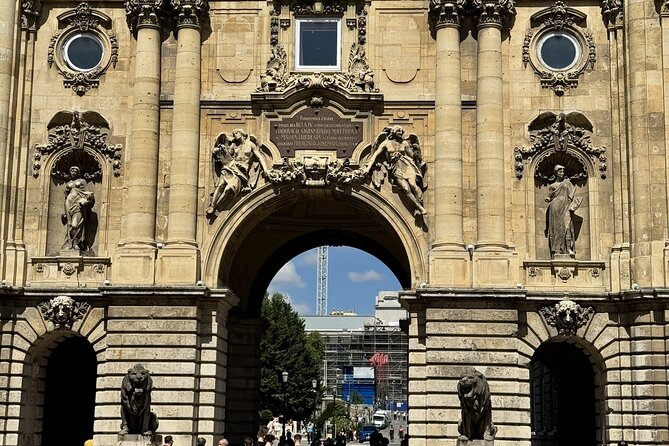
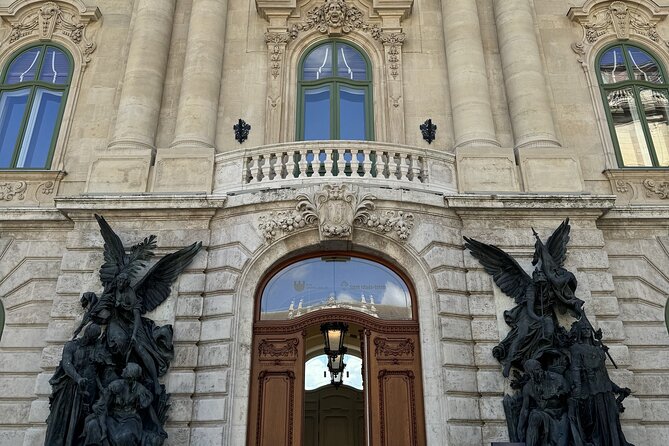
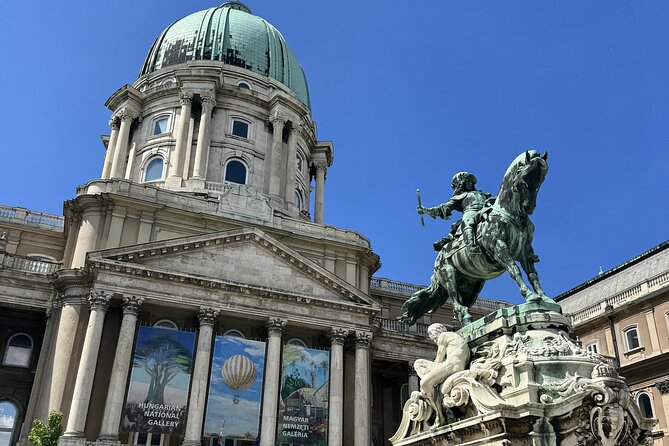
The route then reaches the Lions Court of Buda Castle. Here, you look at the castle courtyard, mythical figures, and the explanations attached to statues on the facade. The guide also shares local customs and trends connected with the area.
The short timing is both a strength and a limit. You cover many notable points without getting bogged down, but you will not have much time to study every sculpture or enter every building. I would use this section to decide what deserves a return visit after the walk.
Royal Riding Hall and Prince Eugene’s statue
The Royal Riding Hall receives just two minutes, the shortest scheduled stop. The guide explains its role as the royal Hungarian stable and adds local details.
This is mainly an orientation point. Do not expect a full architectural tour in two minutes. It works well as part of the route because the building helps you understand the scale and function of the former royal quarter.
Five minutes at Prince Eugene of Savoy’s equestrian statue brings the Ottoman period into focus. The guide presents Prince Eugene as the liberator of the Hungarians from Ottoman rule and adds a few fun facts. The statue is described as the largest in the Castle District, so it is hard to miss.
The next stop, marked by the words S. MARIA MATER DEI, centers on the Virgin Mary and the infant Jesus. The guide also links Budapest’s bridges with Hungarian monarchs. This is another compact stop where religious symbolism, royal identity, and the city’s river crossings meet.
Castle Garden and the Várkert Bazaar finish
The final two stops move downhill toward the Castle Garden and the Castle Garden Bazaar. In the garden, you see the spiral staircase tower and Triton fountain. The setting gives the route a softer finish after the military stories, ruins, and royal monuments.
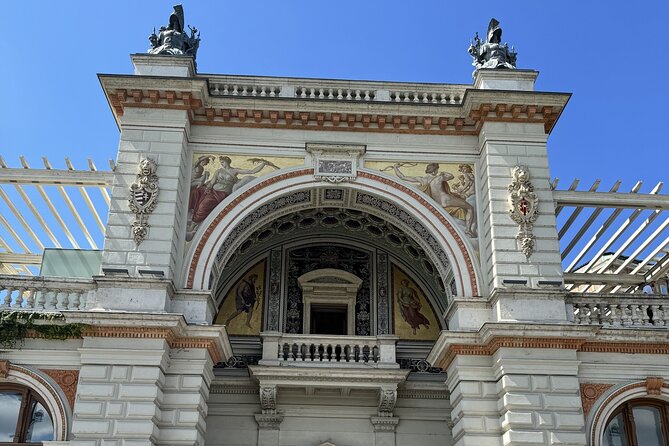
At the Castle Garden Bazaar, the guide discusses the architecture and the statues along the facade. This is the endpoint at Ybl Miklós tér 2 to 6, beside the garden at the foot of Castle Hill.
Ending here is practical. You are not returned to the starting square, so you can continue toward the Danube or explore the lower part of the hill. You should plan your onward route before the tour begins, especially if you need to return to your hotel or catch an evening booking.
What the $3.61 price really gives you
At the stated price of $3.61 per person, this is strikingly inexpensive for a live, English-language walking tour lasting about 2 hours and 10 minutes. The value comes from the route and the guide, not from included admissions, food, or transportation.
All listed stops show free admission, and the tour includes a live guide. Tips and gratuities are not included. Since the walk visits many outdoor monuments and viewpoints, you are paying for interpretation and organization rather than entry to a major museum.
I would judge the value in three ways:
- Excellent value for first-time visitors: You get a ready-made route through many major sights.
- Good value for history fans with limited time: The guide links royal, religious, military, and modern political stories.
- Less useful for slow sightseers: Twenty stops require you to keep moving, and several explanations last only five minutes.
The maximum group size is 45. That is large enough to affect how easily you hear and how close you can get to the guide, though the strong comments about clear English and presentation are encouraging. If your group is large on the day, staying near the guide will matter.
Walking demands, timing, and practical fit
The tour starts at 3:00 pm and is offered in English. It lasts about 2 hours and 10 minutes, with stops spread across the Castle District and a downhill finish near the Castle Garden Bazaar.
You should wear comfortable shoes. The route includes a hilltop district, promenades, courtyards, and a natural cave site. The description does not provide a detailed accessibility assessment, but it does state that most people can participate and that service animals are allowed.
The experience requires good weather. If poor weather causes cancellation, you are offered another date or a full refund. You can cancel for a full refund up to 24 hours before the start time. Changes or cancellations inside that 24-hour window are not accepted, and the amount paid is not refunded.
This tour suits you best if you:
- Want a fast introduction to the Castle District
- Prefer stories and explanation to walking alone with a map
- Enjoy statues, legends, architecture, and city views
- Have enough energy for a brisk walk with many short stops
- Want recommendations for other parts of Budapest from the guide
It is less suitable if you want long interior visits, a slow photography walk, or a focused study of just one period.
Should you book the Castle District walk?
I would book this tour if you want to get your bearings in Buda quickly and understand what you are seeing. The route is unusually broad for two hours, and the best parts are the Fisherman’s Bastion views, the WWII context at the Árpád Tóth Promenade, the Labyrinth story, and the royal monuments around Buda Castle.
The strongest praise is for the guides’ English, warmth, humor, and ability to point out details beyond the usual brochure facts. That matters here because the Castle District rewards interpretation. The $3.61 price also makes the decision easy for most people.
Go in with the right expectation: this is a brisk overview, not a series of long visits. If you are comfortable walking, value a live guide, and want a useful first look at Budapest’s historic hill, it is a smart buy. Stay near the guide, save your most careful photos for the longer stops, and mark the places you want to revisit after the tour.
FAQ
Where does the tour begin?
It begins at the Holy Trinity Statue on Szentháromság utca, Budapest 1014, Hungary.
Where does the tour end?
It ends at the Castle Garden Bazaar at Ybl Miklós tér 2 to 6, Budapest 1013, beside the garden at the foot of Castle Hill.
What time does the tour start?
The start time is 3:00 pm.
How long does the tour last?
The experience lasts approximately 2 hours and 10 minutes.
Is the tour offered in English?
Yes. The tour is offered in English and includes a live guide.
What is included in the price?
A live guide is included.
Are tips and gratuities included?
No. Tips and gratuities are not included.
How many people can join the tour?
The maximum group size is 45 people.
Can I cancel for a full refund?
Yes. You can cancel at least 24 hours before the start time for a full refund. Cancellations made less than 24 hours before the start time are not refunded. If poor weather cancels the experience, you are offered another date or a full refund.
Just added in Budapest
- Budapest: Private Walking Tour with a Local Guide★ 3.6 · 6 reviews
- Budapest: Danube River Views Bike Ride★ 4.8 · 23 reviews
- Budapest: City Bike Tour with Coffee Stop★ 5.0 · 37 reviews
- From Budapest: Guided Tour of Eger with Wine Tasting★ 4.5 · 6 reviews
- Walk to recent and aged spiritual sanctuaries near Budapest★ 5.0 · 5 reviews
- Walking consultancy with alternative psychologist and author★ 5.0 · 2 reviews
- Budapest: Guided Tour of the Parliament Building in Spanish★ 4.6 · 1,240 reviews
- Budapest: 3-Hour Trabant Sightseeing Tour★ 4.7 · 28 reviews
Buda Castle and Castle District Tours, compared.
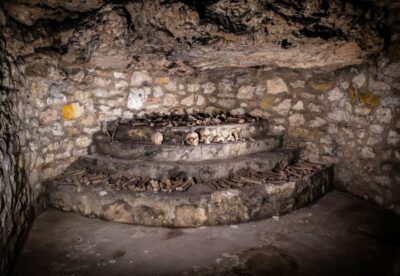

Buda Castle District Vampires and Myths Night Tour
Read our review →
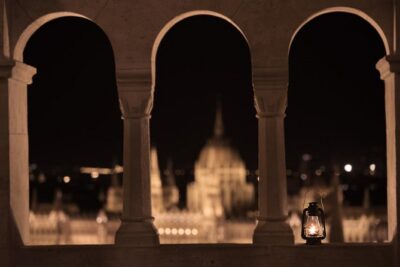
Buda Castle District Dark History, Legends and Vampire Night Tour
Read our review →
Buda Castle District Walking Tour with a Historian
Read our review →

Walking tour in the Buda Castle incl. Fisherman’s Bastion
Read our review →Browse the lists this tour appears in