
REVIEW · JEWISH HERITAGE TOURS
Private Jewish Heritage Tour of Budapest with Local Expert
Budapest’s Jewish Quarter rewards a closer look. This private 2.5-hour walk links Herzl Square, three important synagogues, WWII ghetto sites, and the Carl Lutz Memorial with stories from a local guide. I especially like the private format, which lets you ask questions and keep a sensible pace, and the stop at Fröchlich Confectionery for flódni, a classic Jewish-Hungarian pastry.
The main caution is simple: entrance tickets are not included, so this is primarily an outdoor walking tour unless you pay separately to enter a synagogue. The tour also costs $220 per person, which is a serious price for two and a half hours, though a private guide can make it worthwhile for visitors who want focused context rather than a large group lecture.
In This Review
- Key points before you book
- Why Budapest’s Jewish Quarter deserves a guided walk
- Starting at Herzl Square and the Great Synagogue
- Dohány Street Synagogue and the weight of the setting
- Rumbach Street’s Moorish design
- The Carl Lutz Memorial and wartime Budapest
- Kazinczy Street and Orthodox Jewish life
- Erzsébetváros and the former ghetto
- Fröchlich Confectionery and the flódni stop
- The old market area, ritual baths, and final streets
- What the $220 price really buys you
- Guide quality and one important service warning
- Who should book this Budapest walking tour?
- FAQ
- How long is the Private Jewish Heritage Tour of Budapest?
- Is this a private tour?
- What does the tour include?
- Are synagogue entrance tickets included?
- Will I taste flódni?
- Is pickup available?
- Can I cancel for a full refund?
- Should you book it?
Key points before you book
- Herzl Square begins the story: The route opens near the Great Synagogue, one of Budapest’s most important Jewish landmarks.
- Three major synagogue sites: You visit or pass the Dohány Street, Rumbach Street, and Kazinczy Street synagogues, each linked to a different Jewish tradition and architectural style.
- WWII history is part of the walk: The guide points out key places connected with the 1944 ghetto and shares local stories from Erzsébetváros.
- Flódni adds a welcome food stop: Fröchlich Confectionery serves the layered pastry, along with other Jewish sweets.
- Private means personal: Only your party joins the tour, with visual handouts, a notebook, and souvenir pen included.
- Miklos earned high praise: One particularly strong account describes him as punctual, clear, considerate, and able to cover a lot without rushing.
Why Budapest’s Jewish Quarter deserves a guided walk
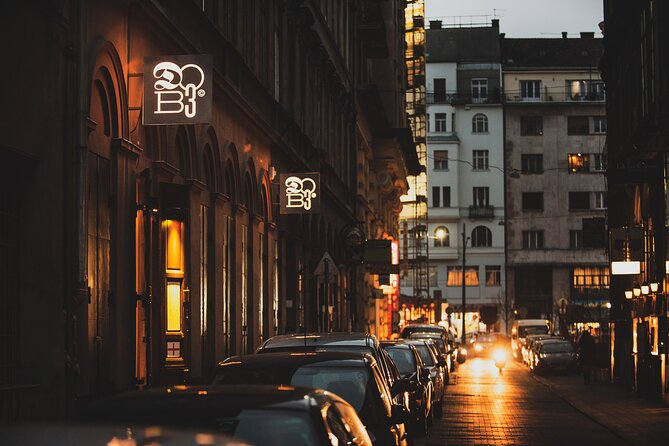
District VII, also called Erzsébetváros, is the center of Jewish life and memory in old Budapest. Jewish culture flourished here for more than 200 years, and the area remains home to the largest and most active Jewish community in Eastern Europe.
That broad statement matters, but the streets make it real. You move past synagogues, prayer houses, monuments, kosher shops, restaurants, street art, and nightlife venues. The same neighborhood now known for ruin pubs and late-night energy was also the site of the former Jewish ghetto in 1944.
I like this contrast because it helps you see Budapest as a living city, not an open-air museum. The guide can explain how the district changed, where Jewish markets once operated, and why some buildings carry several layers of meaning. You are not only looking at façades. You are learning how religion, commerce, war, memory, and modern city life overlap in a compact area.
The private setup should suit you if you have specific questions or a limited amount of time. A guide can adapt the amount of detail, pause when you want photographs, and explain unfamiliar Jewish customs without holding up a larger group.
More Jewish heritage tours:
- Budapest Jewish Heritage Memorial Walking Tour & Synagogue Entry
★ 5.0 · 568 reviews - Budapest: Jewish Heritage Guided Tour with Synagogue Ticket
★ 4.8 · 533 reviews - Jewish Quarter of Budapest Walking Tour
★ 4.7 · 369 reviews
Starting at Herzl Square and the Great Synagogue
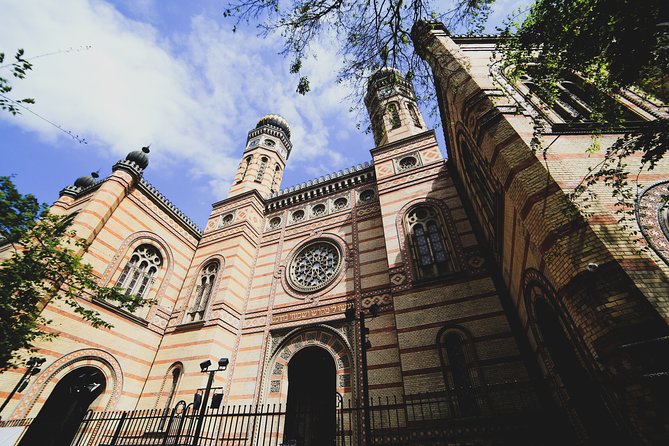
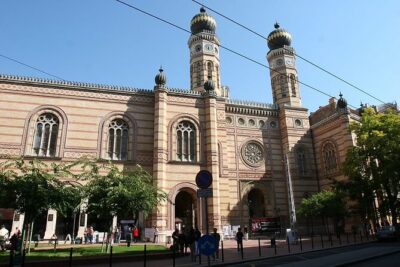
The walk begins around Herzl Square and the Great Synagogue, also known as the Dohány Street Synagogue. This is the headline sight of the tour and the main visual reference point for understanding Budapest’s Jewish Quarter.
The synagogue is described as the largest in Europe and the second largest in the world. Even if you only view the exterior during the walking portion, its scale gives the neighborhood immediate weight. The guide uses the surrounding streets to explain the role of the synagogue and the Jewish community connected with it.
Allow 20 minutes for this opening section. That is enough time to get oriented and hear the basic story, but not enough for a full, slow architectural visit. If you want to enter the synagogue, confirm the extra cost and opening arrangements when you book, since entrance tickets are not part of the tour price.
This is one of the tour’s practical limits. The experience promises visits to important sites, but the included admission is listed as free, while entrance tickets are specifically excluded. In plain terms, expect an exterior-focused walking tour unless you arrange and pay for interior access separately.
Dohány Street Synagogue and the weight of the setting
The Dohány Street stop lasts about 20 minutes and forms the main event of the route. You hear about the synagogue’s scale, location, and place in Budapest’s Jewish story.
The guide’s role matters here. A building this famous can easily become a quick photograph and a few dates. A private local guide can add the human scale: how the surrounding quarter functioned, how the ghetto affected this part of the city, and how Jewish life continues today.
I would not book this experience expecting a long interior visit as standard. The information provided places the tour in the vicinity of the synagogue and separately excludes admission fees. For many people, that is fine. You still get the setting, the exterior, and a focused explanation without committing to a longer museum visit.
If the Great Synagogue is your main reason for booking, ask before departure exactly what access is planned. That one question can prevent a mismatch between what you expect and what the tour delivers.
Rumbach Street’s Moorish design
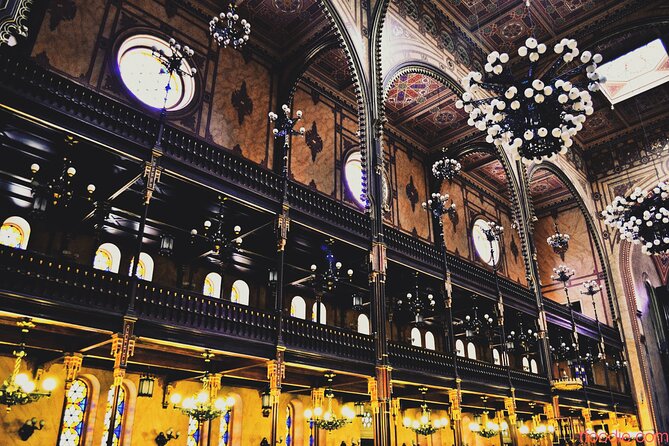
The next synagogue is Rumbach Sebestyén Street Synagogue, known for its Moorish decoration and graceful interior light. The planned stop is about 15 minutes.
This gives the walk an architectural change of mood. Dohány is the large, famous landmark. Rumbach offers a more intimate and decorative setting, with a style that helps show the variety within Budapest’s Jewish religious buildings.
Again, the ticket detail matters. The interior is the attraction, yet entrance tickets are not included. You might see the outside and hear the explanation during the standard walk, or you may need to purchase admission if the building is open and you want to go inside.
Fifteen minutes is short, so I would treat this as an introduction rather than a full architectural study. It is enough to notice the design and understand why Rumbach belongs in the synagogue triangle, but not enough for an extended visit.
More history tours in Budapest:
- Budapest: Historic Cruise with Welcome Drink
★ 4.7 · 6,512 reviews - Budapest Historical Sightseeing – Free Walking Tour
★ 5.0 · 1,302 reviews - Buda Castle District Dark History, Legends and Vampire Night Tour
★ 4.5 · 1,240 reviews - BloodThirsty Hungary: Walking tour & Dark Historical Stories
★ 4.9 · 633 reviews
The Carl Lutz Memorial and wartime Budapest
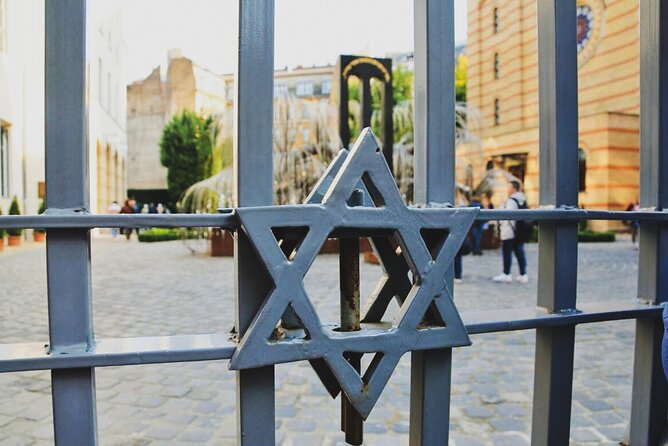
The Carl Lutz Memorial receives roughly 20 minutes. Lutz was a Swiss diplomat recognized as one of the Righteous Among the Nations, and he is often called the Hungarian Schindler.
This section shifts the tour from architecture to moral courage and wartime rescue. The former ghetto sites around Erzsébetváros are not just background scenery. They connect the present-day streets with the people who were confined, threatened, protected, or killed here during World War II.
I value having this memorial on the route because it keeps the tour from becoming a simple synagogue checklist. The guide can connect the memorial with the 1944 ghetto and explain why ordinary-looking streets carry such painful meaning.
You should be prepared for a serious change in tone. The food stop and nightlife talk come later, but this part asks for attention and respect. The private format is useful here because you can ask questions without feeling that you are interrupting a fixed group presentation.
Kazinczy Street and Orthodox Jewish life
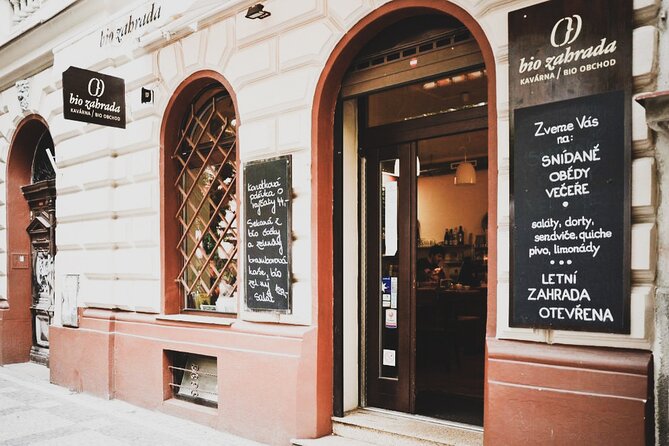
Kazinczy Street brings another architectural and religious perspective. The synagogue here is one of the largest functioning Orthodox synagogues in Europe and was built in the Art Nouveau style.
The route also passes a busy passage and the central part of the old Jewish market area. In earlier days, shops, restaurants, law offices, and market activity filled these streets. Today, the area has a different feel, with kosher food, wine, nightlife, street art, and the famous ruin-pub scene nearby.
The guide provides local suggestions about beer ruins and evening activity. That is a useful extra if you have only just arrived in Budapest and want to explore District VII after dark. Still, keep the focus clear: nightlife tips are an addition, not the reason to choose this tour.
The Kazinczy stop is planned for about 20 minutes. You get a strong sense of the area’s religious importance, but you may not receive a full tour of the synagogue interior. As with the other buildings, ask about admission if seeing the inside is important to you.
Erzsébetváros and the former ghetto
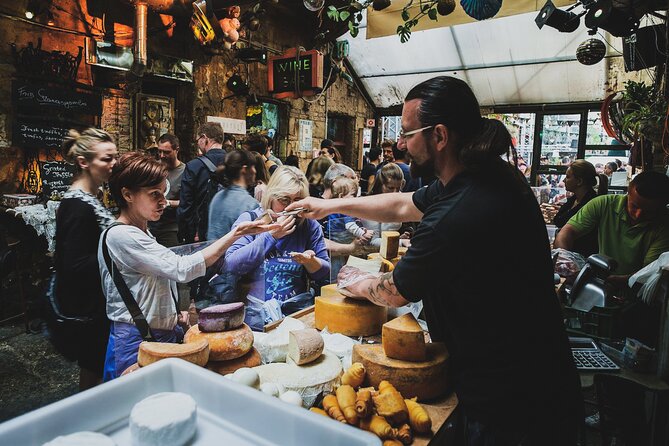
The walk through Erzsébetváros is where the pieces begin to fit together. The district contains synagogues, prayer houses, monuments, kosher restaurants, and shops, but it is also the former ghetto, the historic Jewish quarter enclosed in the heart of Budapest.
The route spends time on the streets of District VII rather than moving only from one landmark to another. That is a smart choice. Jewish heritage is not limited to grand buildings. It also appears in street names, former commercial areas, memorials, and the shape of the neighborhood itself.
The tour information notes that Budapest has 24 synagogues and prayer houses. You will not visit all of them in two and a half hours, of course. Instead, the guide uses a small group of major sites to give you a framework for understanding the wider community.
The route includes several 20-minute sections, so the schedule is fairly brisk. You should have moderate physical fitness and be comfortable walking through city streets. Pickup is offered, and the area is near public transportation, but the experience itself is a walking tour rather than a vehicle-based sightseeing trip.
Fröchlich Confectionery and the flódni stop
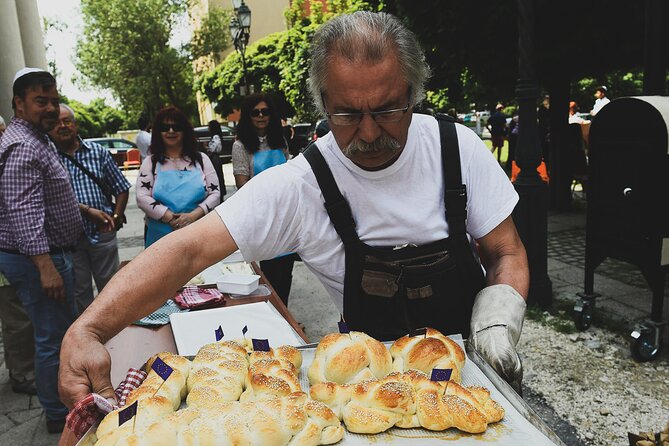
The food break at Fröchlich Confectionery is one of the most appealing details. You taste flódni, an iconic Jewish-Hungarian pastry, and may also encounter a Chanukah doughnut, Purim hamantaschen, and other Jewish sweets.
Flódni is especially useful as a cultural marker. It is not a generic café snack added to fill time. It gives you a small, edible connection to the neighborhood’s Jewish traditions and Hungarian baking culture.
Coffee or tea is included, while other food and drinks are not. That means you should not expect a full meal. If you arrive hungry, plan accordingly, especially since the walk includes several stops and may take place around normal meal times.
The Dob Street portion is listed at about 20 minutes. Use it as a chance to sit briefly, ask questions, and get suggestions for kosher food or other local places. The sweet stop also provides a welcome pause after the heavier wartime material.
The old market area, ritual baths, and final streets
The Kazinczy area once had a busy Jewish market surrounded by shops, restaurants, and professional offices. The route explains that earlier commercial life and points toward the area’s current association with high-quality kosher wine.
You also stop near the Castle Garden to photograph the oldest traditional Jewish baths, used for ritual purposes. This is a short 10-minute stop, so think of it as a visual introduction rather than a detailed visit.
The final stretch returns to the Jewish Quarter and the former ghetto streets. You pass synagogues, monuments, kosher businesses, and everyday city life. The guide adds local stories about Budapest, which can make the final walk feel less like a formal lesson and more like a conversation with someone who knows the neighborhood.
The full schedule lists many stops of 10 to 20 minutes. That provides variety, but it also means you will not linger everywhere. I would choose this tour for breadth and personal explanation, not for long interior visits at each synagogue.
What the $220 price really buys you
At $220 per person, the tour is expensive for 2.5 hours, especially if you are a couple paying $440 before any synagogue admission. The price makes more sense for a small private group that values individual attention and wants to use limited time well.
You receive a private walking tour, all listed taxes and fees, visual handouts, a notebook, a souvenir pen, and coffee or tea. The biggest value is the guide’s time. You are paying for a route built around your interests, not simply a ticket and a recorded explanation.
Group discounts may improve the value if several people are sharing the experience. A family or group of friends can spread the private-tour cost across more participants, although the exact discount is not specified.
I would compare the price with your priorities. If you mainly want to photograph the synagogues from outside, the cost may feel high. If you want a private explanation of Jewish Budapest, wartime sites, religious traditions, and local food, the price is easier to defend.
The eco-friendly walking format is another plus. You avoid a vehicle for a compact neighborhood where walking is the sensible way to see the details.
Guide quality and one important service warning
The strongest personal feedback names Miklos as an excellent guide. He was described as punctual, clear, polite, and able to cover everything the customer hoped to see despite limited time. That combination is exactly what this short private tour needs.
One person had a very different experience when the guide did not arrive. The provider later explained that the guide had become ill, that they attempted to call, and that the tour was fully refunded. The customer said messages and calls had not been answered, and the communication failure caused serious frustration.
I would not ignore that warning. Confirm the meeting details, provide a reachable phone number, and check your messages before the start time. The cancellation policy allows a full refund when you cancel at least 24 hours ahead, but late cancellations and late changes are not refundable.
This is not a reason to dismiss the tour, but it is a reason to be organized. Guide availability can affect a private experience more than it affects a large scheduled group.
Who should book this Budapest walking tour?
I would choose it if you:
- Have a strong interest in Jewish culture, religion, and WWII history.
- Prefer private guiding to a fixed large group.
- Have about half a day and want several major sites connected in one route.
- Like adding a local pastry stop to a history-focused walk.
- Want advice about District VII nightlife, kosher food, and street art.
- Are comfortable walking and have moderate physical fitness.
I would hesitate if you need guaranteed synagogue interiors, extensive museum time, or a low-cost activity. The tour covers a lot, but its short length requires quick stops, and entrance fees are extra.
FAQ
How long is the Private Jewish Heritage Tour of Budapest?
The tour lasts approximately 2 hours and 30 minutes.
Is this a private tour?
Yes. Only your group participates in the activity.
What does the tour include?
It includes a private walking tour, all fees and taxes, visual handouts, a notebook, a souvenir pen, and coffee or tea.
Are synagogue entrance tickets included?
No. Entrance tickets are not included in the price.
Will I taste flódni?
Yes. The tour includes a stop at Fröchlich Confectionery for flódni. Other Jewish pastries may include a Chanukah doughnut and Purim hamantaschen.
Is pickup available?
Pickup is offered, and the area is also near public transportation.
Can I cancel for a full refund?
Yes, if you cancel at least 24 hours before the experience start time. Cancellations or changes made less than 24 hours ahead are not accepted for a refund.
Should you book it?
Book this tour if you want a personal introduction to Budapest’s Jewish Quarter and prefer meaningful context over a rushed list of landmarks. The combination of the Great Synagogue, Rumbach, Kazinczy Street, the Carl Lutz Memorial, former ghetto sites, and flódni gives you a clear and varied two-and-a-half-hour route.
Before paying, confirm what synagogue interiors are included, if any, and make sure the provider has your correct contact details. If you do that and value a private guide, especially one with the clear, punctual approach praised in connection with Miklos, this can be a useful and thoughtful way to understand District VII.
Just added in Budapest
- Budapest: Private Walking Tour with a Local Guide★ 3.6 · 6 reviews
- Budapest: City Bike Tour with Coffee Stop★ 5.0 · 37 reviews
- Budapest: Danube River Views Bike Ride★ 4.8 · 23 reviews
- From Budapest: Guided Tour of Eger with Wine Tasting★ 4.5 · 6 reviews
- Walk to recent and aged spiritual sanctuaries near Budapest★ 5.0 · 5 reviews
- Walking consultancy with alternative psychologist and author★ 5.0 · 2 reviews
- Budapest: Guided Tour of the Parliament Building in Spanish★ 4.6 · 1,240 reviews
- Budapest: 3-Hour Trabant Sightseeing Tour★ 4.7 · 28 reviews
Jewish Heritage Tours, compared.
Budapest Jewish Heritage Memorial Walking Tour & Synagogue Entry
Read our review →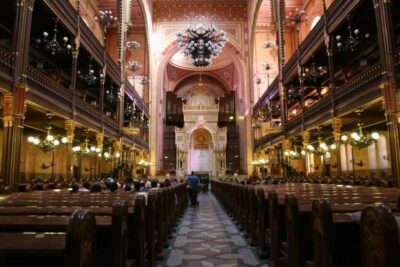
Jewish Heritage Guided Tour with Synagogue Ticket
Read our review →
Past and Present of Budapest Jewish District Tour
Read our review →
Budapest Dohany Synagogue & Hungarian Jewish Museum & free extras
Read our review →
Jewish History Guided Walking Tour with Historian
Read our review →Browse the lists this tour appears in