
REVIEW · WALKING TOURS
Taste Budapest – Fat Boy Foodies Walk
Taste Budapest one bite at a time. This four-hour walk pairs two local markets with Hungarian street food, a Transylvanian meal, and a historic coffeehouse. I like the small group of up to 10 and the generous food plan, which includes at least seven tastes, drinks, lunch, and market entry. The main caution is the $150 price, which asks you to eat enough to make a half-day food tour worthwhile.
I also like that the route moves through Budapest’s VI, VII, and VIII districts instead of keeping you in the postcard center. Guides such as Zsuzsa have earned praise for their friendly style, clear English, and local knowledge. You should arrive hungry, though. This is not a light snack walk, and it may not suit anyone with food allergies.
In This Review
- Key points at a glance
- Why this Budapest food walk is worth considering
- Starting at Hunyadi tér at 9:30
- Hunyadi tér and the market-side food stops
- From markets to a Transylvanian table
- Andrássy Avenue, coffee, and Budapest after the meal
- What the seven tastes really mean
- Guide quality and the value of a small group
- Is $150 a fair price?
- Who should book this food tour?
- Should you book Taste Budapest?
- FAQ
- How long is the Taste Budapest food tour?
- Where does the tour start and end?
- Is the tour offered in English?
- How many people can join the tour?
- How much food is included?
- Is the tour suitable for people with food allergies?
- Can I cancel for a full refund?
Key points at a glance
- At least seven Hungarian tastes: Expect a mix of small portions, including at least three hot foods, sweets, drinks, and a full restaurant meal.
- Two local markets: Hunyadi tér and another neighborhood market give you a look at everyday food shopping beyond the grand tourist sights.
- Street food with a Hungarian accent: Lángos, sausages, rétes, and chimney cake give you a useful introduction to local favorites.
- A Transylvanian restaurant stop: The meal adds a sit-down course and brings regional Hungarian cooking into the tour.
- A small group capped at 10: This should make it easier to ask questions and keep the walk personal.
- A spirited finish: The day includes a coffeehouse stop, a toast with pálinka, and a planned visit to a famous Budapest ruin bar.
Why this Budapest food walk is worth considering
Food is one of the fastest ways to understand Budapest. The city’s cooking reflects Hungarian traditions, regional influences, market habits, and a fondness for food that is filling rather than fussy. This tour uses that idea well. Instead of placing you at one restaurant for four hours, it turns the city into a series of edible stops.
You get movement, context, and several chances to decide what you actually like. Maybe the crisp, fried lángos wins you over. Maybe the sweet chimney cake is the treat you remember. Or perhaps the Transylvanian dish gives you a better sense of how varied the food of the region can be.
The route covers parts of the VI, VII, and VIII districts. These areas offer a different view of Pest from the grand avenues and major monuments. You still get the city streets and architecture, but the food is the main guide.
I see the small group as a major plus. With a maximum of 10 people, you are less likely to feel like you are following a flag through the city. A guide can explain ingredients, answer questions, and adjust the pace more easily than on a large coach-style outing.
The strongest praise has centered on the guides, especially Zsuzsa. Her style is described as relaxed, welcoming, and easy to follow. That matters on a food tour because a good guide does more than point at dishes. You want help understanding what you are eating, where it fits into local life, and how to approach unfamiliar flavors.
More walking tours in Budapest:
- Budapest: Buda Castle Walk with Saint Stephen’s Hall
★ 4.5 · 3,012 reviews - Big Bus Budapest Hop-On Hop-Off Bus and Walking Tour
★ 3.5 · 2,206 reviews - Budapest: Buda Castle District Walking Tour
★ 4.6 · 2,108 reviews
Starting at Hunyadi tér at 9:30
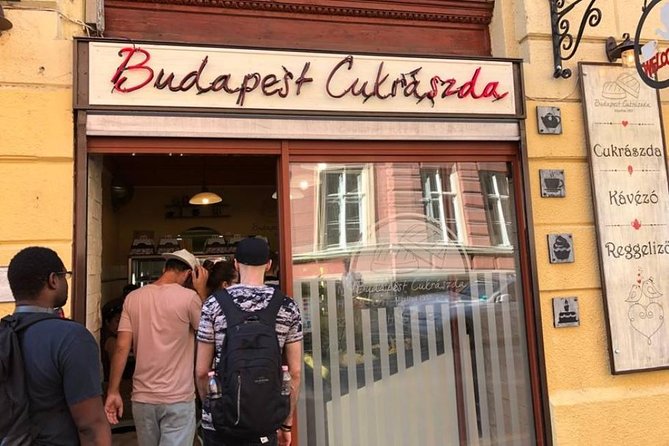
The stated meeting point is Hunyadi tér, 1067 Budapest, with a 9:30 a.m. start. The tour returns to the same general meeting point at the end, which makes the morning easier to plan.
One detail needs your attention before you set out. The tour information also refers to Rákóczi tér as the meeting point and notes that it is close to the number 4 or 6 tram. The detailed meeting information lists Hunyadi tér instead. Since those are different squares, check your confirmation carefully and contact the provider if the instructions are unclear.
The early start is useful for a food walk. You can cover the markets before the day gets too far along, and you will have the rest of the afternoon free. It also means you should plan breakfast carefully. The food stops add up quickly, so a large morning meal would work against you.
Wear shoes you can walk in for four hours. The tour is built around moving through several districts rather than sitting in one place. The route includes market visits, food stops, and restaurant time, so expect a mixed pace rather than nonstop walking.
Hunyadi tér and the market-side food stops
The first major part of the experience takes you to Hunyadi tér and other favorite local places in the surrounding districts. The focus is on food that feels connected to ordinary Budapest life, not just dishes designed for a visitor’s photograph.
At a local market, you can expect to see the ingredients and food habits behind Hungarian cooking. Markets are useful because they show what people buy, how food is displayed, and which products appear in daily meals. This is more revealing than hearing a list of national dishes in a restaurant.
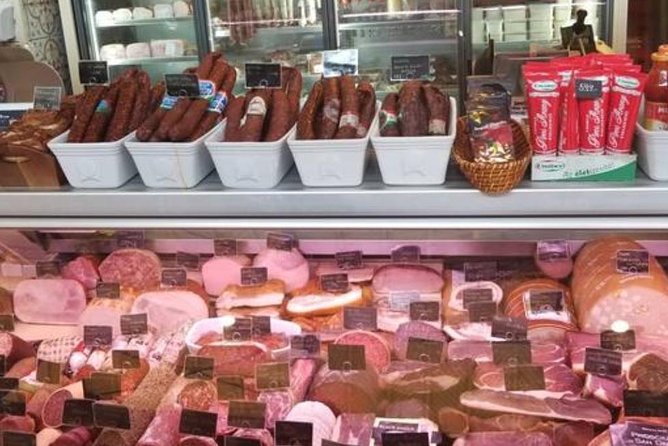
A butcher stop adds another practical layer. Here, the focus turns to Hungarian sausages and meat-based street food. Sausage is not a complicated idea, but the setting matters. Tasting it at a butcher or market stop gives the food a stronger connection to neighborhood commerce than a polished restaurant plate would.
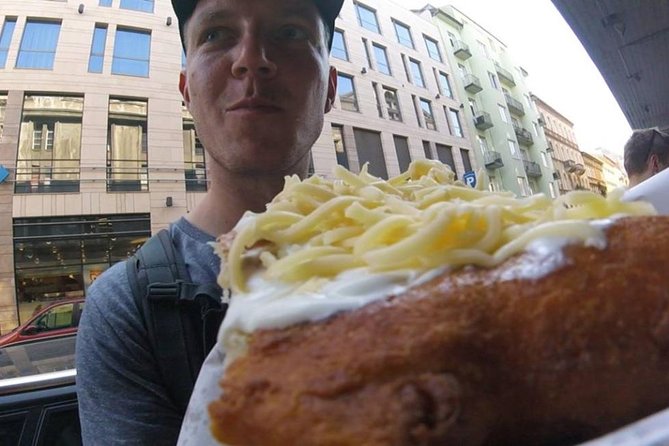
Then comes lángos, one of the country’s best-known casual foods. It is a fried dough dish and can be wonderfully substantial. If you are eating several more courses afterward, pay attention to portion size. The tour promises small portions overall, but lángos is still the sort of food that can fill you quickly.
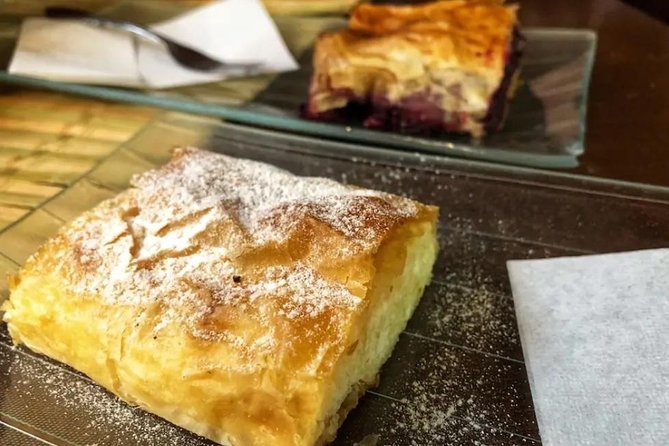
The stop involving rétes adds a welcome change of pace. You can see Hungarian strudel being made, not merely receive a finished piece. That kind of demonstration helps you notice the work behind a familiar pastry, especially the thin dough and careful shaping.
The chimney cake provides another sweet note. This popular treat is cooked around a cylinder, creating its recognizable hollow shape. It is an easy food to enjoy, but it also helps show how Budapest’s street-food culture blends old forms with foods that are now common on city walks.
This section lasts about two hours and includes admission. The benefit is variety: market goods, savory food, pastry, and sweets in one stretch. The tradeoff is that anyone who prefers long museum visits or detailed sightseeing may find the food stops leave less room for extended architectural commentary.
From markets to a Transylvanian table
The second half shifts from standing and sampling to a proper restaurant stop. You visit a Transylvanian gourmet restaurant described as one of the city’s strongest places for this style of cooking.
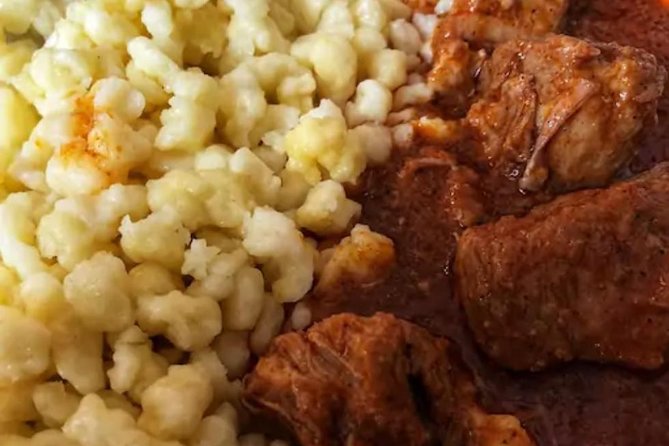
That regional focus gives the meal a useful purpose. Hungarian food is not one fixed menu, and Transylvanian cooking adds its own character to the broader food story. The tour includes a local dish in a restaurant setting, giving you a chance to sit down and compare a prepared meal with the market foods from earlier.
The portions are designed as part of a larger tasting rather than as an isolated lunch. Even so, the full program promises a restaurant lunch, at least seven different local foods, and at least three hot dishes. You should not expect to leave hungry. Several people have specifically advised skipping breakfast to make room for the food.
That abundance is a strength for curious eaters. At $150 per person, the value depends heavily on how much food, drink, and guidance you want in one morning. If you paid separately for a restaurant lunch, several tastings, market access, drinks, and a guide, the package could make sense. If you mainly want one inexpensive local meal, it will feel costly.
The tour also includes pálinka, Hungary’s strong fruit brandy, for a toast. It is a small but memorable cultural touch. If you do not drink alcohol, the food remains the main event, but you should be aware that the itinerary includes this toast.
More things to do in Budapest:
- Budapest: City Highlights Cruise with Welcome Drink
★ 4.6 · 35,610 reviews - Budapest: Unlimited Prosecco, Beer and Aperol Spritz Cruise
★ 4.8 · 25,310 reviews - Budapest: Széchenyi Spa Day Ticket with Optional Upgrades
★ 4.3 · 23,911 reviews - Budapest: Nighttime or Daytime Sightseeing Cruise
★ 4.2 · 21,062 reviews
Andrássy Avenue, coffee, and Budapest after the meal
The tour continues toward Andrássy Avenue, one of Budapest’s grand urban corridors. The setting gives the food walk a change of scale. You move from markets and neighborhood businesses to a more formal part of the city.
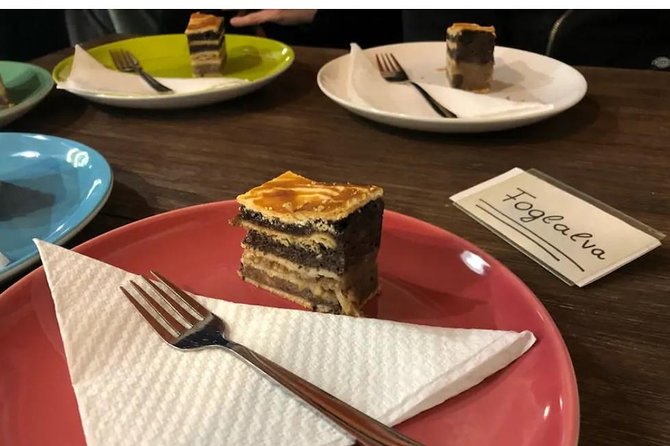
The final coffeehouse has a literary connection. It was once a favored meeting place for writers, so the stop adds a little social and cultural background to the meal. Coffee and something sweet can be a comfortable ending after several savory dishes, though you may already feel full by this point.
The highlights also include a stop at a famous Budapest ruin bar. These bars are part of the city’s modern social identity, often occupying older buildings or courtyards with an intentionally mismatched look. The supplied route details do not specify exactly where this stop falls or how long you stay, so treat it as a brief cultural stop rather than a full evening out.
The contrast between a market, a butcher, a restaurant, a coffeehouse, and a ruin bar is one of the tour’s better ideas. You are not only tasting food. You are seeing how Budapest uses different kinds of spaces for shopping, eating, conversation, and nightlife.
What the seven tastes really mean
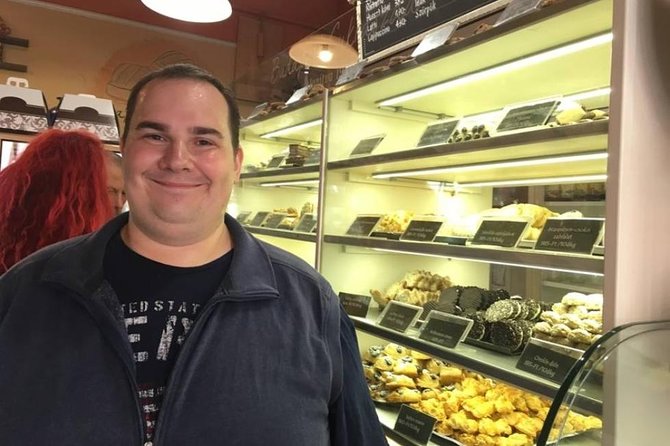
The promise of at least seven local foods sounds simple, but it is important when judging the price. You are not buying a single cooking demonstration or one fixed lunch. You are paying for a succession of samples, with at least three served hot, plus drinks and the restaurant course.
The exact menu can vary because markets and local businesses do not always offer the same items every day. That uncertainty is normal for a market-based food walk. It can also be part of the appeal, since the experience is tied to real places rather than a sealed tasting room.
Here is what the planned mix gives you:
- Savory street food through lángos and sausages
- A pastry-making look at rétes
- A sweet street treat with chimney cake
- A regional dish at a Transylvanian restaurant
- At least three hot tastes
- Coffeehouse refreshments
- A pálinka toast
This is a lot for four hours. I would treat lunch as an extended tasting rather than a separate meal after the tour. You may want water between stops, especially if you are eating fried or salty foods and sampling pálinka.
Guide quality and the value of a small group
A food walk can succeed or fail on the guide. The route matters, but the explanations and pacing turn a collection of snacks into an experience.
Zsuzsa has received especially warm praise for being friendly, relaxed, and easy to understand in English. Her approach appears to favor conversation over a stiff lecture. That suits a food tour, where questions about ingredients, customs, and local favorites are often more useful than memorized dates.
The guide is also important because some foods may be unfamiliar. You may want to know how to eat them, what flavors to expect, or how they differ from something you have tried elsewhere. A good explanation makes the tasting more comfortable without turning it into a classroom.
The limit of 10 participants helps here. You can stay close to the guide, hear the explanations, and ask about the city’s food culture. It also makes the walk more personal than a large group tour.
The rating is 4.5 from 10 reviews, with repeated praise for the food, the locations, the English-speaking guides, and the off-the-main-route feel. That is a small sample, so I would not treat the number as final proof. Still, the same strengths appear again and again: friendly hosting, good food, and a genuine look at Pest.
Is $150 a fair price?
The price is $150 per person. That is not a bargain food walk, especially in Budapest, where you can often eat well for less at casual restaurants.
The price becomes easier to understand when you count the inclusions. You receive roughly four hours with a guide, market entry, at least seven tastings, drinks, a restaurant lunch, and stops at several types of food venues. You are also paying for the planning and the chance to try many dishes without ordering full portions yourself.
I think the tour offers reasonable value for someone who wants a well-organized introduction to Hungarian food and prefers a small group. It is less compelling for a budget-minded visitor who is happy to research markets and restaurants alone.
The tour is booked an average of 64 days ahead, which suggests that you should not leave it until the last minute if the date matters. Confirmation arrives within 48 hours, subject to availability. Free cancellation is available if you cancel at least 24 hours before the start time. Changes or cancellations inside that window are not accepted for a refund.
Who should book this food tour?
I would recommend it to first-time visitors who want an easy introduction to Budapest’s food traditions. It also suits people who enjoy sampling many things instead of committing to one large plate.
The experience is a good match if you like:
- Local markets and neighborhood streets
- Small-group tours
- A combination of food and city background
- Savory dishes, pastries, sweets, and drinks
- A relaxed guide-led morning
- A generous meal replacing breakfast and lunch
I would think twice if you have food allergies. The tour is specifically not recommended for people with food allergies, likely because the route includes multiple vendors and prepared foods. It may also be a poor fit if you dislike eating early, cannot manage a large amount of food, or want a tour focused mainly on major monuments.
Most people can participate, and the tour is near public transportation. The key practical task is confirming the correct meeting square, since the general description points to Rákóczi tér while the detailed meeting information gives Hunyadi tér.
Should you book Taste Budapest?
Book this tour if you want a generous, social introduction to Hungarian food and like the idea of moving through markets, a butcher, a restaurant, a coffeehouse, and a ruin bar in one morning. The small group, friendly guide style, and wide range of included food make it more than a simple list of tastings.
Skip it if $150 feels high for a meal-centered activity, if you have food allergies, or if you prefer to choose your own restaurants. For everyone else, arrive hungry, confirm the meeting point, and expect lunch to begin long before noon.
FAQ
How long is the Taste Budapest food tour?
The tour lasts approximately four hours and begins at 9:30 a.m.
Where does the tour start and end?
The detailed meeting information lists Hunyadi tér, 1067 Budapest, as both the starting and ending point.
Is the tour offered in English?
Yes. The experience is offered in English.
How many people can join the tour?
The group has a maximum of 10 participants.
How much food is included?
The tour includes at least seven different local foods in small portions, with at least three hot dishes. It also includes a restaurant lunch, drinks, and a pálinka toast.
Is the tour suitable for people with food allergies?
It is not recommended for people with food allergies.
Can I cancel for a full refund?
Yes, if you cancel at least 24 hours before the experience start time. Cancellations made less than 24 hours in advance are not refunded.
Just added in Budapest
- Budapest: Private Walking Tour with a Local Guide★ 3.6 · 6 reviews
- Budapest: Danube River Views Bike Ride★ 4.8 · 23 reviews
- Budapest: City Bike Tour with Coffee Stop★ 5.0 · 37 reviews
- From Budapest: Guided Tour of Eger with Wine Tasting★ 4.5 · 6 reviews
- Walk to recent and aged spiritual sanctuaries near Budapest★ 5.0 · 5 reviews
- Walking consultancy with alternative psychologist and author★ 5.0 · 2 reviews
- Budapest: Guided Tour of the Parliament Building in Spanish★ 4.6 · 1,240 reviews
- Budapest: 3-Hour Trabant Sightseeing Tour★ 4.7 · 28 reviews
Walking Tours, compared.
Budapest City Landmarks Walking Tour in 2 Hours
Read our review →
3-Hour Orientation Walking Tour of Buda and Pest
Read our review →
Budapest Historical Sightseeing – Free Walking Tour
Read our review →
Budapest All in One Small Group Walking Tour with Strudel Stop
Read our review →
Buda Castle District Walking Tour with a Historian
Read our review →
BloodThirsty Hungary: Walking tour & Dark Historical Stories
Read our review →Browse the lists this tour appears in