
REVIEW · WALKING TOURS
Walk and Cook Budapest
History tastes better at the stove. This five-hour Budapest experience pairs a guided walk with a hands-on Hungarian cooking class and full sit-down dinner. I like the clear connection between places such as Gul Baba’s Tomb, the Parliament Building, and the Great Synagogue, and the dishes shaped by Hungary’s many cultural influences.
I also like the small group limit of 10 people, which should make it easier to ask questions and take part in the cooking. The main consideration is the price, $131.06 per person, which is a serious outlay for a half-day activity, especially if you mainly want a quick food tasting rather than a guided history lesson and a complete meal.
In This Review
- Key Points About Walk and Cook Budapest
- From Gul Baba’s Tomb to Budapest’s Many Past Lives
- Why the 1.5-Hour Walk Matters Before Dinner
- Gul Baba’s Tomb and the Ottoman Thread
- Parliament and the Austro-Hungarian City
- The Great Synagogue and Budapest’s Jewish Story
- The Kitchen: From City History to Hungarian Recipes
- What the Full Dinner Adds to the Price
- The Personal Touch From Kata and Karolina
- Who Will Get the Most From This Experience?
- Timing, Tickets, and Cancellation
- Should You Book Walk and Cook Budapest?
- FAQ
- Where does Walk and Cook Budapest take place?
- How long does the experience last?
- What language is the tour offered in?
- How many people can join the activity?
- Which Budapest sights are included?
- What food might be prepared?
- Is dinner included?
- What is the cancellation policy?
Key Points About Walk and Cook Budapest
- Three important Budapest stops: The route includes Gul Baba’s Tomb, the Hungarian Parliament Building, and the Great Synagogue.
- A 1.5-hour history walk: The guide connects Ottoman rule, Jewish life during the Second World War, and the Austro-Hungarian period.
- Hands-on Hungarian cooking: After the walk, you prepare traditional dishes rather than simply watching someone else cook.
- A full dinner is included: Depending on the menu, you may prepare stuffed peppers, roast goose, or Székely goulash, followed by a Hungarian dessert.
- Small-group format: The experience accepts no more than 10 people, allowing for a more personal feel.
- English-language tour: The activity is offered in English and uses a mobile ticket.
From Gul Baba’s Tomb to Budapest’s Many Past Lives
The walking portion lasts about 1.5 hours, which is long enough to give the meal some context without taking up the entire afternoon. You begin in Budapest and visit three places tied to different chapters of the city’s past.
The first stop is Gul Baba’s Tomb, also known as Gul Baba Turbeje. This site points to the Ottoman period and gives the walk an unusual starting point. Budapest is often introduced through grand Austro-Hungarian buildings, but the Ottoman connection adds another layer. Here, you begin to see that Hungarian food and culture did not develop in isolation.
The tomb also helps explain why the cooking class includes more than a list of standard national dishes. The idea is to show how outside influences left their mark on Hungary. You will not simply hear that history in a lecture. You will later encounter it through the food.
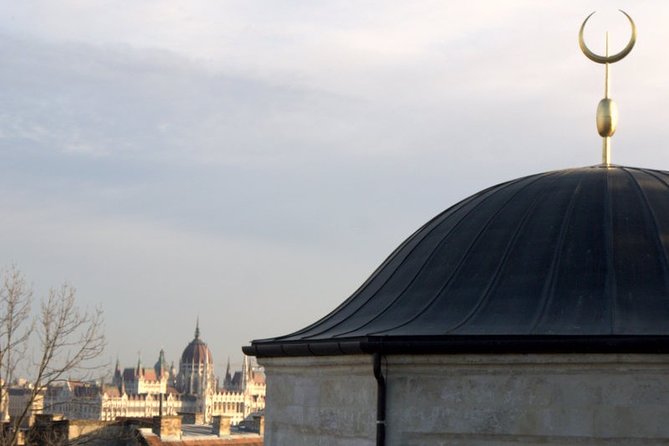
The Hungarian Parliament Building brings the walk into one of Budapest’s most recognizable settings. The information provided for the tour highlights the beautiful buildings constructed during the Austro-Hungarian period. That makes this stop useful for understanding the city’s grand architectural era and the political importance of Budapest within the old empire.
Do not expect the Parliament stop to mean a full interior visit. The experience is described as a walking tour with selected stops, not as an admission tour of the building. Its value is in the setting and the explanation supplied by the guide.
The Great Synagogue, or Nagy Zsinagoga, introduces the Jewish story of Budapest. The tour specifically addresses what happened to Jewish people in the city during the Second World War. That is an important part of the experience, since the cooking class is meant to connect food with people and historical events, not treat Hungarian cuisine as a fixed, isolated tradition.
The three stops cover a lot in a short time. Gul Baba’s Tomb represents Ottoman influence, Parliament points to the Austro-Hungarian period, and the Great Synagogue brings attention to Jewish life and wartime loss. You get a broad introduction rather than a long, specialized history walk.
More walking tours in Budapest:
- Budapest: Buda Castle Walk with Saint Stephen’s Hall
★ 4.5 · 3,012 reviews - Big Bus Budapest Hop-On Hop-Off Bus and Walking Tour
★ 3.5 · 2,206 reviews - Budapest: Buda Castle District Walking Tour
★ 4.6 · 2,108 reviews
Why the 1.5-Hour Walk Matters Before Dinner
A cooking class can be enjoyable on its own, but the walking section gives the meal a stronger purpose. You learn why Hungary’s food culture includes outside influences and how the country’s changing political and social life affected what people cooked and ate.
I like this format because the history is not separated from daily life. After discussing empires, architecture, and the Jewish community, you move into a kitchen and work with recipes linked to Hungary’s past. That change of setting can make the information easier to remember.
The short walk also helps keep the day manageable. You are not committing to a full-day sightseeing program before cooking. The activity lasts about five hours in total, so you still have room in your Budapest schedule for other plans.
There is one practical point to keep in mind. The tour moves through the city before you cook, so wear shoes suitable for walking and plan your time around a combined activity rather than a quick meal. The supplied details do not give a precise walking distance, so you should not assume the route is minimal.
The tour is offered in English. If you want a detailed historical lecture in another language, this activity will not fit that need. For English-speaking participants who like history explained in plain terms and then linked to food, the format makes good sense.
Gul Baba’s Tomb and the Ottoman Thread
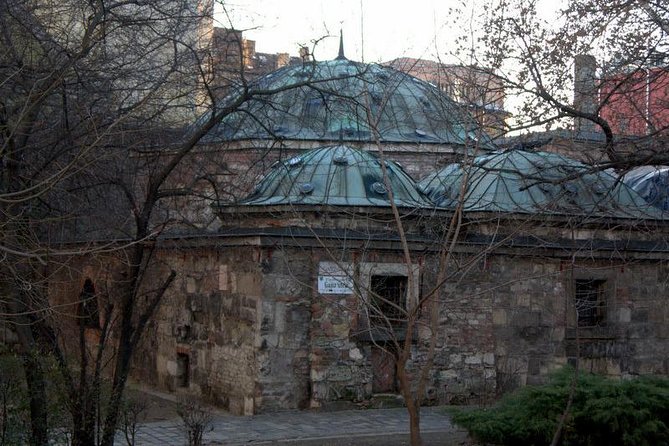
Gul Baba’s Tomb is the most distinctive stop on the route. It brings the Ottoman Empire into the story of Budapest and gives the tour a setting that is different from the city’s better-known imperial sights.
The Ottoman influence matters at the cooking stage. The tour explains that Hungarian dishes carry hints of the nations Hungary had connections with. This does not mean every recipe is presented as purely Ottoman. It means you are encouraged to see Hungarian cooking as the result of long contact between cultures.
That approach is more useful than memorizing a few dish names. You begin to understand why a national cuisine can have several layers, with local ingredients and methods shaped by foreign rule, trade, migration, and political change.
The provided details do not say how much time you spend at the tomb or if there is interior access. Treat it as a guided exterior stop and historical reference point unless your confirmation says otherwise. Its main contribution is the Ottoman chapter in the larger story.
Parliament and the Austro-Hungarian City
The Hungarian Parliament Building is one of the city’s grandest landmarks and a natural point for discussing the Austro-Hungarian period. The tour uses Budapest’s architecture to show how the city changed during that era.
You will likely find this part especially useful if you are new to Budapest. The buildings can look impressive without immediately explaining the political world that produced them. A guide can connect the design and scale of the city to the period when Budapest gained importance within the Austro-Hungarian state.
The stop is also a visual break from the more intimate scale of the tomb and synagogue. That variety helps the walking portion feel like a tour of several Budapests rather than a single themed route.
Still, the activity does not promise a full architectural tour or a Parliament admission. If your top priority is entering the building, choose a dedicated Parliament visit instead. Here, the building works as a landmark and as a prompt for historical discussion before you move on to the kitchen.
More things to do in Budapest:
- Budapest: City Highlights Cruise with Welcome Drink
★ 4.6 · 35,610 reviews - Budapest: Unlimited Prosecco, Beer and Aperol Spritz Cruise
★ 4.8 · 25,310 reviews - Budapest: Széchenyi Spa Day Ticket with Optional Upgrades
★ 4.3 · 23,911 reviews - Budapest: Nighttime or Daytime Sightseeing Cruise
★ 4.2 · 21,062 reviews
The Great Synagogue and Budapest’s Jewish Story
The Great Synagogue is the stop with the most serious emotional weight. The tour addresses what happened to Jewish people in Budapest during the Second World War, giving the experience a necessary reminder that food culture cannot be separated from the people who created, shared, and lost it.
The supplied information does not promise entry into the synagogue, a museum visit, or a memorial tour. You should view this as a guided stop connected to the city’s Jewish history. If you want a detailed study of Budapest’s Jewish quarter, you will need more time elsewhere.
Even so, including the synagogue makes the walking portion more complete. The route does not present Hungarian history as only imperial architecture and old recipes. It also recognizes the damage caused by war and persecution.
That balance is one of the activity’s strongest qualities. The tone is not just sightseeing followed by a cheerful meal. You get a more honest picture of the forces that shaped the city and its cooking.
The Kitchen: From City History to Hungarian Recipes
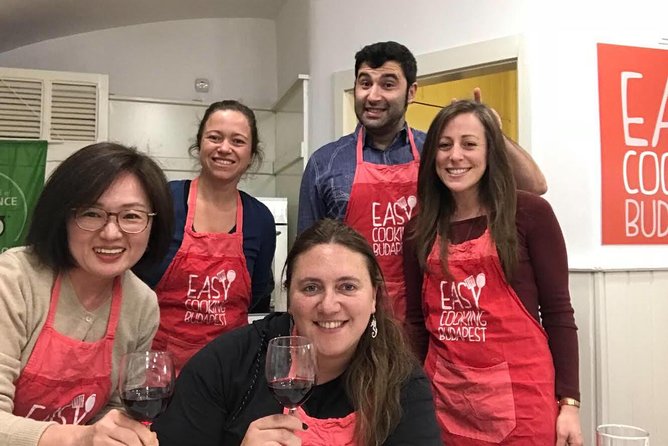
After about 1.5 hours of walking, you head to the kitchen for the cooking workshop. The key feature is participation. You are there to cook Hungarian dishes, not just sit at a counter while someone prepares food.
The menu can include several traditional combinations. One option is töltött paprika, or stuffed peppers, followed by mákos guba, described as dumplings with poppy seeds. Another menu pairs roast goose with onion potatoes and braised cabbage, followed by fánk, a special Hungarian donut.
A third possibility is székelygulyás, a goulash soup with sauerkraut, followed by szilvásgombóc, or plum dumplings. These dishes offer different ways to experience Hungarian cooking: stuffed vegetables, roast meat, cabbage, potatoes, poppy seeds, fried dough, and fruit dumplings.
The exact menu is not presented as a guaranteed single choice, so you should be prepared for the menu to vary. That is important if you have your heart set on one specific dish. The menu examples suggest a substantial meal, but the supplied details do not explain how dishes are selected or whether dietary substitutions are available.
The class also gives you a chance to notice how the history from the walk appears in the kitchen. The stated aim is to show the influence of each nation Hungary had a connection with. You are not simply collecting recipes. You are looking at how a country’s past reaches the dining table.
What the Full Dinner Adds to the Price
At $131.06 per person, this is not a budget activity. The price needs to be judged against what is included: a guided city walk, a cooking workshop, a full dinner, an English-speaking format, and a group capped at 10 people.
I see the strongest value for someone who would otherwise book a separate walking tour and a cooking class. Combining them saves you from arranging two activities and gives the day a clear story from sightseeing to food.
The small group matters here. With no more than 10 people, you have a better chance of taking an active role in the kitchen than you would in a large demonstration class. A small group can also make it easier to speak with the guide and ask about the dishes, history, or local customs.
The price is harder to justify if you only want to sample Hungarian food. Budapest has many less expensive ways to eat a traditional meal. You should book this for the guided context and hands-on cooking, not just for the dinner itself.
The sit-down meal is still a useful part of the value. After preparing the food, you get to eat it as a proper dinner rather than leaving with a small tasting portion. That makes the activity feel like a complete evening experience, even though the walking begins earlier.
The Personal Touch From Kata and Karolina
The supplied experience details identify Kata and Karolina in connection with a particularly warm visit. Their names are useful to note when you book or receive your confirmation, though the information does not specify which guide leads each section.
A personal thank-you described time spent guiding a participant around Budapest and creating good memories during the Christmas season. That points to the friendly, personal tone this activity aims for. It also fits the small group size, where the experience can feel less like a standard group excursion.
You should still keep expectations reasonable. A five-hour activity with several historical topics and a cooking lesson cannot cover every detail of Budapest. The strength is the combination of personal attention, selected landmarks, and food preparation.
Who Will Get the Most From This Experience?
I would recommend Walk and Cook Budapest to you if you enjoy learning through food and want more than a restaurant meal. It is a good match for first-time visitors who want a compact introduction to Budapest’s history, architecture, Jewish heritage, and cuisine.
It should also suit people who prefer small groups. Ten participants is enough for conversation but small enough to make the cooking portion feel active rather than anonymous.
The experience may work well for couples, friends, and solo participants. A solo participant can meet others in a naturally social setting, while couples and friends get a shared activity that is more memorable than simply choosing a restaurant.
You may want to skip it if you dislike group activities, do not want to cook, or need a highly specialized history tour. The route covers several broad subjects, and the food menu can vary. People with dietary restrictions should confirm options before booking because no substitutions are specified.
The tour may also be less suitable if you have only a few hours in Budapest and need strict control over your schedule. The duration is approximately five hours, and the experience returns to the meeting point rather than ending at a separate destination.
Timing, Tickets, and Cancellation
The activity is offered in English and uses a mobile ticket. It begins in Budapest and ends back at the meeting point. The meeting point information supplied is broad, so check the exact location and start time on your confirmation.
The tour is near public transportation, which is useful for reaching the start and leaving afterward. The maximum group size is 10 people, but the activity requires a minimum number of participants. If that minimum is not reached and the tour is canceled, you are offered another date or experience, or a full refund.
Confirmation arrives within 48 hours of booking, subject to availability. That makes it wise to avoid booking it at the last possible moment if your Budapest plans are tight.
Free cancellation applies when you cancel at least 24 hours before the experience start time. A cancellation made less than 24 hours in advance is not refunded, and late changes are not accepted. The cutoff follows local Budapest time.
Should You Book Walk and Cook Budapest?
Book it if you want one small-group activity that links Budapest’s past with its food. The mix of Gul Baba’s Tomb, Parliament, the Great Synagogue, and a hands-on dinner gives you more substance than a basic cooking class.
At $131.06, it is best for someone who values the guide, the history, the personal group size, and the full meal. If you only want an inexpensive taste of Hungarian cuisine, choose a restaurant or shorter food activity instead.
For a first visit, I like the structure: 1.5 hours of city context, followed by practical cooking and a sit-down dinner. The experience has a clear point of view, treats Hungarian food as part of a complicated past, and gives you something to do with your hands as well as something to see.
FAQ
Where does Walk and Cook Budapest take place?
The experience takes place in Budapest, Hungary. It starts and ends at the meeting point in Budapest.
How long does the experience last?
The activity lasts approximately five hours. The guided walking portion lasts about 1.5 hours before the cooking session.
What language is the tour offered in?
The tour is offered in English.
How many people can join the activity?
The experience has a maximum of 10 participants.
Which Budapest sights are included?
The stops include Gul Baba’s Tomb, the Hungarian Parliament Building, and the Great Synagogue, also called Nagy Zsinagoga.
What food might be prepared?
Possible dishes include stuffed peppers, roast goose with onion potatoes and braised cabbage, or Székely goulash with sauerkraut. Possible desserts include poppy-seed dumplings, a special donut called fánk, or plum dumplings.
Is dinner included?
Yes. The experience includes a full dinner after the cooking workshop.
What is the cancellation policy?
You can cancel at least 24 hours before the start time for a full refund. Cancellations or changes made less than 24 hours before the start time are not accepted for a refund.
Just added in Budapest
- Budapest: Private Walking Tour with a Local Guide★ 3.6 · 6 reviews
- Budapest: Danube River Views Bike Ride★ 4.8 · 23 reviews
- Budapest: City Bike Tour with Coffee Stop★ 5.0 · 37 reviews
- From Budapest: Guided Tour of Eger with Wine Tasting★ 4.5 · 6 reviews
- Walk to recent and aged spiritual sanctuaries near Budapest★ 5.0 · 5 reviews
- Walking consultancy with alternative psychologist and author★ 5.0 · 2 reviews
- Budapest: Guided Tour of the Parliament Building in Spanish★ 4.6 · 1,240 reviews
- Budapest: 3-Hour Trabant Sightseeing Tour★ 4.7 · 28 reviews
Walking Tours, compared.
Budapest City Landmarks Walking Tour in 2 Hours
Read our review →
3-Hour Orientation Walking Tour of Buda and Pest
Read our review →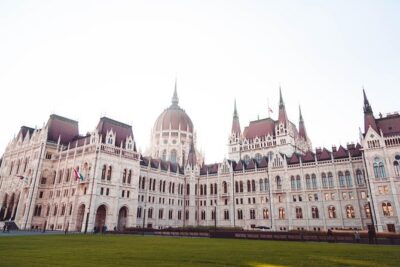
Budapest Historical Sightseeing – Free Walking Tour
Read our review →
Budapest All in One Small Group Walking Tour with Strudel Stop
Read our review →
Buda Castle District Walking Tour with a Historian
Read our review →
BloodThirsty Hungary: Walking tour & Dark Historical Stories
Read our review →Browse the lists this tour appears in