
REVIEW · JEWISH HERITAGE TOURS
2-Hour Jewish Quarter Walking Tour in Budapest with Historian
Budapest’s Jewish Quarter rewards a closer look. This walking tour connects Rumbach Street Synagogue and Kazinczy Street Synagogue with the district’s wartime story and present-day Jewish life. I like the small group limit of 15 and the chance to walk with Daniel Kalman, a historian whose work covers Jewish heritage across East-Central Europe.
I also like the thoughtful stop at the Carl Lutz Memorial, which adds human detail to a difficult subject. The main concern is important: synagogue access is not guaranteed. Rumbach may be closed on weekdays during the winter schedule, and Kazinczy is temporarily closed for restoration. If entering both buildings is your main goal, check conditions before booking.
In This Review
- Key points at a glance
- Why this two-hour walk matters in Budapest
- Rumbach Street Synagogue and Otto Wagner’s design
- Kazinczy Street Synagogue and Art Nouveau detail
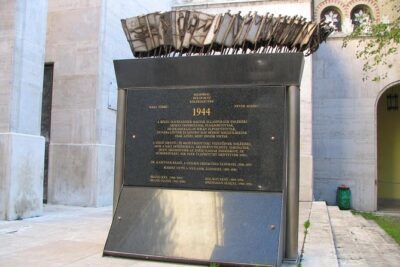
- The Carl Lutz Memorial and the human side of the story
- Daniel Kalman’s approach to Jewish heritage
- What the price means at $46.46
- Timing, walking pace, and meeting points
- Who should book this Jewish Quarter tour?
- How to plan around synagogue closures
- The final call: book it or skip it?
- FAQ
- Where does the tour begin?
- What time does the tour start?
- Where does the tour end?
- How long does the tour last?
- What is the price?
- How large can the group be?
- Which synagogues are included in the route?
- Is entry to both synagogues guaranteed?
- Is food or coffee included?
- Can I cancel for a full refund?
Key points at a glance
- Two major synagogue buildings: Rumbach Street Synagogue and Kazinczy Street Synagogue anchor the walk.
- A historian leads the tour: Daniel Kalman focuses on Jewish heritage and monuments across East-Central Europe.
- Holocaust history has a personal focus: The Carl Lutz Memorial introduces the people who helped others survive.
- Small-group format: The maximum group size is 15, with the possibility of a more personal outing.
- A useful end point: The tour finishes at Klauzál Square, near a café for optional coffee or food.
- Check synagogue opening conditions: Admission details can change with holidays, restoration work, and the winter schedule.
Why this two-hour walk matters in Budapest
Budapest’s Jewish Quarter is not simply a collection of old religious buildings. It is a part of Pest where Jewish life grew for generations, suffered near destruction during the Holocaust, and continues in new forms today.
That combination gives the walk a clear purpose. You are not only looking at façades. You are following the outline of a community through its places of worship, memorials, and surviving urban fabric.
The tour lasts about two to three hours and begins at 11 a.m. at Madách Imre tér. That start time gives you a full morning before the walk, while the finish at Klauzál tér leaves you in a useful part of the district for a snack or further exploring.
I would choose this experience if you want historical explanation rather than a quick photo stop. The guide’s stated research focus is Jewish heritage and monuments in Hungary, Slovakia, Poland, Ukraine, and Romania. That wider regional view can help you understand Budapest as part of Central and Eastern Europe’s Jewish story, not as an isolated case.
The group limit of 15 is another practical strength. A smaller group makes it easier to ask questions, especially on a subject where you may want clarification about dates, people, religious traditions, or the meaning of a memorial.
More Jewish heritage tours:
- Budapest Jewish Heritage Memorial Walking Tour & Synagogue Entry
★ 5.0 · 568 reviews - Budapest: Jewish Heritage Guided Tour with Synagogue Ticket
★ 4.8 · 533 reviews - Jewish Quarter of Budapest Walking Tour
★ 4.7 · 369 reviews
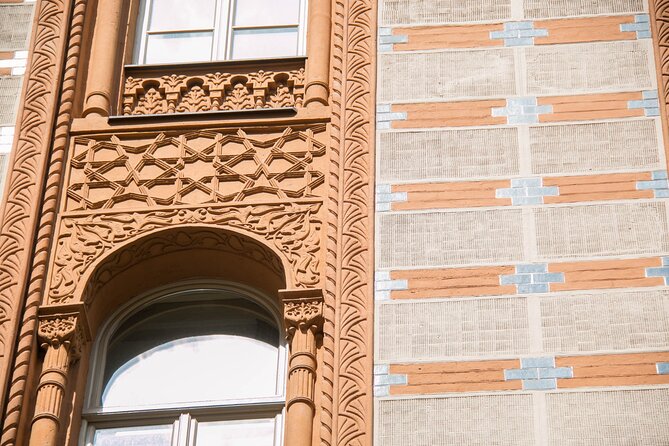
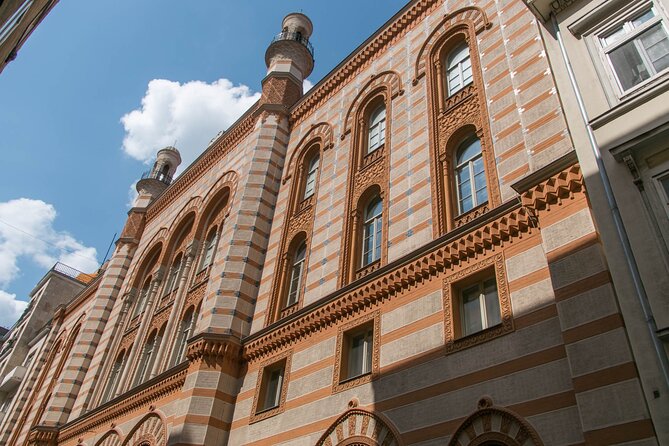
Rumbach Street Synagogue and Otto Wagner’s design
The first major stop is Rumbach Street Synagogue, with about 30 minutes set aside for it. The synagogue was built in the 1870s and designed by Otto Wagner, a major name in European architecture.
The building has been beautifully renovated in recent years, making it one of the more important architectural stops in the Jewish Quarter. Even if you are not an architecture specialist, the synagogue gives you a direct sense of the community’s confidence and growth during the late 19th century.
The value of having a historian here is that the building can be read on more than one level. You can look at its design, but you can also ask how the synagogue fit into Budapest’s Jewish religious and social life. That kind of explanation is difficult to get from a plaque alone.
There is a catch. Entrance to Rumbach is not always included in practice. During the winter schedule, the synagogue is closed on weekdays, so an 11 a.m. weekday tour may involve viewing the exterior and discussing the site rather than going inside. Opening conditions can also change around holidays.
This is not a reason to reject the walk, but it is a reason to set your expectations correctly. If the building is open, you get a stronger architectural experience. If it is closed, the guide can still explain its importance, but you will miss the interior.
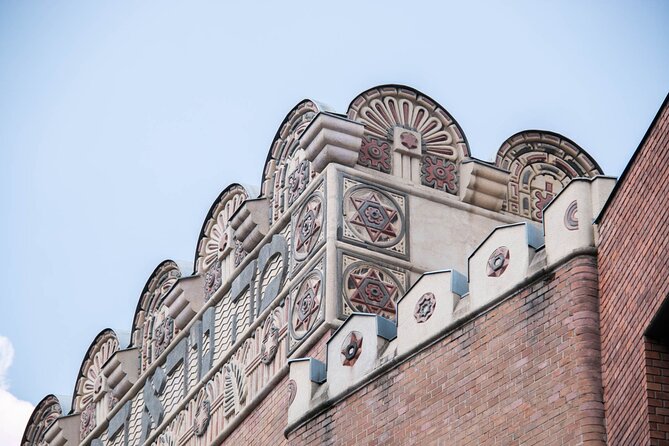
Kazinczy Street Synagogue and Art Nouveau detail
The second synagogue stop is Kazinczy Street Synagogue, also planned for about 30 minutes. It was built in 1912 by the Löffler Brothers in the Art Nouveau style.
That date gives you a useful contrast with Rumbach. Instead of seeing one synagogue as a complete picture of Jewish Budapest, you can compare two buildings from different periods. The change in design reflects the changing character and confidence of the community before the First World War.
Kazinczy is also important as a religious and cultural site. The guide can help you understand why this building mattered to the local community and how it fits into the district’s broader story.
At present, Kazinczy Synagogue is temporarily closed because of restoration. That means the advertised plan to visit two historical synagogues may become a discussion of the exterior, the building’s history, and available visual material rather than an interior visit.
This limitation matters because the synagogues are the tour’s main physical attractions. One past participant joined when the buildings were closed for a holiday and could not go inside. Daniel had photographs of the interiors, which helped provide some visual context. That is useful, but photographs are no substitute for standing inside the actual rooms.
Before you book, decide what matters most to you. If you want the buildings explained in context, the tour remains worthwhile. If you need guaranteed interior access, you should confirm the current opening situation first.
The Carl Lutz Memorial and the human side of the story
The stop at the Carl Lutz Memorial is brief, lasting about 10 minutes, but it gives the walk an important change of scale.
The synagogues show the size and character of Jewish communal life. The memorial turns your attention to individual action during the Holocaust. The guide discusses Carl Lutz and others who helped people survive, giving you a chance to consider the choices and risks involved in that work.
Because the stop is short, do not expect a full Holocaust museum visit or a long memorial lecture. Instead, think of it as a focused pause that connects the district’s buildings with the people whose lives were threatened there.
This is one of the tour’s strongest features for me. A walking route can easily become a parade of architecture, with one attractive façade after another. The Carl Lutz Memorial keeps the history personal and reminds you that the district is also a place of loss, courage, and remembrance.
The subject is serious, and the route will not suit someone looking only for light sightseeing. For many people, that seriousness is exactly the point. The guide’s role is especially valuable here because he can explain the memorial within the wider wartime history rather than treating it as an isolated object.
More walking tours in Budapest:
- Budapest: Buda Castle Walk with Saint Stephen’s Hall
★ 4.5 · 3,012 reviews - Big Bus Budapest Hop-On Hop-Off Bus and Walking Tour
★ 3.5 · 2,206 reviews - Budapest: Buda Castle District Walking Tour
★ 4.6 · 2,108 reviews - Budapest City Landmarks Walking Tour in 2 Hours
★ 5.0 · 2,048 reviews
Daniel Kalman’s approach to Jewish heritage
Daniel Kalman is identified as the historian guide for the experience. His research centers on Jewish heritage and monuments in East-Central Europe, and he has visited synagogues and Jewish cemeteries in Hungary, Slovakia, Poland, Ukraine, and Romania.
That background is useful for two reasons. First, it suggests that you can ask questions that reach beyond Budapest. Second, it gives the guide a broader basis for explaining how Jewish communities, religious buildings, and wartime experiences differed across the region.
One strong feature of the experience is the freedom to ask questions. On one outing, the group consisted of only one person, which allowed plenty of time for discussion. Daniel also helped that participant find a point of interest elsewhere in Budapest after the tour ended.
You should not assume every departure will be private. The maximum is 15 people, so the actual group can vary. Still, the small cap creates a better chance for conversation than a large city tour.
I would especially recommend this guide-led format if you already know a little about Budapest and want to go further. You can ask about the meaning of a building, the fate of the local community, or connections with Jewish sites elsewhere in the region. If you prefer to move quickly and take photos without much explanation, the tour may feel slower than you want.
What the price means at $46.46
At $46.46 per person, this is not the cheapest way to walk around the Jewish Quarter. You are paying for a specialist guide and a focused route rather than simply following a free map.
The price makes more sense if you value interpretation. Two to three hours with a historian can help you understand details that are easy to miss on your own, especially the relationship between architecture, community life, and Holocaust memory.
The value is less clear if both synagogues are closed. The tour includes the historian and the route, but synagogue admission may not be available. Entrance to Rumbach is specifically not included during certain winter weekday closures, and Kazinczy is temporarily closed for restoration.
You should also know that coffee, tea, and food at the end are optional and cost extra. The nearby café is a pleasant practical touch, but refreshments are not part of the price.
The advance booking pattern is worth noting. This experience is booked, on average, 64 days ahead. That does not mean you must reserve exactly two months in advance, but it suggests that planning ahead is sensible, particularly if you have fixed Budapest dates or want a smaller group.
The free cancellation policy gives you some flexibility. You can cancel up to 24 hours before the 11 a.m. start for a full refund. Changes or cancellations inside that period are not accepted for a refund.
Timing, walking pace, and meeting points
The tour begins at Madách Imre tér at 11 a.m. The meeting point is near public transportation, which makes it fairly practical to reach from other parts of Budapest.
The route ends at Klauzál tér in the 1072 area. That is helpful because you do not have to return to the starting point, and you can continue your day from the Jewish Quarter. The nearby café offers an optional place to sit, talk, and have a coffee or something to eat.
The stated duration is about two to three hours. Since the itinerary includes three stops and walking between them, you should allow the longer end of that range if the discussion becomes lively or if the group asks many questions.
The route is suitable for most people according to the supplied activity information. Still, it is a walking tour, so comfortable shoes are a sensible choice. The experience provides a mobile ticket, and confirmation arrives when you book.
The subject matter also affects the pace. This is not a quick circuit designed to cover every street in the district. You will spend real time at the synagogues and memorial, with room for explanation and questions.
Who should book this Jewish Quarter tour?
I would recommend it most strongly to:
- People interested in Jewish history, religious buildings, or Budapest architecture
- Visitors who want a historian rather than a general sightseeing guide
- Anyone who wants to connect Budapest with Jewish sites across East-Central Europe
- First-time visitors who prefer a focused introduction to the Jewish Quarter
- Returning visitors who want a more serious look at an area they have already seen
- People comfortable discussing Holocaust history in a respectful setting
You may want to choose another activity if you need guaranteed synagogue entry, dislike walking tours, or want a broad overview of all Budapest attractions. This route is narrow by design. Its strength is concentration, not coverage.
Families and mixed-interest groups can still enjoy it, but the adults in the group should be ready for detailed historical discussion. The tour is not presented as a children’s activity, and the Holocaust section requires some maturity.
How to plan around synagogue closures
The single most important planning step is to check access before the tour date.
Rumbach Street Synagogue can be closed on weekdays under its winter schedule. Kazinczy Street Synagogue is temporarily closed for restoration. Holidays can also affect opening, as shown by the experience of joining when both synagogues were inaccessible.
If you go ahead during a closure, ask Daniel to show or explain interior details. He has used photographs to give participants a sense of spaces they could not enter. That can rescue much of the educational value, but it will not satisfy you if your main aim is interior architecture.
I would treat the synagogue access as a bonus rather than the only reason to book. The historical route, memorial stop, and discussion still form a coherent experience. Just do not pay the price expecting two guaranteed indoor visits.
The final call: book it or skip it?
Book this tour if you want a focused, serious introduction to Budapest’s Jewish Quarter and you value a historian’s explanation. Daniel Kalman’s regional research, the small group limit, the two distinctive synagogue buildings, and the Carl Lutz Memorial give the walk more substance than a simple architectural stroll.
The best time to book is after checking the current synagogue schedule. If Rumbach is open and restoration has not changed access elsewhere, the experience offers stronger value at $46.46. If both interiors are unavailable, book only if you are happy with an exterior-based tour supported by historical discussion and photographs.
I would not choose it for guaranteed admission or a light, fast-paced city walk. I would choose it for context, questions, and a thoughtful look at how Jewish life shaped this part of Pest, how the Holocaust changed it, and how the community continues today.
FAQ
Where does the tour begin?
The tour begins at Madách Imre tér in Budapest.
What time does the tour start?
The start time is 11 a.m.
Where does the tour end?
The tour ends at Klauzál tér, 1072 Budapest.
How long does the tour last?
The tour lasts approximately two to three hours.
What is the price?
The listed price is $46.46 per person.
How large can the group be?
The tour has a maximum of 15 participants.
Which synagogues are included in the route?
The route includes Rumbach Street Synagogue and Kazinczy Street Synagogue.
Is entry to both synagogues guaranteed?
No. Rumbach Street Synagogue can be closed on weekdays during the winter schedule, and Kazinczy Street Synagogue is temporarily closed for restoration.
Is food or coffee included?
No. Coffee, tea, and food at a café near Klauzál Square are optional and are not included.
Can I cancel for a full refund?
Yes. You can cancel at least 24 hours before the experience start time for a full refund. Cancellations or changes made less than 24 hours before the start are not refunded.
Just added in Budapest
- Budapest: Private Walking Tour with a Local Guide★ 3.6 · 6 reviews
- Budapest: Danube River Views Bike Ride★ 4.8 · 23 reviews
- Budapest: City Bike Tour with Coffee Stop★ 5.0 · 37 reviews
- From Budapest: Guided Tour of Eger with Wine Tasting★ 4.5 · 6 reviews
- Walk to recent and aged spiritual sanctuaries near Budapest★ 5.0 · 5 reviews
- Walking consultancy with alternative psychologist and author★ 5.0 · 2 reviews
- Budapest: Guided Tour of the Parliament Building in Spanish★ 4.6 · 1,240 reviews
- Budapest: 3-Hour Trabant Sightseeing Tour★ 4.7 · 28 reviews
Jewish Heritage Tours, compared.
Budapest Jewish Heritage Memorial Walking Tour & Synagogue Entry
Read our review →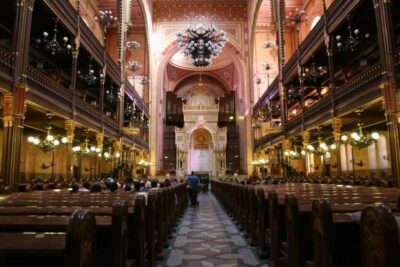
Jewish Heritage Guided Tour with Synagogue Ticket
Read our review →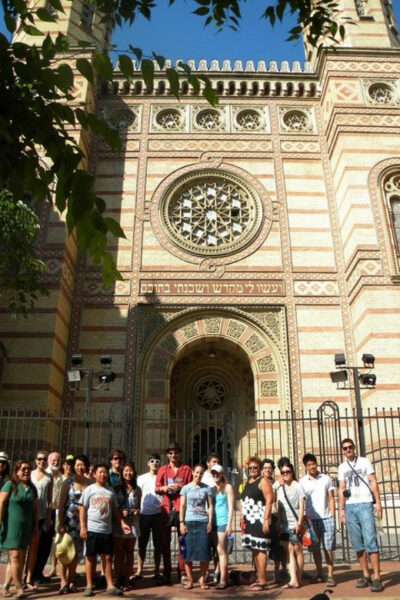
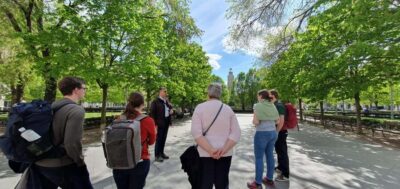
Past and Present of Budapest Jewish District Tour
Read our review →
Budapest Dohany Synagogue & Hungarian Jewish Museum & free extras
Read our review →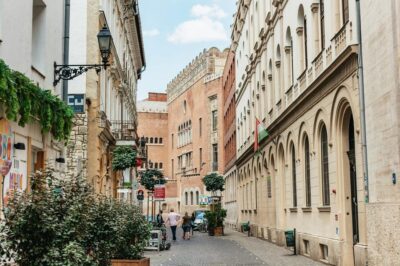
Jewish History Guided Walking Tour with Historian
Read our review →Browse the lists this tour appears in