
REVIEW · JEWISH HERITAGE TOURS
Budapest: Jewish Heritage Walking Tour with Historian Guide
Budapest keeps its Jewish stories close. This two-hour walk brings them into focus through the Rumbach Street Synagogue, the Gozsdu Passage, and streets shaped by centuries of Jewish life. I like the small group, limited to 10 people, and the fact that a field historian leads the walk rather than a general city guide.
I also like the mix of grand buildings and quiet memorials, including the Carl Lutz Memorial, the Memory Wall, and a surviving section of the former ghetto wall. The main consideration is that Kazinczy Street Synagogue is temporarily closed, so you see it from outside and do not receive an interior visit there.
In This Review
- Key points to know before you book
- Why this Jewish Quarter walk is worth your time
- Meeting the guide at Deák Square
- Rumbach Street Synagogue brings architecture into the story
- Gozsdu Passage shows the district’s changing face
- Walking the streets between the major sights
- The Carl Lutz Memorial and the Memory Wall
- Kazinczy Street Synagogue is an important limitation
- What the $62 price really covers
- Who should take this tour
- Timing, cancellation, and planning advice
- My verdict: book it for the stories, not just the synagogues
- FAQ
- Where does the Budapest Jewish Heritage Walking Tour begin?
- How long does the tour last?
- What language is the tour conducted in?
- How large is the group?
- Can I enter Rumbach Street Synagogue?
- Can I enter Kazinczy Street Synagogue?
- What is included in the $62 price?
Key points to know before you book
- A real historian leads the walk: The guide focuses on Jewish life, Hungarian history, architecture, and the people connected with the district.
- Rumbach Street Synagogue is the main interior visit: Your ticket includes entry to this important synagogue.
- Kazinczy Street Synagogue is currently exterior-only: Restoration work means you cannot enter, and its admission ticket is not included.
- The Holocaust memorial stops are brief but serious: You visit the Carl Lutz Memorial, a Memory Wall, and part of the old ghetto wall.
- The route starts at Deák Square: Meet at the entrance of the Lutheran Church, close to the M2 metro entrance.
- The $62 price buys a focused small-group experience: It makes the most sense if Jewish and Hungarian history matter to you, not if you only want a quick architectural stroll.
Why this Jewish Quarter walk is worth your time
Budapest’s Pest side was home to one of Central Europe’s most important Jewish communities from the 18th century into the mid-20th century. That long span gives this walk a useful shape. You are not only looking at synagogues. You are following the story of a community that built institutions, filled streets with daily life, faced persecution, and left behind memorials that still shape the district.
I like tours that let a neighborhood explain itself. Here, streets, courtyards, religious buildings, and memorials all carry part of the story. The guide connects them instead of treating each sight as a separate photo stop.
The experience lasts two hours, which is enough time for a clear introduction without taking over your entire day. You walk through the Jewish District rather than sitting through a long indoor lecture. That matters in Budapest, where the street plan itself helps you understand how the area developed.
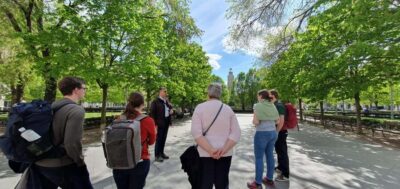
The group is limited to 10 participants. I consider that a real advantage for a history-heavy tour. You should have a better chance to hear the guide, ask questions, and pause at the more difficult memorials without being lost in a crowd.
More Jewish heritage tours:
- Budapest Jewish Heritage Memorial Walking Tour & Synagogue Entry
★ 5.0 · 568 reviews - Budapest: Jewish Heritage Guided Tour with Synagogue Ticket
★ 4.8 · 533 reviews - Jewish Quarter of Budapest Walking Tour
★ 4.7 · 369 reviews
Meeting the guide at Deák Square
The tour begins at the entrance of the Lutheran Church at Deák Square. The meeting point is near the M2 metro entrance, making it practical if you are coming from another part of Budapest.
Deák Square is a busy central location, so allow yourself a few minutes to identify the church entrance. You do not need hotel pickup, and none is provided. If you are unsure of the route, the activity information asks you to request help in advance.
The guide speaks English. Daniel is the guide named in the strongest recent comments about this experience, and he has been praised for being friendly, clear, and very well informed. One useful clue from the feedback is that the tour works well for people who already know some Hungarian history and for people who are simply curious about it.
Rumbach Street Synagogue brings architecture into the story
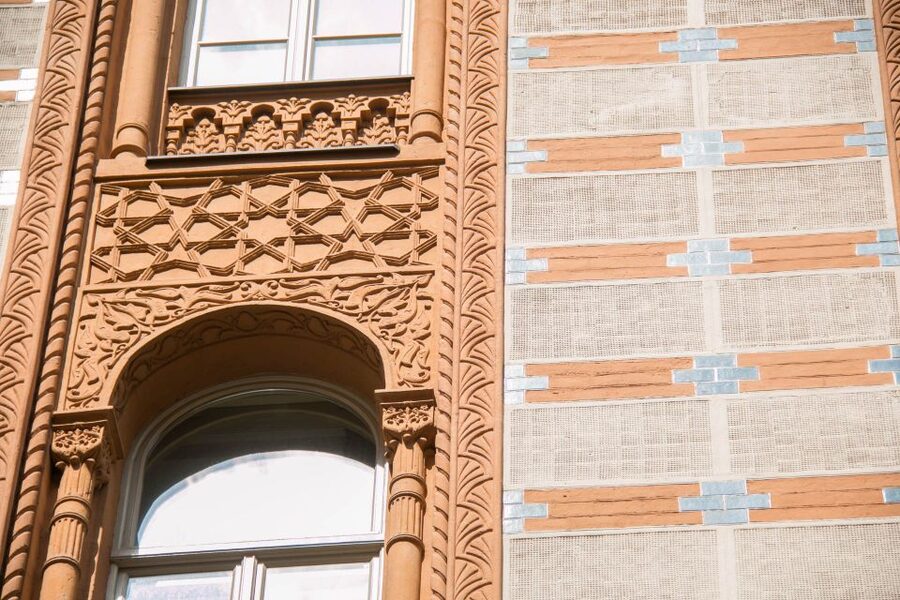
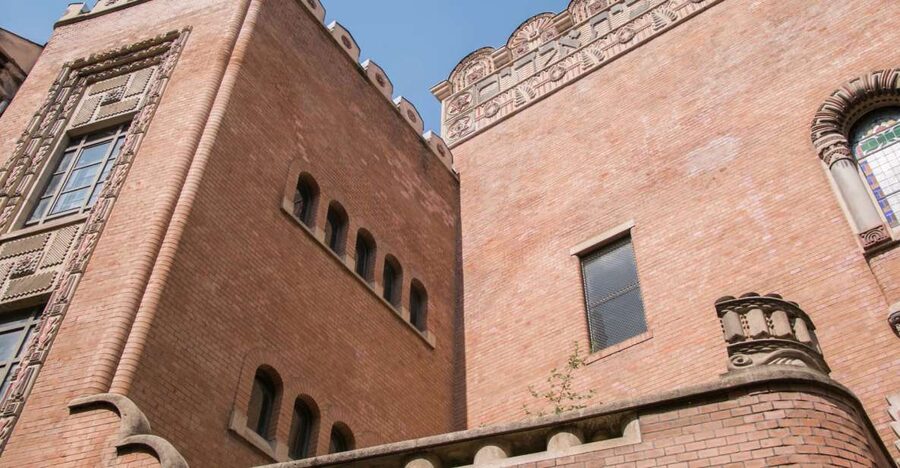
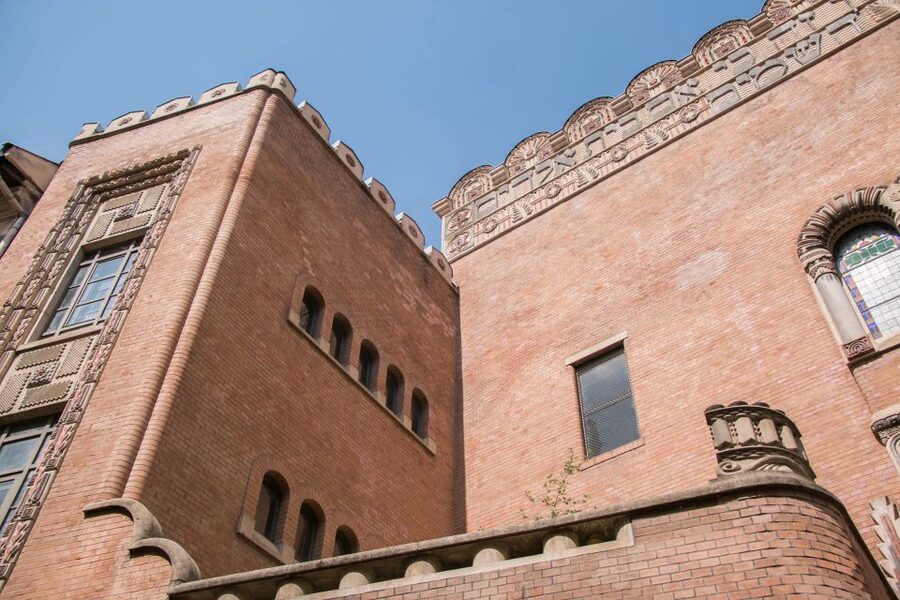
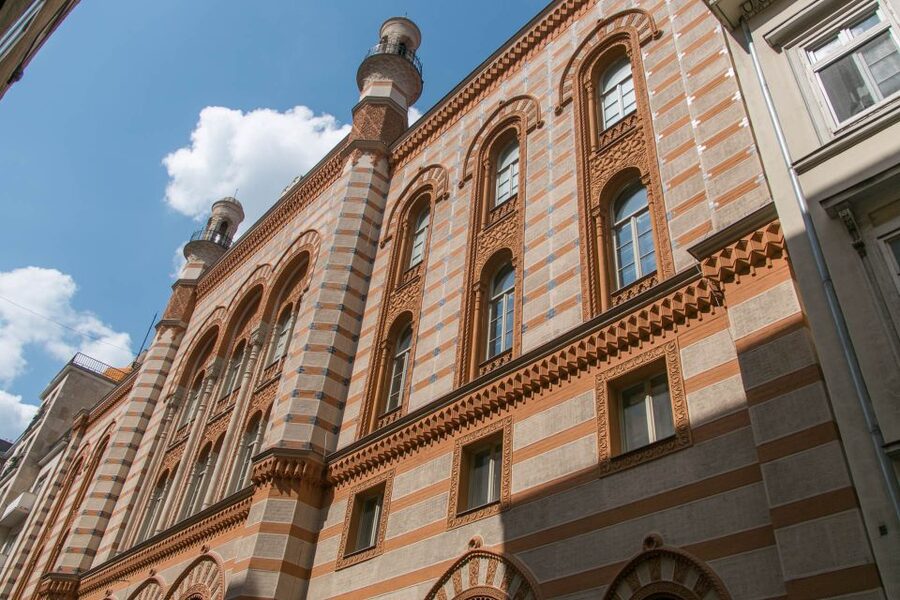
Rumbach Street Synagogue is the first major interior stop. Your admission is included, so there is no separate ticket to arrange during the walk.
The synagogue matters for two reasons. First, it is an art-historical example of its period. Second, it gives the guide a place to explain how Jewish life in Budapest developed and how religious buildings reflected the identity of the community that used them.
You should expect a guided visit and time for looking around, not just a quick exterior photograph. The building is one of the visual anchors of the tour, and the interior visit gives the route more weight than a walk that stays entirely on the street.
I would pay attention to the guide’s explanation of the synagogue as a historical object. The value is not only in seeing a beautiful building. It is in learning what the building represented, who gathered there, and how it fits into Budapest’s wider Jewish story.
A practical point: the schedule describes this as a photo stop, guided tour, and sightseeing visit. The exact amount of time inside can vary, so do not plan a tightly timed museum visit immediately afterward.
Gozsdu Passage shows the district’s changing face
From Rumbach Street, the walk continues through the Jewish Quarter and reaches Gozsdu Passage. This is one of the more recognizable parts of the route, but the guide uses it as more than a backdrop for photographs.
Passages and connected courtyards help you see how the district functions as an urban neighborhood. They also give the guide a natural setting for stories about the streets, the people who lived there, and the way the area changed over time.
I like this part because it breaks up the more formal synagogue and memorial stops. You get a sense of the district as a place where people lived and worked, not merely as a collection of historic buildings.
The passage is also a good reminder that Budapest’s Jewish Quarter has several identities at once. It is a historic district, a place of memory, and a current city neighborhood. The tour does not present only one of those faces.
More history tours in Budapest:
- Budapest: Historic Cruise with Welcome Drink
★ 4.7 · 6,512 reviews - Budapest Historical Sightseeing – Free Walking Tour
★ 5.0 · 1,302 reviews - Buda Castle District Dark History, Legends and Vampire Night Tour
★ 4.5 · 1,240 reviews - BloodThirsty Hungary: Walking tour & Dark Historical Stories
★ 4.9 · 633 reviews
Walking the streets between the major sights
Much of the experience happens between the named stops. That is where the historian guide can explain lesser-known details that you would probably miss on your own.
The walk includes stories about people who lived in the district, figures who became famous, and the reasons they were remembered. It also raises a question that many visitors will not know to ask: where were two other synagogues that had already been demolished by the 1930s?
That kind of question gives the tour its strongest historical value. A remaining building tells you what survived. A missing building can tell you about planning, politics, changing populations, and loss. You should not expect every answer to be presented as a long academic lecture, but the route gives the guide room to point out what is no longer visible.
The walk also deals with miraculous survivals and the people who helped others survive. Those stories add a human scale to a subject that can otherwise become a list of dates and buildings.
Wear comfortable shoes. The tour is only two hours, but it is a walking experience with several outdoor sections. You will also want to dress for the day’s weather because the route moves between indoor and outdoor spaces.
The Carl Lutz Memorial and the Memory Wall
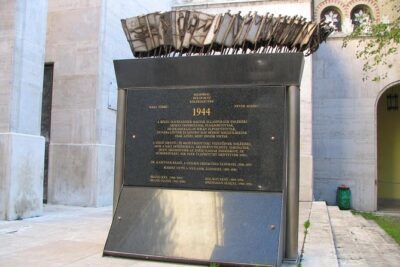
The Holocaust-related stops change the mood of the tour. You visit the Carl Lutz Memorial and a Memory Wall, along with a remaining section of the old ghetto wall.
These are not decorative additions to the route. They mark the destruction and danger faced by Budapest’s Jewish population, while also bringing attention to the people who acted to protect others. The guide’s stories about survival and rescue are especially important here because they connect a major historical event with individual choices.
Carl Lutz is remembered through the memorial named for him. The tour uses this stop to discuss people who helped others survive, not only those who suffered. That wider focus is useful. It allows you to consider courage, risk, and responsibility alongside persecution and loss.
The remnant of the ghetto wall is more modest than a grand monument, but that is part of its force. A fragment can be easy to overlook if you are walking alone. With the guide, you get the context needed to understand why the small physical remains matter.
I would expect these stops to be concise rather than museum-length presentations. The whole tour has to cover synagogues, streets, courtyards, and memorials in two hours. If you want extensive Holocaust documentation or a large museum collection, you will need to add a separate visit elsewhere in Budapest.
Kazinczy Street Synagogue is an important limitation
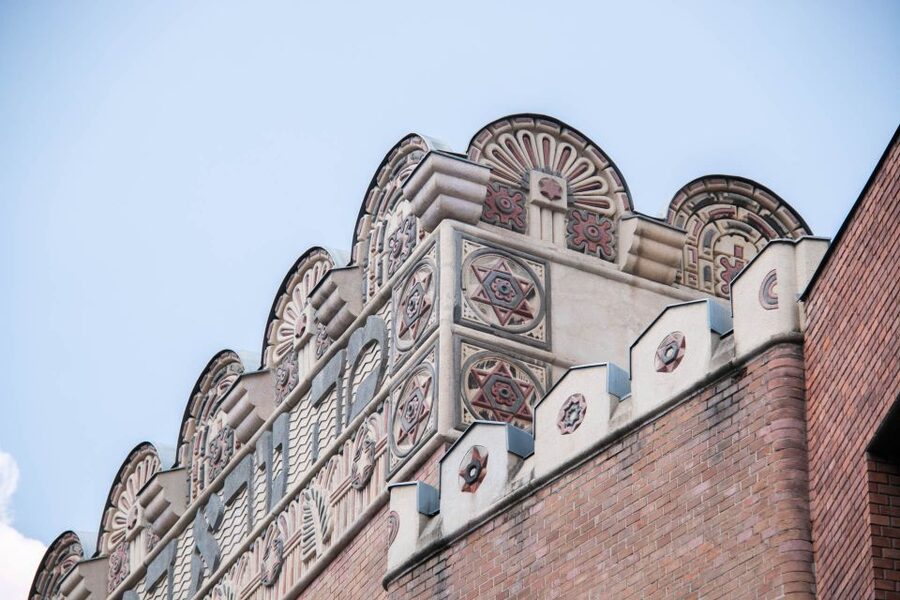
Kazinczy Street Synagogue is included in the route, but at present the visit is exterior-only because the building is temporarily closed for reconstruction.
This is the clearest drawback of the experience. The tour information highlights Kazinczy as one of the two historic synagogues, but you should not book expecting two interior synagogue visits. You will see the building and hear about its place in the district, but there is no entry ticket because entry is not available.
The closure may be temporary, and restoration could change the experience later. Still, check the current status before booking if seeing the interior is a major reason for choosing this tour.
Even from outside, the stop remains useful. The guide can place the synagogue within the district’s religious and architectural story, and the contrast with the interior visit at Rumbach helps you understand that these buildings belong to different moments and traditions.
What the $62 price really covers
At $62 per person, this is not the cheapest way to walk around the Jewish Quarter. You are paying for a specialist guide, a small group, and admission to Rumbach Street Synagogue, as well as entry to the Ghetto Wall Memorial.
The price makes more sense when you value interpretation. Without a historian, you can photograph the buildings and walk through Gozsdu Passage, but you will miss much of the connection between the streets, the vanished synagogues, the memorials, and the people involved.
The group limit of 10 is a meaningful part of the price. A smaller group can make a history tour feel more like a conversation. You are less likely to strain to hear or wait while a large crowd gathers around each stop.
Still, the value depends on your interests. If you want only a general orientation to Budapest, a broader city tour may give you more sights for less money. If Jewish heritage, Hungarian history, architecture, and Holocaust memory are central to your plans, the focused subject and historian guide justify the higher cost.
Food, drinks, and hotel transportation are not included. That is easy to manage because the tour starts in central Budapest, but you should budget separately for anything you want before or after the walk.
Who should take this tour
I would recommend this experience to you if you want more than attractive buildings and short captions. It suits visitors who enjoy asking why a neighborhood developed as it did, what happened to buildings that vanished, and how personal stories fit into national history.
It is also a good choice if you prefer a small group. Ten people is still enough for a social walk, but it is far more manageable than a large coach-style tour.
The tour can work well for first-time visitors to Budapest because it gives you a clear introduction to one of Pest’s most important districts. It can also suit returning visitors who have already seen the major landmarks and want a more focused subject.
I would be cautious about booking it for very young children unless they are comfortable with a serious historical subject and a two-hour walking route. The Holocaust memorials and stories of survival require attention and respect.
You should also consider your expectations about synagogue access. Rumbach includes entry. Kazinczy does not currently allow visitors inside.
Timing, cancellation, and planning advice
Starting times vary, so check availability for the date you want. The tour is conducted in English and lasts two hours.
You can cancel up to 24 hours in advance for a full refund. A reserve-now, pay-later option is also available, which helps if your Budapest schedule is still changing.
I would place this walk early in your stay if Jewish Quarter history is a priority. The guide can give you names, locations, and context that may sharpen your understanding of later independent walks through the district. If you already have a packed sightseeing day, avoid squeezing it between two timed museum entries. The route has enough content to deserve your full attention.
My verdict: book it for the stories, not just the synagogues
I recommend this tour if you want a focused, human account of Jewish Budapest led by a historian. The best parts are the small group, the included visit to Rumbach Street Synagogue, and the way the guide links ordinary streets with memorials, vanished buildings, and stories of courage.
The temporary closure of Kazinczy Street Synagogue is the main reason to pause. You receive an exterior visit only, so the experience is less complete than the description of two synagogue visits might first suggest.
Book it if the $62 price fits your budget and you care about context. Skip it if you want a broad sightseeing tour or if you are mainly looking for synagogue interiors. For the right audience, this is a thoughtful two-hour walk that helps Budapest’s Jewish Quarter speak in more than one voice.
FAQ
Where does the Budapest Jewish Heritage Walking Tour begin?
It begins at the entrance of the Lutheran Church at Deák Square, near the M2 metro entrance of Deák Square.
How long does the tour last?
The tour lasts two hours.
What language is the tour conducted in?
The live tour guide speaks English.
How large is the group?
The tour is limited to 10 participants.
Can I enter Rumbach Street Synagogue?
Yes. The tour includes a visit and an entry ticket to Rumbach Street Synagogue.
Can I enter Kazinczy Street Synagogue?
No. Kazinczy Street Synagogue is temporarily closed for reconstruction, so the tour visits it from outside only. Entry is not included.
What is included in the $62 price?
The price includes the field expert historian guide, entry to Rumbach Street Synagogue, and entry to the Ghetto Wall Memorial. Food, drinks, hotel pickup, and hotel drop-off are not included.
More Walking Tours in Budapest
- Budapest: Buda Castle Walk with Saint Stephen’s Hall
★ 4.5 · 3,012 reviews - Big Bus Budapest Hop-On Hop-Off Bus and Walking Tour
★ 3.5 · 2,206 reviews - Budapest: Buda Castle District Walking Tour
★ 4.6 · 2,108 reviews - Budapest City Landmarks Walking Tour in 2 Hours
★ 5.0 · 2,048 reviews
Just added in Budapest
- Budapest: Private Walking Tour with a Local Guide★ 3.6 · 6 reviews
- Budapest: Danube River Views Bike Ride★ 4.8 · 23 reviews
- Budapest: City Bike Tour with Coffee Stop★ 5.0 · 37 reviews
- From Budapest: Guided Tour of Eger with Wine Tasting★ 4.5 · 6 reviews
- Walk to recent and aged spiritual sanctuaries near Budapest★ 5.0 · 5 reviews
- Walking consultancy with alternative psychologist and author★ 5.0 · 2 reviews
- Budapest: Guided Tour of the Parliament Building in Spanish★ 4.6 · 1,240 reviews
- True Crime Walking Tour in the Buda Castle district★ 5.0 · 26 reviews
Jewish Heritage Tours, compared.
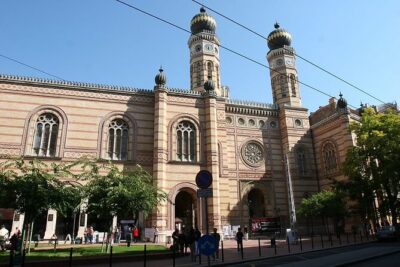
Budapest Jewish Heritage Memorial Walking Tour & Synagogue Entry
Read our review →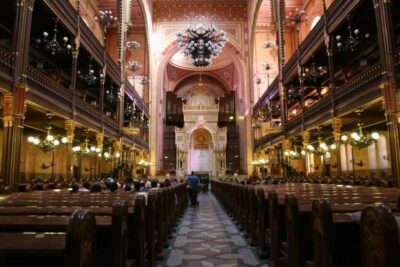
Jewish Heritage Guided Tour with Synagogue Ticket
Read our review →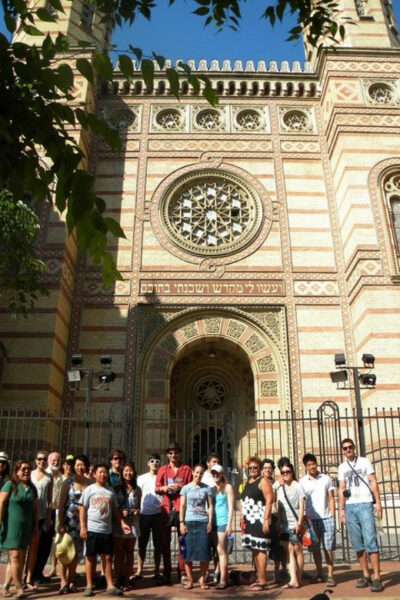
Past and Present of Budapest Jewish District Tour
Read our review →
Budapest Dohany Synagogue & Hungarian Jewish Museum & free extras
Read our review →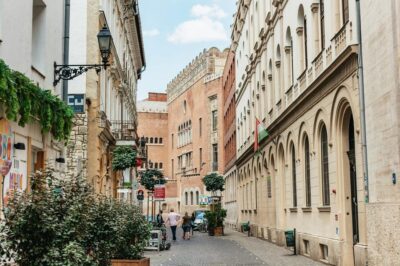
Jewish History Guided Walking Tour with Historian
Read our review →Browse the lists this tour appears in