
REVIEW · COMMUNIST HISTORY TOURS
Budapest: Communist History Tour with House of Terror Option
The past still speaks from Budapest’s grandest streets. This two-hour tour connects Parliament, Liberty Square, the 1956 uprising, and Cold War secrets with a local English-speaking guide. I like the small groups of no more than 10, which give you room to ask questions, and I like the choice between the playful Budapest Retro Center and the much darker House of Terror Museum.
The main consideration is that the two museum options create very different moods. The Retro Center is light, visual, and interactive, while the House of Terror is disturbing and emotionally heavy. The walking route also involves moving through central Budapest, so you should be comfortable walking for about two hours. At $58 per person, the value depends on choosing the museum that matches your interests.
In This Review
- Key points at a glance
- Why Budapest’s Communist past deserves a dedicated tour
- Starting beside Parliament and the memory of dictatorship
- Liberty Square and the last Soviet monument
- Cold War secrecy beneath the city
- Following the 1956 revolution through central Budapest
- Morning choice: the playful Budapest Retro Center
- Afternoon choice: the House of Terror Museum
- Guided House of Terror option for a fuller explanation
- What the guides add to the experience
- Price, timing, and practical value
- Who should book the Communist History Tour?
- Should you book it?
- FAQ
- How long does the Budapest Communist History Tour last?
- What language is the tour conducted in?
- What landmarks are included in the walking tour?
- Can I choose between different museums?
- Is the House of Terror visit guided?
- How many people are in each group?
Key points at a glance
- See Communist-era landmarks in central Budapest: The route begins near Parliament and continues to Liberty Square, with monuments and sites tied to Soviet rule and the 1956 revolution.
- Choose your ending carefully: The morning option includes the Budapest Retro Center, while the afternoon option offers the House of Terror Museum.
- Expect a personal history lesson: Guides such as Alexandra, Flora, Bea, Noémi, Kati, and Veronika have been praised for clear explanations and, in some cases, personal memories of life under Communism.
- Keep the small group advantage: A maximum of 10 people makes it easier to hear the guide and ask about family history or Cold War politics.
- Prepare for two very different museum experiences: The Retro Center uses humor and household objects; the House of Terror presents imprisonment, torture, deportation, and political violence.
- Allow extra time for the museum choice: The advertised duration is two hours, but the morning museum visit is described as lasting one hour after the walk.
Why Budapest’s Communist past deserves a dedicated tour
Budapest is often introduced through thermal baths, cafés, Baroque churches, and the Danube. Those are good reasons to visit, but they do not explain the Hungary of the twentieth century. From 1945 to 1989, daily life was shaped by Soviet military occupation, one-party rule, surveillance, shortages, political trials, and the memory of the failed 1956 uprising.
That period is still close to living memory. Older Hungarians grew up with its rules and silences, while younger people inherited family stories that were not always discussed openly. A guide can help you understand why an ordinary-looking square or apartment block may carry painful meaning.
I find this tour especially useful early in a Budapest visit. The route gives you a framework for the city’s modern political story, and later sights make more sense once you understand the conflict between Hungarian independence and Soviet control.
The experience is not a general city tour with a quick mention of Communism. Its purpose is narrow and serious. If you want a focused look at the years of dictatorship, it gives you far more structure than wandering into a museum without preparation.
More communist-era history tours:
- Communism in Hungary with a Historian
★ 5.0 · 70 reviews - Budapest: 3-Hour Walking Tour About Communism (Small Group)
★ 4.7 · 70 reviews - Budapest Hammer & Sickle Communist Times Tour
★ 4.5 · 68 reviews
Starting beside Parliament and the memory of dictatorship
The walk begins at the magnificent Hungarian Parliament, one of Budapest’s most recognizable buildings. Its Gothic Revival exterior can make it easy to focus on architecture, but the nearby memorials turn your attention to the people affected by political violence.
You will see a monument commemorating victims of the Red Terror and later Communist repression. The exact details of the memorial matter less than the guide’s explanation of how public space was used to honor, erase, or reshape memory. This is where the tour begins moving beyond dates and political labels.
A good guide should help you separate different stages of Hungary’s twentieth-century ordeal. The Nazi period, the postwar Soviet takeover, the Stalinist years, the 1956 revolution, and the later Kádár era were not identical. They brought different policies and different forms of fear.
The strongest comments about this experience praise guides for making those connections clear. Alexandra has been described as expressive and able to answer detailed questions. Kati was praised for including American involvement and support connected with Hungary, which can be helpful if your knowledge of the Cold War comes mainly from a Western European or American school curriculum.
Liberty Square and the last Soviet monument
From Parliament, the walk continues to Liberty Square. Here you find the Soviet Liberation Memorial, described as the last Communist monument in Budapest still in its original location.
That makes the square an important stop. It is not just a place to photograph a monument. It shows how competing memories can share a small urban space. The square contains reminders of both liberation and domination, and the meaning changes depending on whose story you hear.
This is one of the tour’s best features because the monument is part of everyday Budapest rather than sealed inside a museum. You can see how a difficult political symbol remains in public view. The guide’s role is to explain the historical argument around it without reducing everything to a simple good-versus-bad story.
The tour also points out the windows associated with Cardinal József Mindszenty, the anti-Communist Catholic Church leader who spent many years in exile inside the American Embassy. This detail brings international politics into the street scene. It also shows how religious leaders, foreign powers, and the Hungarian state became entangled during the Cold War.
Cold War secrecy beneath the city
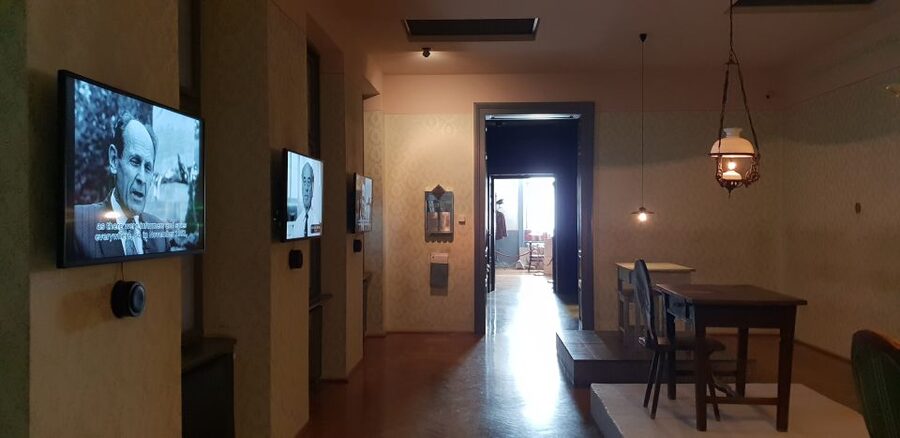
One unusual part of the route concerns the ventilation channels of a secret underground nuclear bunker built during the Cold War. You do not simply receive a lecture about nuclear anxiety. You see a physical trace of the preparations made for a possible conflict.
The bunker detail adds texture to the tour. Communist history can otherwise become a procession of statues and speeches. A ventilation system is less glamorous, but it reveals how governments planned for disaster and how ordinary city infrastructure could conceal military purposes.
You should keep your expectations realistic. The description focuses on seeing the ventilation channels, not on a full underground bunker visit. If you are hoping for a large bunker interior with many rooms, this may feel like a brief stop. Its value comes from the story and location rather than the scale of the site.
More history tours in Budapest:
- Budapest: Historic Cruise with Welcome Drink
★ 4.7 · 6,512 reviews - Budapest Historical Sightseeing – Free Walking Tour
★ 5.0 · 1,302 reviews - Buda Castle District Dark History, Legends and Vampire Night Tour
★ 4.5 · 1,240 reviews - BloodThirsty Hungary: Walking tour & Dark Historical Stories
★ 4.9 · 633 reviews
Following the 1956 revolution through central Budapest
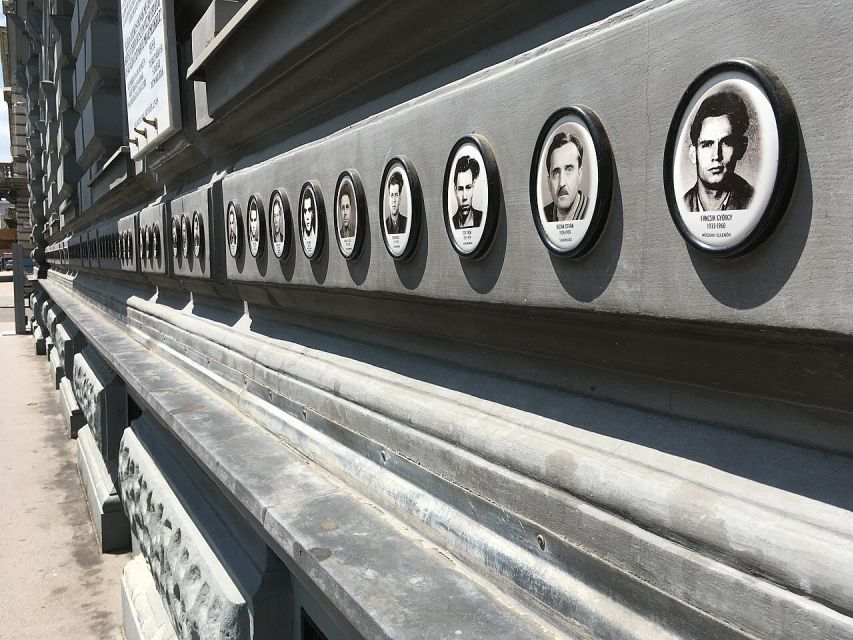
The walk also visits sites connected with Hungary’s anti-Soviet revolution of 1956. This was the moment when public anger erupted into open rebellion against the Communist government and Soviet control.
A guide makes this part far more useful than a textbook summary. You can ask how the uprising began, what Hungarians wanted, why Soviet forces intervened, and what happened afterward. The tour description also connects 1956 with the later end of Communism in 1989.
Several guides have been praised for adding family stories and personal perspective. Veronika was specifically appreciated for having grown up in Hungary under Communism and explaining the period from first-hand experience. Other guides, including Adam and Kati, have shared personal memories or family accounts.
That personal element can make the history vivid, but it also calls for care. One person’s memory cannot represent every Hungarian experience. The best approach is to listen for the connection between private life and public policy, then ask questions when you want a broader explanation.
Morning choice: the playful Budapest Retro Center
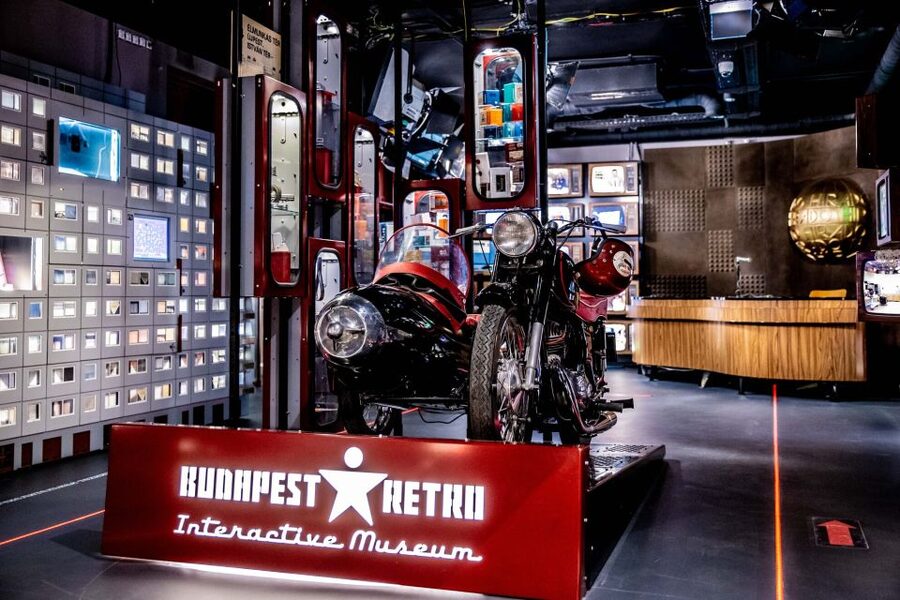
The morning option combines the walking tour with a one-hour guided visit to the Budapest Retro Center. This is the more relaxed choice, and it offers a useful change of tone after the political history outdoors.
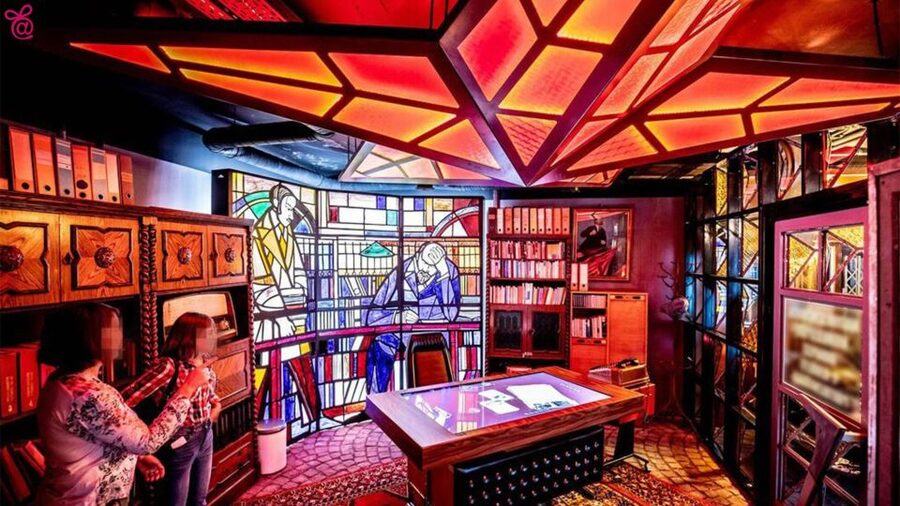
The collection covers everyday life from roughly the 1960s through the 1980s. It includes street scenes, typical vehicles, Soviet-Hungarian space-flight material, home interiors, and thousands of objects from the period. The exhibition occupies three floors and is designed to be interactive.
You may be able to dress as a Communist comrade or try presenting a television news broadcast from the period. Those touches sound silly, and that is partly the point. They show how official culture, household life, work, transport, and television shaped the everyday world behind the political slogans.
I would choose this option if you want context without an unbroken sequence of grim material. It is also a good fit for families or for anyone curious about what ordinary homes and streets looked like during the later decades of Communist rule.
The limitation is that a playful museum cannot tell the whole story. It may give you a strong sense of objects and routines, but it will not carry the same emotional or political weight as the House of Terror. If your main goal is repression, interrogation, and the 1956 aftermath, choose the afternoon alternative instead.
Afternoon choice: the House of Terror Museum
The afternoon option pairs the Communist-themed walk with a ticket to the House of Terror Museum. You visit the museum on your own after the walking portion, unless you select the version that includes a guided museum tour.
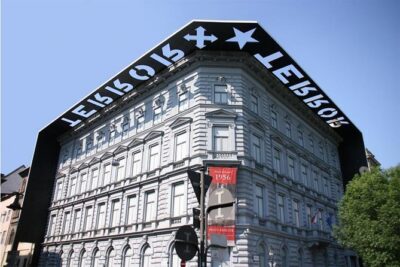
The building was the former headquarters of the AVO State Protection Police, Hungary’s local equivalent of the Soviet KGB. The museum presents the site as a memorial to victims of both Nazi and Communist dictatorship, with the focus moving from the Second World War and Nazi rule into the Soviet occupation and the Communist period.
This is the more demanding option. The displays cover the economy and daily life of the 1950s, interrogation and torture cells, the director’s office, mass deportations, labor camps, political trials, the 1956 revolution, and the final collapse of Communism in 1989.
You should expect a serious, sometimes haunting visit. The museum’s subject matter is not softened for comfort. If you have family connections to Hungary, the material may feel especially personal. One visitor used the tour to explore grandparents’ lives under Soviet rule and found the guide compassionate when the history became emotional.
The museum can also be hard to interpret without help. Its displays use images, objects, rooms, and sound to create an intense experience, but the political context is not always obvious to someone unfamiliar with Hungarian history. That is why the guided version can be worthwhile.
Guides such as Noémi, Alexandra, Flora, and Naomi have received strong praise for explaining the museum clearly and answering questions. One guide extended the visit to help cover more of the exhibits, while another adapted the presentation to suit different levels of prior knowledge.
Remember that the guide is an independent professional, not a museum employee. If you choose the self-guided museum option, your museum ticket comes from the tour guide, not the museum ticket office. This small detail matters, since searching for a ticket at the wrong counter could waste time.
Guided House of Terror option for a fuller explanation
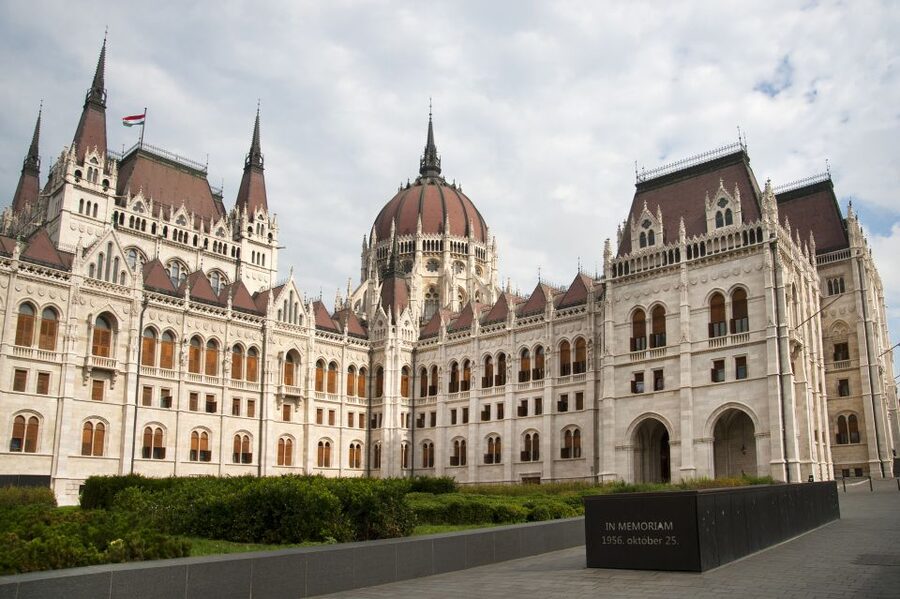
A third choice provides a guided visit inside the House of Terror. This is the best fit if you want the museum’s difficult material placed into a clear timeline.
The guide leads you through Hungary from the Second World War and Nazi rule to Soviet occupation, the 1950s, the 1956 uprising, and the end of Communism. You also hear about mass deportations, labor camps, political trials, interrogation, and torture.
I would favor this option if you have limited background knowledge or if the museum is one of your main reasons for booking. It lets you stop and ask why a particular room, photograph, or document matters. It also reduces the risk of leaving with a collection of disturbing images but no clear sense of how events fit together.
The self-guided choice may suit you better if you prefer to move quietly at your own speed. The museum is emotionally powerful, and some people need more time in certain rooms while others want to move on. The key is to choose based on how much explanation you want, not simply on price.
What the guides add to the experience
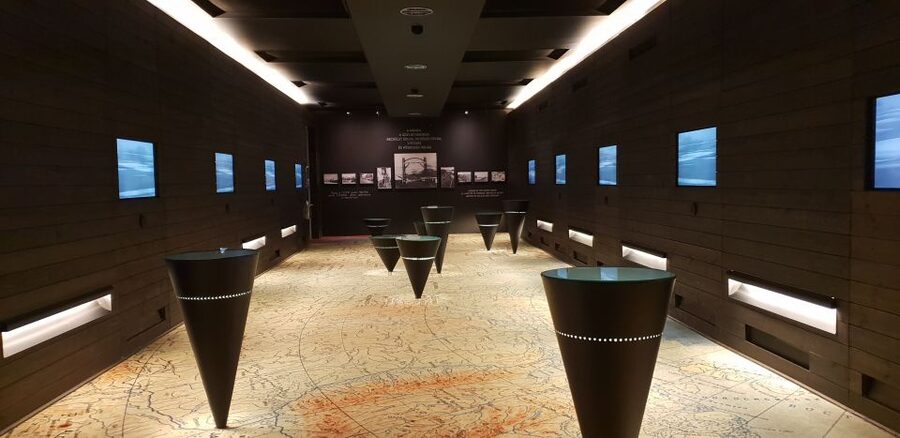
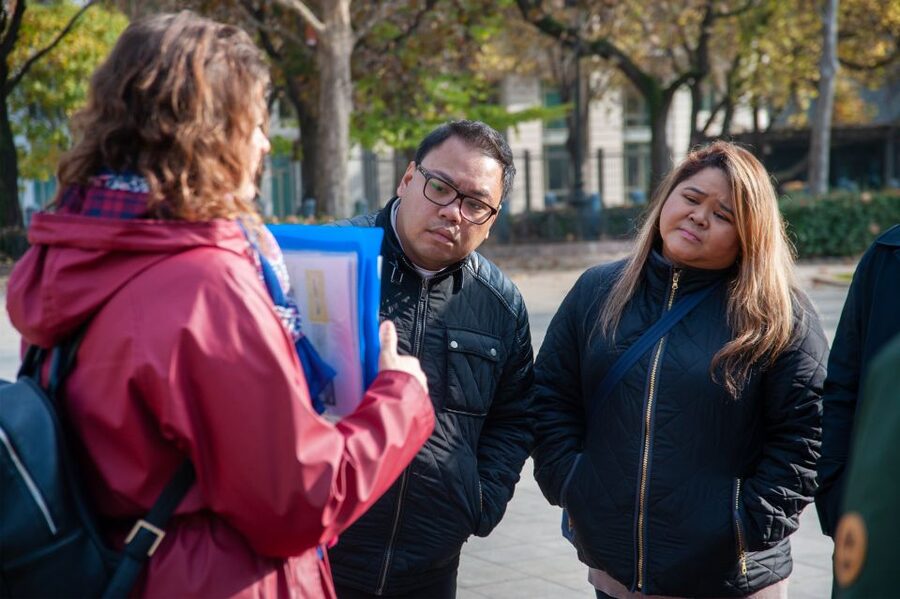
The guide is the heart of this tour. The strongest praise has focused on clear speaking, enthusiasm, patience, and the ability to handle difficult questions.
Alexandra has been praised repeatedly for detailed explanations and a lively presentation. Flora has been described as patient and flexible, while Bea received praise for honesty, local insight, and restaurant recommendations. Kati has been appreciated for her facts, dates, personal stories, and links to American involvement.
The guides also appear to adapt well to different groups. One guide presented in both English and Hungarian for a mixed-language family. Another slowed down and waited for visitors using walking aids. That suggests a thoughtful approach, though you should still be ready for a walking tour and tell the guide if you need a slower pace.
The English is described as easy to follow, and the tour is limited to 10 participants. A small group does not guarantee a private tour, but it usually makes a major difference at busy street corners and during museum explanations.
Price, timing, and practical value
At $58 per person, this is not the cheapest way to see Budapest. You are paying for a specialist walking tour, a professional English-speaking guide, and admission to either the Budapest Retro Center or the House of Terror, depending on your selection.
I think the price is fair if you want interpretation rather than a quick visit. The route covers several historical sites, and the guide provides connections that would be difficult to assemble on your own. The value is strongest for first-time visitors who want to understand modern Hungary, Cold War enthusiasts, students, history teachers, and people tracing family connections.
The advertised duration is two hours. The morning option also includes a one-hour guided Retro Center visit after the walk, so check the exact timing when booking. The meeting point varies by option, so read your confirmation carefully.
Morning and afternoon tours share the same first section, but the museum ending changes the character of the day. I would choose the Retro Center when you want a lighter, more visual experience. I would choose the House of Terror when you want the difficult story of state violence and political repression.
Free cancellation up to 24 hours before the start and the option to reserve now and pay later make the booking less risky. Availability and starting times vary, so check those details before you build the rest of your day around the tour.
Who should book the Communist History Tour?
I recommend it to anyone who wants more than Budapest’s imperial surface. It is particularly useful if you have studied Communism, are interested in the Cold War, or have Hungarian relatives whose lives were shaped by the period.
The tour also suits curious first-time visitors. You do not need a specialist background, since the guides explain the basic timeline and invite questions. Students may find the street sites especially useful because the history is linked to real locations rather than presented only in a classroom.
You may want to skip it if you have limited mobility and do not want a walking route, although the guide may be able to adjust the pace. You should also think twice about the House of Terror if you are uncomfortable with displays about torture, deportation, and political imprisonment. The Retro Center gives you a gentler alternative.
Should you book it?
Book this tour if you want a focused, human explanation of Hungary’s Communist decades. The small group format, central walking route, and choice of two very different museums give it more flexibility than a standard sightseeing walk.
For a lighter afternoon, pick the Budapest Retro Center. For a serious look at repression and the 1956 revolution, choose the House of Terror, ideally with the guided museum option if you want help making sense of the exhibits.
The strongest reason to book is the guide. Names such as Alexandra, Flora, Bea, Noémi, Kati, and Veronika appear repeatedly in praise for warmth, patience, and strong command of the subject. If you want to understand why Budapest’s recent past still matters, this is a worthwhile use of two hours and $58.
FAQ
How long does the Budapest Communist History Tour last?
The advertised duration is two hours. The morning option also includes a one-hour guided visit to the Budapest Retro Center after the walking tour, so check the specific starting time and schedule for your selected option.
What language is the tour conducted in?
The live guided tour is conducted in English. A guide has also provided explanations in both English and Hungarian for a mixed-language family, but the listed tour language is English.
What landmarks are included in the walking tour?
The walk begins near the Hungarian Parliament and continues to sites around Liberty Square. It includes monuments connected with Communist repression, the Soviet Liberation Memorial, the windows associated with Cardinal Mindszenty, Cold War nuclear-bunker ventilation channels, and locations tied to the 1956 revolution.
Can I choose between different museums?
Yes. The morning option includes the Budapest Retro Center. The afternoon option offers entry to the House of Terror Museum, and a separate option includes a guided visit inside the House of Terror.
Is the House of Terror visit guided?
The afternoon option includes an additional House of Terror ticket for a visit on your own. You can also select a version with a guide who explains the museum’s material from the Second World War through the end of Communism.
How many people are in each group?
The tour is described as a small-group experience limited to 10 participants. The meeting point may differ depending on the option you select.
Just added in Budapest
- Budapest: Private Walking Tour with a Local Guide★ 3.6 · 6 reviews
- Budapest: Danube River Views Bike Ride★ 4.8 · 23 reviews
- Budapest: City Bike Tour with Coffee Stop★ 5.0 · 37 reviews
- From Budapest: Guided Tour of Eger with Wine Tasting★ 4.5 · 6 reviews
- Walk to recent and aged spiritual sanctuaries near Budapest★ 5.0 · 5 reviews
- Walking consultancy with alternative psychologist and author★ 5.0 · 2 reviews
- Budapest: Guided Tour of the Parliament Building in Spanish★ 4.6 · 1,240 reviews
- True Crime Walking Tour in the Buda Castle district★ 5.0 · 26 reviews
Communist History Tours, compared.

3-Hour Walking Tour About Communism (Small Group)
Read our review →

Lives of Hungarians Under Communist and Capitalist system
Read our review →
Private Budapest Hammer & Sickle Communist Times Tour
Read our review →
Memento Park Visit with Private Trabant Transfer
Read our review →
Browse the lists this tour appears in