
REVIEW · COMMUNIST HISTORY TOURS
Communist Budapest Walking Tour
Budapest’s Cold War story begins under open skies. This three-hour walk links Parliament, Freedom Square, the former People’s Stadium, and the House of Terror with a historian guide who explains how politics shaped daily life. I like the small-group format and the way the route uses real streets and monuments rather than keeping you inside a museum. I also like that guides such as Andras and Kata bring the subject to life through discussion, not just a stream of dates.
The main drawback is the price: $126.50 per person is a serious amount for a walking tour, especially since public transport tickets and entry to the House of Terror are extra. Still, the cost can make sense if you want a focused history lesson and the chance to ask detailed questions in a group described as limited to six people, with a maximum of eight listed elsewhere.
In This Review
- Key points to know before you book
- Why Communist Budapest makes a strong walking subject
- From Parliament to Freedom Square
- Ronald Reagan and the Iron Curtain
- Bem József Square and the opening of the 1956 uprising
- The former People’s Stadium and socialist realist art
- Ending outside the House of Terror
- What the $126.50 price really buys you
- Timing, transport, and what to bring
- Who should book this Budapest walk?
- Should you book the Communist Budapest Walking Tour?
- FAQ
- How long is the Communist Budapest Walking Tour?
- What language is the tour offered in?
- What is the price of the tour?
- Where does the tour begin?
- Where does the tour end?
- Is admission to the House of Terror Museum included?
- Are public transport tickets included?
- How many people can join the tour?
- Can I cancel for a full refund?
Key points to know before you book
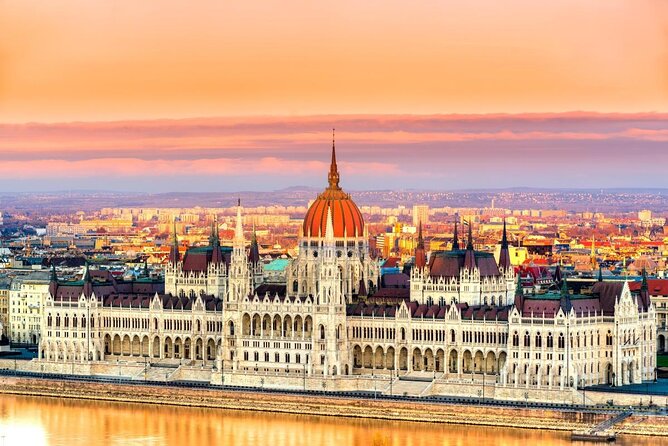
- The route connects 1956 uprising sites with Cold War symbols, including Parliament, Bem József Square, Freedom Square, and the Soviet War Memorial.
- A historian leads the three-hour walk, with past guides such as Andras and Kata praised for detailed answers and thoughtful discussion.
- You see the House of Terror from outside, but museum admission is not part of the tour.
- The former People’s Stadium offers a look at socialist realist propaganda, including statues still preserved around the Puskas Soccer Stadium.
- Morning and afternoon departures are available, which makes the tour easier to fit around a Budapest sightseeing plan.
- Bring good walking shoes and water, and allow for Budapest metro or tram tickets if you do not have a visitor pass.
Why Communist Budapest makes a strong walking subject
Budapest is easy to enjoy at street level, but its 20th-century story can be hard to read without help. A monument may look like a simple statue, while the same object can reveal Soviet influence, Hungarian resistance, political compromise, or changing public memory.
That is the strength of this tour. You move through central Budapest while the guide explains how the city responded to communism, the Cold War, and the 1956 uprising. The subject is serious, but the format is not a lecture hall. You can stop, look closely, and ask why a monument remains, why another was removed, or how people lived with official propaganda.
I particularly like tours that show history in ordinary public places. Parliament, a soccer stadium, a square, a statue, and a coffeehouse may sound less dramatic than a grand museum, but these locations help you see how politics entered daily life. You get a better sense of how public space was used to promote state power and how later generations reshaped those same spaces.
The guides are a major part of the value. Andras is praised for detailed answers and wide-ranging discussion, while Kata is described as well informed and effective at explaining what life under communism felt like. Guide availability can change, so you should not book solely expecting one particular person, but the format clearly depends on guides who can handle questions rather than recite a fixed script.
More communist-era history tours:
- Budapest: Communist History Tour with House of Terror Option
★ 4.8 · 182 reviews - Communism in Hungary with a Historian
★ 5.0 · 70 reviews - Budapest: 3-Hour Walking Tour About Communism (Small Group)
★ 4.7 · 70 reviews
From Parliament to Freedom Square
The tour begins at Budapest’s Parliament area, reached by metro to Kossuth Square. The first section focuses on monuments connected with the 1956 revolution, then moves toward Freedom Square for a Cold War discussion.
This opening works well because Parliament gives you an immediate sense of national power and public memory. The guide can place the nearby monuments in the story of 1956, when a popular uprising challenged Soviet control and Hungary’s communist government. You are not simply looking at a grand building. You are learning how the square became tied to national protest and political change.
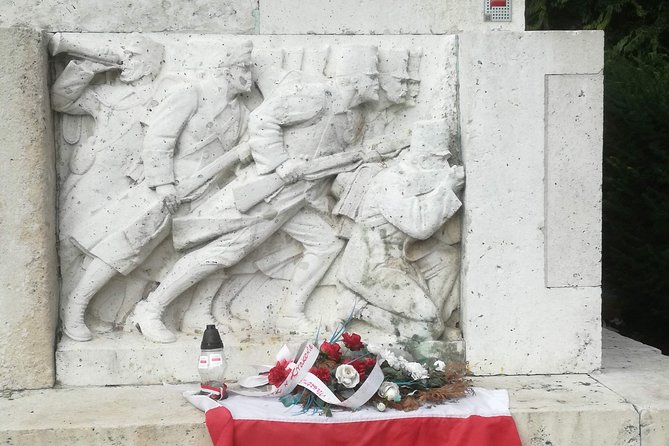
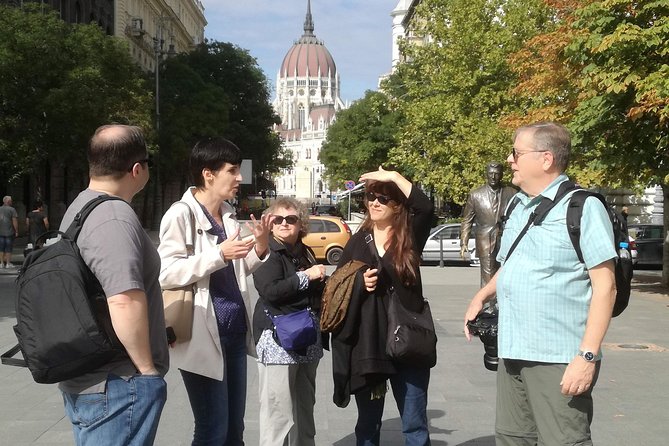
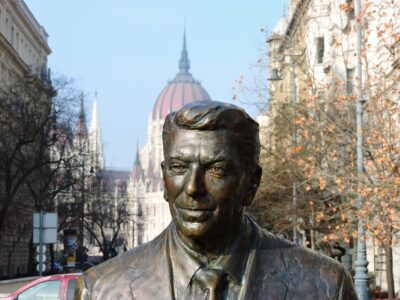
The walk continues to Freedom Square, one of the most useful places on the route for understanding competing memories. Here you discuss the US Embassy, the Soviet War Memorial, Ronald Reagan’s statue, and an atomic shelter. Each site points in a different direction, so the square becomes a compact lesson in the Cold War.
The Soviet War Memorial is especially important. It is not just a historical marker from a past era. Its presence in a central Budapest square raises questions about occupation, liberation, national sovereignty, and how Hungary remembers the Soviet period. A good guide can explain why a memorial remains in place and how its meaning has shifted over time.
The atomic shelter adds another layer. It reminds you that the Cold War was not only a contest between governments. It also shaped public fears about nuclear conflict. The tour does not include an interior visit to the shelter, but seeing it as part of the route gives the political story a practical edge.
You should expect about 25 minutes at this first section. That is enough time for explanation and questions, but not enough for a long museum-style examination of every monument. If you want extended time for photographs, tell your guide early so you can manage the pace.
Ronald Reagan and the Iron Curtain
The Ronald Reagan statue provides a striking contrast to the Soviet memorial. The tour explains the Hungarian sense of obligation to Reagan for his role in bringing down the Iron Curtain.
The point is not simply to praise one political figure. It is to show how different countries remember the Cold War through their own experiences. In Budapest, the statue expresses gratitude toward an American president, while the nearby Soviet memorial points to the Soviet presence and influence. Seeing both in the same city walk helps you understand how public monuments can turn international politics into local memory.
You spend about 10 minutes at the statue. That may sound brief, but it suits the stop. This is a discussion point rather than a full attraction, and the guide’s explanation matters more than the amount of time spent standing beside it.
I would pay attention to the questions that come up here. The tour is at its best when you ask how Hungarians viewed the United States, the Soviet Union, and their own government during the Cold War. The format appears well suited to that kind of exchange, especially with a small group.
Bem József Square and the opening of the 1956 uprising
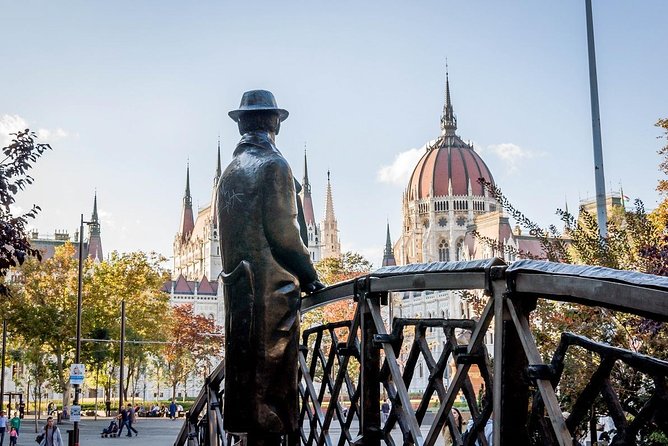
Bem József Square is one of the most meaningful stops on the route. It is associated with the first major demonstration of the 1956 uprising, so the square helps turn a broad political event into a specific place where people gathered and took action.
The stop also includes a coffeehouse that has retained its original 1960s interior. That detail matters because it moves the tour away from official monuments and toward everyday life. A period interior can tell you something about design, habits, and the atmosphere of an era in a way that a political slogan cannot.
You spend around 25 minutes here. The square is a good place to pause and consider how a protest begins. Large historical events often look inevitable in hindsight, but a public demonstration starts with people deciding to gather, speak, and take risks. A guide can help you connect the square to the wider events without reducing the story to a list of battles and dates.
This stop should appeal even if you are not a dedicated history fan. One strong feature of the tour is its focus on what living under communism felt like, not only on who held office. If your interests are limited to architecture and quick photographs, the stop may feel talk-heavy. If you want social and political context, it is likely to be one of the most useful parts.
More walking tours in Budapest:
- Budapest: Buda Castle Walk with Saint Stephen’s Hall
★ 4.5 · 3,012 reviews - Big Bus Budapest Hop-On Hop-Off Bus and Walking Tour
★ 3.5 · 2,206 reviews - Budapest: Buda Castle District Walking Tour
★ 4.6 · 2,108 reviews - Budapest City Landmarks Walking Tour in 2 Hours
★ 5.0 · 2,048 reviews
The former People’s Stadium and socialist realist art
The route then takes you to the former People’s Stadium, now the Puskas Soccer Stadium. The site includes classic socialist realist statues, which the guide uses to explain the heavy propaganda favored by the communist regime.
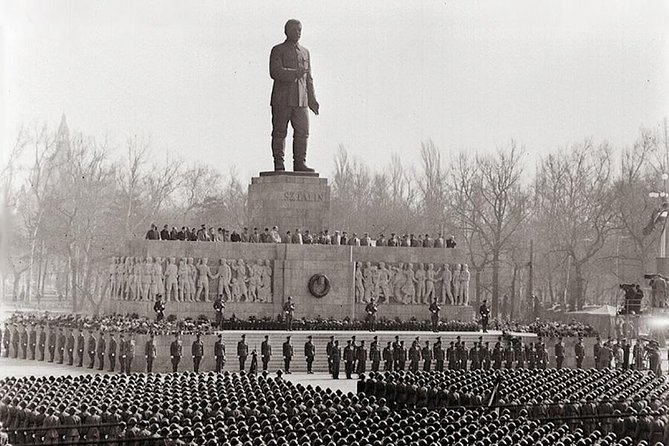
This is a smart choice for a history walk. Propaganda is easier to understand when you can see how bodies, poses, clothing, and public buildings were used to promote an ideal citizen. Socialist realist art often presents workers, athletes, soldiers, and leaders as strong, disciplined, and confident. The statues around the stadium offer a direct example of that visual language.
You spend about 20 minutes here. The stop is outdoors and the admission is free. It does not require you to be a soccer fan, although the stadium setting gives the discussion an extra connection to mass entertainment and public life.
The site also shows how old political symbols can survive after a system changes. Statues may remain because they have artistic value, historical importance, or simply because removing them is more complicated than expected. The guide’s job is to explain those layers without forcing you to admire or reject the work.
This is one place where the small group helps. A large crowd would make it harder to hear and harder to stop for questions about individual statues. With up to six people in the advertised small-group format, or up to eight according to the additional tour details, you should get a more personal explanation than on a standard city walk.
Ending outside the House of Terror
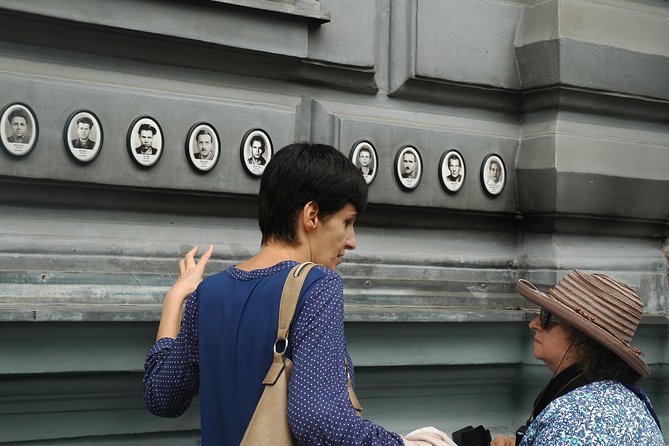
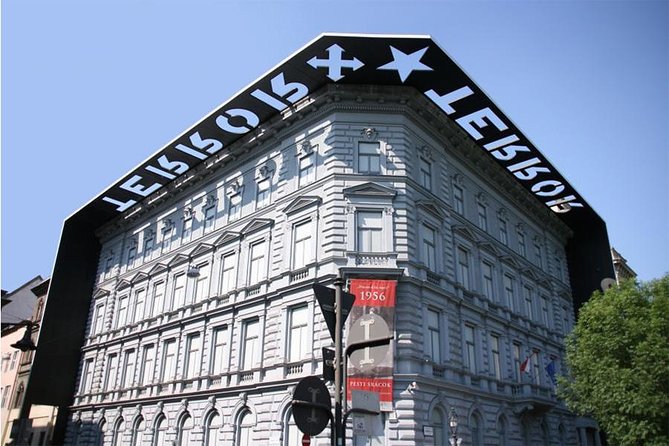
The tour ends outside the House of Terror Museum on Andrássy Avenue. The museum occupies the former headquarters of Hungary’s communist secret services, and a section of the Berlin Wall sits in front.
This is a powerful endpoint because it gathers several themes from the tour in one place: dictatorship, surveillance, political imprisonment, and the collapse of the divided Cold War world. You finish with a clear option for continuing on your own.
Museum admission is not included. That is both a limitation and a practical advantage. The tour keeps its route focused and does not force you to spend extra hours indoors, but you should budget separately if you want to visit the exhibits. The House of Terror is a serious museum, so plan your energy accordingly if you add it immediately after the walk.
The endpoint also makes planning simple. You can enter the museum after the tour, return later, or continue along Andrássy Avenue. Since the tour concludes outside rather than returning you to the starting point, you should treat the walk as a one-way route through the city.
What the $126.50 price really buys you
At $126.50 per person, this is not a budget sightseeing walk. You are paying for a specialist subject, a historian guide, a small group, and the chance to shape the conversation with your own questions.
That price is easier to justify for couples, families, or friends who would otherwise spend hours reading scattered background information. A guide can connect the sites in real time and adjust the explanation to your interests. The value is strongest if you want to understand Communist Hungary rather than simply collect central Budapest landmarks.
The price is harder to justify if you want a general introduction to Budapest. The tour does not include museum admission, and you also need public transport tickets if you do not have a visitor pass. It is best viewed as a focused history seminar on foot, not as a broad city tour.
Group discounts are available, which may improve the value for larger parties. Even then, compare the cost with your own priorities. If you are keen on 20th-century European history, the specialist content may be worth more to you than a lower-cost general walk.
Timing, transport, and what to bring
The experience lasts about three hours and offers morning or afternoon departures. That gives you room to place it before or after other Budapest plans, though you should avoid scheduling a tightly timed activity immediately afterward.
The route uses Budapest public transport at the start, including travel to Kossuth Square. Your guide can help you buy tram and metro tickets if you do not already have a visitor pass. That support is useful, but the tickets themselves are not included.
Wear good walking shoes and carry water. One past participant specifically stressed both points, and the advice is practical for any three-hour urban route. You should also be ready to listen outdoors, where weather and street noise may affect comfort.
Confirmation is provided at booking, and the meeting point is Budapest, Frankel Leó út 2-4, in District 2. The tour ends at the House of Terror Museum, Andrássy út 60, in District 6. It operates near public transportation, and most people can take part.
Free cancellation is available if you cancel at least 24 hours before the start time. Changes or cancellations made later are not accepted for a refund, with cut-off times based on local Budapest time.
Who should book this Budapest walk?
I would choose this tour if you want a clear explanation of Hungary’s communist period, the 1956 uprising, and the Cold War as they appear in public places. It suits curious visitors who enjoy asking questions and connecting monuments to ordinary life.
It is also a good choice if you prefer a compact, guided route over spending a full day piecing together the story on your own. The combination of Parliament, Freedom Square, Bem József Square, the stadium, and the House of Terror gives you a broad arc without requiring a long museum visit.
I would skip it if you only want pretty streets, quick photo stops, or a general introduction to Budapest. Several stops are valuable mainly because of the explanation, so you need to enjoy listening and thinking. The price also demands a real interest in the subject.
The tour has earned an excellent rating from 24 published ratings, with full recommendation from those assessed. More important than the number is the repeated praise for the guides’ depth, patience, and ability to explain daily life under communism. That is where the experience earns its keep.
Should you book the Communist Budapest Walking Tour?
Book it if Communist Hungary and the Cold War are central to your Budapest plans. You will see important places, hear the political story in a logical order, and finish outside the House of Terror with a useful option for further study.
At $126.50, it is a specialist purchase, not an automatic add-on. But if you value a small group, a historian guide, and honest discussion around real monuments, this is a strong way to spend three hours. Bring comfortable shoes, keep your schedule flexible, and consider adding the House of Terror separately if you want the indoor evidence to complete the story.
FAQ
How long is the Communist Budapest Walking Tour?
The tour lasts approximately three hours.
What language is the tour offered in?
The tour is offered in English.
What is the price of the tour?
The price is $126.50 per person.
Where does the tour begin?
The meeting point is Budapest, Frankel Leó út 2-4, 1027 Hungary.
Where does the tour end?
The tour ends outside the House of Terror Museum at Andrássy út 60, 1062 Hungary.
Is admission to the House of Terror Museum included?
No. The tour concludes outside the museum, and admission to the exhibits is not included.
Are public transport tickets included?
No. Tram and metro tickets are not included, though the guide can help you purchase them if you do not have a visitor pass.
How many people can join the tour?
The tour is described as a small-group experience limited to six people, while the additional tour information gives a maximum of eight participants.
Can I cancel for a full refund?
Yes. You can cancel at least 24 hours before the experience start time for a full refund. Changes or cancellations made less than 24 hours before the start time are not accepted for a refund.
Just added in Budapest
- Budapest: Private Walking Tour with a Local Guide★ 3.6 · 6 reviews
- Budapest: Danube River Views Bike Ride★ 4.8 · 23 reviews
- Budapest: City Bike Tour with Coffee Stop★ 5.0 · 37 reviews
- From Budapest: Guided Tour of Eger with Wine Tasting★ 4.5 · 6 reviews
- Walk to recent and aged spiritual sanctuaries near Budapest★ 5.0 · 5 reviews
- Walking consultancy with alternative psychologist and author★ 5.0 · 2 reviews
- Budapest: Guided Tour of the Parliament Building in Spanish★ 4.6 · 1,240 reviews
- Budapest: 3-Hour Trabant Sightseeing Tour★ 4.7 · 28 reviews
Communist History Tours, compared.
Communist History Tour with House of Terror Option
Read our review →3-Hour Walking Tour About Communism (Small Group)
Read our review →

Lives of Hungarians Under Communist and Capitalist system
Read our review →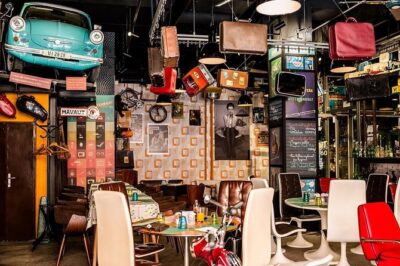
Private Budapest Hammer & Sickle Communist Times Tour
Read our review →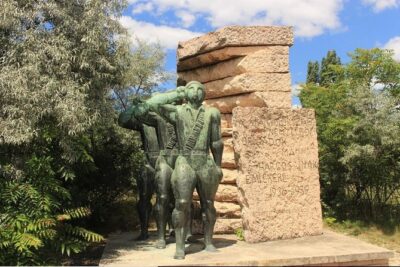
Memento Park Visit with Private Trabant Transfer
Read our review →
Browse the lists this tour appears in