
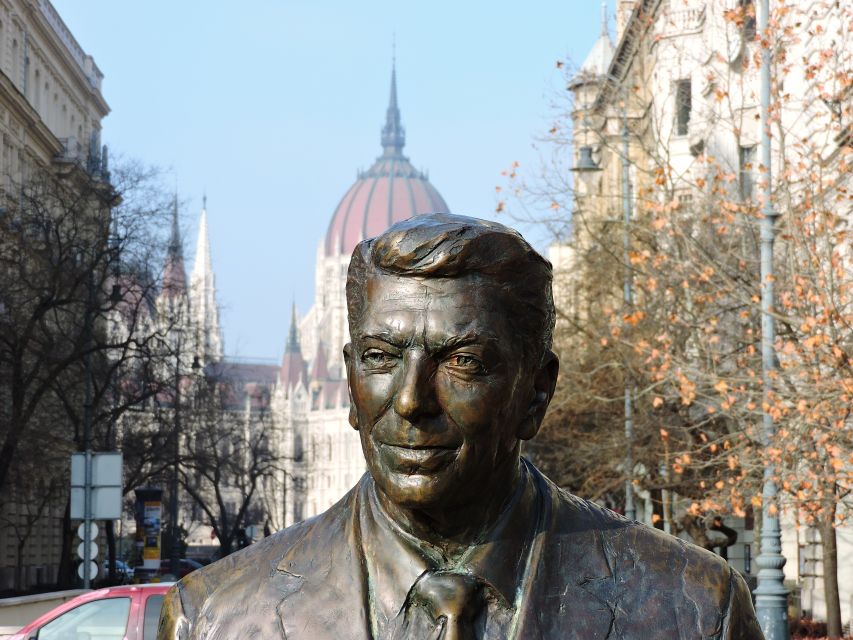
REVIEW · COMMUNIST HISTORY TOURS
Budapest: 3-Hour Walking Tour About Communism (Small Group)
History is hiding in plain sight in Pest. This three-hour walk connects bullet holes, public squares, political symbols, and everyday memories to explain how Communism arrived in Hungary, shaped daily life, and left its mark after 1989. I especially like the personal family stories and the stop at a retro café dating to 1961, which give the subject a human scale.
The tour also includes a short ride on Budapest’s red M2 subway and keeps the group to no more than 10 people. The main consideration is that the subject is broad, covering World War II, the 1956 revolution, the Communist decades, the transition of 1989, and the early 1990s, so anyone seeking a tightly chronological political lecture may find the presentation a little wide-ranging.
In This Review
- Key points at a glance
- Starting at Deák tér, Budapest’s historical crossroads
- Reading the traces left on central Pest
- Why the family stories matter
- Understanding the 1956 revolution and what followed
- Riding the red M2 subway
- A drink in a café that opened in 1961
- The guides make or break a history walk
- Is $57 a fair price?
- Who should book this Budapest Communist history tour?
- Practical details before you go
- Should you book it?
- FAQ
- Where does the tour meet?
- How long does the walking tour last?
- What language is the tour conducted in?
- Is the subway ticket included?
- Is a drink included?
- How large is the group?
Key points at a glance
- A historian-led walk through central Pest: Begin at Deák tér and read the city through its buildings, squares, street details, and remaining traces of the Communist era.
- Family stories beside political history: Personal accounts help explain shortages, pressure, compromise, humor, and ordinary life under the system.
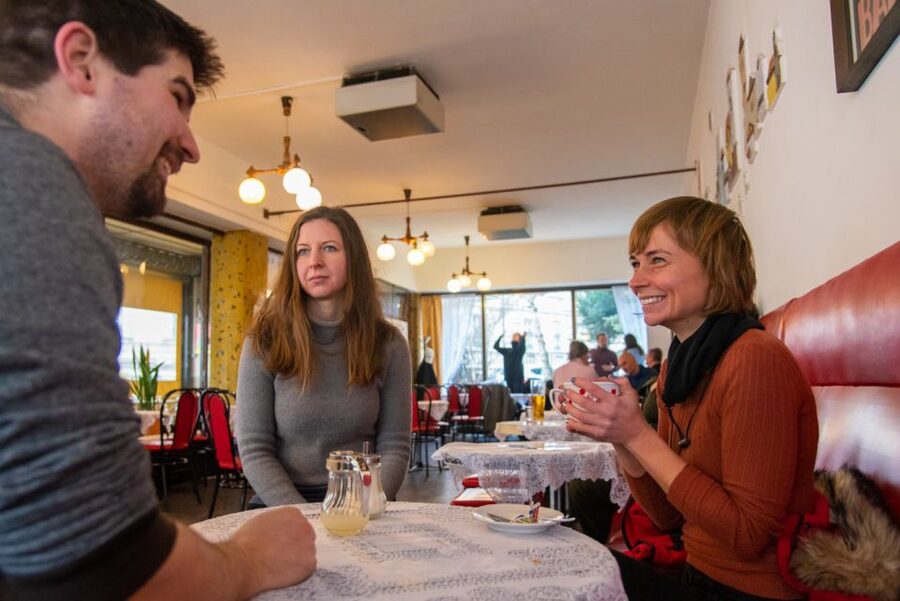
- A retro café opened in 1961: Pause for a drink in a place that has changed little since the Communist period.
- The M2 subway is part of the lesson: A ticket is included, adding a small but useful piece of everyday Budapest life.
- Small groups make discussion possible: With a maximum of 10 participants, you can ask questions and follow topics that interest you.
- Best for curious history and politics readers: The tour is especially useful if you want context for what you see around Budapest, not just a list of dates.
Starting at Deák tér, Budapest’s historical crossroads
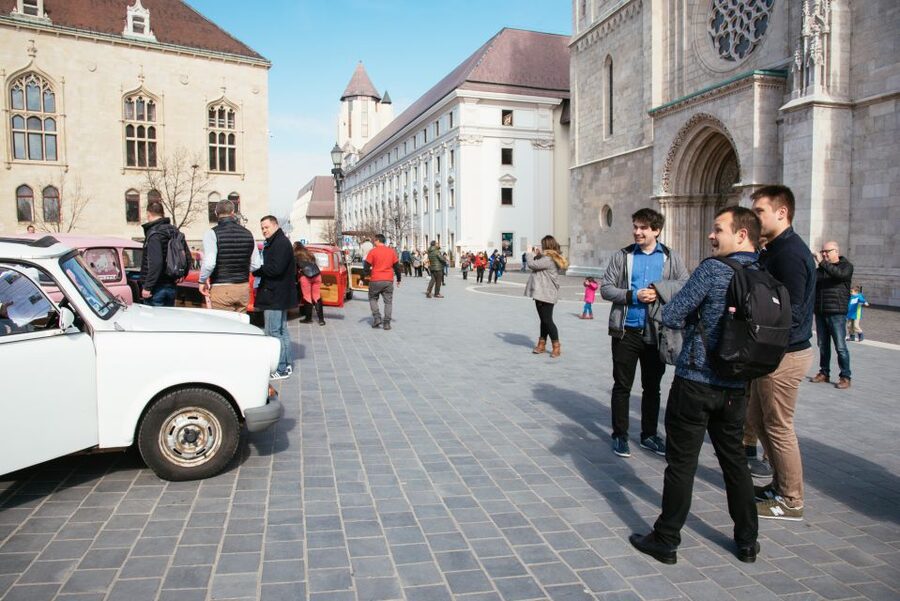
The tour meets in front of the Kempinski Hotel Corvinus Budapest at Erzsébet tér 7, facing the Ferris wheel. This is Deák Ferenc tér, one of the easiest places to reach in the city, with connections on the M1, M2, and M3 metro lines plus several buses and trams.
That convenient start matters. You do not need to trek across town for an early meeting, and the square puts you in central Pest from the first minute. It is also a fitting place to begin because the surrounding area contains several layers of Budapest’s recent past, even if they are easy to miss during a quick city walk.
Your guide begins by setting the Communist period in context. That is important in Hungary, where the story did not begin in 1945 and end with the fall of the Soviet-backed system. The walk connects World War II, the postwar takeover, the 1956 revolution, the later softer form of socialism, the opening of the Hungary-Austria border, and the political changes of 1989 and the early 1990s.
I appreciate this wider frame because Communist history can otherwise become a string of slogans and dates. You get a sense of how Hungary moved from one form of outside pressure to another, and how people adapted while maintaining a strong sense of national identity.
More communist-era history tours:
- Budapest: Communist History Tour with House of Terror Option
★ 4.8 · 182 reviews - Communism in Hungary with a Historian
★ 5.0 · 70 reviews - Budapest Hammer & Sickle Communist Times Tour
★ 4.5 · 68 reviews
Reading the traces left on central Pest
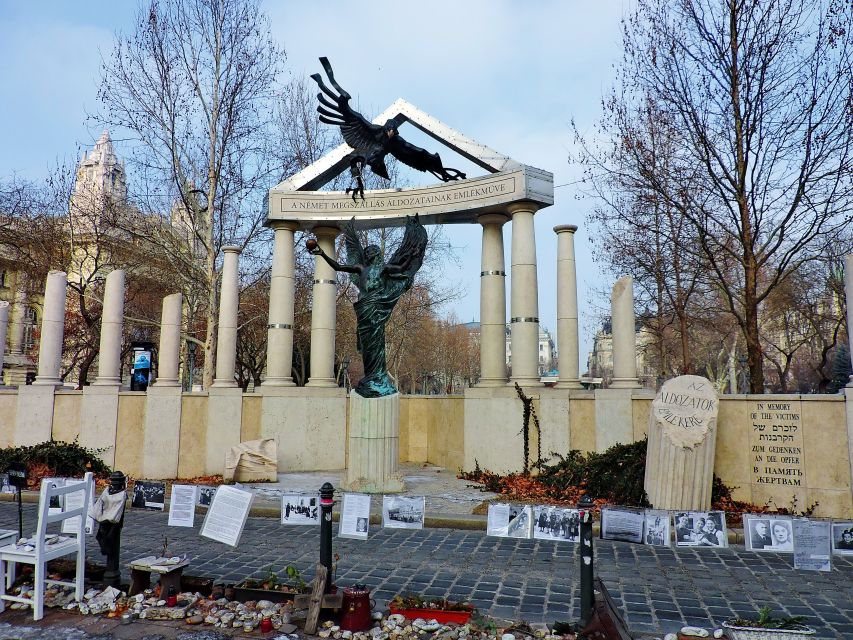
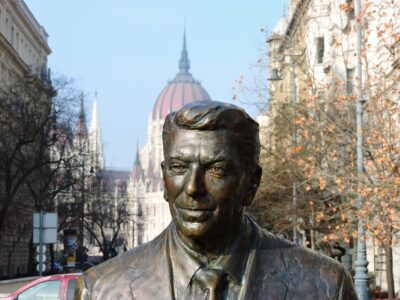
The walking route passes through one of Pest’s pleasant central areas, where the historical evidence is not always presented behind glass. Bullet holes and old buildings are part of the story, but so are statues, street art, monuments, public spaces, and small details of modern city life.
Your guide points out what you might otherwise walk past. A monument can look decorative or harmless until you understand who placed it, what it represented, and how people in Hungary viewed it. A political symbol can carry several meanings at once, depending on when it was installed and who is looking at it.
That kind of explanation is one of the strongest reasons to choose this tour instead of simply reading about Hungarian Communism in a museum. You are not only told what happened. You are shown how the city still carries arguments about the past.
The walk also includes references to popular culture and everyday details. These touches keep the subject from becoming too formal. The guide may move from a major political event to an ordinary habit or a familiar piece of street life, showing how national policy reached into kitchens, workplaces, schools, churches, media, and family conversations.
Do not expect every stop to be a grand monument. The value often lies in the connection between a modest visual clue and the explanation that follows. The city becomes easier to read once you know which details deserve attention.
Why the family stories matter
The most praised feature of this experience is the use of family stories. Guides such as Judit, Gergely, Dániel, Monica, Virág, Zsuzsanna, and Greg have been described as bringing personal or inherited memories into the discussion.
These stories help answer questions that political history alone cannot. What did it feel like to live with official ideology in the background? How did people manage shortages and restrictions? Where did humor fit into a difficult system? How did families interpret the revolution of 1956, the later reforms, and the changes after 1989?
The stories are also useful because they show that life under Communism was not one single experience. The tour aims to explain the ideology itself, including its arrival and rule, but it also deals with the compromises and contradictions of ordinary life. That makes the subject less tidy, but more believable.
I like that the human stories include both hardship and comic moments. A tour about dictatorship can become relentlessly grim. Small details about how people coped, joked, or found room for normal life make the period easier to understand without pretending that it was easy.
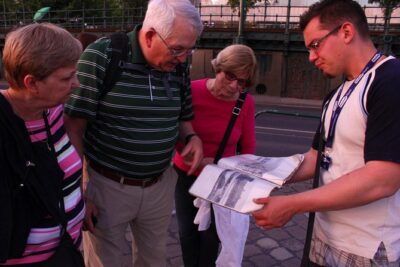
The personal approach also encourages questions. You are invited to discuss what you see and hear, rather than quietly follow a speech. That is particularly valuable in a small group, where the guide can respond to interests in post-1956 politics, church life, media, border changes, or daily routines.
One guide, Greg, has been praised for answering a long series of questions and for discussing the period from several angles. Another, Zsuzsanna, has been noted for linking political history with street art, pop culture, and small signs of how the past remains present.
Understanding the 1956 revolution and what followed
The 1956 revolution is a central point in Hungary’s twentieth-century story, and the tour uses the city to explain what came before and after it. You hear how the Communist system was established, how resistance developed, and how the later government sought to maintain control through a less visibly harsh form of socialism.
This is where the tour can be especially useful for visitors who know the broad outline but not the Hungarian version of events. The guide does not treat Communism as a uniform block. The experience distinguishes between the early period, the changes after 1956, the softer system that followed, and the breakdown of the old order.
The shift toward a more relaxed form of socialism is important. It helps explain why memories of the period can be divided. Some people remember fear, control, and limited choice. Others recall stability, familiar routines, or a social system that changed gradually rather than all at once.
That does not make the past simple or harmless. It does show why family memories can differ, and why conversations about the Communist era still touch politics and identity in Hungary today.
The later part of the story reaches toward the opening of the Hungary-Austria border and the political changes around 1989. The tour continues into the early 1990s, helping you see the transition as a process rather than a single dramatic date.
One limitation is that the tour covers a lot. If you want a narrow study of the 1956 revolution or a detailed account of post-1989 elections, you may need a museum, book, or specialist lecture as a follow-up. This walk is designed to connect the main pieces and make the city understandable.
More walking tours in Budapest:
- Budapest: Buda Castle Walk with Saint Stephen’s Hall
★ 4.5 · 3,012 reviews - Big Bus Budapest Hop-On Hop-Off Bus and Walking Tour
★ 3.5 · 2,206 reviews - Budapest: Buda Castle District Walking Tour
★ 4.6 · 2,108 reviews - Budapest City Landmarks Walking Tour in 2 Hours
★ 5.0 · 2,048 reviews
Riding the red M2 subway
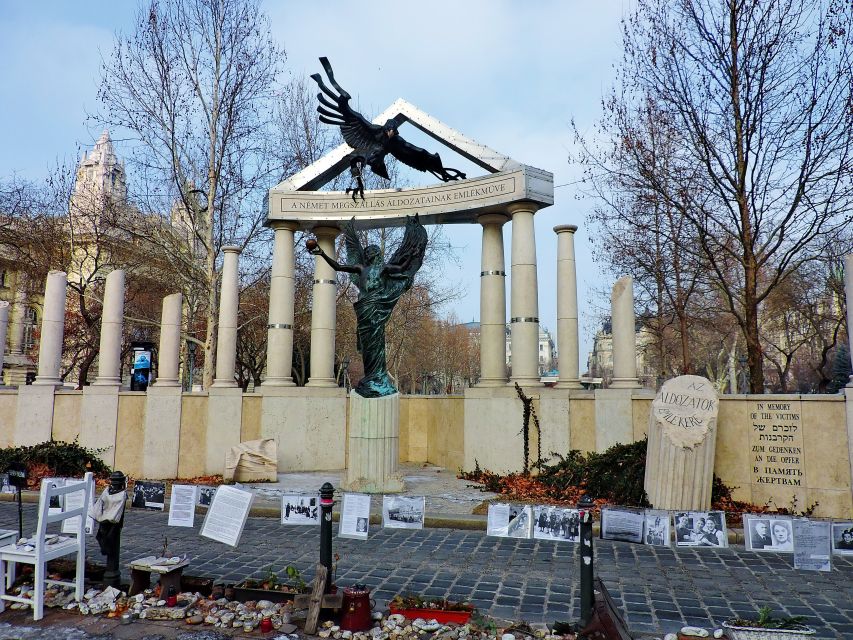
The included ride on the M2 line is a small part of the tour, but it adds a welcome change of pace. You are not simply walking from one talking point to another. You also use public transportation that belongs to the daily life of Budapest.
The subway ride helps connect the political story with ordinary movement around the city. Public systems, routes, stations, and shared urban spaces can tell you something about how a city functions under different political systems, even when the ride itself is brief.
A transportation ticket is included, so you do not need to arrange that part separately. Still, remember that this is a walking tour first. The subway is an ingredient, not the main attraction.
If you have limited mobility or dislike walking, check the practical details before booking. The activity is described as a three-hour walk, and the information provided does not give a full accessibility assessment or a precise walking distance.
A drink in a café that opened in 1961
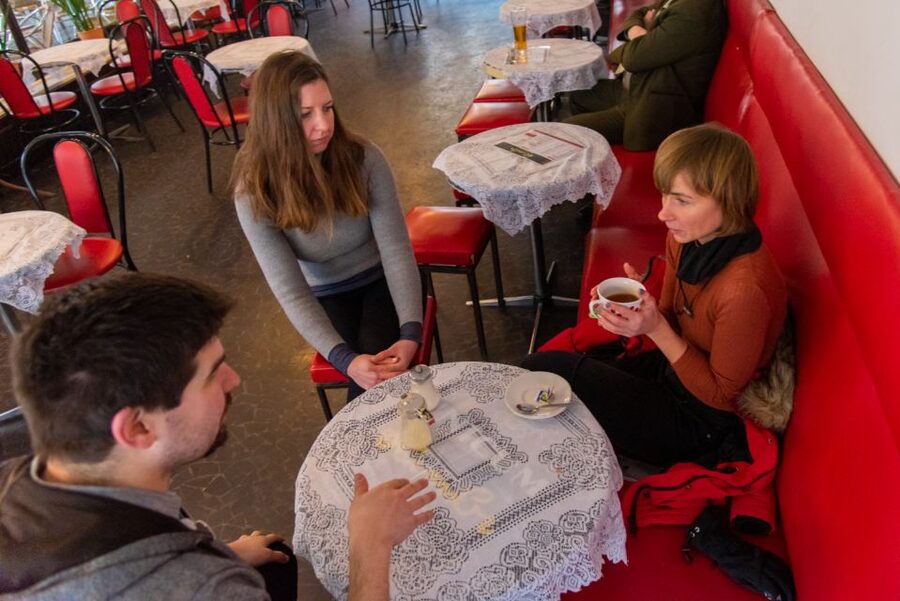
The café stop is one of the tour’s most memorable ideas. You sit down for a drink and conversation in a retro bar that has changed very little since opening in 1961.
This pause gives the history a physical setting. Instead of discussing the Communist period only beside monuments and government buildings, you spend time in a place associated with everyday social life. It also creates room for questions that may not fit naturally into the walking portions.
The included drink adds real value to the $57 price. You are paying for a three-hour English-language guide with a specialist focus, a small group, public transportation, and a sit-down stop. The café is not an expensive extra, but it makes the experience feel more complete.
It is also a good way to end because the conversation can become more informal. You can ask about something you saw earlier, compare the Hungarian experience with your own country, or clarify a point that moved quickly during the walk.
The café should not be mistaken for a full meal break. It is a drink and a discussion, so plan lunch or dinner separately if needed.
The guides make or break a history walk
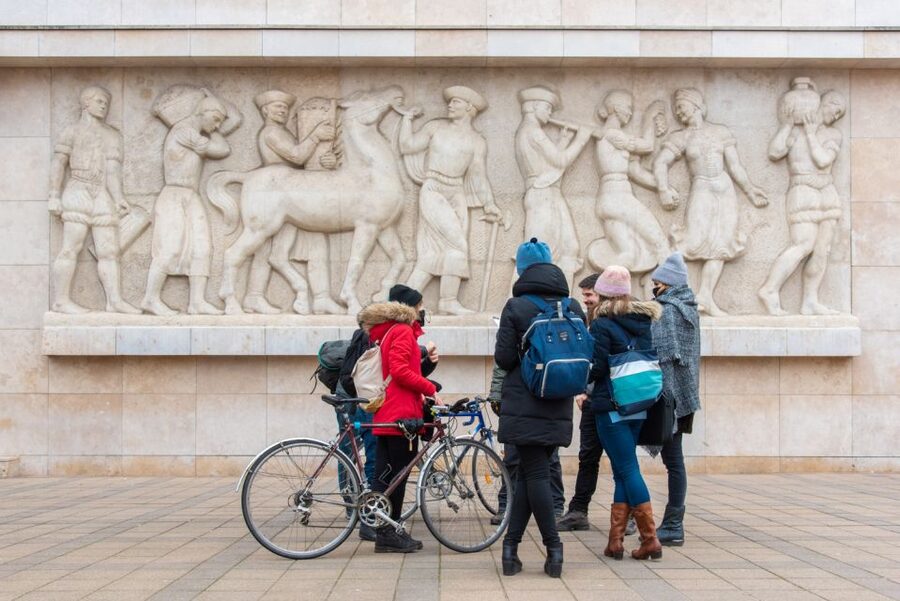
The strongest element here is the guide. Names that appear in the tour’s praise include Judit, Gergely, Greg, Virág, Dániel, Monica, and Zsuzsanna. Each is described as warm, animated, passionate, or deeply informed about Hungarian history and society.
The best guides do more than recite facts. They encourage discussion, explain political paradoxes, and connect national events with family experience. They also make space for questions, which is essential for a topic where visitors often arrive with assumptions formed by their own country’s history.
Judit has been praised for giving wider historical background before explaining Communism. Virág is noted for keeping participants involved during the three-hour walk. Monica is described as making the experience feel close to lived reality, while Dániel is praised for combining enthusiasm with family stories.
A small group of up to 10 gives this style of guiding room to work. If the group is especially small, the discussion can become more personal and the route may respond more closely to your interests. One participant described having a nearly private experience and being able to focus on the period after 1956, the move toward softer socialism, border changes, politics, church, media, and daily life.
The possible downside is that the exact style may vary with the guide. Some people prefer a firm chronological structure. One participant felt the Communist story could have been organized more clearly and in stricter order. If you need a precise lecture format, make your preference clear at the start and ask questions as you go.
Is $57 a fair price?
At $57 per person, this is not the cheapest way to see central Budapest. You can walk around Deák tér and nearby streets for free, and many museums cost less than a small-group guided experience.
The comparison changes once you count what you receive. The fee covers three hours, an English-speaking historian guide, a subway ticket, a drink in the retro café, and a group limited to 10 people. More important, it provides interpretation that you cannot get from simply looking at bullet holes or statues.
I consider the price fair for visitors who would otherwise spend hours trying to assemble the story from guidebooks, museums, and scattered online sources. The value is strongest if you ask questions and care about political history, culture, or the link between public events and private life.
It is less useful if you want a general introduction to Budapest’s main sights. This is not a substitute for a broad city tour, and the Communist theme shapes nearly every part of the experience.
Free cancellation up to 24 hours before the start and the option to reserve now and pay later make it easier to fit into a changing itinerary. Starting times vary, so check availability when choosing a date.
Who should book this Budapest Communist history tour?
I would recommend it to you if you enjoy history that explains the present. It suits visitors who want to understand why certain monuments and symbols matter, how Hungary experienced Soviet influence, and why memories of Communism remain complicated.
It is also a good fit for people who prefer conversation to a one-way lecture. The small group, open questions, café stop, and family accounts create a more personal format than a standard sightseeing circuit.
You will get the most from it if you already have some interest in politics, twentieth-century Europe, or social history. You do not need prior expertise, but the subject is serious and broad. The guide may move quickly across several decades, so a little curiosity helps.
Families with older children may find it useful if everyone is comfortable discussing war, dictatorship, revolution, and political repression. It may be less suitable for very young children, since the tour depends on sustained historical discussion.
Book with care if your top priority is a strict, date-by-date lecture. The tour’s strength is its connections, stories, and conversation. Its weaker point, based on the available feedback, is that the chronology may feel less orderly than some history students would prefer.
Practical details before you go
Meet in front of the Kempinski Hotel Corvinus Budapest at Erzsébet tér 7, facing the Ferris wheel. Deák Ferenc tér is served by the M1, M2, and M3 metro lines, as well as buses and trams, so the meeting point is straightforward to reach from much of central Budapest.
The tour lasts three hours and operates in English with a live guide. Wear comfortable shoes because the experience is built around walking, and allow enough time for the subway segment and café conversation rather than treating the finish time as a minute-by-minute guarantee.
The group limit is 10 participants. That is small enough for questions without promising a private tour. If you are particularly interested in the period after 1956, the 1989 transition, religion, media, or everyday life, tell the guide early.
Should you book it?
Book this tour if you want Budapest to explain itself. The best parts are not flashy attractions, but the way an expert guide connects ordinary streets, political symbols, family memories, a subway ride, and a café that has survived from the Communist era.
I would choose it early in a Budapest visit, especially if you plan to spend more time exploring Pest afterward. You will look at the city differently once you understand the events behind its bullet holes, monuments, jokes, and public spaces.
Skip it if your schedule is tight and you only want Budapest’s famous sights, or if you prefer a tightly structured academic lecture. For everyone else, the combination of strong guides, personal stories, open discussion, and a genuinely useful three-hour route makes $57 a reasonable price for understanding a difficult but essential part of Hungary’s story.
FAQ
Where does the tour meet?
It meets in front of the Kempinski Hotel Corvinus Budapest at Erzsébet tér 7, facing the Ferris wheel on the square.
How long does the walking tour last?
The activity lasts three hours, including the walking route, the M2 subway ride, and the café stop.
What language is the tour conducted in?
The live tour guide speaks English, and English is the listed tour language.
Is the subway ticket included?
Yes. The transportation ticket for the subway ride is included in the tour price.
Is a drink included?
Yes. The tour includes a drink at a retro café that has changed very little since opening in 1961.
How large is the group?
The tour is limited to 10 participants, making it a small-group experience.
Just added in Budapest
- Budapest: Private Walking Tour with a Local Guide★ 3.6 · 6 reviews
- Budapest: Danube River Views Bike Ride★ 4.8 · 23 reviews
- Budapest: City Bike Tour with Coffee Stop★ 5.0 · 37 reviews
- From Budapest: Guided Tour of Eger with Wine Tasting★ 4.5 · 6 reviews
- Walk to recent and aged spiritual sanctuaries near Budapest★ 5.0 · 5 reviews
- Walking consultancy with alternative psychologist and author★ 5.0 · 2 reviews
- Budapest: Guided Tour of the Parliament Building in Spanish★ 4.6 · 1,240 reviews
- Budapest: 3-Hour Trabant Sightseeing Tour★ 4.7 · 28 reviews
Communist History Tours, compared.
Communist History Tour with House of Terror Option
Read our review →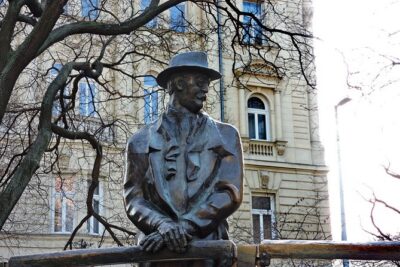
Lives of Hungarians Under Communist and Capitalist system
Read our review →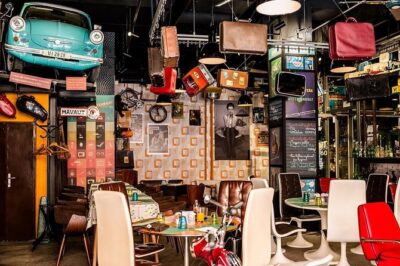
Private Budapest Hammer & Sickle Communist Times Tour
Read our review →
Memento Park Visit with Private Trabant Transfer
Read our review →
Browse the lists this tour appears in