
REVIEW · COMMUNIST HISTORY TOURS
Lives of Hungarians Under Communist and Capitalist system
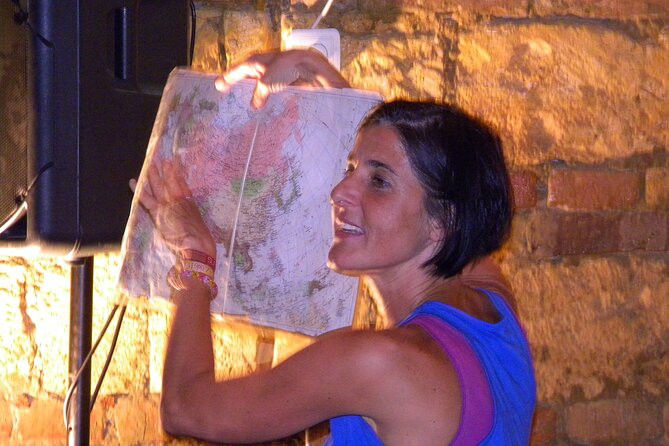
History feels different when told through ordinary life. This Budapest Communism tour connects political events with travel papers, housing, religion, schooling, transport, and family memories from guides who lived through the period. I like the personal angle, and I like that the walk compares Communist and post-Communist Hungary instead of treating 1989 as a simple finish line. The main consideration is the unusual pricing: the $4.65 booking fee does not pay the guide, so you should plan to give a tip at the end.
The walk also tackles why some Hungarians feel nostalgia for Communism, a question many history tours avoid. It is a useful choice for families, since one review praised the way the guide helped teenagers connect school lessons with real life. Just remember that the tour is discussion-led, not a museum visit, and most stops do not include admission to an indoor attraction.
In This Review
- Key points to know before you go
- Why this Budapest history walk is different
- Meeting at the Budapest Eye in Erzsébet tér
- Travel papers and Communist-era cars at Fröccsterasz
- Religion and family life beside St. Stephen’s Basilica
- District V and the practical side of Communist life
- Szabadság tér and Budapest’s contested public memory
- Parliament and the 1956 uprising
- What the $4.65 price really means
- Who should book this walk
- Booking, cancellation, and timing advice
- Should you book Lives of Hungarians Under Communist and Capitalist System?
- FAQ
- Where does the tour start?
- Where does the tour end?
- What time does the tour begin?
- How long does the tour last?
- Is the guide’s tip included in the $4.65 price?
- Can I cancel for a full refund?
Key points to know before you go
- Personal memories guide the story: The guides lived under Communism and explain how public policy shaped daily choices.
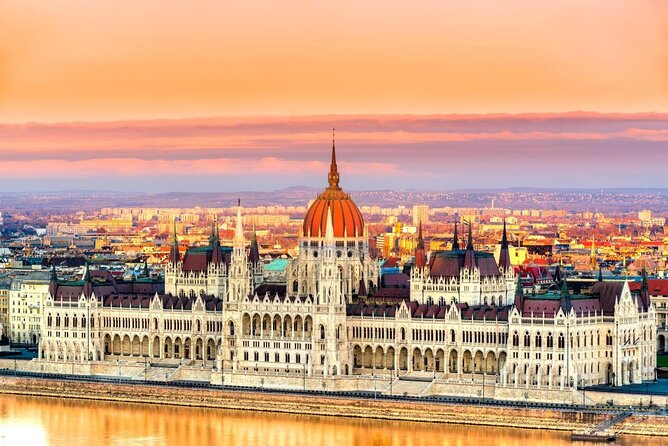
- Six central Budapest stops: The route runs from the Budapest Eye in Erzsébet tér to the Hungarian Parliament.
- The 1956 uprising gets serious attention: You see bullet holes near Parliament and hear about people who experienced the Revolution as children.
- The walk covers ordinary life: Travel documents, cars, housing, health care, education, religion, media, sport, and the Olympic Games all enter the conversation.
- The payment model needs planning: The booking fee reserves your place, while guide income comes from donations. Most people give about €10 per person.
- Small groups help the discussion: Attendance is capped at 20 people, with a 3:30 pm start and an ending near the M2 red metro line.
Why this Budapest history walk is different
Budapest has plenty of grand architecture and famous monuments, but the Communist period is often harder to read from the streets. This walk gives you a framework for understanding what those decades meant inside a Hungarian home, school, workplace, or passport office.
The focus is not only on government leaders or Cold War headlines. You hear about the small systems that shaped a normal week: where you could go, what documents you needed, how housing was assigned, how religious practice changed, and how propaganda reached people through media and sport.
I like that the tour includes both Communism and the years after it. That comparison matters. It helps you see why the end of the system brought freedom and major change, but did not erase habits, memories, or economic worries overnight.
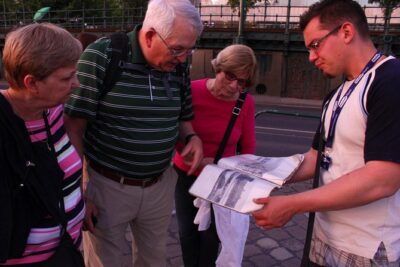
The guides’ own life experience is central. The information says they lived through the era, and that gives the tour a human scale. You are not simply memorizing dates. You are considering how a child, parent, student, or worker might have understood the same events at the time.
The route lasts about 1 hour 30 minutes according to the listed stop times. Another description refers to a 2 hour itinerary, so I would keep a little extra time available rather than schedule a tight connection immediately afterward.
More communist-era history tours:
- Budapest: Communist History Tour with House of Terror Option
★ 4.8 · 182 reviews - Communism in Hungary with a Historian
★ 5.0 · 70 reviews - Budapest: 3-Hour Walking Tour About Communism (Small Group)
★ 4.7 · 70 reviews
Meeting at the Budapest Eye in Erzsébet tér
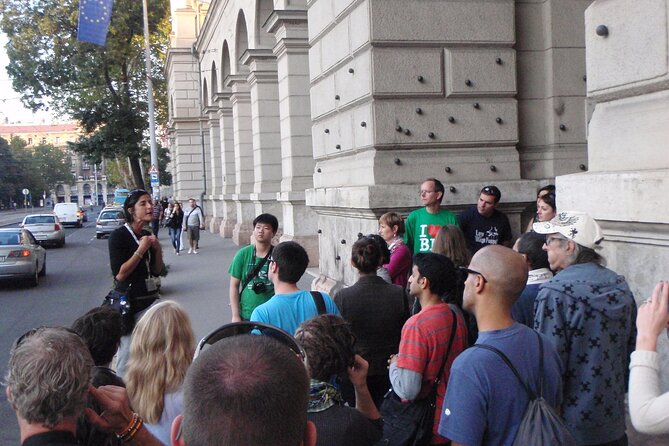
The walk begins near the Budapest Eye, officially the Ferris Wheel of Budapest, in Erzsébet tér. Look for the licensed guide about 20 meters from the wheel. The meeting point is central and close to public transportation, which makes it easy to reach from other parts of the city.
The opening lesson takes about 15 minutes. It introduces Hungarian and Central European Communism and gives you the basic political and historical setting for the rest of the walk.
This introduction is important because Hungary’s Communist experience was not identical to that of every neighboring country. The guide’s job here is to give you enough context to understand the later stories without turning the first stop into a long lecture.
There is no admission charge at this stop. You remain outdoors, so dress for the weather and wear shoes suitable for a city walk. Since the tour begins at 3:30 pm, the route takes place during the afternoon and moves toward Parliament as the walk continues.
Travel papers and Communist-era cars at Fröccsterasz
At Fröccsterasz, the subject shifts to movement. You learn about travel into and out of Hungary, see basic travel documents, and hear about the cars and other forms of transport associated with the Communist period.
This is one of the more useful stops because travel rules can feel abstract when explained only through laws. Seeing the documents gives the subject a practical edge. You can think about who was allowed to leave, what permission involved, and how different travel could feel under a system that controlled borders and information.
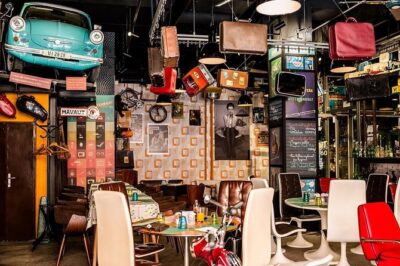
The discussion of Communist car types adds a lighter, more familiar subject. Cars reveal status, supply, waiting, and the limits of consumer choice without requiring a political speech. Transport also connects naturally to the larger question of independence. The ability to move around a country, cross a border, or own a particular vehicle can say a great deal about daily freedom.
This stop is brief, about 10 minutes, so expect a focused explanation rather than a long vehicle display. No entrance ticket is included or needed at the stop.
Religion and family life beside St. Stephen’s Basilica
St. Stephen’s Basilica provides a strong setting for a discussion of religion under Communism. Here, the guide explains the difficulties faced by different denominations and how religious life varied from one family to another.
That family-by-family point is worth noticing. Political systems do not affect every household in exactly the same way. One person might remain active in religious life, while another might keep faith private or avoid it altogether. The tour presents religion as a lived issue rather than a simple battle between belief and government.
The stop lasts about 15 minutes. You learn about the pressures placed on religious communities, but the key value is the human detail. The guide helps you consider how public policy entered family habits, celebrations, education, and identity.
The tour does not list admission to the basilica as part of the experience. The stop is an outdoor history talk connected to the building, not a scheduled interior visit. If seeing the inside is important to you, plan that separately.
More things to do in Budapest:
- Budapest: City Highlights Cruise with Welcome Drink
★ 4.6 · 35,610 reviews - Budapest: Unlimited Prosecco, Beer and Aperol Spritz Cruise
★ 4.8 · 25,310 reviews - Budapest: Széchenyi Spa Day Ticket with Optional Upgrades
★ 4.3 · 23,911 reviews - Budapest: Nighttime or Daytime Sightseeing Cruise
★ 4.2 · 21,062 reviews
District V and the practical side of Communist life
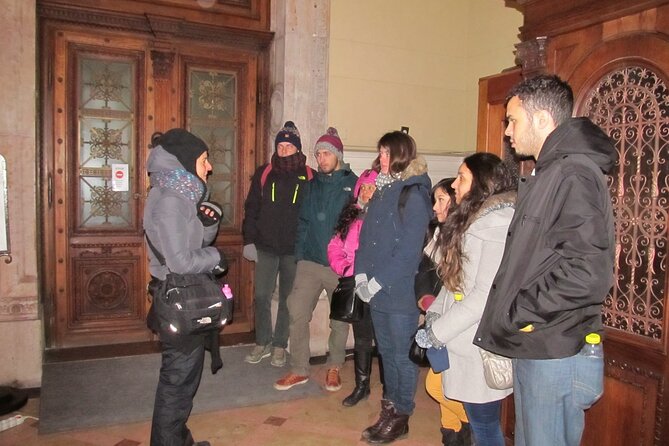
In District V, the walk broadens into the subjects that shape everyday living: housing, health care, education, media, propaganda, sport, the Olympic Games, and the changes that followed Communism.
This is the core of the tour. Political history becomes personal when you ask where people lived, how they found medical care, what children learned, what information reached the public, and how success was measured.
Housing is especially useful because it helps explain why some older residents remember parts of the Communist period with affection. Nostalgia does not always mean a wish to restore the entire system. It can reflect memories of predictable housing, work, social services, or a life that felt more stable in certain ways. The walk explains why those memories exist while also addressing the restrictions and problems of the era.
Education and media add another layer. A school system may provide common structure while also teaching official ideas. Media can offer entertainment and sports coverage while limiting what people are told. The discussion of athletics and the Olympic Games shows how sport could serve both personal pride and state messaging.
This stop takes about 20 minutes, the longest single section of the walk. It suits anyone who wants more than monument facts. It may also be the most discussion-heavy part, so pay attention if you prefer social history to military dates.
Szabadság tér and Budapest’s contested public memory
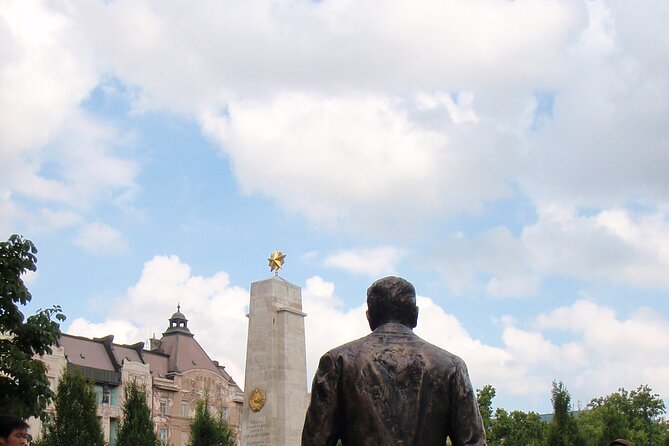
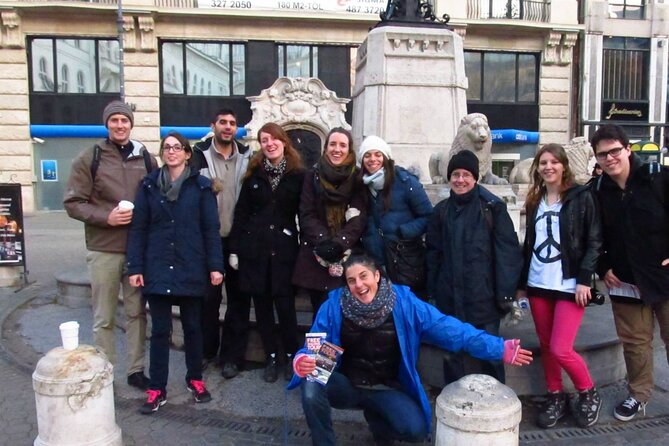
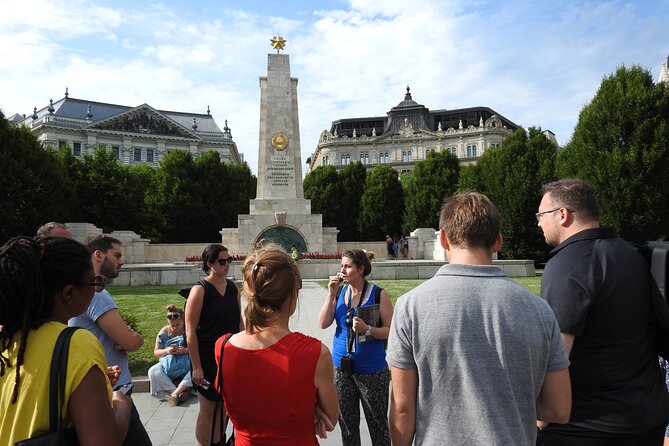
Szabadság tér brings the tour into a space where public memory is especially visible. The guide shows two controversial monuments, urban art guerrilla statues, and the emergency exit of the F4 military nuclear bunker.
The pairing of controversial monuments matters. Public spaces can present competing versions of the past, and the guide uses them to explain how Hungary remembers power, occupation, resistance, and political change.
The bunker detail gives the stop a physical connection to Cold War anxiety. You are not entering the facility, but seeing its emergency exit helps make the period feel less distant. The urban art adds another angle, showing how unofficial messages can challenge official symbols.
The stop also includes the second most guarded building in Budapest, which once sheltered a prominent Hungarian person for more than 15 years. The supplied information does not identify that person, so you should expect the guide to provide the story during the tour rather than rely on the written description.
This section lasts about 10 minutes. It is short but packed with visual clues, so you may want to stay close to the guide and listen carefully. The square has several subjects competing for your attention.
Parliament and the 1956 uprising
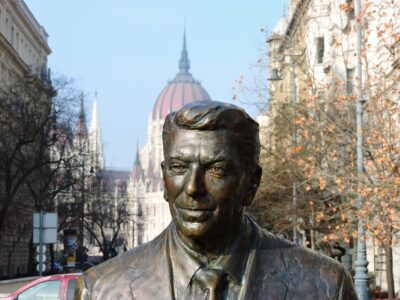
The walk ends at the Hungarian Parliament Building on Kossuth Lajos tér. Here, the guide gives a detailed account of the 1956 uprising, points out bullet holes on the facades of nearby residential buildings, and tells stories about the heroes of the Revolution.
This final stop carries the greatest emotional weight. Parliament is already one of Budapest’s most powerful sights, but the surrounding marks connect the grand building to ordinary people who lived through violence and political upheaval.
The focus on childhood memories is particularly effective. Hearing how someone experienced the Revolution as a child can show how major events arrive in daily life: through family conversations, fear, confusion, sudden changes, and memories that remain for decades.
The 1956 discussion also gives the earlier stops a sharper meaning. Travel restrictions, propaganda, religion, and housing were not isolated subjects. They formed part of the political atmosphere that shaped how people understood their country and its future.
The tour ends at Parliament, at Kossuth Lajos tér 1-3, about 50 meters from the M2 red metro line. That makes the finish practical. You can continue sightseeing, take the metro, or use the location as a clear stopping point in your afternoon plans.
What the $4.65 price really means
The $4.65 per-person price is not the full cost in the usual paid-tour sense. It is a booking and administrative fee used to reserve your place and support marketing. It does not contribute to the guide’s earnings.
The guide depends entirely on tips, and the suggested pattern is about €10 per person, with some people giving more. That means you should judge the experience by the total expected outlay, not just the small online charge.
This pay-what-you-feel structure can offer good value if you want a compact, personal history lesson at a low entry price. It also means the final cost is less predictable than a standard fixed-price tour. If you prefer knowing the exact total before booking, this arrangement may feel less comfortable.
The group maximum is 20 people. That is small enough for a guide to speak directly to the group, though the quality of the experience will still depend on where you stand and how clearly the guide handles questions.
Who should book this walk
I would choose this tour if you want to understand Budapest through the lives of ordinary Hungarians. It is a strong fit for adults interested in political history, families with older children, and anyone who has studied Communism but wants a more human explanation.
The tour also suits repeat visitors who have already seen the main monuments. You walk through central Budapest, but the purpose is not simply to photograph the basilica or Parliament. The buildings become reference points for stories about power, belief, travel, and memory.
Families may find the format useful because a guide’s personal account can make school history easier to grasp. One written response described the experience as valuable for teenagers because it brought a period from textbooks into real life.
I would be more cautious if you want a museum-style tour with indoor exhibits, long time at each site, or a strict focus on architecture. The route is outdoors, the stops are relatively short, and the main attraction is the explanation rather than entry into monuments.
The tour is listed as suitable for most people, and service animals are allowed. It is close to public transportation, though the route involves walking between several central stops.
Booking, cancellation, and timing advice
The experience is normally booked about 14 days ahead, which gives you a useful planning benchmark. Confirmation arrives when you book, and the mobile ticket makes it easy to keep the reservation on your phone.
You can cancel for a full refund up to 24 hours before the local start time. Changes or cancellations inside that 24-hour window are not accepted for a refund.
Book the 3:30 pm start with enough room before dinner or another timed activity. The listed stop durations total about 90 minutes, but one description calls the route a 2 hour itinerary. I would allow two hours in your schedule to cover the meeting, movement, and possible questions.
Should you book Lives of Hungarians Under Communist and Capitalist System?
Book it if you want personal stories, social history, and a clear look at 1956 rather than another pass through Budapest’s standard sights. The route is short, central, and unusually broad, covering everything from travel documents and cars to religion, housing, education, and public memory.
Skip it if you dislike tip-based tours or want substantial time inside attractions. The $4.65 fee is only an administrative charge, so plan for an additional donation, with about €10 per person being common.
For families and history-minded visitors, the mix is especially appealing. You finish near Parliament with a better sense of why Hungary’s Communist past still shapes conversations about freedom, security, identity, and change.
FAQ
Where does the tour start?
It starts at the Ferris Wheel of Budapest, also called the Budapest Eye, in Erzsébet tér, Budapest 1051. The guide meets the group about 20 meters from the wheel.
Where does the tour end?
The walk ends at the Hungarian Parliament Building, Kossuth Lajos tér 1-3, Budapest 1055. The endpoint is about 50 meters from the M2 red metro line.
What time does the tour begin?
The scheduled start time is 3:30 pm.
How long does the tour last?
The experience is listed as approximately 1 hour 30 minutes. The route description also refers to a 2 hour itinerary, so allowing up to two hours is sensible.
Is the guide’s tip included in the $4.65 price?
No. The $4.65 booking fee covers administration and does not contribute to the guide’s earnings. Tips are not included, and the usual amount is about €10 per person, though you choose the amount.
Can I cancel for a full refund?
Yes. You can cancel at least 24 hours before the experience start time for a full refund. Cancellations or changes made less than 24 hours before the start are not accepted for a refund.
Just added in Budapest
- Budapest: Private Walking Tour with a Local Guide★ 3.6 · 6 reviews
- Budapest: Danube River Views Bike Ride★ 4.8 · 23 reviews
- Budapest: City Bike Tour with Coffee Stop★ 5.0 · 37 reviews
- From Budapest: Guided Tour of Eger with Wine Tasting★ 4.5 · 6 reviews
- Walk to recent and aged spiritual sanctuaries near Budapest★ 5.0 · 5 reviews
- Walking consultancy with alternative psychologist and author★ 5.0 · 2 reviews
- Budapest: Guided Tour of the Parliament Building in Spanish★ 4.6 · 1,240 reviews
- Budapest: 3-Hour Trabant Sightseeing Tour★ 4.7 · 28 reviews
Communist History Tours, compared.
Communist History Tour with House of Terror Option
Read our review →3-Hour Walking Tour About Communism (Small Group)
Read our review →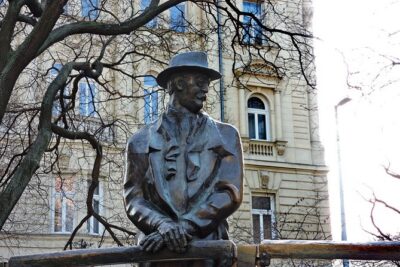
Private Budapest Hammer & Sickle Communist Times Tour
Read our review →
Memento Park Visit with Private Trabant Transfer
Read our review →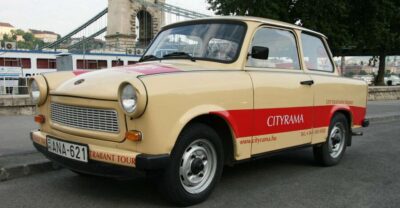
Browse the lists this tour appears in