
REVIEW · COMMUNIST HISTORY TOURS
Communism in Hungary with a Historian
History is hiding in plain sight. This three-hour Budapest walking tour turns ordinary squares, churches, statues, and government buildings into evidence of Hungary’s communist past. I especially like the small group limit of 10 people, which gives you room to ask questions, and the way the tour combines public events with family stories about nationalization, church life, housing, work, and fear under party rule. The main consideration is that most stops are viewed from outside, so this is a street-based history lesson rather than a museum visit.
I also like that the route crosses both Pest and Buda, using the metro with tickets included, and finishes with coffee or a drink at Bambi Café, a place that dates from 1961. The price, $59.13 per person, is fair for a private-feeling history walk with transportation and refreshments included, though you should be ready to walk outdoors for much of the afternoon.
In This Review
- Key points at a glance
- Why this tour is different from a standard Budapest walk
- Starting at Elizabeth Square and former Stalin Square
- St. Stephen’s Basilica and the place of religion
- Szabadság tér, statues, embassies, and a bunker
- Parliament and the violence of Bloody Thursday
- Finishing at Bambi Café in Buda
- The guides make or break a history tour
- How personal stories explain life under communism
- Price, pace, and practical value
- Who should book this Budapest history walk?
- Should you book Communism in Hungary with a Historian?
- FAQ
- Where does the tour begin?
- What time does the tour start?
- How long does the experience last?
- How many people can join the tour?
- Is transportation included?
- Does the tour enter St. Stephen’s Basilica or Parliament?
- Where does the tour end?
Key points at a glance
- Personal stories give the politics a human scale: Guides have explained how one family’s factory was nationalized, how apartments were reassigned, and how churches survived pressure from the state.
- Elizabeth Square begins the story in former Stalin Square: Monuments and changing names open the discussion about power, memory, and public space.
- Szabadság tér packs in the most visual evidence: You see memorials, statues, embassies, and part of a bunker from outside.
- The 1956 Revolution gets a precise setting: At Parliament, the group discusses Bloody Thursday on Kossuth Square.
- Bambi Café is more than a coffee stop: The café opened in 1961 and has kept much of its old character.
- The group is capped at 10: That matters when the guide is explaining sensitive subjects or answering detailed questions.
Why this tour is different from a standard Budapest walk
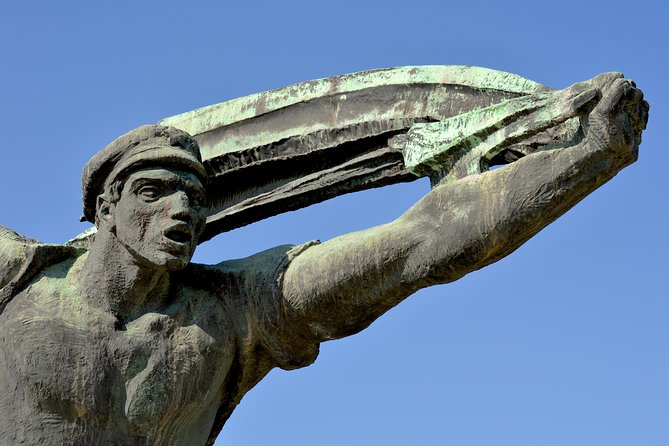
Most first visits to Budapest focus on grand architecture, river views, thermal baths, and imperial landmarks. This tour asks you to look again at the same city through a harder lens. A church becomes a place that had to negotiate with the communist state. A square becomes the scene of violence. A statue or embassy becomes a clue to shifting alliances.
That approach is useful because communism in Hungary was not confined to a few monuments. It shaped where people lived, what work they did, how they spoke in public, and what they feared saying at home. The guides explain those effects without reducing the period to a list of dates.
The strongest part of the experience is the human detail. Raymond has told the story of a family business taken by the state, with the former owner’s grandfather forced to work in his own factory for low pay under a party loyalist who lacked the necessary skills. He also described how the family lost apartments and was assigned to poorer housing shared with another family.
Those details help you understand why political systems matter in daily life. You are not only hearing about leaders and revolutions. You are hearing how policy reached the kitchen table.
Guides vary, but several have been praised for making the subject clear and approachable. Gabriel, also called Gábor in Hungarian, has been described as a patient storyteller who presented different sides of the period. Greg, András, Virág, Judit, Peter, and Raymond have each led versions of the tour, so the exact personality and emphasis can change from one afternoon to the next.
More communist-era history tours:
- Budapest: Communist History Tour with House of Terror Option
★ 4.8 · 182 reviews - Budapest: 3-Hour Walking Tour About Communism (Small Group)
★ 4.7 · 70 reviews - Budapest Hammer & Sickle Communist Times Tour
★ 4.5 · 68 reviews
Starting at Elizabeth Square and former Stalin Square
The meeting point is outside Kempinski Hotel Corvinus Budapest at Elizabeth Square, Erzsébet tér 7 to 8. The tour begins at 2:00 pm, a useful time if you want a relaxed morning for the Central Market Hall, a museum, or breakfast before setting out.
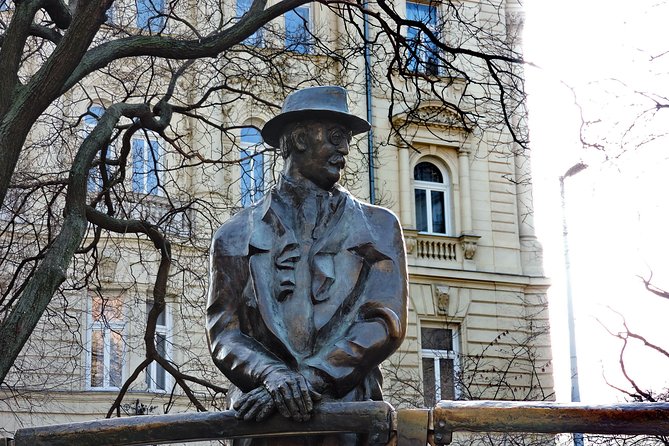
Elizabeth Square is not just a convenient place to meet. The guide uses it to explain how public spaces were renamed and repurposed under communist rule. It was once known as Stalin Square, and the monuments here become a starting point for discussing official memory and political symbolism.
You spend about 15 minutes at this first stop. That may sound brief, but it works as an introduction. The guide establishes the broad period and gives you a way to read the city before the route becomes more detailed.
The group then moves by metro, with tickets included. This is a practical benefit, especially since the tour covers Buda and Pest rather than staying in one compact neighborhood. You do not need to work out the ticket system during the tour, and the underground ride becomes part of the experience of seeing how Budapest connects its two sides.
St. Stephen’s Basilica and the place of religion
The stop at St. Stephen’s Basilica is about 15 minutes, and the church is viewed from outside. Do not book this expecting an interior visit or a full architectural tour. The point here is religious life under communism.
The guide explains how churches functioned when the state held major power over public institutions. Family experiences add warmth and tension to the subject, particularly when the guide describes the pressure placed on religious organizations and the ways churches tried to continue their work.
One account explained that churches survived partly through financial arrangements involving donations to the party. That kind of detail gives you a clearer sense of the compromises people and institutions faced. The subject is not presented as a simple battle between heroes and villains. Instead, you hear how ordinary people tried to protect faith, family, and community under an authoritarian system.
The basilica is also a good reminder that Budapest’s famous sights have more than one story. You can admire the grand facade while considering what religious practice meant during decades when official ideology had little use for independent institutions.
Szabadság tér, statues, embassies, and a bunker
Szabadság tér is the longest scheduled stop, at roughly 45 minutes. This is where the tour’s visual clues and political explanations come together.
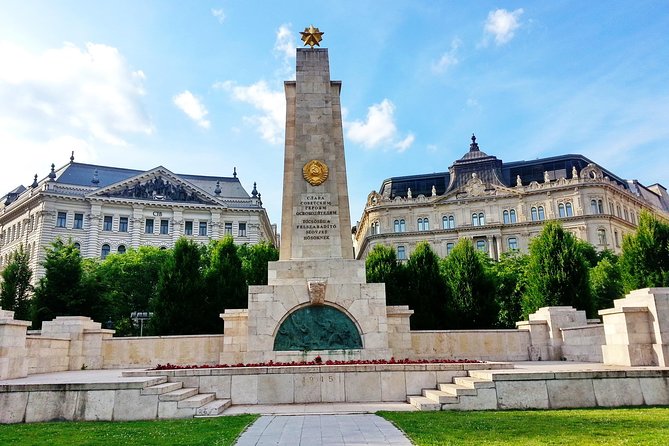
The square contains memorials, statues, and embassies tied to different chapters of Hungary’s modern political life. The guide explains how these objects relate to communism, foreign influence, and the way public memory is argued over in stone and metal.
You may also see part of a bunker from the outside. It is not a standard attraction with an interior visit, but its presence helps show how security concerns shaped the city. The bunker reference is especially useful for anyone interested in the Cold War, secret police, or the practical fears of the period.
The value here comes from interpretation. Without a guide, you might notice a statue or a memorial and move on. With context, you begin asking who placed it there, what message it was meant to send, and how that message changed after 1989.
Some accounts also describe seeing an old terminal or train station connected with the period. Since the formal route details focus on Szabadság tér and the bunker from outside, treat these extra sights as possible additions rather than guaranteed stops. The precise route can depend on the guide and the conditions that day.
More things to do in Budapest:
- Budapest: City Highlights Cruise with Welcome Drink
★ 4.6 · 35,610 reviews - Budapest: Unlimited Prosecco, Beer and Aperol Spritz Cruise
★ 4.8 · 25,310 reviews - Budapest: Széchenyi Spa Day Ticket with Optional Upgrades
★ 4.3 · 23,911 reviews - Budapest: Nighttime or Daytime Sightseeing Cruise
★ 4.2 · 21,062 reviews
Parliament and the violence of Bloody Thursday
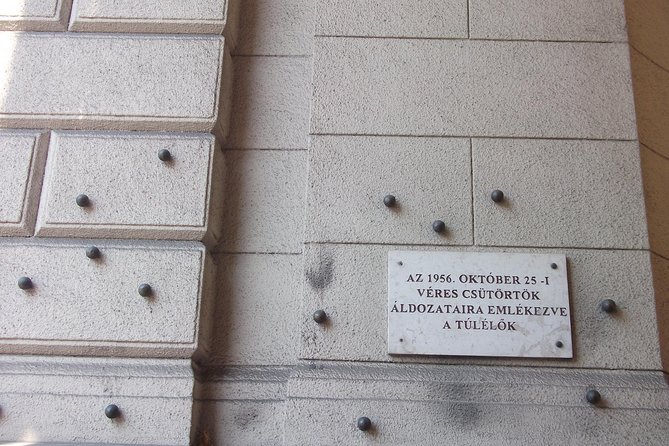
The tour continues to the Hungarian Parliament Building and Kossuth Square. The focus is one of the key events of the 1956 Revolution, known as Bloody Thursday.
You spend about 15 minutes here. Again, this is an exterior history stop, not a Parliament interior tour. The guide places the event in the square and explains why the confrontation became such a powerful part of Hungary’s memory.
This is one of the tour’s best choices because the setting gives the story weight. You are not hearing about a distant uprising in an abstract classroom. You are standing in the public space where the event happened, looking at the building and the area around it.
The guides also connect 1956 to the years before and after it. András, for example, has been praised for explaining how Hungary’s interwar period and Second World War experience shaped the later communist era. That wider frame matters. The story does not begin when communism takes power, and it does not end when the revolution is suppressed.
If your interest includes the Second World War, the Cold War, or the political changes of twentieth-century Hungary, this section gives you a useful bridge between those subjects.
Finishing at Bambi Café in Buda
The usual endpoint is Bambi Café on Frankel Leó út 2 to 4, on the Buda side near Margaret Bridge. The tour generally ends with coffee included, although the café setting also makes it possible to discuss the afternoon over a drink.
Bambi opened in 1961 and has changed little over the years. That gives the finale a pleasing sense of place. Instead of ending beside a modern attraction or sending you back to the meeting point, the guide brings you to a café connected with the era you have been studying.
This is where the personal and political threads can come together. You can ask about current events, compare the guide’s explanations with what you have seen, and clarify points that were difficult to absorb while walking.
On colder or rainy days, the group often finishes on the Pest side near the starting area instead. That is a sensible adjustment, though it means you should not treat the Buda café stop as absolutely fixed in poor weather.
The guides make or break a history tour
A subject such as communism depends heavily on the person telling it. Dates and names are easy enough to find in a book. The challenge is explaining how an official system affected real people without turning the tour into a lecture or a political speech.
The strongest guide accounts describe clear storytelling, thoughtful answers, and a balanced presentation. Gábor has been praised for being both honest and even-handed. Virág, who studied the subject and wrote a thesis on the communist era, has brought a more academic level of detail while still using personal stories.
Judit has been praised for answering questions with warmth and care. Gabriel has received particular praise for staying patient and enthusiastic during cold, rainy conditions. Greg has been described as friendly and easy to talk with, creating the relaxed feeling of learning from an informed local friend.
That range is worth noting because guide quality can vary in any small-group experience. The available information suggests a strong team, but you cannot select a specific guide from the details provided. If a particular guide matters to you, ask when booking, though availability may determine the assignment.
How personal stories explain life under communism
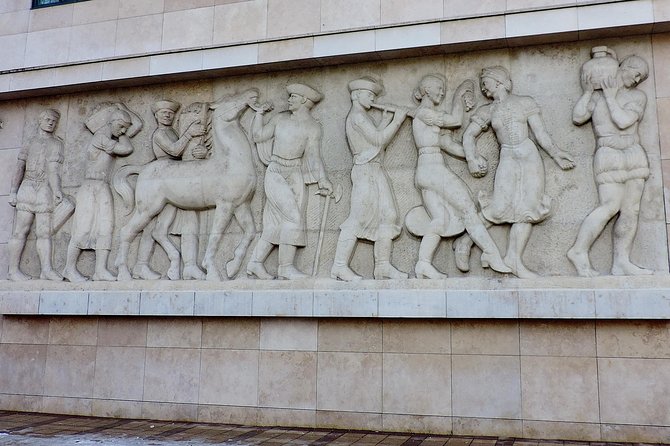
The tour’s best material concerns ordinary life. The guides discuss working conditions, housing, education, church life, and the fear that someone might report you to the party.
The story of nationalized property is especially effective. When the owner of a factory is forced to work there under a new manager chosen for political loyalty, the meaning of nationalization becomes clear. It is no longer a dry economic term.
Housing stories add another layer. Families could lose apartments they owned and be assigned to live with another family in worse quarters. That helps explain why property, privacy, and family space carried such strong emotional weight.
The guides also connect the period to the present and sometimes discuss current politics. That can be useful if you want to understand why twentieth-century events still shape Hungarian public life. It can also make the tour feel less tidy than a museum display, since the past remains connected to arguments happening now.
The tone appears to be conversational rather than theatrical. You are encouraged to ask questions, and the small group makes that easier. For a subject that can become heavy, this personal exchange is a real strength.
Price, pace, and practical value
At $59.13 per person, the tour is not the cheapest way to spend three hours in Budapest. You are paying for a specialist subject, a maximum group of 10, metro tickets, a guide, and coffee at the end.
I consider that good value if you want more than a general sightseeing walk. A standard city tour may point out Parliament and a basilica, but it is unlikely to explain nationalization, church compromises, assigned housing, party surveillance, and Bloody Thursday in one connected route.
The small group matters. Ten people is still large enough for energy and discussion, but small enough for the guide to hear questions and adjust the explanation. It also reduces the risk of being lost in a large crowd at busy central sites.
The pace is moderate, but you should expect outdoor walking and time spent standing. The tour is near public transportation, and most people can participate. Service animals are allowed. Comfortable shoes and suitable clothing are sensible because the experience continues in rain or cold, although the ending may change in poor weather.
Confirmation arrives when you book. Free cancellation is available up to 24 hours before the 2:00 pm start time. Cancellations or changes inside that window are not accepted for a refund.
The tour is usually booked about 23 days in advance, so you should not leave it until the last day if your Budapest schedule is tight.
Who should book this Budapest history walk?
I would choose this tour if you have already seen Budapest’s major landmarks and want the stories behind them. It also suits anyone with a strong interest in the Second World War, the Cold War, the 1956 Revolution, religion under state socialism, or everyday life under one-party rule.
It is a good fit for curious couples, families with older children, and solo visitors who like asking questions. The intimate format is especially helpful if you want to discuss a complicated subject rather than simply receive a list of facts.
I would think twice if you want interiors, formal museum exhibits, or a tour focused mainly on architecture. St. Stephen’s Basilica and Parliament are exterior stops, and the bunker is viewed from outside. The route is built around conversation and interpretation.
You should also know that the subject is serious. The stories include forced property transfers, political fear, violence, and institutional compromise. The friendly café ending helps, but this is not a light sightseeing stroll.
Should you book Communism in Hungary with a Historian?
Book it if you want Budapest to make more sense beyond its grand facades. The strongest reasons are the personal family accounts, the small group, and the careful link between places such as Szabadság tér and Kossuth Square and the people who lived through their events.
The $59.13 cost is justified for a focused three-hour history walk with metro tickets and coffee included. Just keep your expectations clear: this is an outdoor tour, the exact guide may vary, and not every stop includes entry.
For a thoughtful look at how communism shaped Hungarian homes, workplaces, churches, streets, and public memory, I would put this high on your Budapest list.
FAQ
Where does the tour begin?
It begins at Kempinski Hotel Corvinus Budapest, Budapest, Erzsébet tér 7 to 8, 1051 Hungary.
What time does the tour start?
The tour starts at 2:00 pm.
How long does the experience last?
It lasts approximately three hours.
How many people can join the tour?
The group has a maximum of 10 people.
Is transportation included?
Yes. The tour uses the metro, and metro tickets are included.
Does the tour enter St. Stephen’s Basilica or Parliament?
The scheduled stops at St. Stephen’s Basilica and the Hungarian Parliament Building are exterior visits. Admission tickets are not included for either location.
Where does the tour end?
It usually ends at Bambi Café on Frankel Leó út 2 to 4, on the Buda side near Margaret Bridge. On cold or wet days, it may end on the Pest side near the starting area.
Just added in Budapest
- Budapest: Private Walking Tour with a Local Guide★ 3.6 · 6 reviews
- Budapest: Danube River Views Bike Ride★ 4.8 · 23 reviews
- Budapest: City Bike Tour with Coffee Stop★ 5.0 · 37 reviews
- From Budapest: Guided Tour of Eger with Wine Tasting★ 4.5 · 6 reviews
- Walk to recent and aged spiritual sanctuaries near Budapest★ 5.0 · 5 reviews
- Walking consultancy with alternative psychologist and author★ 5.0 · 2 reviews
- Budapest: Guided Tour of the Parliament Building in Spanish★ 4.6 · 1,240 reviews
- Budapest: 3-Hour Trabant Sightseeing Tour★ 4.7 · 28 reviews
Communist History Tours, compared.
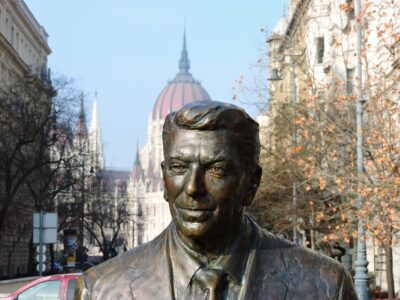
Communist History Tour with House of Terror Option
Read our review →3-Hour Walking Tour About Communism (Small Group)
Read our review →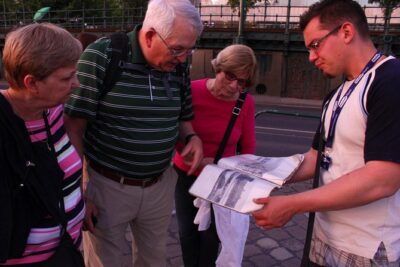
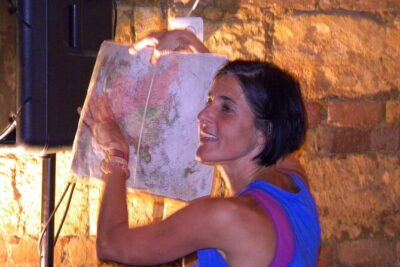
Lives of Hungarians Under Communist and Capitalist system
Read our review →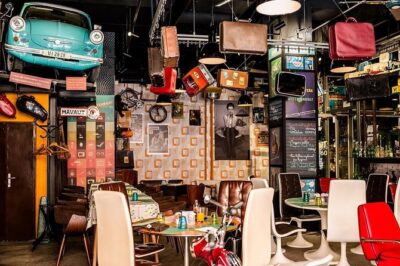
Private Budapest Hammer & Sickle Communist Times Tour
Read our review →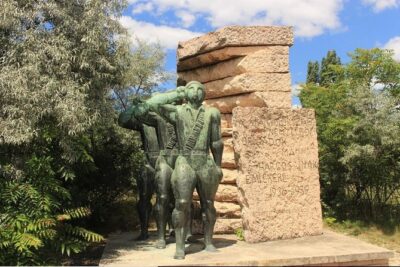
Memento Park Visit with Private Trabant Transfer
Read our review →
Browse the lists this tour appears in