
REVIEW · COMMUNIST HISTORY TOURS
Private Budapest Hammer & Sickle Communist Times Tour
History gets personal here. Despite the Budapest title and location shown in the booking details, the route described is a Prague walking tour focused on Nazi occupation, Soviet rule, and the Velvet Revolution. I like the strong lineup of places, from Wenceslas Square to the former Gestapo, SS, and KGB sites, and I like the chance to hear these events explained by a local guide. The main concern is the confusing description, along with a long stretch of outdoor listening that can feel tough in cold or hot weather.
This is a good pick if you want more than Prague’s castles, churches, and pretty lanes. The small private format lets your guide adjust the conversation to your interests, and guides such as Martina, Mike, Mikel, Martin, and Honza have been praised for bringing old photographs, personal memories, and useful historical context. Just confirm the city, route, start point, and exact duration before paying.
In This Review
- Key points to know before you book
- First, clear up the Budapest and Prague confusion
- Bartolomejska Street begins with Prague’s darker side
- National Avenue links two generations of protest
- Wenceslas Square shows the cost of political change
- Republic Square carries the story from independence to uprising
- Old Town brings in Einstein, the Jewish quarter, and former power centers
- Letná Park closes with Stalin’s enormous monument
- What the private format really adds
- Is $133.67 a fair price?
- Who should book this Prague history walk?
- My booking advice
- FAQ
- Is this tour in Budapest or Prague?
- How long does the tour last?
- Is this a private tour?
- What is included?
- Is the tour suitable for children?
- Is the walk suitable for people with limited mobility?
Key points to know before you book
- The advertised route is in Prague, not Budapest: The sights and stories all belong to Prague’s 20th-century past.
- Expect about 3 to 3.5 hours: The tour involves extended walking, with roughly two hours of continuous movement over curbs, stairs, and slippery surfaces.
- The history is serious and specific: You visit former secret-police, Nazi, and communist sites rather than simply hearing a general lecture.
- A private format can make the history more personal: Only your group participates, although another description says groups may be limited to 15 people.
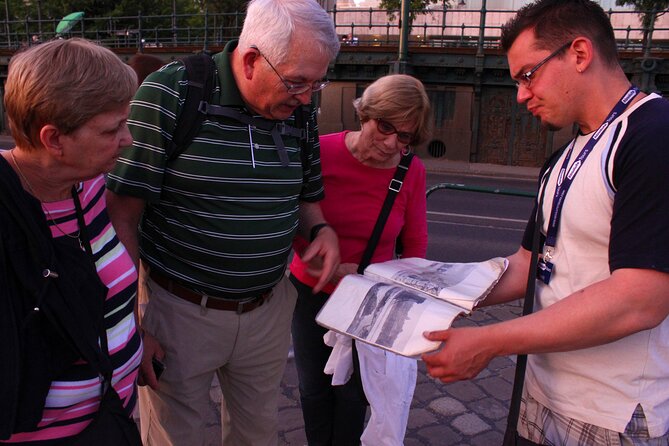
- The best guides bring the past to life: Several guides have been praised for using old photographs, articles, and personal memories.
- Weather matters: Much of the tour takes place outdoors, and there is no stated bad-weather alternative itinerary.
First, clear up the Budapest and Prague confusion
The experience title says Budapest Hammer & Sickle Communist Times Tour, and the location field also says Budapest. Yet every major stop in the route is in Prague: Bartolomejska Street, National Avenue, Wenceslas Square, Republic Square, the Old Jewish Cemetery, and Letná Park.
That is not a small spelling error. It affects flights, hotels, meeting points, and the entire reason you might book the experience. The supplied itinerary also says the tour begins and ends in central Prague. I would contact Absolute Tours before booking and ask them to confirm that this is the Prague Nazi and communist history walk.
The duration has a similar mismatch. One part lists three hours, while the route describes a 3.5-hour walk. Plan for the longer figure. With a refreshment stop, explanations at several sites, and a good deal of walking, this is not a quick orientation stroll.
More communist-era history tours:
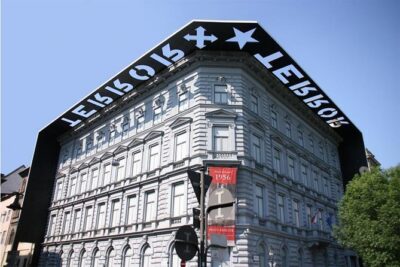
- Budapest: Communist History Tour with House of Terror Option
★ 4.8 · 182 reviews - Communism in Hungary with a Historian
★ 5.0 · 70 reviews - Budapest: 3-Hour Walking Tour About Communism (Small Group)
★ 4.7 · 70 reviews
Bartolomejska Street begins with Prague’s darker side
The walk starts in central Prague with an introduction to the city’s 20th-century story. The first major stop is Bartolomejska Street, where a former World War II prison was used by secret police to torture prisoners.
This is a fitting opening because it makes the subject immediate. You are not starting with a broad political speech. You are standing beside a place connected to imprisonment, interrogation, and fear. Your guide sets up the larger story of occupation and political control before taking you through the city.
The site itself is not presented as a conventional museum visit. Much of the value comes from the explanation, so the guide matters greatly. Past tours have varied by guide. Honza was praised for answering questions and keeping the tour to a comfortable length, while Mike and Mikel were singled out for strong background information and enthusiasm. On the other hand, one guide was criticized for spending more than an hour talking in one spot before the walking began.
That difference is important. A private tour gives you personal attention, but it also means the quality depends heavily on the individual leading your group.
National Avenue links two generations of protest
From Bartolomejska Street, you walk toward National Avenue, the grand route separating Prague’s Old Town and New Town. Here the guide explains two very different protest movements that took place in the same part of the city.
In 1939, students protested against the occupying Nazis. In 1989, students again became part of the resistance, this time against communist rule and Soviet influence. The comparison gives the street unusual weight. You see how one city space can hold several layers of public defiance.
This is one of the tour’s strongest ideas: Prague’s 20th-century story is not a chain of isolated events. The same squares and avenues were repeatedly used for speeches, demonstrations, crackdowns, and celebrations. A guide who can connect those episodes will give you a much clearer sense of how the city changed.
The drawback is that the tour often explains history outdoors, on the pavement, rather than inside a warm exhibit. If you visit during cold weather, wear more than you think you need. A past tour was described as informative but uncomfortable because the group spent too long standing outside in the cold. The same problem can occur on a hot day.
Wenceslas Square shows the cost of political change
Wenceslas Square is the emotional center of the walk. It has been a stage for occupation, protest, public mourning, and political speeches. Your guide discusses the Prague Spring of 1968, when an attempt at greater political freedom was crushed by Soviet-led military intervention.
You also hear about early 1969, when the square became tied to the public reaction against the occupation. The tour then connects these events to the Velvet Revolution of 1989, when mass demonstrations helped bring communist rule to an end.
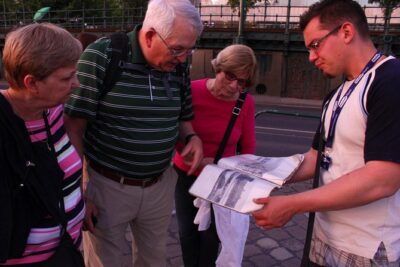
The square is large and busy, so your guide’s storytelling helps you imagine the tanks, crowds, speeches, and fear that once filled the space. This is where a local guide can add something a book or audio guide may not. Several guides have been praised for showing old photographs and articles on a tablet, allowing you to compare the present-day square with earlier scenes.
One guide, Martina, had lived through the communist period. That sort of first-hand perspective can make the discussion more direct, though you should remember that the guide assigned to your tour may be someone else. Names reported from different departures include Jan, Yonas, Mikel, Mike, Martin, Martina, Honza, and Peter.
The route does not promise a long indoor museum visit at this point. If you want extensive displays, artifacts, or preserved rooms, this tour may feel more like a guided street lecture than a museum program.
More things to do in Budapest:
- Budapest: City Highlights Cruise with Welcome Drink
★ 4.6 · 35,610 reviews - Budapest: Unlimited Prosecco, Beer and Aperol Spritz Cruise
★ 4.8 · 25,310 reviews - Budapest: Széchenyi Spa Day Ticket with Optional Upgrades
★ 4.3 · 23,911 reviews - Budapest: Nighttime or Daytime Sightseeing Cruise
★ 4.2 · 21,062 reviews
Republic Square carries the story from independence to uprising
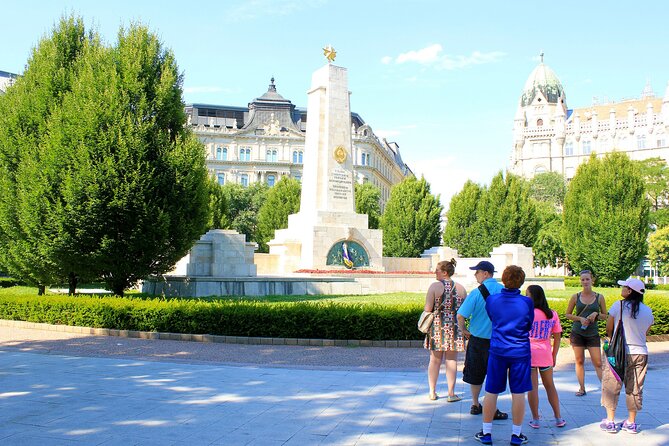
Next comes Republic Square, named for the 1918 declaration of an independent Czechoslovakia. Its importance is not limited to that founding moment.
During World War II, the square was linked to Czech resistance efforts. Secret radio stations helped spread information and contributed to events surrounding the 1945 Prague Uprising. Your guide explains how these broadcasts and resistance activities fit into the final phase of the war.
Then the story takes an ironic turn. Only three years later, the square became associated with the Communist Party, following the communist takeover of the Czechoslovak government in 1948. That sharp change is typical of this walk. The same public places repeatedly change meaning as power shifts hands.
You also see the balcony connected with Klement Gottwald’s declaration of the communist takeover. It is a useful stop because it shows how public architecture can become a political stage. Speeches made from balconies are easy to treat as distant history, but the guide explains how such moments helped turn a political change into a public spectacle.
The sequence is not strictly chronological. Jan, one of the guides, was described as enthusiastic but somewhat issue-by-issue in his presentation, moving around the inner ring of the Old Town rather than telling the story in a clean timeline. If you prefer a tidy beginning-to-end history lesson, this may feel scattered. If you like seeing the city in a practical walking loop, the order makes more sense.
Old Town brings in Einstein, the Jewish quarter, and former power centers
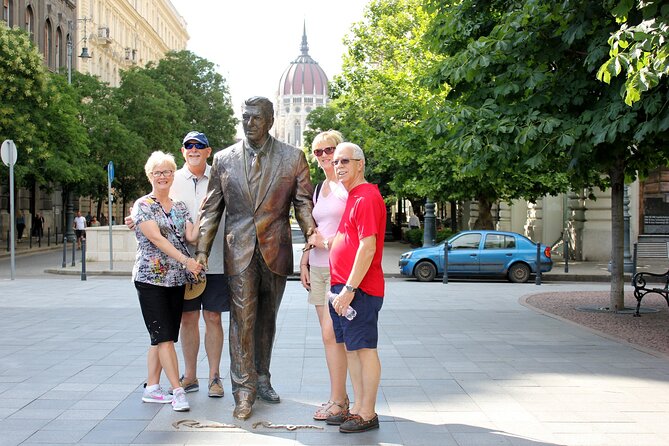
The walk continues through Old Town toward the old Jewish quarter. Along the way, you see where Albert Einstein lived while working at Charles University. The guide connects his scientific work with the development of theories that eventually contributed to the invention of the atom bomb.
This section broadens the tour beyond political buildings and protest sites. It shows Prague as a place where academic life, Jewish heritage, scientific work, occupation, and state power all overlap.
You also view the Old Jewish Cemetery and other nearby landmarks. The cemetery is an important reminder that Prague’s wartime story cannot be separated from the destruction and persecution faced by Jewish communities under Nazi rule. The supplied details do not promise admission inside the cemetery or a dedicated museum visit, so expect to view and discuss the site as part of the walk.
The route includes former headquarters connected with the Nazi SS and the communist-era KGB. These buildings may look ordinary from the outside, which is part of the point. The tour helps you read the modern city differently. A plain office facade can carry a past linked to surveillance, occupation, and political violence.
A few guides have brought extra photographs and articles to support these explanations. That is especially useful at places where the original events are not obvious from the street. Mike was praised for offering perspective on daily life under both Nazi and communist rule, while Martin was noted for adapting the walk to a participant’s interest in Prague’s public library.
Letná Park closes with Stalin’s enormous monument

The final major stop is Letná Park beside the Vltava River. Here the guide tells the story of the world’s largest statue of Stalin, built in 1955 and destroyed in 1962.
The monument’s short life says plenty about political power. It was built as a giant public symbol, then removed when the political climate shifted. You do not need a surviving statue to understand its force. The riverside setting and the guide’s account help you picture how strongly the communist state once marked the city’s skyline.
The walk ends in central Prague after time along the riverside. Pickup is offered, but drop-off is not included. Since the advertised route is in Prague, ask exactly where the walk finishes and how that fits your plans for the rest of the day.
What the private format really adds
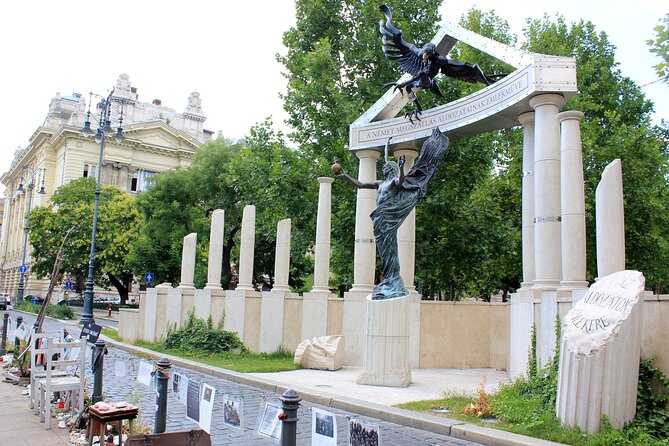
The booking information describes this as a private activity for only your group. Elsewhere, the experience is described as limited to 15 people, so confirm the exact group arrangement. Either way, the goal is a more personal tour rather than a large crowd following a flag.
That matters with a subject like this. You may want to ask about the Prague Spring, the role of the KGB, the 1945 uprising, Jewish life, or what daily routines were like under communism. A private guide can spend more time on your interests instead of moving on because a large group is waiting.
The strongest guide accounts share a few traits: clear explanations, patience, enthusiasm, and a willingness to tailor the route. One guide adjusted the walk to focus more on Cold War life, the Nazi period, the post-Cold War years, and the fall of communism. Another used personal memories of the Velvet Revolution. Those touches can turn a standard sightseeing walk into a useful conversation.
Still, private does not guarantee perfect delivery. One departure was criticized for a poor start, unclear organization, and a guide who talked too much about himself. Another participant found a guide’s English difficult to follow. If precise English narration is essential to you, ask about the assigned guide in advance if the company can provide that information.
Is $133.67 a fair price?
At $133.67 per person, this is not a bargain city walk. Its value depends on your group size and your interest in the subject.
For a private group of two or three people, the price may be reasonable if you want a specialist guide, pickup, a refreshment stop, and the freedom to ask questions. The cost also buys a focused route through places you could otherwise pass without understanding.
For a larger family or friend group, the price becomes easier to justify because the same guide serves everyone. Group discounts are offered, though the amount is not specified. If you are traveling alone or as a couple and mainly want a general introduction to Prague, a lower-cost group walk may offer better value.
The tour includes a licensed English-speaking guide, pickup, and a beverage stop. It does not include drop-off. Admission tickets are listed as free, but the route does not promise substantial indoor museum access. You are paying mainly for the guide’s interpretation and the structure of the walk.
Who should book this Prague history walk?
I would choose this tour if you:
- Care about World War II, the Cold War, communism, or the Velvet Revolution.
- Prefer streets, squares, and real buildings to a standard museum tour.
- Want to ask detailed questions and adjust the conversation to your interests.
- Are comfortable walking for several hours over uneven surfaces.
- Are traveling with teenagers aged 14 or older who can handle serious subject matter.
- Want an early Prague orientation built around modern history rather than medieval sights.
I would hesitate if you:
- Have limited mobility or struggle with stairs, high curbs, or slippery surfaces.
- Dislike standing outdoors while listening to long explanations.
- Want a strictly chronological presentation.
- Need a fully indoor itinerary in poor weather.
- Are mainly interested in Prague Castle, art, architecture, or traditional sightseeing.
- Are booking for children under 14, since the subject is not recommended for them.
The tour requires about two hours of continuous walking and is not suitable for people with limited mobility. It runs in all weather, so comfortable shoes and proper clothing are essential. Build in extra time rather than scheduling a tight appointment immediately afterward.
My booking advice
This can be a very good Prague tour for a history-minded person, especially when the guide brings the events to life with photographs, personal memories, and clear local context. The most praised guides, including Mike, Mikel, Martina, Martin, Yonas, and Honza, appear to make the city’s difficult past easier to understand without turning the walk into a dry lecture.
But I would not book blindly. First, get written confirmation that the experience is in Prague, not Budapest. Then confirm whether the tour lasts three or 3.5 hours, where pickup occurs, how many people will be in your group, and whether the assigned guide speaks clear English.
If those details check out, book it as a focused history walk, not a sightseeing sampler. You will get the most from it if you arrive ready to look at familiar Prague streets through the lens of occupation, protest, surveillance, and political change.
FAQ
Is this tour in Budapest or Prague?
The supplied title and location say Budapest, but the route, meeting details, stops, and ending point all describe Prague. Confirm the correct city with Absolute Tours before booking.
How long does the tour last?
The information gives both three hours and 3.5 hours. Plan for approximately 3.5 hours, since the described route includes many stops and extended walking.
Is this a private tour?
The activity is described as private, with only your group participating. Another description says groups are limited to 15 people, so confirm the exact arrangement when booking.
What is included?
The tour includes a licensed English-speaking guide, pickup, and a refreshment stop with a beverage. Drop-off is not included.
Is the tour suitable for children?
The tour is not recommended for children under age 14 because of its subject matter, which includes Nazi persecution, torture, war, political repression, and communist rule.
Is the walk suitable for people with limited mobility?
No. The tour involves about two hours of continuous walking over high curbs, stairs, and slippery surfaces, so it is unsuitable for people with limited mobility.
Just added in Budapest
- Budapest: Private Walking Tour with a Local Guide★ 3.6 · 6 reviews
- Budapest: Danube River Views Bike Ride★ 4.8 · 23 reviews
- Budapest: City Bike Tour with Coffee Stop★ 5.0 · 37 reviews
- From Budapest: Guided Tour of Eger with Wine Tasting★ 4.5 · 6 reviews
- Walk to recent and aged spiritual sanctuaries near Budapest★ 5.0 · 5 reviews
- Walking consultancy with alternative psychologist and author★ 5.0 · 2 reviews
- Budapest: Guided Tour of the Parliament Building in Spanish★ 4.6 · 1,240 reviews
- Budapest: 3-Hour Trabant Sightseeing Tour★ 4.7 · 28 reviews
Communist History Tours, compared.
Communist History Tour with House of Terror Option
Read our review →3-Hour Walking Tour About Communism (Small Group)
Read our review →
Lives of Hungarians Under Communist and Capitalist system
Read our review →
Memento Park Visit with Private Trabant Transfer
Read our review →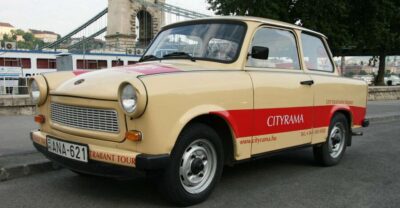
Browse the lists this tour appears in